
In 1995, American designer Jim Bede, attempting to retain the original order for the Monitor Jet MJ-7 “Bede Jet,” developed a two-seater variant of the popular BD-5 light aircraft. The new aircraft, designated BD-12, was a composite low-wing monoplane with streamlined contours.
Design and Performance
The BD-12 was equipped with a 100 hp (75 kW) four-cylinder Continental O-200A engine. Additionally, a 150 hp four-cylinder Lycoming O-320 engine could be used as a standard powerplant.
Equipped with the 150 hp engine, the BD-12 could achieve a maximum speed of 346 kilometers per hour and fly a distance of nearly 1300 kilometers.
Production Ambitions and Fate
The aircraft was being prepared for release as a kit-set. Bede also planned to start production of a four-seater version, the BD-14. However, the BD-12 did not generate significant interest.
In 1997, investors once again declared Jim Bede bankrupt. The two-seater project naturally did not develop, and the four-seater aircraft remained only in drawings. Currently, BedeCorp owns the development rights.
Technical Specifications
| Modification | BD-12 |
| Wingspan, m | 7.01 |
| Aircraft length, m | 6.55 |
| Aircraft height, m | 2.39 |
| Wing area, m2 | 8.64 |
| Empty weight | 308 |
| Maximum takeoff weight | 594 |
| Fuel, l | 140 |
| Engine type | 1 Piston engine Lycoming O-320 |
| Power, hp | 1 x 150 |
| Maximum speed, km/h | 346 |
| Cruising speed, km/h | 322 |
| Practical range, km | 1287 |
| Rate of climb, m/s | 564 |
| Practical ceiling, m | 6400 |
| Crew | 2 |
Image and diagram gallery of the BD-12
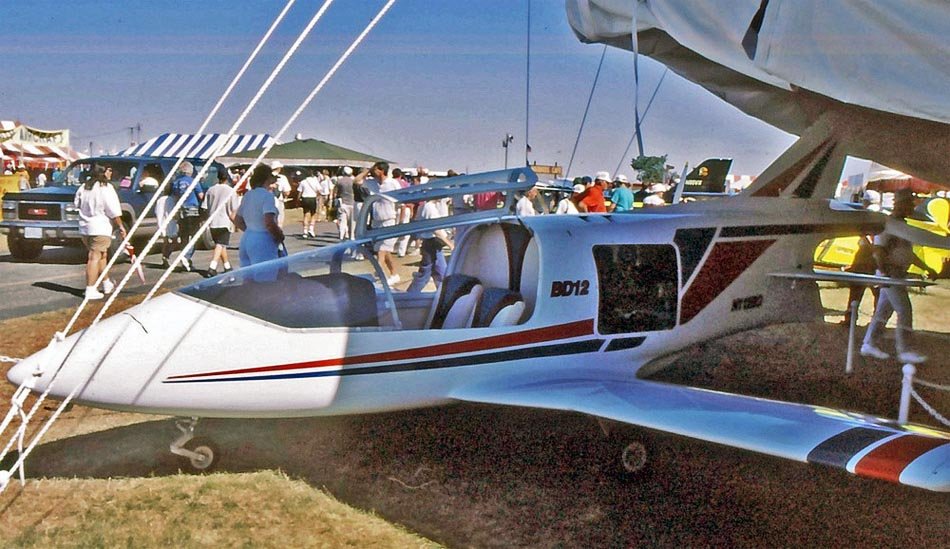 BD-12 |
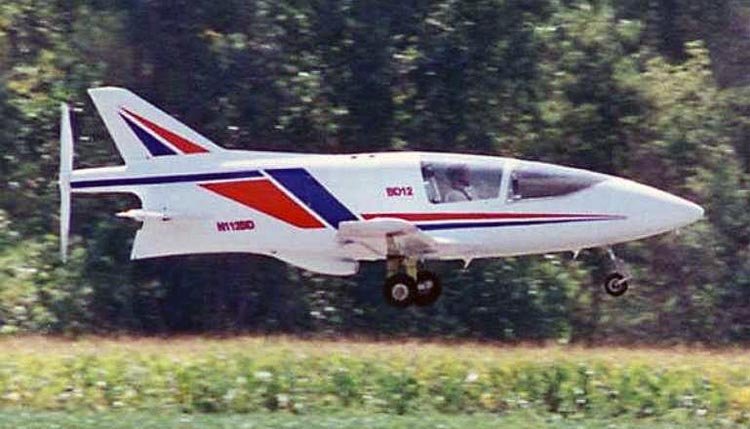 BD-12 |
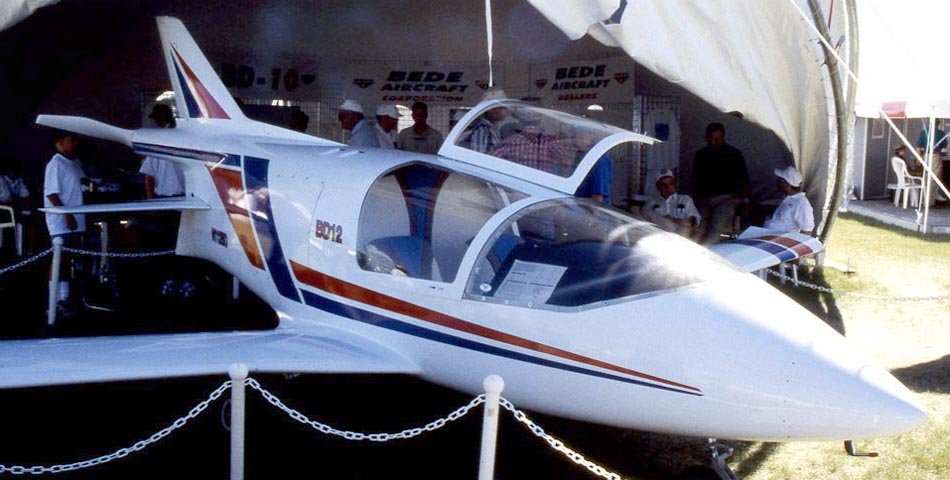 BD-12 |