
Origins of the Soviet Glider
January 23, 1940, marked the starting point in the history of Soviet multi-seat assault gliders, when the Directorate for the Production of Assault and Transport Gliders was established within the People’s Commissariat of the Aviation Industry. In the autumn of the same year, a special meeting attended by Stalin decided to hold a competition to identify the most successful designs of such aircraft for subsequent mass production.
This led to the creation of gliders by O.K. Antonov, V.K. Gribovsky, P.V. Tsybin, and N.K. Kurbala. The most successful among them, the A-7 and G-11, were serially produced and successfully used in the Great Patriotic War.
Nikolai Polikarpov, however, did not participate in the design of unpowered aircraft; his proposal came in early June 1941, and it seemed to take many by surprise. For years after these events, aviation industry workers wondered why a renowned designer would delve into such an ostensibly non-prestigious field, engaging in a topic considered to be on the sidelines of mainstream aviation development. After all, gliders were intended for production not even in aviation factories, but in secondary industries, woodworking, and furniture factories.
The reason for Polikarpov’s unexpected interest was likely his unique perspective on the problem, as he conceived something new and original. Unlike other designers, he proposed a glider not for transporting cargo or troops behind friendly or enemy lines, but as a means of attack. Comparing the timeline of events, it can be assumed that the direction of his thoughts was influenced by the events of late May 1941. During those days, the Germans attempted to seize the island of Crete, defended by British forces, in an airborne attack that involved assault gliders. Although the objective was achieved, the losses were heavy.
Analyzing this operation from the perspective of aviation involvement, Polikarpov concluded that the attacking side could avoid high casualties by employing special, well-armed, and armored landing craft. In line with this idea, he designed a distinctive glider. Troopers inside could fire their personal weapons at ground targets even during the gliding phase. Adequate in-flight protection was provided by removable armor plates, which could be used as shields after landing in open terrain.
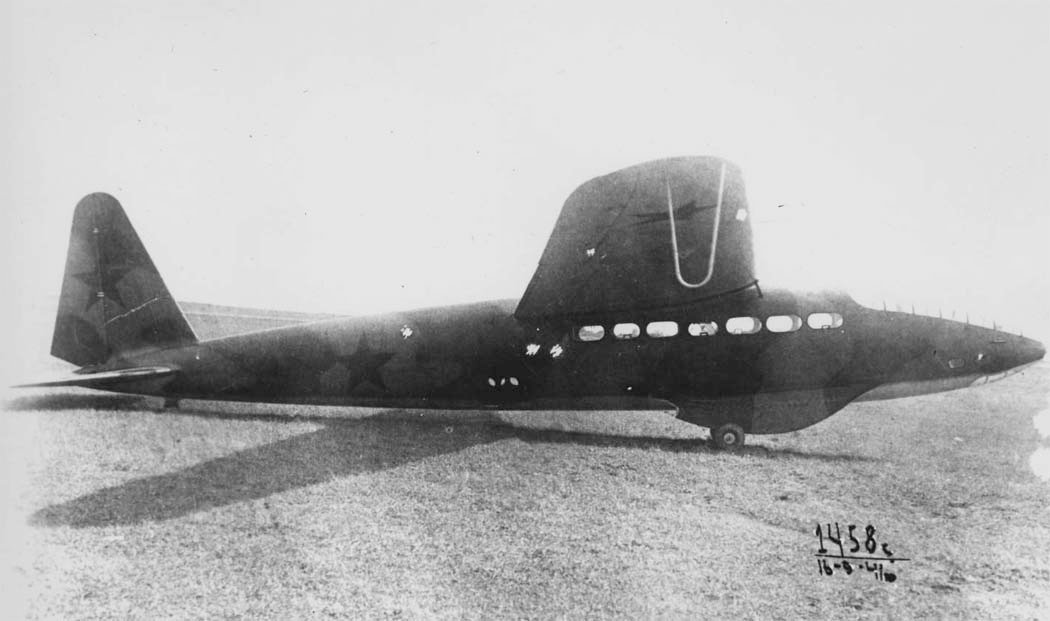
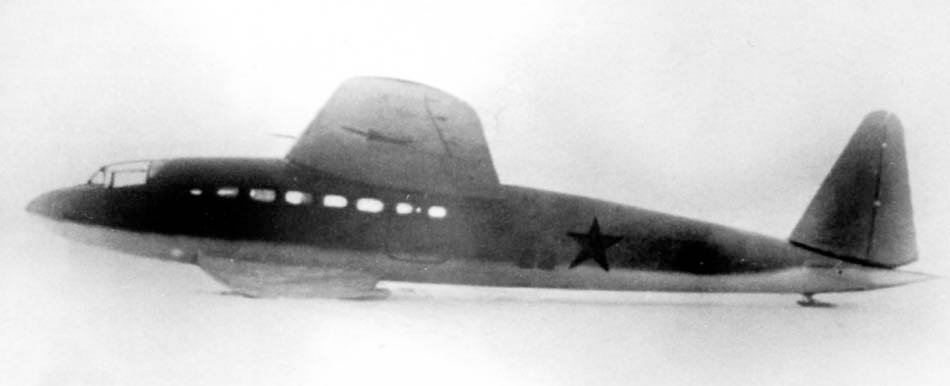
The development of the glider, designated “Combat Assault Glider” (BDP, from its Russian acronym), was carried out by Polikarpov and his design bureau during June 1941. The preliminary design was completed a few days before the fateful 22nd. Structurally, it was a high-wing monoplane with a 20-meter wingspan and a smooth, spindle-shaped fuselage. The construction was entirely wooden, aiming for maximum cheapness and simplicity in production.
The glider’s capacity, capable of transporting 16 fighters with their armament, was chosen to allow towing by SB and DB-3 bombers. It was also envisioned that the troopers’ small arms could be used to repel attacks on the glider train by enemy fighters.
Initial Trials and Evaluation
The BDP project was approved by the aviation industry leadership and accepted for implementation at Aviation Plant No. 51. By late summer 1941, the glider was built and prepared for flight tests. Flights of the first experimental BDP began in September and took place at the Flight Test Institute airfield near Moscow. An SB bomber with M-103 engines was used as the tug aircraft, piloted by the experienced V.P. Fyodorov. A total of fourteen flights were completed.
On October 14, tests were halted due to the rapidly deteriorating situation on the approaches to Moscow and the शुरू of evacuation. Although deemed incomplete, the test results noted that the BDP was stable in flight across all axes, allowed flight with the controls released, and the effectiveness of the control surfaces was sufficient both in flight and during landing. It was described as “…very simple and pleasant to pilot, not requiring high pilot qualifications. Accessible to a pilot trained on instructional gliders.”
However, insufficient structural strength was noted in some wing and fuselage components. Therefore, during testing, the BDP’s flight weight was limited to 2200 kg and its speed to 220 km/h (it was designed for 3200 kg and 320 km/h, respectively). The pilot noted that the curved front glazing caused significant distortion and recommended installing a conventional canopy with a faceted visor. When the landing flaps were deployed, tail unit buffeting (shaking) was observed.
After incorporating design changes and reinforcements, the BDP was proposed for mass production. No difficulties were anticipated, and it was believed that the glider’s production was feasible for small woodworking factories, although TsAGI (Central Aerohydrodynamic Institute) specialists noted that its cost as a mass-produced glider was somewhat high.
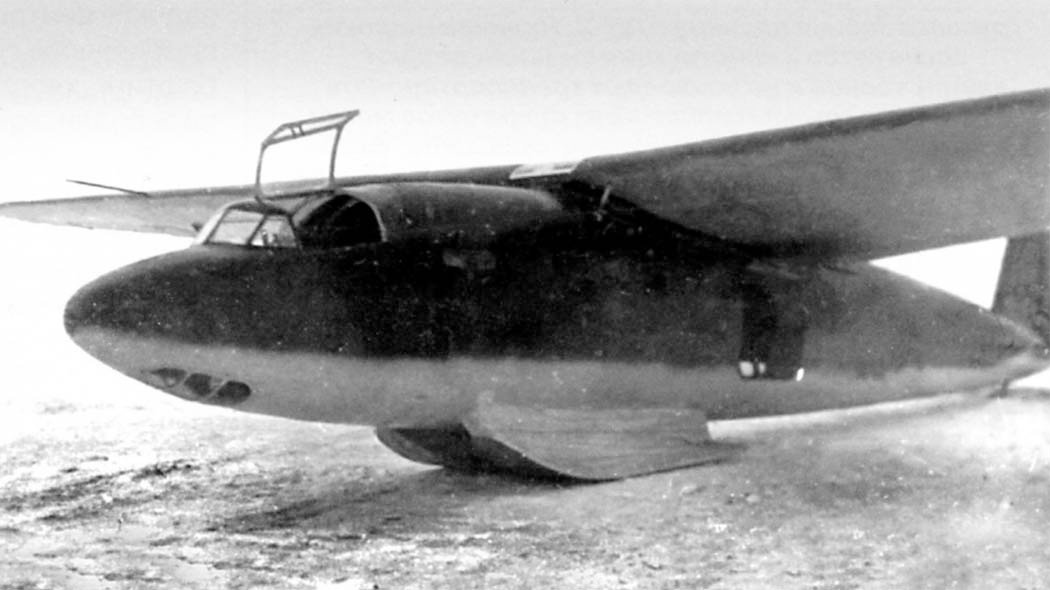
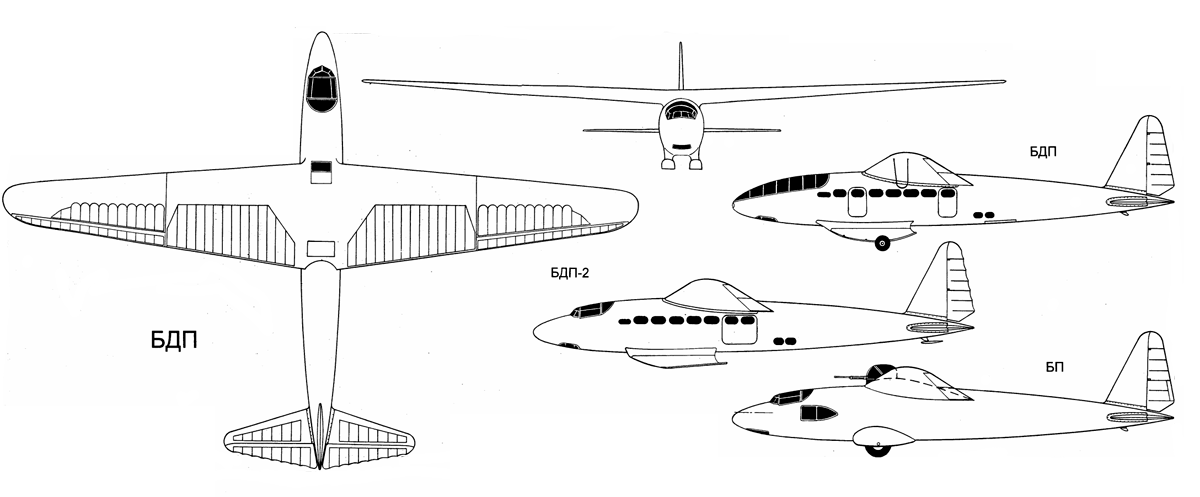
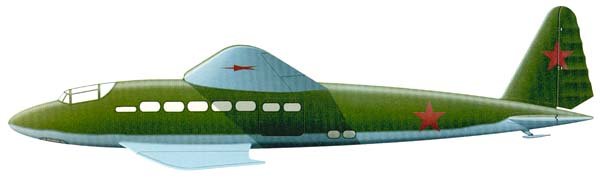
The second experimental glider, designated BDP-2, was completed in Novosibirsk, where Aviation Plant No. 51 and Polikarpov’s design bureau had been evacuated. The glider arrived for flight tests at the LII branch on February 6, 1942, piloted by I.I. Shelest. The BDP-2’s structure was reinforced compared to the first prototype, resulting in a slight increase in weight. Its external appearance also changed. The pilot’s canopy now featured a stepped visor, and some elements were simplified, such as the trailing edge of the rudder and elevator, which were made of steel wire, a practice common in the early days of aviation.
BDP-2 tests were conducted on skis and lasted until March 14, 1942. During this period, measures were taken to reduce tail unit buffeting. This problem was somewhat resolved by cutting a series of holes in the flaps, which reduced flow disturbance. The conclusion from the test results once again highlighted the BDP-2’s ease of piloting, large payload, sufficient maneuverability, and stability across all axes over a wide range of center of gravity (27-41%). The glider was recommended for series production.
Almost concurrently with the start of flight tests, a search began for a production facility for the serial release of the BDP. After inspecting several small enterprises in the Novosibirsk area, representatives of Polikarpov’s design bureau selected the workshops of the Siberian Military District. Until recently, these workshops served as an auxiliary production facility for Aviation Plant No. 153, manufacturing skis for aircraft. Now, it was planned to establish BDP series production there, with the initial order for 100 units. The cost of one glider in series was estimated at 41,125 rubles.
While approvals were ongoing, a new location for BDP production was identified: Plant No. 490 in Stalingrad. During the summer of 1942, working drawings, full-scale layouts, templates, and fixtures began arriving there from Novosibirsk. However, the changing front situation, unfavorable for the Red Army, and the German advance to Stalingrad, led to the cessation of glider production there. By this point, the expediency of building the BDP was also in question. The war was clearly taking on a protracted and exhausting character, and the special tasks for which this glider was created seemed unlikely. Moreover, Antonov’s A-7 and Gribovsky’s G-11 gliders had already found their way into serial production.
Legacy and Future Projects
The BDP’s story continued as follows: in July 1942, the second experimental BDP-2 was transferred for operational evaluation as a transport vehicle to the Moscow-Irkutsk Airway Directorate. Several towed flights were made behind an SB aircraft along the Novosibirsk-Omsk-Sverdlovsk route and back. Along with the BDP, several A-7 gliders were also used on this route. Aeroflot personnel, it must be said, were delighted with the tests; the gliders allowed for loading bulky cargo, essentially serving as an add-on to the regular SB (PS-40) carrying its own load. Based on the test results, it was proposed to build several transport gliders for civilian lines.
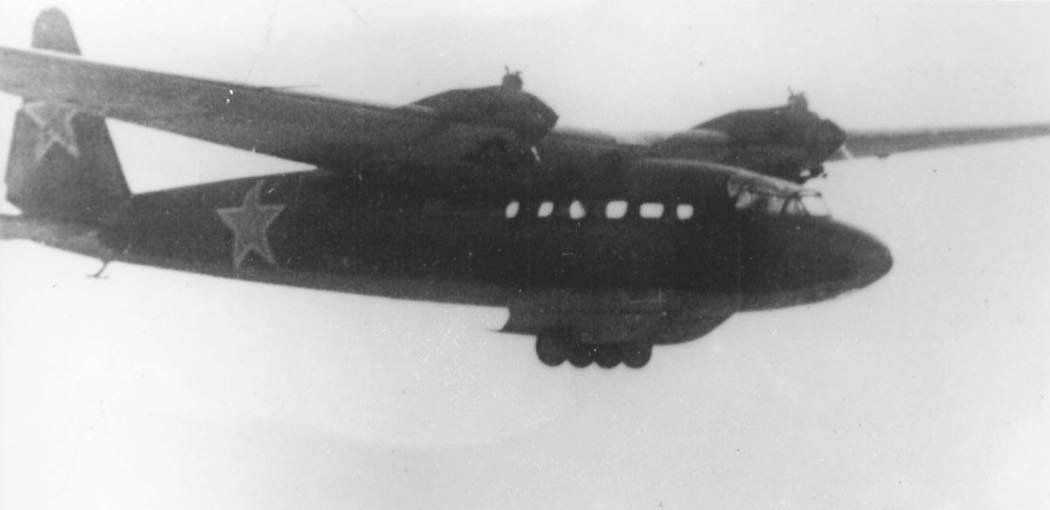
Satisfied with the results achieved during experimental operation, Polikarpov decided to modernize his glider so that it would not depend on a tug aircraft. To achieve this, two carefully faired M-11F engines were installed in the wing’s leading edge. The motor glider (MP) had a fuel reserve for seven hours of flight, could be used as a small transport aircraft, carrying twelve paratroopers with their armament or a corresponding amount of cargo. With increased load, takeoff and delivery to the target were still carried out by towing. A positive distinction from other gliders also existed in this case: in the vast majority of cases, transport gliders did not return and were destroyed after cargo delivery. The motor glider, however, could return home independently.
State tests of the MP were conducted in the summer of 1943. With a maximum speed of 172 km/h, the motor glider had a flight range of 700 km. Despite positive feedback from test pilots, the MP was not mass-produced. This was primarily due to the Red Army closely approaching partisan areas, with some regions already liberated. Furthermore, small transport aircraft like the Shche-2 and Yak-6, both equipped with two M-11 engines, were already being serially produced.
N.N. Polikarpov’s unrealized projects in the field of unpowered aircraft also include the large assault glider DP-30 (for transporting thirty people) and the bomber glider BP. The BP was proposed by the designer back in 1941. Such gliders were to be delivered to their targets by bomber aircraft, with use intended at night or in areas of air superiority. Inside the BP’s bomb bay, up to 2000 kg of bombs could be suspended, and the crew consisted of a pilot, a gunner-bombardier, and an aerial gunner. Defensive armament consisted of a TAT turret with a heavy BT machine gun and a swiveling ShKAS machine gun.
BDP Glider Description
The glider’s design allowed for seventeen assault troopers, including the pilot, to be accommodated inside. The fuselage was an all-wooden structure. The pilot had a jettisonable emergency canopy, the frame of which was also made of wood. The lower part of the cockpit was glazed to improve visibility.
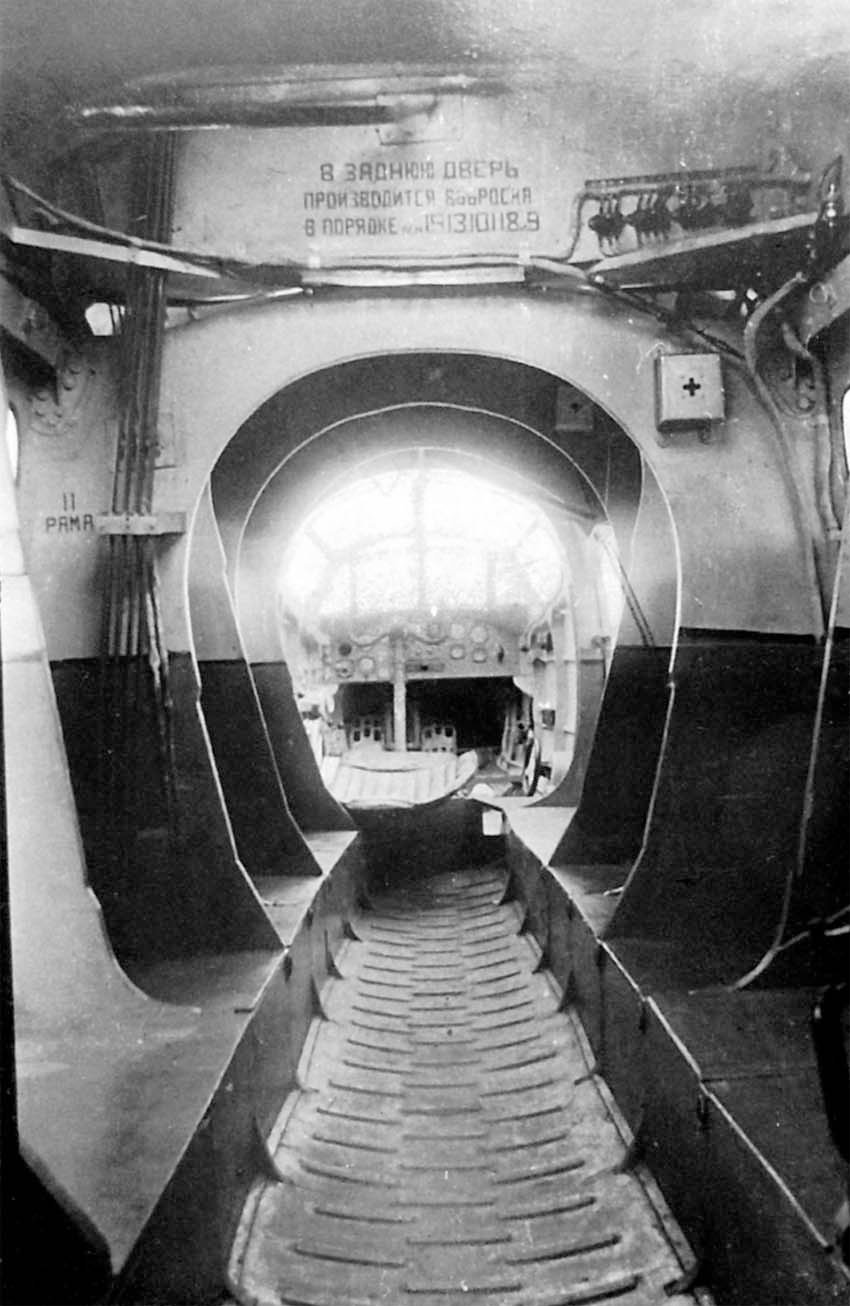
The seats for the assault troopers were arranged along the fuselage sides and formed an integral part of its structure. In the middle, there was a 600 mm wide aisle. For boarding and disembarking, there were two doors, 900 mm and 950 mm wide, one located in the front right of the fuselage and the other in the rear left. The first experimental BDP had two narrow doors on the right side and two on the left. Subsequently, the rear left door was enlarged. In the lower part of the fuselage, behind the troop compartment, there was an additional hatch for abandoning the glider in the air with a parachute. In the areas of the wing’s leading and trailing edges, special hatches were provided for firing infantry machine guns at the upper hemisphere. For tail defense, a segment of the upper fuselage would raise to become the gunner’s fairing.
The BDP’s wing was a single-spar, all-wooden design. The leading edge skin and local reinforcements were made of plywood, while the remaining sections were fabric-covered. The wing profile was NACA 230, and to reduce landing speed, Schrenk-type flaps were located in the section between the ailerons and the fuselage.
The tail unit was cantilever, wooden, with plywood and fabric skinning. The landing gear consisted of two ash wood skis, mounted on rubber plate shock absorbers. The junction of the skis and the fuselage was covered by an aircraft fabric fairing. For takeoff, the BDP was equipped with a jettisonable trolley consisting of four 400×150 mm wheels.
The glider had no special armament, but it was equipped with provisions for installing seven DP infantry machine guns. Two machine guns were for firing at the upper hemisphere, one in the lower hatch, and two machine guns on each side of the fuselage. For passive protection, the glider’s interior had twelve removable 5.5 mm thick armor shields, measuring 480×550 mm. In addition, the pilot had a collapsible armored seat back. The total weight of the armor was 127 kg.
Technical Specifications
| Modification | BDP |
| Wingspan, m | 20.00 |
| Length, m | 13.60 |
| Wing area, m2 | 44.72 |
| Empty weight | 1470 |
| Normal takeoff weight | 3408 |
| Crew | 1 |
| Payload | 17 paratroopers |
Image and diagram gallery of the Polikarpov BDP (Combat Assault Glider)
 |
 |
 |
 |
 |
 |
 |
 |
 |
 |
 |
 |
 |
 |