
Development and Design Challenges
As Allied bombing raids intensified across the Third Reich towards the middle of World War II, it became clear that existing armaments were insufficient to counter the robust and well-protected heavy bombers of England and the USA. Even the exceptionally destructive high-explosive M-Geschoss shells, designed for 20mm and 30mm cannons, did not guarantee the complete destruction of a bomber. This led the Reichsluftfahrtministerium (RLM) to conceive the idea of arming interceptors with a large-caliber weapon capable of disabling a heavy bomber with a single hit from a distance.
Although Rheinmetall had already developed the 37mm BK 3.7 cannon, which showed promising destructive power against targets, German strategists found it inadequate and opted for an even larger caliber. The concept of an aircraft-mounted cannon was not new; almost all nations had experimented with mounting gun barrels, more typically found on tanks, onto aircraft. However, these applications were primarily for engaging ground or naval targets, not for air-to-air combat.
The main suppliers of small arms artillery — Mauser, Rheinmetall-Borsig, and Krupp — were tasked with developing such a system. The specification called for an automatic cannon with a 55mm caliber. All companies energetically began work, but the challenge of creating a large-caliber cannon suitable for aircraft installation proved non-trivial. The task was ultimately resolved only at the very end of the war, by which time its relevance had largely diminished.
Krupp developed the MK 412, a 55mm cannon whose automatic mechanism operated on a combination of short recoil and gas operation. Despite its caliber, the system was relatively light at 240 kg and offered a rapid rate of fire, between 250 and 300 rounds per minute.
Mauser focused on creating the 55mm MK 214 cannon. Recognizing the complexity of the task, chief designer Dr. E. Linder simultaneously launched two projects: the primary, original MK 214b for a 55x450B cartridge, and a simplified backup, the MK 214a. The latter was based on the serial semi-automatic 50mm KwK 39 tank gun, using its standard 50x419R cartridge. The 50mm and 55mm systems differed significantly, and the shared name was used to mask the 5mm caliber deviation, which the RLM strategists would not have approved. Mauser’s design proved quite robust, even seeing a limited production run in 1945, but it arrived too late.
Engineers at Rheinmetall-Borsig followed a similar path to Mauser, launching four parallel projects. The MK 112 cannon was a 55mm scaled-up version of the serial 30mm MK 108, a light and compact system that unfortunately inherited the prototype’s poor ballistics. A second project was the 55mm MK 115 recoilless cannon, which, like all recoilless guns, suffered from low muzzle velocity and limited effective range.
The 55mm MK 114 cannon project featured a more conservative design for a powerful 55x450B shell, weighing 700 kg and achieving a technical rate of fire of 160-180 rounds per minute. However, recognizing that these ambitious projects would take too long, which indeed proved to be the case, Rheinmetall-Borsig President August Kottmann, much like Mauser, initiated a “backup” project. This was the “ersatz” BK 5 system, an adaptation of the 50mm KwK 39 tank gun for aircraft installation.
Unlike Mauser’s approach, Rheinmetall’s chief designer, Fritz Faudi, adopted the entire “ground” system, including its long barrel recoil, almost without modification. The BK 5 was positioned as a temporary measure until the more comprehensive projects outlined by the RLM’s specifications could be realized. Apparently, Kottmann successfully convinced the client of the practicality of this interim solution and secured a contract for serial production in January 1943, beating competitors.
Operational Deployment and Combat Performance
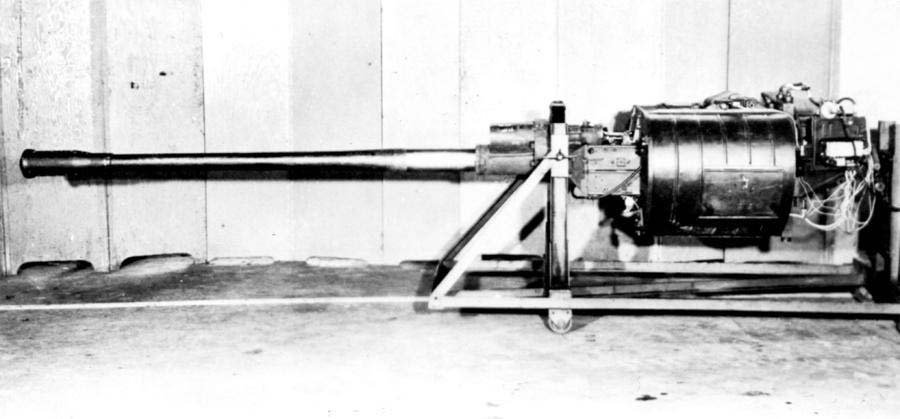
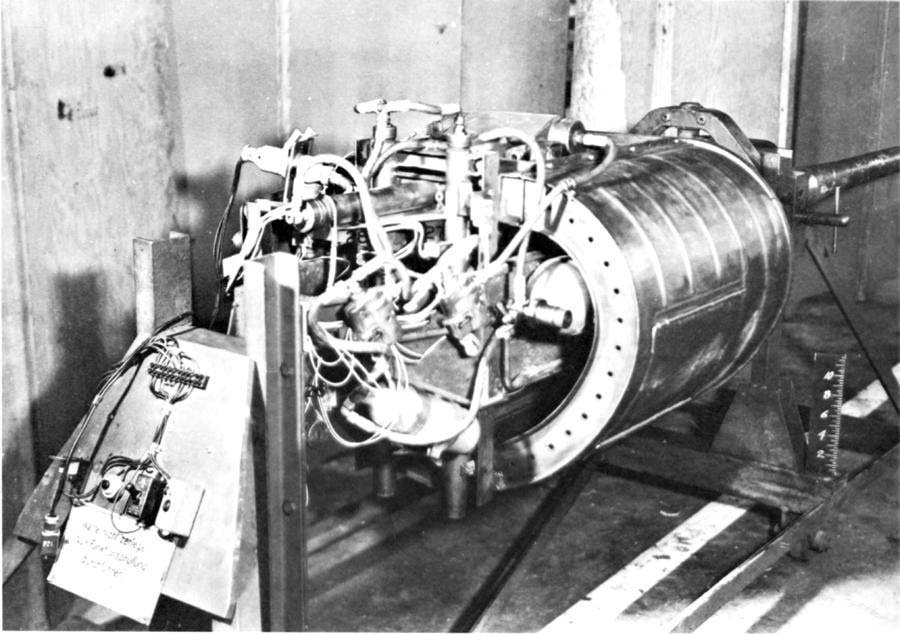
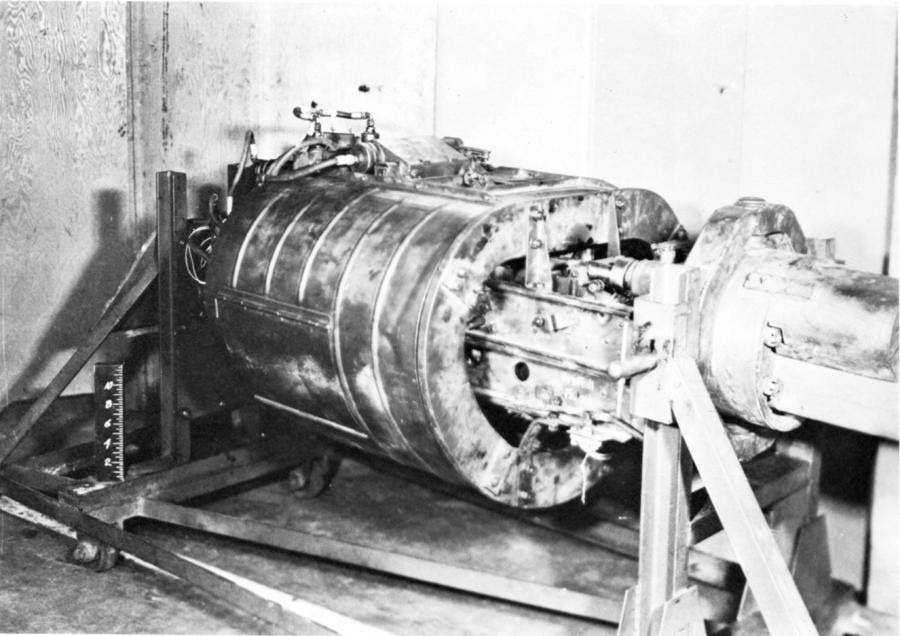
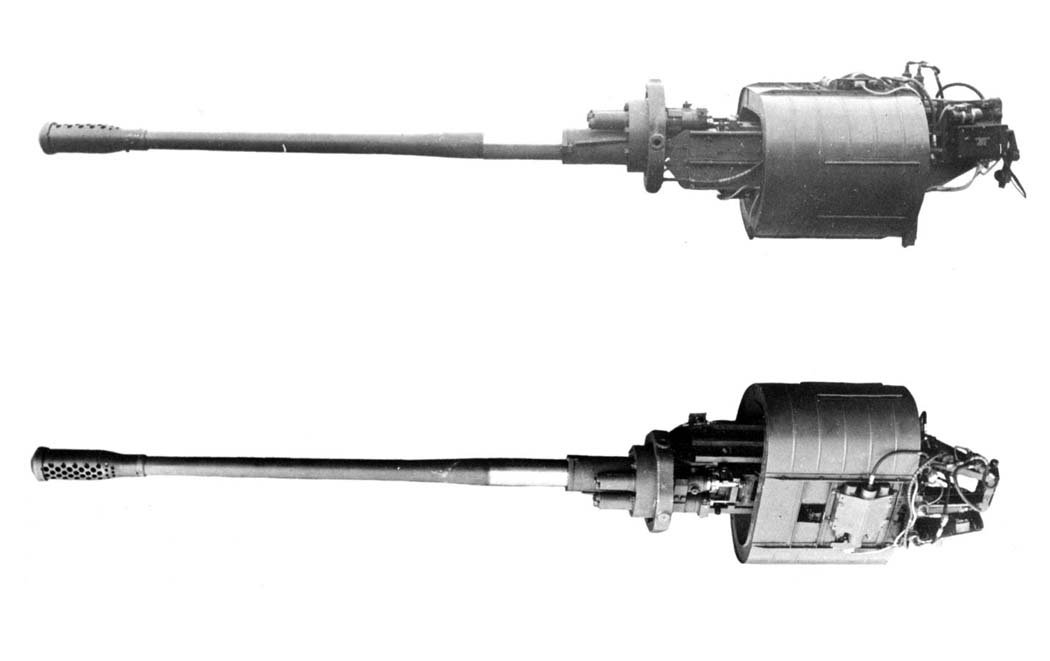
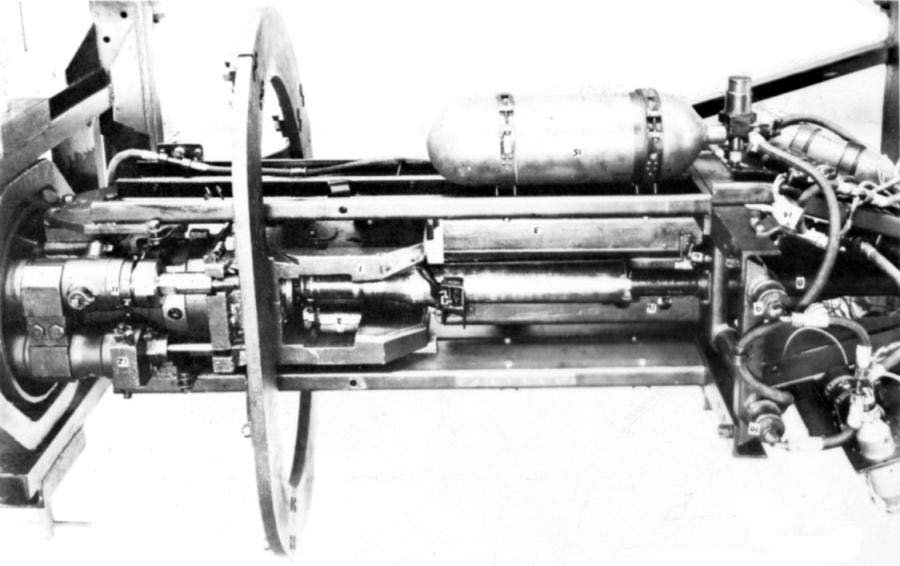
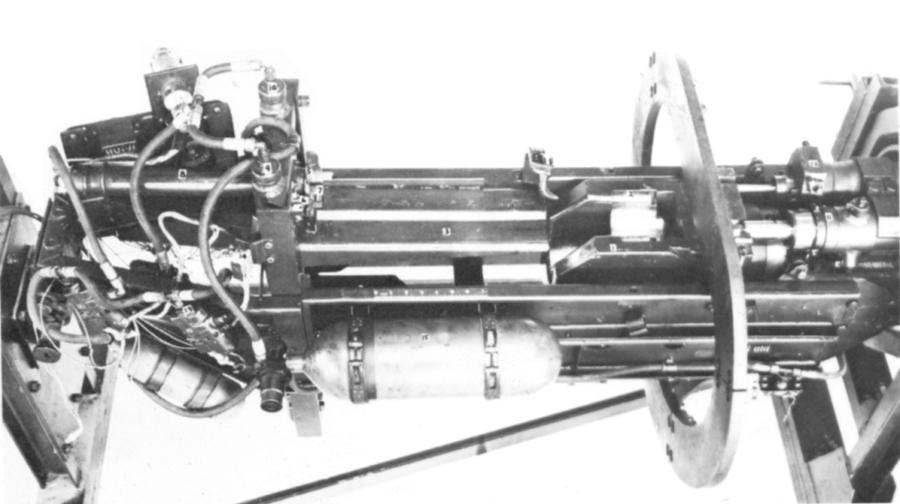
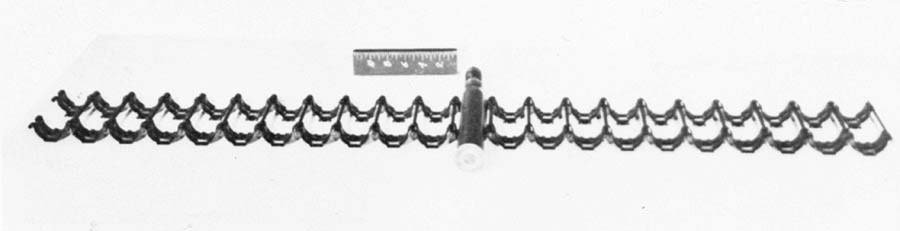
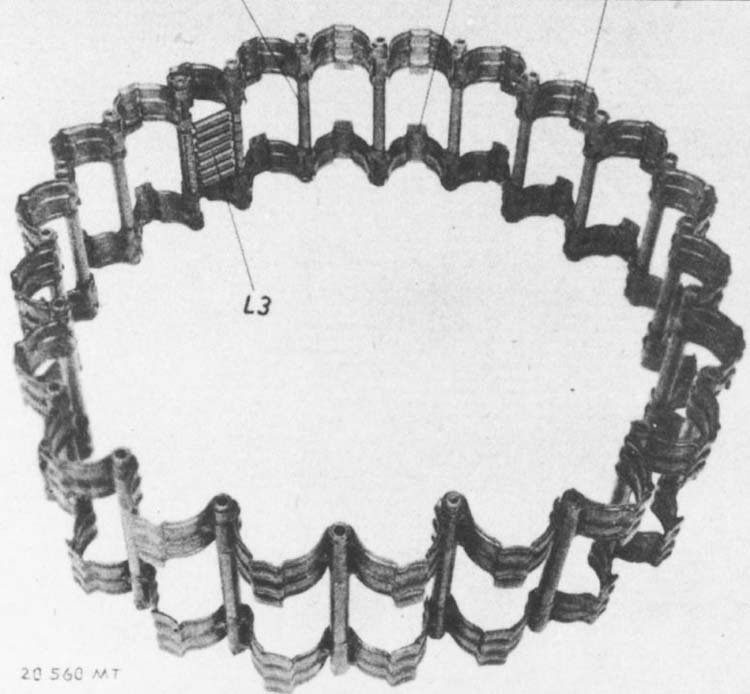
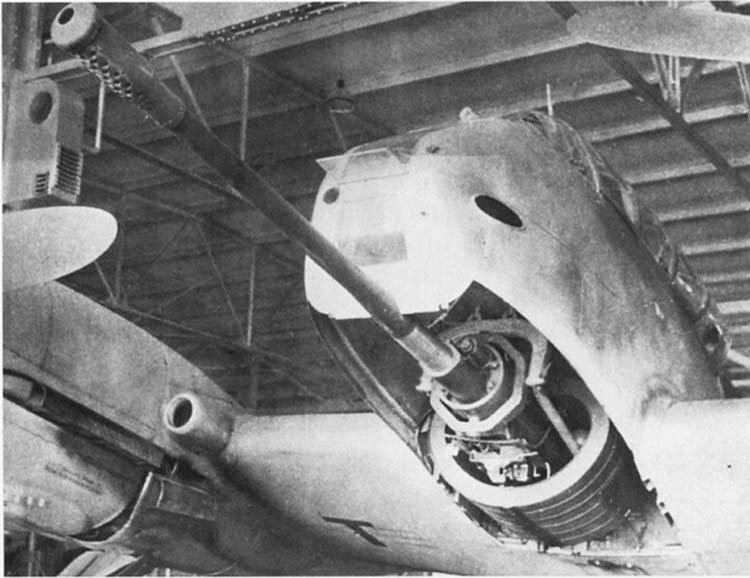
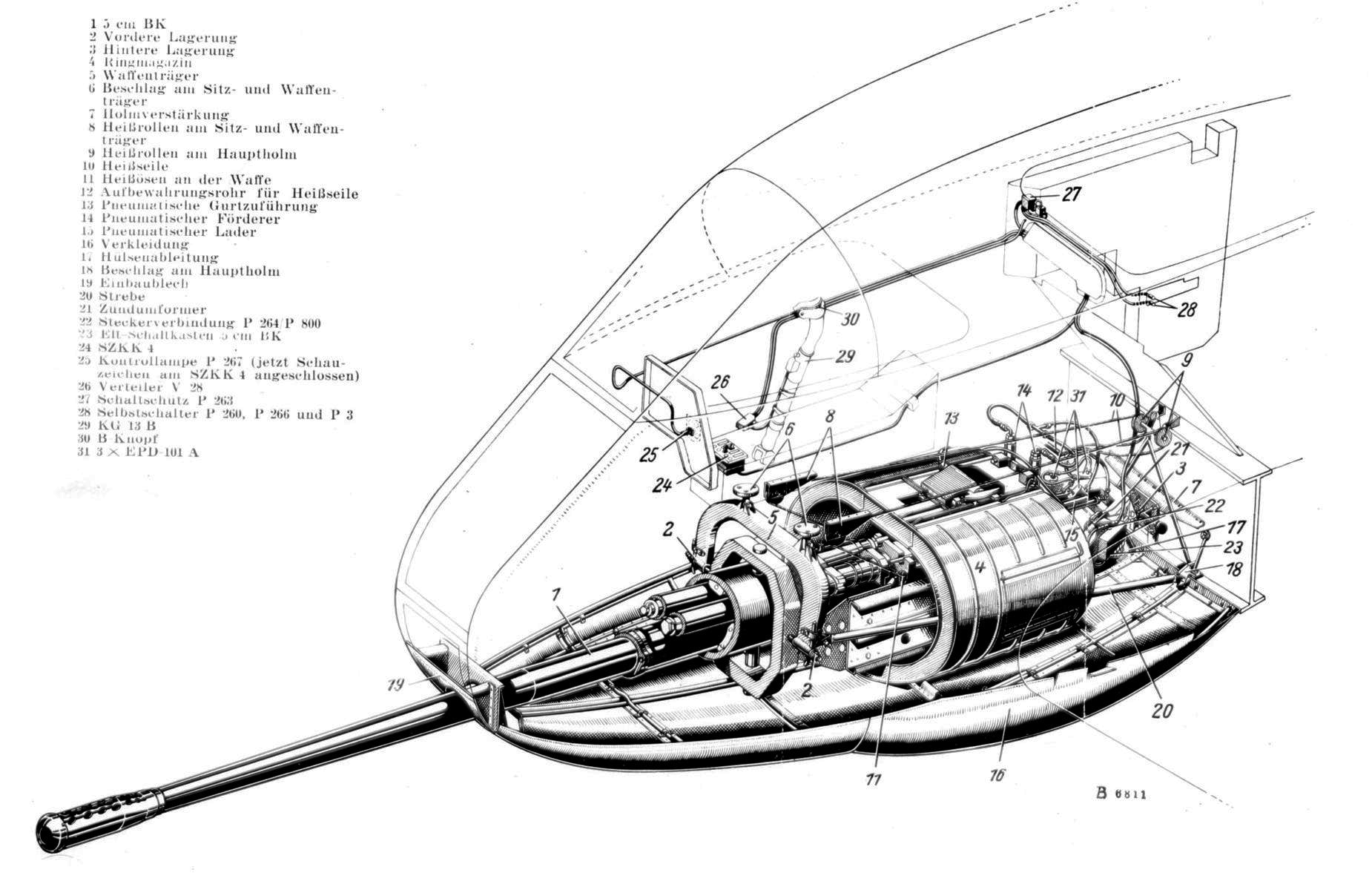
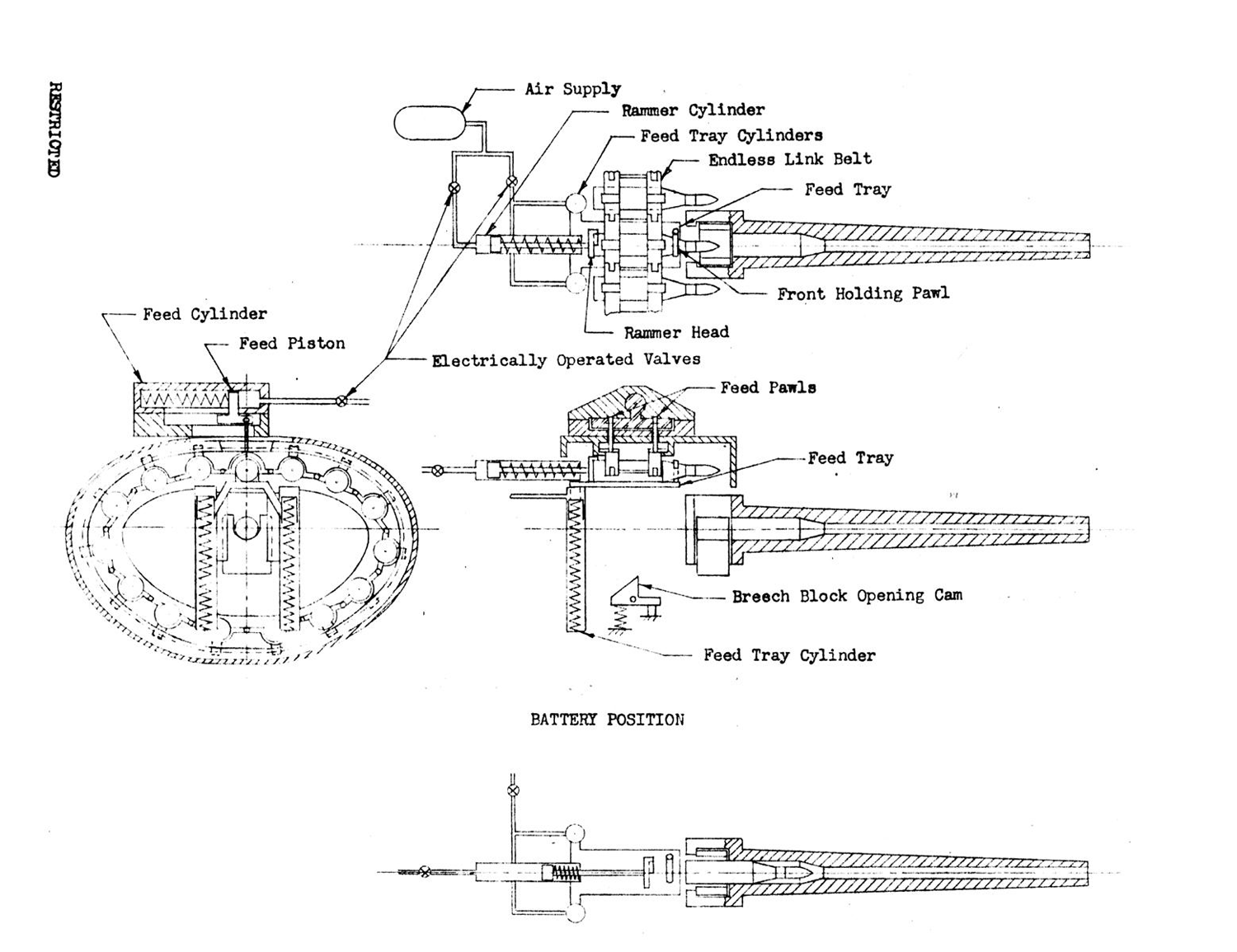
Even at the project stage, a clear picture emerged of the potential carrier for this “wonder weapon”: the Messerschmitt Me 410. The RLM placed great hopes on this advanced heavy fighter, which was fast and capable of carrying a significant payload. Converting the semi-automatic 60-caliber KwK 39 tank gun into a fully automatic aircraft system proved uncomplicated for Rheinmetall-Borsig specialists. The work primarily involved developing an auto-loading device, a closed metallic belt holding 21 rounds (plus one in the chamber), and a pneumatic mechanism to extract rounds from the belt and chamber them. The vertical wedge breech, inherited from the prototype, would then automatically close.
The electric firing mechanism, also a legacy of the tank gun, ignited the cartridge’s electric primer, firing the shot. The barrel, equipped with a muzzle brake, recoiled 285-295 mm, ejecting the spent casing. Curiously, the first aircraft to be fitted with the BK 5 cannons was not a fighter. It was decided to test the experimental weapon on the Heinkel He 177 heavy bomber, intending to use it as a giant ground-attack aircraft to suppress Soviet air defenses around the Stalingrad pocket. Cannon installations were field-mounted on five He 177 A-3/R5 bombers, replacing the lower nose gondola.
Besides the 50mm BK 5, 75mm automatic BK 7.5 cannons and manually loaded PaK 40 anti-tank guns were also tested. These formidable aircraft were unofficially dubbed “Stalingradtyp,” but by the time they were ready, Paulus’s Sixth Army, encircled at Stalingrad, had capitulated, rendering the project meaningless. The question of its initial viability remained open. Consequently, these ersatz ground-attack aircraft were re-modernized back into bombers.
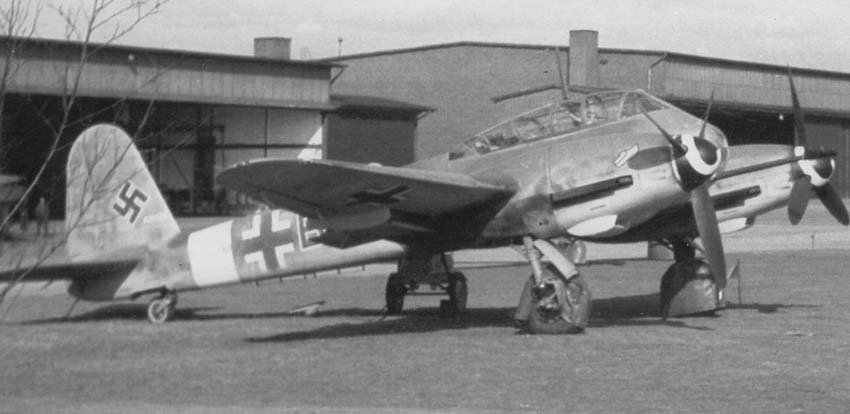
The cannon was tested on a fighter in early August 1943, fitted to a Me 210A-0 (W.Nr.023), which was later converted into the Me 410V2. In its new configuration, the aircraft was delivered to the Tarnewitz test range for firing trials. A decommissioned Heinkel He 111 bomber served as the target. The target aircraft was shattered with the very first shot, and the trials were declared successful. In September 1943, the first batch of 20 guns was produced and immediately installed on Messerschmitt Me 410 fighters.
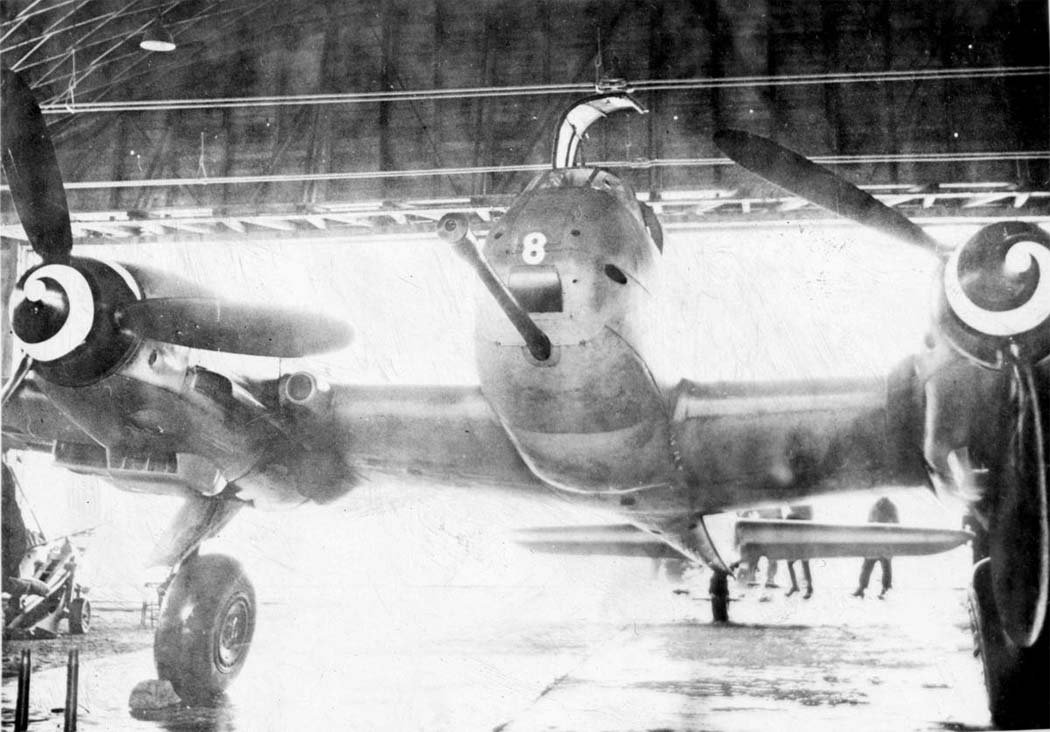
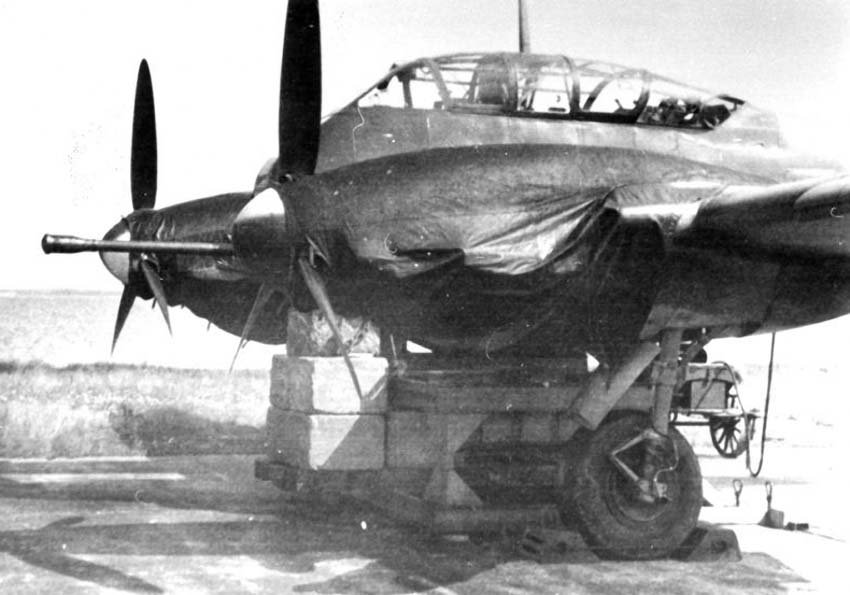
All Me 410s equipped with the 50mm cannon were assigned to Erprobungskommando 25 to evaluate the weapon’s effectiveness in combat. While the Me 410V2 testbed carried both the 50mm cannon and standard armament, the aircraft of Erprobungskommando 25 were armed exclusively with the 50mm cannon and equipped with a ZFR 4a sight. This modification was designated Me 410A-1/U4. The bulky weapon integrated surprisingly well into the aircraft’s contours, housed in the bomb bay with only the 3-meter barrel and muzzle brake protruding. Combat trials proved successful, leading to a decision to equip another 100 aircraft with the BK 5.
New Me 410A-1/U4s, which retained their standard armament, were assembled as part of II./ZG 26, reformed in late summer-early autumn 1943. Later, the 50mm cannon was also fitted to Messerschmitt “B”-series aircraft. The Me 410B-2/U4 largely replicated the Me 410A-1/U4 model, while the Me 410B-2/U2 version replaced the standard armament with two 30mm MK 103 cannons, complemented by the 50mm BK 5.
Early combat engagements between BK 5-equipped Messerschmitts and Allied aircraft exposed the weapon’s glaring deficiencies. The Me 410, originally a fairly fast aircraft, suffered a significant loss in performance dynamics when rearmed with a weapon weighing over half a ton. While the exact speed reduction remains undocumented, the aircraft undeniably became much more sluggish. Although the weapon was well-balanced, located near the aircraft’s center of mass, the pneumatic reloading system frequently malfunctioned. The stated technical rate of fire of 45 rounds per minute often devolved into a series of essentially single shots, creating a host of problems. This made it nearly impossible to keep even a large target like a heavy bomber in the crosshairs.
The primary concept behind creating a large-caliber cannon was to engage targets at long ranges, around 1000 meters. At such distances, even a B-17 appeared as a tiny speck, making a hit incredibly difficult. Consequently, interceptor pilots were forced to reduce their opening fire distance, entering the engagement zone of the target’s defensive machine guns. For instance, on May 12, 1944, a formation of 26 Me 410s from II./ZG 26, armed with 50mm cannons, attacked a group of several dozen American B-17 bombers flying without escort fighters. The BK 5 cannons on eight Me 410s failed after the first shots. Nine Me 410s were shot down by defensive fire from the bombers, at the cost of only three B-17s lost.
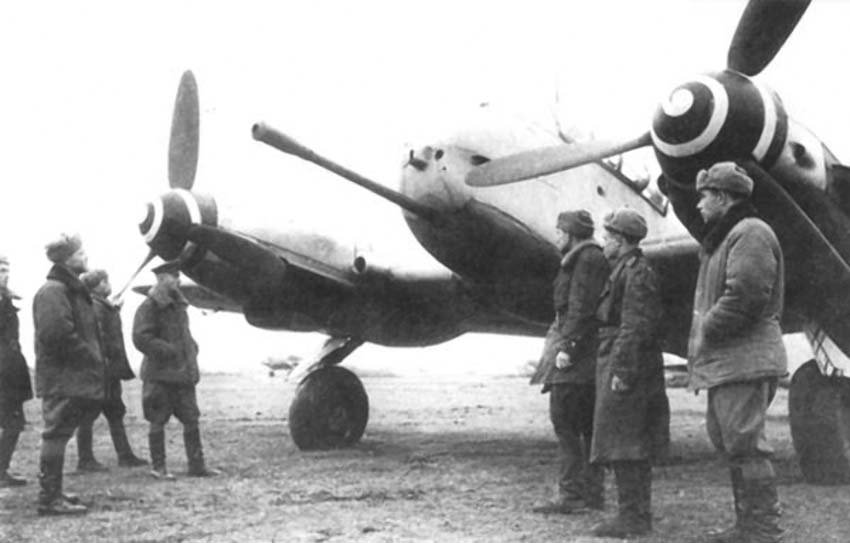
The following day, May 13, 1944, while attempting to intercept American bombers near Poznań, the escorting Mustang fighters inflicted a severe beating on the “four-tens” of II./ZG 26. The group lost almost all its BK 5-equipped aircraft and was rendered completely combat-ineffective. Thus, with the involvement of American escort fighters alongside Allied bomber formations, the concept of heavily armed interceptors became obsolete. The Me 410, with a 3-meter barrel protruding from its nose, was fundamentally incapable of engaging in agile aerial combat.
Legacy and Evaluation
Despite approximately 300 BK 5 cannons being produced, only about 60 were installed on Me 410 interceptors. Most of these aircraft were lost in combat without truly proving their worth, leading to the cessation of cannon production in February 1944. One surviving Me 410 A-2/U-4 with a 50mm BK 5 was captured by the Soviet Army and underwent testing at the Air Force Research Institute, incorrectly designated as “Me 410 B-2.”
The aircraft’s armament was not tested in flight; all cannon and machine gun firing was conducted on the ground, at a firing range. Soviet specialists rightly deemed the main weapon of the Me 410 A-2/U-4 interceptor, the 50mm BK 5 cannon, unsuccessful and inefficient compared to analogous domestic models. The Soviet report stated: “The 50mm BK 5 cannon, being a tank gun adapted for aircraft installation, is of no interest, except for its automatic electro-pneumatic reloading system. With a rate of fire of 40 rounds/min and an initial velocity of approximately 500 m/s (actually significantly higher), the gun, together with its automatic reloading units, weighs 592 kg. In contrast, the domestic 45mm NS-45 aircraft cannon, with a rate of fire of 270 rounds/min and an initial velocity of 795 m/s, weighs 3.5 times less, i.e., 168 kg. A rate of fire of 40 rounds/min practically only allows for aimed single shots. The effectiveness of the BK 5 cannon’s high-explosive fragmentation shells against aircraft structures (Boston aircraft fuselage), as revealed by test shots, only slightly exceeds the effectiveness of the NS-45 cannon’s shell…”
As mentioned, production of the BK 5 cannons ceased by February 1944. Around three hundred of these weapons were produced in total, but only 60 found their way onto Messerschmitt interceptors, which, without fully demonstrating their potential, were almost completely decimated by the summer of 1944.
During the design phase of the Focke-Wulf Ta 154 night fighter, the possibility of arming it with the BK 5 cannon was considered. Late 1944 proposals for the Ta 154C version envisioned it as a carrier for this system. The cannon would have been shifted to the starboard side, with a 50 kg ballast placed in the tail section to compensate for the change in the center of mass. Due to insufficient space for the standard 21-round circular magazine on the Ta 154C, a 5-round clip system was proposed, requiring the second crew member to manage replacements. However, after reviewing the preliminary design, the project was rejected.
The Germans apparently showed little eagerness to repurpose the unused cannons, despite their good armor-piercing properties which might have suited ground-attack aircraft. It can only be speculated that the electro-pneumatic automatic system of the gun was so unreliable that even the catastrophic lack of resources in Germany at the end of the war did not permit its use, even as an ersatz anti-aircraft weapon. Only a few Junkers Ju 88 bombers were converted in 1944 to mount this weapon. This version, designated Ju 88P-4, used the Ju 88V-57/1 as a prototype. The aircraft was lightened, and a more compact gondola with a single 50mm BK 5 cannon was installed. Defensive armament was also improved, and the weight reduction allowed for bomb racks, absent on other Ju 88P modifications. A total of 32 Ju 88P-4 aircraft were converted and deployed to the Eastern Front in late 1944, though they remained there for only a short time and suffered significant losses.
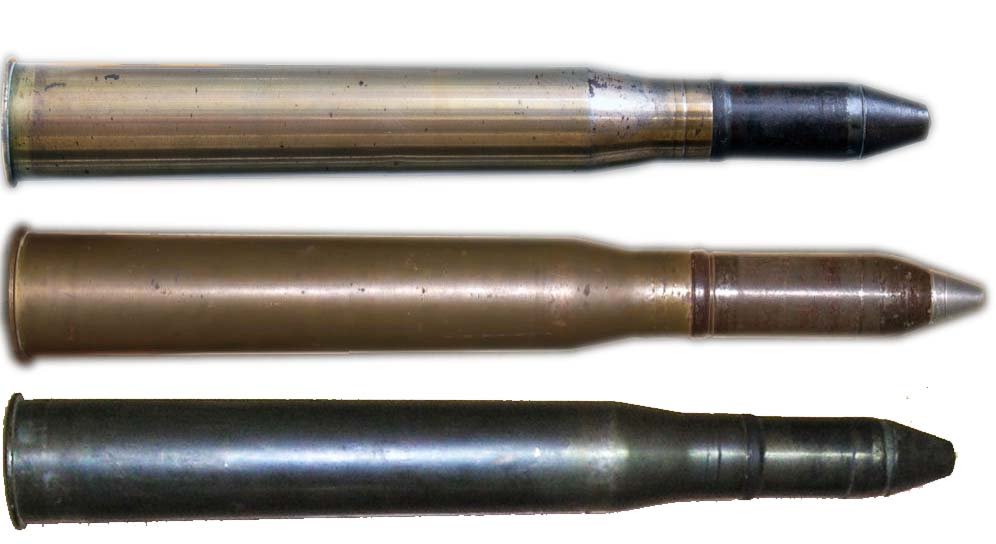
By the end of 1944, the 50mm BK 5 system project was definitively abandoned. Information often circulated about the BK 5 cannon being installed on the Me 262 jet fighter is erroneous; in fact, two Me 262 A-1a/U4 aircraft were equipped with the more advanced 50mm Mauser MK 214A. The BK 5 cannon could use the full range of ammunition employed by the 50mm KwK 39 tank gun with its standard 50x419R cartridge, although in practice, mainly Minengeschoss high-explosive grenades (1.52 kg, containing 340 grams of TNT) and armor-piercing rounds (2.06 kg) were utilized.
Technical Specifications
| Modification | BK 5 |
| Caliber, mm Type of automatic action Rate of fire, rounds/min Muzzle velocity, m/sec Weapon weight, kg Barrel weight Weapon length, mm Barrel length, mm Cartridge type Magazine capacity Projectile weight, g | 50 Long recoil + electropneumatic 40-45 920 (High-explosive Minengeschoss) 835 (High-explosive armor-piercing) 1180 (Armor-piercing composite Hartkernmunition) 540 245 4348 3037 50x419R 21 1520 (High-explosive Minengeschoss) 2060 (High-explosive armor-piercing) 900 (Armor-piercing composite Hartkernmunition) |
Image and diagram gallery of the BK 5 Cannon
 BK 5 |
 BK 5 |
 BK 5 |
 BK 5 |
 BK 5 |
 BK 5 |
 BK 5 |
 BK 5 |
 BK 5 |
 BK 5 |
 BK 5 |
 BK 5 |
 BK 5 |
 BK 5 |
 BK 5 |
 BK 5 |
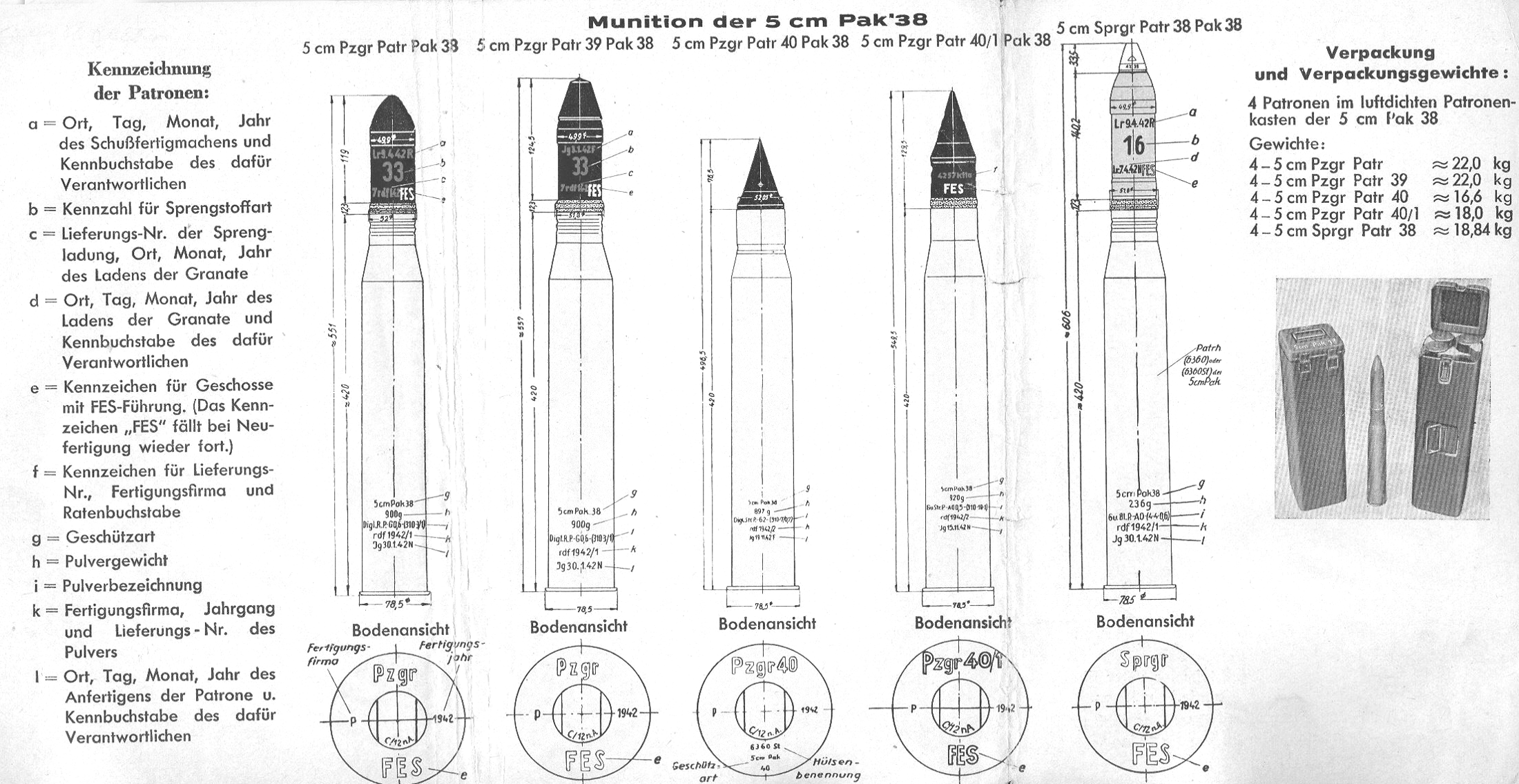 BK 5 |