
The Br.521 Bizerte long-range reconnaissance flying boat traces its lineage to the British Short S.8 “Calcutta” (1931), for which Breguet obtained a license from Short Brothers in 1931. The prototype, Br.521-01, was built according to a 1932 French Navy requirement for a long-range maritime reconnaissance flying boat. It was equipped with three Gnome-Rhône 14Kdrs radial engines, each producing 825 hp.
The aircraft first flew on September 11, 1933, in Le Havre. During initial trials, NACA cowlings were added to the originally exposed engines. Official testing began in Saint-Raphaël in January 1934 and continued until mid-September of that year. On April 1, 1935, the prototype was transferred to Cherbourg for operational trials with Squadron 1E2.
Development and Features
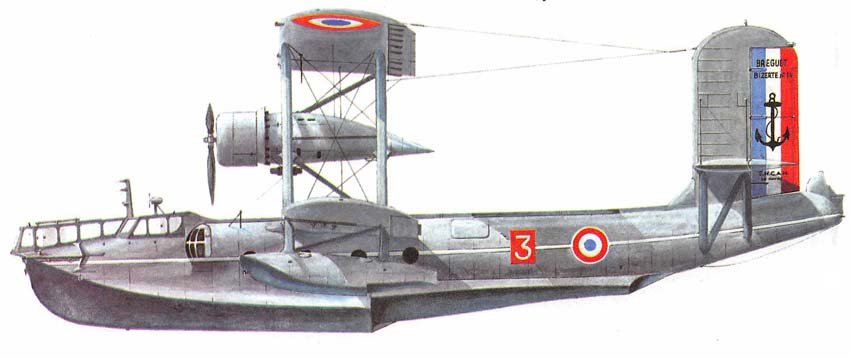
A year prior, a pre-production series of three “Bizerte” flying boats was ordered, with the first completing preliminary trials in Le Havre in October 1935. Several modifications were incorporated into the second production aircraft. These primarily included the elimination of the open bow gun position, the extension of the cockpit canopy forward, and the introduction of blister mounts on the sides of the hull immediately behind the pilot’s cockpit.
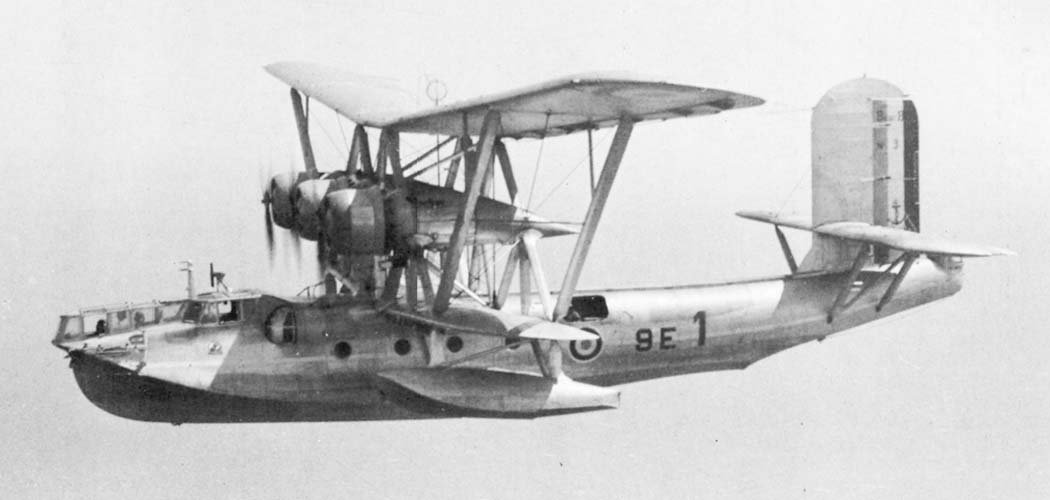
The “Bizerte” featured an all-metal construction. All fuel was stored in tanks within the lower wing, with a total capacity of 5250 liters. Its armament consisted of two firing positions on each side of the forward section of the hull (each with a 7.5-mm Darne machine gun), two more immediately behind the wings, and a fifth in the tail end of the fuselage.
Production “Bizertes” were equipped with 900 hp Gnome-Rhône 14Kirs1 radial engines. Squadrons E2 and E3 began operating the new aircraft in late 1935. Subsequently, several small orders were placed for the Br.521. The seventh “Bizerte” was delivered in March 1936, and the twelfth before the end of the year. This twelfth aircraft featured Hispano-Suiza 14AA radial engines and was designated Br.522, being unique as all other “Bizertes” used Gnome-Rhône engines.
Operational History and Production
Another series of ten flying boats was ordered on November 30, 1936, with three additional aircraft added on November 12, 1937. These modest orders ensured continuous production. On April 10, 1937, the Le Havre factory became part of the nationalized SNCAN concern, which did not affect “Bizerte” production. The 25th, 26th, 27th, and 28th aircraft were delivered in September 1938.
By September 1, 1939, Squadrons E1, E2, E3, and E5 each operated four to five Br.521s. On October 15, Squadron E9 began forming, receiving four “Bizertes.” Despite the outdated design, an order for 12 more flying boats of this type, with Gnome-Rhône 14N11 engines (900 hp), Gnome-Rhône propellers, and improved equipment including a SARAM 3.11 radio, was placed on September 12, 1939. This order was later reduced to three aircraft on December 12, with the first flying in February 1940.
From the onset of hostilities, “Bizertes” patrolled the Atlantic Ocean and the Mediterranean Sea. From August 1, 1940, Squadrons E1, E2, E3, E5, and E9 were renamed 1E, 2E, 3E, 5E, and 9E, respectively. By August 15, 20 “Bizertes” were still in service with the French naval aviation. Ten were undergoing maintenance or repair, and one was being prepared for scrapping. Of the five squadrons equipped with Br.521s, only two, 1E and 9E, remained under the Vichy government. The others were disbanded after the armistice with the Germans.
Wartime and Post-Armistice Service
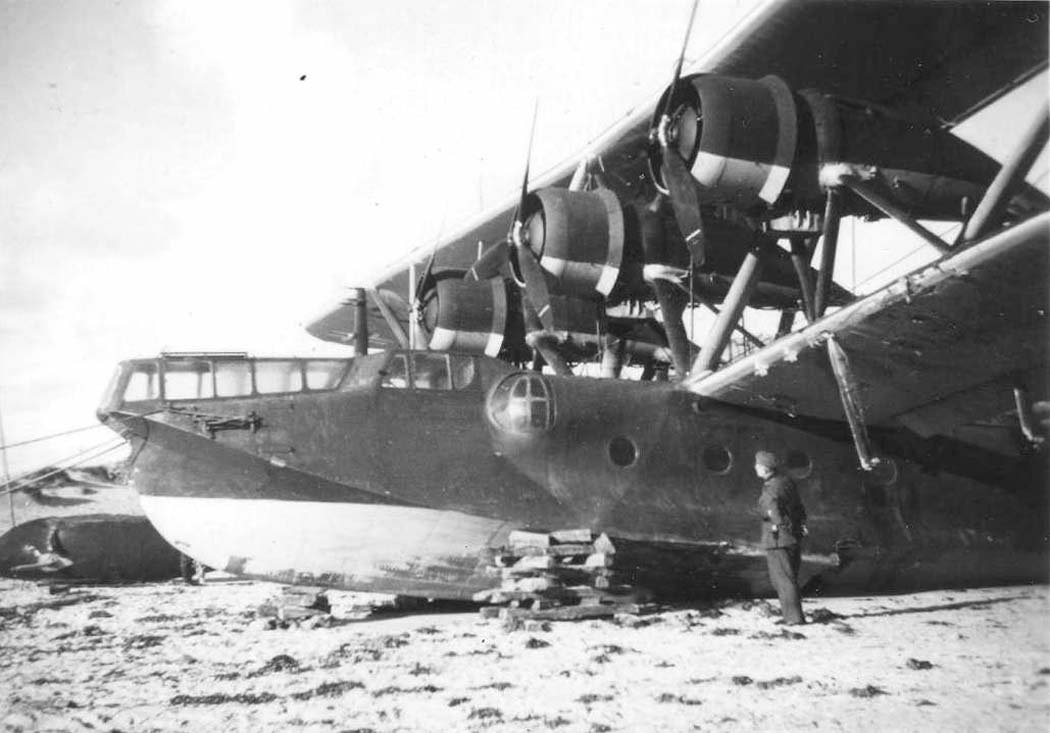
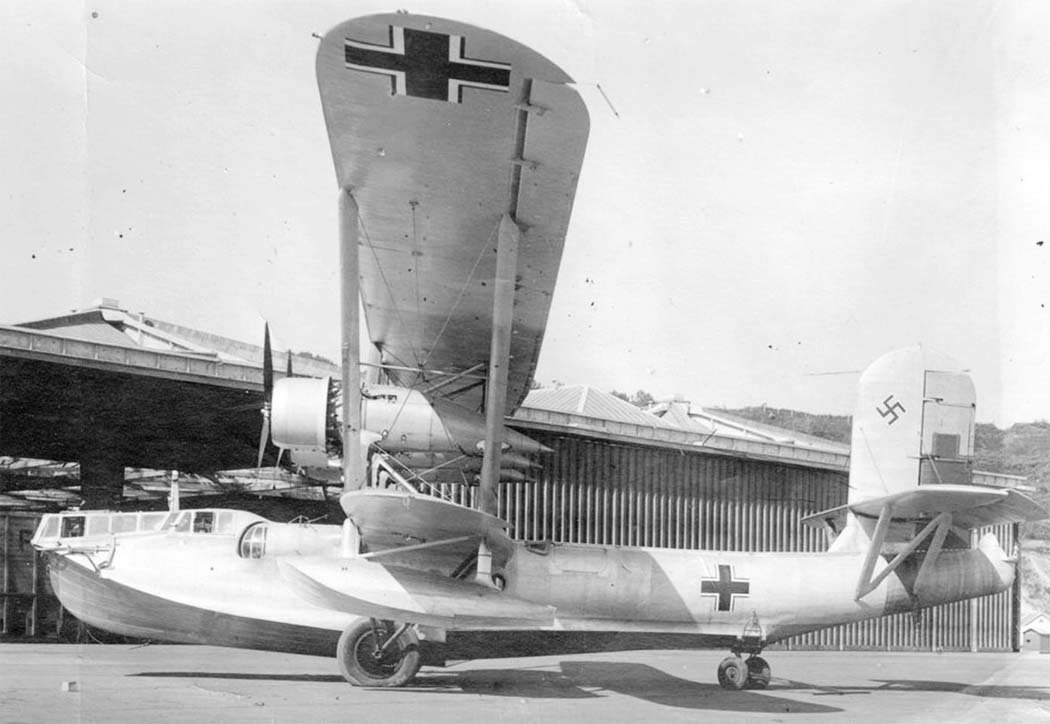
Squadron 1E was sent to Karouba, operating three “Bizertes” and three LeO257 bis floatplanes. Squadron 9E flew from Berre, with three Br.521s and three LeO H.470 flying boats. By November 8, 1942, this squadron had four “Bizertes.” When the Wehrmacht invaded the previously unoccupied part of France, the Germans quickly requisitioned all aircraft of 9E, along with four Br.521s found in storage. These flying boats were integrated into the Luftwaffe, conducting rescue flights from Lorient and Saint-Mandrier.
Canadian forces captured a Br.521 from the Germans in August 1944 and handed it over to the French. After repair, it rejoined French naval aviation in October and was briefly used as a transport aircraft for routes between North Africa and metropolitan France (Flotilla 9FTY). The aircraft was scrapped in May 1946 following an accident.
Technical Specifications
| Modification | Br.521 |
| Wingspan, m | 35.15 |
| Length, m | 20.50 |
| Height, m | 7.45 |
| Wing area, m2 | 162.60 |
| Empty weight | 9470 |
| Normal takeoff weight | 16600 |
| Engine type | 3 Piston engines Gnome-Rhône 14Kirs or 14N-11 |
| Power, hp | 3 x 900 |
| Maximum speed, km/h | 245 |
| Cruising speed, km/h | 200 |
| Practical range, km | 3000 |
| Practical ceiling, m | 6000 |
| Crew | 8 crew members |
| Armament | five 7.5-mm Darne machine guns (2 on the left side, 2 on the right side, and 1 in the tail section); up to 1600 kg of bombs on underwing pylons or 2 x 800-kg torpedoes. |
Image and diagram gallery of the Br.521 Bizerte
 Br.521 Bizerte |
 Br.521 Bizerte |
 Br.521 Bizerte |
 Br.521 Bizerte |
 Br.521 Bizerte |
 Br.521 Bizerte |
 Br.521 Bizerte |
 Br.521 Bizerte |
 Br.521 Bizerte |
 Br.521 Bizerte |
 Br.521 Bizerte |
 Br.521 Bizerte |
 Br.521 Bizerte |
 Br.521 Bizerte |
 Br.521 Bizerte |
 Br.521 Bizerte |
 Br.521 Bizerte |
 Br.521 Bizerte |
 Br.521 Bizerte |
 Br.521 Bizerte |
 Br.521 Bizerte |
 Br.521 Bizerte |
 Br.521 Bizerte |
 Br.521 Bizerte |
 Br.521 Bizerte |
 Br.521 Bizerte |
 Br.521 Bizerte |
 Br.521 Bizerte |
 Br.521 Bizerte |