
The “Breeze” administrative aircraft was designed in 1994 for long-range transport of administrative personnel, providing a high level of comfort. The project author was V. F. Borodin.
This aircraft is a cantilever, twin-engine, low-wing monoplane. The twin-engine configuration was chosen to meet elevated flight safety requirements. For the same reason, a low-set wing was selected. In addition to meeting safety requirements during a forced landing, a low-wing design, compared to a high-wing, allows for reduced aircraft drag due to the relative decrease in fuselage midsection.
Design and General Features
The fuselage structure is a semi-monocoque with a stressed skin. The non-pressurized nose section housed the nose landing gear bay, an instrument compartment containing the main flight-navigation and electrical-radio equipment, and two luggage compartments, each with a volume of 0.2 m³.
The pilot’s cockpit and the passenger cabin are located in a pressurized zone and are separated by a bulkhead. The cockpit provides two workstations for pilots. Entry is through the passenger cabin.
The wing is straight, trapezoidal, and has a high aspect ratio. Its central part is widened to ensure sufficient torsional rigidity of the center section for cantilever engine mounting. The wing structure is a two-spar design, with the inter-spar section used for fuel storage. The empennage is T-shaped, high-mounted. The horizontal tail has a relatively large aspect ratio to reduce losses due to longitudinal aircraft trimming.
Interior Comfort and Amenities
The dimensions of the passenger cabin allow six passengers to be seated comfortably. Seats are arranged in pairs in three rows, with the second row facing the third. A fold-down table located between these rows allows administrative personnel to work during the flight. If necessary, two opposing seats can be transformed into a 2-meter long sleeping berth.
In the forward part of the cabin, there is a buffet with a volume of 0.18 m³. The aft part of the cabin contains a wardrobe of 0.52 m³ and a lavatory of 1.1 m³. Entry to the aircraft is via a 1.3×0.7 m hatch in the aft fuselage, which is closed by a door-ramp.
Powerplant and Performance Highlights
The powerplant consists of two Pratt and Whitney PT6A-41 turboprop engines, each with a takeoff power of 850 hp. The engines are located on the center wing and are extended forward on a relatively long pylon. This significant forward extension of the engines is widely practiced on business-class aircraft and offers several advantages.
These advantages include moving the propeller rotation plane outside the cabin and cockpit areas, reducing cabin noise by distancing the noise source, providing space for the main landing gear (which, in nose-wheel schemes, usually retracts into the inter-spar wing space, avoiding cutting through wing box structural flows), compensating for torque moments arising in the wing section, and ensuring the maximum possible relative flap span. The cross-section of the engine cowlings is designed to minimize interference drag between the wing and the engine nacelles. The rear part of the cowlings is used as a header tank. The engines are fitted with three-blade variable-pitch propellers.
The aircraft’s landing gear is a tricycle type with a nose wheel, and all struts are retractable in flight. A high level of comfort is ensured by a spacious cabin layout, good visibility from the passenger cabin, high cruising altitudes, the cabin’s location at the aircraft’s center of gravity, the engines being placed outside the cabin zone, increased weight limits for cabin equipment, and a high level of aircraft outfitting allowing it to fly in all weather conditions. The cabin’s dimensions also allow for the transport of up to 10 passengers with a denser seating arrangement.
Technical Specifications
| Modification | Briz |
| Wingspan, m | 17.40 |
| Aircraft length, m | 12.60 |
| Aircraft height, m | 4.62 |
| Engine type | 2 Turboprop Pratt and Whitney РТ6А-41 |
| Power, hp | 2 x 850 |
| Maximum speed, km/h | 450 |
| Cruising speed, km/h | 415 |
| Practical range, km | 2850 |
| Crew | 2 |
| Payload | 6-10 passengers |
Image and diagram gallery of the Breeze Administrative Aircraft
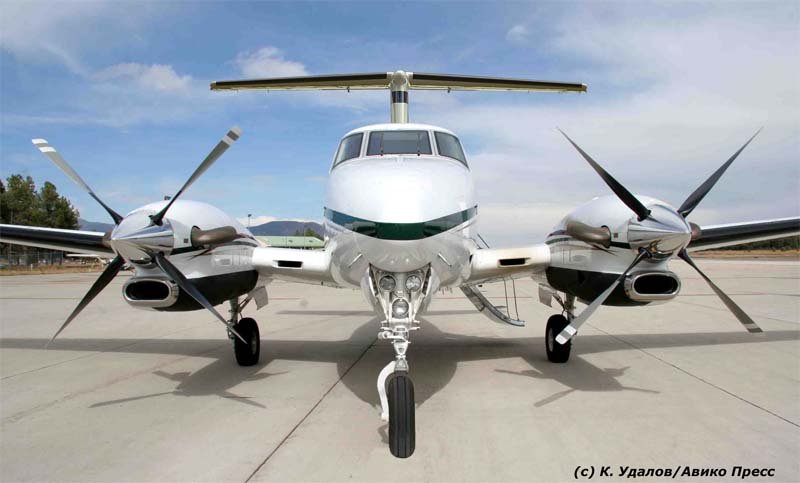 Briz. Photograph: K. Udalov / Aviko Press |
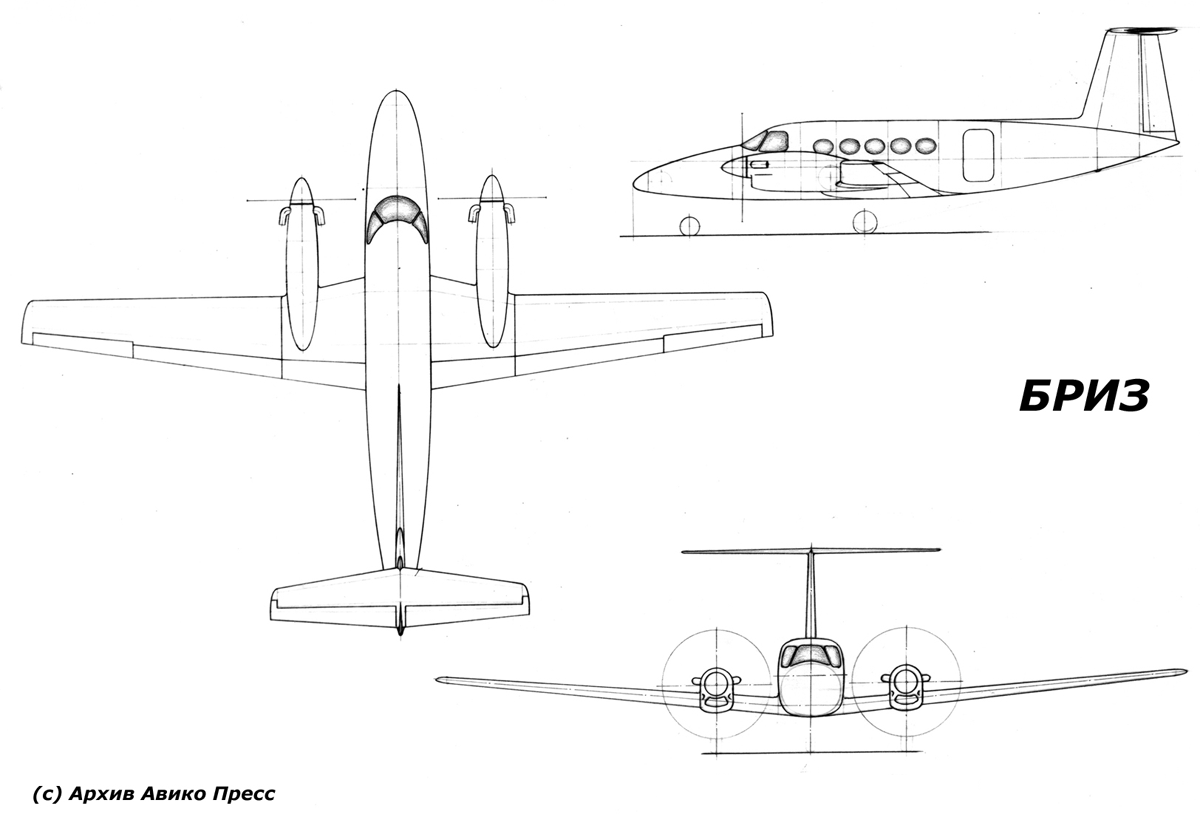 Briz. Photograph: Aviko Press |
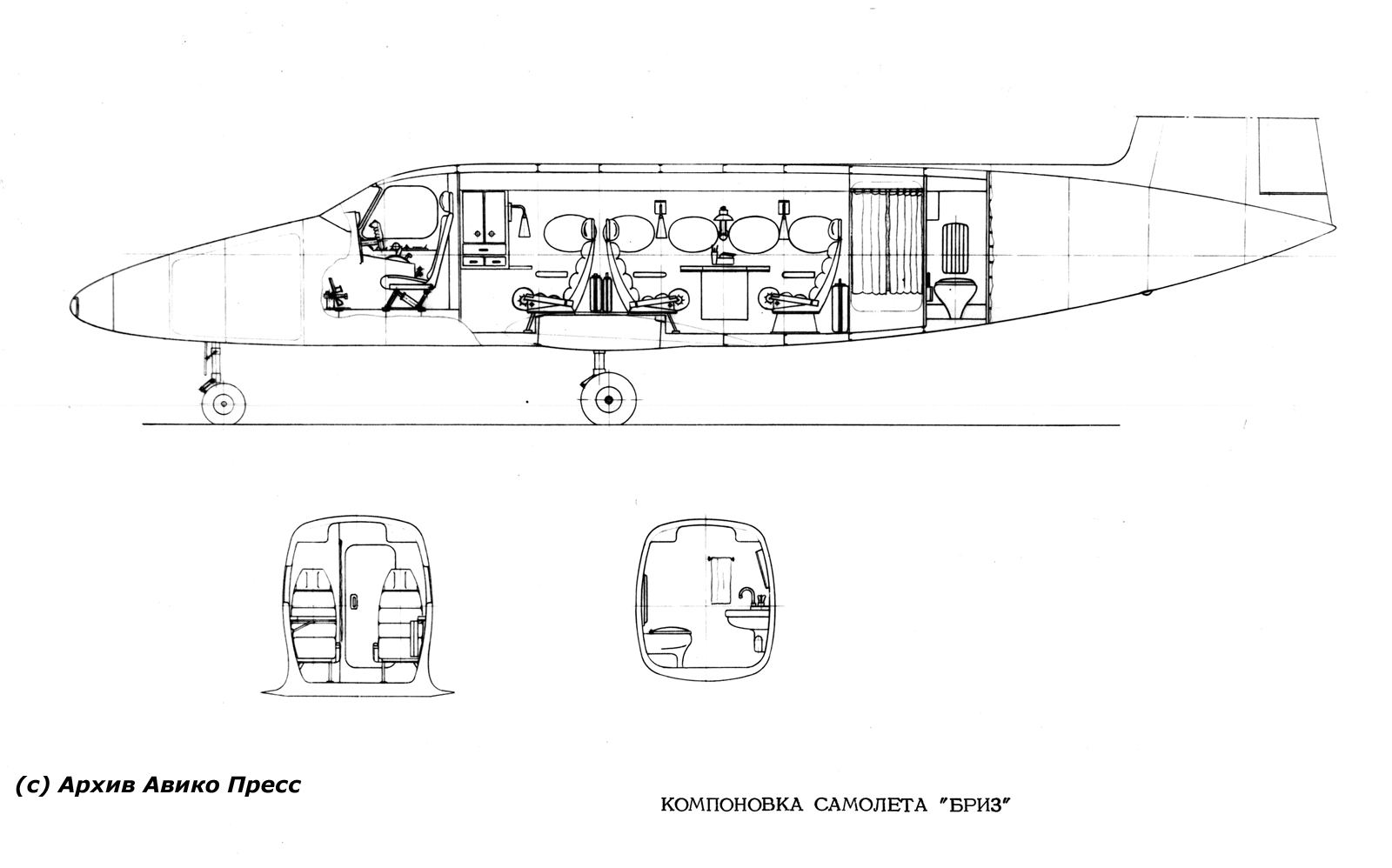 Briz. Photograph: Aviko Press |