
Although the initial stage of World War II was overshadowed by the significant successes of German Junkers Ju 87 dive bombers, it should be noted that the concept of pinpoint dive attacks was not a German invention. In the late 1920s, the United States Army Air Corps (USAAC) and US Navy aviation began to develop it, and in the early 1930s, the leadership of the re-emerging German Air Force adopted it.
US Navy strategists fully recognized the importance of effective dive bombers in combat with enemy ships such as battleships and aircraft carriers. They introduced the “B” (Bomber) category into the designation system for carrier-based aircraft. However, they considered the only effective bomber to be a dive bomber capable of striking on a very steep downward trajectory.
As early as 1934, the US Navy’s Bureau of Aeronautics, responsible for the development and acquisition of aircraft, technical support for naval aviation, and related systems, issued a specification for a modern “B” category aircraft. This was intended to replace the still-used, but conceptually obsolete, biplane aircraft. The Bureau of Aeronautics sent the requirements for the new aircraft to trusted aircraft manufacturing companies for their evaluation and an offer to submit prototypes for comparative testing.
The Birth of the Dive Bomber Concept
American aircraft manufacturing companies developed and produced three biplane prototypes (Curtiss XSBC-3, Great Lakes XB2G-1, and Grumman XSBF-1), two of which were based on carrier-based scout aircraft of the “S” (Scout) category. In addition to these three biplanes, which were eventually rejected by time, the Bureau of Aeronautics was also presented with three modern all-metal cantilever monoplanes featuring enclosed crew cockpits, wings equipped with flaps, and even retractable main landing gear.
These aircraft were the Brewster XSBA-1, Northrop XBT-1, and Vought XSB2U-1. All of them entered serial production and were adopted into service, but only the Brewster company’s aircraft remained in small numbers and was used as a trainer. The Northrop BT-1 (the letter “T” in the US Navy classification system indicated that the aircraft was developed by Northrop), was destined to have the greatest significance for the future of US Navy carrier aviation.
Its development began in 1934 by the renowned designers Jack Northrop and Ed Heinemann. As a basis, the designers took the experimental Northrop XFT-1 monoplane fighter, developed in 1933. The design incorporated a monocoque fuselage and a three-spar wing. The fuselage, whose dimensions were increased, housed the crew cockpit under a long sliding canopy with a robust, multi-section frame.
Design and Technical Specifications
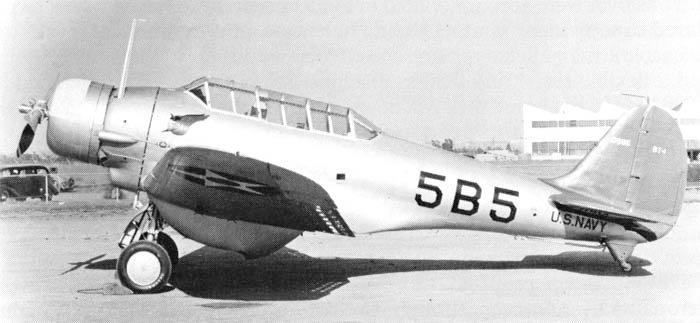
The pilot and gunner, whose cockpit was equipped with a simplified instrument panel and control stick, were seated in tandem. In the front part of the fuselage (on the right side) in front of the windscreen, a synchronized 12.7 mm machine gun was installed; the gunner fired from a movable 7.62 mm machine gun. The main combat load (a 1000-pound [454 kg] bomb) was suspended under the fuselage and released using a Mk.35 tilting fork, which moved the bomb clear of the propeller arc.
Two 100-pound (45 kg) bombs were suspended under the wing panels, outside the propeller arc, on Mk.41 racks. As a power plant, the designers selected a Pratt & Whitney R-1535-04 radial, two-row, fourteen-cylinder air-cooled engine, developing 700 hp (515 kW) and driving a two-bladed variable-pitch propeller.
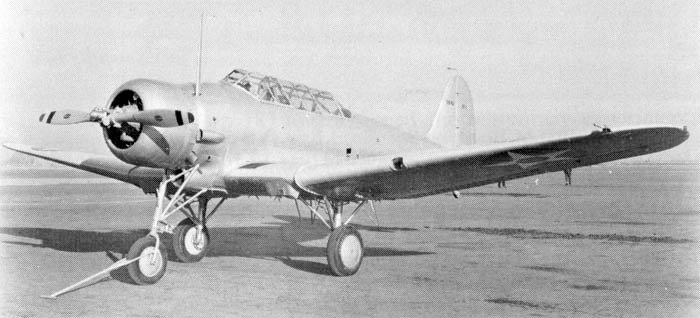
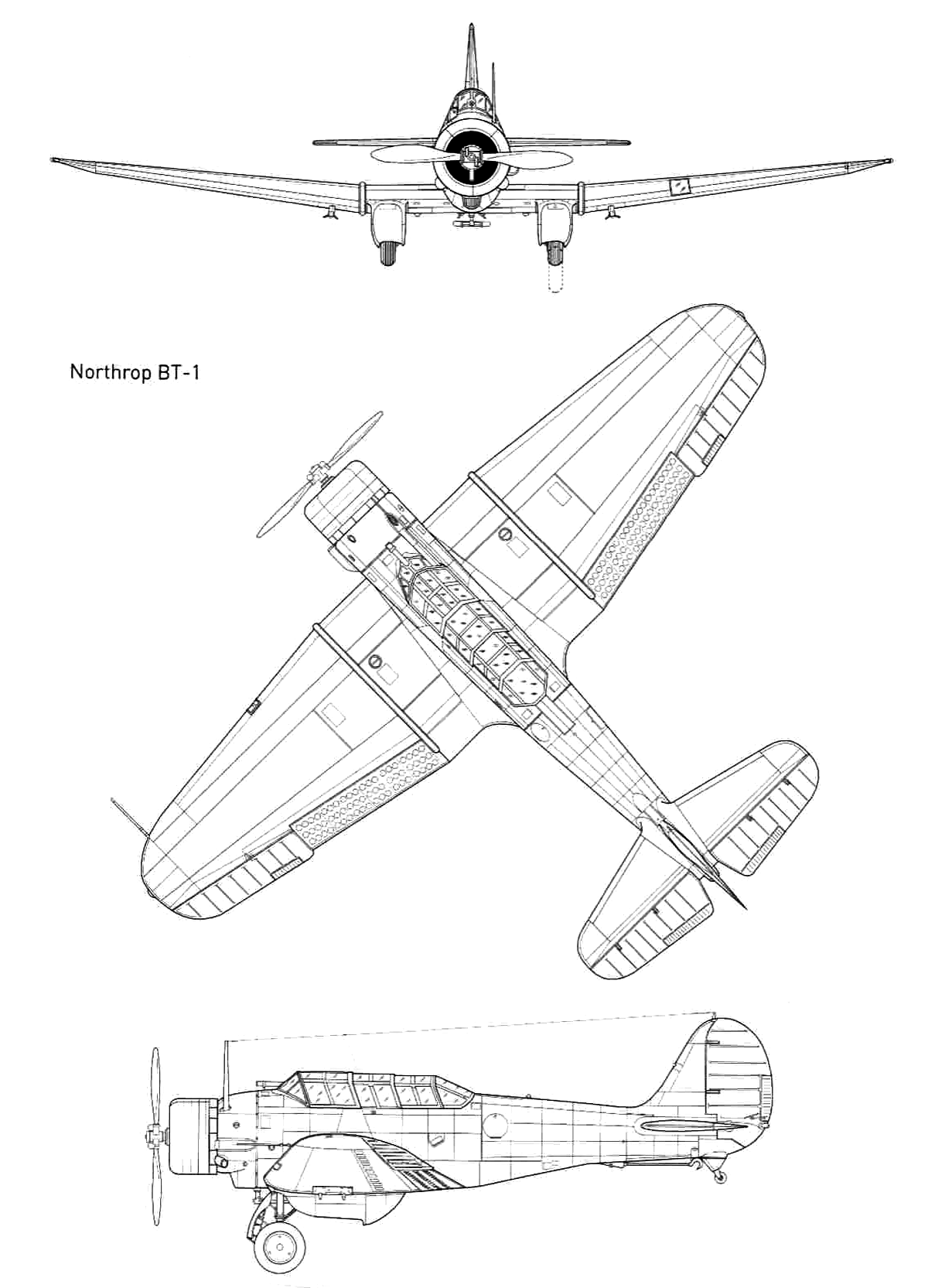
The main landing gear struts were semi-retractable: they retracted backward into large fairings located under the wing’s center section; in flight, the wheels protruded from the fairings. The aircraft’s wing consisted of three parts: a center section and two outer panels, and was equipped with ailerons and flaps. The flaps, located on the center section and wing panels, were split-type: during a dive, only their lower part was deflected.
The Bureau of Aeronautics’ leadership liked the project, and in November 1934, Northrop was ordered to manufacture the first prototype, which received the BuNo 9745 serial number from the Bureau. Construction of the aircraft at the El Segundo factory was completed in the summer of 1935, and on August 12, the machine took to the air. After testing, during which aircraft buffeting and tail flutter were discovered, the lower parts of the outer wing panel flaps were perforated with rows of circular holes.
On production aircraft, the center section flaps also received similar holes. Thanks to these holes, not only was the buffeting problem solved, but with a sufficiently large flap deflection angle, it was possible to damp diving speed (and protect the aircraft from sudden changes in its position) without excessively reducing wing lift.
Service History and Legacy
Further prototype tests took place at NAS Anacostia, and after their successful completion in September 1936, the Bureau of Aeronautics issued Northrop an order for the production of 54 BT-1 aircraft. The production machines differed from the prototype with 825 hp (606 kW) R-1535-94 engines, new radios, and other modern equipment. The first production BT-1 flew for the first time in September 1937, and the last, the 52nd, was delivered in August 1938.
The two remaining company aircraft were converted into an improved XBT-2 prototype and an experimental BT-1S aircraft. The Bureau of Aeronautics assigned military numbers from 0590 to 0626 and from 0628 to 0643 to the production BT-1 dive bombers; the XBT-2 prototype had number 0627, and the experimental BT-1S aircraft had 0643. Production BT-1 dive bombers most often flew as part of squadrons VB-5 (USS Yorktown) and VB-6 (USS Enterprise).
Meanwhile, in 1937—during the production of BT-1 dive bombers—Northrop, El Segundo, became a division of the Douglas corporation. Douglas’s management not only continued production but also engaged Ed Heinemann and the XBT-2 prototype in promising new work. Jack Northrop continued his activities at his second enterprise in Inglewood, while Ed Heinemann continued work on a new project based on the XBT-2, which received the designation XSBD at Douglas Aircraft.
After installing a nine-cylinder, 1200 hp (895 kW) Wright R-1820-60 Cyclone engine, introducing a full retraction mechanism for the main landing gear, and changing the shape of the nose section of the fuselage, the vertical tail, and the cockpit canopy, the aircraft successfully underwent testing, was accepted into service, and under the designation Dauntless, performed excellently in World War II.
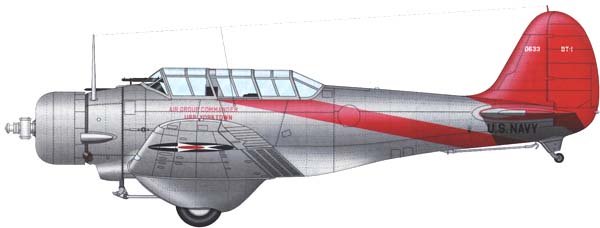
It should be noted that with the BT-1 dive bombers, the era of brightly colored aircraft in US Navy carrier aviation came to an end: in 1940, its combat aircraft were painted light gray. Shortly before 1941, the rapidly obsolete BT-1 dive bombers were relegated to the role of training aircraft. In December 1941—the month when the United States officially entered World War II—the US Navy had fewer than forty flight-worthy BT-1s in service.
Individual examples continued to be operated by combat units, but most were used as trainers at NAS Miami and NAS San Diego. Throughout 1942, the number of flight-worthy machines continuously decreased, and a number of them became non-flying airframes for mechanic training.
Technical Specifications
| Modification | BT-1 |
| Wingspan, m | 12.65 |
| Length, m | 9.65 |
| Height, m | 3.61 |
| Wing area, m2 | 29.63 |
| Empty weight, kg | 2029 |
| Maximum takeoff weight, kg | 3209 |
| Engine type | 1 Piston engine Pratt & Whitney R-1535-94 Twin Wasp Jr. |
| Power, hp | 1 x 825 |
| Maximum speed, km/h | 357 |
| Cruising speed, km/h | 309 |
| Practical range, km | 1851 |
| Combat range, km | 885 |
| Maximum rate of climb, m/min | 387 |
| Service ceiling, m | 7710 |
| Crew, crew members | 2 |
| Armament | one forward-firing fixed 12.7-mm machine gun, one defensive movable 7.62-mm machine gun; bomb load – 454 kg |
Image and diagram gallery of the Northrop BT-1
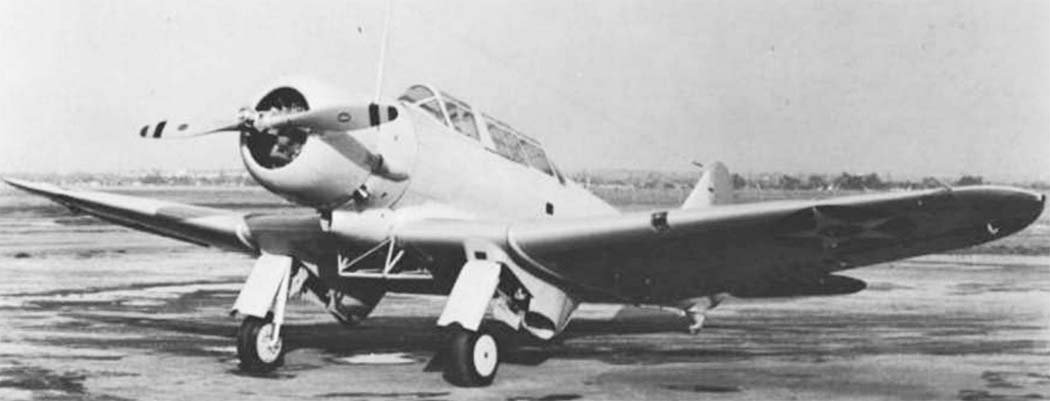 BT-1 |
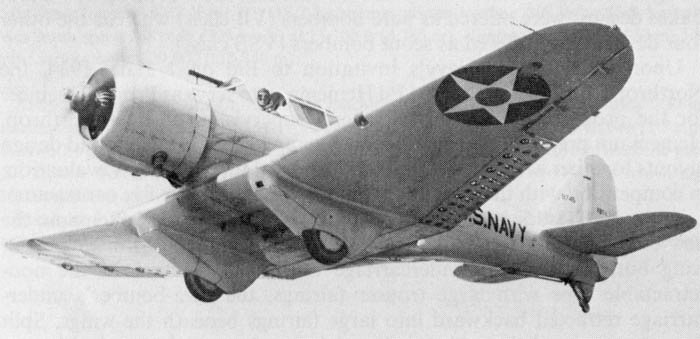 BT-1 |
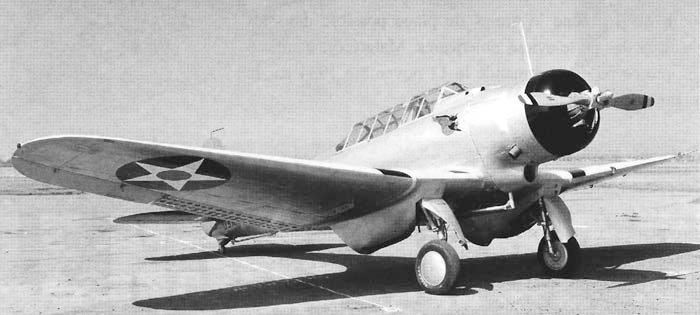 BT-1 |
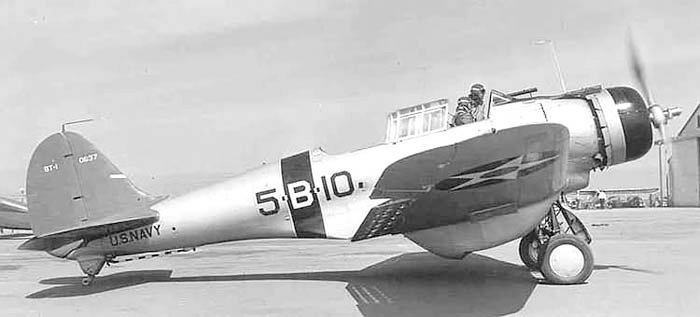 BT-1 |
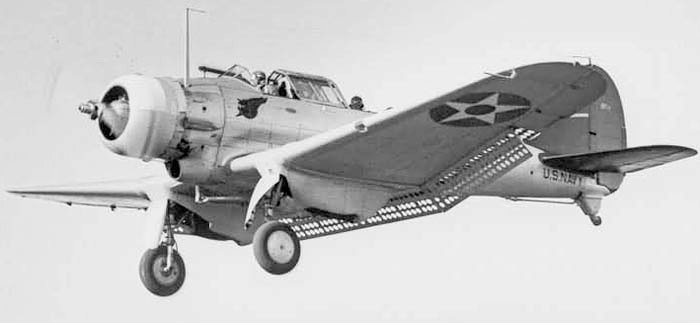 BT-1 |
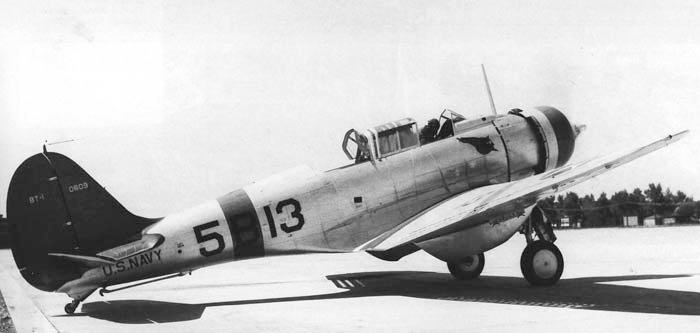 BT-1 |
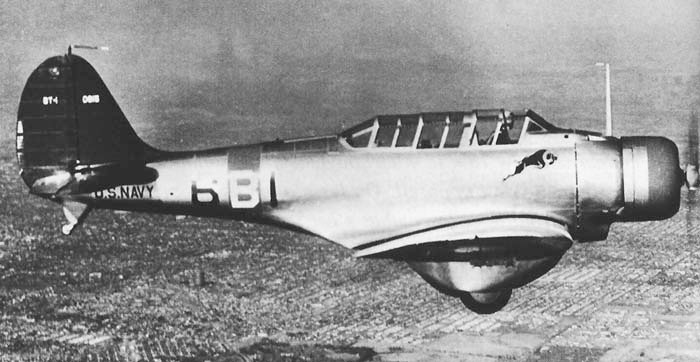 BT-1 |
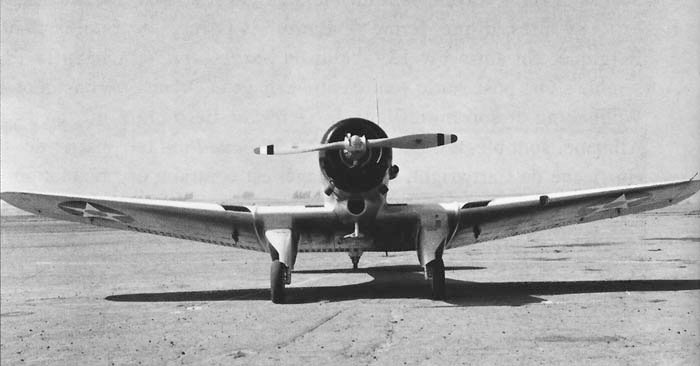 BT-1 |
 BT-1 |
 BT-1 |
 BT-1 |
 BT-1 |
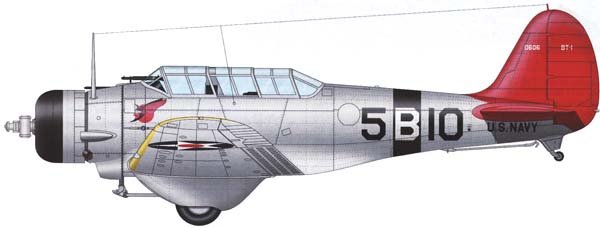 BT-1 |
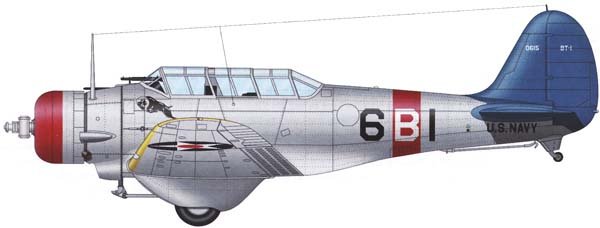 BT-1 |
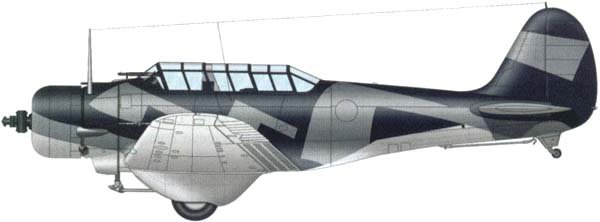 BT-1 |