
In the spring of 1940, the RLM’s Technical Department proposed to Blohm & Voss the possibility of creating an “Ersatz BV.138” for transport and long-range maritime reconnaissance tasks. This “Ersatz” (replacement) was intended to supersede the BV.138, which had just entered service with the Luftwaffe. Vogt’s designers, joined by Hermann Pohlmann from Junkers, put forward eight flying boat projects of various sizes meeting RLM requirements.
Meanwhile, the technical department raised the bar of requirements. The hull contours of flying boats had remained unchanged for 20 years, with a traditional length-to-beam ratio (L/B) of 6. However, tests in the DFS basin showed that the BV.222 achieved hull lines with an L/B of 8.4, a significant step forward that was expected to reduce aerodynamic and hydrodynamic drag and improve its seaworthiness. Initial tests of the BV.222-V1 in September 1940 resolved all doubts regarding the elongated hull, and DFS tests indicated that the L/B could be increased even further. As a result, the Technical Department revised its requirements for the “Ersatz BV.138.”
Early Development and Design Evolution
In November 1940, Blohm & Voss was proposed to start work on a new project, incorporating the latest research, to be powered by four Jumo-223 engines with a total output of 10,000 hp. The engine was a 24-cylinder assembly of four Jumo-205 diesels, with a single reduction gear coupling the four crankshafts to one propeller. The preliminary design, proposed in mid-February 1941, envisioned a flying boat with a 53 m wingspan and a 39.7 m fuselage length.
Normal takeoff weight was estimated at 56 t, and maximum at 74.5 t. Wing loading was 300 kg/m² and 400 kg/m² respectively, with a wing area of 180 sqm. The L/B ratio was 10. It is interesting to compare these figures with the Martin XPBM-2M-1 “Model 170 Mars” flying boat, then being developed in Baltimore. The American aircraft had an L/B of 6.3, a wing area of 331 sqm with a 61 m span, and a loading of 190 kg/sqm at a weight of 65.3 t. The planned armament included 12 x 20mm MG-151 cannons, mainly in remote-controlled turrets.
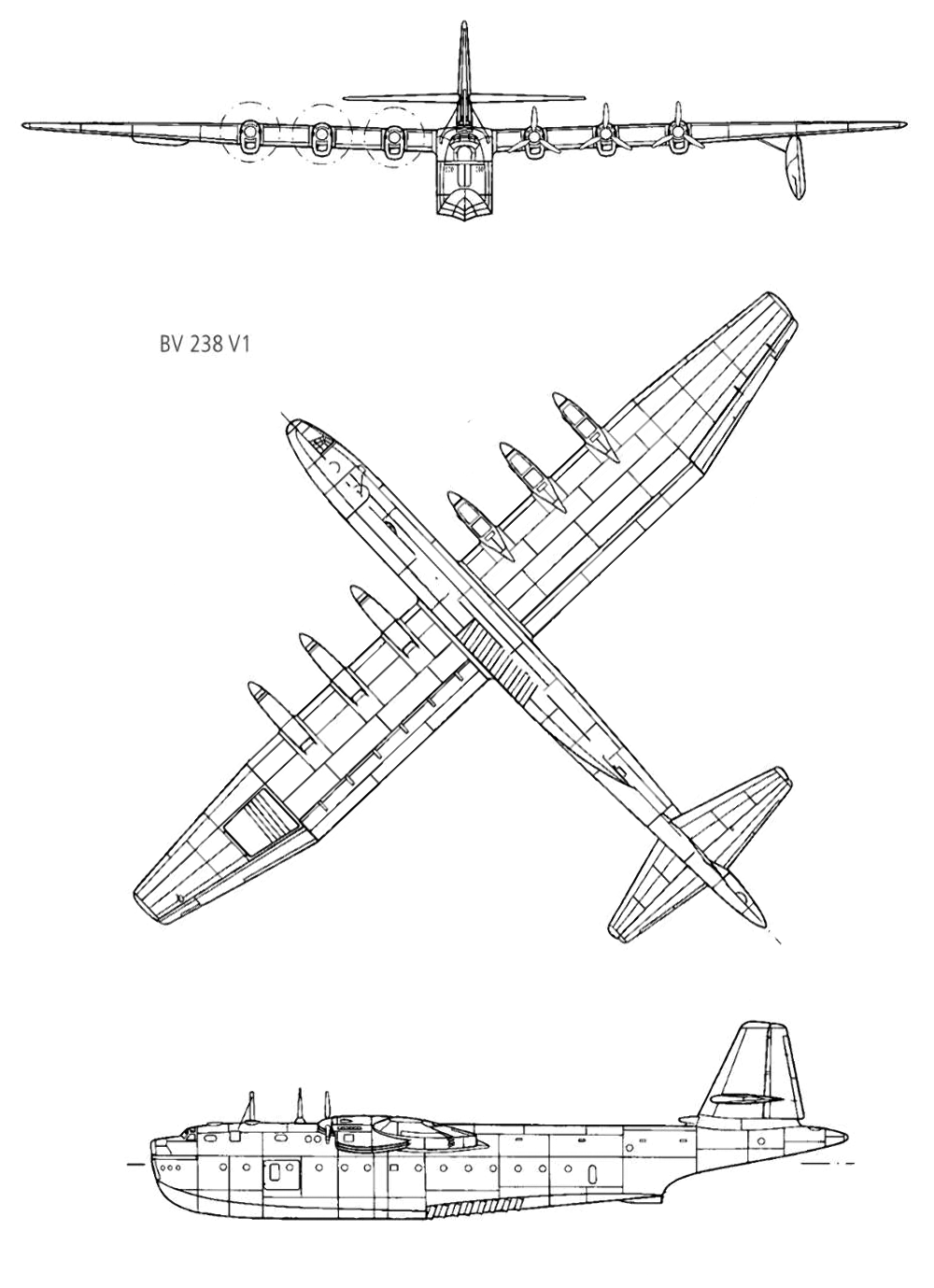
Maximum speed was estimated at 342 km/h at sea level and 396 km/h at 6000 m altitude. Maximum range was 4800 km at 378 km/h with normal weight and 9300 km at 323 km/h with maximum takeoff weight. Blohm & Voss was asked to begin detailed design work on the project, which the RLM designated BV.238. By July 1941, it became clear that the Jumo-223 would not materialize, and due to the lack of engines of similar power, the company’s designers had no choice but to urgently redesign the project for six engines. These changes required increased dimensions. The wingspan became 57.8 m, and the area 336 sqm. The aircraft’s length increased to 45.5 m. Additionally, the requirement to use the BV.238 as a bomber was added.
Armament and Land Variant (BV.250)
In the autumn of 1941, Blohm & Voss received an order from the RLM for four prototypes, including three A-series aircraft with liquid-cooled DB-603 engines and one B-series with BMW-801 radial engines. Weser Flugzeugbau was also involved in the work. Some components were designed by the French firm Louis Breguet and the Czechoslovakian Flugtechnische Fertigungsgemeinschaft Prag, which received an order to manufacture a 1:3.75 scale wooden flying model of the boat.
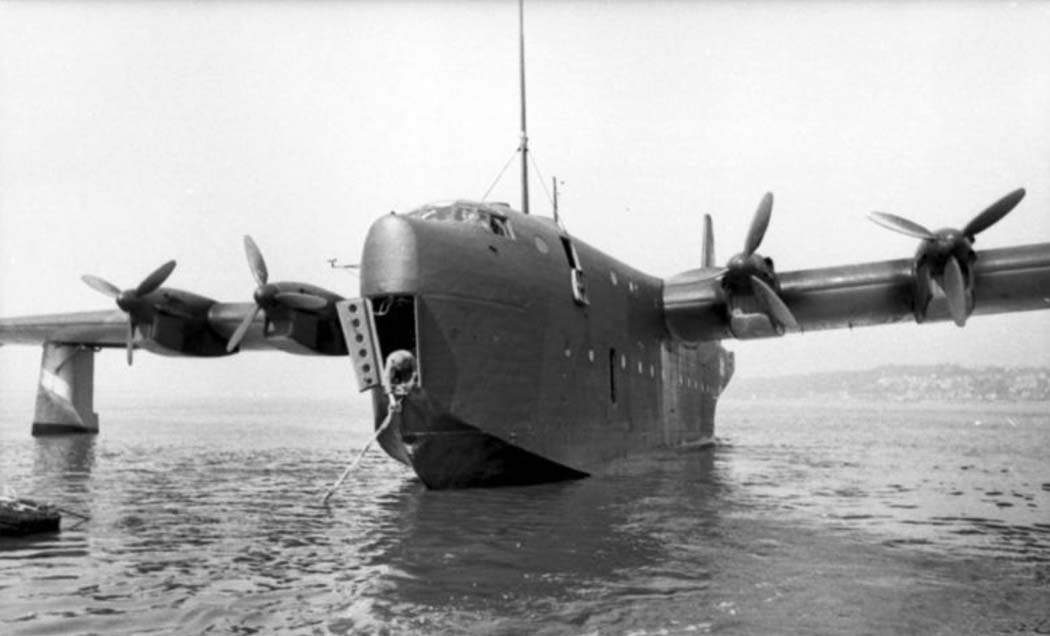
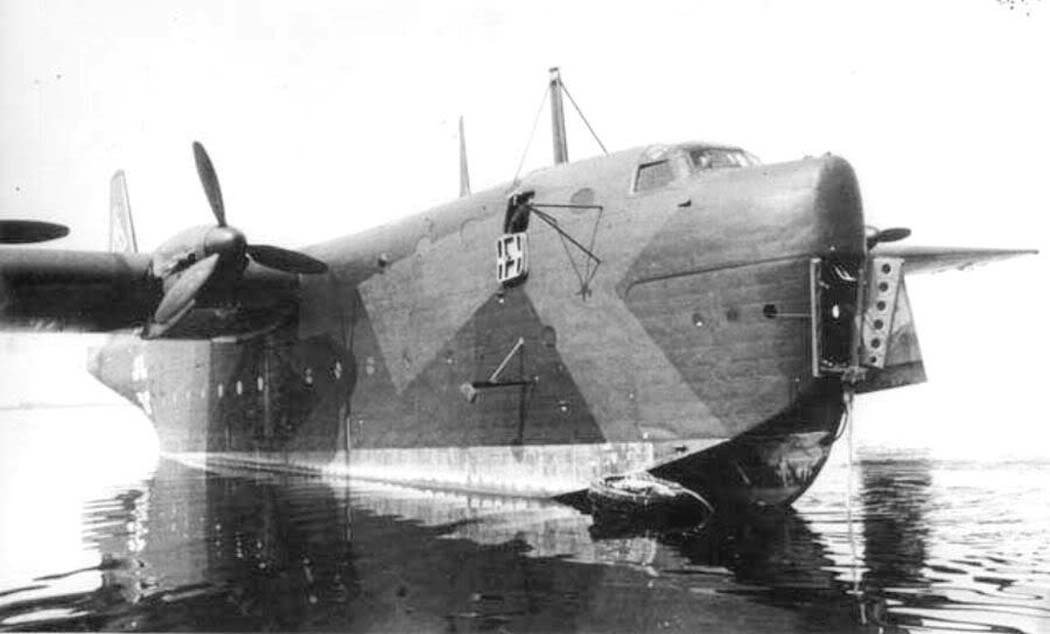
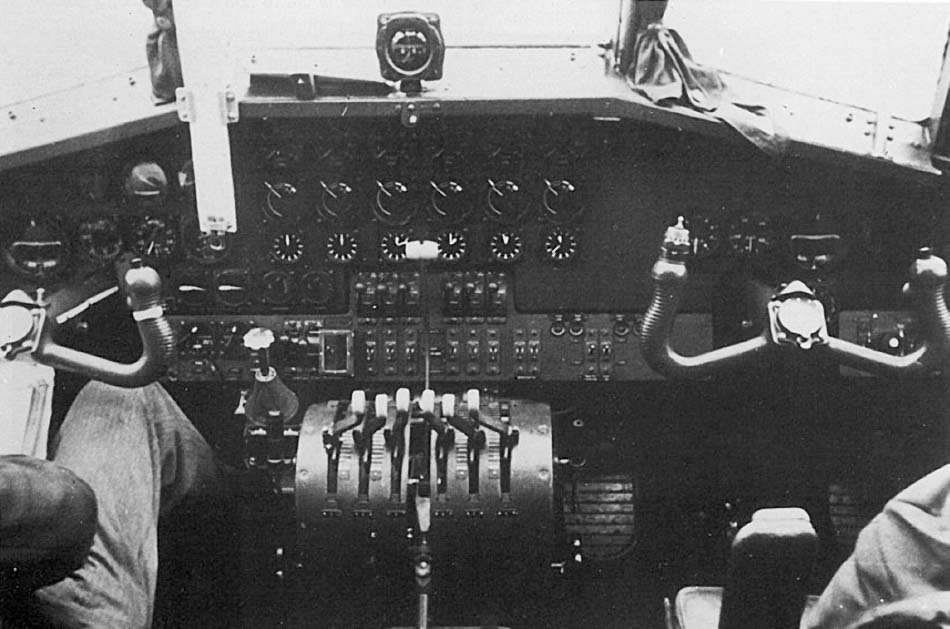
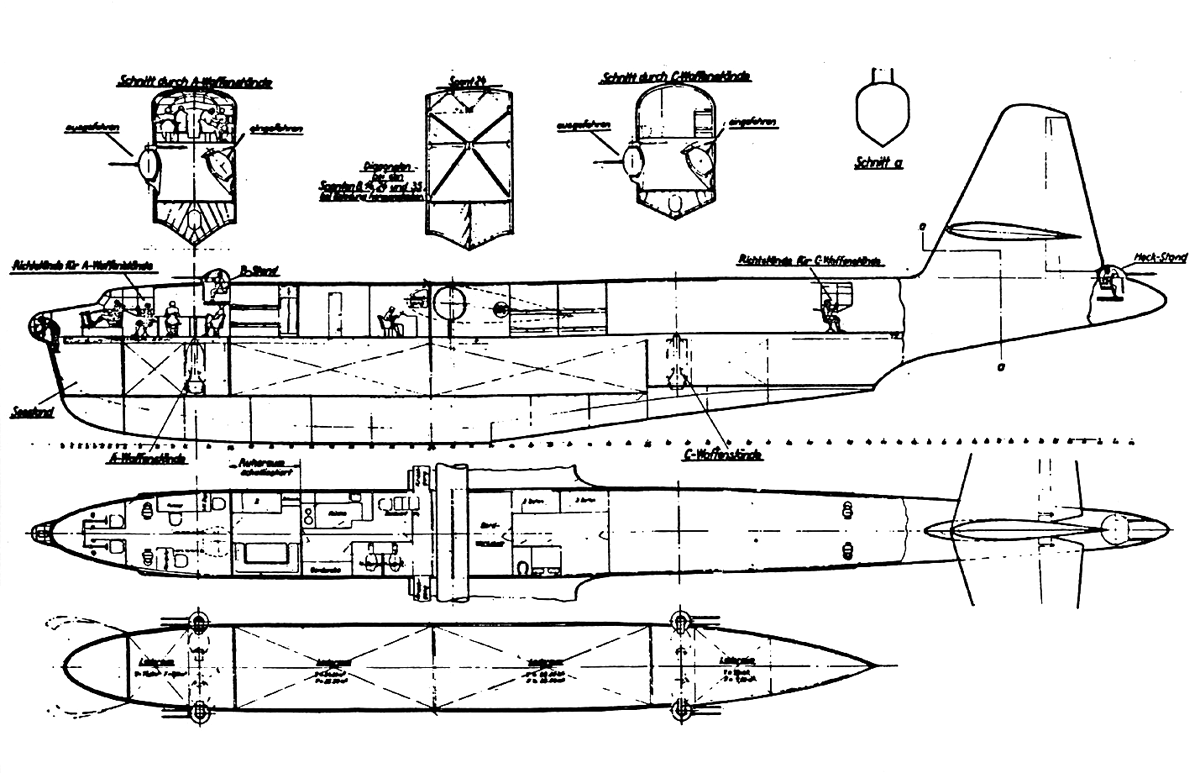
The BV.238 featured the traditional Blohm & Voss tubular main spar, running along 30% of the wing chord. The entire trailing edge of the center wing section was occupied by flaps. Hatches were made in the leading edge of the spar for in-flight access to the engines. The all-metal hull, with corrosion-resistant alloy skin, had opening hatch doors in the nose section, allowing direct loading and unloading onto the lower deck. The forward step, with a very small recess, was supplemented by eight small steps. The control system was like the BV.222’s—partially manual, partially servo-assisted.
By the end of 1941, Blohm & Voss proposed to the Technical Department a so-called land variant of the BV.238, which differed only in the replacement of the step with a bomb bay and the installation of a trolley landing gear, plus a nose dual wheel and two supporting wing-tip struts. The land version was intended to be used as a heavy transport aircraft, capable of carrying 40 t of cargo over 2000 km, and as a bomber, delivering 20 t of bombs over 7000 km and 4 t over 10000 km. As a long-range reconnaissance aircraft, it could survey most of the US Atlantic coast. In early 1942, this project received the designation BV.250. Four prototypes were assembled in parallel with their four maritime counterparts. Apart from the removal of the step, the installation of landing gear, and the bomb bay, the BV.250 did not differ from the flying boat, including its armament composition.
The defensive armament consisted of a front upper turret; two side turrets with gunner positions below them; two side turrets behind the wings with aiming positions above the mounts; and a tail turret. In April 1942, it was decided to replace the side turrets with a twin MG-131 machine gun mount or a single MG-151 cannon, and a year later, it was decided to remove the two remaining turrets. The BV.238’s armament was now planned to include a nose turret HD-151z with a pair of 20mm MG-151 cannons and 2800 rounds, two (nose and tail) HL-131f turrets with four MG-131 machine guns and 7200 rounds, a pair of MG-131s with 500 rounds per barrel in side mounts, and a pair of quad MG-131 HL-131f turrets with 3600 rounds at the center wingtips.
The wing turrets required the installation of an additional section between the center wing and the outer wing, distributing the turret load to the main spar. As a result, the wingspan increased to 60.2 m, and the area to 349 sqm. Since the spars for the first three aircraft were already completed, it was decided to use a new spar with a reinforced section for the turret, starting with the first B-series aircraft – the BV.238-V4, on which defensive armament was planned to be installed first. The removal of the tail cone with a remotely controlled turret and its replacement with an HL-131f shortened the hull length from 45.5 to 43.4 m.
Prototypes, Trials, and Program End
Meanwhile, work continued on the wooden analog FGP.227. Its readiness was delayed, and it ultimately did not influence the work on the BV.238. The analog was equipped with six 21 hp ILO-F-12/400 two-stroke air-cooled engines. Empty weight was 1250 kg, takeoff weight 1640 kg. The crew consisted of two people. Dimensions: wingspan 15.3 m; length 12 m; wing area 23.5 sqm.
The FGP.227 (BQ+UZ) was completed in early 1944 and had an auxiliary landing gear of 10 small wheels with low-pressure tires, intended for factory flight tests from a grass airfield. Since the aircraft resolutely refused to take off, it was disassembled and loaded onto a train for transport to Travemünde. The machine was damaged when French prisoners of war, carrying out the loading, decided it was some kind of secret weapon and “dropped” a wing from a height of 5 m. Repairs dragged on until September 1944, when the FGP.227 made its first flight in Travemünde. Immediately after takeoff, all six engines simultaneously stopped due to lack of fuel. As a result of the forced landing, the aircraft was damaged again. After another restoration, it performed several flights in Travemünde and was found there by the Allies after the war. It was sent for research to Felixstowe, where it was later scrapped.
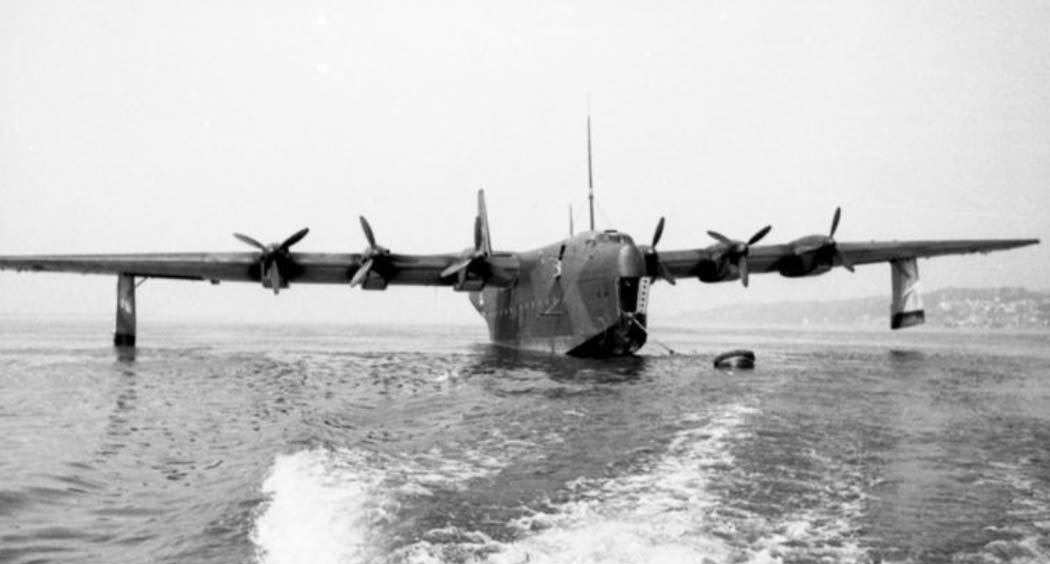
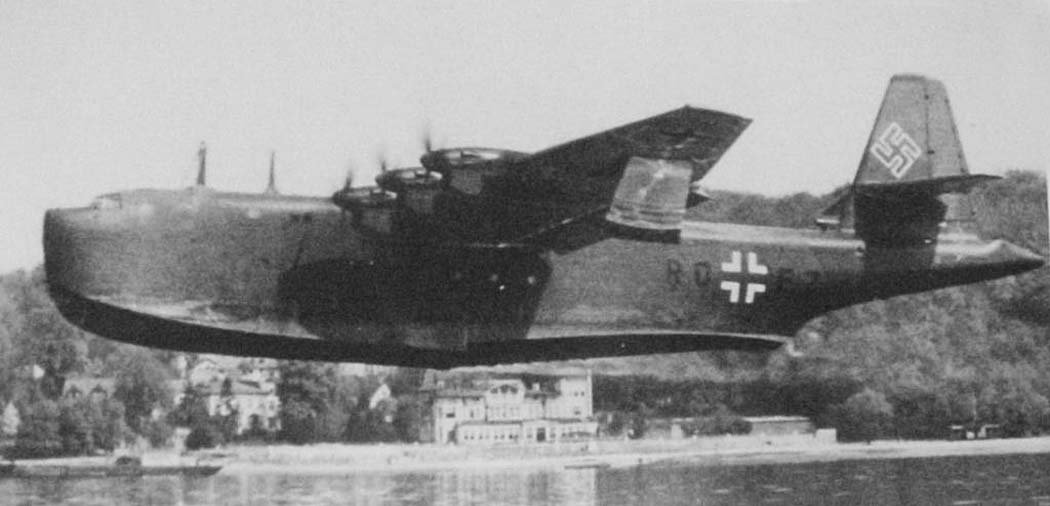
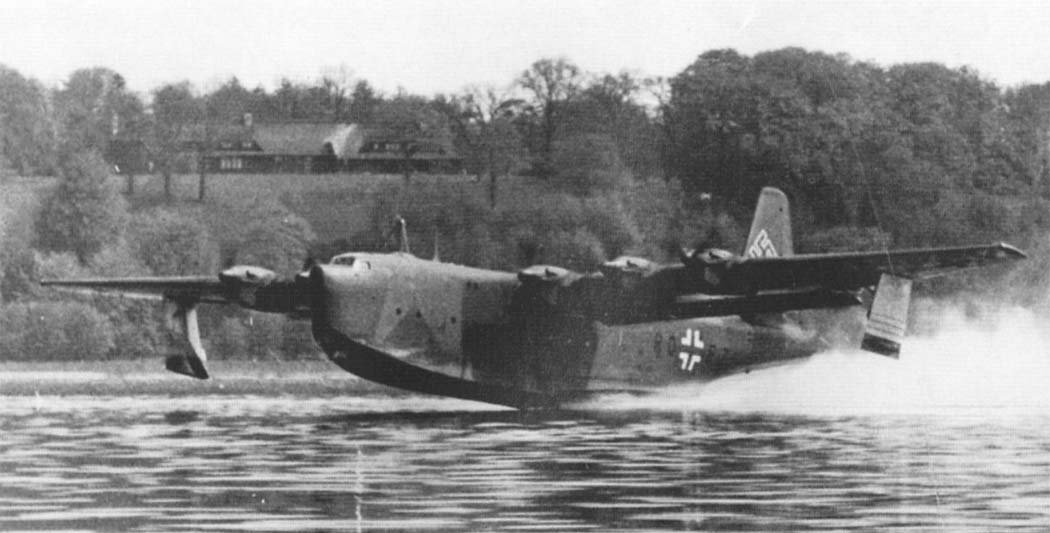
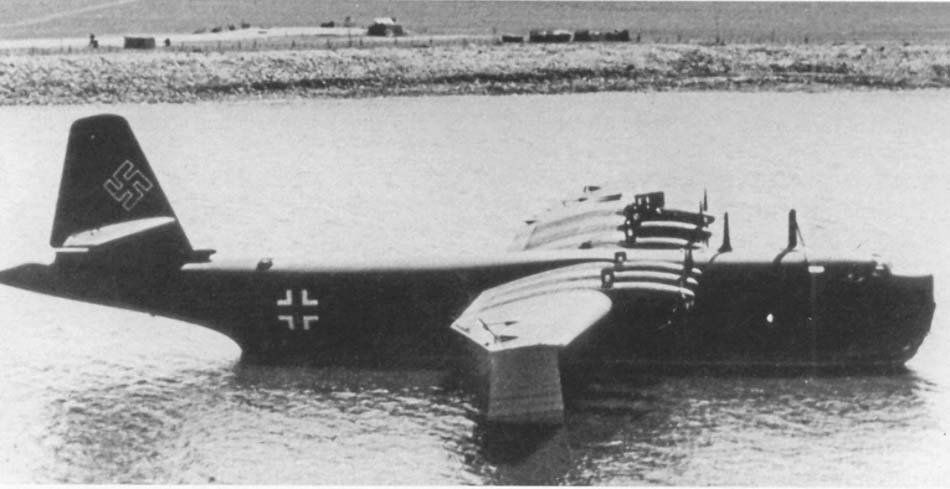
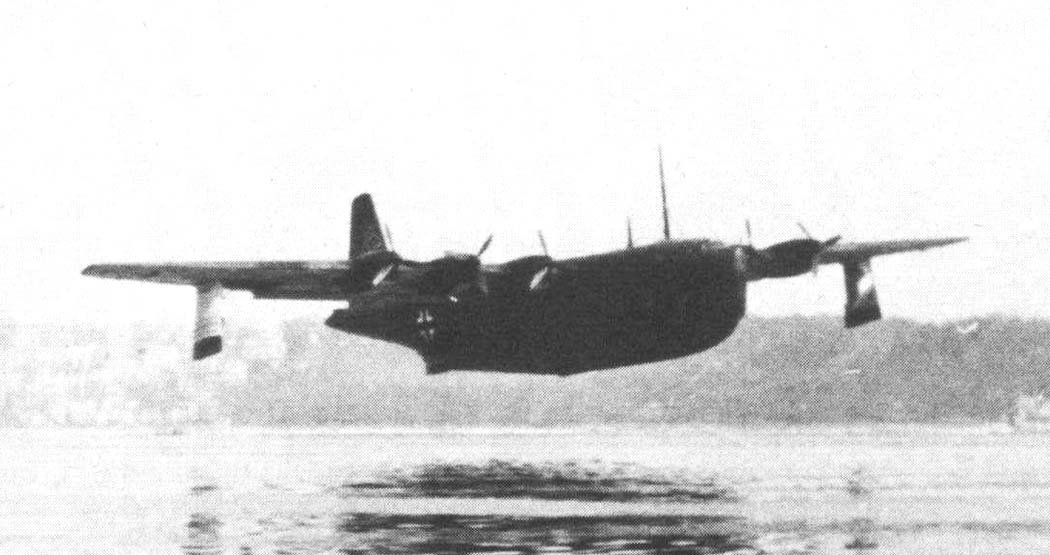
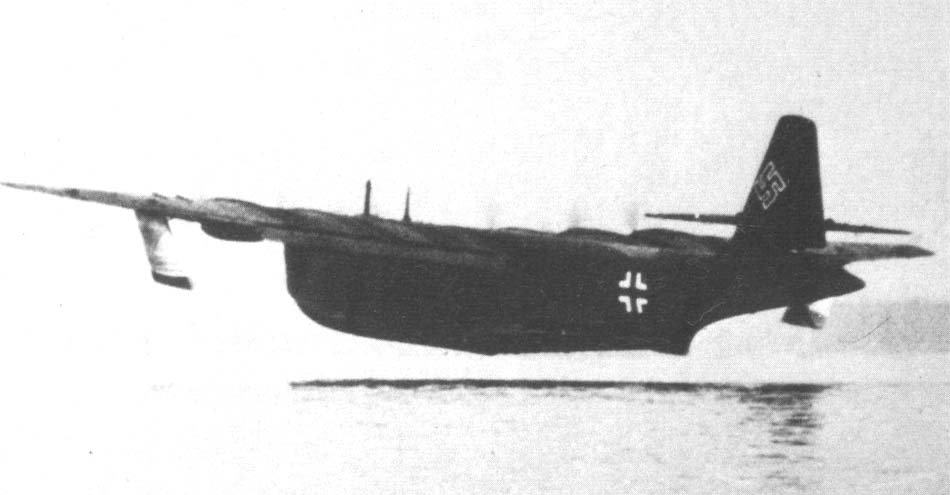
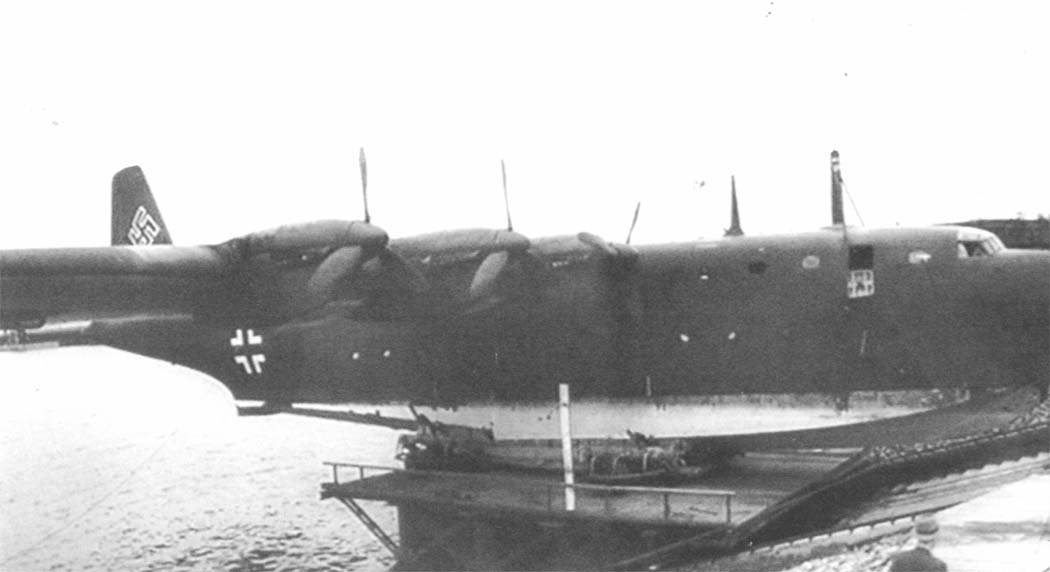
The BV.238-V1 (RO+EZ) was completed in early 1944 and began flights in April. The aircraft was unarmed, equipped with six 1750 hp DB-603A engines, and although in size it was inferior to the largest aircraft in the world at that time—Tupolev’s ANT-20—the BV.238 was still the heaviest in the world. Its flight weight reached 80 t. With the use of four 1500 kg thrust rocket boosters, the takeoff weight reached 90 t. Empty weight was 50800 kg, maximum fuel capacity 49000 liters. The crew consisted of up to 10 people.
The V1 was still undergoing tests when P-51 Mustangs sank it at anchor. By this time, the second prototype, BV.238-V2, was almost finished, and V3 assembly was well underway. Both machines were to receive DB-603D engines with a takeoff power of 1900 hp. V4 and V5, planned as prototypes of the B- and A-series, were ready for assembly, as were four BV.250 prototypes. However, in late summer 1944, the entire program was cancelled, and the half-finished aircraft were scrapped.
Technical Specifications
| Modification | ВV.238V-1 |
| Wingspan, m | 60.20 |
| Length, m | 43.40 |
| Height, m | 12.80 |
| Wing area, m2 | 349.00 |
| Empty weight | 54800 |
| Normal takeoff weight | 90100 |
| Maximum takeoff weight | 100000 |
| Engine type | 6 Daimler-Benz DB-603D |
| Takeoff power | 6 x 1900 |
| Speed at altitude | 356 |
| Speed at sea level | 320 |
| Practical range, km | 7800 |
| Crew, crew members | 7 |
| Armament | four 13-mm MG-131 machine guns with 1800 rounds per barrel in the bow and stern turrets, 2×2 MG-131 machine guns with 500 rounds in the side windows, four identical machine guns in the underwing turrets with 900 rounds per barrel and two 20mm MG-151 cannons with 2800 rounds in the forward upper turret; under the wing, 20x 250kg SC-250 bombs could be suspended, or 4x 1200kg torpedoes, 4x 1000kg bombs, 4 Hs-393 missiles or 2x 1000kg BV-143 glide bombs. |
Image and diagram gallery of the BV.238
 BV.238 |
 BV.238 |
 BV.238 |
 BV.238 |
 BV.238 |
 BV.238 |
 BV.238 |
 BV.238 |
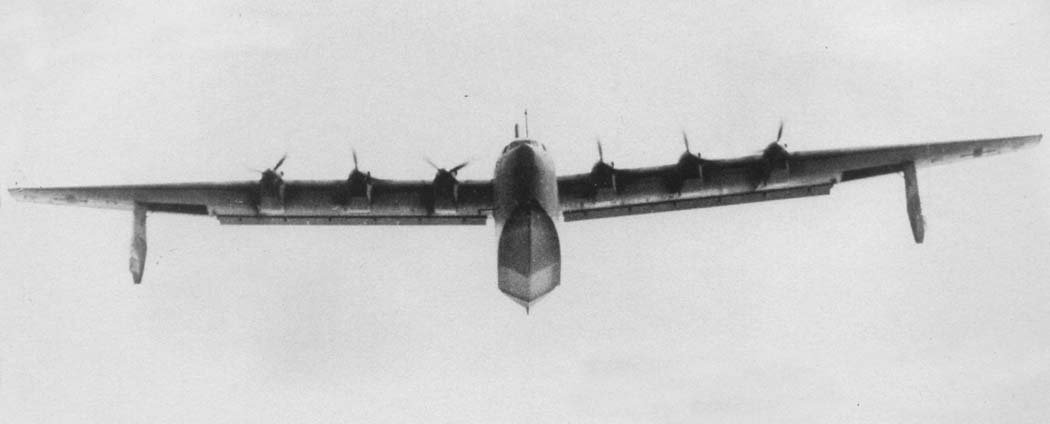 BV.238 |
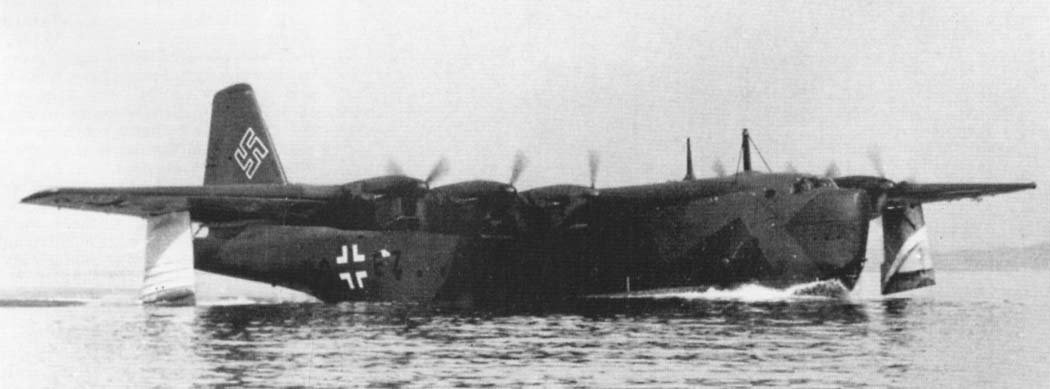 BV.238 |
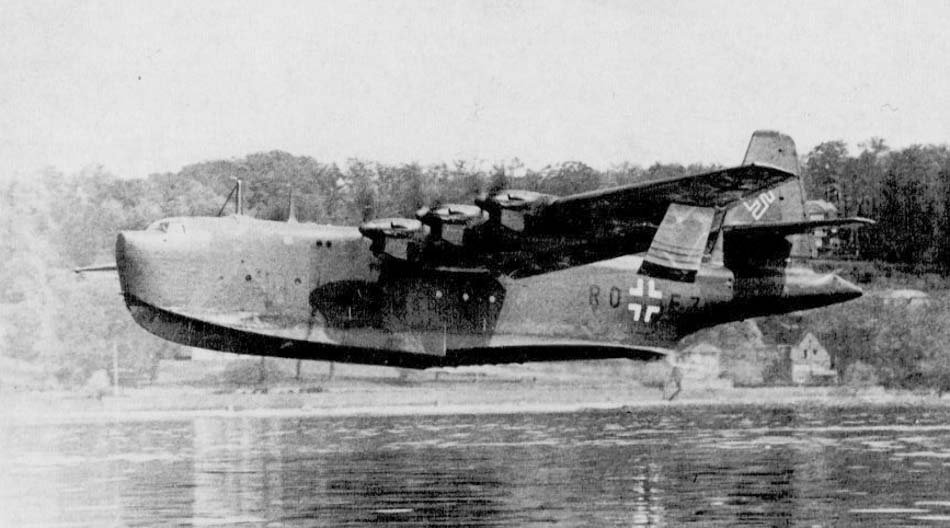 BV.238 |
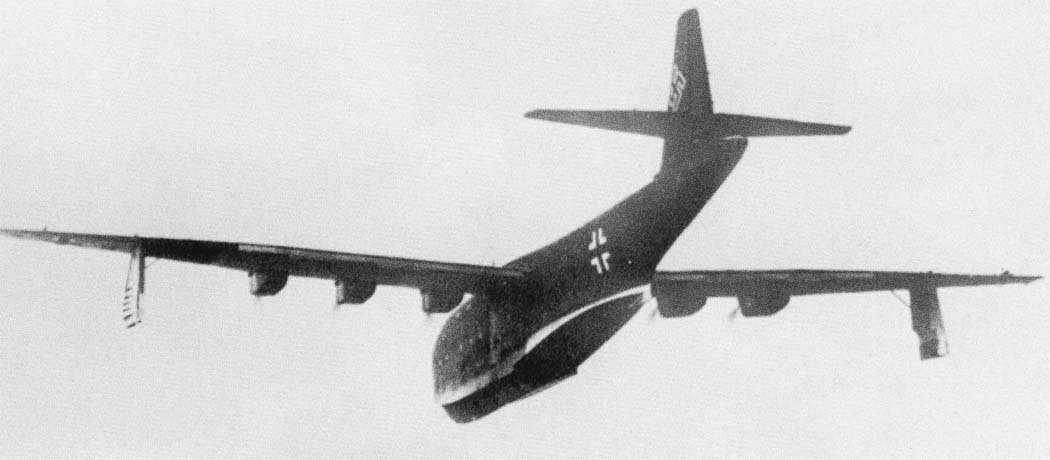 BV.238 |
 BV.238 |
 BV.238 |
 BV.238 |
 BV.238 |
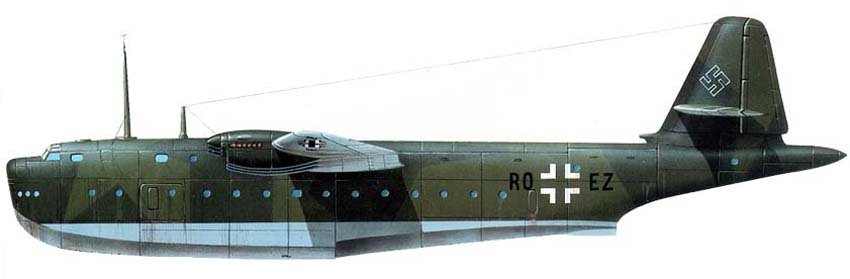 BV.238 |