
In the 1930s, the American firm Lockheed confidently entered the passenger aircraft market with a family of quite successful twin-engine “Electra” airliners—the L-12, L-14, and L-18. Therefore, it was not surprising that in 1939, when Pan American and Transcontinental & Western Air (TWA) airlines needed a new aircraft with a capacity for 40 passengers for long-haul routes up to 3500 miles, they turned to Lockheed.
Work on the new assignment was led by designer Hal Hibbard and aerodynamicist Kelly Johnson. Development did not start from scratch; it was based on the L-44 “Excalibur” project, designed for 21 passengers and completed in 1938, though it never materialized. The new project, meeting customer requirements, received the designation L-49 and the name “Excalibur A,” soon changed to “Constellation.”
Innovative Development and Features
Work on the “model 49” progressed rather slowly. This was largely due to the mass of technical innovations applied by the designers in their pursuit of creating a true “liner of tomorrow.” The result was an elegant four-engine low-wing aircraft with a triple-fin tail. The calculated passenger capacity was 44 people.
The most characteristic innovations applied in the aircraft included three-bladed variable-pitch propellers with reverse capability, hydraulic booster amplifiers in the control channels for ailerons, elevators, and rudders, a pressurized cabin, and a tricycle landing gear with a nose wheel and twin wheels on very long struts, to ensure an acceptable distance from the propellers to the ground.
Wartime Service and Testing
Japan’s attack on Pearl Harbor on December 7, 1941, and the US entry into the war led to a sharp turn in the “Constellation’s” fate. The prototype, under construction at the Burbank, California, factory, was requisitioned by the U.S. Army Air Corps for use as a military transport aircraft. However, the P-38 “Lightning” fighters and the “Hudson” and “Ventura” maritime patrol aircraft being built by Lockheed were far more needed in the war than a passenger airliner.
Therefore, work on the L-49 prototype, which received the military designation C-69, proceeded unhurriedly. The aircraft began ground tests with its civil registration NX25600, but by the time of its first flight on January 9, 1943, it had already received the military number 43-10309. For testing, Boeing’s test pilot Eddie Allen had to be invited, as Lockheed’s own pilots lacked experience testing such heavy multi-engine machines.
On the very first day, the aircraft performed six flights—three under Allen’s control and three during which he served as co-pilot, while Lockheed pilot Milo Barham, who had previously flown nothing heavier than a “Lightning,” piloted the aircraft. One of the aircraft’s creators, Kelly Johnson, was on board the C-69 during its first flight. On the same day, the “Constellation” was flown from the factory airfield to Muroc Field Air Base, now Edwards Air Force Base. Just over a month later, Eddie Allen died during tests of the B-29 bomber.
Legacy and Post-War Uses
The aircraft received Wright R-3350-35 engines, each with 2200 hp. These 18-cylinder air-cooled engines were among the most powerful of their time. However, their primary consumers were the heavy B-29 bombers, which placed significant limitations on the projected production volumes of Lockheed transports.
In total, it was planned to acquire about 300 serial C-69 aircraft of various modifications: the basic C-69, designed to carry 81 soldiers; the C-69A, specialized for troop transport without conversion capability to a cargo variant; the C-69B, with increased range; the C-69C and C-69D, for VIP transport, carrying 43 and 57 passengers respectively; and the C-69E, a “frost-resistant” variant for Arctic use. In practice, these plans were only partially realized. 22 serial aircraft were manufactured: 21 C-69s and a single C-69C. The C-69 prototype was converted into the experimental XC-69E, but this modification was not built in series.
The bomber variant of the “Constellation,” the XB-30, proposed in 1940 in response to the emerging need for long-range bombers, remained at the sketch project stage. It was submitted for competition alongside the Boeing XB-29, Douglas XB-31, and Consolidated XB-32 projects. The outcome of the competition is known: Boeing’s and (for backup) Consolidated’s projects were selected for implementation, while the XB-30 and XB-31 faded into obscurity.
On April 16, 1944, the C-69 set a transcontinental speed record, covering the distance from the western to the eastern coast of the USA—from Burbank to Washington—in six hours, 57 minutes, and 51 seconds. This achievement prompted TWA President Jack Frye to declare, “Tomorrow has already arrived!” A few days later, the same aircraft performed a 50-minute flight under the control of Orville Wright, the 72-year-old aviation pioneer. Symbolically, the aircraft took off from his namesake air base, “Wright Field,” in Ohio.
In 1944-45, about a dozen and a half C-69s were used as transport aircraft in the Pacific Theater of Operations. Here, their long flight range and maximum speed, which exceeded that of Japanese “Zero” fighters, were fully appreciated. After the war, C-69s served for several more years in the U.S. Army Air Force’s Air Transport Command, but were replaced by Douglas C-54s as part of fleet standardization.
Most of the C-69s decommissioned by the military were bought back by the manufacturer. Two aircraft did not survive to this point: Constellation No. 1972 crashed on September 18, 1945, and N21973 was destroyed during static tests. After repair, the aircraft were sold under the designation L-49 to civil airlines, including TWA. In American airlines, the former military aircraft flew smoothly until the end of the 1950s. Five aircraft were sold to the British company BOAC.
The biography of three C-69s, purchased from the US Air Force in 1948 by “Panamanian” airlines, turned out to be much more eventful. This “abracadabra” disguised one of the shell companies created by Israeli special services to supply the young Jewish state.
Technical Specifications
| Modification | C-69 |
| Wingspan, m | 37.49 |
| Length, m | 29.01 |
| Height, m | 7.21 |
| Wing area, m2 | 153.29 |
| Empty weight | 22906 |
| Normal takeoff weight | 32659 |
| Engine type | 4 Piston engine Wright R-3350-35 Cyclone 18 |
| Power, hp | 4 x 2200 |
| Maximum speed, km/h | 531 |
| Cruising speed, km/h | 483 |
| Practical range, km | 3862 |
| Service ceiling, m | 7620 |
| Crew, crew members | 4 |
| Payload: | 81 soldiers |
Image and diagram gallery of the C-69 Constellation
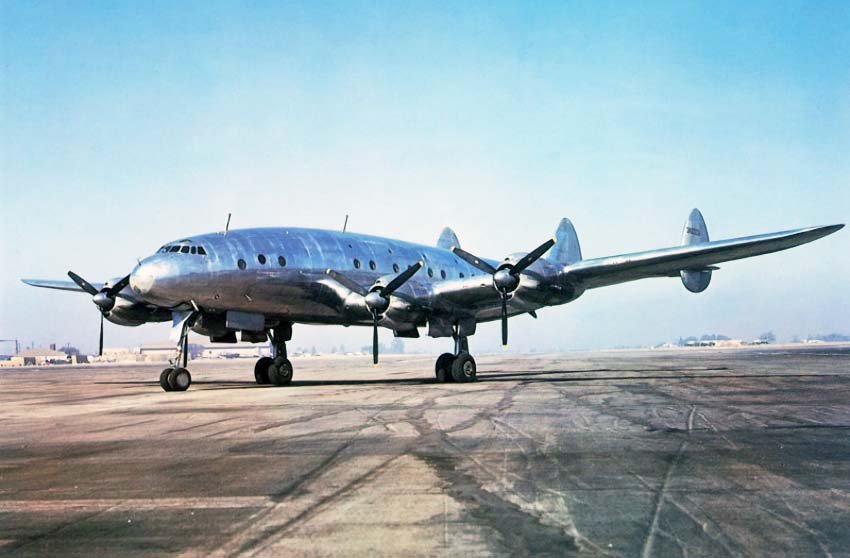 C-69 Constellation |
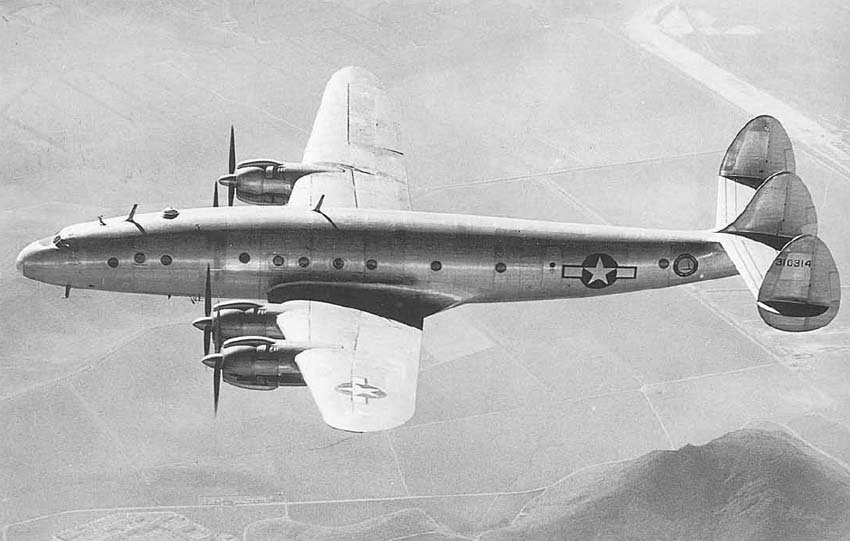 C-69 Constellation |
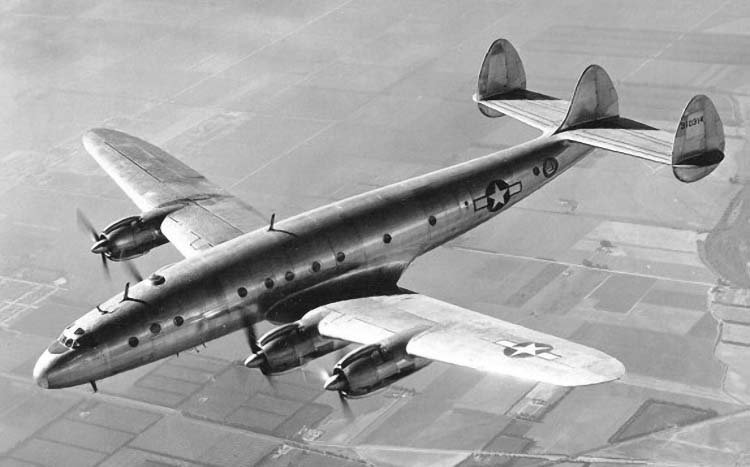 C-69 Constellation |
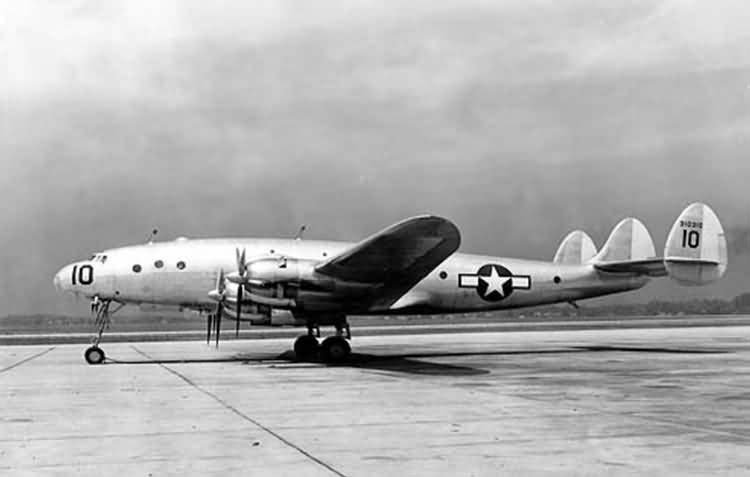 C-69 Constellation |
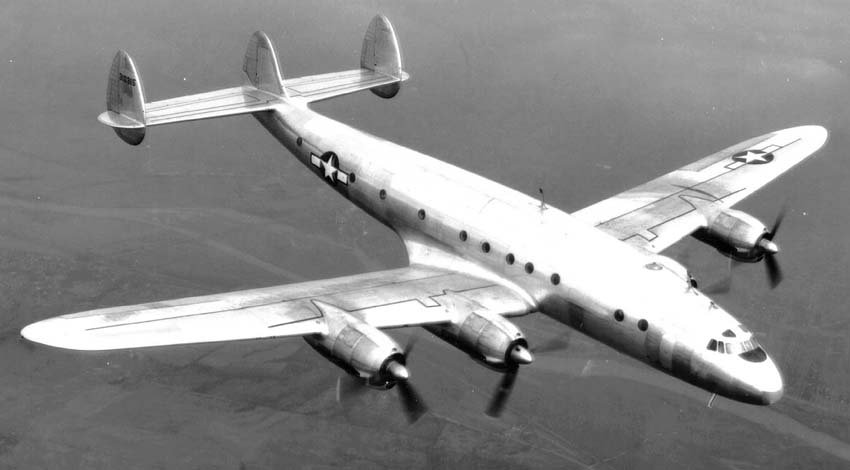 C-69 Constellation |
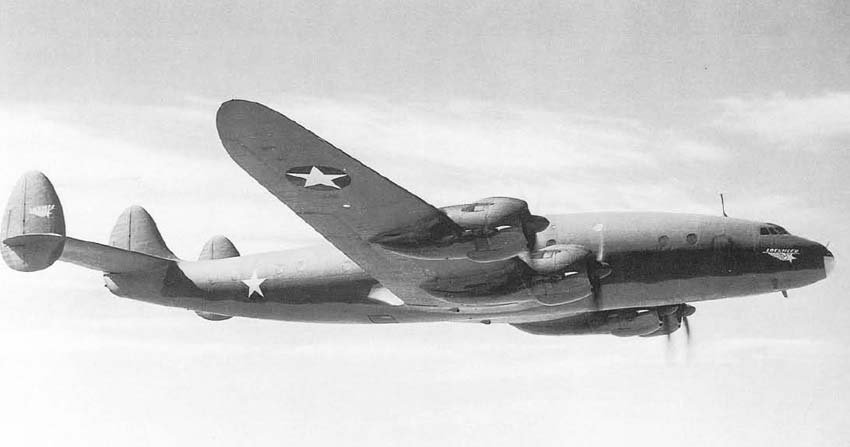 C-69 Constellation |
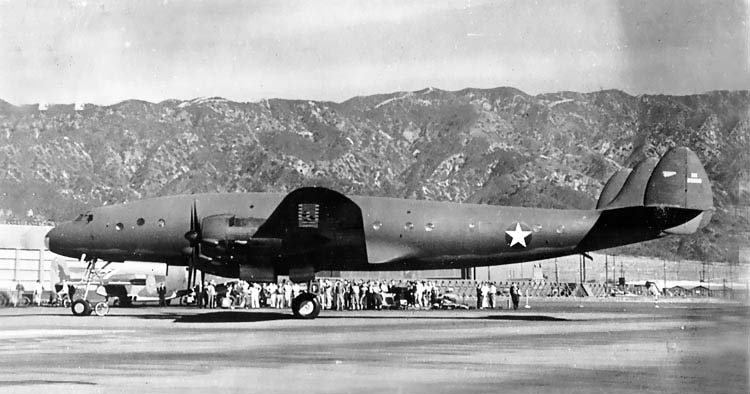 C-69 Constellation |
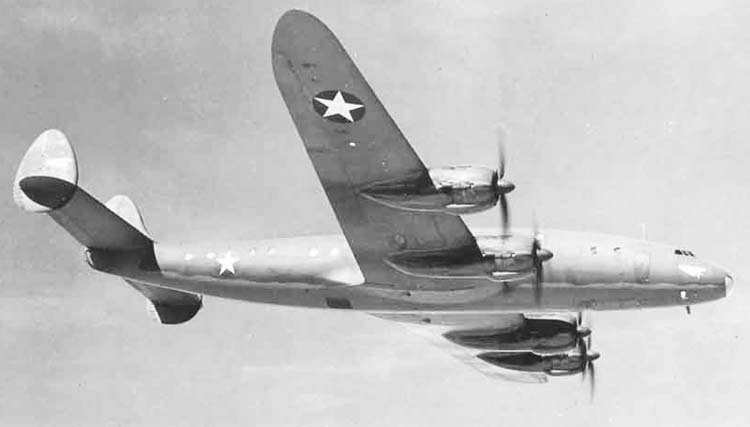 C-69 Constellation |
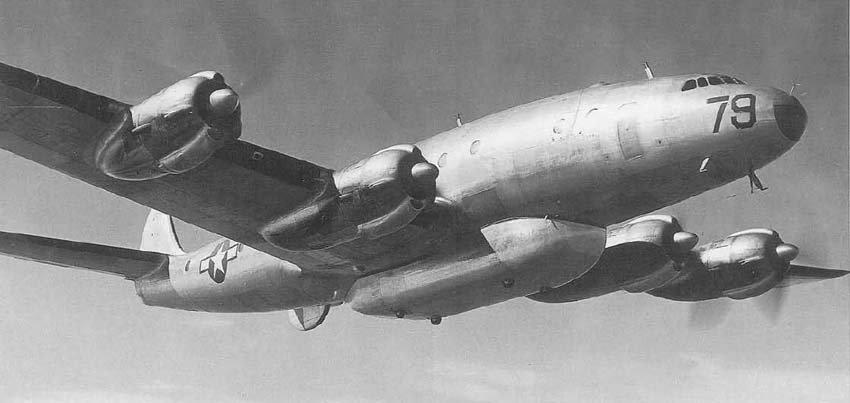 C-69 Constellation |
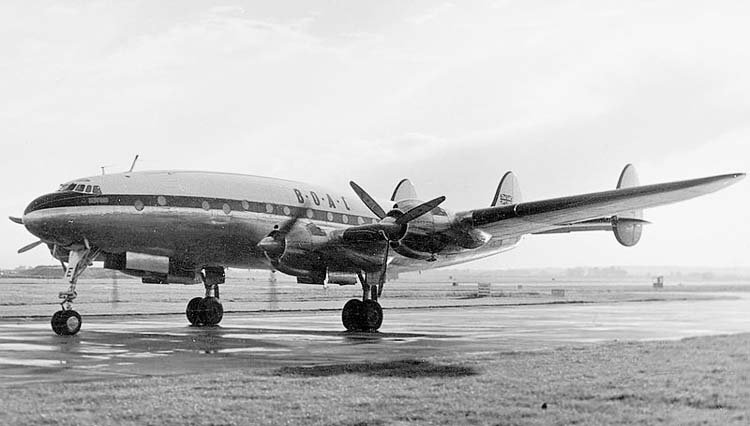 C-69 Constellation |
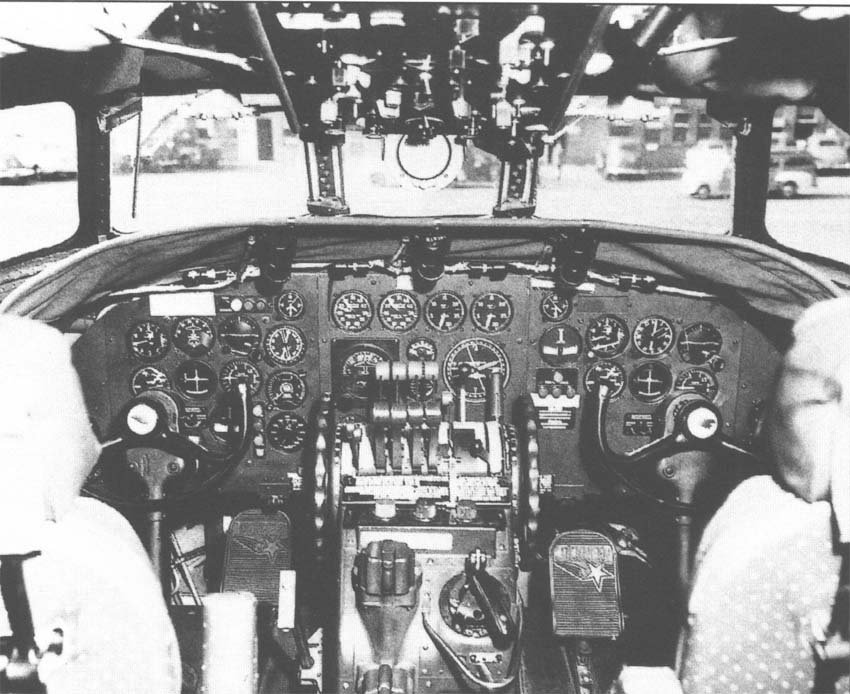 C-69 Constellation |
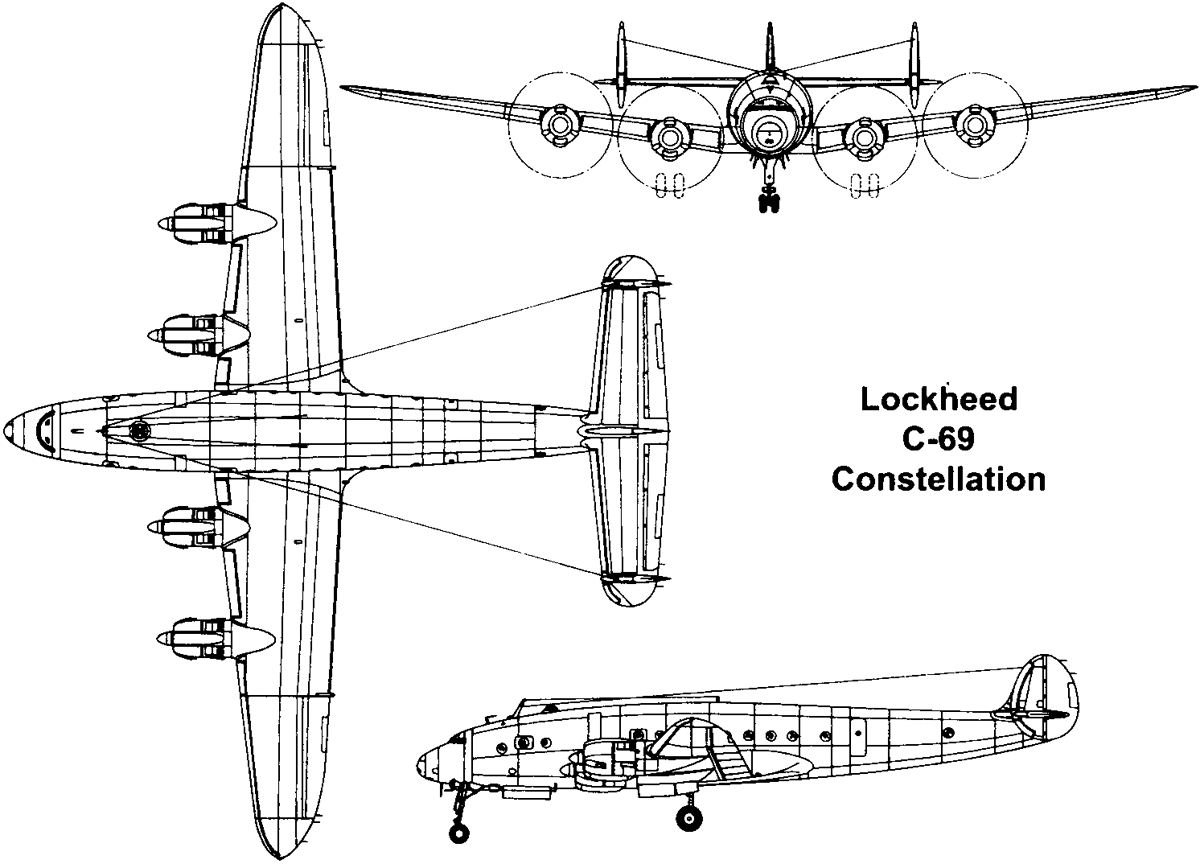 C-69 Constellation |
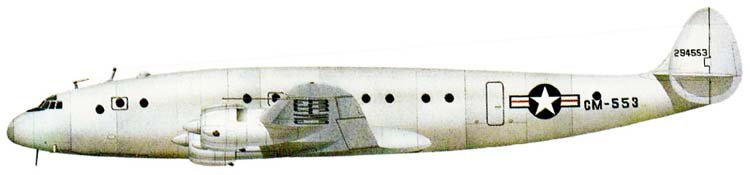 C-69 Constellation. Photography: Arthur Sturgess |
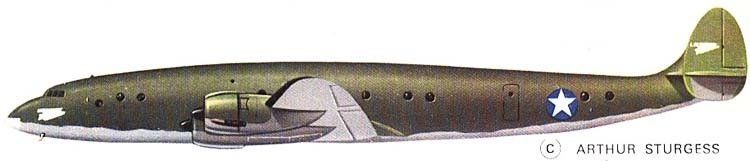 C-69 Constellation. Photography: Arthur Sturgess |