
Caproni’s Innovative Design
The third aircraft by the Italian aircraft designer Giovanni Battista Caproni was the Ca.3. After the failure of his first two aircraft, Caproni slightly modified the system, transforming a conventional biplane into a sesquiplane. His friend and colleague, Henri Coandă, made a significant contribution to the development of this aircraft.
First Flight and Development
At the end of 1910, the Ca.3 made its first successful flight. Several more flights were performed in January of the following year, demonstrating its capabilities. Afterward, the impatient designer moved on to other aeronautical developments and projects.
Technical Specifications
| Modification | Ca.3 |
| Upper wingspan, m | 12.50 |
| Aircraft length, m | 8.90 |
| Wing area, m2 | 34.00 |
| Empty weight | 240 |
| Maximum takeoff weight | 360 |
| Engine type | 1 Piston engine Rebus |
| Power, hp | 1 x 50 |
| Crew, crew members | 1 |
Image and diagram gallery of the Caproni Ca.3 (1910)
 Caproni Ca.3 (1910) |
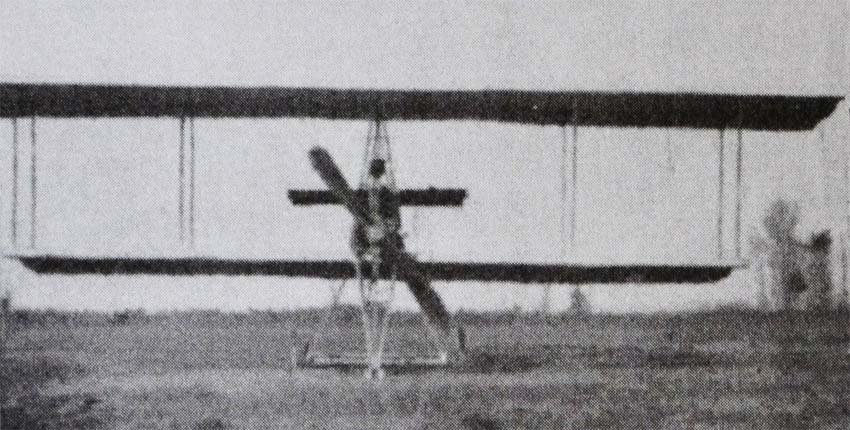 Caproni Ca.3 (1910) |
How to cite this article:
APA: Caproni Ca.3 (1910) (). Caproni Ca.3 (1910). wp.archivoaereo.com. https://wp.archivoaereo.com/en/caproni-ca-3-1910-2/
VANCOUVER: Caproni Ca.3 (1910) [online]. wp.archivoaereo.com; [cited 2026-10-08]. Available at: https://wp.archivoaereo.com/en/caproni-ca-3-1910-2/