
In 1934, the Ala Littoria airline launched a competition for a multi-purpose aircraft intended for secondary routes, similar to the “colonial” aircraft in France. Italy, though lacking vast colonies, considered Libya sufficient for such needs.
The specifications called for a 6-seat passenger cabin, mail transport capability, a cruising speed of no less than 200 km/h, and simple, inexpensive operation. Two aircraft were declared winners: the Breda Ba.44 (based on the British DH.90) and the Caproni Ca.306.
The Ca.306 was designed from scratch by a team led by engineer Cesare Palavicino. This low-wing monoplane featured a fully enclosed cockpit and passenger cabin, along with fixed, faired landing gear. It was equipped with two Walter “Major Six” inline engines, each producing 200 hp, driving two-blade propellers.
The two-seat cockpit had dual controls, and passenger seating was arranged in two rows along wide windows. A baggage compartment was located in the lower part of the fuselage.
Development and Specifications of the Ca.308 Borea
The project was presented in October 1934 under the name “Tipo Aquilla,” leading to a contract for ten aircraft: six for domestic routes and four for Libya. Construction of the Ca.306 began in January 1935.
In the same month, Palavicino renamed the aircraft to Ca.308, giving it the name “Borea.” This low-wing aircraft, featuring an all-wood wing and tail, was powered by two Alfa-Romeo 115 six-cylinder, air-cooled inline engines, each delivering 200 hp (originally, Czech Walter “Major 6” engines of 180 hp were specified). The engine cowlings were integrated with the “trousers” — the fairings of the non-retractable main landing gear struts.
The landing gear’s shock absorption and wing mechanization were designed for use on short, uneven airfields, incorporating ailerons and brake flaps. The Ca.308 was intended for short-duration flights with six passengers.
Its fuselage, featuring a combined plywood and fabric skin, housed the pilots side-by-side, followed by passengers in two rows of seats, and a baggage compartment.
Operational Service and Variants
Several “Borea” aircraft from Ala Littoria served local routes and connections between major airports, with serial deliveries commencing in July. Concurrently, the Libyan command requested the Ca.308 to be adapted for military purposes.
This adaptation involved fitting bomb racks for small bombs up to a total weight of 300 kg, and two movable 7.7mm machine guns in the forward and aft fuselage. That same summer, a requirement emerged to replace the Czech engines with British de Havilland “Gipsy Six” (185 hp) due to issues with the importer.
Although the company also proposed an ambulance variant for six stretcher-bound wounded (equipped with Isotta Frascini 610 engines) and a radial-engined passenger modification, these remained projects.
Civilian Ca.308 variants (with registration codes such as I-DRIA, I-SPRA, I-NTRA, I-MERA, I-VREA, I-MOLA) were delivered in December, after the military order was fulfilled; two of these also went to North Africa.
These aircraft operated on routes like Tripoli-Sirte-Benghazi, Tripoli-Kassala-Asmara (4449 km), Tripoli-Benghazi-Cairo-Khartoum, Rome-Ancona, and within Albania. Their gradual withdrawal began in February 1938. The I-LIBI was lost in an accident in 1940, and the last civilian Ca.308 (I-NTRA) served until 1959, operating for the Allies post-war, before being destroyed in another flight incident.
Regarding the Libyan Ca.308s, one of the two received aircraft was lost before the war, while the other was transferred to the 5th Squadron, where it was used as a liaison aircraft.
Technical Specifications
| Modification | Ca.308 |
| Wingspan, m | 16. 40 |
| Length, m | 12. 60 |
| Height, m | 4. 00 |
| Wing area, m2 | 48.20 |
| Empty equipped weight | 6540 |
| Normal takeoff weight | 9820 |
| Engine type | 2 De Havilland Gipsy Six Piston engines |
| Power, hp | 2 x 185 |
| Maximum speed, km/h | 364 |
| Cruising speed, km/h | 278 |
| Practical range, km | 1200 |
| Service ceiling, m | 5800 |
| Crew | 2 |
| Payload | up to 6 passengers |
Image and diagram gallery of the Caproni Ca.308 Borea
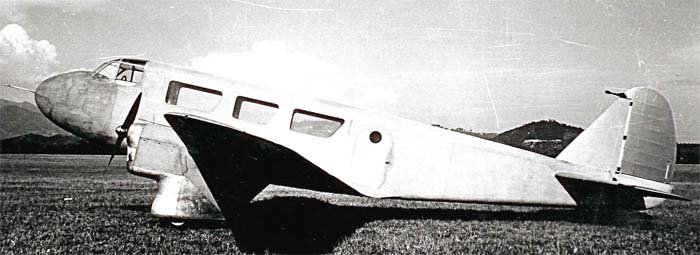 Ca.308 Borea |
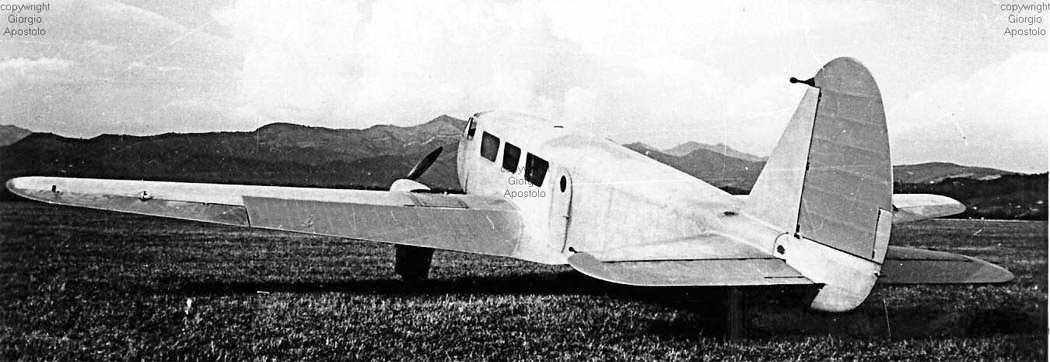 Ca.308 Borea |
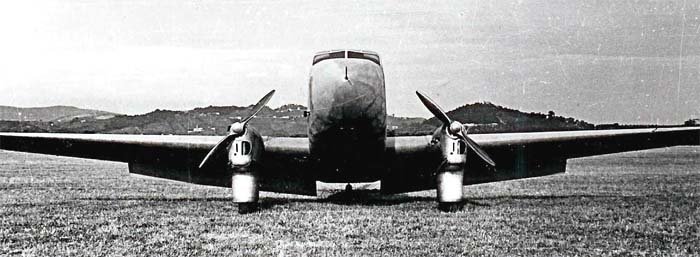 Ca.308 Borea |
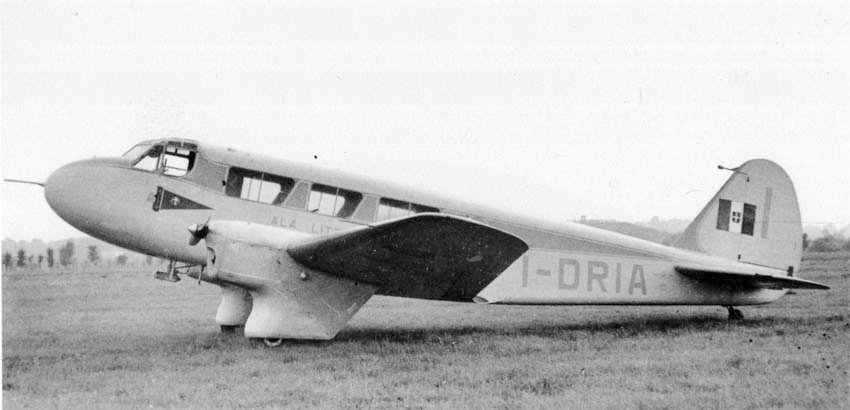 Ca.308 Borea |
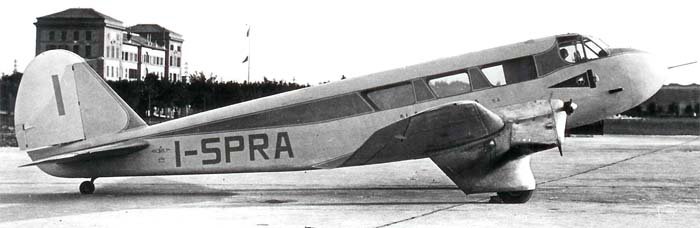 Ca.308 Borea |
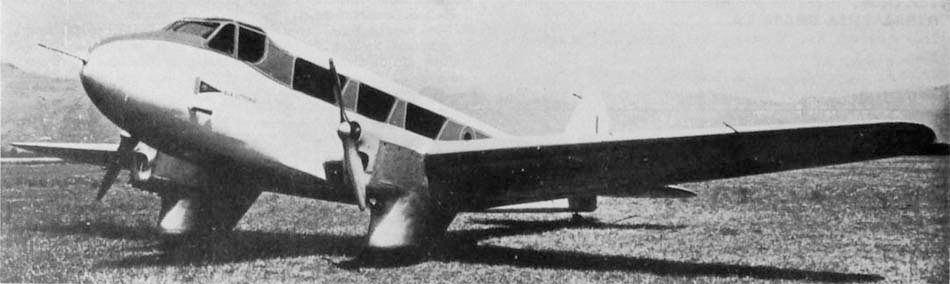 Ca.308 Borea |
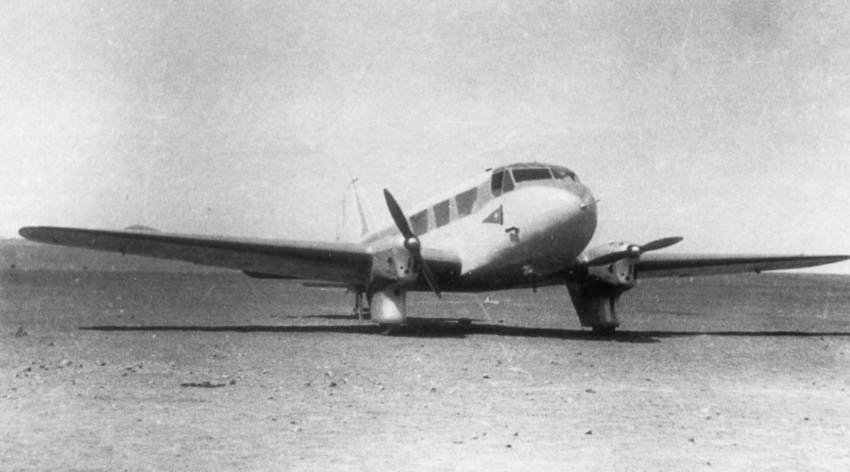 Ca.308 Borea |
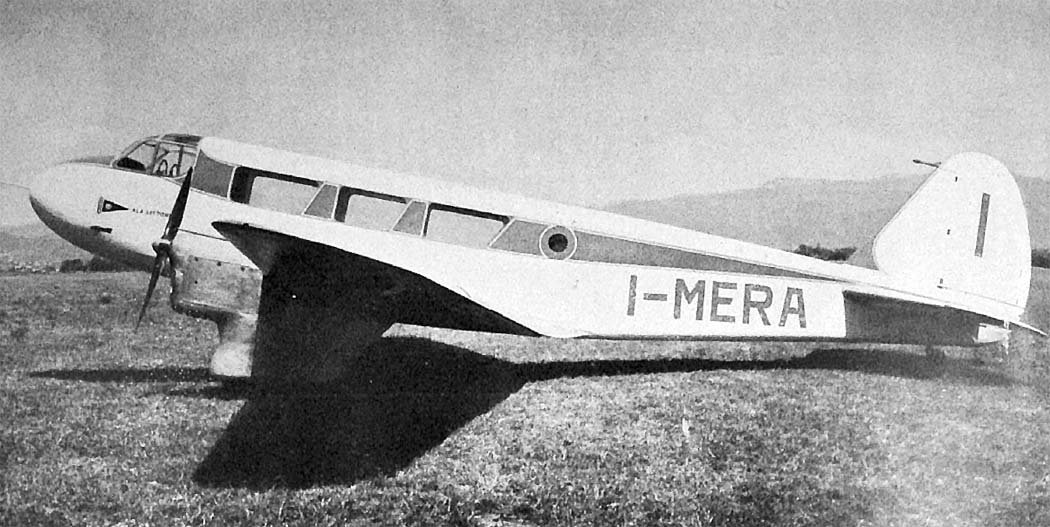 Ca.308 Borea |
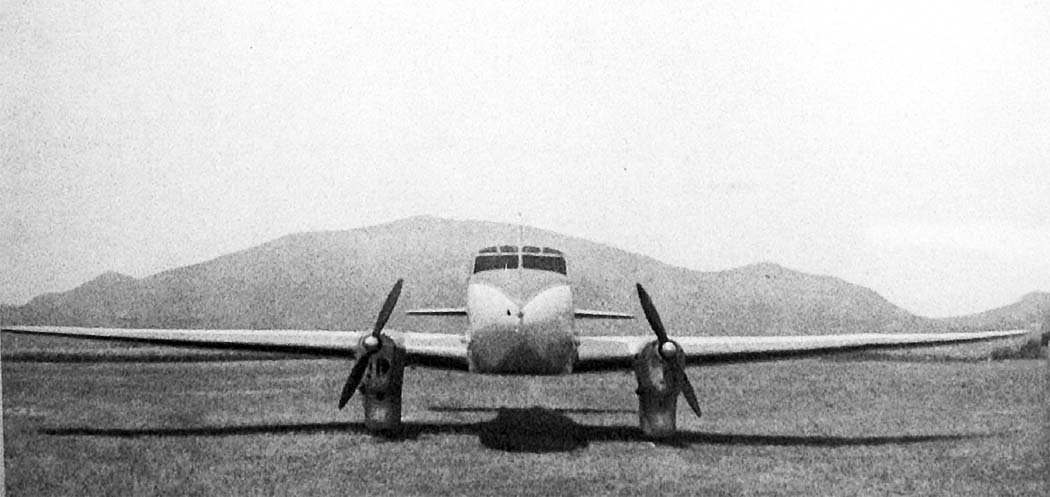 Ca.308 Borea |
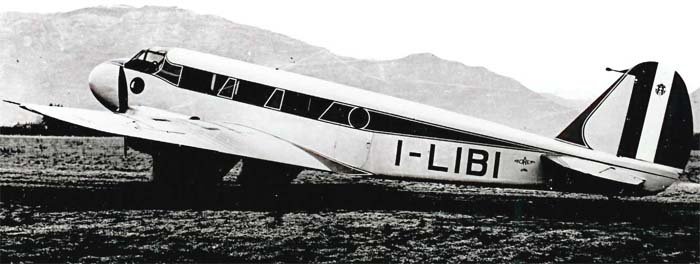 Ca.308 Borea |