
A Revolutionary Aircraft for Remote Regions
The research, development, and construction of the experimental prototype of the airfield-free aircraft “Bella-1” were carried out over more than 10 years. This aircraft is designed for operation in the conditions of the Far North, Siberia, and the Russian Far East, offering higher transport efficiency than currently used light aircraft and helicopters.
The “Bella-1” is intended for transporting 5-6 passengers up to 1000 km with a high level of comfort, delivering various goods “door to door,” and use in a cargo-passenger variant. Thanks to its ability to land and take off from any natural site (lake, river, swamp, field) and at any time of year, significant time savings are achieved in the delivery of both passengers and cargo.
The “Bella-1” will ensure transport links not only between large cities and regional centers with airfields but also between any settlements lacking special runways. It will serve the needs of the Ministries of Defense, Internal Affairs, Emergency Situations, Health, Communications, and the Border Service, especially in hard-to-reach regions. It will also facilitate the development of oil and gas fields, geological exploration, delivery of shift crews, patrolling and servicing of oil and gas pipelines, and other tasks with minimal transport costs, while also supporting business interests and tourism development.
Innovative Design and Operation
The “Bella-1” project arose from the need for a significant reduction in operational costs by eliminating airfield infrastructure. In the conditions of Russia’s North, Siberia, and Far East, airport expenses can reach 70% or more of all aircraft service costs. Moreover, these regions boast numerous natural flat landing sites, such as lakes, rivers, swamps, and fields, usable in both summer and winter.
Traditional aircraft, including planes and helicopters, cannot operate from these natural runways in the specified regions without changing their landing gear units (LGU) and requiring specially prepared runways. For example, the well-known Russian An-2 aircraft has three interchangeable LGUs: wheel, ski, and hydro-float, with the first two requiring runways. Helicopters also require LGU changes depending on the season and cannot land on, for instance, a swamp without specially prepared runways, or on deep snow or tall grass due to the negative ground effect.
All these mentioned drawbacks are eliminated in the “Bella-1” aircraft. This aircraft can take off and land on any flat natural site at any time of year. It does not need to change its LGU. Furthermore, such an aircraft is less sensitive to weather conditions, such as wind direction and visibility. It can move in aircraft, air-cushion vehicle modes, and perform short takeoffs and landings.
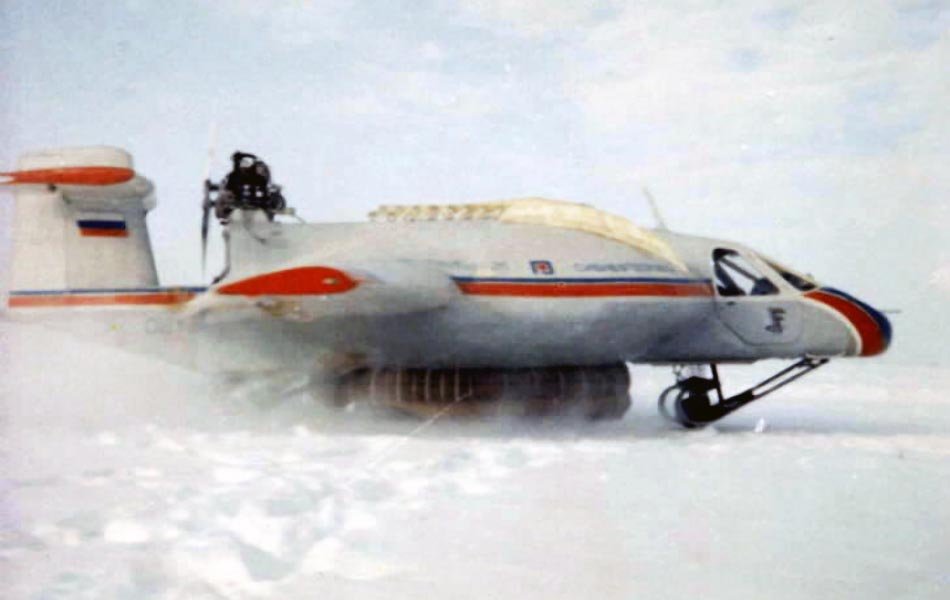
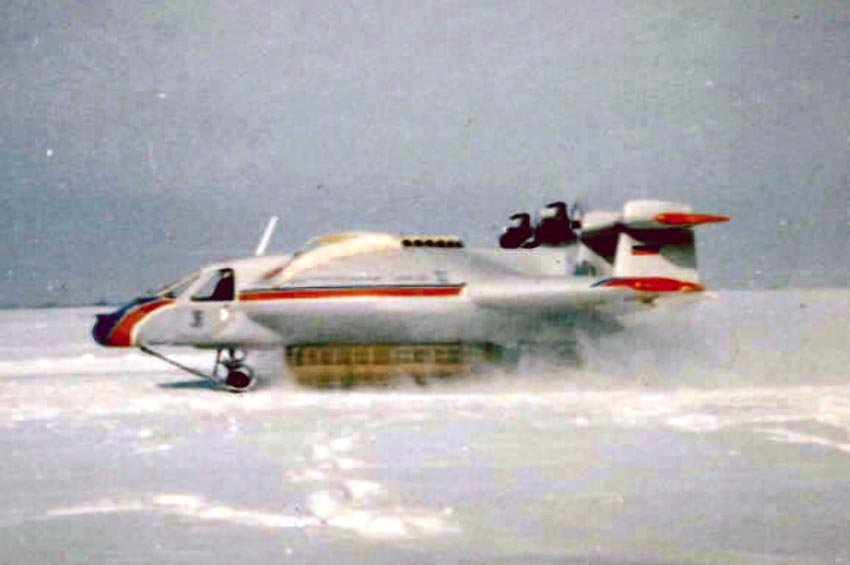
After scientific research (theoretical calculations and wind tunnel tests), an experimental prototype of such an aircraft was built in 1994. For two years, factory bench tests were conducted, followed by the first stage of flight tests: high-speed runs and short hops in conditions close to natural—a snowy agricultural field, a frozen river, a river floodplain in summer, and water. The aircraft demonstrated high takeoff and landing characteristics and confirmed the results of wind tunnel research and calculated data. Patents were obtained for the aircraft in the Russian Federation, the USA, and Germany, covering both invention and industrial design.
Advanced Technology for Superior Efficiency
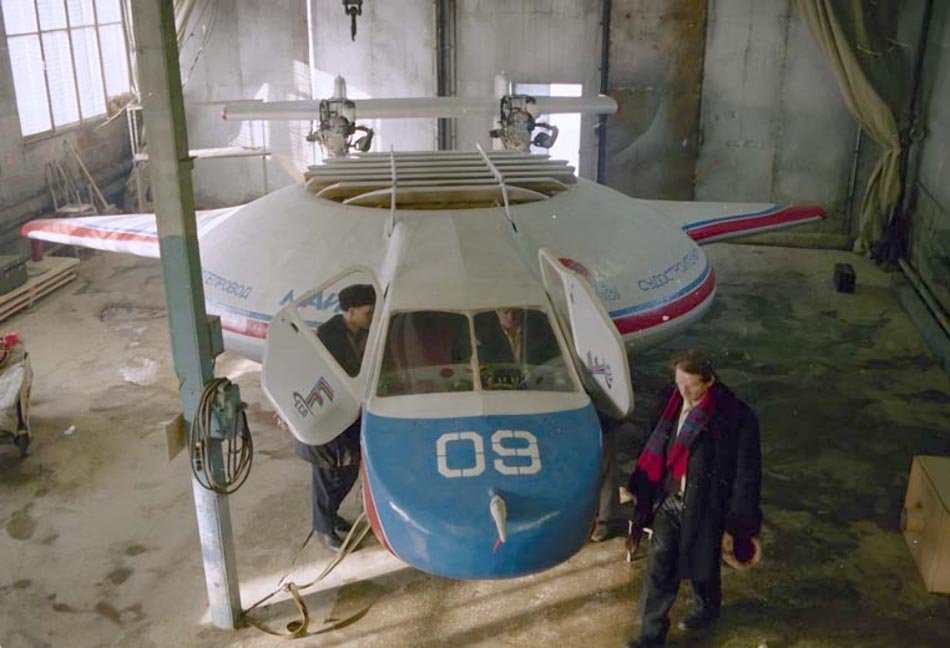
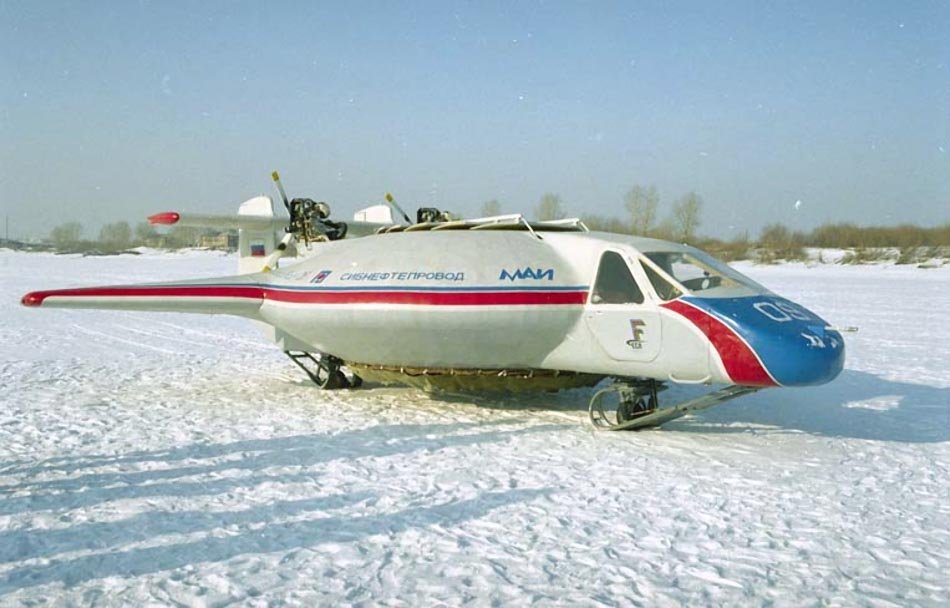
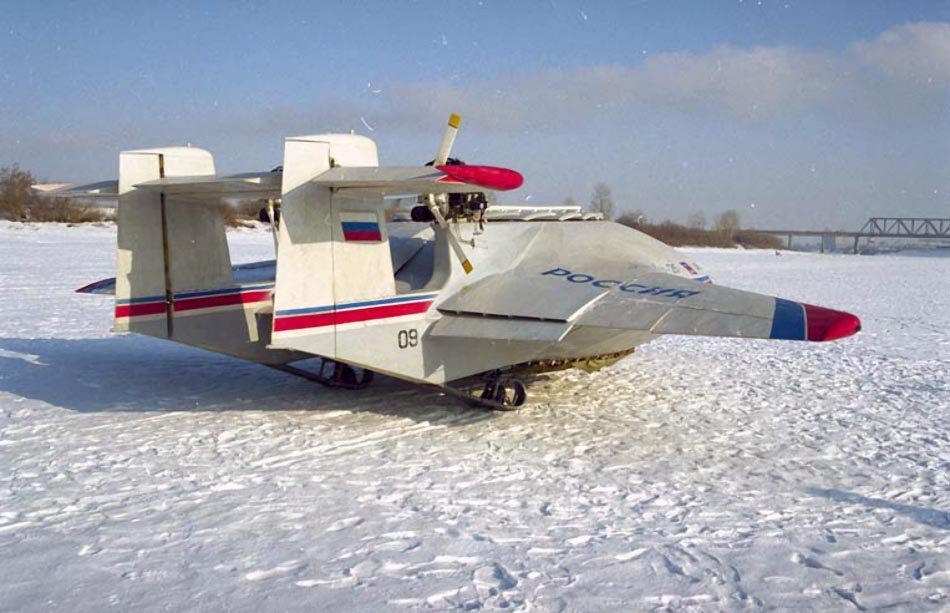
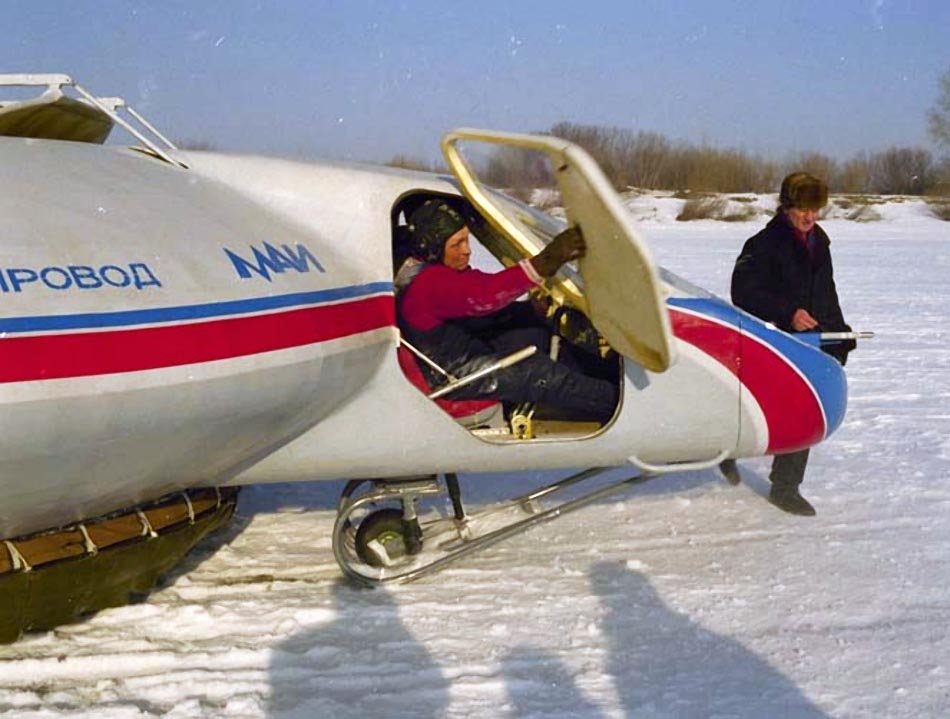
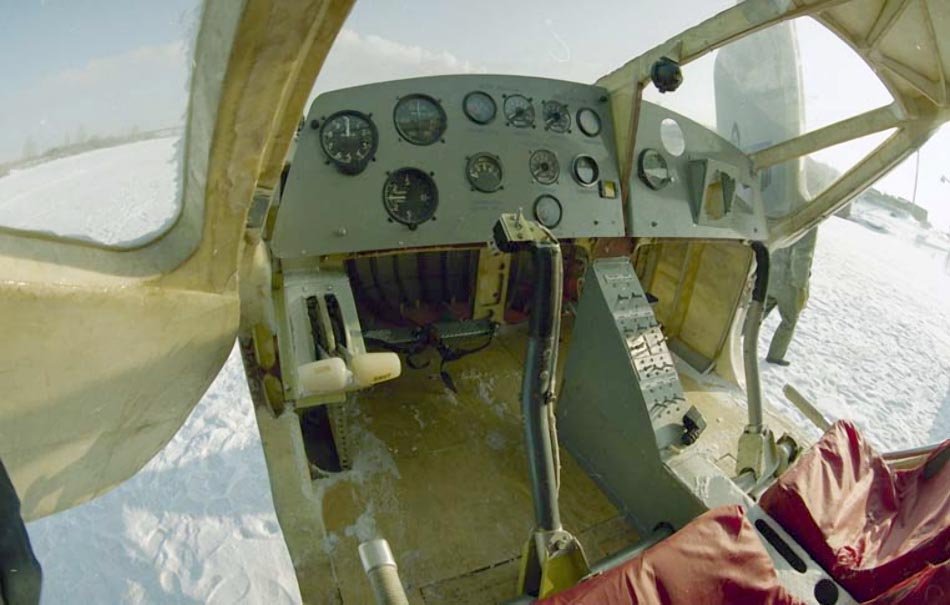
The aircraft is built on a “flying wing” scheme with a developed tail unit and a pilot-passenger cabin at the front. The main part of the aircraft is a disk-shaped center section with a central tunnel, housing a propeller lifting system and a cargo cabin. Wing console parts are located on the sides of the center section.
Below is a universal LGU in the form of an inflatable landing torus (which serves as an enclosure for the air cushion), wheel-ski supports, and planing surfaces: a step under the pilot-passenger cabin and a hydrofoil behind the center section. Such a universal LGU allows for airfield-free operation from water, marshy and snowy surfaces, or any ground. Marching propeller-motor units located at the rear of the center section provide full airflow over the tail surfaces, increasing reliability and safety in various flight modes and in the event of an engine failure.
Key design features of the aircraft include: the presence of a lifting propeller-motor unit alongside conventional cruising power units, ultimately enabling short takeoffs and landings; the disk-shaped center section serves not only for accommodating cargo, power units, etc., but also creates aerodynamic lift in flight; the airframe is almost entirely made of composite materials using three-layer shells with foam and honeycomb fillers, which reduces the structural weight by 1.5 to 2.0 times compared to metal structures.
Other notable features include: a separate cargo cabin alongside the pilot-passenger cabin, eliminating the costs of converting the pilot-passenger cabin for cargo; a universal LGU that eliminates the need for seasonal re-equipment; and foldable wing console parts, allowing for ground or air transport of the aircraft.
Technical Specifications
| Modification | Бэлла-1 |
| Main rotor diameter, m | 11.00 |
| Fuselage length, m | 10.00 |
| Overall length, m | 2.60 |
| Empty equipped weight | 1100 |
| Normal takeoff weight | 2000 |
| Fuel capacity | 300 |
| Cruise engines | 2 x 210 |
| Lift engine | 1 x 110 |
| Cruising speed, km/h | 250 |
| Minimum speed, km/h | 30 |
| Ferry range, km | 3000 |
| Practical range, km | 1000 |
| Practical ceiling, m | 3000 |
| Max. operational overload | 3.5 |
| Crew, crew members | 1-2 |
| Payload: | 600 kg of cargo |
Image and diagram gallery of the Bella-1
 BELLa-1 |
 BELLa-1 |
 BELLa-1 |
 BELLa-1 |
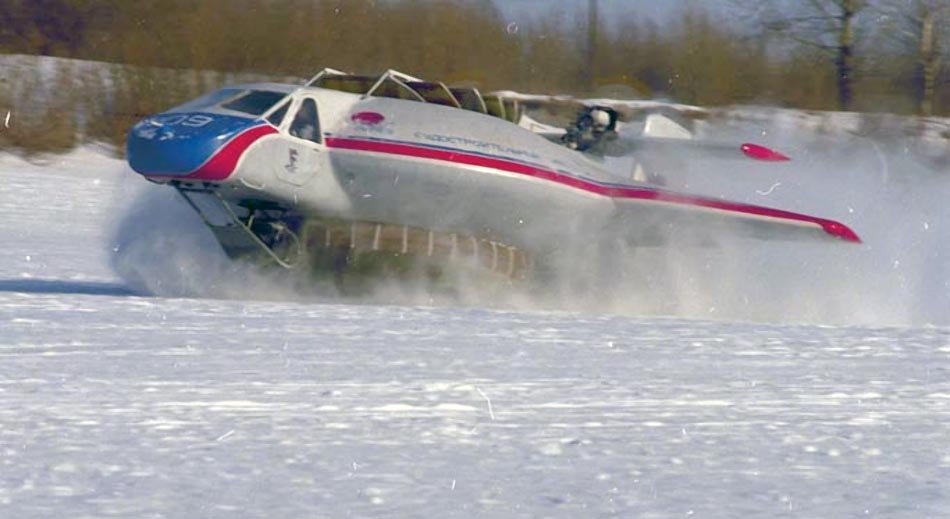 BELLa-1 |
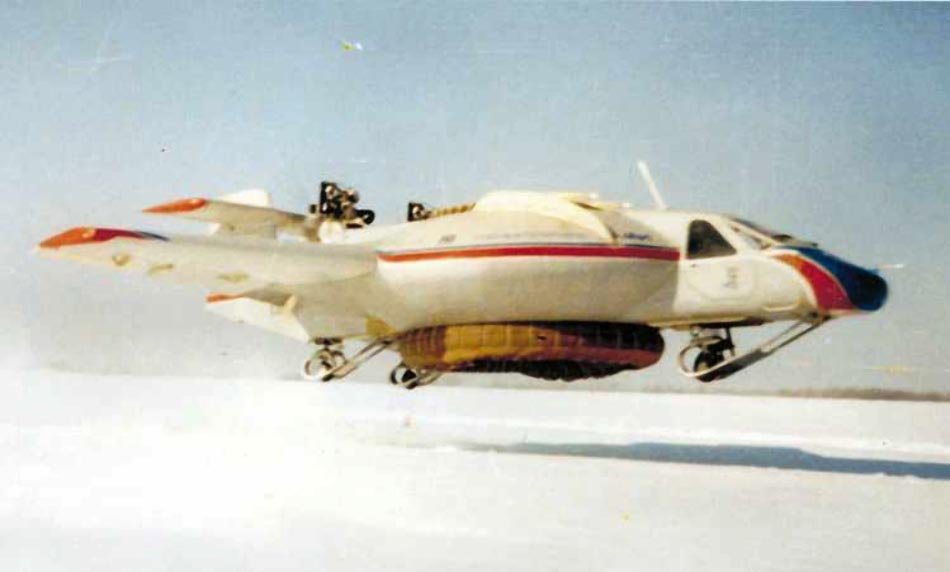 BELLa-1 |
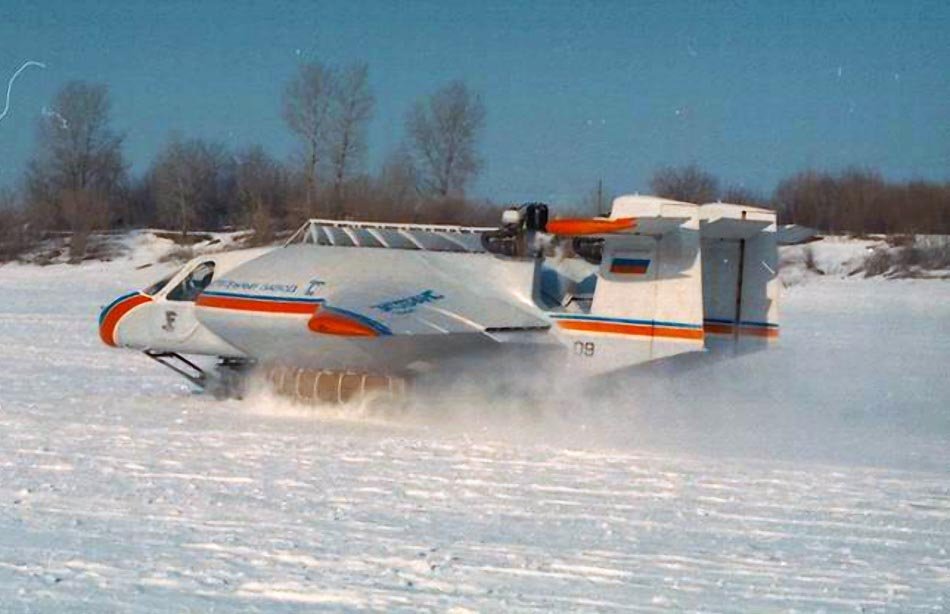 BELLa-1 |
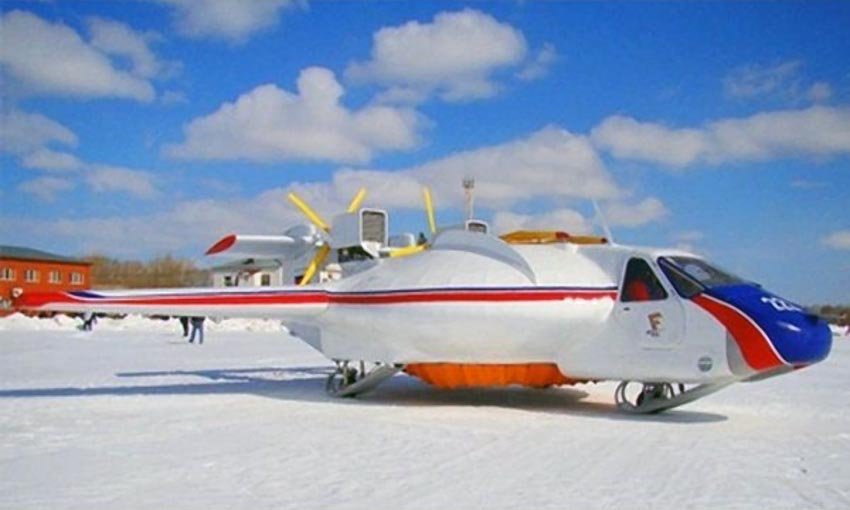 BELLa-1 |
 BELLa-1 |
 BELLa-1 |
 BELLa-1 |