
In 1935, with the Air Ministry’s revision of the multi-role “hunter” concept, requirements were drawn up for a more specialized high-speed bomber, the Schnellbomber, capable of also being used as a reconnaissance aircraft. By this time, Bayerische Flugzeugwerke was already working on a reconnaissance variant of the Bf 110, and this company’s Schnellbomber consequently acquired the latter’s characteristics. Both projects received orders for experimental aircraft in 1936 after successful Bf 110 trials. The reconnaissance variant was designated Bf.161, and the bomber Bf.162. The latter had a higher priority and flew a year earlier than the former.
Specifications and Initial Design
According to the requirement, the Schnellbomber was to be a three-seater aircraft capable of carrying a normal bomb load of 500 kg and a maximum of 750 kg. The maximum speed was set at 500 km/h, and cruising speed at 450 km/h. Ascent to 7000 m with normal weight was set at 25 minutes, and takeoff distance at 15 m was 700 m. The use of DB 600 engines was planned. Defensive armament was limited to a single upper 7.9 mm MG 15 machine gun with 500 rounds.
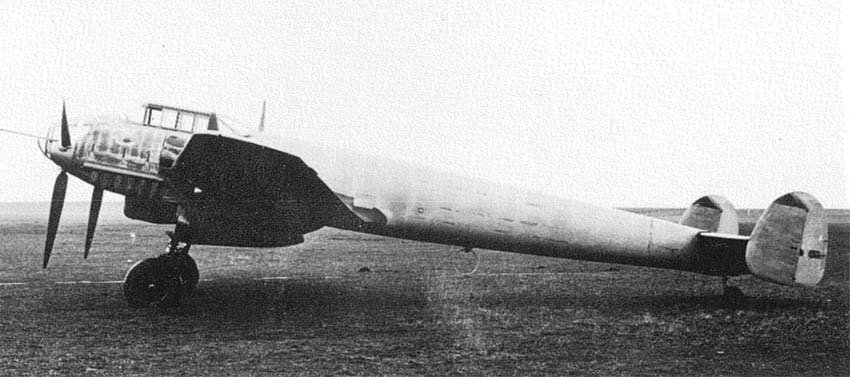
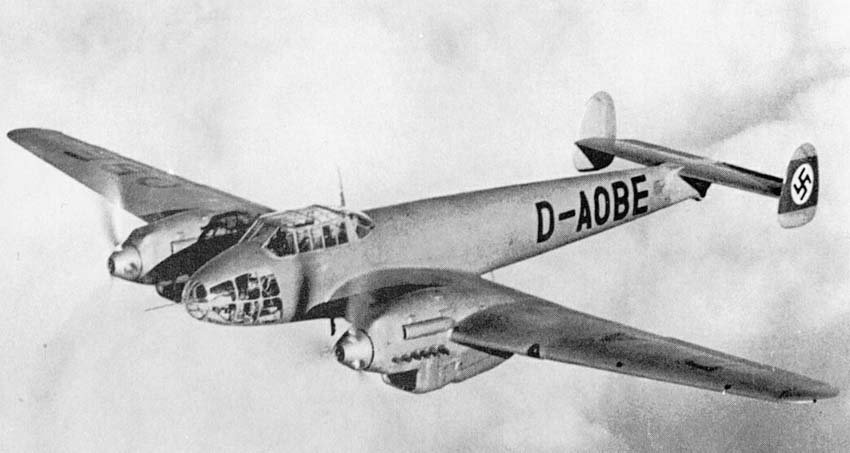
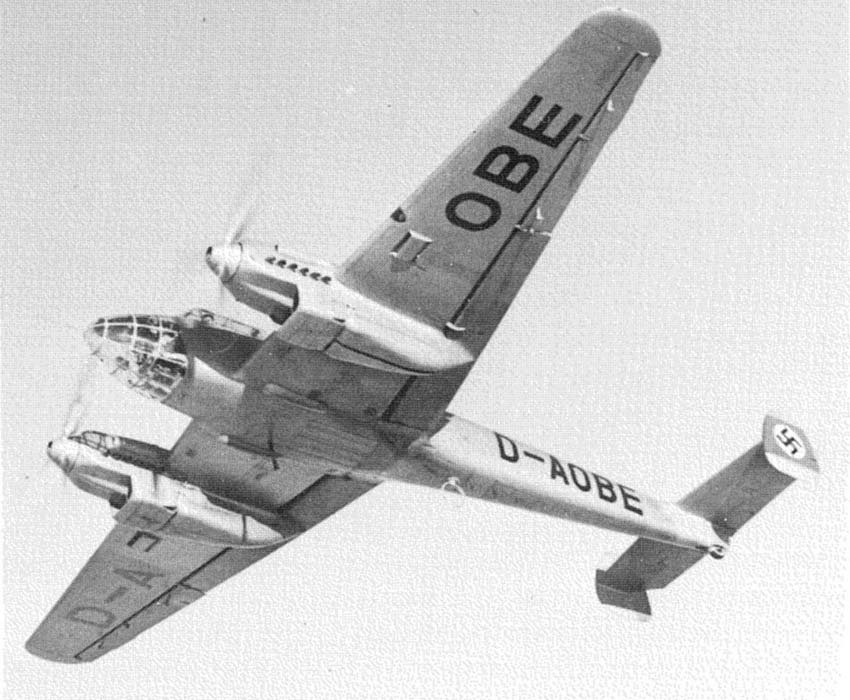
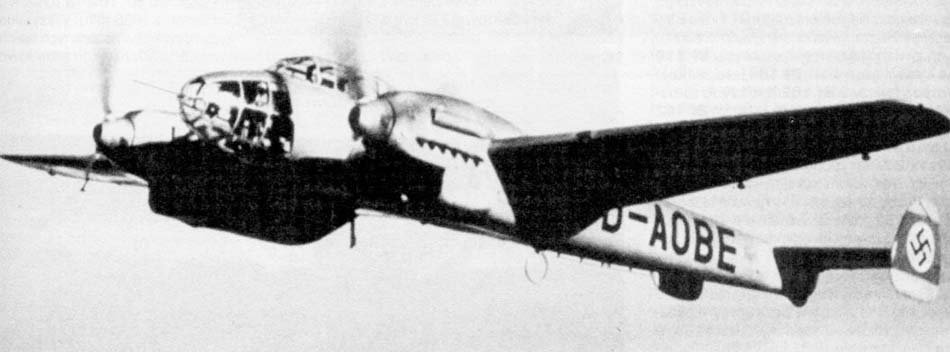
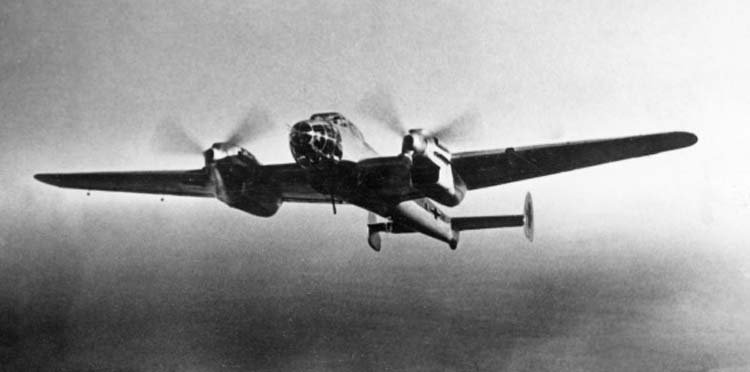
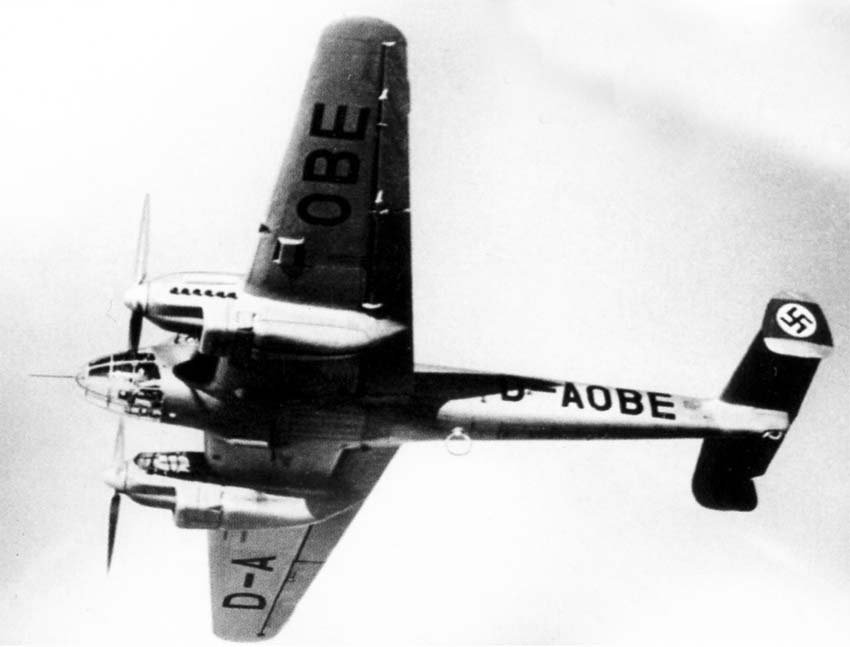
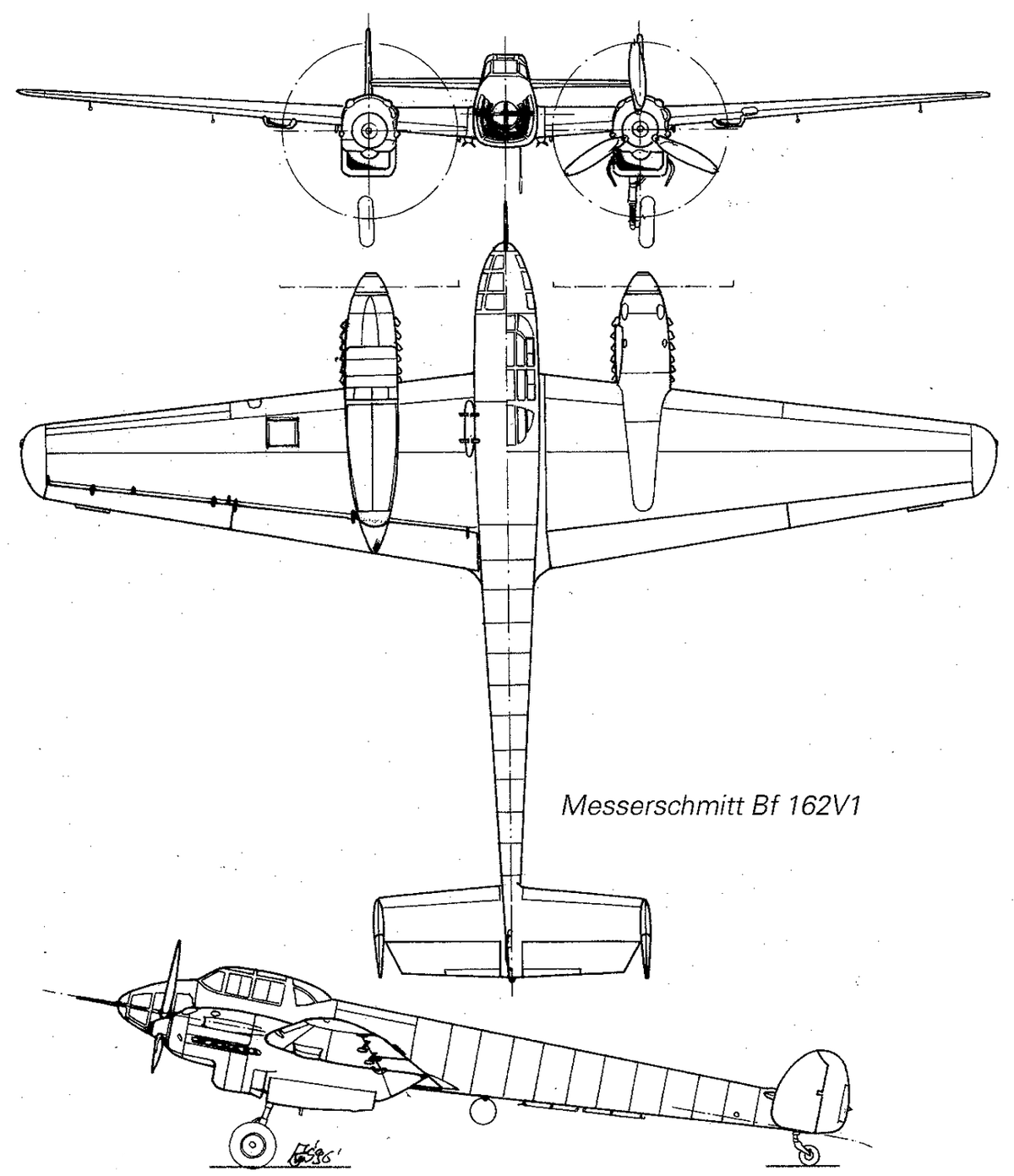
The Bayerische Flugzeugwerke high-speed bomber, the Bf 162, competing with the Junkers Ju 88 and Henschel Hs 127, strongly resembled the Bf 110. The wing structure was practically analogous to the Bf 110A, but the span and area were significantly increased. The fuselage with its twin-rudder empennage also resembled the fighter, but the tail section was lengthened to maintain the center of gravity. The fuselage nose section was completely new and wider, with good glazing. A 7.9 mm MG 15 machine gun was placed in a small recess behind the cockpit. The crew was planned for three people. The bombardier’s position was slightly behind the pilot. The internal bomb bay immediately behind the cockpit could hold 10×50 kg bombs. Two 250 kg bombs could be suspended on two under-fuselage ETC racks.
Flight Testing and Project Termination
The two DB 600Aa engines had a power of 986 hp at takeoff and 910 hp at 4000 m altitude. Flight tests of the first prototype Bf 162 V1 (D-AIXA) began in Augsburg in late spring 1937. In September, the second, Bf 162 V2, flew. The Bf 162’s flight data proved disappointing: the maximum speed at 3400 m altitude was only 480 km/h. Cruising speed at normal weight was 425 km/h. The Bf 162’s low flight performance and the Air Ministry’s idea to limit Messerschmitt and its designers’ activities solely to fighter design led to the termination of work on this aircraft, although the third prototype Bf 162 V3 (D-AOVI) was completed and first flew on August 20, 1938.
The experimental Bf 162s were used in various research programs. For example, the Bf 162 V3 was tested with remotely controlled installations for the Me 210. However, Messerschmitt’s high-speed bomber quietly faded into obscurity, unlike other not-so-successful combat aircraft projects. Soon after the start of hostilities, it was “resurrected” by the Ministry of Propaganda, which published its photos with emblems of various units, christening it the “Jaguar.” The purpose of this mystification was to deceive Allied intelligence.
Technical Specifications
| Modification | Bf.162 V2 |
| Wingspan, m | 17.10 |
| Length, m | 12.75 |
| Height, m | 3.60 |
| Normal takeoff weight, kg | 5800 |
| Engine type | 2 Piston engines Daimler-Benz DB 600Aa |
| Power, hp | 2 x 986 |
| at sea level | 425 |
| at altitude | 475 |
| Cruising speed, km/h | 423 |
| Practical range, km | 780 |
| Maximum rate of climb, m/min | 540 |
| Practical ceiling, m | 6000 |
| Crew, crew members | 3 |
| Armament | one 7.9-mm MG 15 machine gun on a flexible mount in the rear part of the cockpit; 10×50-kg bombs in the bay and (overload) 2×250-kg bombs on external hardpoints. |
Image and diagram gallery of the Bf.162
 Bf.162 |
 Bf.162 |
 Bf.162 |
 Bf.162 |
 Bf.162 |
 Bf.162 |
 Bf.162 |