
In 1924, Pavel Beneš and Miroslav Hajn developed the BH-20, a light sports aircraft intended for both recreational flying and the training of civilian pilots. This wooden, two-seater, single-strut biplane was powered by a 60 hp Walter NZ-60 engine.
Origins and Design
The BH-20 was envisioned for initial pilot training, forming part of a tiered system alongside other aircraft from the same firm. It would serve for primary instruction, with the BH-22 and BH-21 designated for subsequent training stages.
A Solitary Prototype
Despite its potential, the BH-20 never entered serial production. Only one example was built, receiving the civil registration OK-IPB, thus remaining a unique prototype in aviation history.
Technical Specifications
| Modification | BH-20 |
| Wingspan, m | 7.88 |
| Aircraft length, m | 6.29 |
| Wing area, m2 | 16.10 |
| Empty weight | 345 |
| Maximum takeoff weight | 485 |
| Engine type | 1 Piston engine Walter NZ-60 |
| Power, hp | 1 x 60 |
| Maximum speed, km/h | 160 |
| Cruising speed, km/h | 140 |
| Rate of climb, m/min | 186 |
| Service ceiling, m | 4000 |
| Crew, crew members | 2 |
Image and diagram gallery of the BH-20 Light Sports Aircraft
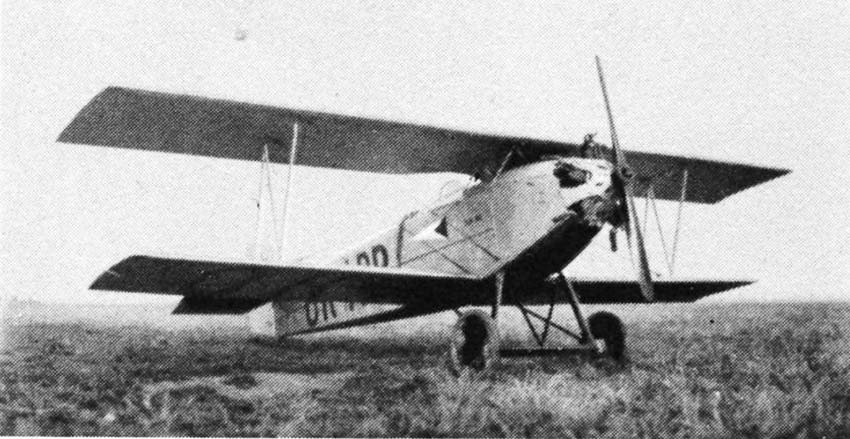 BH-20 |
How to cite this article:
APA: BH-20 Light Sports Aircraft (). BH-20 Light Sports Aircraft. wp.archivoaereo.com. https://wp.archivoaereo.com/en/bh-20-light-sports-aircraft/
VANCOUVER: BH-20 Light Sports Aircraft [online]. wp.archivoaereo.com; [cited 2026-10-18]. Available at: https://wp.archivoaereo.com/en/bh-20-light-sports-aircraft/