
Howard Wright began his aviation activities in 1899 at H. Maxim’s firm (Hiram Maxim). In July 1905, he founded his own company with his brothers (Warwick and Walter), inheriting Maxim’s clients and business connections.
The company manufactured aircraft of its own design and accepted orders from other designers, such as Barber (and later his firm ASL) and Poynter. Sometimes Howard Wright also assisted customers in design; the Cooke, Lascelles, and Scottish Aeroplane Syndicate aircraft, built by Howard Wright, bear clear imprints of Howard’s own ideas. The firm’s last and most successful apparatus was the “Biplane No. 2”, designed in 1910. The main part of the design was executed by W.O. Manning, who joined the firm in December 1908.
Innovative Design and Characteristics
The “Biplane No. 2” was very similar in layout to the Farman-4, but in detail and manufacturing quality, these aircraft were incomparable. It was easy to control and forgiving of many pilot errors. It was a two-seater biplane with a pusher propeller; the pilot and passenger sat one behind the other at the leading edge of the lower wing, with the engine located behind them.
Initially, a 60 hp water-cooled ENV engine was installed, with radiators on both sides of the passenger seat; later, 50 hp Gnome rotary engines were fitted. The wings had the same span, covered with fabric only on one (lower) side, and additional sections could be installed on the upper wing. Ailerons were on both the upper and lower wings, as well as on the additional sections.
Aileron control was standard, via a stick located to the pilot’s right. This same stick controlled the front and rear elevators. Unlike the Farmans, the rear elevator was monoplane, and there was only one rudder. Most of the structure was made of Honduras mahogany, with only the landing gear and rudder post made of ash.
Flight Milestones and Achievements
In August 1910, the aircraft first took to the sky at Larkhill airfield in Salisbury Plain, piloted by Lt. E.M. Maitland, but it soon crashed. Maitland was no longer able to fly, and the aircraft was repaired and transferred to another officer, Lt. H.E. Watkins, who began to learn to fly on it.
On November 15, Watkins received Royal Aero Club Pilot Certificate number 25, and in December 1910, he began preparing for a flight for the Baron de Forest prize, which offered £4000 for the longest flight from London to the continent. A radio transmitter was installed on the aircraft to track its flight over the English Channel, but the “Biplane No. 2” crashed again before the competition began.
After restoration, the aircraft was sold to the War Ministry for £625, where it served until July 8, 1911, accumulating 1 hour and 56 minutes of flight time. In January 1912, it was sent to the Royal Aircraft Factory, where its parts were used in the construction of the B.E.6 aircraft.
Watkins continued flights on the second example of this type, and the third example was acquired by Thomas Sopwith, the future famous aircraft designer of World War I. On the morning of November 21, 1910, Sopwith, who had only flown a few times previously on a Howard Wright monoplane and without receiving any instructions, made several straight flights. The flights were successful, and by evening, several circular flights were completed, including the three required to obtain a Pilot’s Certificate (No. 31).
Three days later, with only 10 hours of flight experience, Sopwith participated in the “British Michelin Cup” competition for the longest flight by a British pilot in a British machine by the end of 1910. His flight, lasting 3 hours and 3 minutes, not only set a new British record but also gave him a good chance of winning the competition.
Over the next two weeks, the aircraft was modified for long-duration flights: additional upper wing sections were installed, a large fuel tank was placed in the passenger seat position, a fabric fairing was added to protect the pilot from the wind, and the control stick was moved to the center. On December 18, Sopwith received the Baron de Forest prize for a 169-mile flight from England to Belgium, lasting 3.5 hours. In doing so, he also became the first pilot to cross the English Channel in a fully British aircraft.
On December 31, the last day of the “Michelin Cup” competition, a new record was set – 150 miles in 4 hours and 7 minutes. However, the prize was not awarded to him; it went to S.F. Cody, who covered 195 miles in 4 hours and 50 minutes on the same day. Sopwith continued to use this aircraft for demonstration, passenger, and acrobatic flights for a long time, even conducting a tour of the USA with it.
Upon his return to the UK, the aircraft was transferred to the flight school founded by Sopwith in London, for which dual controls were installed in March 1912.
Legacy and End of Production
A fourth example, also with an ENV engine, was sent to New Zealand, where it flew until December 1913. A fifth was sent to Burma.
At the 1911 aviation show in Olympia, a special racing variant of the biplane with a Gnome rotary engine was presented, built for the Irishman Robert Loraine. It had a reduced wingspan, and the outer sections of the lower wing could be removed, along with the outer pair of struts. Consequently, ailerons were absent on the lower wing. Claude Grahame-White also ordered a similar aircraft. In 1912, at his new flight school, at least six pilots obtained their pilot certificates on this biplane.
The last two aircraft of the nine built (both with ENV engines) participated in the Daily Mail Circuit of Britain race and the second Michelin Cup in 1911, respectively, but both were forced to withdraw due to engine problems. In mid-1911, Howard Wright’s company was bought by Coventry Ordnance Works, and the construction of “Biplane No. 2s” ceased.
Technical Specifications
| Modification | Biplane No.2 |
| Wingspan, m | 11. 00 |
| Aircraft length, m | 11.10 |
| Wing area, m2 | 38. 50 |
| Empty weight | 360 |
| Maximum takeoff weight | 545 |
| Engine type | 1 Piston engine Green |
| Power, hp | 1 х 50 |
| Maximum speed, km/h | 113 |
| Cruising speed, km/h | 58-72 |
| Crew, crew members | 2 |
Image and diagram gallery of the Howard Wright Biplane No. 2
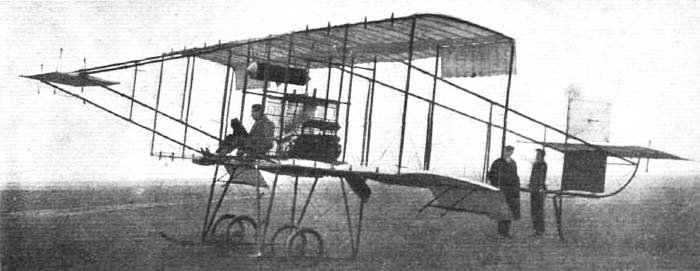 Biplane No.2 |
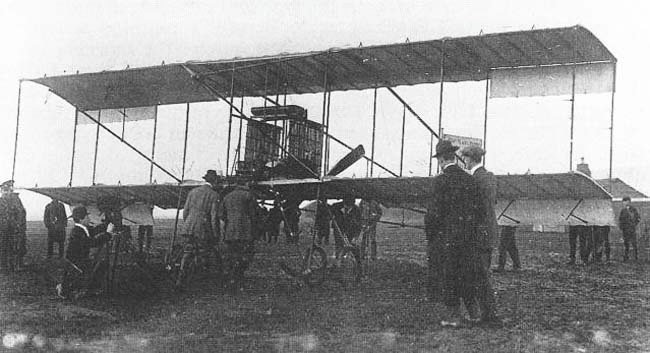 Biplane No.2 |
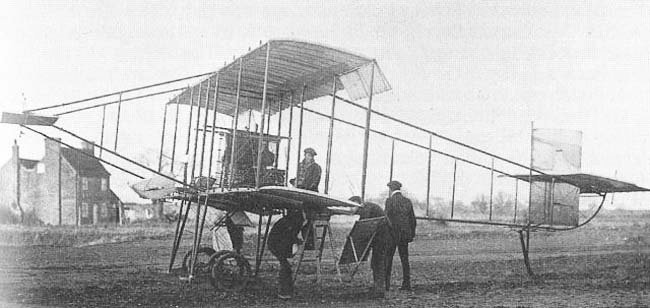 Biplane No.2 |
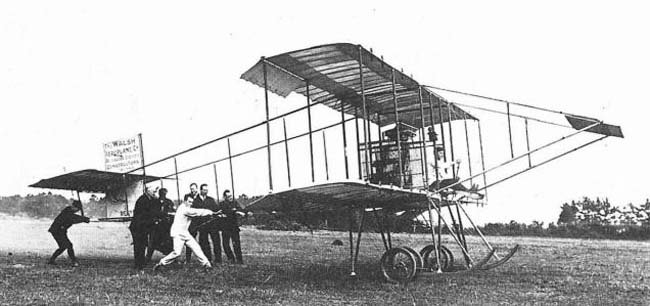 Biplane No.2 |
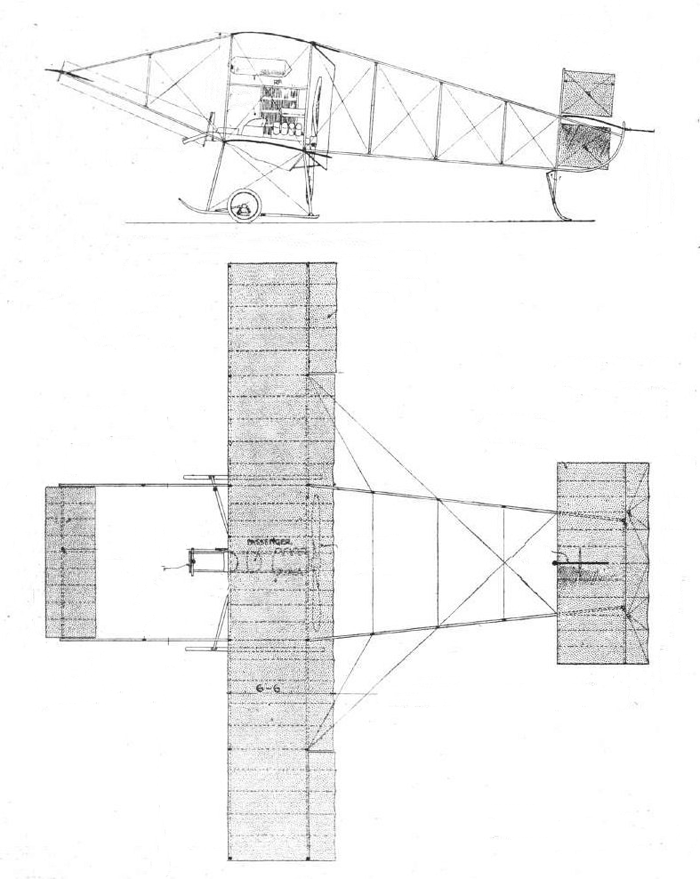 Biplane No.2 |