Origins and Specification F.7/30
The unprecedented success of the Rolls-Royce Kestrel water-cooled engine, installed in contemporary combat aircraft in service by late 1931, led the Air Ministry to issue Specification F.7/30 to the aviation industry. This called for a single-seat day and night interceptor fighter, equipped with the Kestrel IV engine featuring an evaporative cooling system, which was then completing flight development trials and entering serial production as the Goshawk.
Requirements were stringent: a maximum speed exceeding 250 mph (402.25 km/h), superiority over existing fighters in range, maneuverability, climb rate, and service ceiling. The fighter also needed to be equipped with four synchronized Vickers machine guns, a transceiver radio, and night flight equipment. Mandatory requirements included low wing loading and a good field of vision, free from exhaust glare.
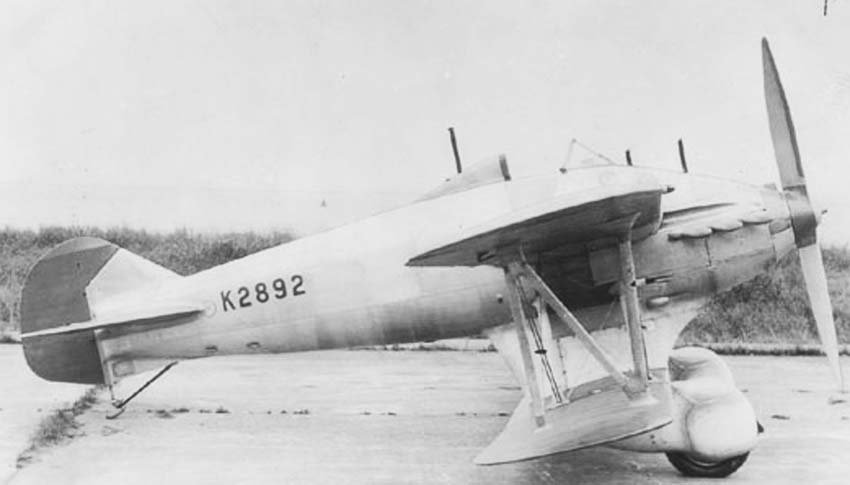
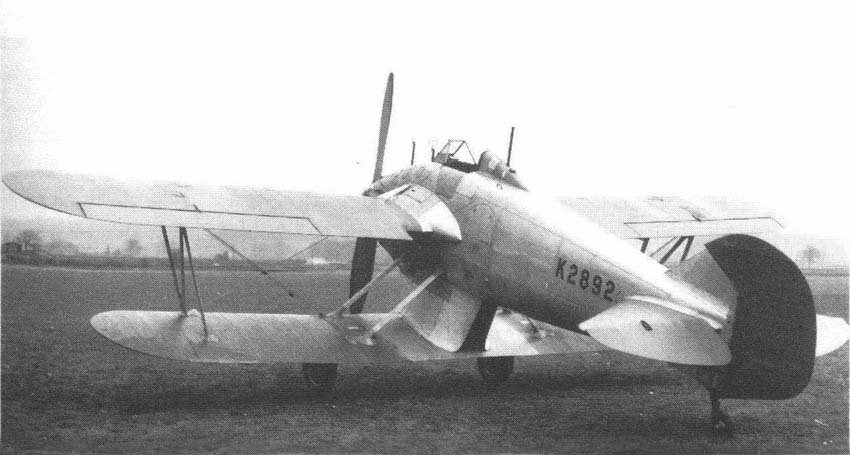
From several proposals, the Air Ministry selected the Supermarine Type 224, Westland P.V.4, and Blackburn F.3 as the most promising, ordering one prototype of each and assigning serial numbers K2890, K2891, and K2892, respectively. Competitive trials were planned for 1934 at Martlesham’s Aeroplane and Armament Experimental Establishment (A&AEE). Although not chosen for prototype construction, Bristol and Hawker built the Type 123 and P.V.3 at their own expense.
The contracting companies approached the specification too literally, resulting in several highly unusual aircraft. Ultimately, none of these, including the one designed by Blackburn’s G. E. Petty, received a production order.
Design Innovations and Armament
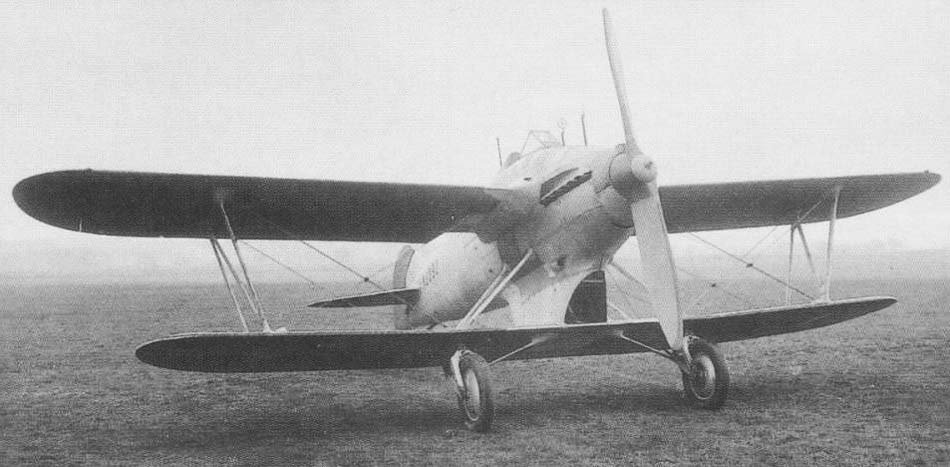
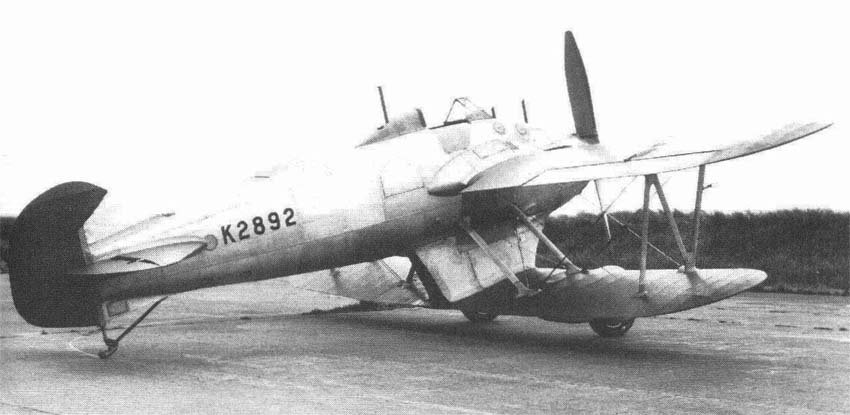
This was the smallest biplane that could be built around the 660 hp Rolls-Royce Goshawk III engine. Drawing on the company’s experience with flying boat hulls, Petty employed a stressed-skin duralumin fuselage with an integral fin. Otherwise, the aircraft’s general scheme was standard for Blackburn: fabric-covered steel and duralumin structures, featuring a horn-balanced rudder. The upper wing had a greater span and chord than the lower wing and carried the ailerons, which, like the elevators, were unbalanced.
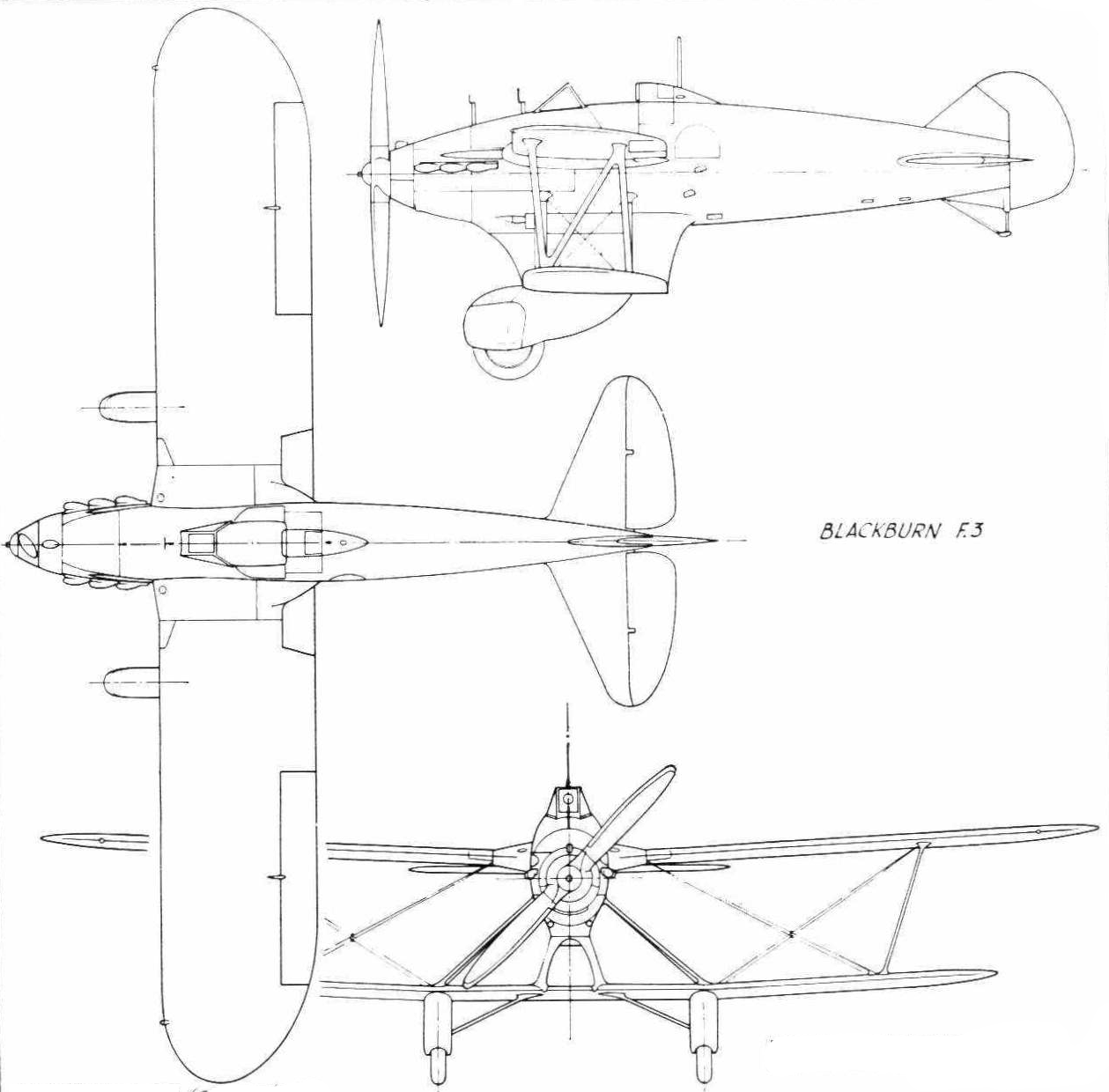
The aircraft’s unusual appearance was due to its fuselage being raised from its typical position between the lifting planes, allowing the biplane box to be below the pilot’s field of vision. Forward and upward visibility was almost ideal, as the nose, with its smoothly cowled Goshawk engine and flame-damping exhaust system ahead of the cockpit, sloped sharply downwards. Special honeycomb condensers replaced conventional fluid radiators and were housed in a streamlined tunnel, which, like on the Blackburn Nautilus, filled the gap between the fuselage and the lower wing.
A starter ratchet was installed on the large, two-bladed wooden propeller, through which all four machine guns fired via an interrupter gear. Two machine guns were located in the root sections of the upper wing, firing through troughs positioned above the exhaust stubs, while the other two fired through ports located on each side of the condenser fairing.
Testing and Ultimate Failure
The exceptionally wide-track landing gear consisted of two disk wheels mounted in steel cantilever forks, which included spring-oil shock absorbers and were bolted directly to the front spar of the lower wing. Landing loads were transferred to the main structure via parallel inclined struts installed on each side. The wheels were almost completely covered by large duralumin fairings, and a typical Blackburn reinforced tail skid was installed on the aircraft’s tail.
Preliminary taxiing was carried out at Brough on July 20, 1934, by A. M. Blake, with ground operational tests commencing on August 17. During these trials, it became clear that the aircraft, like other Goshawk-equipped prototypes, suffered from cooling problems. Another difficulty was the challenging taxiing of the aircraft due to its short fuselage and high center of gravity. Removing the fairings and replacing the tail skid with a wheel did not significantly improve the situation.
An inspection on September 5 revealed cracks and dents in the metal skin of the fuselage, resulting from the taxiing tests. Thus, the Blackburn F.7/30 was not ready for submission by the agreed deadline, and the Air Ministry withdrew its support for the project. This unique aircraft never flew, despite the skill of its designers and the immense effort expended during its construction. In July 1936, the aircraft was transferred to the Electrical and Wireless School in Halton, to serve as a training glider.
Technical Specifications
| Modification | F.3 |
| Wingspan, m | 9.02 |
| Length, m | 8.22 |
| Height, m | 3.05 |
| Empty weight | 1133 |
| Normal takeoff weight | 1794 |
| Engine type | 1 Piston engine Rolls-Royce Goshawk III |
| Power, hp | 1 x 695 |
| Maximum speed, km/h | 290 |
| Crew, crew members | 1 |
| Armament | four synchronized 7.7-mm Vickers MkIII machine guns (200 rounds per gun) |
Image and diagram gallery of the Blackburn F.7/30
 F.3 |
 F.3 |
 F.3 |
 F.3 |
 F.3 |