
At the end of the First World War, Great Britain had two dozen aircraft manufacturers with their own design departments. All of them faced the fact that their products were not in demand. The Royal Air Force had a surplus of thousands of serviceable aircraft, and hundreds more were being produced weekly until contracts were cancelled.
There was no prospect of military orders in the near future, but most companies hoped for a boom in civil aviation. They decided to either convert existing designs or develop new, purpose-built machines for this emerging market.
Although Boulton-Paul had built only three aircraft of its own design by the end of the war (the Bobolink, P.6, and the first Bourges, with two more Bourges almost completed), the company had some advantages compared to many other aircraft manufacturers. The P.6, though mainly experimental, was a simple two-seat light aircraft, ready for market as a private plane after minor modifications.
After abandoning Dragonfly engines in favor of the Napier Lion, the Bourges emerged as an outstanding twin-engine bomber, offered as an advanced basis for airliner development. However, the company suffered from one serious drawback. Despite building over 2,000 aircraft during the war, Boulton-Paul had few original designs and its name was not at the forefront of aviation circles.
There was, however, one very good chance to put its name in the spotlight and promote a new airliner based on the Bourges at this time. The £10,000 prize, established by the Daily Mail newspaper for the first non-stop flight across the Atlantic Ocean, had been postponed due to the war. This prize offered a unique opportunity for prestige and commercial success.
Naturally, many other aircraft manufacturers immediately entered the race for the prize, promoting their own products in the process. To outpace their rivals, each company attempted to keep its developments in strict secrecy. The fastest contenders included Sopwith, with its single-engine Atlantic, largely based on the wartime B.I with many Cuckoo components for rapid construction, and Martinsyde, with a significantly enlarged version of the F.4 Buzzard, renamed Raymor.
Frederick Handley Page saw his four-engine V/1500 as the ideal aircraft for the task, while Vickers entered the race with its twin-engine Vimy. Short Brothers considered their Shirl long-range torpedo-bomber as a basis for a machine capable of flying across the Atlantic from east to west, unlike all others who preferred to fly in the other direction with the prevailing winds. Fairey prepared to convert its Fairey III seaplane for the attempt, and the Alliance Aircraft Company built a special aircraft for the task – the P.2 Seabird, equipped with a single Napier Lion engine.
Finally, Boulton & Paul began preparations for what would be one of the most thoroughly conceived projects for the Daily Mail competition: the P.8 Atlantic.
Development and Design
Two prototypes were built, and from the outset, the first one was designed and constructed exclusively for the attempt to cross the Atlantic Ocean. The second prototype was Bourges F2904, which, having been severely damaged in an accident at Mousehold, was obtained from the Air Ministry and stripped down.
The remains of its structure formed the basis of the first prototype, with the inclined planes of the upper wing center section and the Dragonfly engines being discarded. The P.8 wings had an increased span of 60 ft 4 in (18.39 m), but were still based on the Bourges wings: three-bay, unstaggered, with a continuous upper wing center section chord of 8 ft (2.438 m) and a lower wing chord of 6 ft 6 in (1.98 m). Horn-balanced ailerons were fitted on all four wing panels.
Conventional wooden construction was used, but the spar joints were very strong, with all struts hinged and supported at each joint by metal splice plates. Although John North had already decided that the future of aircraft construction lay in metal structures, the use of wood in the P.8 was continued for convenience and speed of construction.
This, however, did not prevent him from introducing some advanced technical methods. For example, hollow rivets were used instead of bolts to strengthen metal fittings to the wooden fuselage spars. These rivets were inserted through metal plates on each side, with their ends flattened by specially designed riveting equipment.
This resulted in only flattened heads on each side instead of protruding bolts, leading to a lighter and more compact joint. Additionally, rivets were quicker to install, despite taking longer to replace compared to conventional bolts.
Although the main visual difference of the P.8 from its predecessor was that the fuselage filled the interplane gap of 6 ft 6 in (1.98 m), the fuselage actually retained the basic Bourges design. The upper section was simply a fairing for the cross-members and guides.
This design choice was also made to speed up construction and prepare the aircraft for the Atlantic flight ahead of competitors. The fuselage featured four spars, braced and reinforced crosswise with struts and turnbuckles. When the aircraft was in flight, the upper spars were perfectly straight, which was very beneficial for structural strength.
The nose gunner’s position was replaced with a rounded structure covered in plywood and fabric. The pilot’s cockpit, like on the Bourges, was located in front of the wings but was fully enclosed by a canopy, a very advanced solution for its time.
It had a streamlined shape with the upper fuselage such that the rearward view was restricted, but the forward, side, and downward views were excellent—better than any airliner known until the D.H. Dragon matched it. For conservative pilots who preferred to feel the wind, the option to open the top of the canopy was provided.
In the first prototype (for the Atlantic flight), provisions were made to assist the pilot and radio operator, with two sets of equipment: one for communication and one for direction-finding. In case of a forced landing in the Atlantic, the aircraft carried a small balloon and a hydrogen flask containing a radio antenna at the top for emergency signals. The radio operator and navigator sat behind the pilot’s cockpit, illuminated by large rectangular windows on each side of the fuselage.
Behind the crew compartment, six fuel tanks occupied the entire cabin space. They were fitted with emergency fuel dump valves capable of jettisoning fuel within 1¼ minutes and were positioned so that when empty, they could keep the aircraft afloat.
The fuel capacity was sufficient for a flight range of 3,850 miles (6,194.65 km). The aircraft’s characteristics, including its cruising speed of 116 mph (186.644 km/h) which was significantly higher than any potential competitor, allowed it to maintain altitude on a single engine two hours after fuel consumption. More importantly, it could maintain altitude at half power, reducing engine stress.
The 450 hp Napier Lion engines were covered by aluminum cowlings and installed on the lower wing within the inner biplane struts. The frontal radiators, installed on the Bourges P.7b, were discarded in favor of a single retractable radiator mounted under the fuselage.
This radiator was connected to header tanks located above each engine, with two shut-off valves on each side, allowing the system to be isolated in case of a leak. Six-gallon (27.277 L) oil tanks were installed behind each engine next to the self-starting magnetos. The engines drove four-blade propellers with a diameter of 9 ft 6 in (2.896 m) and were attached to the fuselage spars by steel tubes, forming a sturdy lattice truss with bracing wires.
The fin and horn-balanced rudder had a circular contour, while the tailplane, like the wings, was rectangular, and the elevators were not compensated. Since the rudder was insufficient for maintaining course with asymmetric power, two small auxiliary fins were installed protruding above and below the tailplane.
In the event of an engine failure, these could be locked at an angle in the airflow. The P.8 was so stable that it could practically fly hands-off when fully trimmed, and it was possible, by moving a single lever, to lock the elevators and ailerons and transfer rudder control to the control wheel.
This was unusual, as such devices typically only acted on the ailerons, since on most aircraft, rudder control via the control wheel merely created a pitching effect. On the P.8, a light touch of the rudder was enough to bring the aircraft back on course without losing altitude. This device was also useful for ground control, using only hands instead of feet, provided the pilot remembered to unlock the controls before takeoff!
To the pilot’s left was a wheel for raising and lowering the radiator. To their right were two wheels: one for setting the angle of the auxiliary fins on the tailplane to counter asymmetric thrust, and the second for controlling the tailplane’s angle of attack.
The undercarriage was probably the most advanced feature of the aircraft. The landing gear components consisted of V-struts attached to the inner biplane struts, providing a wide track, and split axles hinged under the fuselage spars. A single very large Palmer aircraft wheel was fitted on each side.
The technical advancement lay in the suspension elements, which were not just conventional simple rubber shock absorbers but also included oil-pneumatic struts designed to absorb landing impacts. This combination of suspension was even more advanced than the newly emerging pure oleo-pneumatic shock absorbers.
Early oleo-pneumatic systems could absorb landing impacts very well but were less capable of absorbing the frequent vertical jolting caused by taxiing over uneven grass airfields.
The Transatlantic Race
The crew selected for the Atlantic flight were Major K.S. Savory as first pilot, Captain A.L. Howarth as second pilot-radio operator, and Captain J.H. Woolner as navigator. Boulton & Paul Managing Director Major Guy Hiske traveled to Newfoundland to choose a suitable runway for takeoff, and North Atlantic weather conditions were studied in detail for several months.
The race for the prize developed publicly. After initial flights in February 1919, the Sopwith was shipped, and on March 19, 1919, the Daily Mail was officially notified of its entry into the competition. Applications for the Short Shamrock (a modified Shirl, named after its proposed takeoff point in Curragh), Martinsyde Raymor, and the Fairey III seaplane were to follow in quick succession.
The Sopwith Atlantic arrived in Newfoundland on March 29, and shortly thereafter, the Martinsyde underwent 24-hour ground tests, followed by the dismantling and inspection of its Rolls-Royce Falcon engine. On the Vickers, modifications to the 13th Vimy on the production line were nearing completion, and both pilots, John Alcock and Arthur Whitten Brown, had been selected.
The preparation of the Boulton & Paul aircraft was severely delayed because the unregistered P.8 crashed. In the haste to get the P.8 ready for the Atlantic flight, Frank Courtney tested each engine separately before the first flight in April 1919, thus failing to detect a fuel system malfunction that prevented sufficient fuel supply to both engines simultaneously.
One of the Lion engines cut out immediately after takeoff, causing the aircraft to swerve into the wind and hit a wing on the ground, practically writing itself off. The entire nose section detached; Courtney was in it but fortunately was unharmed.
A second P.8 was under construction, and preparations were made for its use in the Atlantic flight. On April 11, the Sopwith Atlantic conducted a test flight in Newfoundland but soon landed due to rain and dense fog. Martinsyde had just arrived in Newfoundland, and four days later, the Handley Page V/1500 was shipped.
On April 18, the Vickers Vimy performed a test flight at Brooklands, and on the same day, the Short Shamrock, a modified Shirl with wings enlarged to three-bay configuration and a huge jettisonable cylindrical fuel tank (increasing total fuel load to 435 gallons / 1977.55 L), departed from Eastchurch for Ireland.
Piloted by Major J.C.P. Wood with Captain C.C. Wyllie as navigator, the aircraft refueled in Holyhead and then flew to Curragh, considered the only place in Ireland with a long enough takeoff run for fully loaded machines. After twelve miles of flight across the Irish Sea, the engine stopped, and Wood made a forced water landing. Although the Shamrock overturned, it remained afloat and was towed to Holyhead port, after which Wood announced his intention to continue in the race.
Although the Americans were not competing for the Daily Mail prize, they made an official attempt to cross the Atlantic, albeit in several stages via the Azores. Three Curtiss NC flying boats flew in formation via Newfoundland and the Azores to Lisbon.
The route was marked by 68 destroyers stationed at 50-mile (80.45 km) intervals, and five battleships positioned 500 miles (804.5 km) apart. Every fourth destroyer acted as a meteorological station. In case the flying boats, with such massive support, were unable to make it, an airship with a four-man crew, departing from Newfoundland, also attempted the crossing.
On May 8, three Curtiss NCs departed Rockaway, New York, for the first leg to Newfoundland; they all arrived, though it took five days. The threat of the Americans being first spurred the small private British teams into action.
The Sopwith and Martinsyde crews made hurried preparations, but the Americans took off first. On May 16, three NCs lifted off from Trepassey Bay and headed for the Azores, but by 9:25 on May 17, only NC-4 had arrived. Although news of the Americans’ arrival in the Azores reached Newfoundland, there remained a chance that the British could be the first to make a non-stop ocean crossing.
On May 18, the Sopwith Atlantic, piloted by Harry Hawker with Captain 3rd Class MacKenzie-Grieve as navigator, took off from Newfoundland. For 8 days, nothing was heard from them. They made a forced landing at sea and, fortunately, were picked up by a ship, despite having drifted 100 miles off course after flying an estimated 800 miles.
Their failure justified the safety measures built into the Boulton & Paul P.8, particularly its ability to fly on one engine and radio direction-finding. In fact, the Sopwith aircraft flew over the heads of the Martinsyde crew as they made desperate attempts to get the Raymor ready. The Raymor’s overloaded landing gear collapsed during an attempted takeoff 20 minutes after the Sopwith, severely damaging the aircraft.
On May 27, NC-4, piloted by Captain 3rd Class Read, took off from the Azores and reached Lisbon the same day, becoming the first aircraft to cross the Atlantic Ocean. However, the honor of making the first non-stop flight and winning the £10,000 prize still remained to be claimed.
Meanwhile, the Handley Page V/1500 and Alcock and Brown in the Vickers Vimy arrived in Newfoundland. Damage was found on the Handley Page, which was rectified through manual repairs. It was intended to have a four-person crew: Major H.G. Brackley as pilot, Admiral Mark Kerr as co-pilot, Tryggve Gran as navigator and third pilot, and F. Wyatt as radio operator.
After repairs were completed, bad weather prevented a test flight until June 10. Test flights showed that the engines had an alarming tendency to overheat; new radiators were sent from England but did not arrive by the 18th.
Repairs were also carried out on the Martinsyde Raymor, but before its second attempt and before the completion of the second Boulton & Paul P.8, Alcock and Brown, taking off on June 14, completed the first non-stop transatlantic flight in their Vickers Vimy.
From Transatlantic Hope to Civilian Airliner
The Boulton & Paul project was abandoned, but the Martinsyde crew made a second attempt, though the landing gear again collapsed on takeoff. Instead of a transatlantic flight, the Handley Page was sent on promotional flights to Long Island, where many demonstrations took place.
The second P.8 was completed and, for some time, was used as an airliner prototype and a flying aerodynamic testbed, registered as G-EAPE. It was never converted into an airliner configuration, but the company built a fuselage mock-up of the proposed layout, and Geoffrey Watson presented an artist’s impression of the finished product.
Although the mock-up showed cargo/passenger accommodation and fuel tank capacity sufficient to meet any needs, the basic airliner version was offered with 100 gallons (454.61 L) of fuel and 7 passengers. The main fuel tank was located inside the fuselage directly under the upper wing, allowing gravity feed to the engines.
In front of it was a cabin for three passengers, and behind it, another for four passengers. Passengers were to enter the cabins through separate doors. To improve headroom upon entry, part of the roof above each section could slide aside. The front door was located behind the cockpit and was quite high off the ground, requiring a step-up of 10 feet (3.048 m) for access. Even the threshold of the rear door was 6 feet (1.829 m) off the ground.
Both cabins were heated, and one brochure made much of the fact that passengers would not need to wrap themselves in warm clothing—a typical inconvenience of many palliative airliners introduced at the time. Both cabins had large porthole windows on each side.
A postal compartment, capable of carrying up to 500 pounds (226.8 kg) of mail, could be loaded with a patented Boulton & Paul special loading device and was directly connected to the bomb bay hoist developed for the Bourges. The total useful load of the aircraft, excluding fuel, was 1,870 pounds (830.088 kg).
Its maximum speed was remarkable—149 mph (239.741 km/h) at sea level and 143 mph (230.087 km/h) at 10,000 feet (3048 m). Even its cruising speed of 116 mph (186.644 km/h) was faster than the maximum speed of all contemporary airliners offered for sale. It was claimed that the P.8 was the fastest twin-engine aircraft in the world.
With a wing loading not much higher than that of the Bourges—10¼ lb/ft² (50.046 kg/m²), the P.8 retained its progenitor’s high maneuverability. To appease the conservative nature of most pilots, the airliner version was offered with either an enclosed canopy or an open cockpit with a windscreen.
There is little doubt that the P.8 had the most advanced and well-designed structure prepared for the Atlantic crossing, but fate decreed that the great glory of the pioneer would not come to the Boulton & Paul machine. The company’s attempts to market the P.8 as an airliner ended in failure.
The power that gave the P.8 outstanding performance and the ability to fly on one engine meant that the aircraft could not compete economically with some of its rivals. This was especially true with the desperate economy prioritized by some early airlines over passenger comfort and safety.
With a total of 900 hp and seven passengers, comparing the P.8 with the DH.18, which made its first flight in March 1920, would not favor the former. The DH.18 carried a pilot and eight passengers with only one Napier Lion. The fact that it had only one engine resulted in a maximum speed of 121 mph (194.689 km/h), and the view from the pilot’s cockpit, located behind the passenger cabin—closer to the tail than the nose—was terrible, but this was less important than economy.
Even a converted Handley Page O/400 bomber, though twin-engine, was completely unable to maintain altitude on one engine, and only its very low landing speed allowed many crashes to be avoided during forced landings.
If the first P.8 had not crashed, the Atlantic prize might have been won, and the glory achieved could have led potential air passengers to demand flights on an aircraft capable of safely crossing the Atlantic Ocean.
Technical Specifications
| Modification | P.8 |
| Wingspan, m | 18. 39 |
| Length, m | 12.19 |
| Height, m | 3.76 |
| Wing area, m2 | 71.50 |
| Empty weight | 2345 |
| Normal takeoff weight | 3574 |
| Engine type | 1 Piston engine Napier Lion |
| Power, hp | 1 х 450 |
| Maximum speed, km/h | 240 |
| Cruising speed, km/h | 187 |
| Service ceiling, m | 7620 |
| Crew, crew members | 1 |
| Payload: | 7 passengers (planned) |
Image and diagram gallery of the P.8 Atlantic
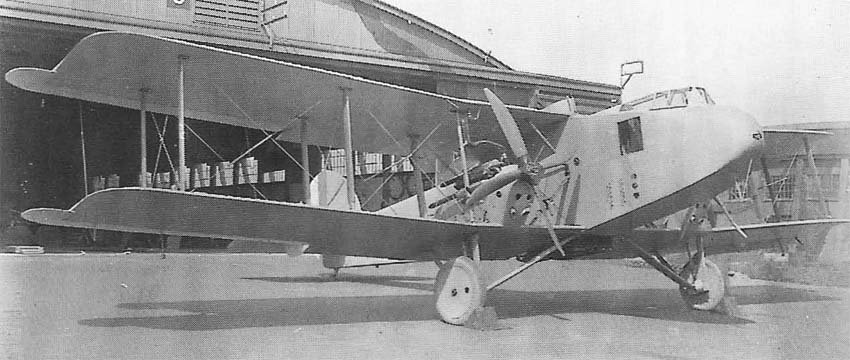 P.8 Atlantic |
 P.8 Atlantic |
 P.8 Atlantic |
 P.8 Atlantic |
 P.8 Atlantic |