
Although Caproni was shaken by the failure of his nine-winged Ca.60 Transaereo, an transatlantic airliner that famously crashed during its first public flight on March 4, 1921, Count Gianni Caproni di Taliedo did not abandon the construction of giant airplanes. He resumed work on bombers for the Italian Royal Air Force, starting with the Ca.73 in 1925.
This aircraft proved fortunate for Caproni, becoming the basis for a series of “successors” that culminated in the Ca.90P.B. The letters in the aircraft’s name stood for pesante bombardamento — heavy bomber — but this was an understatement, as the Ca.90P.B. was the heaviest bomber of its era.
Gianni Caproni’s Vision and Early Designs
Born in 1886, Gianni Caproni began his career as an electrical engineer. However, he developed an interest in aviation from childhood, building a small biplane glider in 1908. Two years later, he constructed a biplane equipped with two modest 25-horsepower Miller engines, installed between the wings, managing short flights on a meadow now part of Malpensa Airport.
In 1911, Caproni, with his brother Federico and Agostino di Agostini, founded “Societa de Agostini e Caproni” and began producing aircraft. Their first was a monoplane with a 28-horsepower Anzani engine. This aircraft, which completed a 50-minute test flight on June 15, 1911, was the first aircraft of Italian design.
In 1912, Agostini left the firm, replaced by another talented engineer, Carlo Comitti. The renamed company, “Societa Caproni e Comitti,” developed the Ca.9 monoplane, powered by a 35-horsepower Anzani engine. On January 30, 1912, this aircraft set a world record by flying 170 km with a 165 kg load in 2 hours, 2 minutes, and 46 seconds.
In 1913, Caproni met Major Giulio Douhet, whose views on the future of military aviation were dismissed as unrealistic by the Italian General Staff. Douhet, explaining his concept of using aircraft for deep strategic bombing to terrorize the enemy population into demanding peace, asked Caproni to create an aircraft capable of such tasks.
In response, Caproni built the Ca.30, a large biplane with three 80-horsepower Gnome rotary engines: two tractor propellers ahead of twin tail booms and one pusher propeller behind a central crew nacelle. It could carry 250 kg of bombs, a pilot, a bombardier, and a gunner, with a flight duration of 3.5 hours. After successful prototype trials, Caproni launched the design into production as the Ca.33, using three 150-horsepower engines and increasing the bomb load to half a ton.
When Italy entered the war against Austria-Hungary in May 1915, Caproni’s three-engine aircraft became the most sought-after military aircraft in the Italian arsenal and one of the best bombers worldwide. Caproni built approximately 1000 bombers of various types for the air forces of Italy, France, and the USA. Several Ca.42 triplanes were also used by the British Royal Naval Air Service.
Evolution of Caproni Bombers
After World War I ended on November 11, 1918, aircraft efficiency and engine quality significantly improved. Engineers began showing interest in commercial aviation. Caproni was no exception, but he did not abandon military aircraft design, especially after Benito Mussolini came to power in 1922, and his Fascist party promoted Italy’s militarization.
In 1925, Caproni’s design team developed the Ca.73Bi.B (bimotore bombardamento), a twin-engine bomber with a wooden frame and an unusual inverted sesquiplane wing arrangement, where the lower wing was significantly larger than the upper. The lower wing, with a 24.99 m span, also featured aerodynamically balanced ailerons.
Two 400-horsepower Lorraine-Dietrich engines, mounted in tandem between the wings on steel tube struts, drove two-bladed wooden propellers. The 15.08 m long fuselage featured two stabilizers and a single rudder. One machine gun was mounted in the nose for the bombardier/navigator/observer, a second behind the cockpit, and a third under the fuselage. Bombs were externally suspended near the open cockpit, where the commander and co-pilot sat side-by-side. With a standard five-ton load, the Ca.73Bi.B had a maximum speed of 202 km/h, a ceiling of 4,600 m, and a range of 748 km.
The Ca.73Bi.B was a successful design, and Caproni soon sought to improve it. The Ca.79Q.d. (quadra dure) was identical but featured an all-metal frame. The Ca.73bis, built in 1926, used more powerful 440-horsepower Lorraine-Dietrich engines, while the Ca.73ter employed 490-horsepower Isotta-Fraschini engines. A transport version, the Ca.82, was also built, along with the Ca.82Co. (coloniale), adapted for harsh conditions in Italy’s African colonies. Further improvements were made on the Ca.88 and Ca.89, the latter featuring a closed cockpit and a nose turret with two machine guns.
The Ca.89 was another successful Caproni aircraft, used for eight years in Italian bomber aviation. During this period, Caproni proposed an aircraft design he believed could bring Douhet’s theory of strategic bombing closer to reality. This bomber was envisioned to carry nearly 8 tons of bombs over 4,600 km at 235 km/h.
The Mammoth Ca.90P.B. and Its Legacy
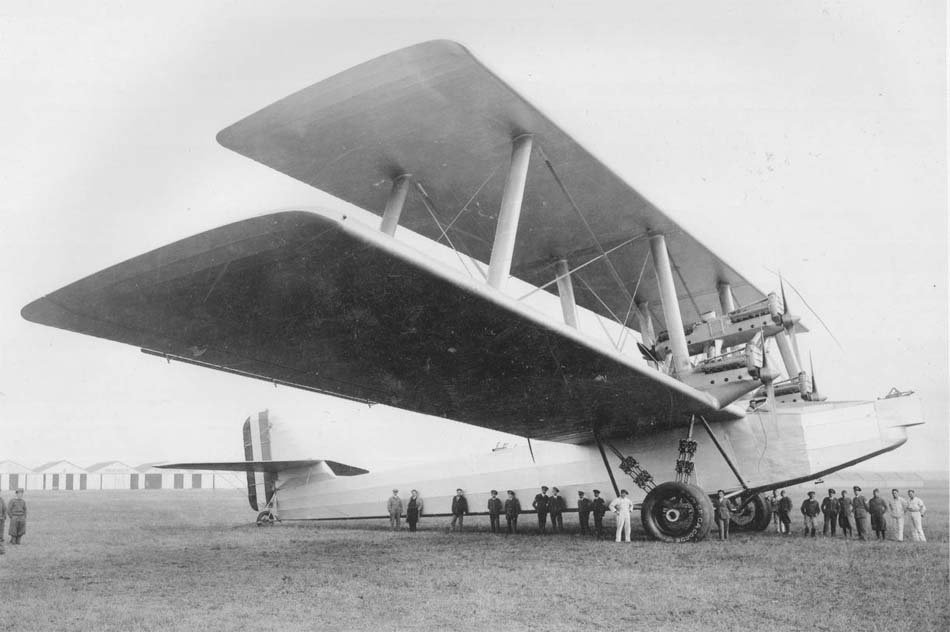
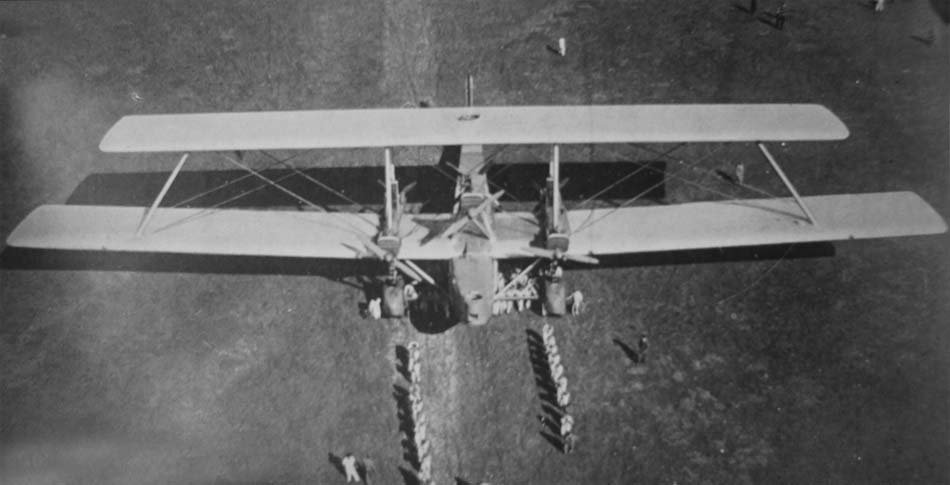
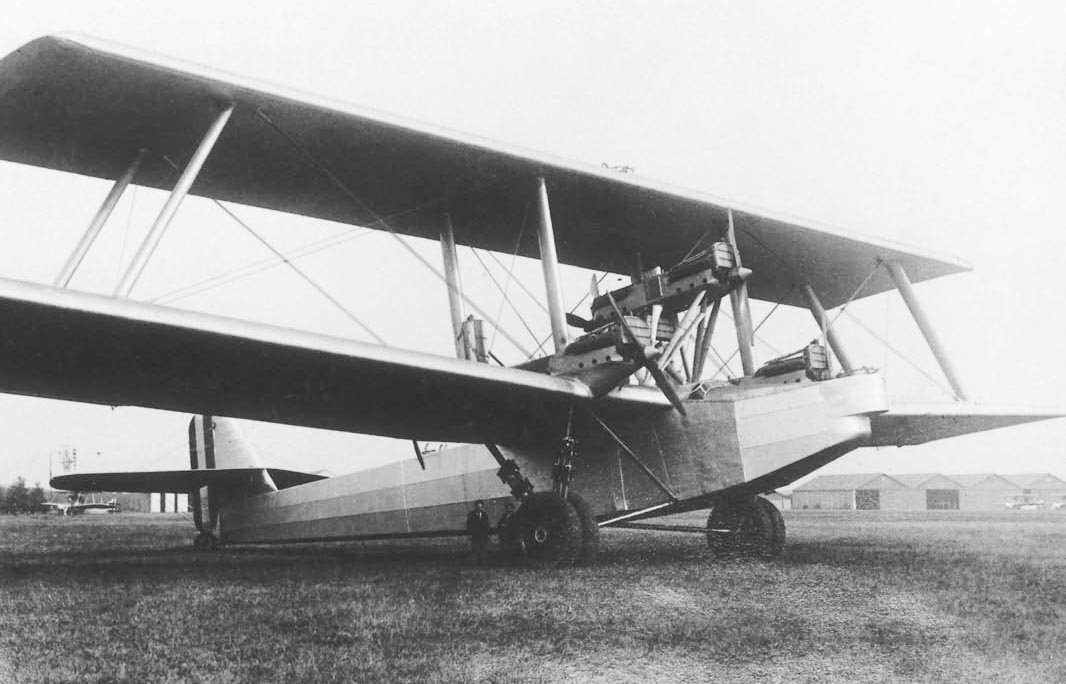
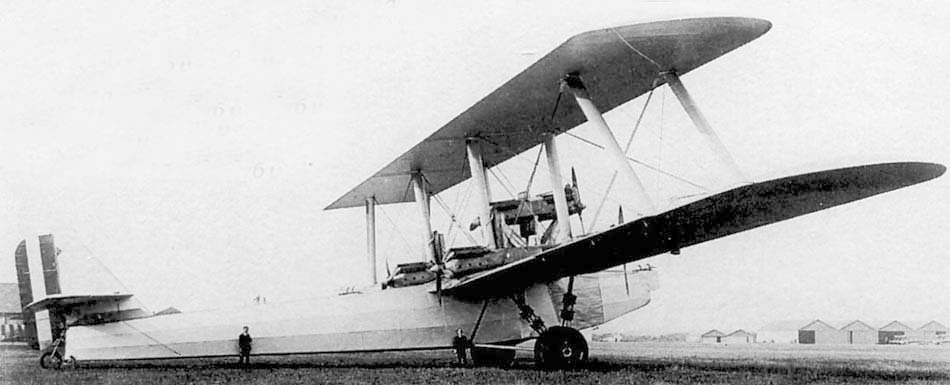
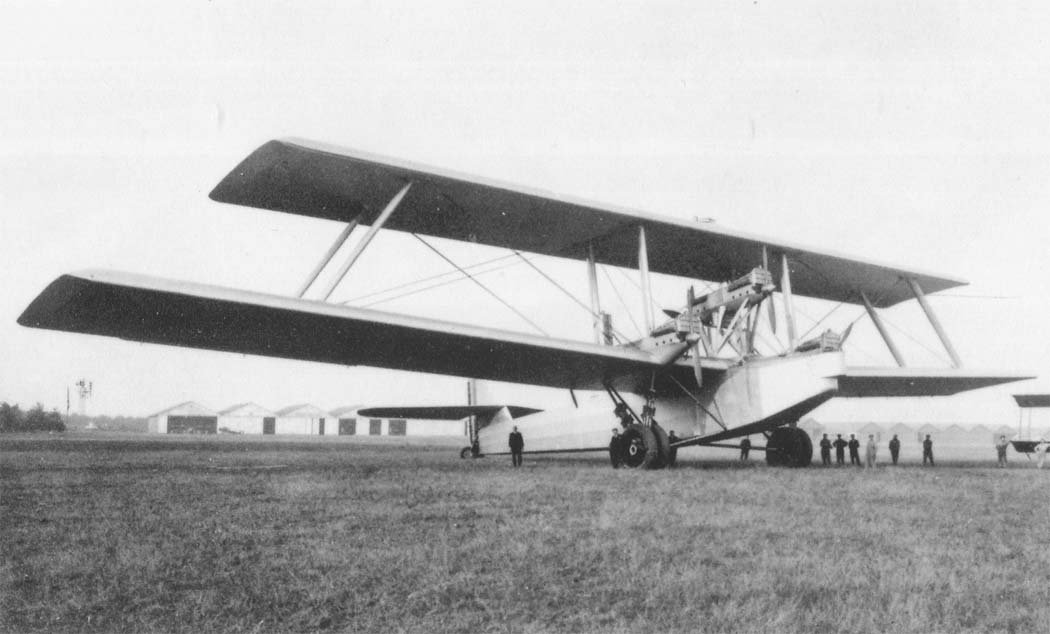
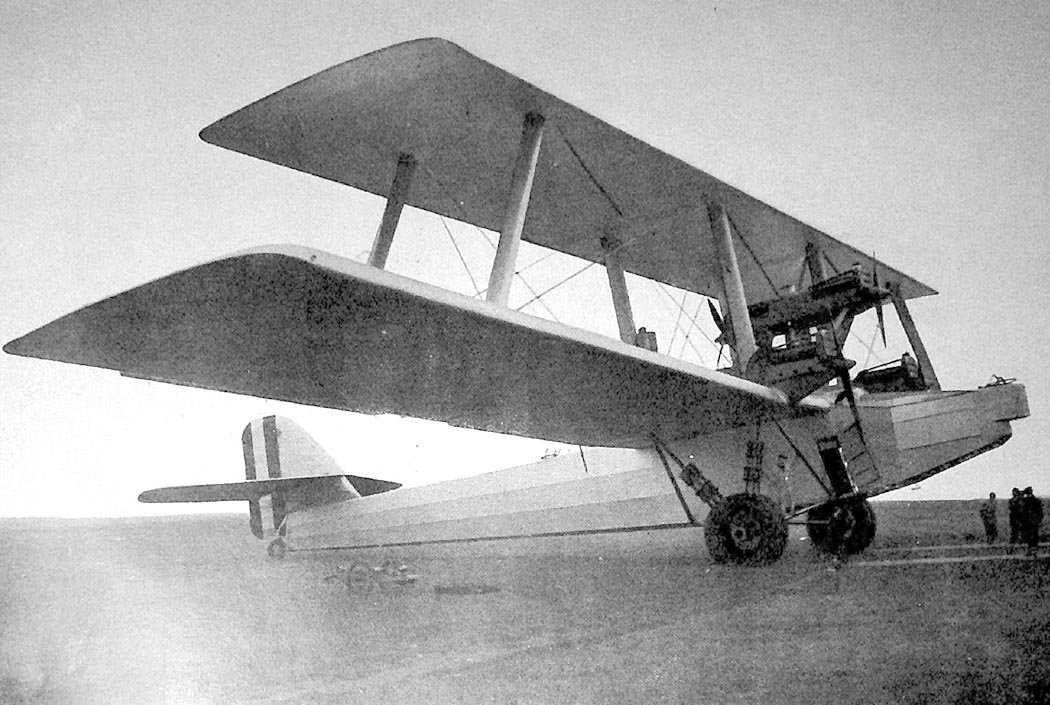
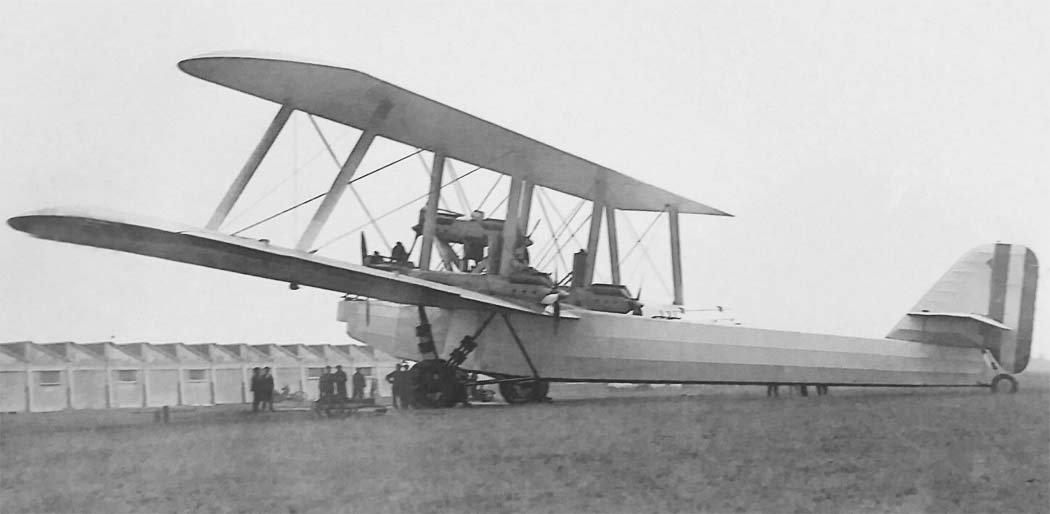
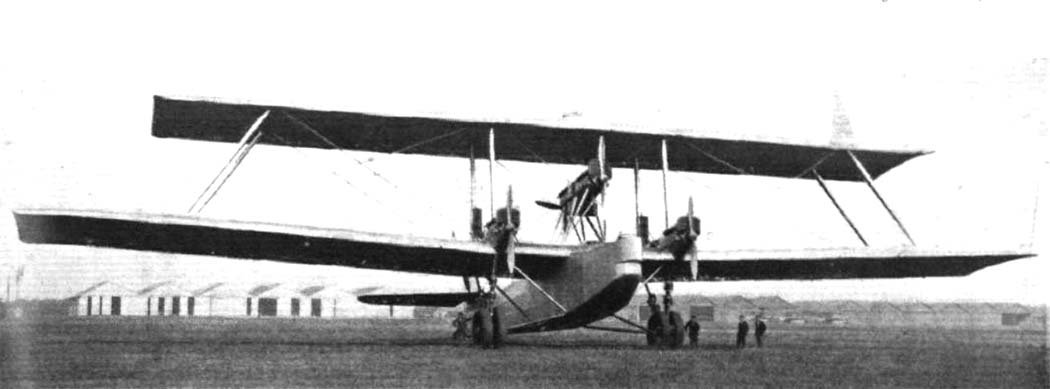
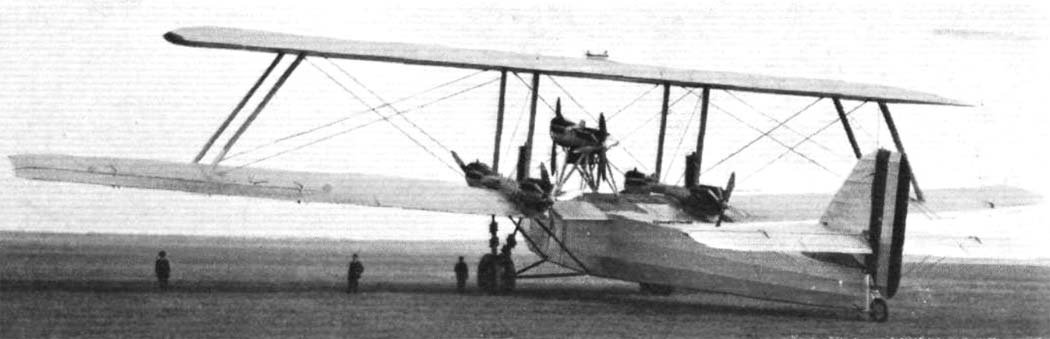
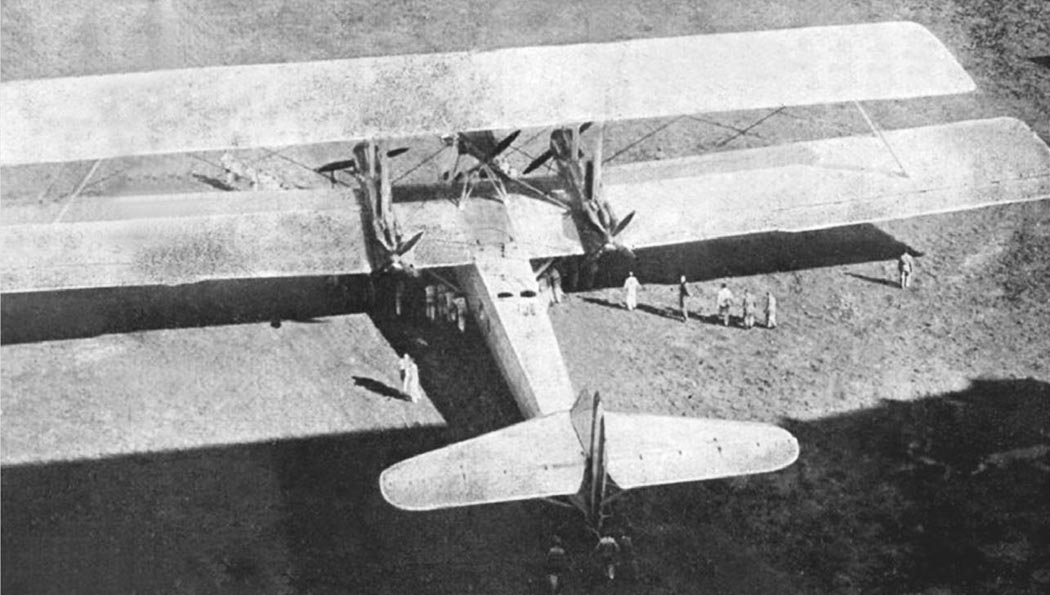
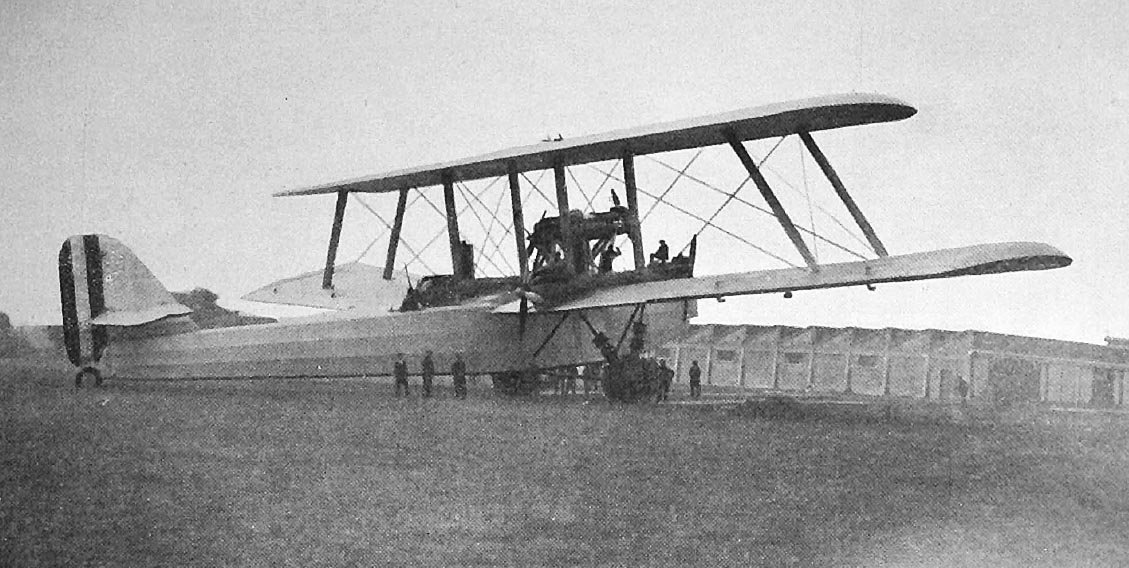
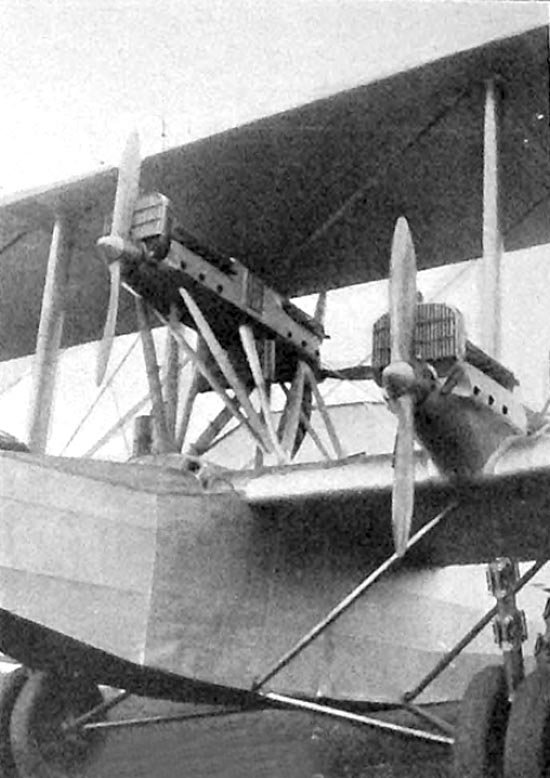
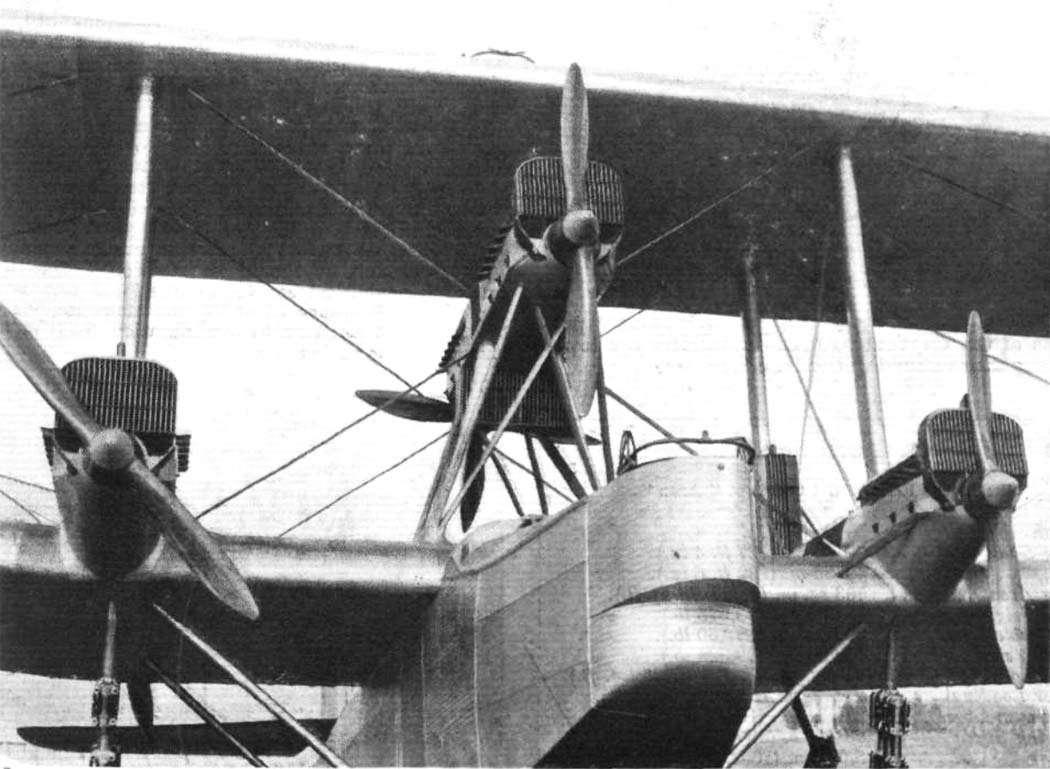
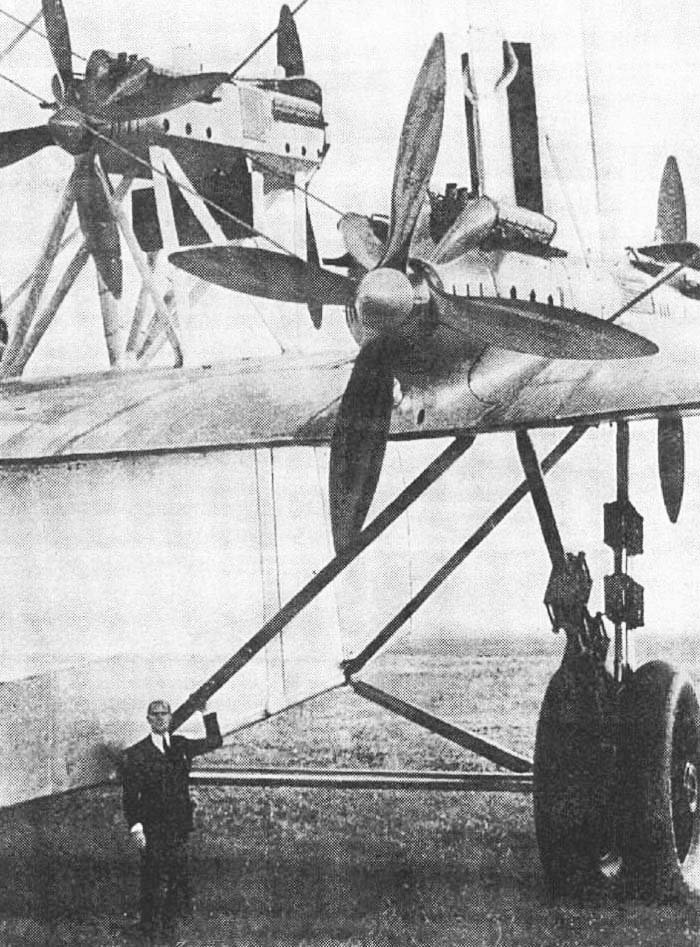
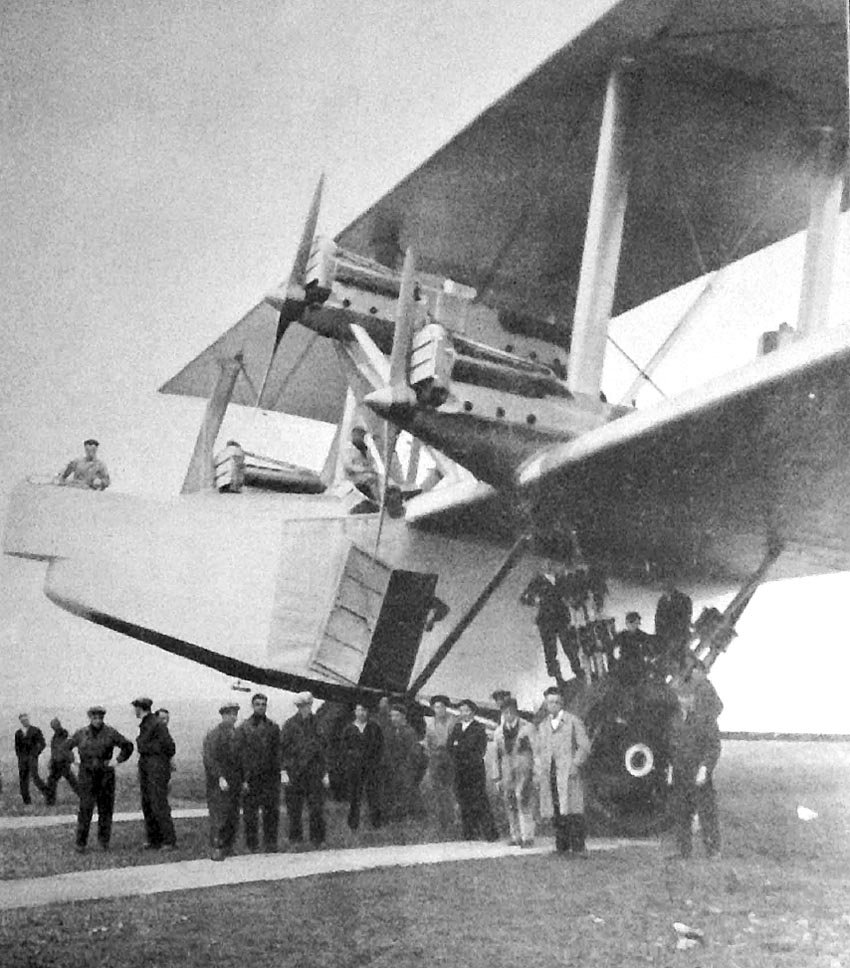
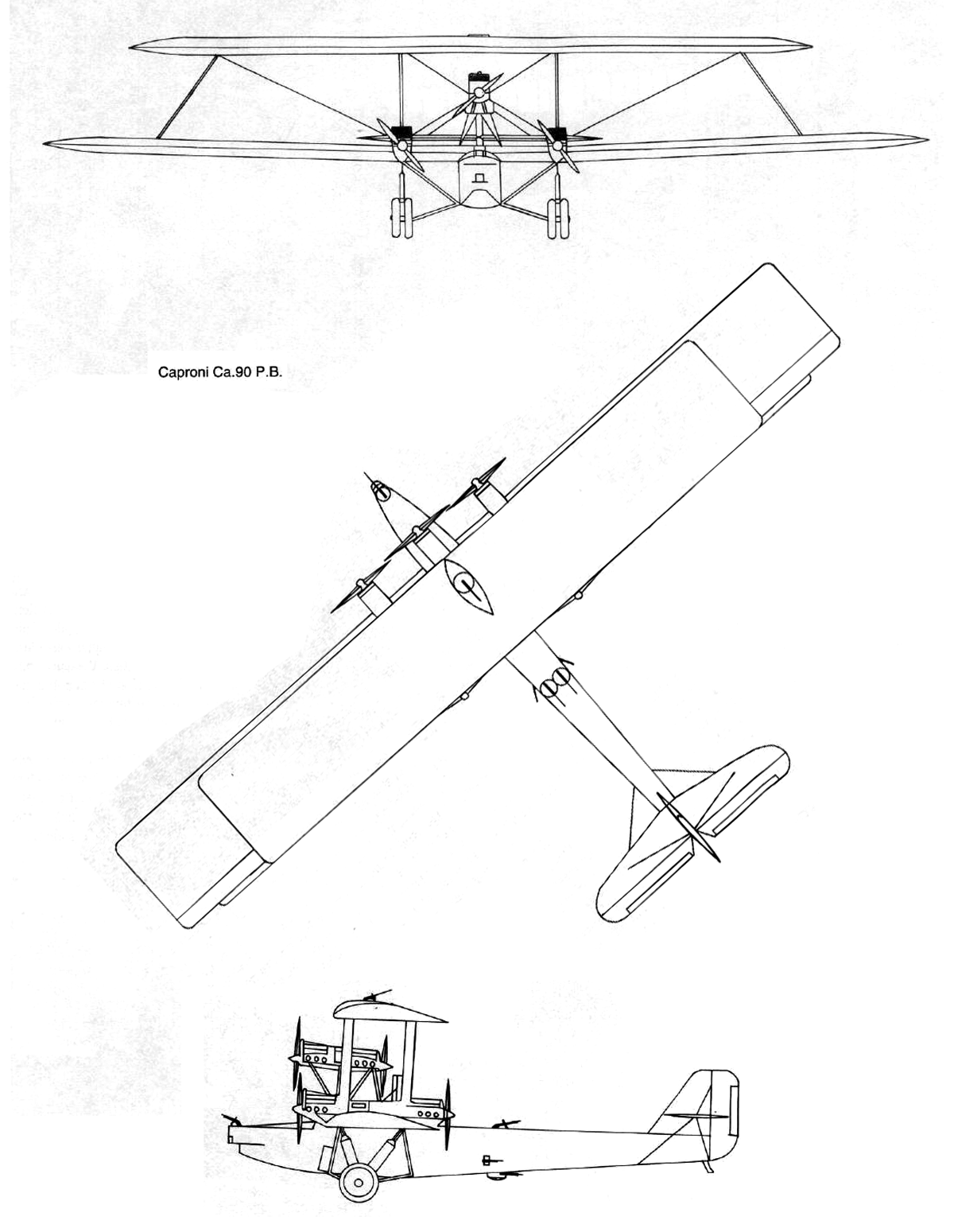
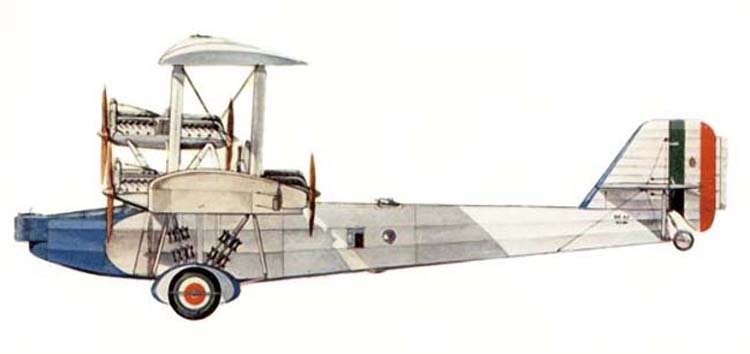
To meet these ambitious conditions, a total engine power of 6,000 hp was required, provided by six 1000-horsepower Isotta-Fraschini Asso engines mounted in tandem, driving three two-bladed propellers forward and three four-bladed propellers aft. Like the Ca.79Q.d., this giant Caproni bomber featured an all-metal frame and an “inverted” sesquiplane wing configuration.
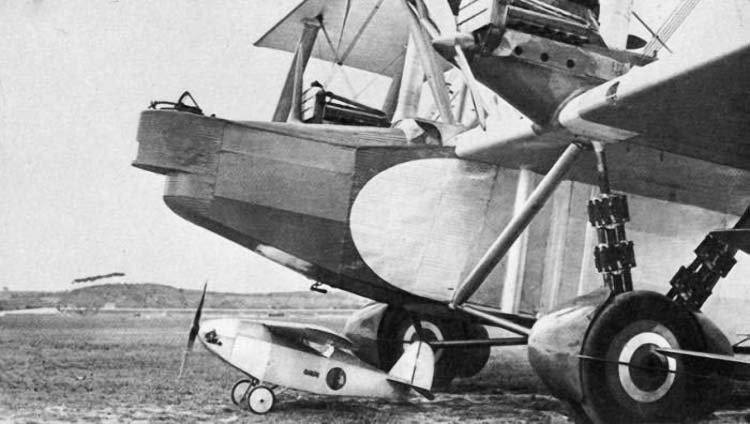
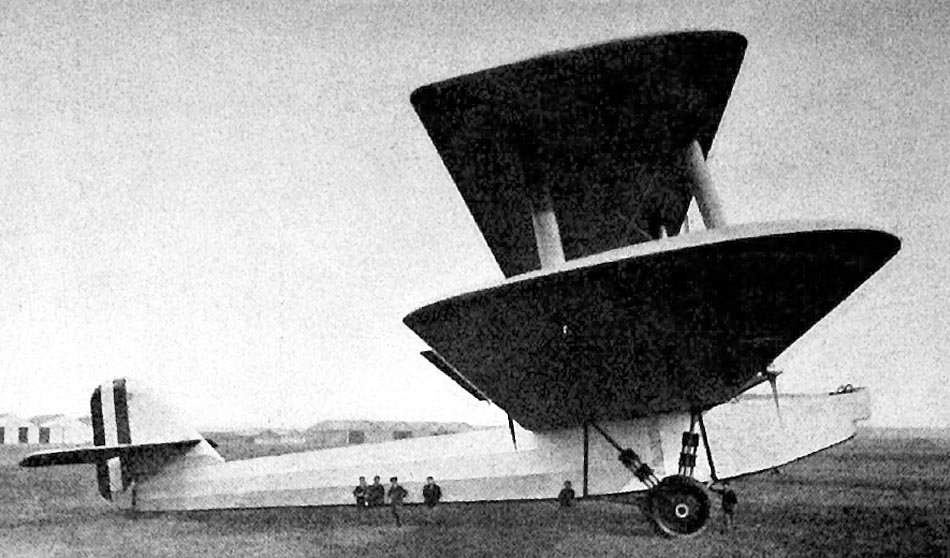
However, it differed significantly from the Ca.73 series with its much larger wingspan (lower wing span of 46.35 m), which had fabric covering and lacked balanced ailerons. Two engine tandems were installed on the lower wing, while the third pair was suspended above the fuselage on steel tube struts. Two pairs of massive, streamlined steel struts, additionally braced with steel cables, supported the upper wing. Engine cowlings, nose, parts of the wings, some fuselage side panels, pilot seats, and strut fairings were made of aluminum or duralumin alloy.
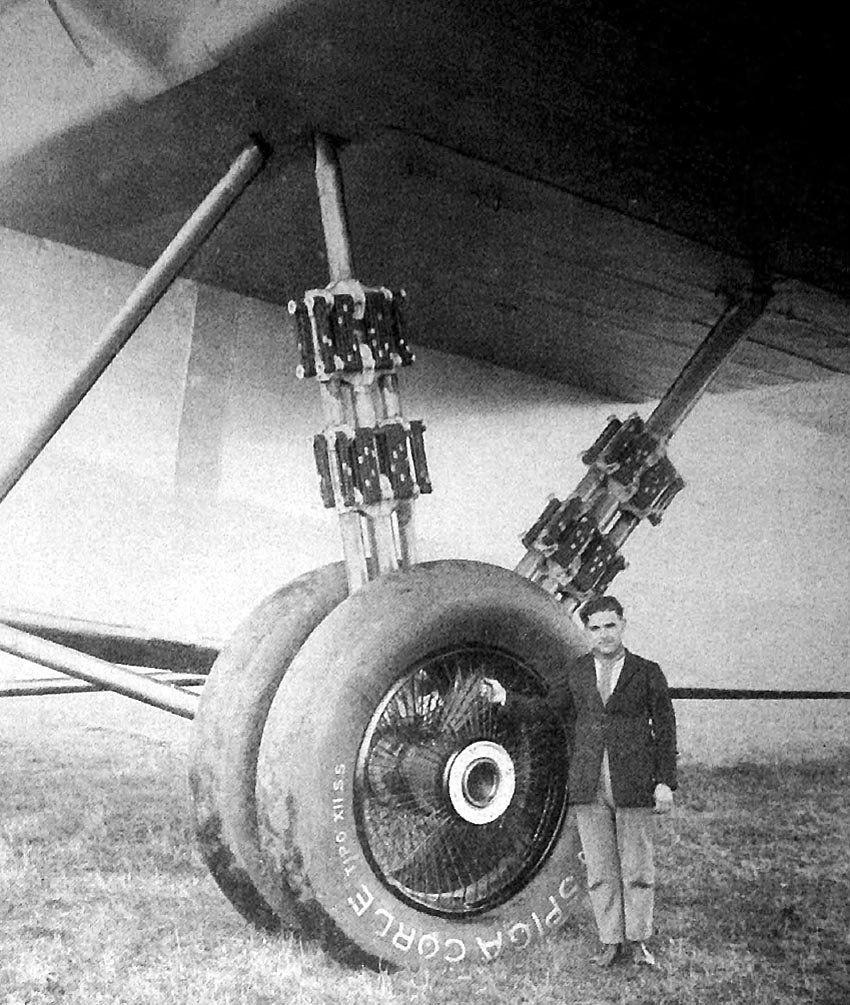
The 26.92 m long fuselage ended in a simpler tail unit design than the Ca.73, with a single vertical fin and a horizontal stabilizer positioned above the wash of the lower wing. Each steel landing gear strut was fitted with two 2.49 m diameter wheels, featuring rubber ring shock absorbers, bringing the aircraft’s height to 10.79 m.
A bomb load of 7,983 kg was carried inside the fuselage at the center of gravity and released by electrical bomb droppers. A small tunnel provided access to the bomb bay. The crew consisted of eight: commander and co-pilot (side-by-side in an open cockpit with fuel control levers between them); a radio operator (behind them); a bombardier-observer (in the nose); an upper gunner (accessing a cabin on the upper wing via a folding ladder); two rear gunners (operating machine guns on fuselage sides and a tail turret with two machine guns); and a lower gunner.
To house this flying fortress during construction, Caproni dismantled and transported an old World War I Zeppelin hangar from the former Austro-Hungarian base in Pola (now Pula, Croatia), reassembling it in Taliedo. Here, under the supervision of senior engineer Dino Giuliani, the Ca.90P.B. was completed in 1929, and its first test flight took place on October 13 of that year. Pilot Domenico Antonini reported outstanding handling, adding that the “Ca.90 behaves like a single-engine aircraft.”
This comparison of the Ca.90P.B. to a single-engine aircraft was encouraging. The empty weight of the aircraft was 15 tons, and its normal takeoff weight was 30 tons. With a total wing area of 562.6 m², the Ca.90P.B. could carry such a load to an altitude of 4,480 m and fly at speeds up to 235 km/h. These characteristics were even better than Gianni Caproni’s most optimistic expectations, and the aircraft’s capabilities soon became widely known.
On February 22, 1930, Antonini conducted a series of flights with the Ca.90P.B., breaking the altitude record of 2,000 m with a 10-ton load and then setting a new one by lifting the same load to 3,230 m. This flight also set a duration record for that weight: 3 hours and 31 minutes. By the end of that day, the Ca.90P.B. had officially set three world altitude records.
However, despite these achievements, the Italian military never fully embraced the initial enthusiasm, and only one prototype of the Ca.90P.B. was built. Despite its enormous payload capacity and being the largest military aircraft in the world in 1930, the Ca.90P.B. was essentially an enlarged version of a successful 1925 bomber design. By 1930, aircraft manufacturing had already moved past this stage, making the Ca.90P.B. obsolete even before it left the drawing board.
After the Ca.90P.B., Caproni shifted to designing more traditional and smaller bombers, such as the Ca.101 three-engine monoplane, while the Ca.90P.B. passed into aviation history after a brief moment of global fame, forgotten even by the country where it was built.
Technical Specifications
| Modification | Ca.90P.B |
| Wingspan, m | 46.35 |
| Length, m | 26.92 |
| Height, m | 10.79 |
| Wing area, m2 | 562.60 |
| Empty weight | 15000 |
| Normal takeoff weight | 30000 |
| Engine type | 6 Piston engines Isotta Fraschini Asso |
| Power, hp | 6 х 1000 |
| Maximum speed, km/h | 235 |
| Cruising speed, km/h | 204 |
| Practical range, km | 750 |
| Practical ceiling, m | 3500 |
| Crew | 4 crew members |
| Armament | six 7.7-mm machine guns; bomb load – 7983 kg normal, up to 10000 kg maximum |
Image and diagram gallery of the Caproni Ca.90P.B.
 Ca.90 |
 Ca.90 |
 Ca.90 |
 Ca.90 |
 Ca.90 |
 Ca.90 |
 Ca.90 |
 Ca.90 |
 Ca.90 |
 Ca.90 |
 Ca.90 |
 Ca.90 |
 Ca.90 |
 Ca.90 |
 Ca.90 |
 Ca.90 |
 Ca.90 |
 Ca.90 |
 Ca.90 |
 Ca.90 |
 Ca.90 |