
“If no one can sell us the aircraft we need, we will build them ourselves.” This, albeit in more diplomatic terms, was the Australian government’s decision after declaring war on Germany with Great Britain on September 3, 1939, and subsequently conducting a rapid inventory of the Royal Australian Air Force (RAAF).
Australia’s general unpreparedness to participate in the war that erupted in Europe in the late 1930s was alarming. Initially, Australians were not overly concerned; it was believed that, as in World War I, semi-trained infantrymen would be sent to Europe and the Commonwealth would be satisfied with this.
However, the situation in the late 1930s was vastly different from 1914. Back then, the Japanese fought on the side of the Allies; now, they were seen as the main adversary in the Pacific. Thus, Australians were more worried about the unsettling proximity of an expanding Japan than about affairs in distant Europe.
The inventory of RAAF matériel yielded rather discouraging results. Australia’s air force was a mixed bag of two-seater Hawker Demon biplanes (the most modern fighters and light bombers, 75 units), Avro Anson transport and patrol aircraft (82 units), Supermarine Seagull V amphibious flying boats (21 units), and de Havilland Tiger Moth training aircraft (several dozens of machines).
From this bleak list, a small glimmer of hope came from seven recently received CAC CA-1 Wirraway training aircraft from the domestic aviation industry, which to a limited extent could also serve as combat machines. Theoretically, the necessary aircraft, their armament, and ground equipment could be purchased from traditional suppliers in Great Britain.
However, in the motherland, the Royal Air Force (RAF)’s armament situation was not much better, and it was clear that this time, British aircraft manufacturers could offer little help. The Americans remained, but they too were preoccupied with their own problems, and the prevailing US commitment to strict neutrality at the time hindered arms deliveries to warring nations.
Thus, we arrive at a more detailed elucidation of the phrase at the beginning of this article. This proposition was not formulated simultaneously with the declaration of war, but in the early war years and the brief period preceding them, it became a kind of motto for the Australian defense industry’s military efforts and logistical support services.
As early as 1936, it became evident to the most farsighted Australian officials that Australia’s participation in a war, which would undoubtedly erupt in Europe and Asia, would be inevitable. And since this time it was expected that the RAAF would also take part in battles occurring in close proximity to the Green Continent or even directly on its territory, there was an urgent need for its own aviation industry, which would allow it to break free from its current dependence on Great Britain (and thereby ensure the replenishment of the RAAF in case supplies from Europe ceased).
Origins of the Australian Aviation Industry
As a result, the Australian government made a decision, joined by the country’s largest industrial, raw material, and transport organizations, which led to the founding of a major aircraft manufacturing company, Commonwealth Aircraft Corporation Pty. Ltd. (CAC), in the Melbourne suburb of Fishermen’s Bend.
CAC’s shareholders included Broken Hill Pty. Ltd., Broken Hill Associated Smelters, Electrolytic Zinc (Australia) Ltd., ICIANZ, General Motors Holden, and Orient Steam Navigation Co. Ltd. CAC’s share capital reached 1 million Australian pounds, with investors, seemingly in a patriotic fervor, demanding a meager 5% return on their shares.
In February 1936, the Australian government reported this development to London’s competent authorities (those dealing with dominion affairs) and the British government. Great Britain highly appreciated the Australian efforts and promised assistance. CAC even offered 10% of its shares to the Hawker aircraft company, but the latter declined, and CAC remained exclusively in Australian hands.
On October 17, 1936, CAC was officially registered and could begin operations. Production facilities on the banks of the Yarra River were built fairly quickly, and six months before the start of World War II, the first prototype of the multi-purpose aircraft (trainer, reconnaissance, and light bomber) CA-1 Wirraway was manufactured there.
Soon, the banks of the Yarra River became the center of Australia’s aviation industry: in close proximity to CAC, facilities for the Government Aircraft Factory (GAF) were built, which was preparing to license-produce Bristol Beaufort bombers. In the Sydney suburb of Lidcombe, New South Wales, CAC opened an engine manufacturing plant, which immediately began license production of American Pratt & Whitney R-1830 Twin Wasp radial engines.
Originally, in 1936, CAC’s staff consisted of 490 employees of all professions, and at its helm was Wing Commander L. J. Wackett, who served as both general manager and chief designer. Wackett already had experience in aircraft design, and some of his developments were quite interesting.
He contributed to the adaptation of the license-built North American NA-33 training aircraft to Australian conditions, on which the aforementioned CA-1 Wirraway was based. Soon after, he developed the CA-6 primary trainer, named Wackett after its creator; its first flight took place in October 1939. In December 1940, the two-hundredth production Wirraway was delivered to the customer; production of these machines reached a rate of 7 per week.
By this time, series production of Wackett aircraft, ordered in a quantity of 300 units, had also begun, and L. J. Wackett himself started working on a new project.
Developing the CA-4 Wackett Bomber
Analysis of military operations in Europe and somewhat unreliable information about Japanese combat actions in China showed that the RAAF needed a medium multi-purpose aircraft—something between the Wirraway and the Beaufort (the production of the latter was initially complicated by the need to import a number of materials, semi-finished products, and finished parts from Great Britain).
On April 15, 1940, the RAAF Air Board issued detailed Specification No. 241, which called for the development and construction of prototypes of a twin-engine combat aircraft capable of serving as a tactical bomber, reconnaissance aircraft, and torpedo bomber at the current level of technology. The new combat aircraft had to meet not only the climatic conditions of the intended theater of operations but also the RAAF’s operational capabilities, as well as CAC’s production capabilities.
The specification was based on L. J. Wackett’s preliminary design, which appeared in early documents as the Wackett Bomber. However, this designation remained only for one machine – the first prototype. The subsequent name for the aircraft became Woomera, which officially appeared only on the second modified prototype, the CA-11.
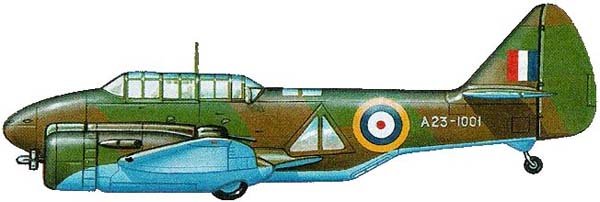
The name was chosen in accordance with Wackett’s personal “tradition” of giving his aircraft names starting with ‘W’ – the first letter of his surname. Concurrently with the issuance of the specification, the Air Board allocated 50,000 Australian pounds to cover development costs. The project received the company designation CA-4, and the RAAF command assigned the future prototype military number A23-1001, where A23 was the code assigned to CA-4 type aircraft.
The Wackett Bomber was a collaborative effort between the company’s General Manager L. J. Wackett and designers T. W. Air (lead designer for the CA-4 program), F. W. David, D. G. Humphries, E. F. Faggeter, and I. B. Fleming, who was responsible for the technical aspects of flight testing. During the design phase, the engineering team demonstrated original technical solutions for several components of the future aircraft.
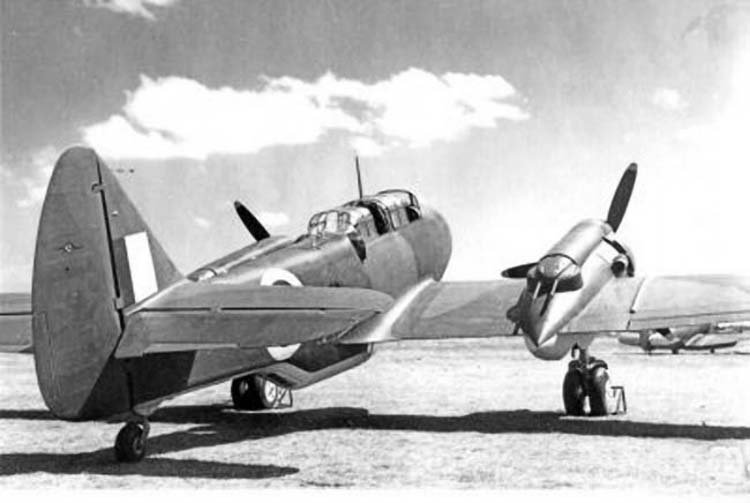
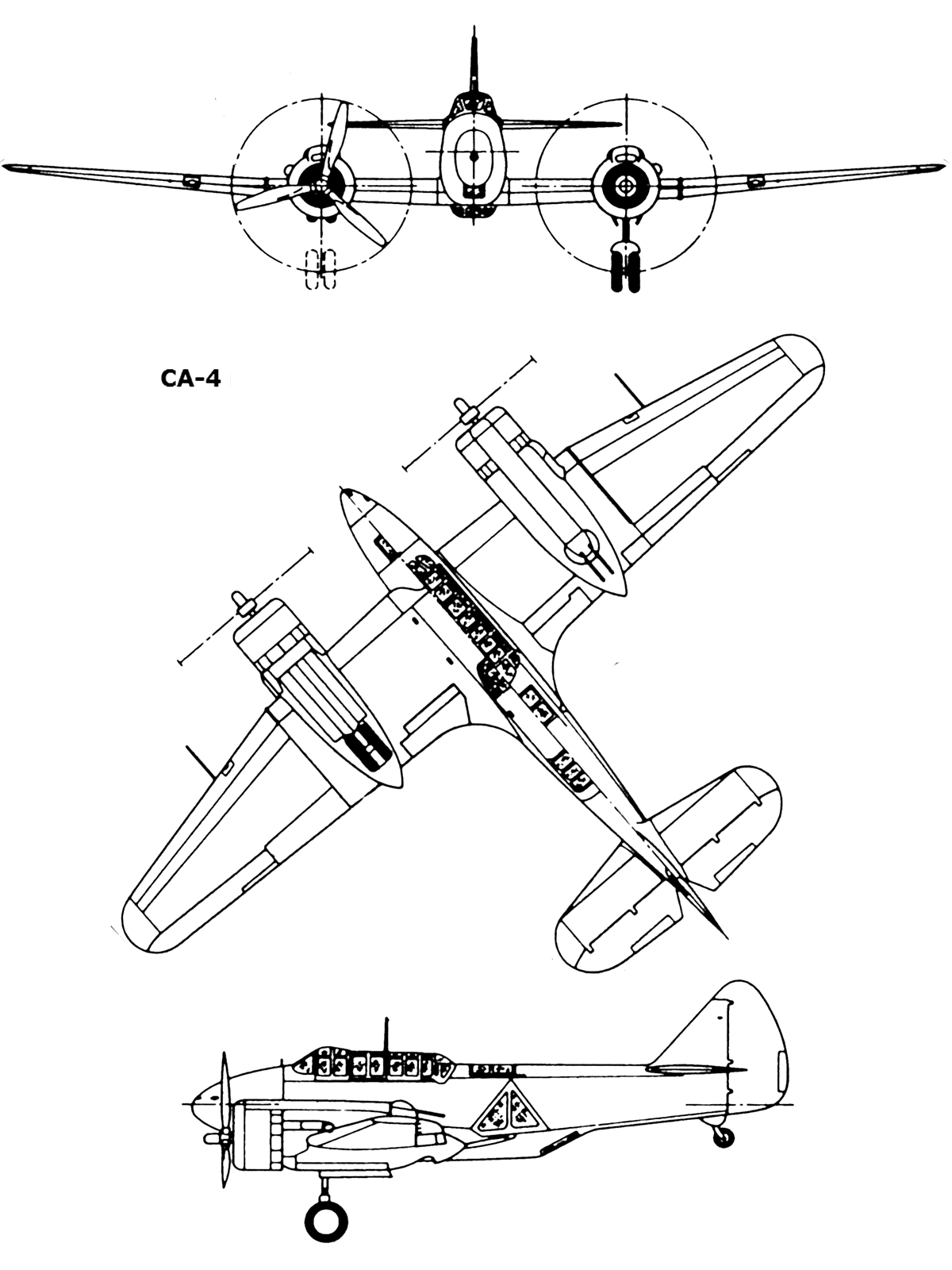
The Wackett Bomber was a cantilever monoplane of all-metal construction. The outlines of the wing and empennage mirrored the single-engine Wirraway and were thus borrowed from the American company North American. Like the Wirraway, the fuselage was a steel tube truss, welded and covered with fabric. The CA-4’s powerplant was to consist of two license-built Pratt & Whitney R-1830-S3C3-G Twin Wasp radial engines, developing 1100 hp (808 kW) and driving three-bladed automatic propellers (the prototype received American-made engines).
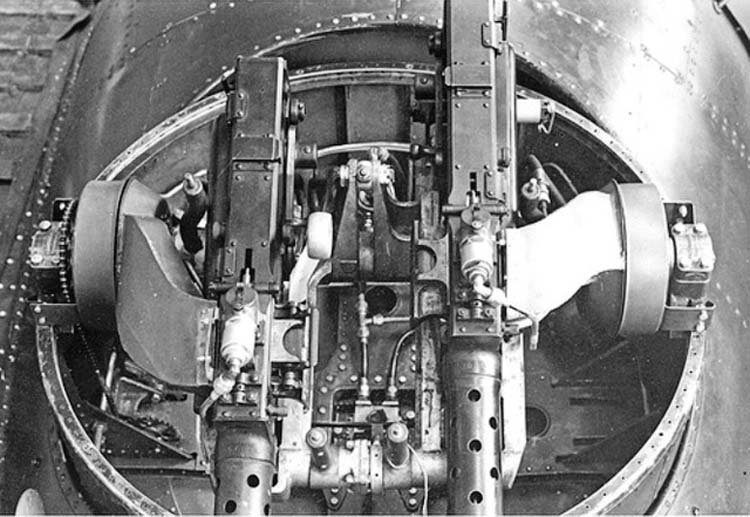
On the upper side of the rear parts of the engine nacelles – not reaching the wing’s trailing edge – the designers placed remotely controlled turrets, each equipped with two 7.7-mm Browning Mk.II machine guns. Theoretically, turrets with four machine guns could have been installed. The turrets were hydraulically operated and controlled by the second pilot-gunner, who sat in the rear section of the long, multi-part canopy-enclosed crew cabin.
The pilot, seated in front, could engage in fighter-style firing (aiming with the entire aircraft) from four machine guns of the same type, fixed in the unglazed nose of the machine. The third crew member – bombardier-navigator-gunner – was located in the fuselage behind the wing, in a cabin with triangular side windows. He could fire a movable 7.7-mm Vickers K machine gun, mounted on a hinged suspension in the rear of the ventral gondola. He would also move into this gondola for bomb release, aiming through a small window in its forward part.
The CA-4’s landing gear was of the classic tail-wheel type. The main struts were equipped with twin wheels and retracted backward into the engine nacelles. Twin wheels on the main struts were a necessity turned into a virtue: large-sized wheels and tires were not manufactured in Australia in those years. The tail strut was equipped with a single wheel and was non-retractable.
The fuselage of the Wackett Bomber had no built-in bomb bay, and the combat load was carried externally. On two pylons, located under the wing roots, two Mk.XII aerial torpedoes or four 227-kg bombs could be suspended. For long-range reconnaissance flights, two 1333-liter tanks could also be attached to these pylons.
Even at the initial stage of the prototype’s construction, it was proposed to reinforce its bombing armament by placing two 113-kg bombs in each engine nacelle behind the engines, on attachment points in the widened main landing gear bays, whose doors were split lengthwise (only their narrow inner parts opened during retraction and extension of the landing gear). The wheels themselves, in the retracted position, partially protruded from the nacelle’s contour.
The designers envisioned the possibility of dive bombing, for which the wing was equipped with air brakes on the upper surfaces of the center section and outer panels; simultaneously, during a dive, it was planned to extend the flaps with maximum downward deflection. The empennage was cantilever; the elevators and rudder had a duralumin structure and fabric covering.
The concept of the CA-4 combat aircraft looked very attractive and capable, although the power of the two Twin Wasp engines was somewhat insufficient for an aircraft with a projected takeoff weight of 9135 kg. Insufficient thrust-to-weight ratio could have led to the CA-4 becoming a tri-motor! Even before license production of Twin Wasp engines began in Australia, Pratt & Whitney ceased deliveries of original engines from the USA.
Consequently, L. J. Wackett prepared a project for a CA-4 variant with engines similar to the Wirraway trainer-combat aircraft, i.e., with 600 hp (441 kW) Pratt & Whitney R-1340-S1H1 Wasp engines, which were already being mass-produced in Australia. Since the power of two such engines was clearly insufficient, it was proposed to install another one in the nose of the aircraft. Fortunately, the tri-motor variant remained only on paper – this little monstrosity would hardly have inspired the RAAF command.
Testing Challenges and the CA-4’s Fate
The construction of the CA-4 Wackett Bomber prototype progressed relatively quickly: the machine was completed in late summer 1941 – less than a year and a half after the start of design work. After short ground tests, the CA-4 made its first flight on September 19, 1941, piloted by CAC test pilot Flight Lieutenant H. F. Boss-Walker.
During the initial flight tests, the successful concept of the CA-4 was confirmed. The aircraft did not exhibit treacherous characteristics and generally met the specification requirements. At a takeoff weight of 8285 kg, the takeoff roll was 460-510 meters, the climb rate near the ground was 6.7 m/s, the aircraft reached an altitude of 7625 meters in 25.8 minutes, the practical ceiling was 8080 meters, and the maximum speed at 4700 meters was 430 km/h.
These characteristics were certainly not outstanding, but for 1941 and compared to other RAAF aircraft, they were considered sufficient (especially considering that the Pacific was still at peace, and theoretically there was time for further improvement). Japanese fighters, then still practically unknown, were widely underestimated.
The first flights generated hope, but during testing, disappointment gradually grew. A serious defect was discovered during test flights: a loss of elevator effectiveness, accompanied by tail vibrations, especially during steep turns and during flight at high angles of attack on approach to landing. The elevator was so ineffective that the pilot was unable to bring the aircraft to critical speed (and thus check stall characteristics), nor to bring it into a three-point landing attitude.
The cause of the rudder’s ineffectiveness was found to be partial and asymmetric airflow separation over the wing’s center section, between the fuselage and engine nacelles. Test pilot Boss-Walker also discovered “heavying” of the ailerons at certain flight regimes at high speeds and altitudes, as well as continuous aircraft vibrations at speeds below 240 km/h, which rapidly intensified when the landing gear was deployed.
The aircraft’s ground handling also left much to be desired. The wheel brakes proved ineffective and worsened turns during taxiing, and assistance in the form of differing propeller rotation speeds was insufficient. Ineffective brakes also hindered takeoff, when, with the powerplant operating at full power, it was impossible to keep the aircraft stable, and during landing, preventing effective reduction of the landing roll.
In mid-December 1941, larger diameter propellers were installed on the engines. These propellers were intended for comparative flights, but their program was partially curtailed. Problems were discovered with the engines and hydraulic system. With larger propellers, the aircraft’s behavior during taxiing worsened: the machine developed a tendency to deviate and turn left when the engines were at full power. This tendency was attempted to be compensated by different engine speeds.
Nevertheless, testing continued. The Japanese had already attacked Pearl Harbor, and war was approaching Australia, so tests needed to be accelerated. On takeoff, the aircraft lifted its tail wheel off the runway at a speed of 153 km/h, after running approximately 180 meters. Before the main landing gear was retracted, the machine vibrated slightly, and upon retracting the flaps (at a speed of about 220 km/h), the pilot felt a small loss of altitude.
During climb, the engine speed specified in the operating manual had to be reduced after 12.5 minutes of flight, as both engines tended to overheat. Typically, speeds were reduced at 3800 meters altitude and 225 km/h speed. The graph of the maximum speed achieved in tests (2700 rpm, boost pressure 37.5 inches or 953 mm Hg) was as follows: at ground level it was 349 km/h, at 5000 feet (1525 m) – 377 km/h, at 10,000 feet (3050 m) – 402 km/h, and at 15,400 feet (4697 m) – 430 km/h. With further altitude gain, the maximum speed decreased – at 20,000 feet (6100 m) it was 402 km/h. It was still not possible to improve elevator effectiveness, so the pilot landed only on the main wheels.
In December 1941, RAAF military pilots joined the CA-4 tests. On December 19, 1941, Flight Lieutenant J. H. Harper (Flt Lt J. H. Harper) took to the sky in the aircraft. His final report on flights in the CA-4 sounded almost identical to the factory test pilot’s reports. However, he performed combat turns and other maneuvers that the factory pilot avoided, allowing him to identify several more shortcomings.
Thus, directional instability was found at some flight regimes, and the aircraft did not react to trim deviations as an ordinary pilot would expect. In late 1941, Boss-Walker left the factory test pilot team, and another CAC pilot, Ken Frewin, took his place.
Frewin had previously flown the Douglas DC-2 transport aircraft and recalled that conversations with Douglas pilots mentioned similar problems with the DC-1 and DC-2, which initially had almost no fairing between the wing and the fuselage. Unfavorable airflow over the wing’s center section and its junction with the fuselage was apparently the reason for the CA-4’s rudder ineffectiveness as well.
The aircraft was returned to the workshop, where it received not only large sheet metal fairings between the trailing edge of the wing root and the fuselage but also a modified shape for the leading edge’s junction with the fuselage. Changing the profile of the center section’s leading edge, installing leading-edge slats, slots, or additional surfaces was also considered. However, in the end, they were limited to large fairings.
During further tests, when R. V. Shultz (another member of the technical management) flew as an observer with Frewin, improvements were demonstrated, although problems remained. Additional tests in an improvised wind tunnel showed that the fault lay with the contours of the engine nacelles, the upper parts of which protruded above the upper surface of the wing more than they should have (the machine gun turrets also did not add to aerodynamic perfection, being in an area of turbulent flow).
As a reserve (or rather, emergency) option, Handley-Page type leading-edge slats appeared on the leading edge of the wing’s center section. Subsequent tests showed minor improvements, but it became clear to L. J. Wackett that for this small aircraft to become a full-fledged combat machine, a complete redesign was necessary, i.e., effectively creating a new machine.
In early 1942, an event nobody expected occurred in the CA-4’s fate, filling all the local newspaper headlines for a time. When test pilot Frewin demonstrated the CA-4 to Australian officials in Fishermen’s Bend, including Prime Minister John Curtin and the commander of British forces in the Far East, Sir Robert Brooke-Popham, he discovered after takeoff that the landing gear position lights were not working.
Ken Frewin decided to abort the flight prematurely, but the left main landing gear leg failed to extend, despite attempts to free it through a series of high-G maneuvers. Frewin retracted the right leg and performed a fuselage landing. However, the fuselage itself did not make direct contact with the ground: Wackett’s idea of leaving the main landing gear wheels protruding from the nacelles by one-third was practically proven useful.
Clouds of dust rose above the CA-4, grass and turf flew around, but the machine survived the emergency landing: only the propeller blades were bent, and the lower parts of the engine cowlings were dented. Strangely, even the glass in the ventral gondola window remained intact. The investigation into the accident’s cause was quick and brief, yielding an unexpected result: sabotage!
Two days later, the CA-4 prototype took to the air again and on April 20, 1942, was officially handed over to the RAAF for service trials. The aircraft was assigned to the 1st Aircraft Depot in Laverton, where it was tested by the Special Duties and Performance Flight (SDPF), with a primary focus on armament trials, particularly dive bombing. In December 1942, the aircraft was returned to CAC for maintenance and repair of the landing gear mechanism, which had been damaged in November during high-speed taxiing.
Firing tests at SDPF were performed by Group Captain L. J. Lightfoot on a machine equipped with ersatz armament. Since the planned Browning Mk.II machine guns had not been delivered for the prototype, old Vickers K guns were installed in the nose, and instead of the pilot’s collimator sight, a primitive ring-and-bead sight was used. The installation of armament and the gun camera in the nose of the fuselage were highly rated, and the pilot aimed and fired quite accurately.
Firing from the remote-controlled installations mounted in the rear parts of the engine nacelles was less successful. For the second pilot/gunner to operate the armament, he had to stand in his cabin out of his seat with his back to the direction of flight, and maintaining a stable position during aircraft maneuvering was difficult. Test firing at a cone towed by a Fairey Battle aircraft was conducted by experienced armament instructor Flight Lieutenant W. Davenport-Brown.
He proposed modifying the second pilot/gunner’s cockpit to make his seat rotatable; the bomb sight and its suspension, the cockpit glazing, and the duplicate control organs also needed to be changed. CAC engineers planned to implement the necessary changes to the CA-4’s design in early 1943, but this did not happen.
On January 15, 1943, during a routine factory test flight (new fixed leading-edge slats on the wing center section were being tested), a fuel leak occurred in the left engine, leading to fire and a subsequent explosion. The aircraft was flying at an altitude of only 300 meters at the time, so the crew’s hopes of survival were slim.
Three people were on board: pilot Jim Harper, co-pilot/gunner Jim Carter (who was slated to become the new primary CA-4 test pilot), and engineer Lionel Dudgeon as observer. Only Harper was able to parachute out in time; the others perished. Thus ended the story of the promising CA-4 (A23-1001) Wackett Bomber prototype – Australia’s first true combat aircraft designed and produced domestically. For CAC and the RAAF, it was a major blow, but the modernized CA-11 Woomera variant was manufactured in the corporation’s workshops.
Technical Specifications
| Modification | CA-4 |
| Wingspan, m | 18.04 |
| Length, m | 11.35 |
| Height, m | 4.11 |
| Wing area, m2 | 36.78 |
| Empty weight | 5617 |
| Normal takeoff weight | 9128 |
| Engine type | 2 Piston engines Pratt Whitney Wasp R-1830 Twin Wasp |
| Power, hp | 2 x 1200 |
| Maximum speed, km/h | 435 |
| Cruising speed, km/h | 376 |
| Practical range, km | 3219 |
| Maximum rate of climb, m/min | 579 |
| Practical ceiling, m | 6705 |
| Crew, crew members | 3 |
| Armament: | eight 7.7-mm Vickers Mk.V machine guns; bomb load: 2 torpedoes, 2 x 113-kg bombs, 8 x 13-kg bombs or 4 x 227-kg bombs, 2 x 113-kg bombs, 8 x 13-kg bombs or 2 x 1109 l tanks and 2 x 113-kg bombs, 8 x 13-kg bombs |
Image and diagram gallery of the CA-4 Woomera
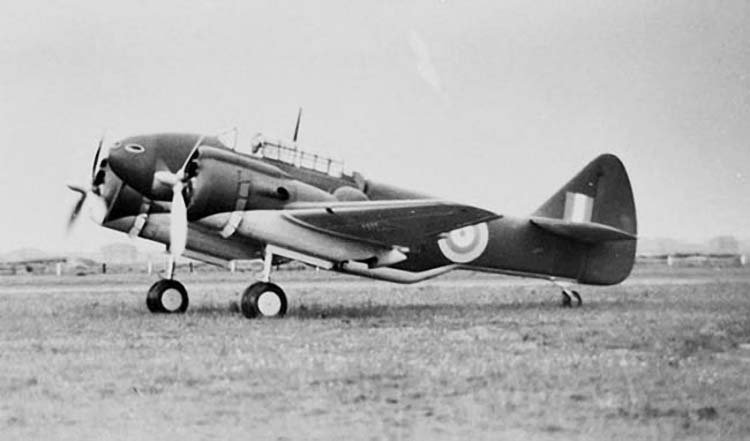 CA-4 Woomera |
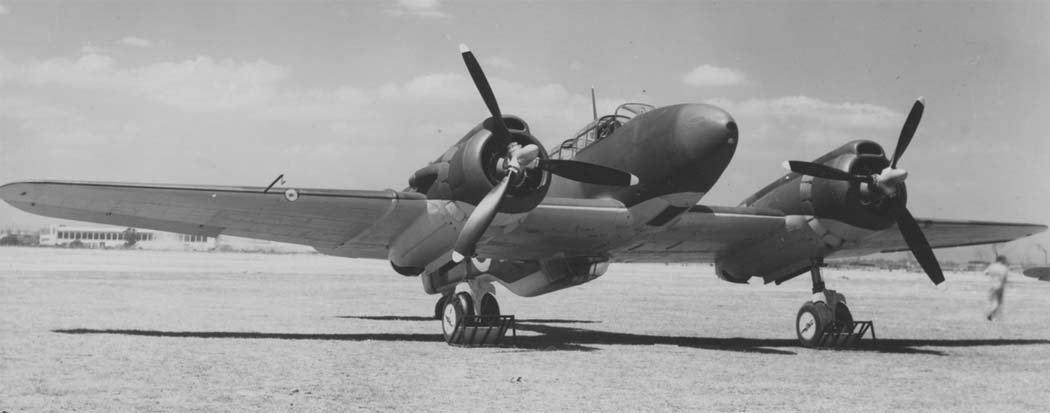 CA-4 Woomera |
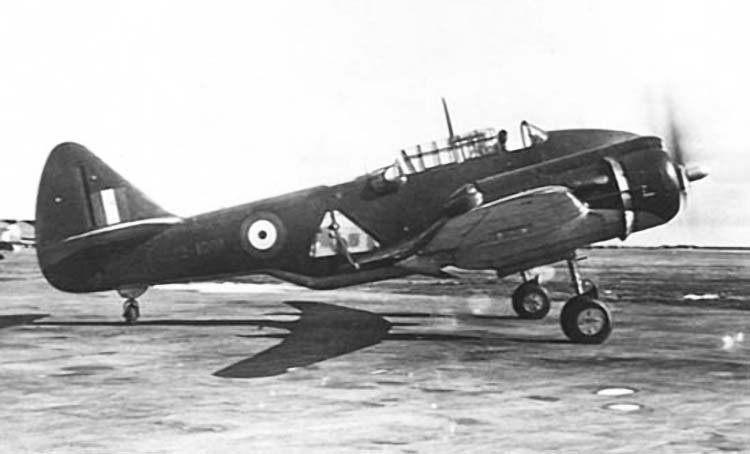 CA-4 Woomera |
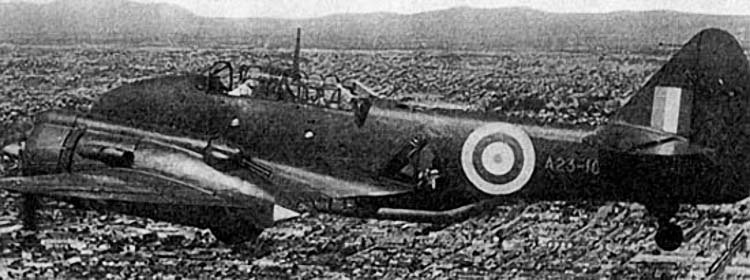 CA-4 Woomera |
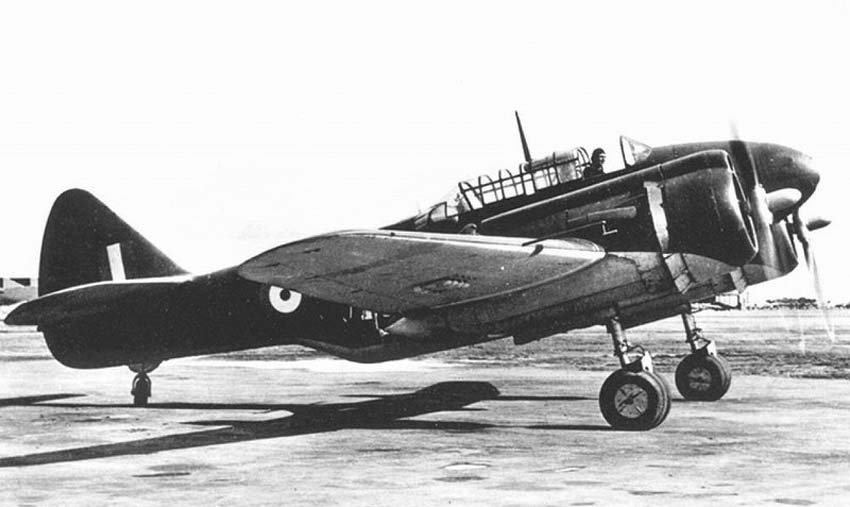 CA-4 Woomera |
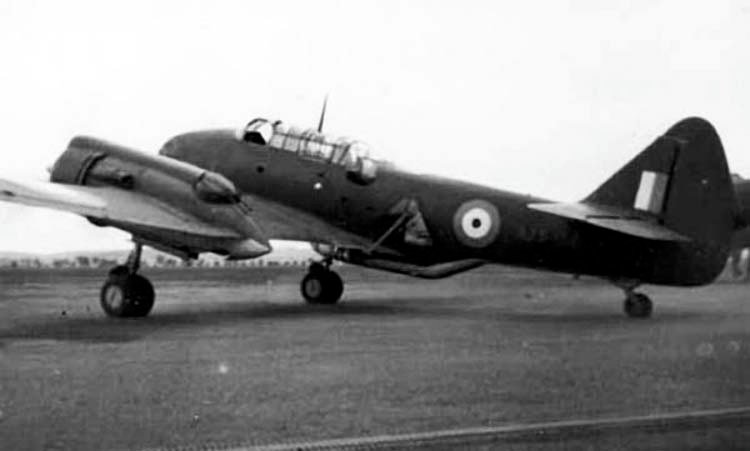 CA-4 Woomera |
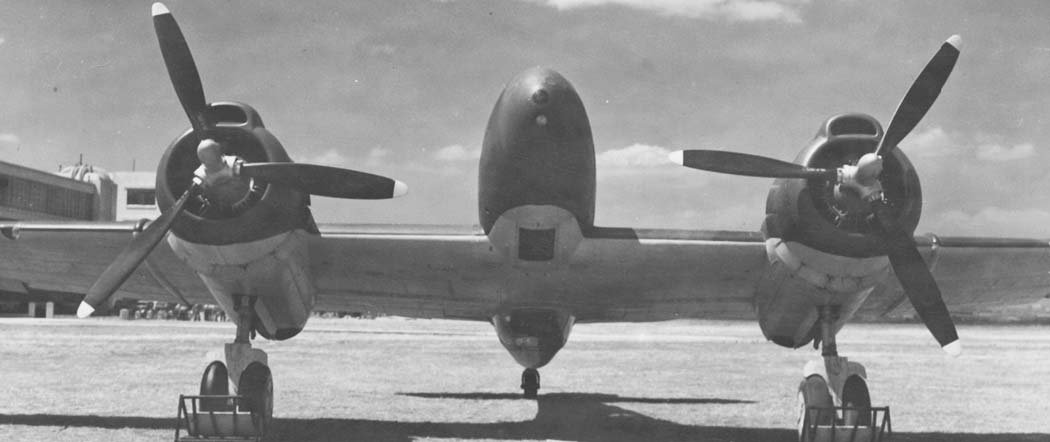 CA-4 Woomera |
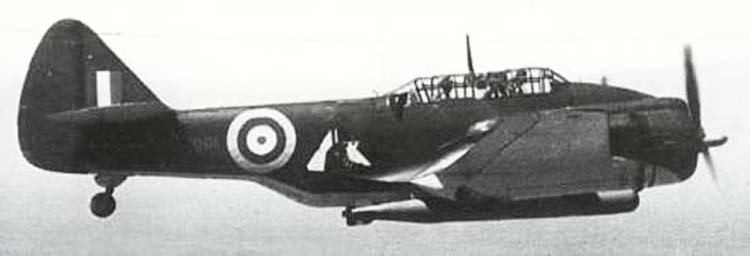 CA-4 Woomera |
 CA-4 Woomera |
 CA-4 Woomera |
 CA-4 Woomera |
 CA-4 Woomera |
 CA-4 Woomera |
 CA-4 Woomera |