
In the summer of 1917, alarm over successful German Gotha raids on London led to an urgent need for retaliatory bombing of German industrial targets. To address this, the 41st Wing of the Royal Flying Corps (R.F.C.) was formed in October. This created a demand for very large, long-range aircraft capable of mass bombing Berlin, prompting Handley Page and Bristol to submit their respective projects.
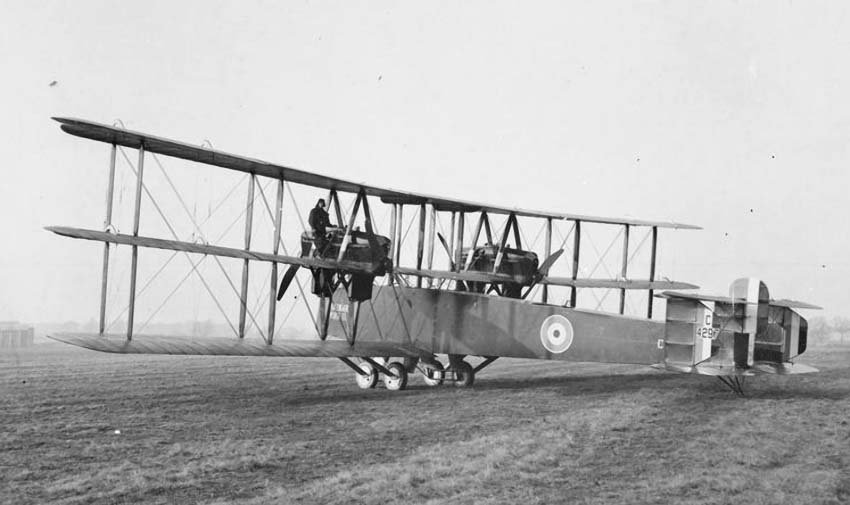
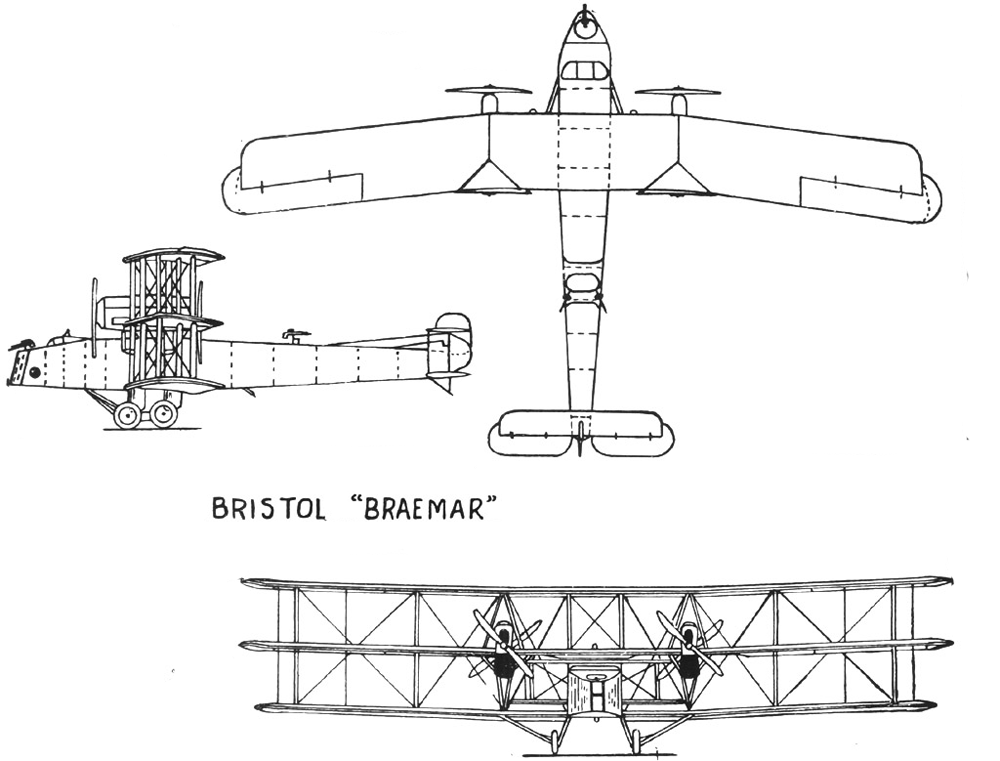
Captain Barnwell, in October 1917, drafted the initial layout, which he named B.1. This triplane featured an aerodynamically shaped internal bomb bay capable of holding six 250-pound (113.4 kg) bombs, and a central engine room housing four engines. The engines were coupled in pairs via reduction gears to shafts, driving large four-bladed tractor propellers located on each side of the fuselage.
The B.1 was equipped with a four-wheel landing gear with wheel brakes and a self-aligning tail wheel. It was designed to carry a six-person crew, including two pilots, a radio operator, a mechanic, and two gunners (one also acting as a bombardier), for a range exceeding 1,000 miles (1609 km). This design was passed to W. T. Reid for detailing, evolving into a less ambitious project with four engines arranged in tandem pairs on the central wing. For ease of construction, the fuselage had flat sides with spruce compression elements, locally reinforced with plywood and braced with compressed turnbuckles.
Production and Assembly Challenges
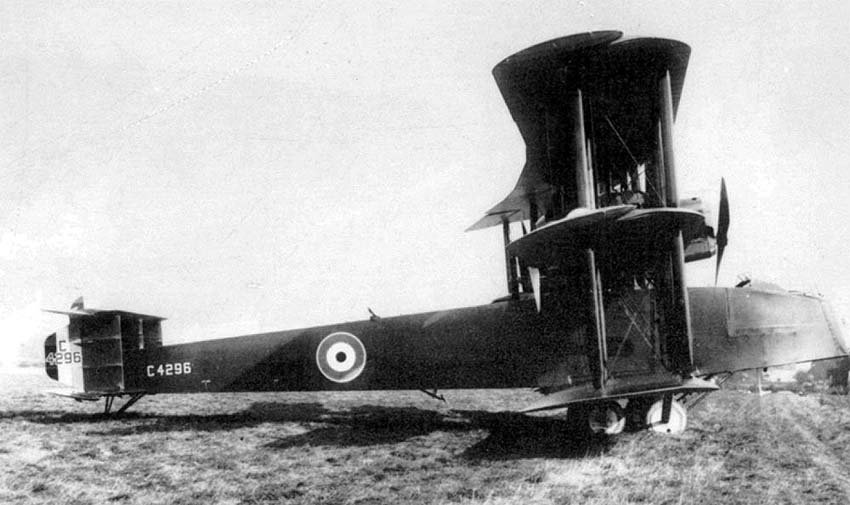
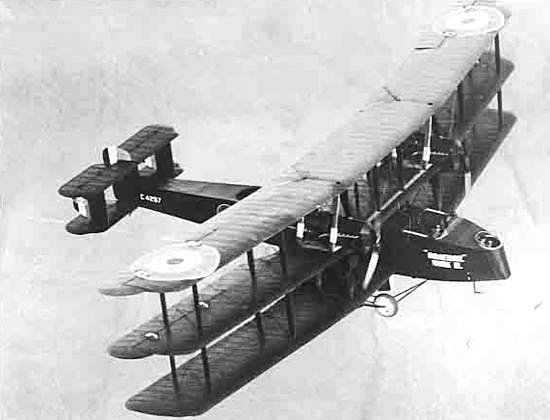
The project was accepted by the Air Board, and a contract for three prototypes (Nos. 3751-3753, C4296-C4298) was issued on February 26, 1918. The company had previously explored the production of large flying boats for the Air Board, which would have required new, suitably sized hangars. However, the only way to build the bomber prototype indoors was to occupy a bay in the acceptance park’s hangars; it was wide enough for the bomber’s length but not for its full wingspan.
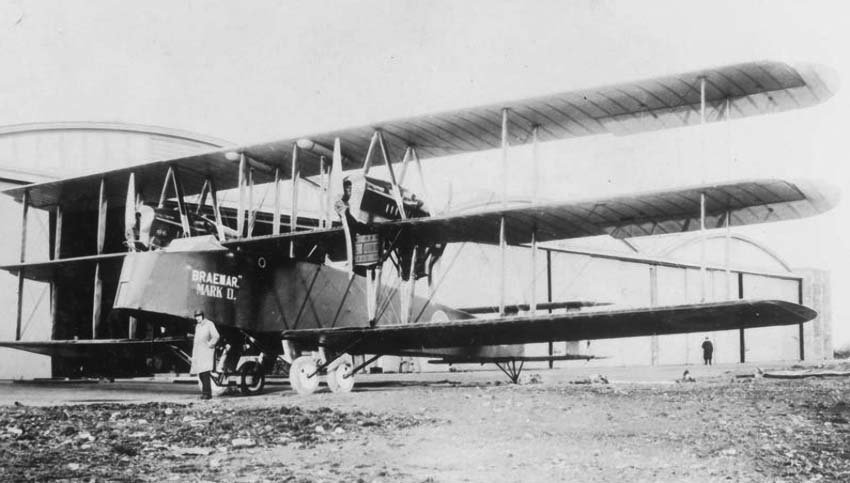
Consequently, the bombers had to be assembled one by one and, turned sideways on trolleys, moved out through the hangar doors. The first prototype, named Braemar Mark I, was completed in August 1918. It was fitted with four 230 hp Siddeley Puma engines, replacing the 360 hp Rolls-Royce Eagle engines due to their unavailability.
F. P. Raynham conducted the successful first flight on August 13th and flew it to Martlesham Heath for acceptance trials on September 13th, achieving a very commendable maximum speed of 106 mph (170.554 km/h) at an all-up weight of 16200 lbs (7348.32 kg). Major R. H. Carr and Captain G. Gathergood delivered it to Martlesham throughout October, finding the characteristics and handling generally satisfactory. However, they criticized the controls and pilot’s view, and complained about fuselage vibrations during taxiing. The method of attaching the upper and lower wings to the central one was believed to cause frequent brace failures in the outer struts. From Martlesham, Braemar I was sent to Farnborough, where it ended its days in 1920.
Improvements and the Braemar Mark II
Most of the features criticized at Martlesham were improved on the second prototype, the Braemar Mark II, which received 400 hp Liberty engines. This aircraft first flew on February 18, 1919, piloted by Cyril Uwins; the speed and climb rate it demonstrated proved better than expected. It was delivered to Martlesham Heath on April 17th, where it remained until at least February 1920.
As late as November 1921, there was a proposal to fit a torpedo dropper under the Braemar II’s fuselage. However, by that date, the aircraft had been destroyed when it overturned during takeoff and collided with a hangar at Martlesham Heath. In April 1919, the Air Board stipulated that the company should complete the third prototype as a 14-passenger civil transport, but Barnwell did not permit flights of the machine with an enlarged fuselage until its model had been tested in a wind tunnel.
Technical Specifications
| Modification | Braemar I |
| Wingspan, m | 24.89 |
| Length, m | 15.70 |
| Height, m | 6. 30 |
| Wing area, m2 | 176.97 |
| Empty weight | 5084 |
| Normal takeoff weight | 7490 |
| Engine type | 4 Piston engine Armstrong Siddeley Puma |
| Power, hp | 4 x 230 |
| Maximum speed, km/h | 170 |
| Cruising speed, km/h | 142 |
| Practical range, km | 2000 |
| Service ceiling, m | 5180 |
| Crew, crew members | 4 |
| Armament | two 7.7-mm Lewis machine guns; bomb load – 680 kg |
Image and diagram gallery of the Braemar
 Braemar |
 Braemar |
 Braemar |
 Braemar |
 Braemar |
 Braemar |
 Braemar |
 Braemar |
 Braemar |
 Braemar |
 Braemar |
 Braemar |
 Braemar |
 Braemar |