
The Lockheed 1329 JetStar aircraft was developed by Lockheed on its own initiative. It was a low-wing monoplane with swept wings and empennage, initially powered by a pair of Bristol Orpheus 1/S turbojets, each providing 21.57 kN of thrust.
The prototype’s first flight took place on September 4, 1957. Two prototypes were built, with the second being equipped with extended fuel tanks integrated into the wing. However, due to disagreements with Bristol-Siddeley, the planned production of Orpheus engines in the USA could not be organized.
As a result, Lockheed changed the aircraft’s configuration. In 1959, the second prototype was fitted with four Pratt & Whitney JT12 engines, and the wing fuel tanks were removed. In this form, the aircraft was approved for production and launched into series (and commercial operation) in 1961.
Early Operational History
Sixteen aircraft of the first series were purchased by the U.S. Air Force under the UTX (Utility Transport eXperimental) program and designated C-140A. These aircraft were used for administrative transport of army leadership and for calibrating radionavigation equipment. Subsequently, 11 more aircraft were acquired for these purposes, remaining in use until the 1980s.
Several aircraft, configured for military leadership transport, were acquired by Germany and Canada. The JetStars served various governmental and military roles, highlighting their versatility as VIP and liaison aircraft internationally.
Modernization and JetStar II
New aircraft noise regulations in the U.S., along with the high fuel consumption of the early series aircraft, necessitated modernization. Turbofan engines Garrett AiResearch TFE731 were installed, and external wing fuel tanks were re-introduced. The new aircraft was designated 731 JetStar, and later, JetStar II.
Forty aircraft of this series were produced from 1976 to 1979. However, military interest in the new version did not materialize, so most of the 204 JetStar aircraft built were sold to civilian customers as business jets. Production of the aircraft ceased in 1980.
Global Operators and Design
The aircraft was used by civilian air carriers in Canada (Department of Transport) and Iraq (Iraqi Airways). Military operators included the defense ministries of West Germany, Indonesia, Iran, Iraq, Kuwait, Libya, Mexico, the USA, and Saudi Arabia. Among the aircraft’s famous private owners was Elvis Presley.
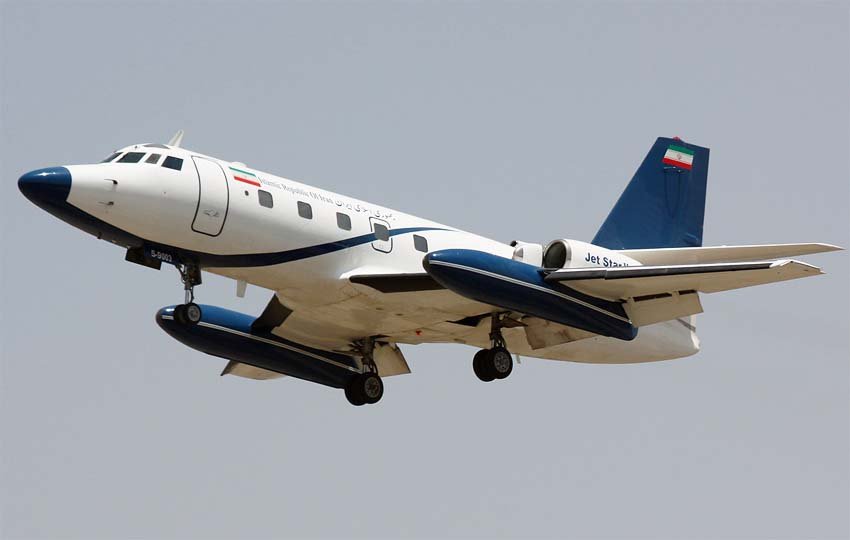
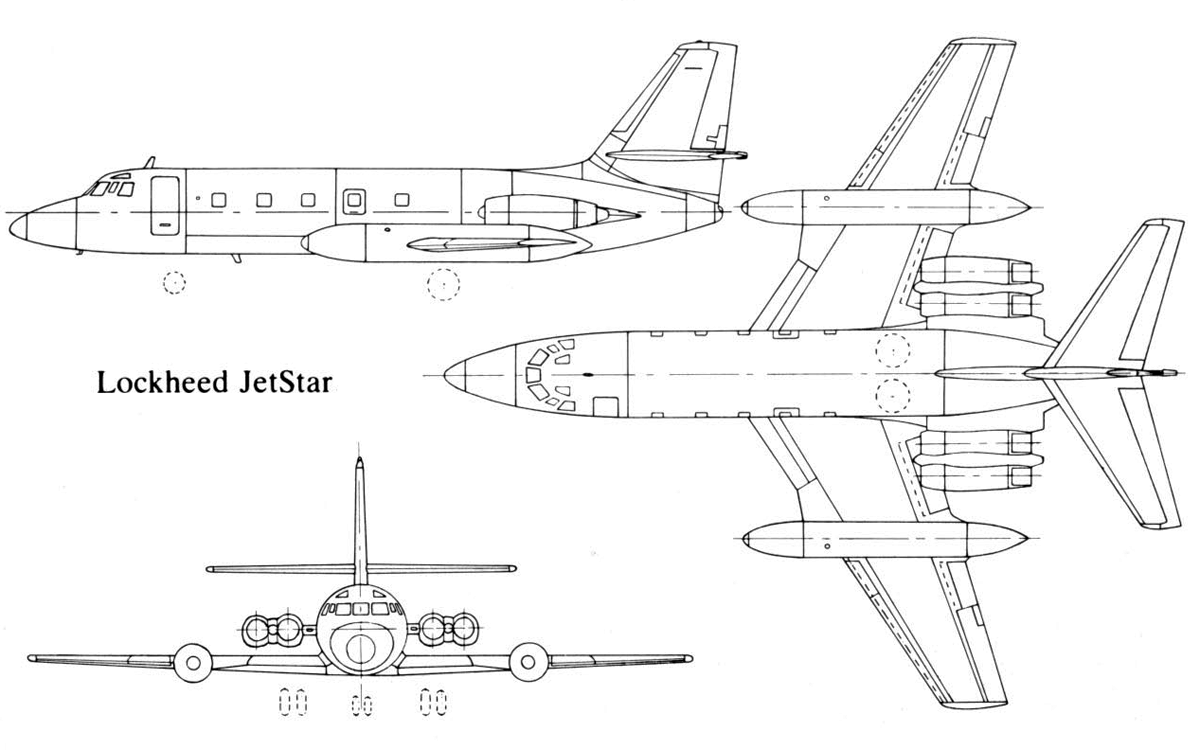
The JetStar was built according to a conventional low-wing monoplane aerodynamic scheme with a 30° swept wing. The wing featured large fuel tanks integrated across its structure, protruding both forward and backward. Wing mechanization included leading-edge slats and double-slotted flaps. A fully-movable horizontal stabilizer was positioned midway up the fin, and an airbrake was located on the underside of the fuselage.
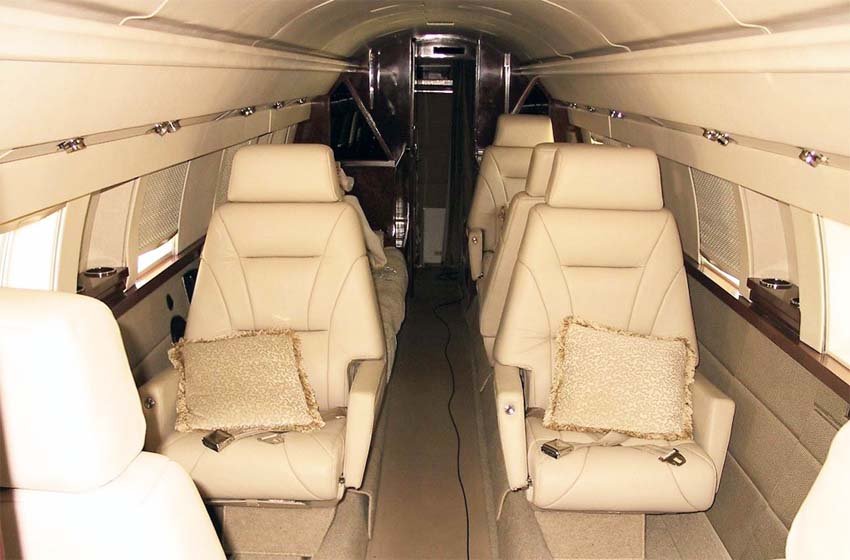
Four engines were arranged in pairs at the rear of the fuselage. The JetStar was a relatively large aircraft for its class, with a maximum takeoff weight approaching 20 tons. In a standard cabin layout (with a lavatory), the aircraft was designed to carry eight passengers, or up to 10 in a denser configuration. The central aisle in the cabin was lowered relative to the seats to ensure adequate headroom.
The JetStar II model differed, besides its engines, by slightly different fuselage and wing contours.
Technical Specifications
| Modification | C-140B |
| Wingspan, m | 16.60 |
| Aircraft length, m | 18.48 |
| Aircraft height, m | 6.23 |
| Wing area, m2 | 50.40 |
| Empty weight | 10967 |
| Normal takeoff weight | 18840 |
| Maximum takeoff weight | 20185 |
| Internal fuel, l | 10070 |
| Engine type | 4 Turboprops Garrett TFE731-3 |
| Thrust, kN | 4 x 16.46 |
| Maximum speed, km/h | 880 |
| Cruising speed, km/h | 817 |
| Practical range, km | 5132 |
| Operational range, km | 4818 |
| Practical ceiling, m | 10975 |
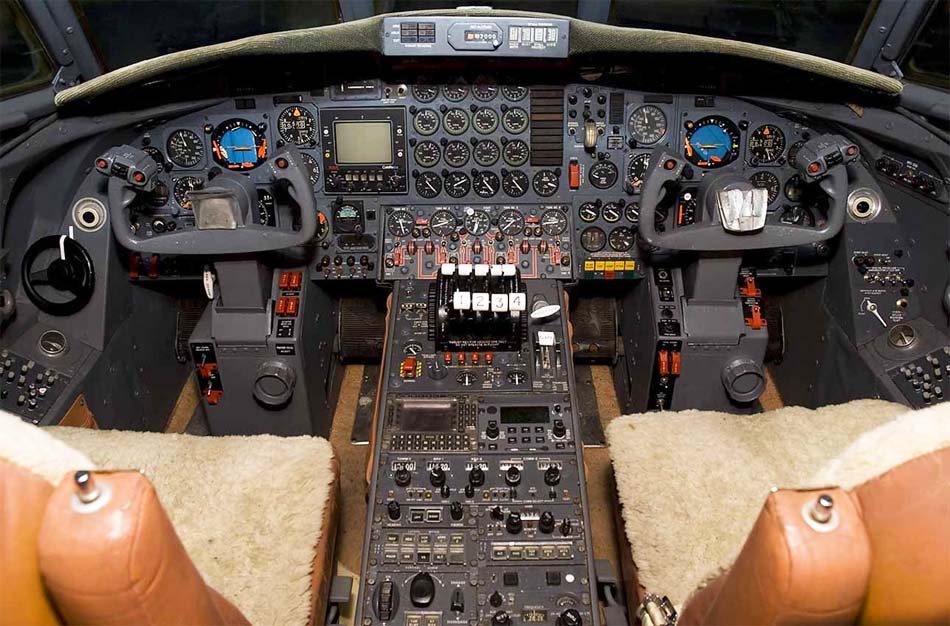
| Crew | 2 |
| Payload | 10 passengers or 1280 kg of cargo |
Image and diagram gallery of the Lockheed JetStar
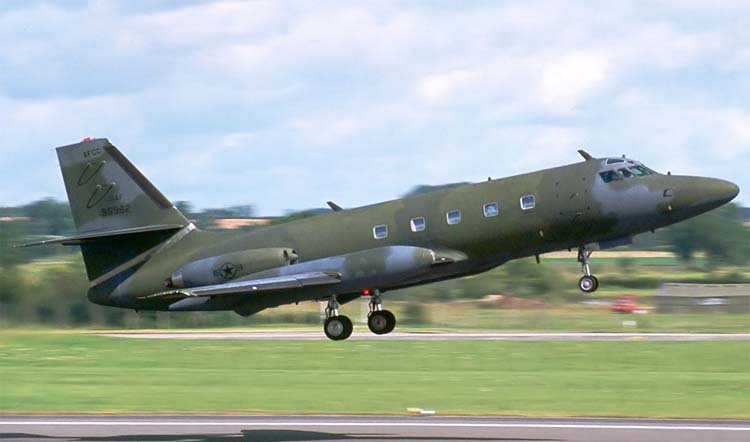 C-140 Jetstar |
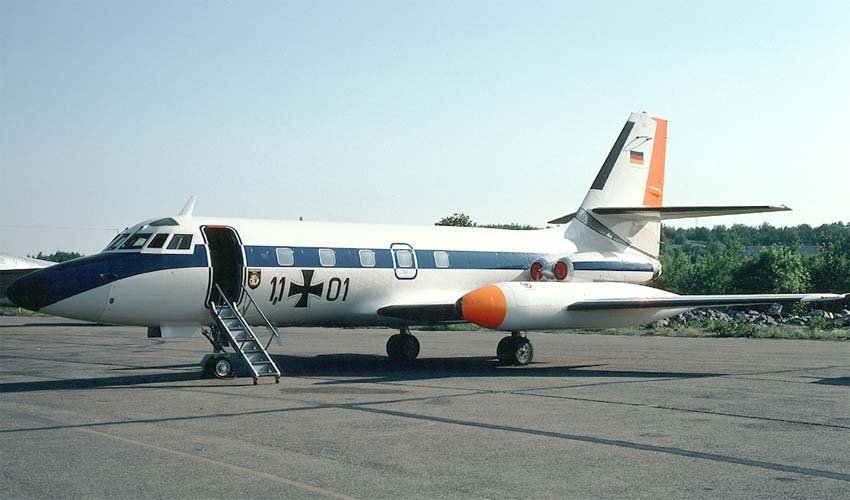 C-140 Jetstar |
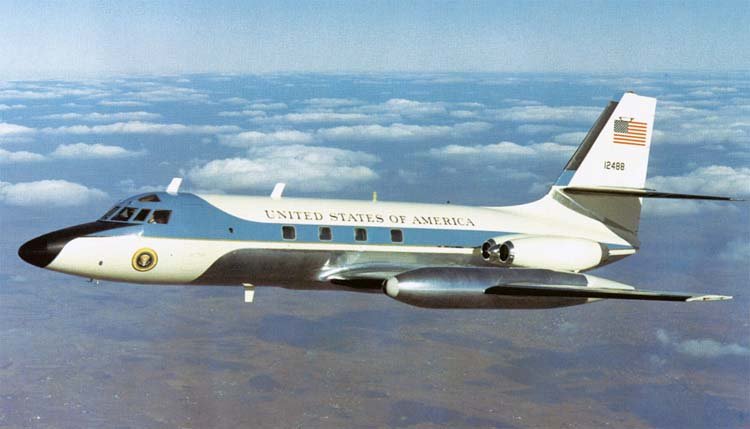 C-140 Jetstar |
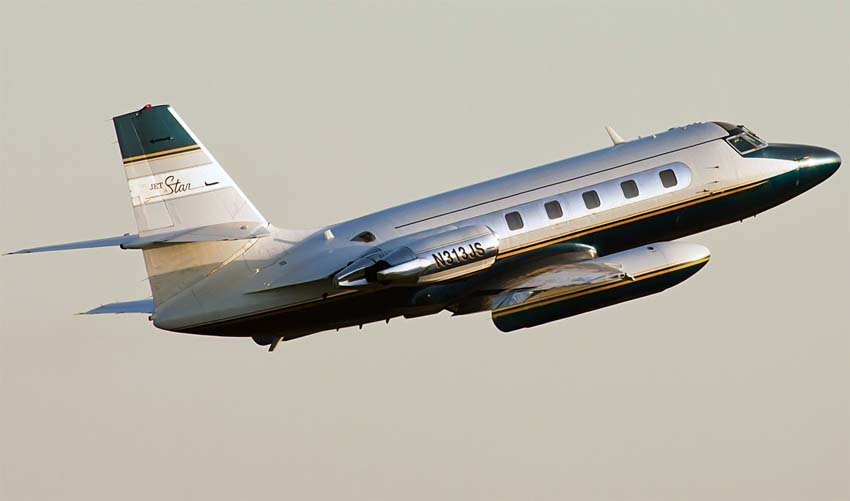 C-140 Jetstar |
 C-140 Jetstar |
 C-140 Jetstar |
 C-140 Jetstar |
 C-140 Jetstar |
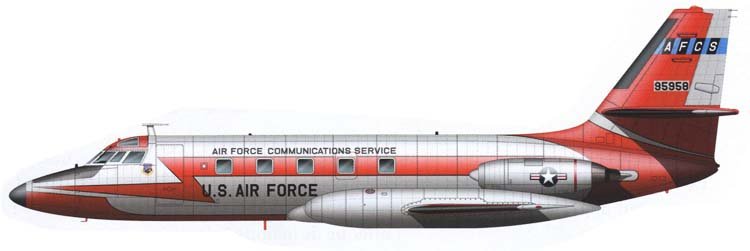 C-140 Jetstar |
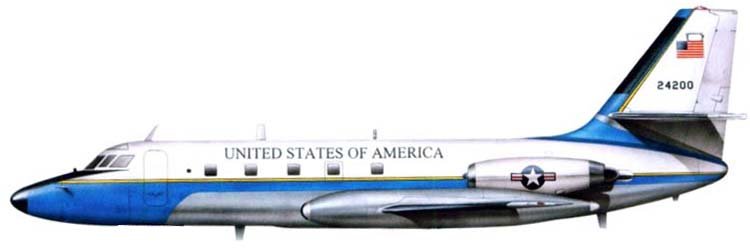 C-140 Jetstar |