
Origins and Initial Development
The Model 210 began its career as a variant of the Model 182, featuring a retractable tricycle landing gear. It became Cessna’s first single-engine aircraft with a fully retractable landing gear, a design that was unique in itself. The prototype, converted from a Model 182, performed its first flight on February 25, 1957.
Initially, the aircraft was designated Model 185, but in 1958, the designation changed to Model 210. After the installation of a swept fin and other structural modifications, the revised prototype performed its first flight on August 28, 1958, equipped with a 260 hp Continental IO-470-E engine.
Evolution and Key Variants
The Model 210 is a high-wing aircraft with a wing equipped with turned-down tips, except for the latest built aircraft. Early models featured a strut-braced wing and an angular fuselage nose section. The first production variant was the Model C210 (575 aircraft built), launched in 1960. This variant was similar to the Model 182 but had only two main cabin windows, with a small, narrow window for the pilot.
In 1961, the Model C210A (265 units) appeared, featuring a more spacious and comfortable cabin with additional side windows. In 1962, the Model C210B (280 aircraft) was released, distinguished by a slightly longer fuselage, accommodating more fuel. The enlarged cabin featured “Omnivision” rear glazing, and it was powered by a 260 hp IO-470-S engine. A not-so-different variant, the Model C210C (135 aircraft), appeared in 1963.
In 1964, the Model C210D (290 units) was introduced, which received the name Centurion and was built in several sub-variants. The Model C210D was equipped with a 285 hp IO-520-A engine, a horizontal empennage with a longer chord, longer flaps, and two small radio antennas installed above the cabin. The Model C210E (205 aircraft), created in 1965, was almost indistinguishable from the preceding variant.
Serial production of the Model T210F Turbo Centurion (300 aircraft) began in 1966, featuring a 285 hp TSIO-520-C turbocharged engine and a three-bladed propeller. The cabin could accommodate up to six people and included a frameless windshield, an oxygen system for passengers, and an increased maximum takeoff weight. The more complex Model T210F – and subsequent variants – boasted better flight characteristics compared to piston aircraft, contributing to its strong sales.
Innovations and End of Production
A redesigned wing with a laminar profile was installed on the Model C210G and T210G (228 aircraft) in 1967. The new wing was cantilevered and had a slight dihedral. To maintain balance, the new, heavier wing was shifted closer to the tail, and the stabilizer chord was increased. Model C210G and later variants featured small square windows in the rear of the cabin instead of “Omnivision” glazing.
Model C210H and T210H (210 aircraft) were equipped with new flaps and cockpit instrumentation. In 1969, Model C210J and T210J entered serial production with reduced wing dihedral; these were the first Centurion aircraft with smooth, rounded engine cowlings. Model C210K and T210K (303 aircraft) appeared in 1970 and were distinguished by an increased volume six-seat cabin with two side windows, as well as two large radio antennas above the wing. The aircraft also received a new landing gear with bulbous main gear well doors.
The Model C210L and 210L (2070 aircraft) from 1972 were similar to the Model C210K, but had two large landing lights in the forward fuselage. The Centurion II was envisioned with more complex avionics. Model C210M and T210M (1381 aircraft) from 1977, and Model C210N and T210N (1943 aircraft) from 1979, were very similar to the Model 210L, although the Model 210M offered the option of installing a TSIO-520-R engine with a three-bladed propeller.
In 1978, production began for the first fully pressurized cabin variant in the Model 210 series – the Model P210N Pressurized Centurion (834 aircraft), with a TSIO-520-P turbocharged engine. Visible differences included four small round cabin portholes, additional air intakes below the main engine air intakes, and landing light fairings with covers. On the Model P210N and T210N, which appeared in 1980, the installation of weather radar in a pod under the right wing was permitted.
No Model 210 series aircraft were built in 1984. However, in 1985, Cessna launched the final variants, the Model P210R and T210R (112 aircraft), featuring a larger span horizontal empennage and a new straight wing. These variants proved to be too complex, and their production ceased in 1986.
Technical Specifications
| Modification | Cessna T210M |
| Wingspan, m | 11.21 |
| Aircraft length, m | 8.59 |
| Aircraft height, m | 2.87 |
| Wing area, m2 | 16.30 |
| Empty weight | 1022 |
| Maximum takeoff weight | 1725 |
| Engine type | 1 Piston engine Continental TSIO-520R |
| Power, hp | 1 x 310 |
| Maximum speed, km/h | 380 |
| Cruising speed, km/h | 367 |
| Economical speed, km/h | 260 |
| Practical range, km | 1455 |
| Maximum rate of climb, m/min | 314 |
| Practical ceiling, m | 8690 |
| Crew, crew members | 1 |
| Payload: | 4-6 passengers |
Image and diagram gallery of the Cessna 210 Centurion
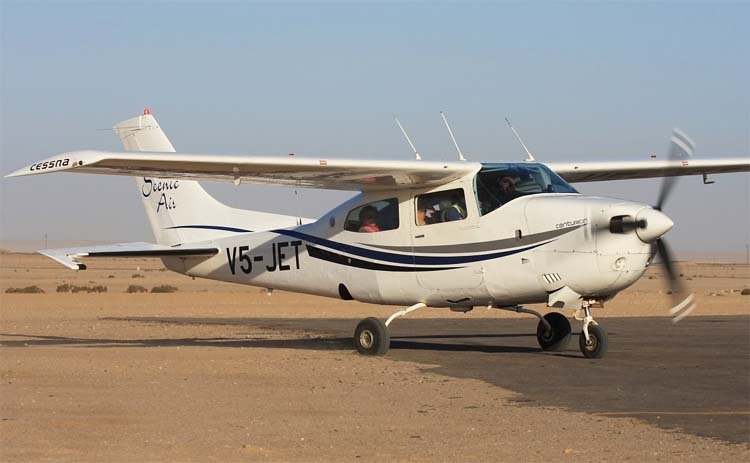 Cessna 210 Centurion |
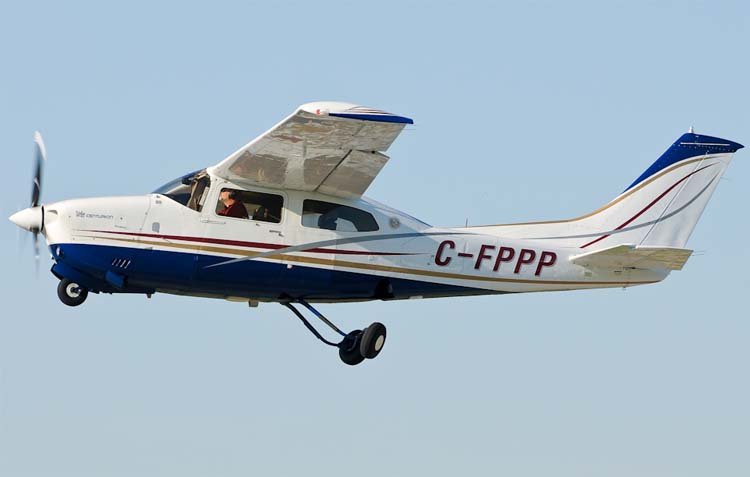 Cessna 210 Centurion |
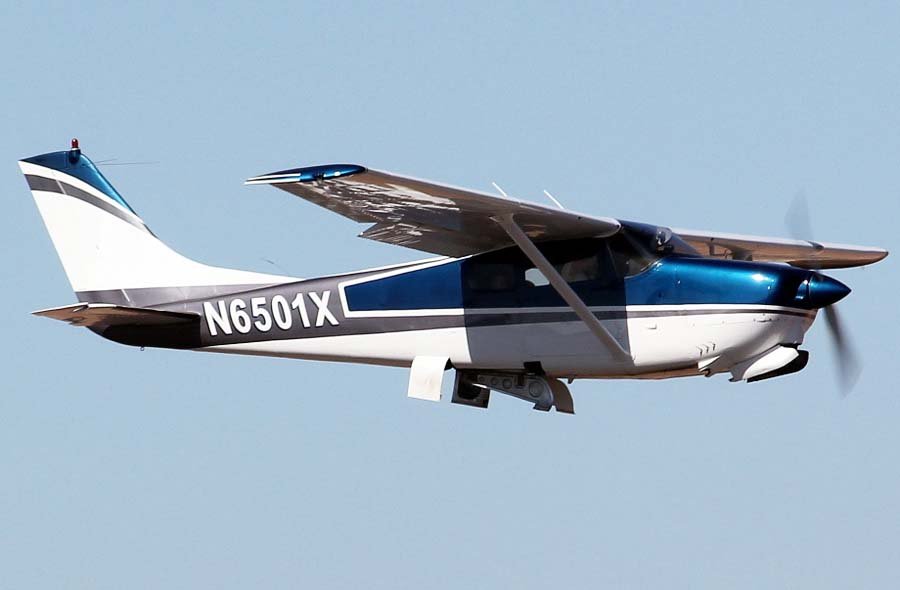 Cessna 210 Centurion |
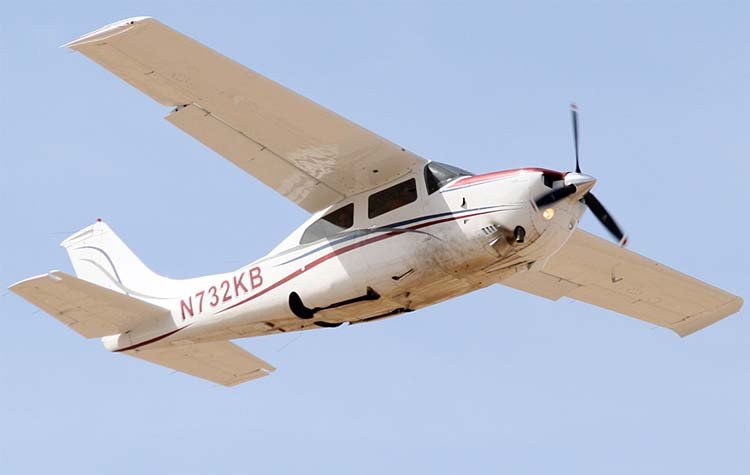 Cessna 210 Centurion |
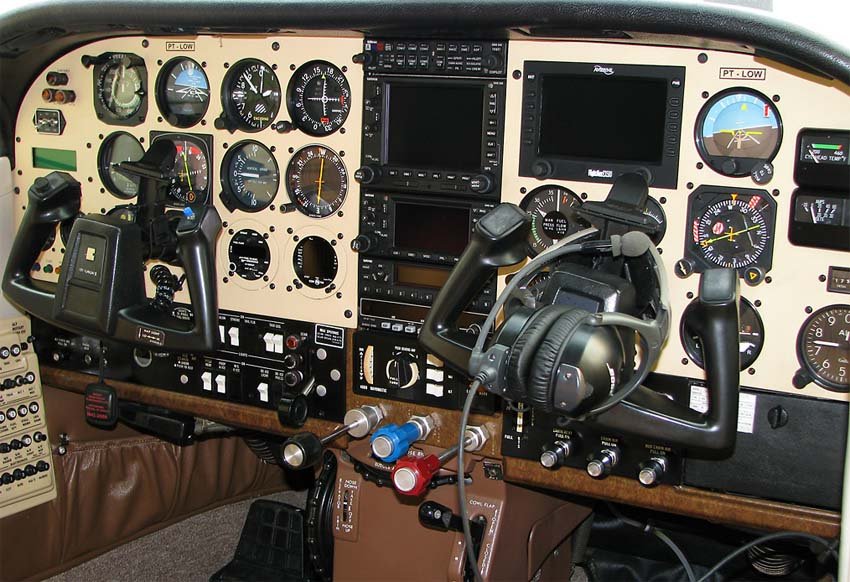 Cessna 210 Centurion |
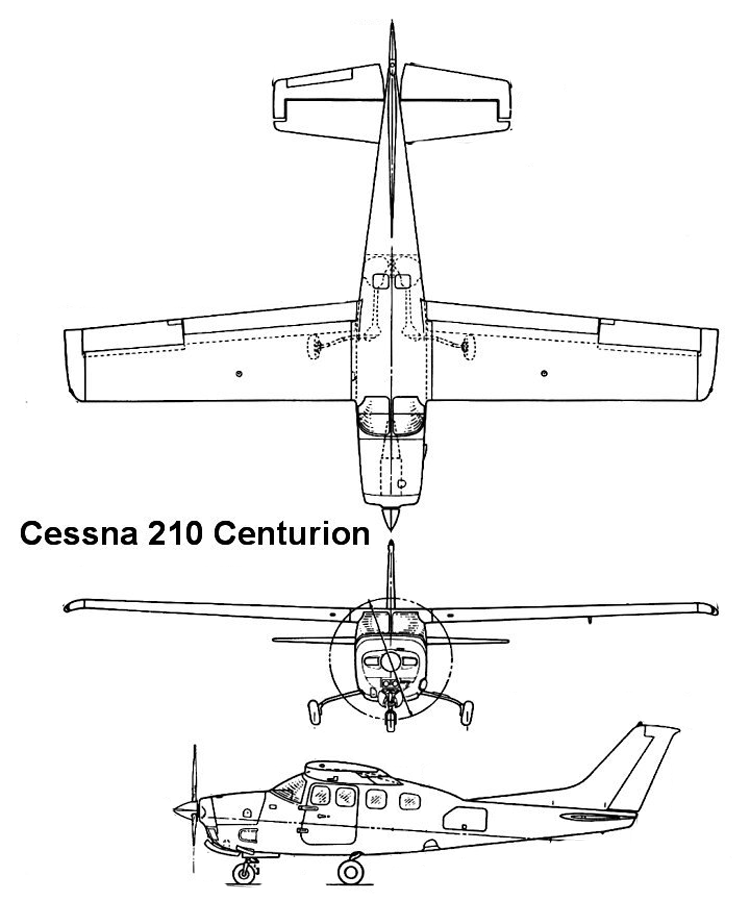 Cessna 210 Centurion |
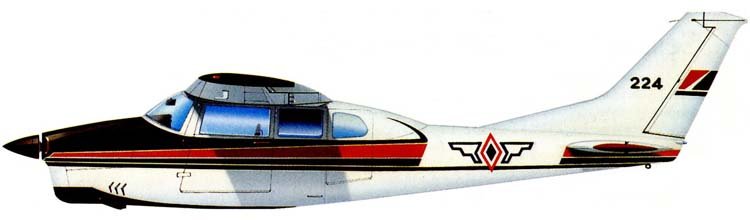 Cessna 210 Centurion |