
Development and Investment
Preliminary work on the medium-range narrow-body aircraft project began in 2010, while the ARJ21 regional aircraft project was in full swing at the Comac concern. Despite difficulties with the smaller aircraft, which only began regular flights by 2015, the concern actively continued working on its “big brainchild.”
Despite the challenges in bringing the ARJ21 into operation, Comac was satisfied with its competencies and proceeded to create another, significantly more ambitious airliner. In 2011, an agreement was signed with the world’s largest low-cost airline, Irish Ryanair, to cooperate in developing requirements for the new airliner, named C919. By the end of that year, the C919’s design was approved.
The total program cost exceeds $8.3 billion. The C919 incorporates all the most advanced technologies available to the PRC. Furthermore, during design, the Comac concern utilizes vast computing resources, including the Tianhe-2 supercomputer, the most powerful in the world at that time. According to plans, Comac will produce up to 150 airliners annually, with a total program goal of 2300 units.
Design and Specifications
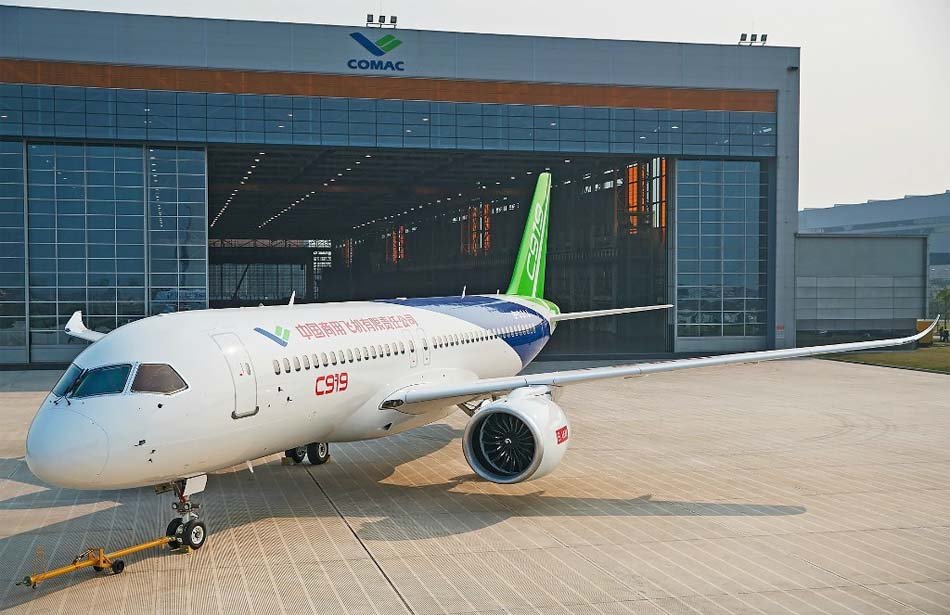
In 2014, a delay in the first delivery was announced, shifting it to 2019 due to production complexities. On November 2, 2015, the first C919 prototype was unveiled to the public. Flight tests of the first C919 prototype aircraft began on May 5, 2017.
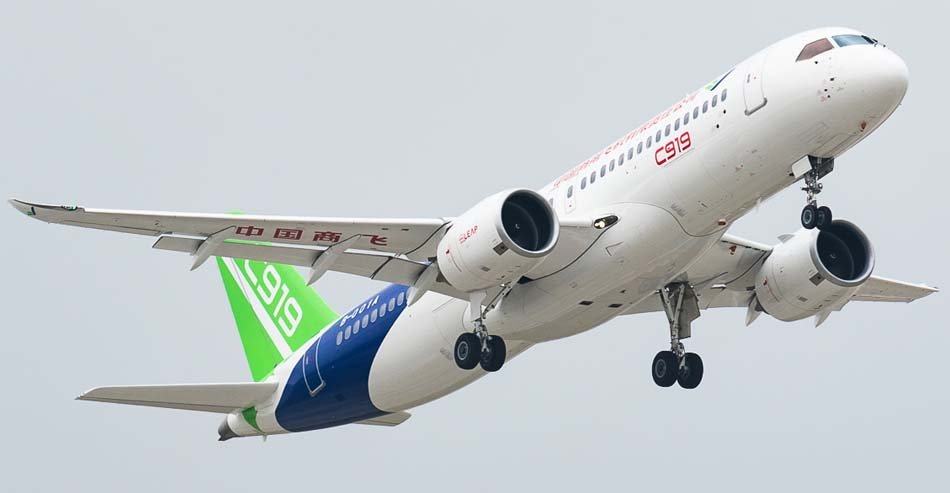
During the 79-minute flight, the aircraft, equipped with CFM Leap 1C engines, reached an altitude of 3,000 meters and a maximum flight speed of 315 km/h. The Chinese manufacturer reported that the flight performance characteristics were normal, and the goals set for the first test flight were achieved. The flight test program is expected to take over two years, involving six aircraft, with the second aircraft still in the assembly shop.
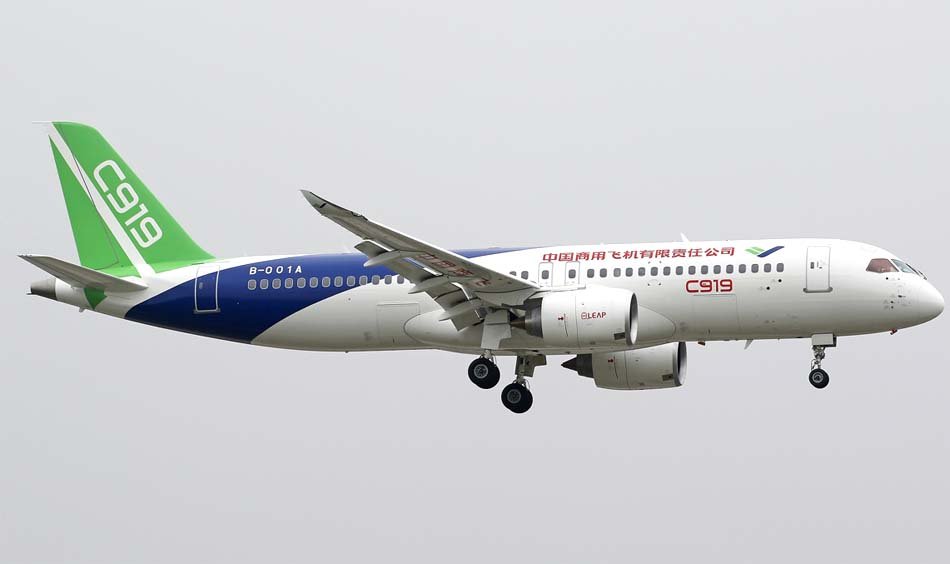
The C919 is a cantilever monoplane with a low-set swept wing and two pylon-mounted jet engines. It features a tricycle landing gear with a nose wheel. The C919 has a standard aerodynamic layout and is similar to its class counterparts, such as the A320, Boeing 737, and MC-21 airliners.
Most of the aircraft’s wing elements, including flaps and ailerons, are manufactured in Xi’an, China. Fuselage sections are produced in Nanchang, China. A large part of the aircraft’s structure is predominantly made of aluminum, although part of the center wing box is made from carbon composites. The engines and avionics on the C919 will initially be foreign-made, though the degree of localization will constantly increase over time.
The engine for the C919 will be supplied by CFM International, specifically the CFM LEAP-1C model. Nevertheless, Comac does not hide its plans to create a Chinese engine for the airliner in the future, with the prospective Comac CJ-1000A engine expected to be certified by the mid-2020s.
Capacity and Market Outlook
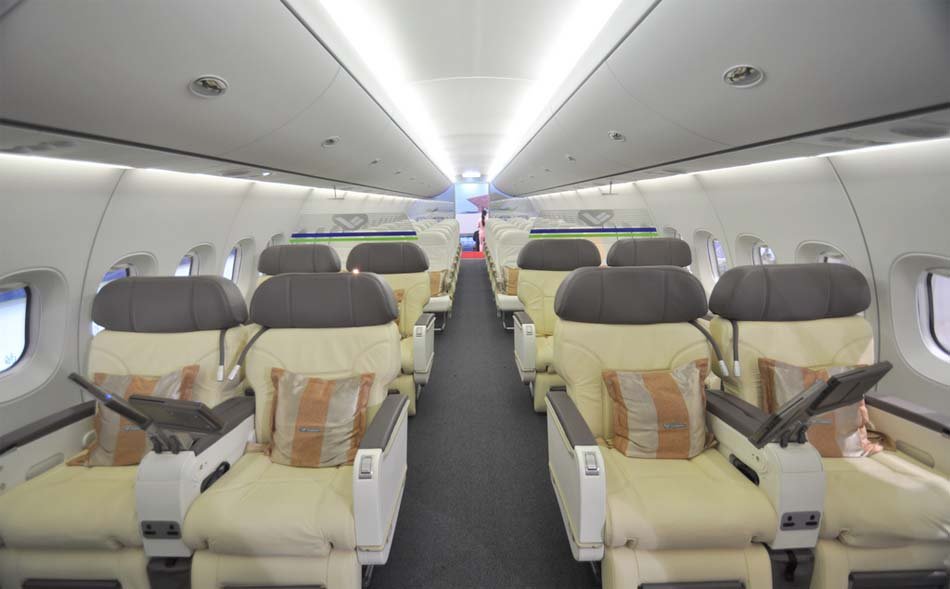
The aircraft will have several basic cabin configurations: a two-class layout for 156 passengers, a single-class for 168, and a high-density single-class accommodating up to 174 people. Additionally, the aircraft will be produced in two modifications with different maximum takeoff weights and flight ranges.
The C919 economy class cabin will be able to accommodate up to 168 passengers, while the hybrid class cabin will seat 156 passengers. The maximum flight range for the standard specification airliner will be 4075 km, and for the improved version, 5555 km. The estimated operational life of the aircraft is 90,000 flight hours, or 30 years.
COMAC has already received orders for 517 C919 airliners from 21 customers, most of which are Chinese state-backed companies. WSJ industry analysts note that foreign airlines are reluctant to invest in airliner projects that lack certificates from Western aviation regulators, such as the US Federal Aviation Administration and the European Union Aviation Safety Agency, and also lack a long operational history. Therefore, discussions about competition in the global market are premature for now.
Technical Specifications
| Modification | C919 |
| Wingspan, m | 35.80 |
| Aircraft length, m | 38.90 |
| Aircraft height, m | 11. 95 |
| Wing area, m2 | 129.15 |
| Maximum takeoff weight, kg | 77310 |
| Engine type | 2 Turbofan engines CFM International LEAP 1C |
| Thrust, kN | 2 x 110 |
| Maximum speed, km/h | 910 |
| Cruising speed, km/h | 834 |
| Practical range, km | 4075-5555 |
| Practical ceiling, m | 12000 |
| Crew, crew members | 2 |
| Payload | 156 passengers in two-class cabins or 168 passengers in single-class configuration |
Image and diagram gallery of the COMAC C919
 C919 |
 C919 |
 C919 |
 C919 |
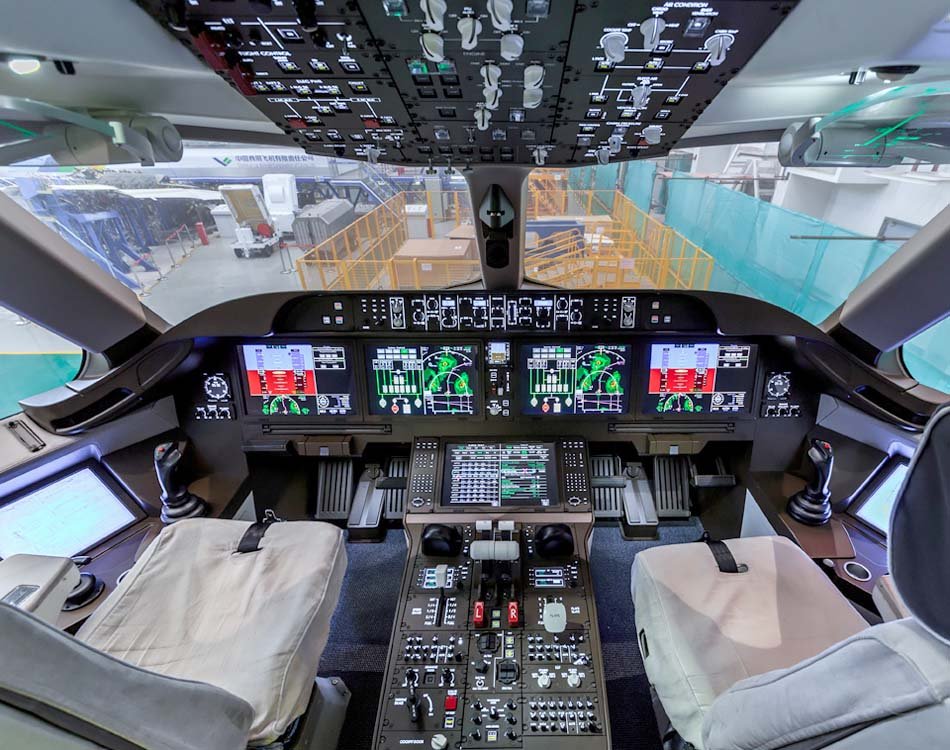 C919 |