
On May 6, 1944, the Douglas XB-42 Mixmaster, a bomber of original design, made its first flight. Its two engines were hidden within the fuselage, driving coaxial propellers via separate shafts. In May 1945, Douglas decided to apply this configuration to private aviation, forming a group led by Charles S. Glascow to design the Model 1015, later named Cloudster II. The idea for this new flying machine was to create an advanced all-metal monoplane, possessing the speed, range, and reliability of a modern airliner, yet simple enough for an amateur pilot to operate.
Incidentally, work on the DC-8 Skybus, a conversion of the XB-42 for carrying 48 passengers, seemingly began around the same time.
First Flight and Project Cancellation
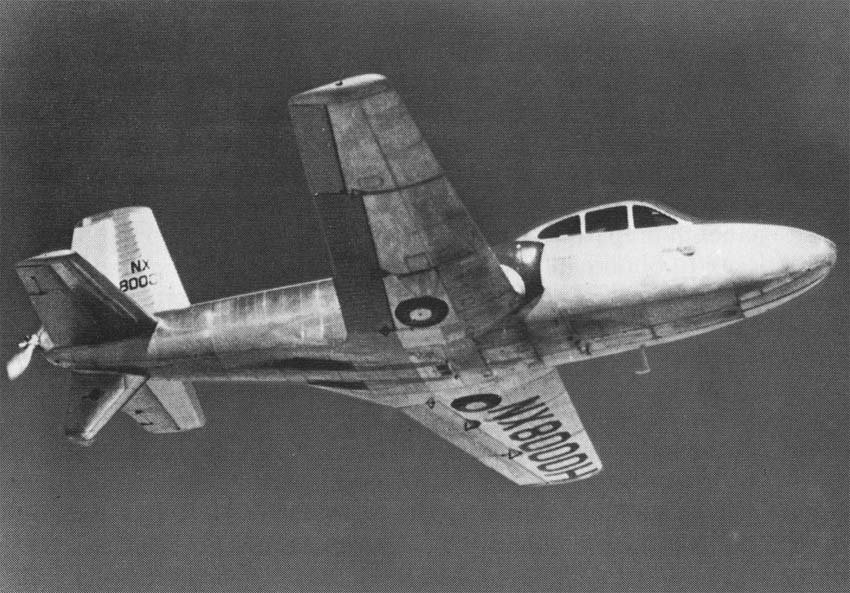
The Cloudster II prototype (s/n 43113. NX8000H) first took to the skies on March 12, 1947. Subsequent tests were largely satisfactory, hindered only by two flaws: strong vibrations and inadequate engine cooling on the ground. Throughout 1947, attempts were made to resolve these issues, but without success.
By the end of the year, the project was frozen. The reasons included post-war cost reductions, doubts about the market’s need for an aircraft of this class, and its design, which incorporated numerous technical innovations requiring further extensive investment. By this time, the aircraft’s cost had escalated from an initial $30,000 to $68,000, transforming it into a true ‘flying Rolls-Royce’. After just two flights, the aircraft was put into long-term storage, eventually given to a local scout troop as an educational aid, and later scrapped.
Powertrain Design and Performance
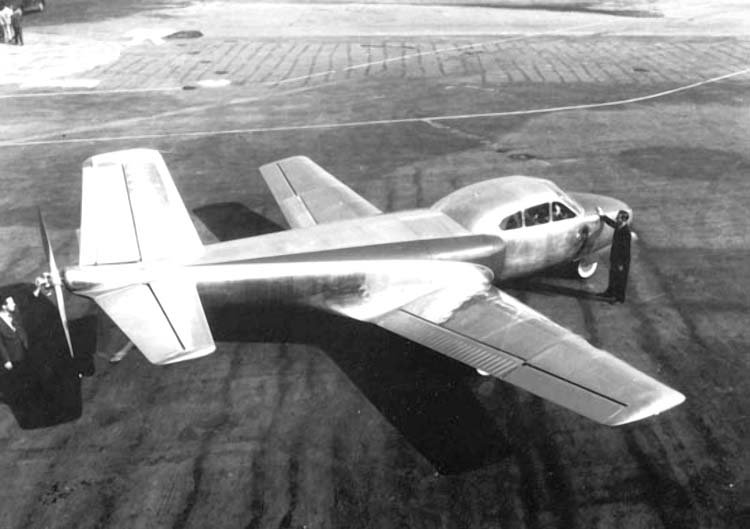
The Cloudster II was equipped with a pair of 200 hp air-cooled Continental engines, operating through a single long shaft. It was later envisioned to replace these with 250 hp Continental E-250 units. Each engine was housed in a separate steel compartment with its own alarm and fire suppression system, cooled via its dedicated side air intake. In the event of an engine failure, the gearbox would disengage it, and flight would continue on the remaining engine.
Interior and Aerodynamic Features
The propeller was two-bladed with a diameter of 2.43 m. The engines were positioned behind the cabin, separated by a sound-insulating bulkhead. The cabin was designed to accommodate five people: a pilot and co-pilot (or passenger) in front, and a rear sofa for three additional passengers. Behind the sofa was a small space for hand luggage and outerwear. The main baggage compartment, rated for 113 kg, was located behind the engine bay.
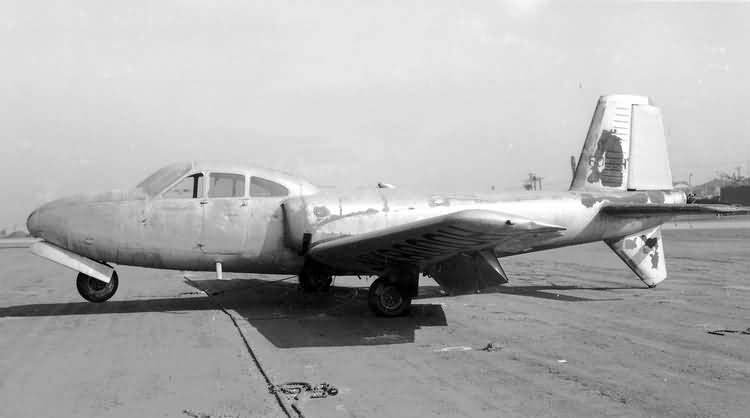
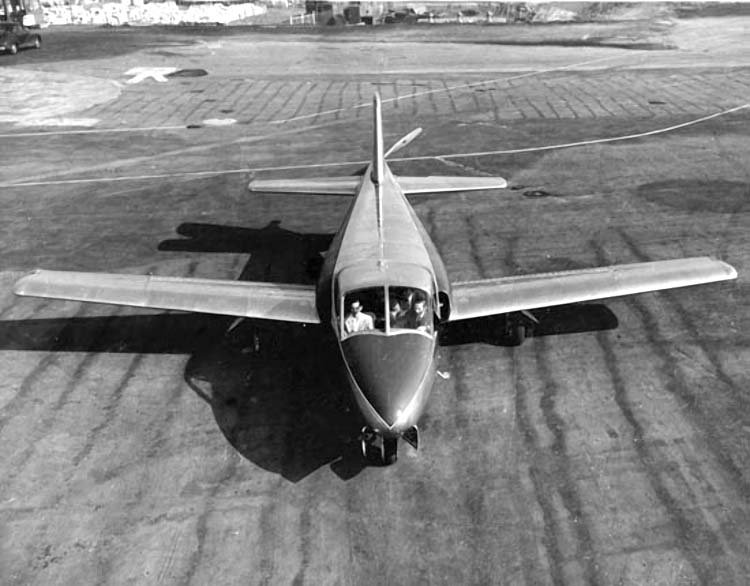
The cabin was situated very low to the ground (38 cm), which, combined with car-style doors, made passenger boarding and disembarking comfortable. It was particularly noted that, due to the unconventional engine placement, rear passengers were afforded an excellent view. The wing featured a laminar flow profile, and all landing gear struts were fully retractable. The main landing gear struts were widely spaced on the wing for greater stability during takeoff and landing in strong crosswinds.
Technical Specifications
| Modification | Cloudster II |
| Wingspan, m | 10.78 |
| Aircraft length, m | 12.13 |
| Aircraft height, m | 3.66 |
| Empty weight | 1451 |
| Maximum takeoff weight | 2307 |
| Engine type | 1 Piston engine Continental E-250 |
| Power, hp | 1 x 250 |
| Maximum speed, km/h | 369 |
| Cruising speed, km/h | 322 |
| Ferry range, km | 1891 |
| Practical range, km | 1529 |
| Maximum rate of climb, m/min | 456 |
| Service ceiling, m | 6767 |
| Crew, crew members | 1 |
| Payload | 4 passengers |
Image and diagram gallery of the Douglas Cloudster II
 Cloudster II |
 Cloudster II |
 Cloudster II |
 Cloudster II |
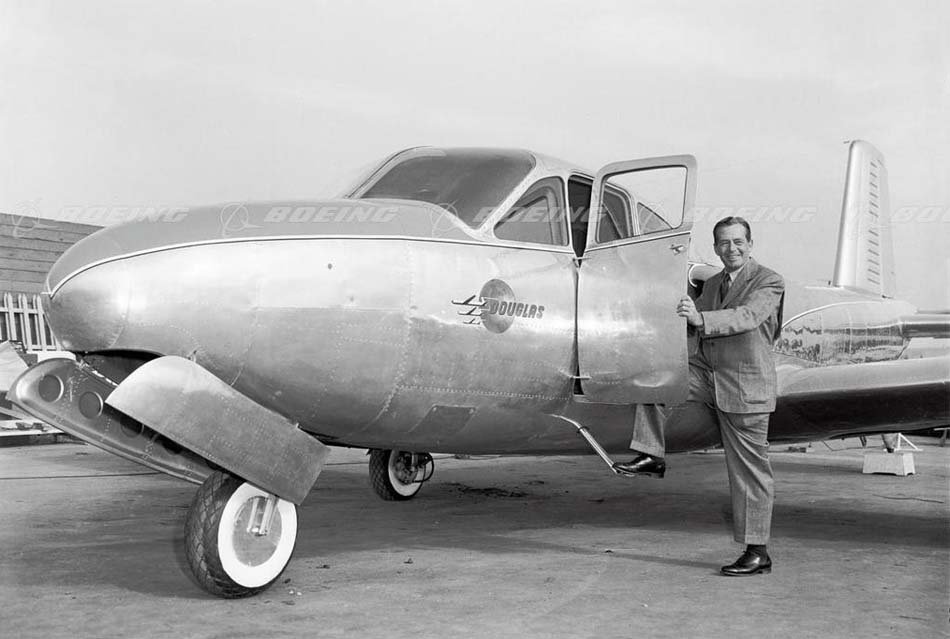 Cloudster II |
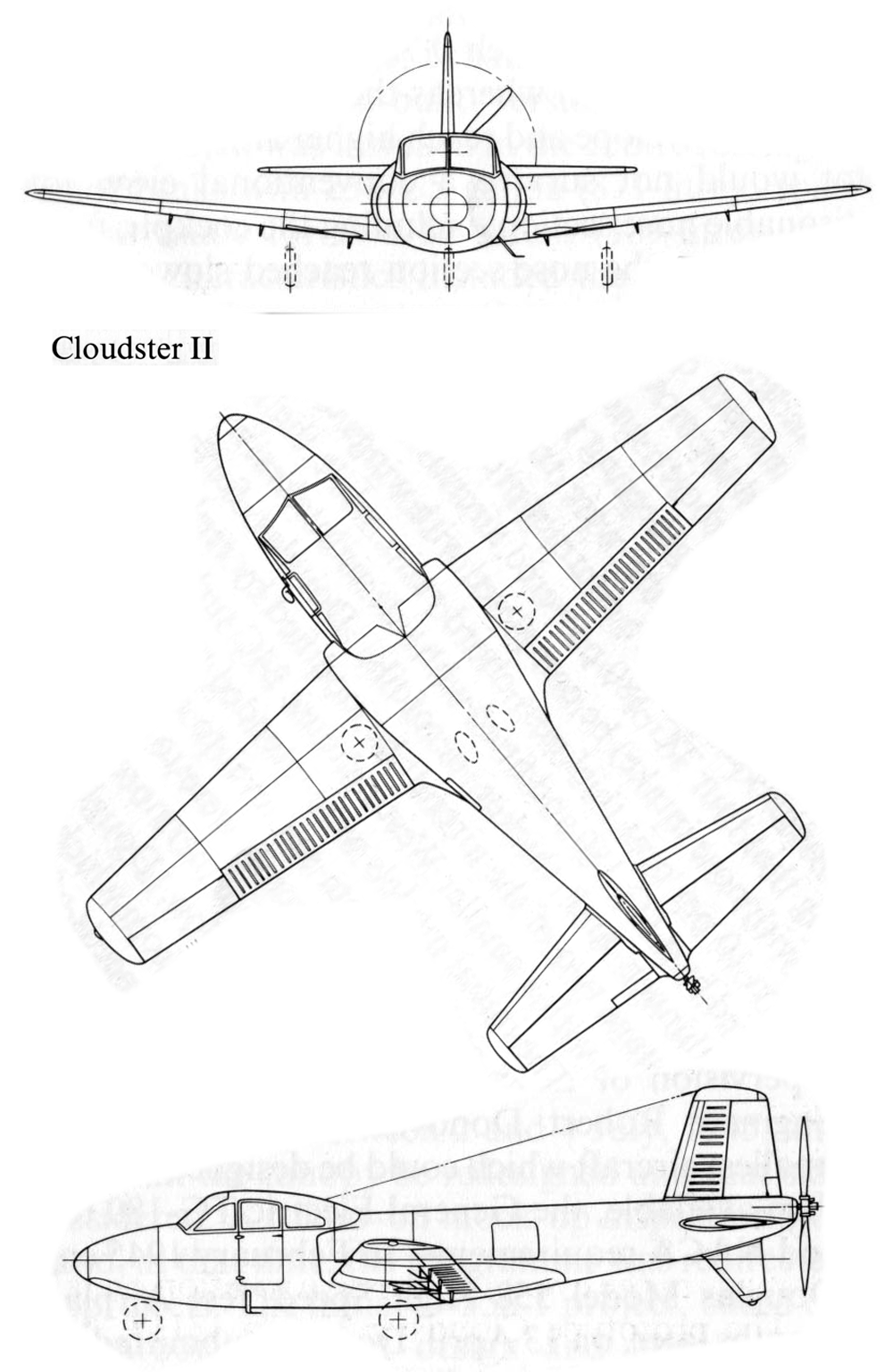 Cloudster II |