
The shipbuilding and engine manufacturing firm of William Beardmore, based in Dalmuir, Scotland, began its aviation activities in 1913 by mastering the production of engines for aircraft and airships. That same year, the firm’s aircraft construction division was opened, and a year later—just before the start of the First World War—it launched the licensed production of RAF BE.2c multi-purpose aircraft. At the same time, the company established its own design bureau, headed by engineer G. Tilghman-Richards.
Under his leadership, prototypes of the W.B.I bomber and the W.B.II multi-purpose aircraft (intended to replace the BE.2c) were created. The W.B.III, a special naval variant of the Sopwith Pup fighter, even entered series production. The next development was another naval fighter, the W.B.IV. Like its predecessor, the W.B.III, the new aircraft was intended for shipboard service but differed significantly in concept.
Innovative Design and Armament
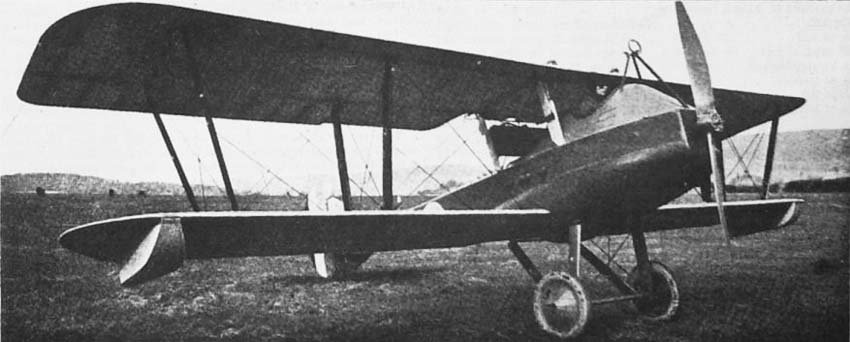
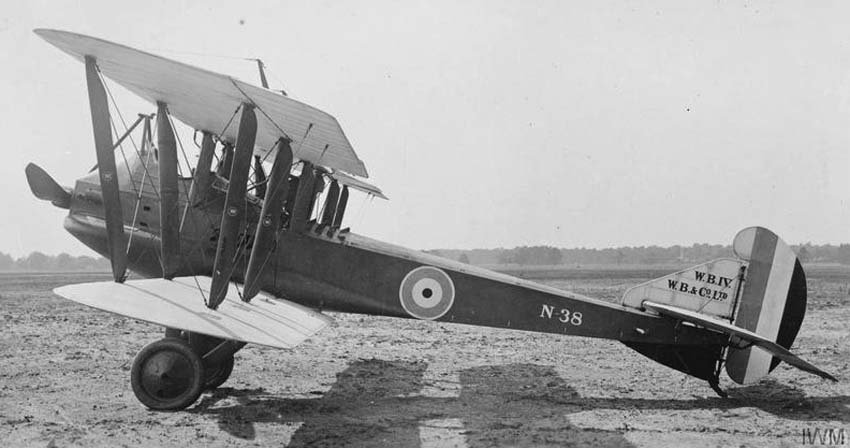
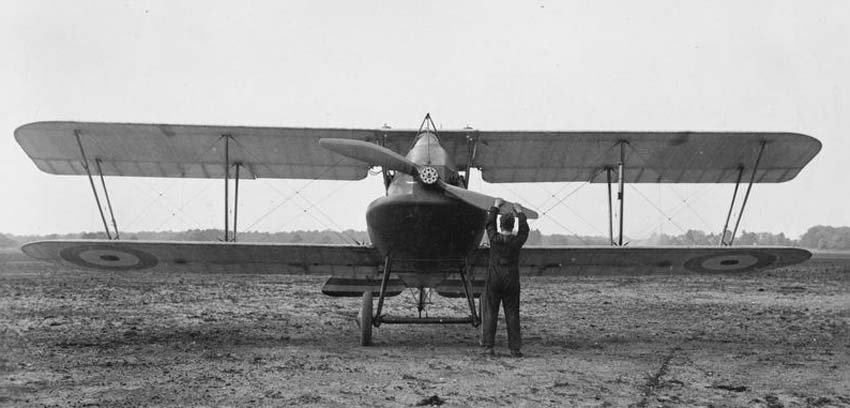
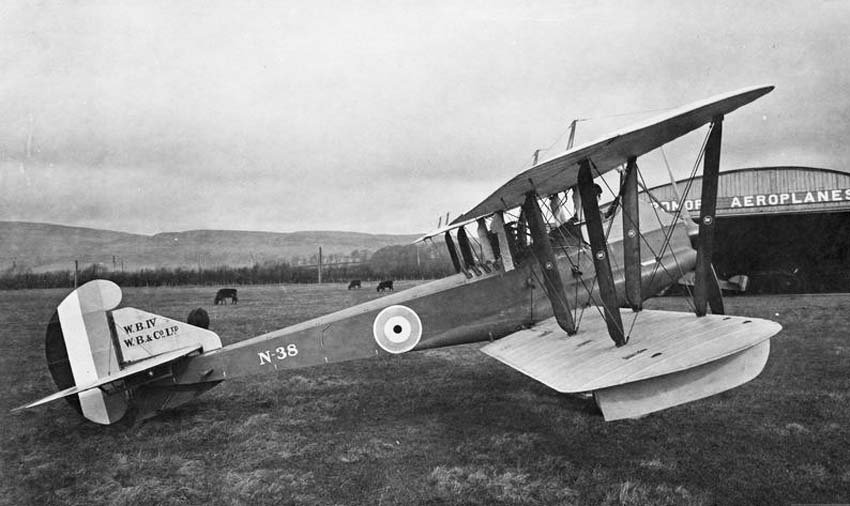
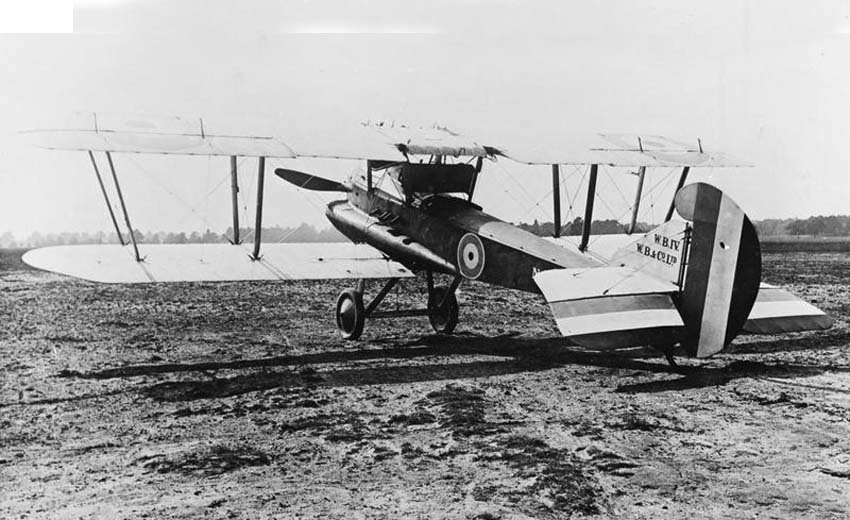
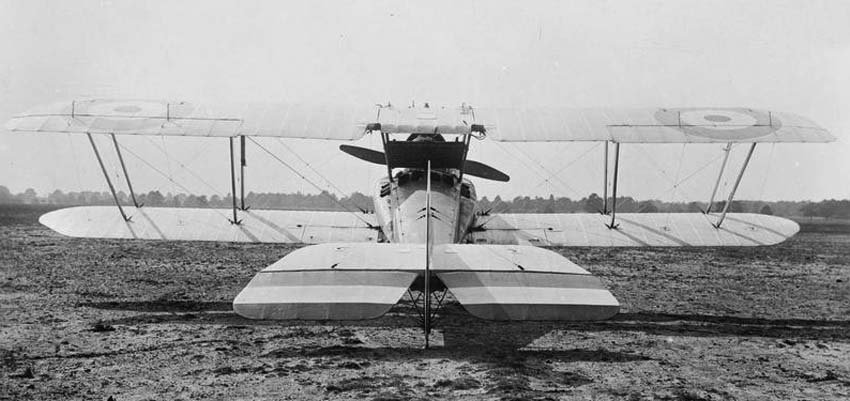
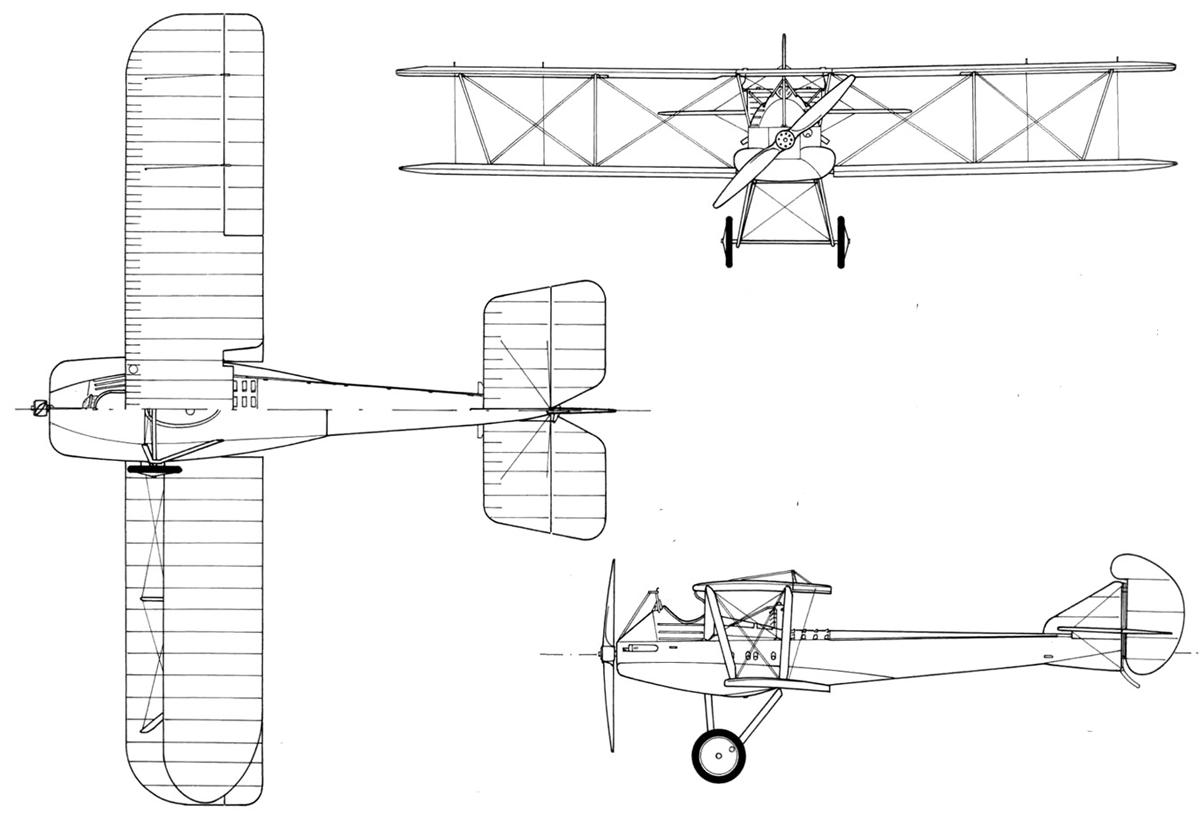
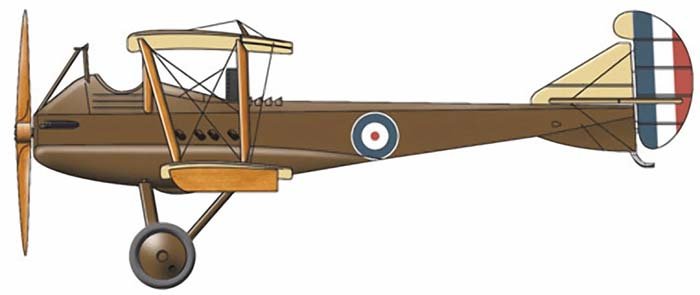
The differences were not only in size—the “four” turned out to be noticeably larger—but primarily in its layout. The designer aimed to provide the pilot of the new fighter with the best, almost unrestricted forward, upward, and downward visibility. To achieve this, he moved the cockpit forward, to the very nose of the aircraft, and raised the pilot’s seat upwards. The engine, a French V-shaped Hispano-Suiza HS 8B “eight” delivering 200 hp, was placed inside the fuselage near the center of gravity.
A two-bladed wooden propeller, located in its usual position in the nose, was connected to the engine via a long shaft passing beneath the pilot’s cockpit. The main fuel tank was situated behind the cockpit, with its drain plug slightly protruding from the fuselage, while the auxiliary tank was in the leading edge of the upper wing. The radiator was positioned above the engine at the level of the upper wing’s trailing edge, where the cockpit is typically located on conventional aircraft. The fighter’s armament consisted of two machine guns: a synchronized 7.7mm Vickers on the left side and a movable 7.7mm Lewis, mounted on a tripod and firing over the propeller.
Unique Water Landing Capability
The W.B.IV had another unusual feature. The technical specification (N.1a) issued by the Admiralty’s Aviation Technical Department, according to which the aircraft was designed, required the ability to safely land on water and maintain buoyancy for six hours. Therefore, the lower part of the “four’s” nose fuselage was shaped like a float. The fuselage itself was covered not with the usual fabric but with plywood, like a boat, and was hermetically sealed. The landing gear was made jettisonable, and small supporting floats were installed under the lower wing.
Testing and the W.B.IV’s Demise
The Royal Naval Air Service (RNAS) ordered three prototypes of the “four” from Beardmore, assigned serial numbers N.38 to N.40. Construction of the first was completed in November 1917, and its maiden flight took place on December 12. However, it flew little in Scotland, as its transfer to the Martlesham Heath test base for official acceptance trials was awaited. The aircraft only arrived there in July 1918, indicating that the RNAS’s initial interest had significantly waned by then.
The Navy was content with the Sopwith 2F.1, the naval version of the famous “Camel,” and was not keen on introducing an entirely new type whose production, pilot and technician training, and logistical support would take months. Before being transferred for testing, the W.B.IV lost its underwing floats; in flight, they only created extra drag, and their ability to keep the aircraft afloat in a normal position seemed dubious due to their small displacement. Tests confirmed the unusual machine’s good flight performance and handling characteristics.
However, the aircraft proved to be too structurally complex, with difficult engine maintenance, not to mention replacement in combat conditions. Consequently, the W.B.IV was not recommended for series production. Furthermore, the Navy canceled the order for the remaining two prototypes. After the test program at Martlesham Heath, N.38, the first and now only “four,” found a new home at the RNAS airbase on Grain Island. Naval pilots continued to test it there until one of them had to perform a “real,” unplanned emergency water landing. Unfortunately, it did not go as the designers had envisioned: upon touching the water, the bottom broke open, and the aircraft quickly sank. Fortunately, the pilot was rescued.
Technical Specifications
| Modification | WB.IV |
| Wingspan, m | 10.92 |
| Length, m | 8.08 |
| Height, m | 3.01 |
| Wing area, m2 | 32.50 |
| Empty weight | 891 |
| Normal takeoff weight | 1182 |
| Engine type | 1 Piston engine Hispano-Suiza |
| Power, hp | 1 x 200 |
| Maximum speed, km/h | 177 |
| Cruising speed, km/h | 145 |
| Flight endurance, h.min | 2.30 |
| Service ceiling, m | 4200 |
| Crew | 1 |
| Armament | one synchronized 7.7-mm Vickers machine gun and one 7.7-mm Lewis machine gun on a turret in front of the cockpit |
Image and diagram gallery of the Beardmore W.B.IV
 WB.IV |
 WB.IV |
 WB.IV |
 WB.IV |
 WB.IV |
 WB.IV |
 WB.IV |
 WB.IV |
 WB.IV |