At the First Paris Air Show in 1908, Louis Blériot exhibited two aircraft: a large “canard” biplane and a small monoplane. The biplane proved unsuccessful and was never heard from again, but the “Blériot XI” monoplane was destined for a great future.
Despite appearing quite small compared to Blériot’s previous, more or less successful aircraft (the Blériot VIII), its flight characteristics proved to be very good. The aircraft was produced in large quantities until the war, both by the company itself and by others under license and without it.
Design and Early Flights
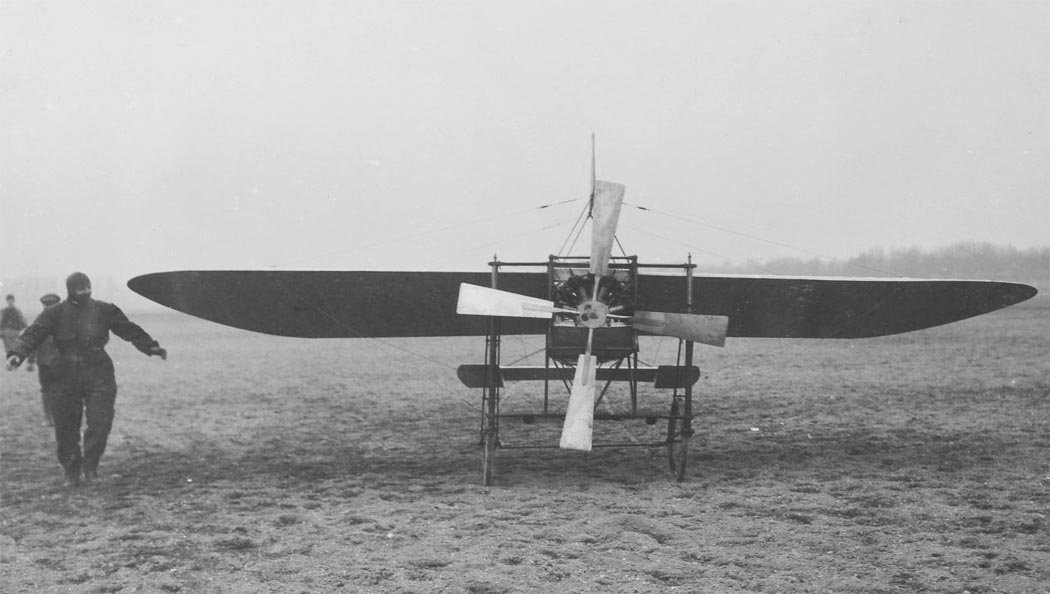
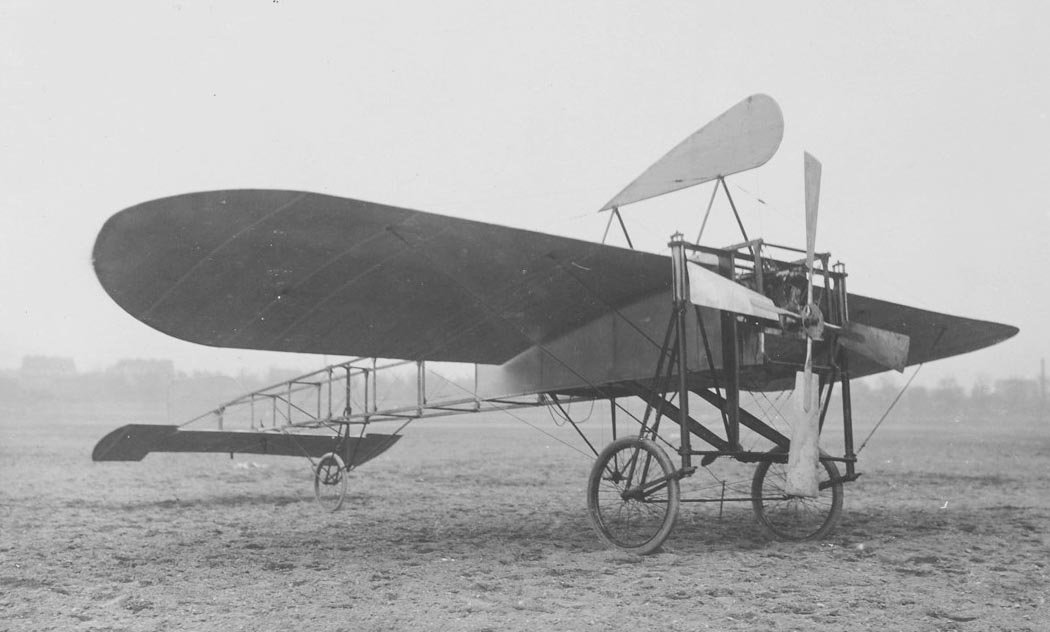
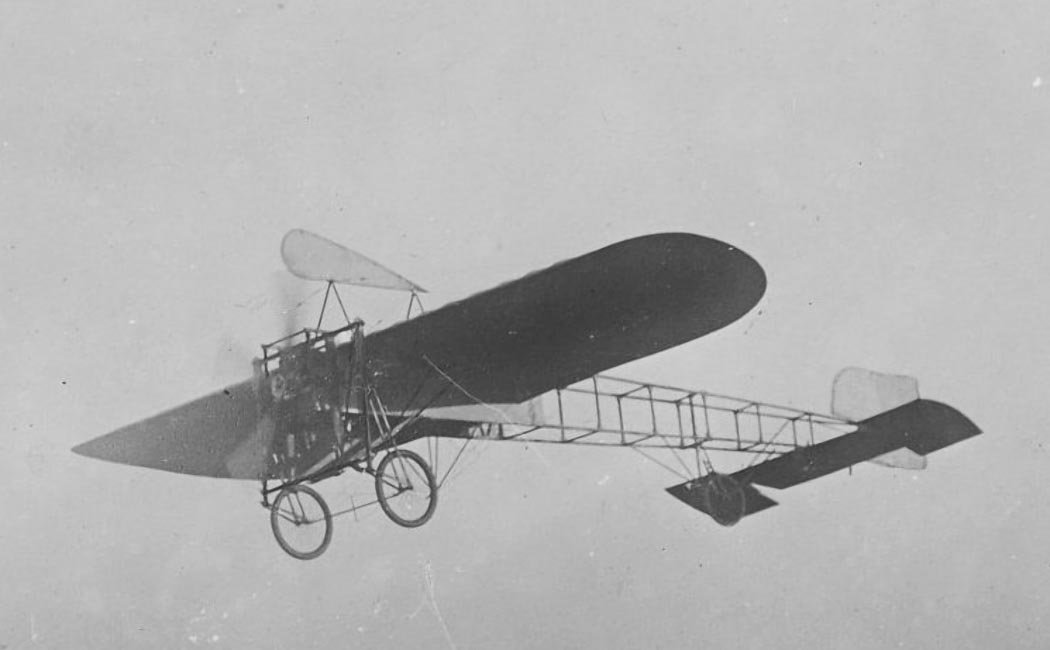
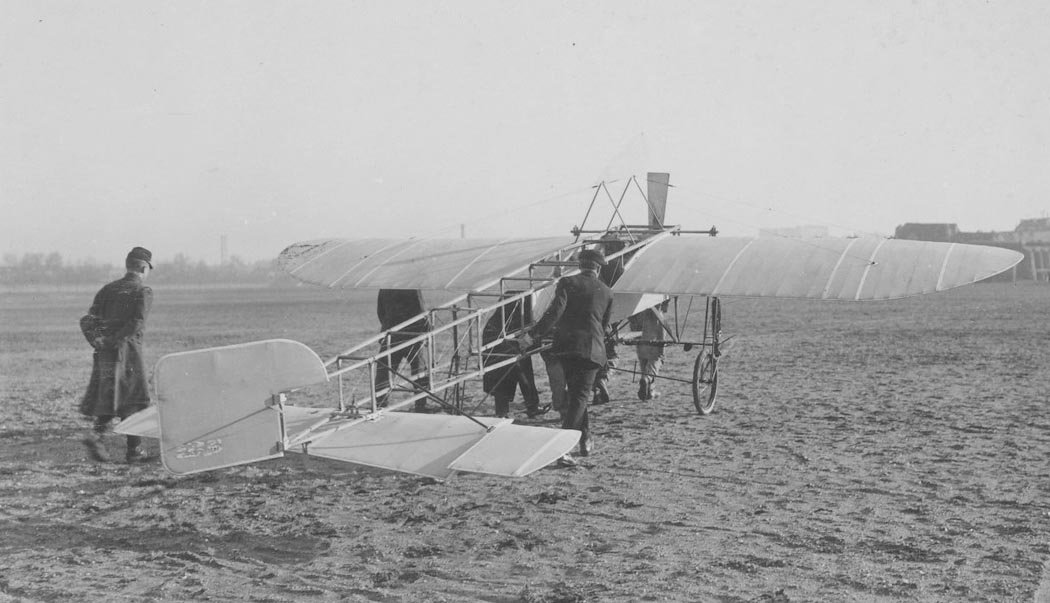
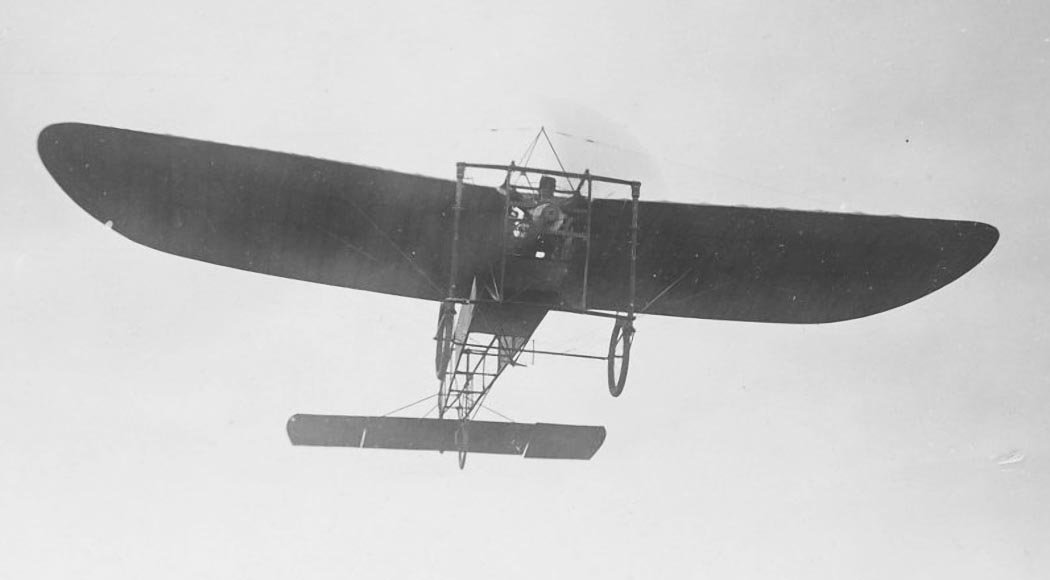
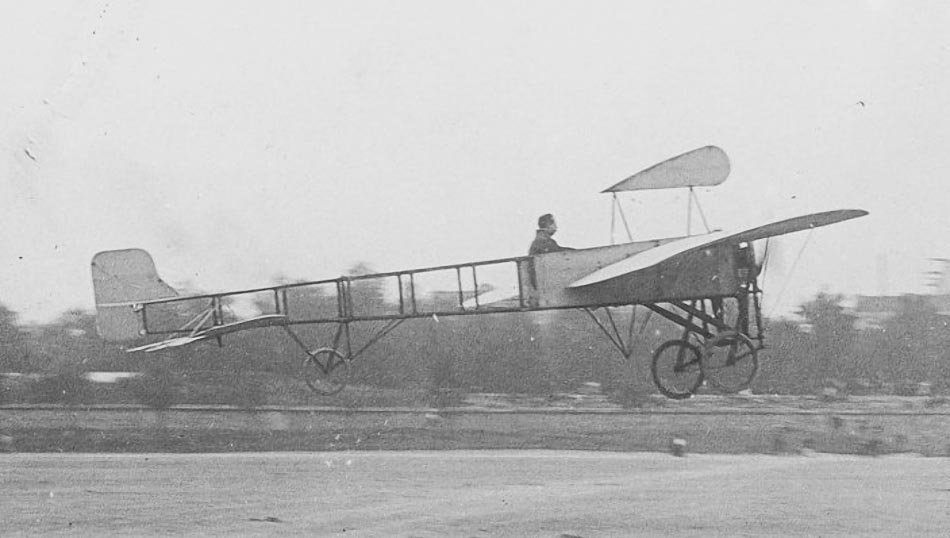
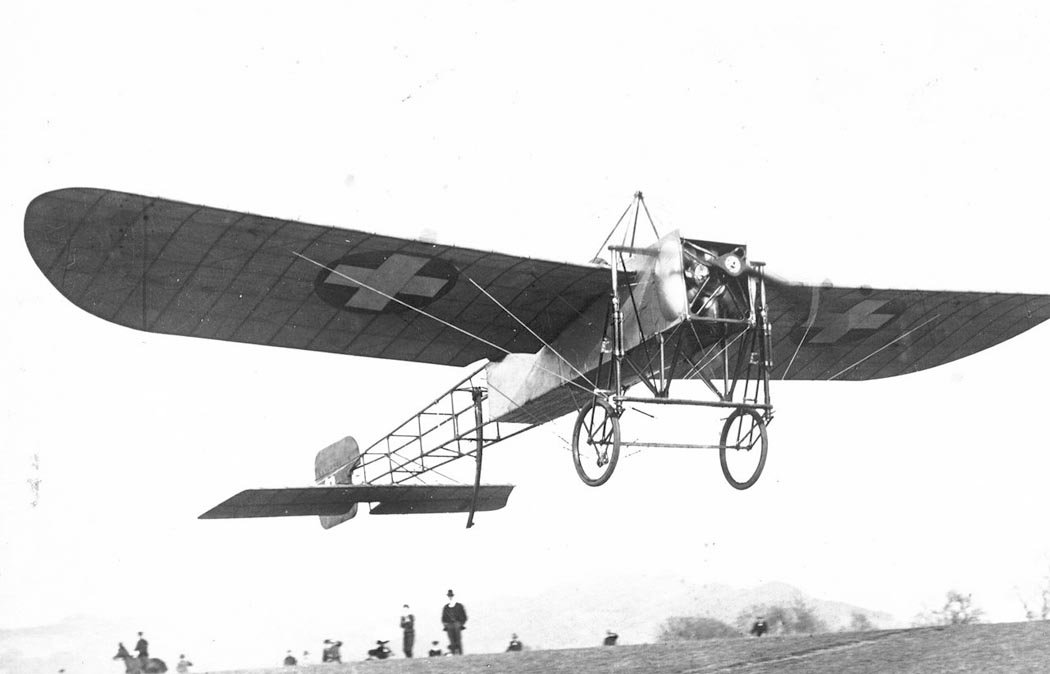
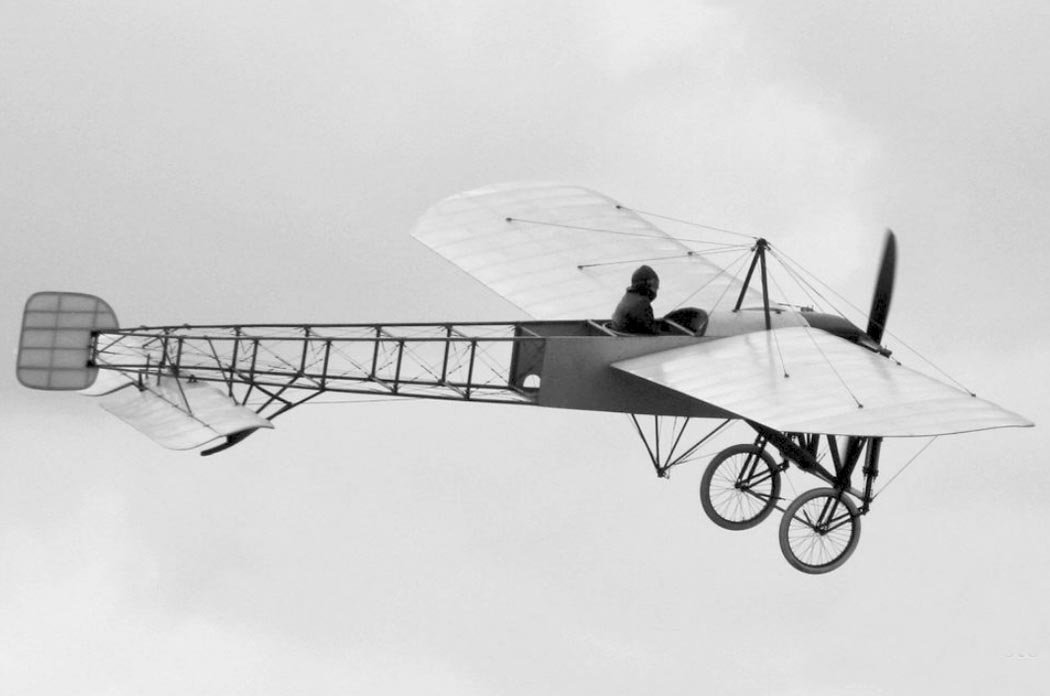
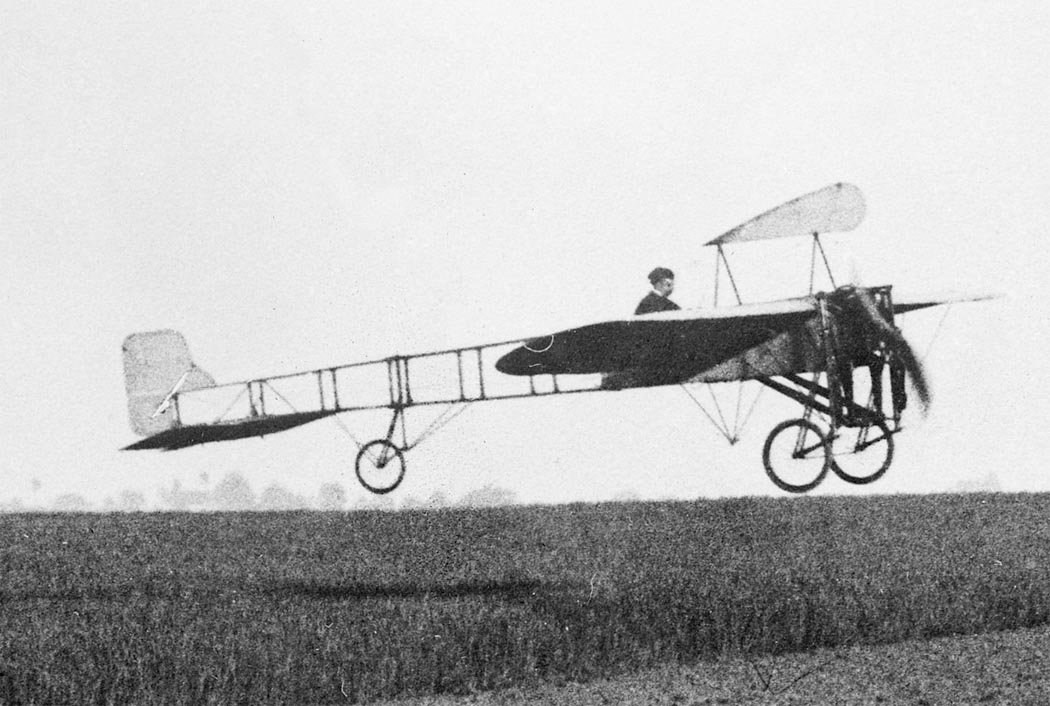
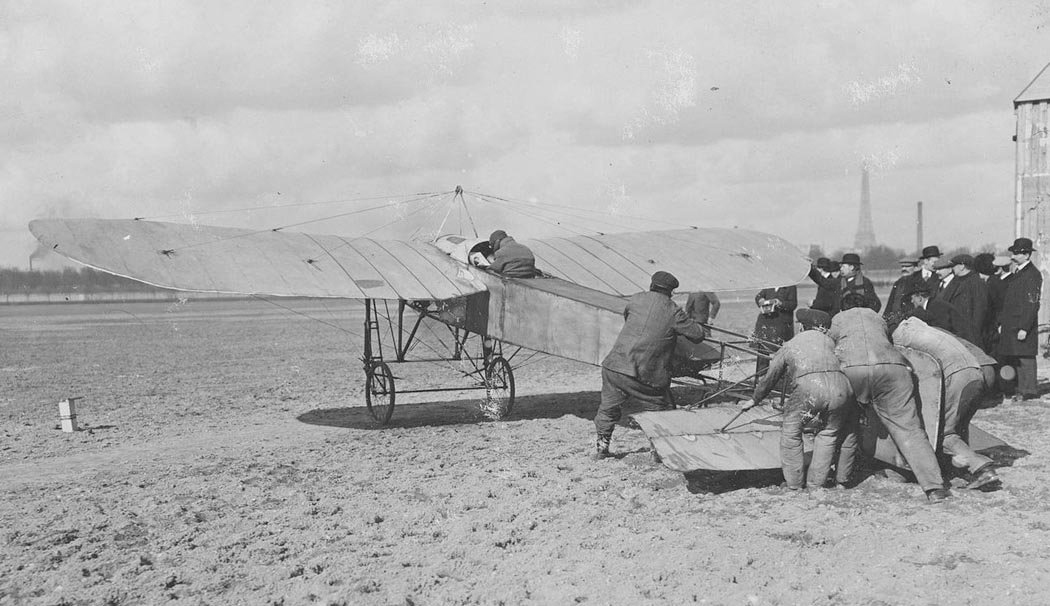
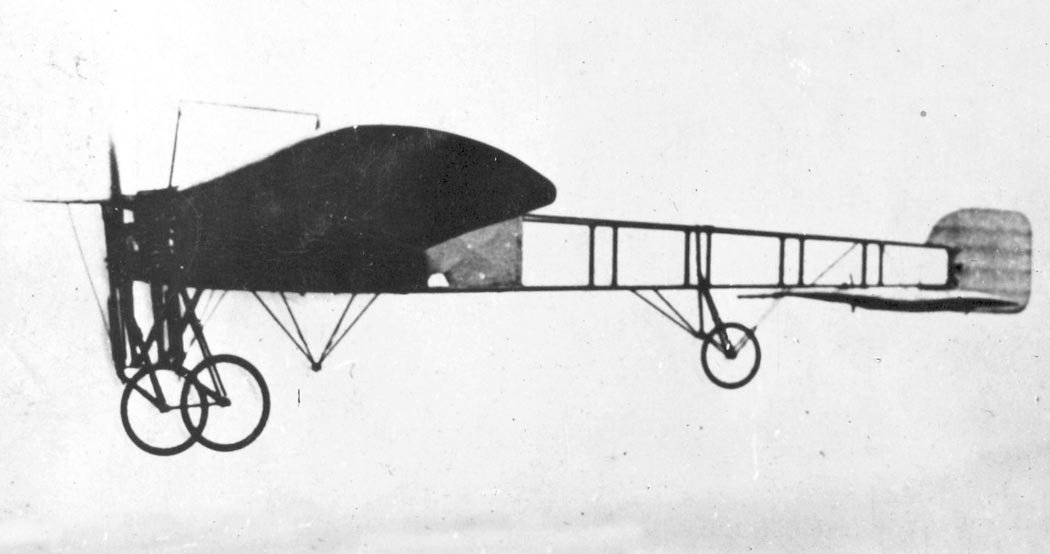
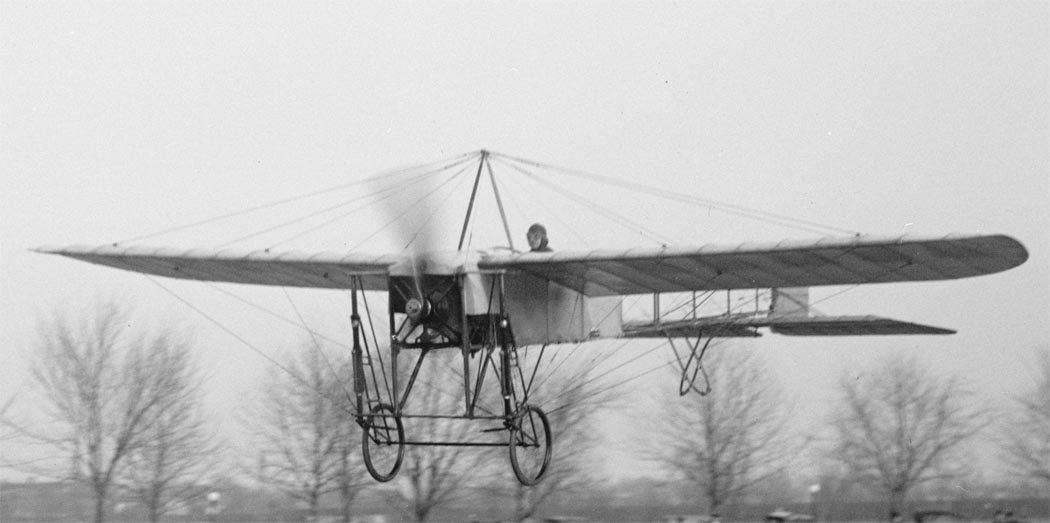
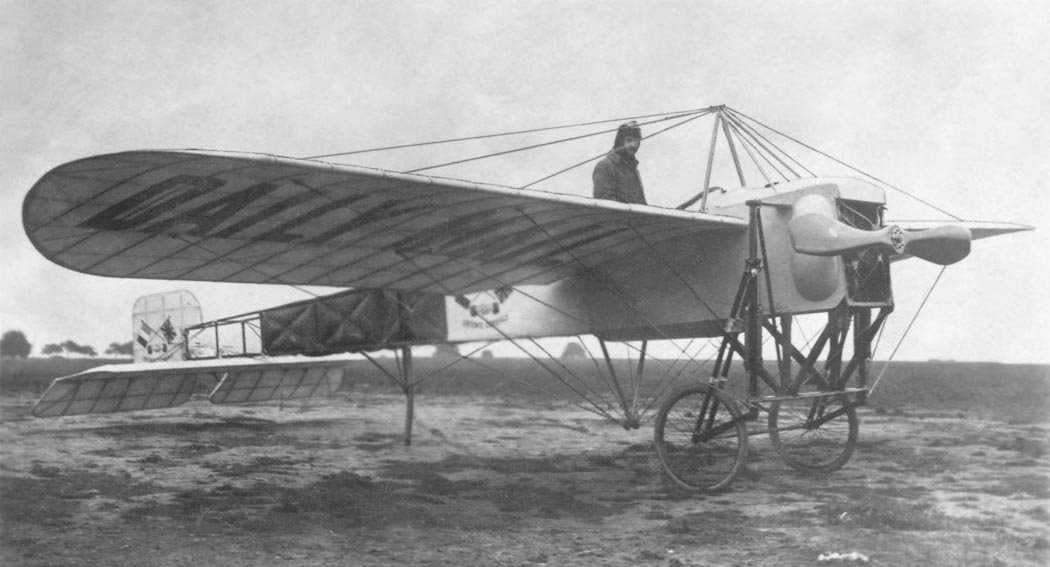
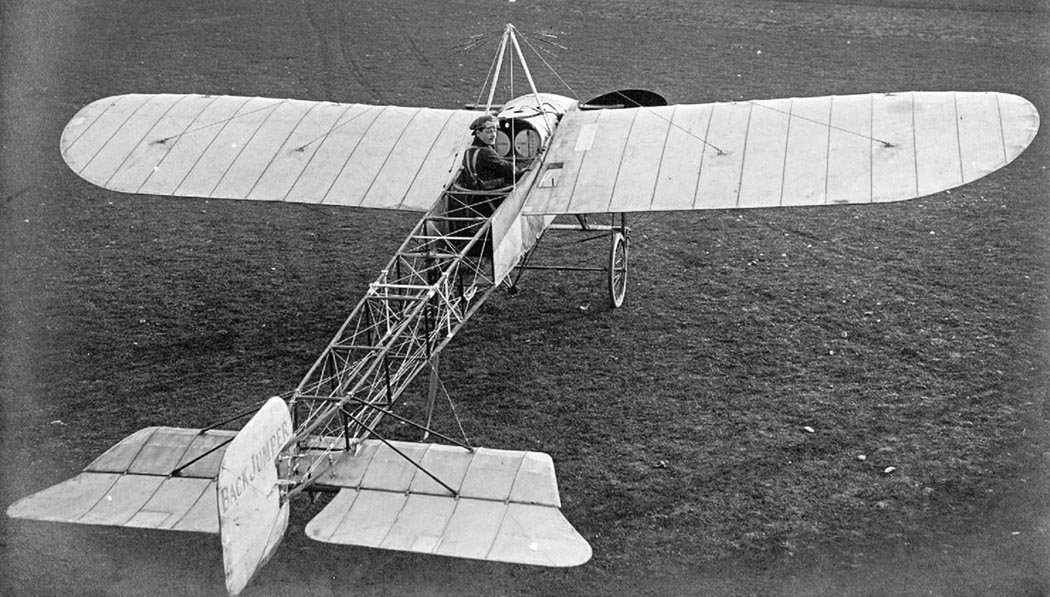
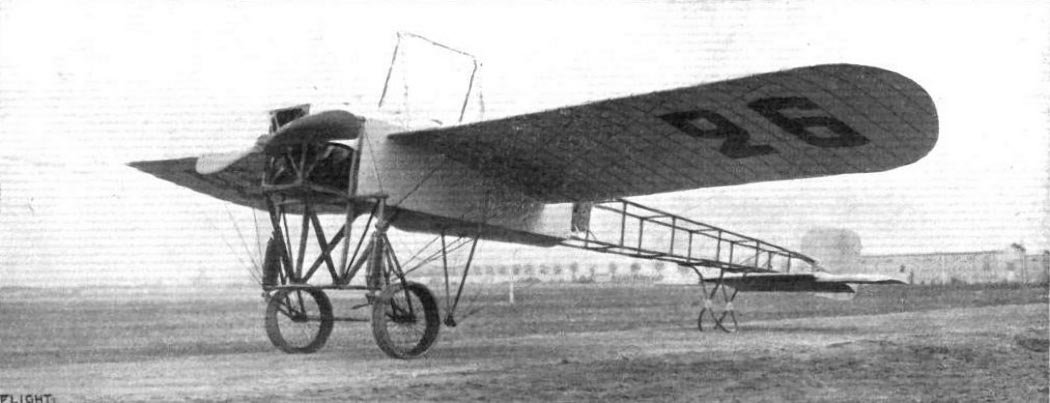
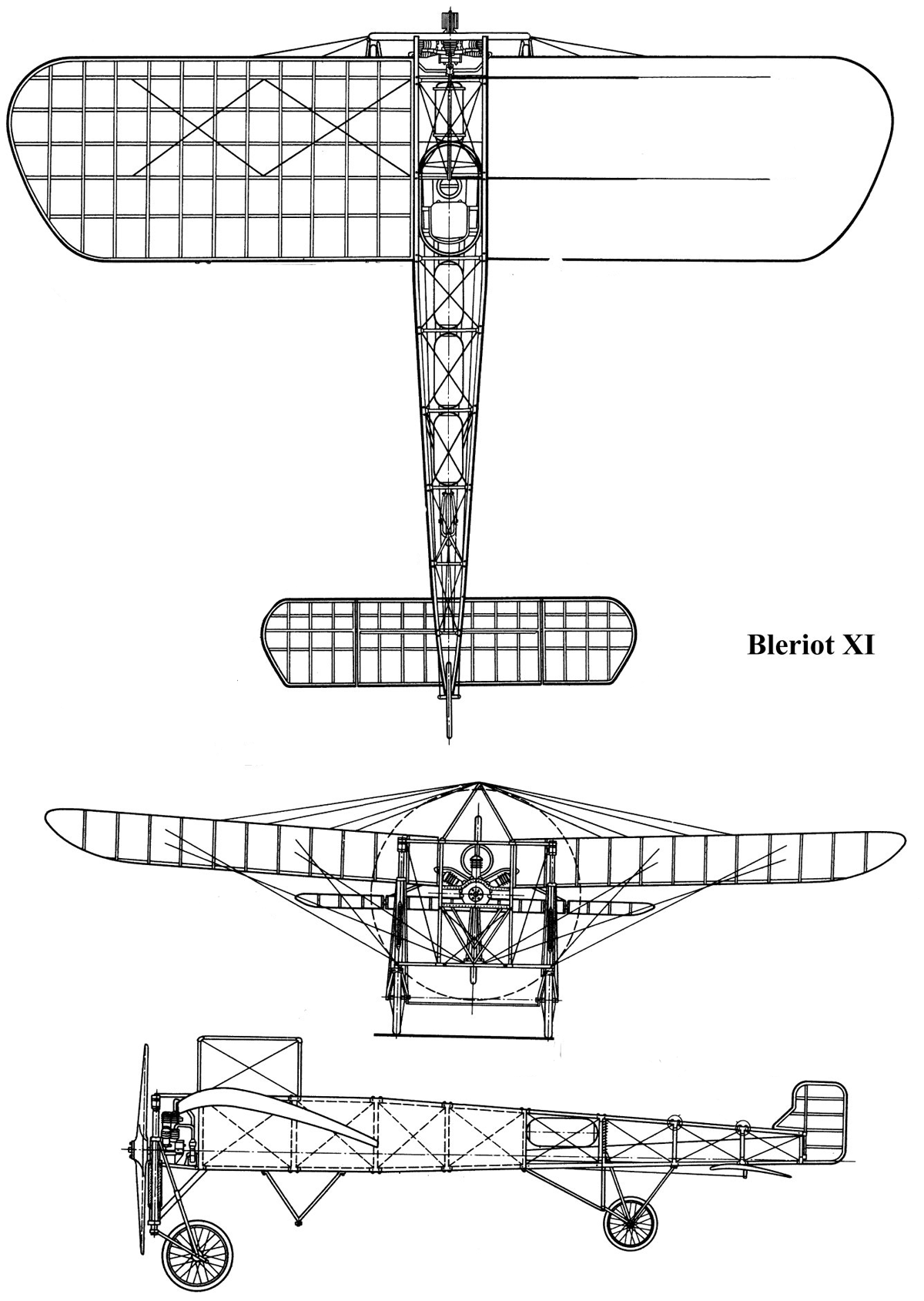
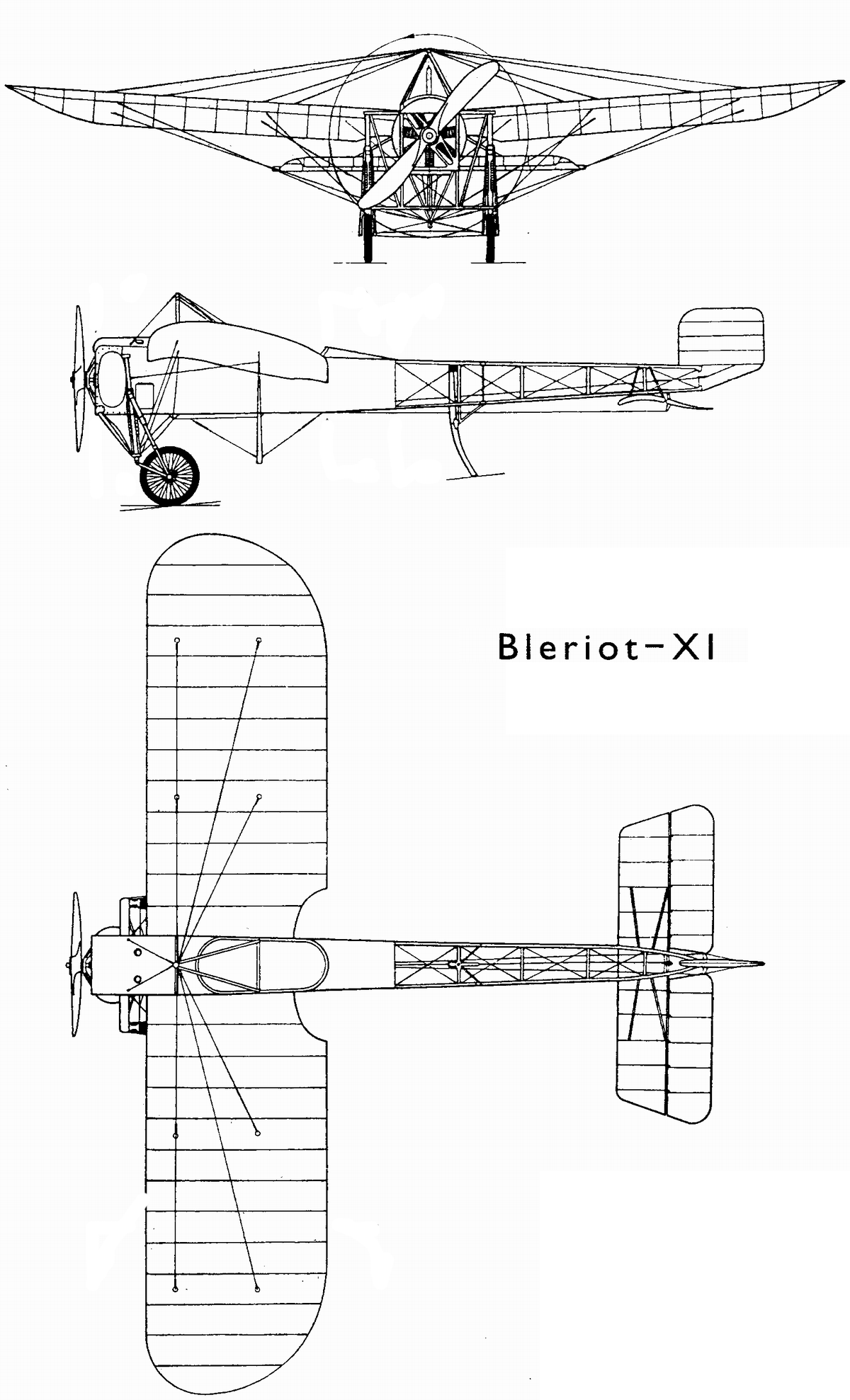
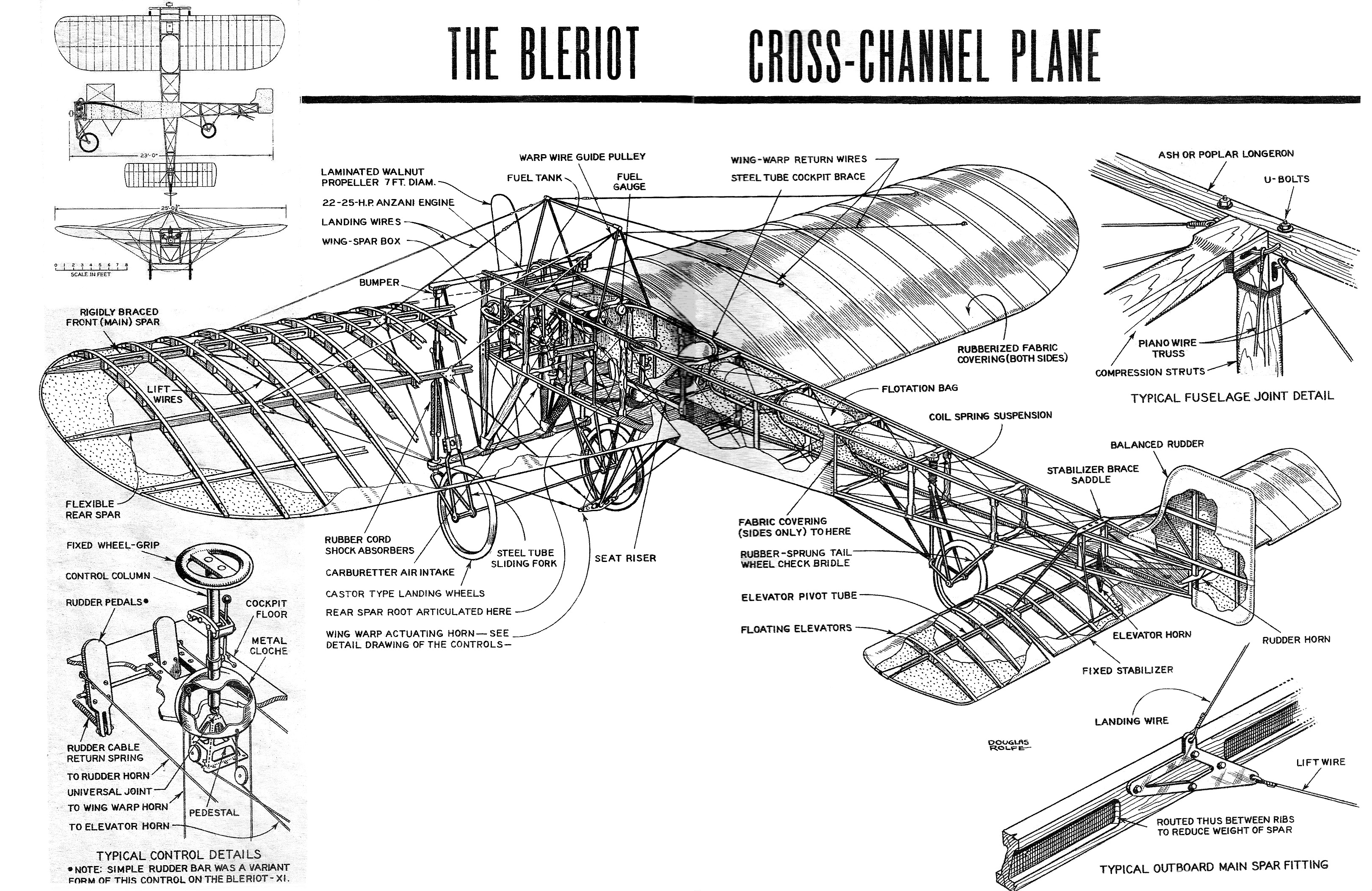
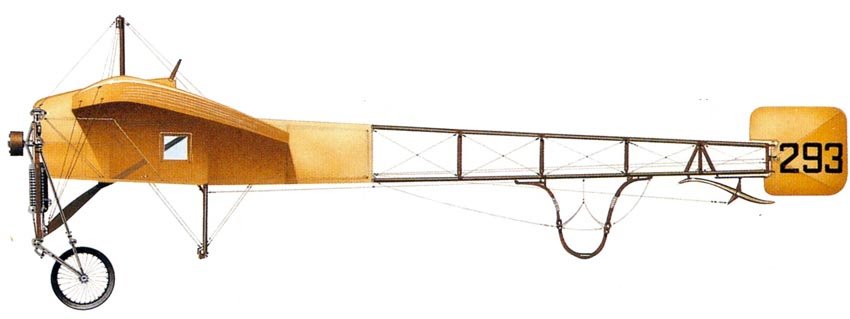
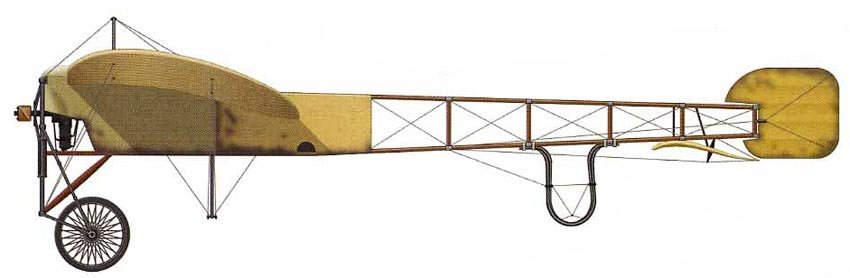
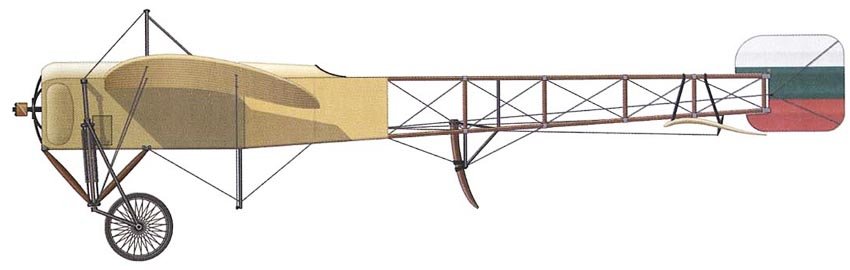
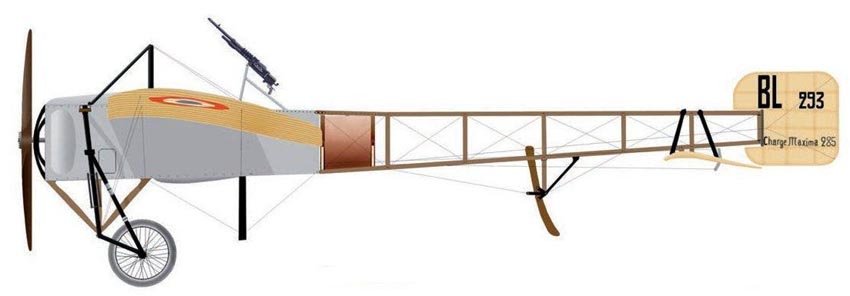
The aircraft was designed at the Blériot company by several designers under the leadership of Raymond Saulnier. The rectangular-section fuselage was covered with fabric only in the nose section. The wing was attached by wires from struts on the fuselage. Lateral control was achieved by wing warping (“gauchissement”).
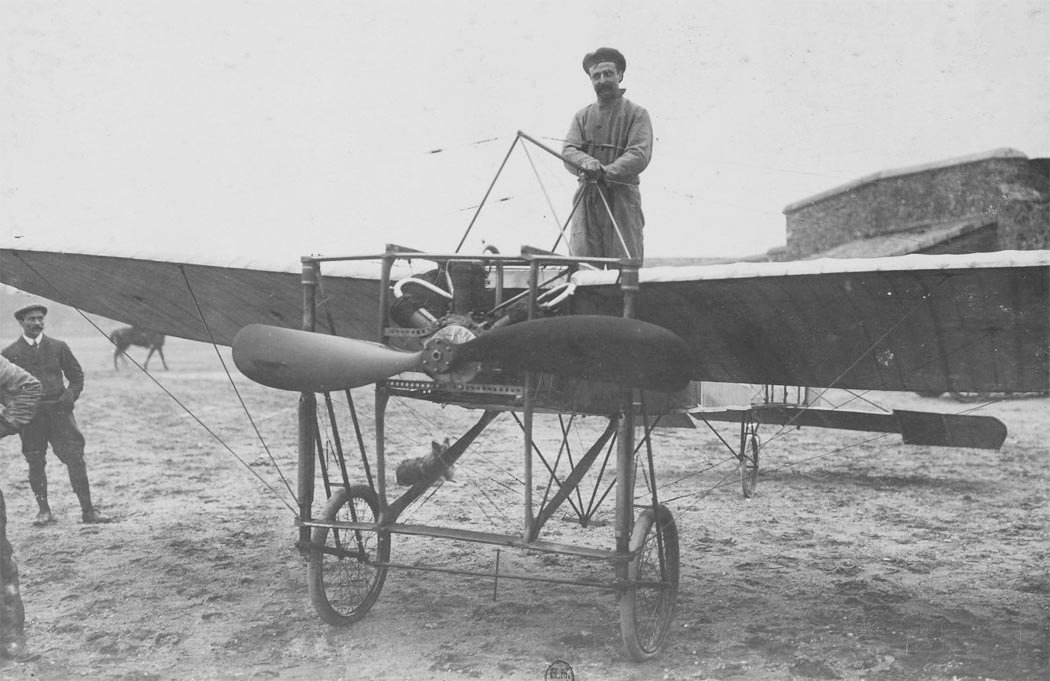
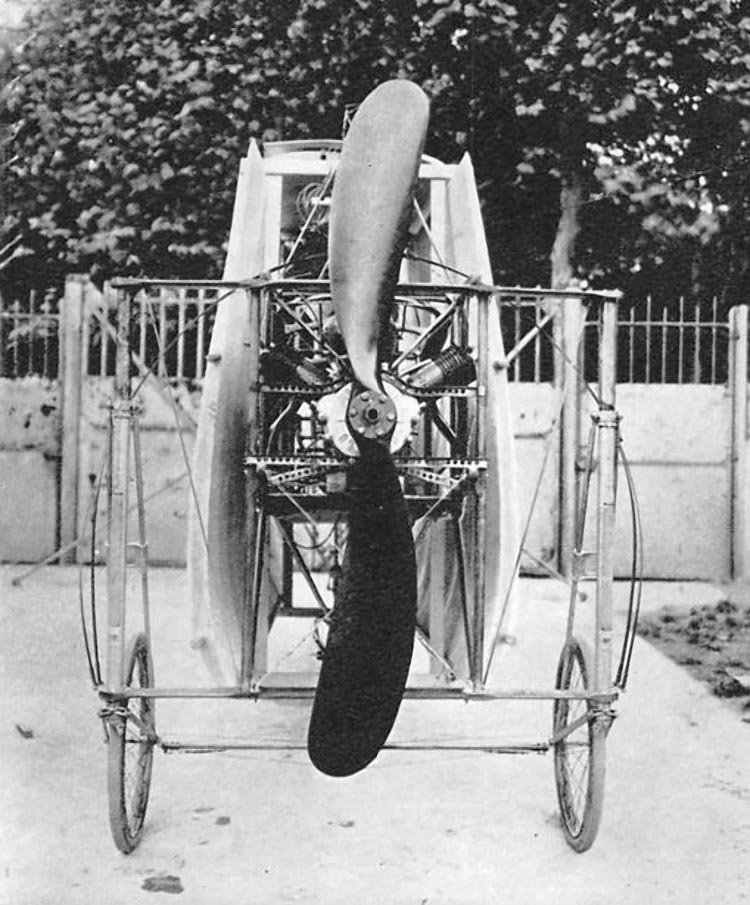
The stabilizer, located under the fuselage at the rear, initially had fully pivotable tips, but later a conventional elevator was installed. At the front, an original landing gear featured lever-spring shock absorption and self-aligning wheels, whose frame gave the aircraft a distinctive appearance.
A wheel or two crossed metal arcs were used as a tail skid. The pilot’s control stick had a typical Blériot appearance: at the top, it had a “steering wheel” (which didn’t turn but served as a convenient handle), and at the bottom, a bell-shaped structure (cloche) to which the control cables were attached.
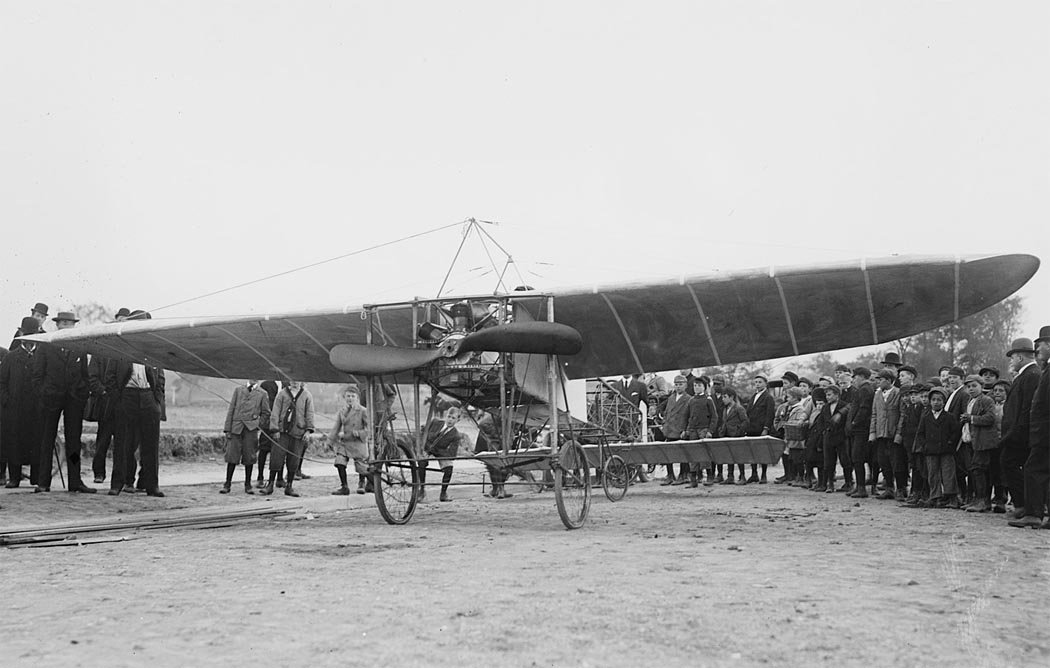
The aircraft exhibited at the air show had a small teardrop-shaped “fin” mounted on struts, to which the wing bracing wires were attached, a REP engine (30 hp), and a four-bladed propeller. It first took to the air after the exhibition, on January 18, 1909. Soon, the aircraft was modified: the engine was replaced with a lighter Anzani (25 hp) with a two-bladed Chauviere propeller, wing area increased from 12 to 14 sq.m., the “fin” was removed, the rudder enlarged, and most of the fuselage was covered with fabric.
In this form, Louis Blériot flew it at various “aviation meetings,” honing his skills. On July 13, Blériot set a distance record for flight outside an airfield, flying 41 km from Chicheny to Croix-Briquet-Cheville (13 km from Orléans) in 44 minutes.
The flight began at 4:44 AM. Three cars with representatives of the French Aero Club accompanied the aircraft. Crossing a railway, Blériot flew over a train, waving to passengers leaning out of windows to watch this unique spectacle for the time.
After some time, the aircraft landed in a field. It turned out the landing was made out of sporting interest, simply to test the possibility of landing at a chosen spot from the air (which was not prohibited by the rules). As he approached his destination, the wind intensified. The pilot had to dodge a railway with telegraph poles during landing, resulting in a less-than-successful landing where the propeller was broken.
Despite this, the record was set, and the Prix de Voyage was won. Blériot received 5000 francs as a pilot and another 4000 as a designer. Additionally, Anzani received 3000 francs as the engine designer and Chauviere 2000 as the propeller designer.
The Channel Crossing and Fame
Some time later, Blériot decided to compete for the 1000-pound prize announced by the Daily Mail newspaper for the first flight across the English Channel. On July 25, 1909, after waiting for a storm that had raged for several days to subside, and following several practice takeoffs, Louis Blériot announced his intention to cross the Channel.
Immediately, the destroyer Escopette set out to sea with Madame Blériot among other observers, ready to provide assistance in case of an emergency landing. Convinced that everything was working normally, Blériot took off towards England at approximately 4:40 AM. The flight took place at an altitude of 50-100 meters. The aircraft quickly outpaced its accompanying destroyer and soon lost sight of land.
It’s worth noting that his aircraft had no instruments whatsoever, not even a compass or a clock. As a result, Blériot soon lost track of the correct flight direction. According to him, “it felt as if the plane was standing still.” All he could do was try to fly straight. Luck smiled upon him, and after about 10 minutes of “blind” flying, he saw the English coast, although it wasn’t exactly the spot he had intended.
Orienting himself, he turned south along the coast towards Dover, where he was awaited. The landing was not very successful, with the landing gear and propeller broken, but the main goal had been achieved. The “Blériot XI” aircraft, nicknamed “La Manche” for this flight, immediately became famous. Orders poured in for the Blériot company.
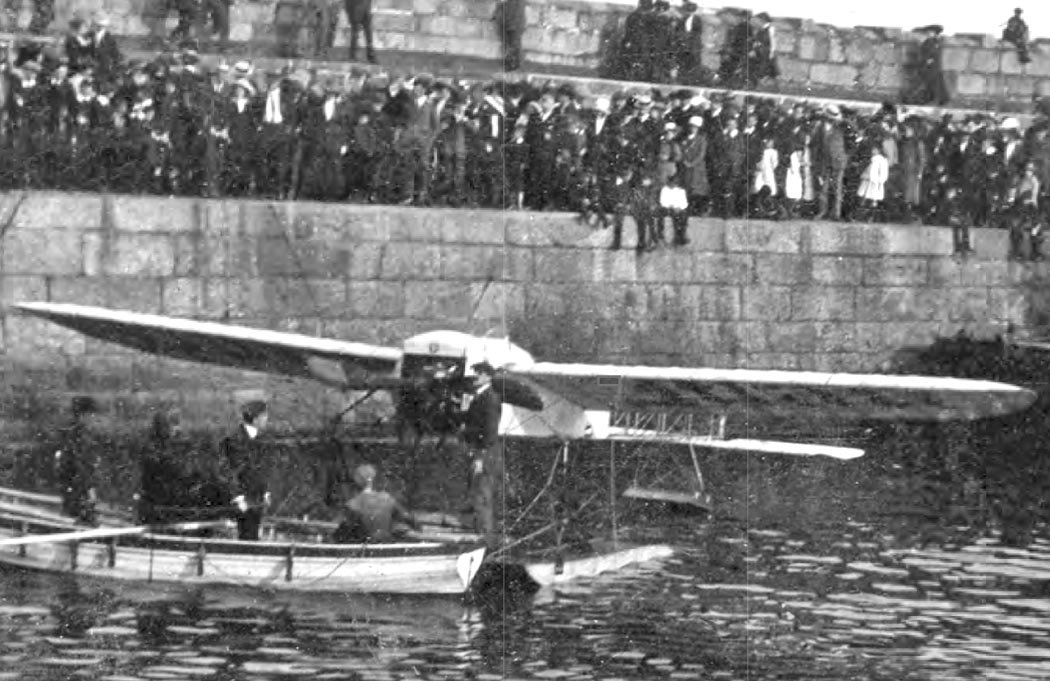
The English Channel was crossed again almost a year later, in May 1910. Jacques de Lesseps, son of the famous Suez Canal builder, flew from Les Baraques to a spot three miles east of Dover in 37 minutes. His machine, “Le Scarabée,” was similar to Blériot’s aircraft, except for the engine and propeller (it had a Gnome engine with a “Progressive” propeller). Lesseps wanted to immediately cross the Channel in the opposite direction, but deteriorating weather forced him to abandon the idea.
Evolution and Military Service
A large number of these aircraft were ordered by the military departments of England, France, Russia, Belgium, Italy, and other countries. Aviation enthusiasts and pilots also bought them. It was serially built in many modifications by the Blériot company, and under license in Italy by Società Italiana Transaerea (SIT) and in Russia at the Shchetinin and “Dux” factories.
The aircraft was built until 1914, and various engines were installed on it, such as 50 and 100 hp Gnome, 50 hp Anzani, 2-cylinder Coudert, Dutheil et Chalmers, Clement-Bayard, and 4-cylinder Humber and Labor-Picker, among others. By the beginning of the war, the number of aircraft designs from the Blériot company had already exceeded fifty, but the most successful and popular remained the eleventh – the Blériot XI. The typical configuration for military use had a crew of 2 and a 70 hp Gnome engine.
Of course, since 1909, the design of this aircraft changed repeatedly, but it was always produced under the same name, sometimes with added prefixes like XIbis or XI-2. The main changes involved installing increasingly powerful engines. A qualitative leap occurred with the appearance of the rotary Gnome engine, first 50, then 100 hp. The power reserve allowed for a two-seater aircraft, although some structural reinforcement was required. The wing suspension scheme changed; the pylon for attaching the bracing wires became a simpler triangular or pyramidal shape. The tail wheel was replaced by a wooden skid or two metal arcs.
Flight range significantly increased, and in April 1911, a non-stop flight from London to Paris was already possible, which Pierre Prier accomplished. The distance of 400 km was covered in 3 hours 56 minutes, with the flight taking place at an high altitude of 700-1000 meters.
In September 1911, Roland Garros set an altitude record in a Blériot XI with a Gnome engine, climbing to 4250 meters.
In March 1912, Henri Salmet continued the exploration of the English Channel. His goal was a flight from London to Paris and back in one day. To shorten the route, he decided to cross the Channel at its widest point – from Eastbourne to Dieppe – something no one had attempted before. He had to fly for almost two hours above the clouds, navigating by compass, but 3 hours and 16 minutes after takeoff, he successfully landed in Issy-les-Moulineaux near Paris.
The return flight was much more difficult due to deteriorating weather; he only managed to cross the Channel the next day, where he was met with rain and strong winds. During a landing in fog, the propeller was damaged, and a new one was urgently delivered. The aviator never managed to reach London; on the next leg of the flight, the engine suddenly stopped, and during a forced landing on a football field, the aircraft was severely damaged.
April 1912 marked the first solo female crossing of the English Channel, achieved by Miss Harriet Quimby (before that, Miss Trehawke Davies had crossed the Channel in an aircraft, but as a passenger).
The first flight from England to Germany was made in April 1913. Gustav Hamel, with a passenger, flew a Blériot XI with an 80 hp Gnome engine from Dover and, after flying over the territory of 5 countries, landed in Cologne 4 hours and 18 minutes later. The straight-line distance between these cities is about 400 km, but, blown off course by a small storm, the pilot flew over 500 km.
In late 1913, Adolphe Pegoud amazed the public by performing stunts unthinkable for the time. His repertoire included inverted flights, the Immelmann turn (bell), and loops (it was believed that he was the first in the world to perform a loop, but in reality, this aerobatic figure was performed 13 days earlier, in distant Russia, by Pyotr Nesterov).
Soon, other pilots began to perform loops. To withstand the increased loads during aerobatics, Pegoud’s aircraft were reinforced, and the pylon to which the wing bracing wires were attached was enlarged. One of the aircraft was equipped with a rescue parachute, with which Pegoud made the world’s first parachute jump from an airplane.
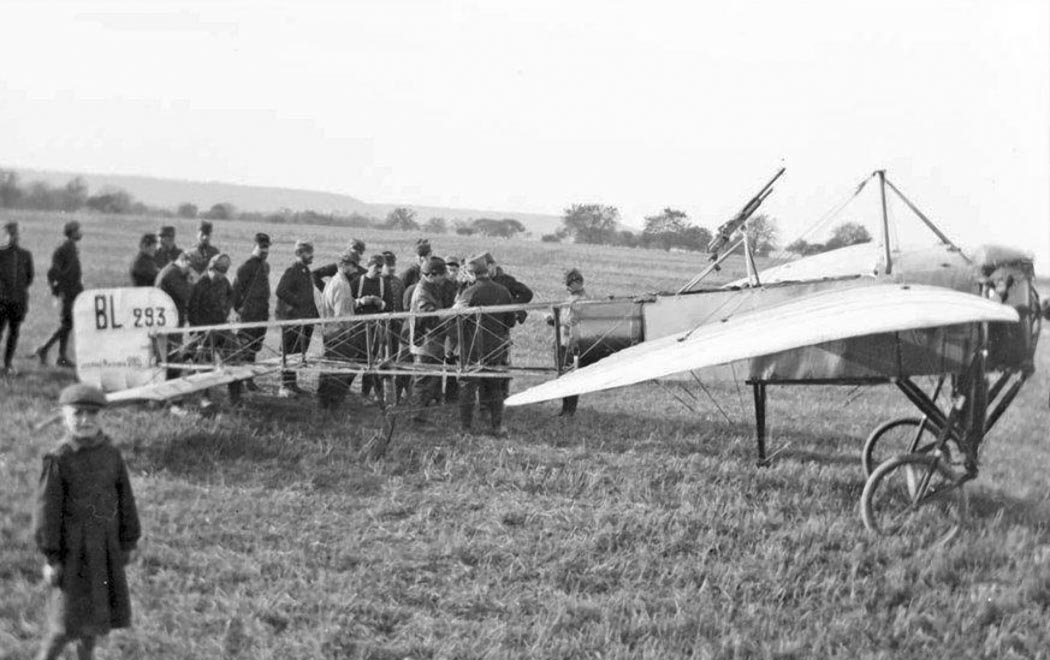
Blériot XIs became one of the first aircraft used in military operations. At the beginning of the Italo-Turkish War in November 1911, Captain Piazza, winner of the summer Italian Competitions, was urgently called to the front with his aircraft. He was soon joined by other aviators in Blériot XIs, Nieuport IVs, Farmans, and Etrich Taubes. Piazza observed enemy movements from the air and directed artillery fire.
Sometimes he carried 2-4 small bombs in a leather bag, with fuses in his pocket. Over Turkish positions, he would place a bomb on his lap, screw in the fuse, throw it overboard, and observe the “sinister results.” Impressed by the results of aviation use, the Italian government further increased the number of aircraft at the front.
By the start of World War I, Blériot XIs served in 6 French and 6 Italian squadrons, with individual machines part of 4 British air divisions. However, the appearance of German fighter aircraft brought an end to the combat career of these slow, unarmed planes. In the spring of 1915, all surviving Blériots were transferred to training units.
Technical Specifications
| Modification | Bleriot XI |
| Wingspan, m | 10.20 |
| Length, m | 8.25 |
| Height, m | 2.65 |
| Wing area, m2 | 20.90 |
| Empty weight | 350 |
| Maximum takeoff weight | 570 |
| Engine type | 1 Piston engine Gnome |
| Power, hp | 1 x 50 (70) |
| Maximum speed, km/h | 106 |
| Cruising speed, km/h | 86 |
| Flight endurance, h.min | 3.30 |
| Service ceiling, m | 1000 |
| Crew, crew members | 1-2 |
| Armament | Not provided. In individual cases, several small bombs were carried on board, which were dropped manually or with the help of improvised devices. |
Image and diagram gallery of the Blériot XI
 Bleriot XI |
 Bleriot XI |
 Bleriot XI |
 Bleriot XI |
 Bleriot XI |
 Bleriot XI |
 Bleriot XI |
 Bleriot XI |
 Bleriot XI |
 Bleriot XI |
 Bleriot XI |
 Bleriot XI |
 Bleriot XI |
 Bleriot XI |
 Bleriot XI |
 Bleriot XI |
 Bleriot XI |
 Bleriot XI |
 Bleriot XI |
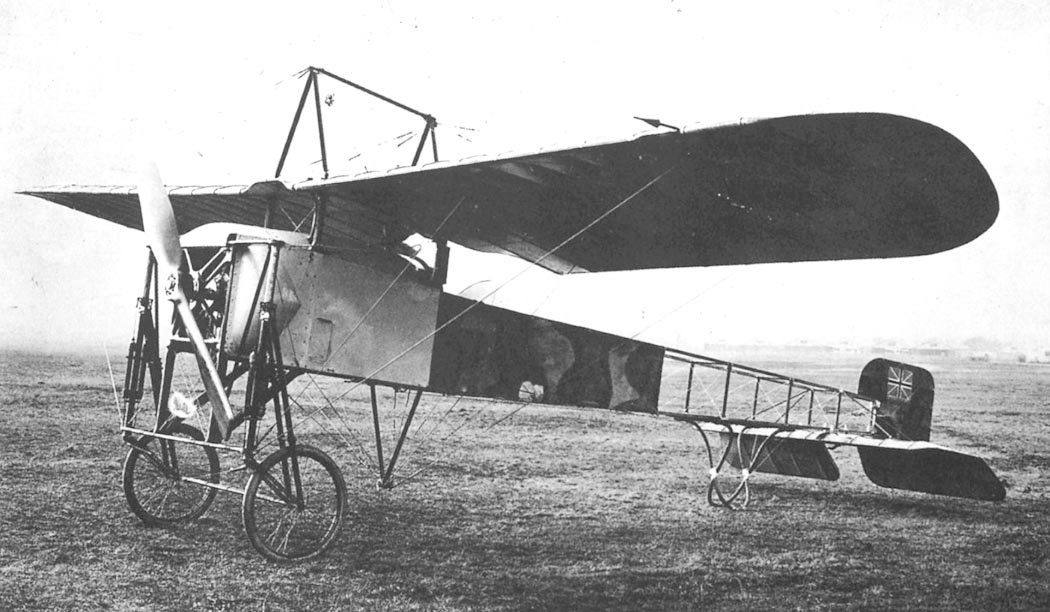 Bleriot XI |
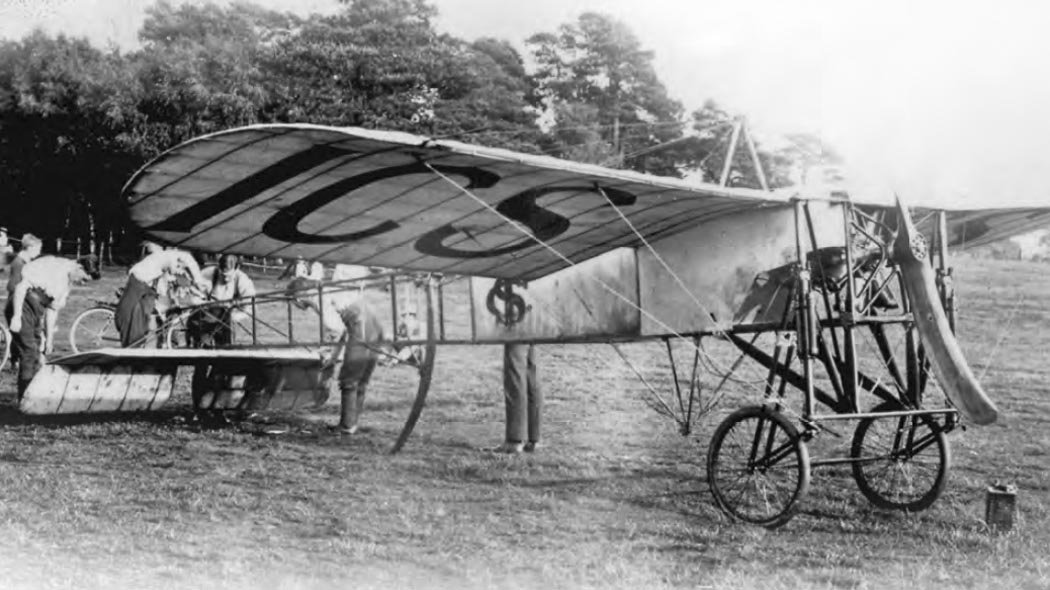 Bleriot XI |
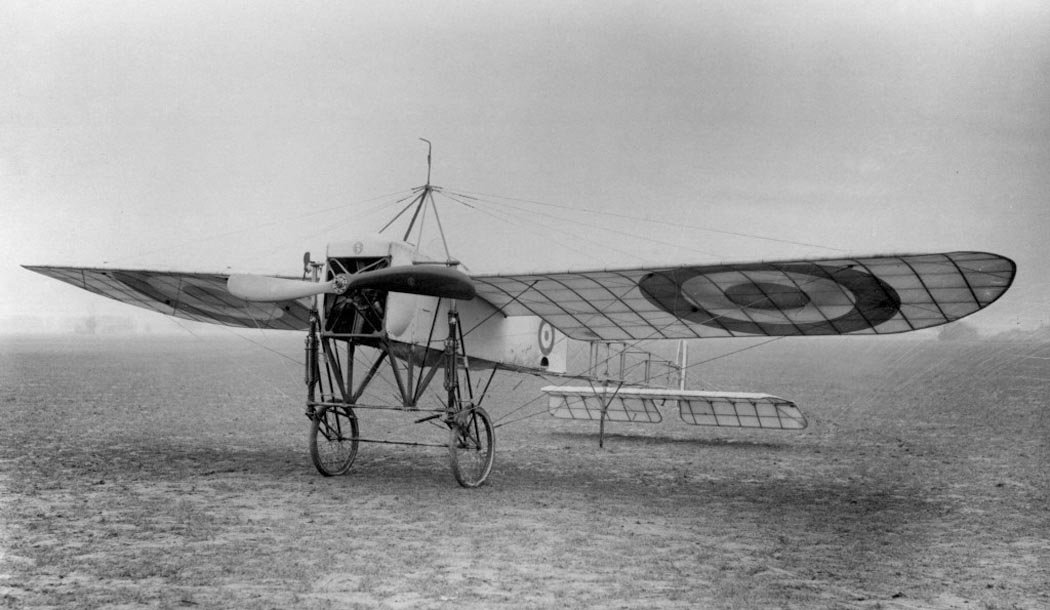 Bleriot XI |
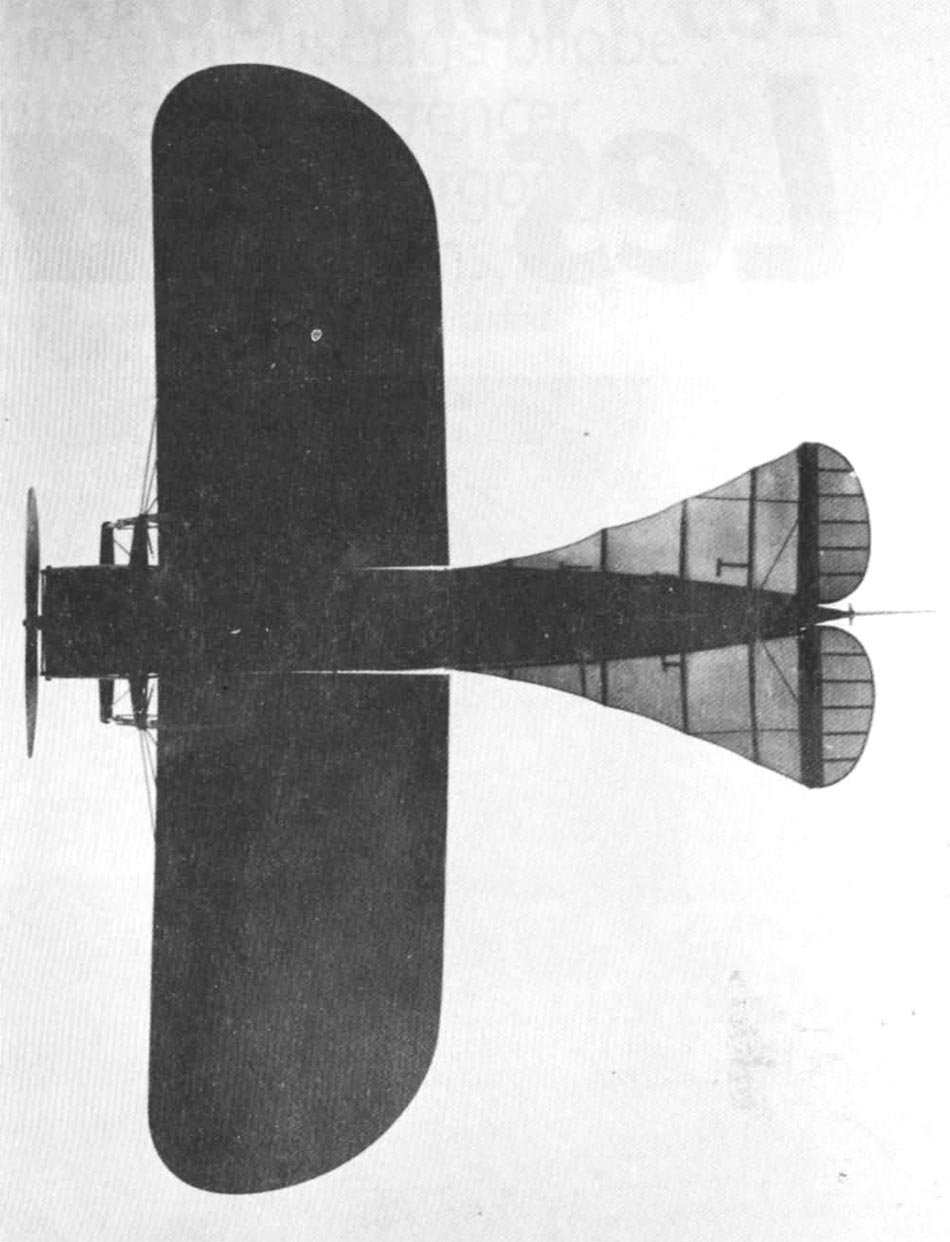 Bleriot XI |
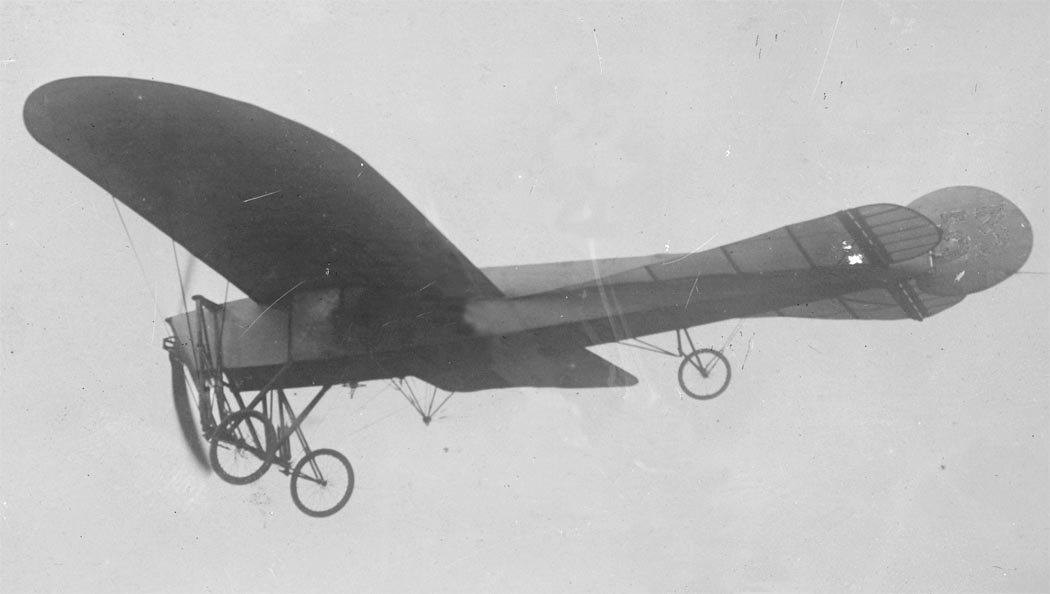 Bleriot XI |
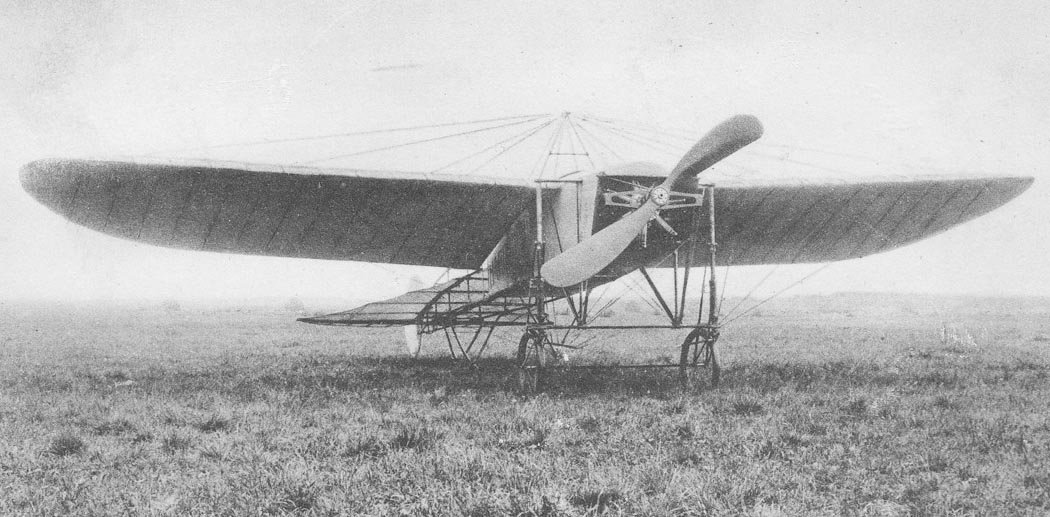 Bleriot XI |
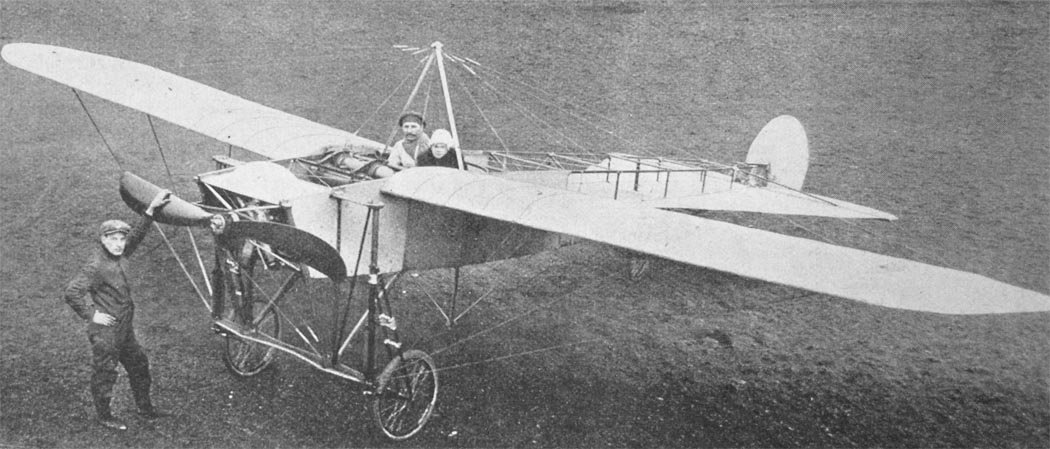 Bleriot XI |
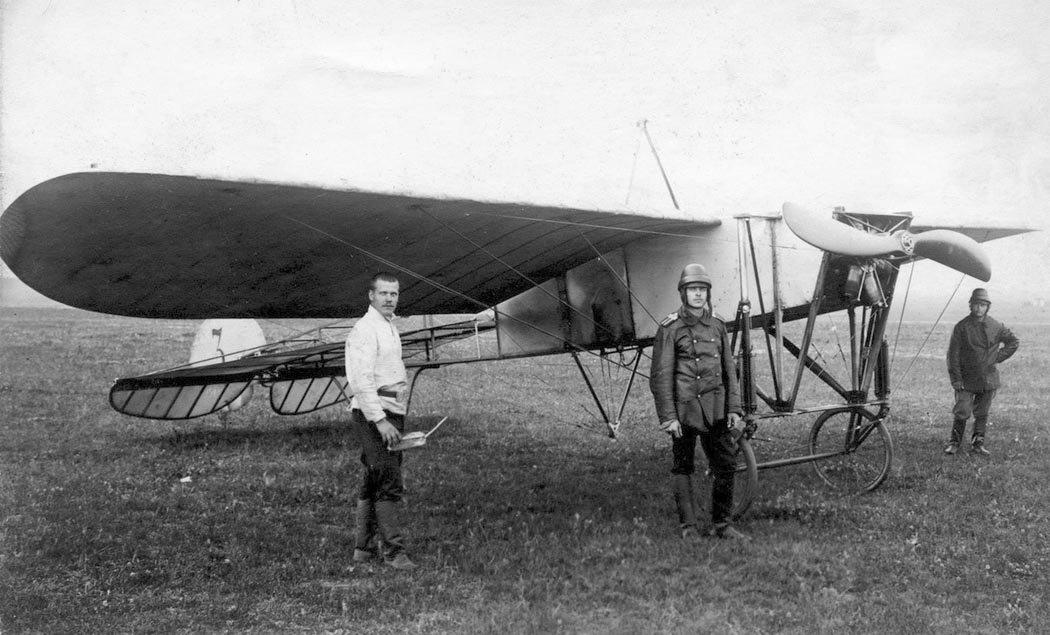 Bleriot XI |
 Bleriot XI |
 Bleriot XI |
 Bleriot XI |
 Bleriot XI |
 Bleriot XI |
 Bleriot XI |
 Bleriot XI |
 Bleriot XI |
 Bleriot XI |