
Vogt’s first flying boat featured a unique layout, distinguishing it from other maritime reconnaissance and patrol seaplanes. From its very first flight in the summer of 1937, the flying boat earned the nickname “Der fliegenzeholzschuh” – “The Flying Clog” – due to the resemblance of its hull to a Danish wooden shoe. Hamburger Flugzeugbau’s interest in flying boats was understandable, given its origins.
When specifications for an ocean-going long-range reconnaissance aircraft were prepared in the winter of 1933-34, Vogt’s designers enthusiastically began their work.
After thoroughly researching global experience, Vogt presented three projects to the Technical Department for selection, each featuring its “signature” single-spar wing. “Project 8” had a short hull and a tail unit mounted on two tubular booms. Its 25-meter span, 97 sq.m gull wing was powered by two BMW-XV engines.
“Project 12” featured a classic hull, a 27-meter span, 116 sq.m wing with three Junkers Jumo-205 diesel engines. “Project 13” used the same wing but had a twin-hull configuration and four Jumo-205 engines.
None of the projects in their initial form fully satisfied the Technical Department, but “Project 8” was favored. After modifications that increased its dimensions to match “Project 12,” a contract for the Hа.138 flying boat was secured in the spring of 1934.
By the time of detailed project development, it became clear that work on the BMW-XV engines would be discontinued. Consequently, Vogt proposed equipping the first prototype with a pair of Jumo-206 diesels, the second prototype with three Jumo-205s, and the third was planned for two Daimler-Benz DB-600s.
The mockup of the first prototype was completed in March 1935, and after several commissions and minor alterations, preparations for production began. Work on the experimental aircraft progressed slowly due to the low priority of the entire program.
By the autumn of 1936, at the time of the first aircraft’s assembly, Vogt received information that work on the Jumo-206 engine was discontinued. Since no other engine of comparable power was available, Hamburger Flugzeugbau had no choice but to redesign the aircraft for three Jumo-205 engines.
This resulted in delays, stretching the work until July 1937 – 27 months from the start. By then, the second aircraft, which had been designed from the outset for three Jumo-205 engines and featured a straight wing instead of a gull wing, was also practically ready.
Early Flight Testing and Challenges
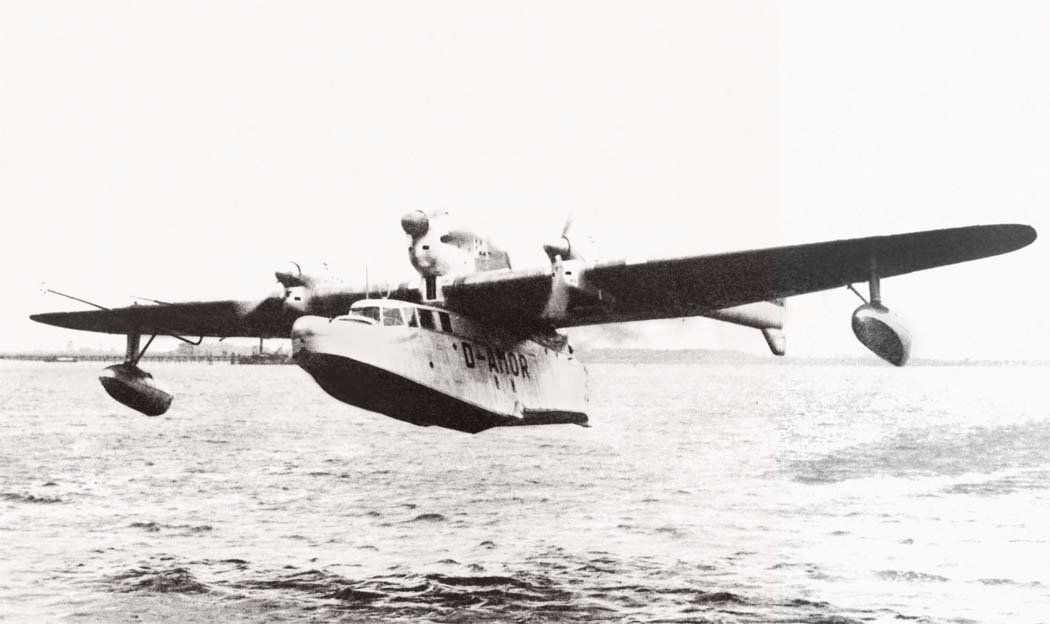
The first experimental Hа.138-V1 (D-ARAK) flew for the first time on July 15, 1937. Four weeks later, the second V2 (D-AMOR) also took flight. From the outset, it was clear that the hydrodynamic characteristics of the short hull left much to be desired.
Immediately after takeoff, the aircraft was unstable. The stability problem was partially resolved by redesigning and enlarging the tail unit on the V2. Following these modifications, the aircraft was presented for official trials on November 6, 1937.
Sea trials were conducted in the Baltic Sea under various conditions. In the spring of 1938, “Hamburger Flugzeugbau” received a report concluding that the hull contours were not very successful. The boat’s hull required strengthening to ensure takeoff with a full load in rough seas, and the tail booms showed a tendency to vibrate.
Furthermore, the crew cabin equipment was unsuitable for long-range flights. Ultimately, a complete redesign was proposed.
Further work on the Hа.138-V3 was suspended pending the results of tests in Travemünde. Consequently, the third aircraft was scrapped, and work began on implementing changes that left little of the initial configuration.
The wing underwent minor modifications. It featured an all-metal construction with a tubular spar, in a three-section design. The wing leading edges were metal-skinned, while the rest was fabric-covered. The center section was mounted directly on the fuselage, to which the engines and tail booms were attached. Three flexible fuel tanks were located within the tubular spar.
All-metal stabilizing floats were attached to the outer wings with struts. The hull was also all-metal, featuring a slight positive V-shape at the step and inclined sides, divided into 10 watertight compartments. Its contours bore little resemblance to its two predecessors; its length was increased from 12.2 m to 15.15 m, and the step was moved forward.
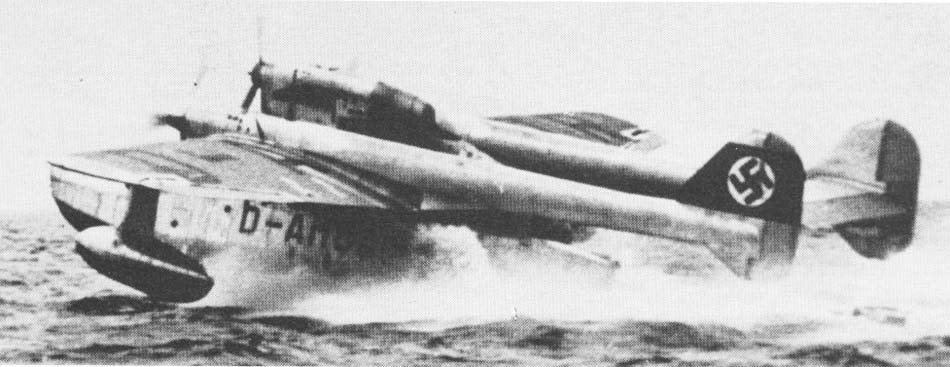
The original tubular tail booms were replaced by rectangular all-metal booms with stressed skin. These ended in metal fins. All control surfaces were fabric-covered, and control systems featured hydraulic boosters.
Powerplant and Armament
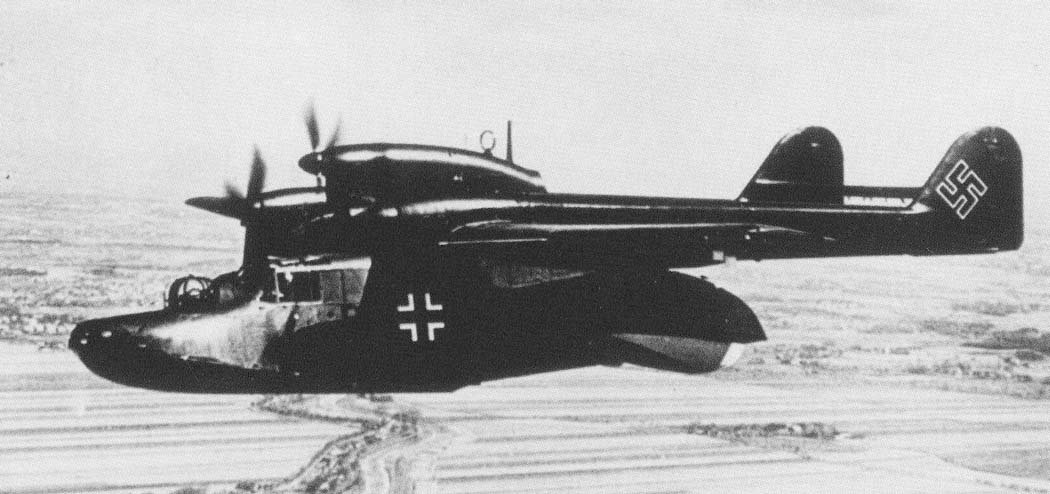
The powerplant consisted of three Jumo-205C-4 diesel engines. One engine was mounted on a pylon above the fuselage, with the other two in nacelles on the wing leading edge, seemingly as extensions of the tail booms. The propellers were three-bladed, variable-pitch units. The normal crew complement was five people.
The cockpit featured dual controls. The central section housed a radio compartment, a galley, and a rest room with three bunks. Three gunner positions were equipped, each offering a good field of fire. In the nose, a hydraulically operated LB-204 turret housed a 20mm MG-204 cannon.
Two additional gunner positions were located aft of the wing – one at the end of the central engine nacelle and another at the end of the hull, providing coverage above and below the stabilizer. Each of these latter positions was equipped with an MG-15 machine gun, with the upper one on an “Arado” mount and the lower one on a D-30 turret. Bomb load could include three 50kg bombs under the right wing.
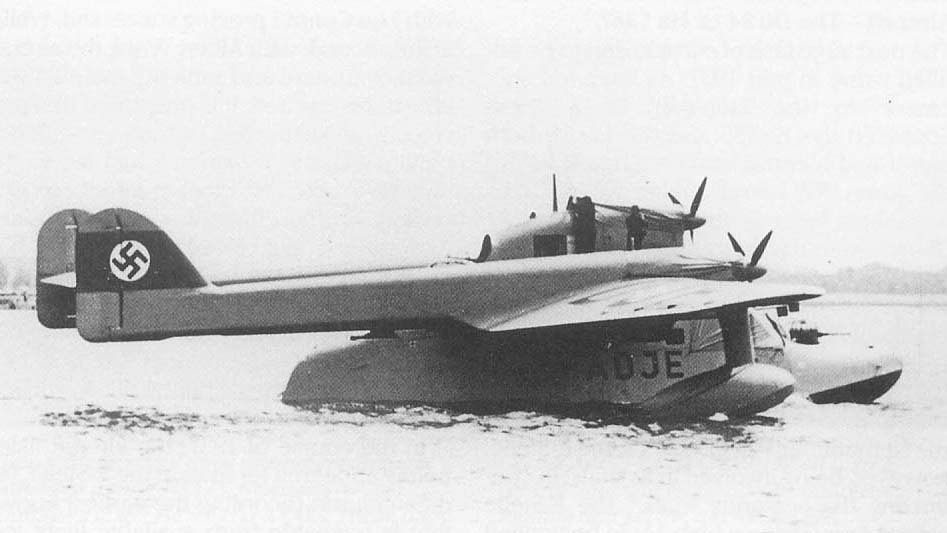
The first example of the new aircraft, the BV.138a-01 (factory number 148, D-ADJE), flew in February 1939. By this time, “Hamburger Flugzeugbau” had become “Abteilung Flugzeugbau der Schiffswerft Blohm und Voss.”
The initial flights and sea trials proved as promising as the previous flights had been disappointing. Work on five pre-series BV.138a-0 aircraft had already begun in Wenzendorf. The Ministry of Aviation later placed an order for 25 BV.138a-1 aircraft.
Tests of six pre-series BV.138a-0 aircraft at Blohm und Voss and the Travemünde test center demonstrated the success of the modifications. However, it was noted that the structural strength did not guarantee the aircraft’s safe operation in the open sea.
Consequently, BV.138a-04 (152, BI+AT) was sent to the new Blohm und Voss factory in Finkenwerder for structural reinforcement. The significance of these modifications can be seen in the aircraft’s renaming to BV.138b-0. The normal takeoff weight with the same equipment increased from 13,760 to 14,500 kg.
An order was placed for ten pre-series BV.138b-0 aircraft, and the Technical Department also ordered three BV.138a-0s to be modified into b-0s. Nevertheless, the urgent need for flying boats for coastal aviation units (Küstenfliegergruppen) led to the decision to produce 25 BV.138a-1s in their original configuration to avoid inevitable delays. Thus, production of the BV.138a-1 ran parallel to that of the BV.138b-0.
Operational Deployment and Initial Issues
Testing of the first BV.138a-1 was delayed awaiting the ice melt on the Elbe until April 1940, when the invasion of Denmark and Norway began. The scarcity of maritime aircraft needed for such operations necessitated the urgent acceptance of the first and second BV.138a-1s from the Finkenwerder factory into the Luftwaffe after brief trials.
They were assigned to KG.z.b.V.108 See (108th Combat Squadron for Special Missions). Three regiments of the squadron operated seaplanes and flying boats from Norderney. Two BV.138a-1s conducted transport flights to Stavanger, Åndalsnes, Trondheim, and Bodø.
Subsequently, BV.138a-1s were ferried from Hamburg to Travemünde for acceptance trials, and by June 1940, 1./Ku.Fl.Gr.506 in Hörnum had received 10 BV.138a-1s and commenced their operational use.
Beyond issues with the Jumo-205C-4 engine, which required highly skilled maintenance by specially trained personnel, difficulties arose with the MG-204 turret installation. The MG-204, developed by Rheinmetall-Borsig to replace the Oerlikon MGFF, was primarily intended for fixed mounts.
The “teething problems” of the cannon were compounded by its installation in a turret. The turret’s mechanics proved unreliable, to the extent that Blohm und Voss had to send personnel specifically to Hörnum to service the turret and cannon. Despite the problems with the forward turret, which eventually led to the discontinuation of both the MG-204 and LB 204, 1./Ku.Fl.Gr.506 was deployed to the Bay of Biscay in October 1940.
By the end of the year, 2./Ku.Fl.Gr.906 also joined with BV.138a-1s.
The combat readiness of the BV.138a-1 in these two coastal aviation squadrons was extremely low due to engine and propeller issues. Deteriorating weather conditions by year-end clearly indicated insufficient hull strength for operations in the Bay of Biscay.
The central Jumo-205C-4 engine proved to be the least reliable, suffering power loss due to exhaust manifold blockage during takeoff. Consequently, the flying boats’ activity was limited. By this time, tests of the reinforced BV.138b-0 in Travemünde showed that most of the operational problems had been resolved, but the increased takeoff weight necessitated the installation of the more powerful Jumo-205D engine on the production BV.138b-1s.
Technical Specifications
| Modification | ВV.138a-1 |
| Wingspan, m | 26.90 |
| Length, m | 19.85 |
| Height, m | 5.90 |
| Wing area, m2 | 108.50 |
| Empty weight | 10800 |
| Normal takeoff weight | 13762 |
| Maximum takeoff weight | 16235 |
| Engine type | 3 Diesel engines Junkers Jumo-205C-4 |
| Power, hp | 3 x 600 |
| Maximum speed, km/h | 264 |
| Cruising speed, km/h | 248 |
| Practical range, km | 3900 |
| Combat range, km | 1244 |
| Maximum rate of climb, m/min | 235 |
| Service ceiling, m | 3600 |
| Crew, crew members | 6 |
| Armament | one 20-mm MG-204 cannon in a hydraulically controlled turret and one 7.9-mm machine gun in each of the two open turrets; 3x 50-kg bombs |
Image and diagram gallery of the Blohm & Voss BV 138 Flying Boat
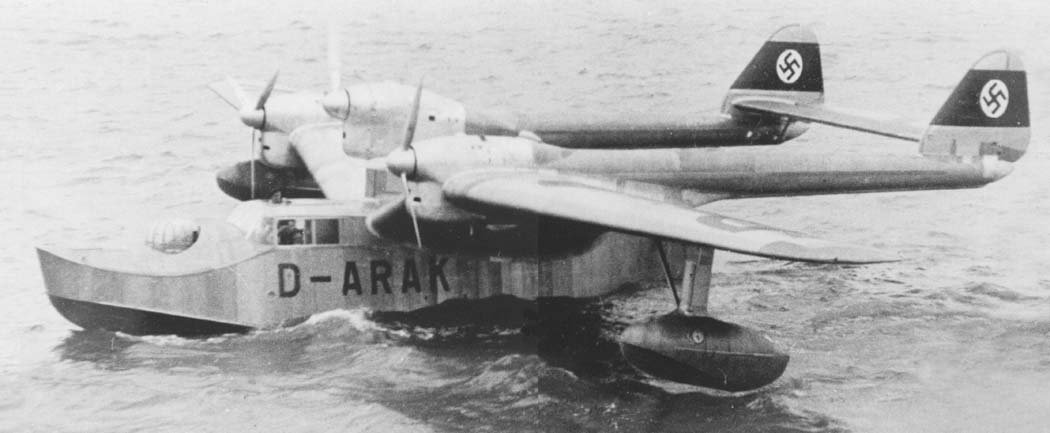 BV.138A |
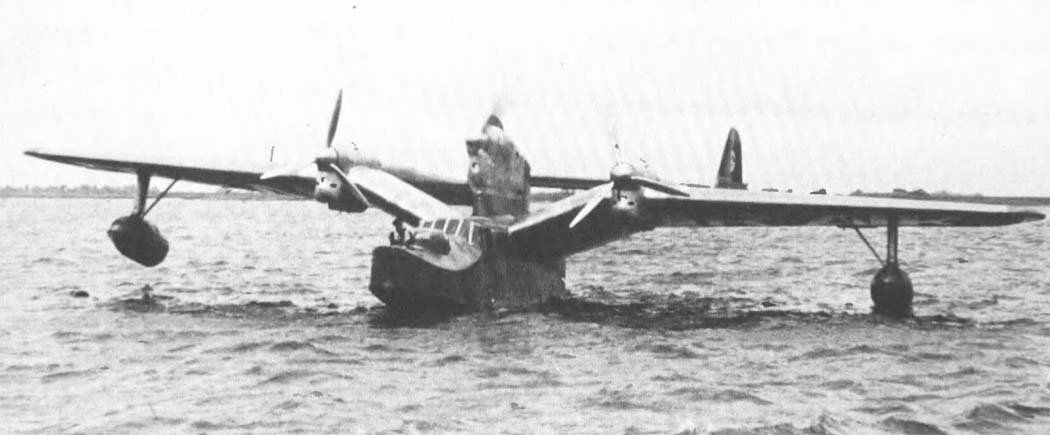 BV.138A |
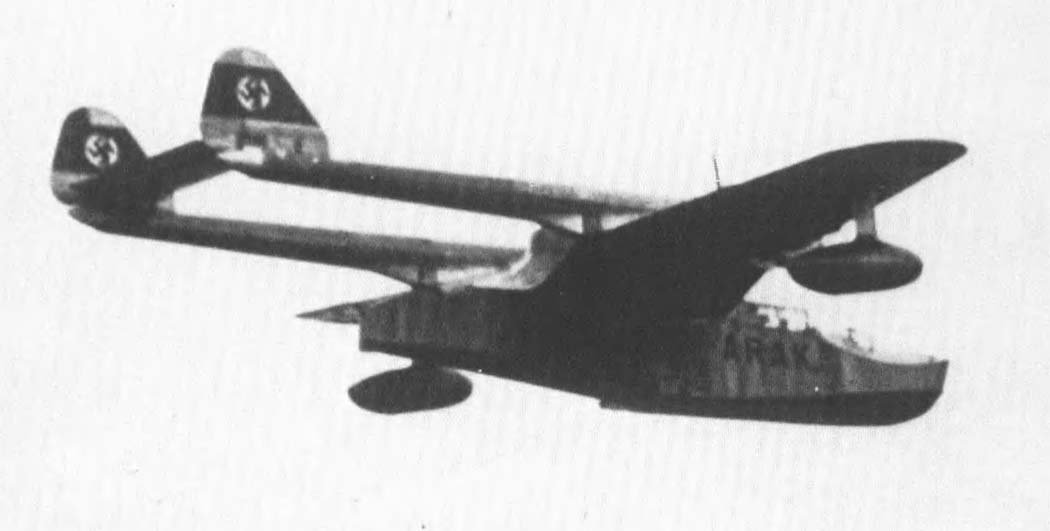 BV.138A |
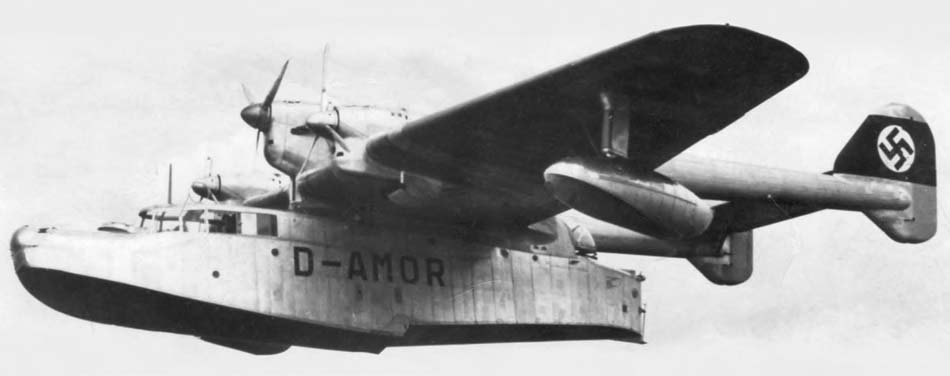 BV.138A |
 BV.138A |
 BV.138A |
 BV.138A |
 BV.138A |
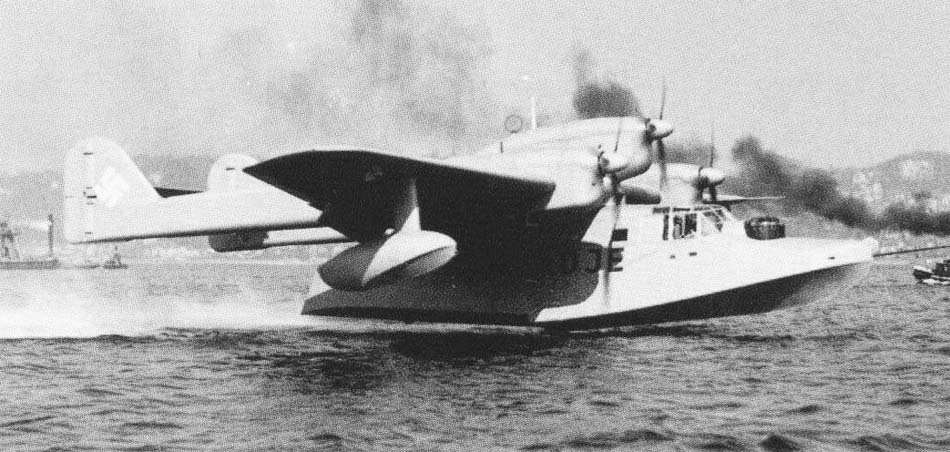 BV.138A |
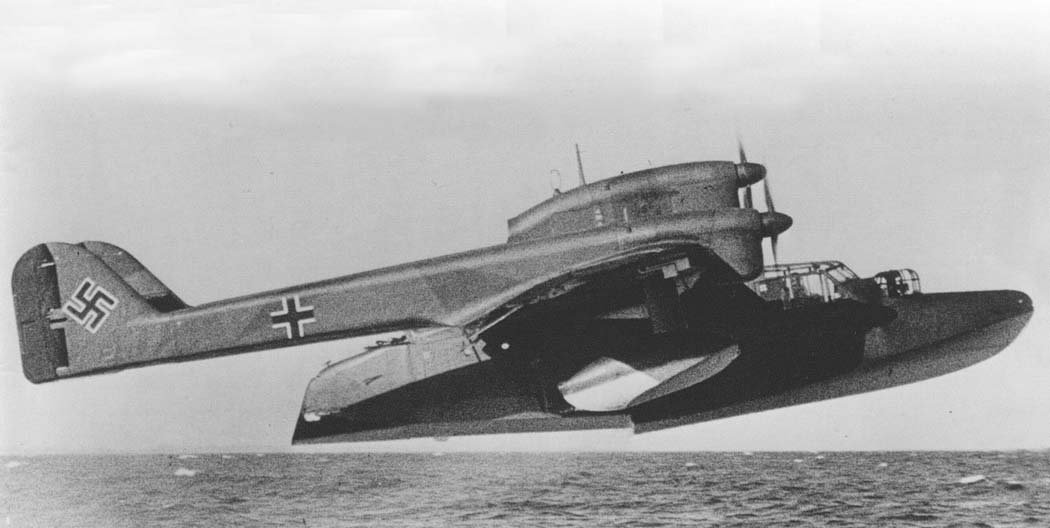 BV.138A |
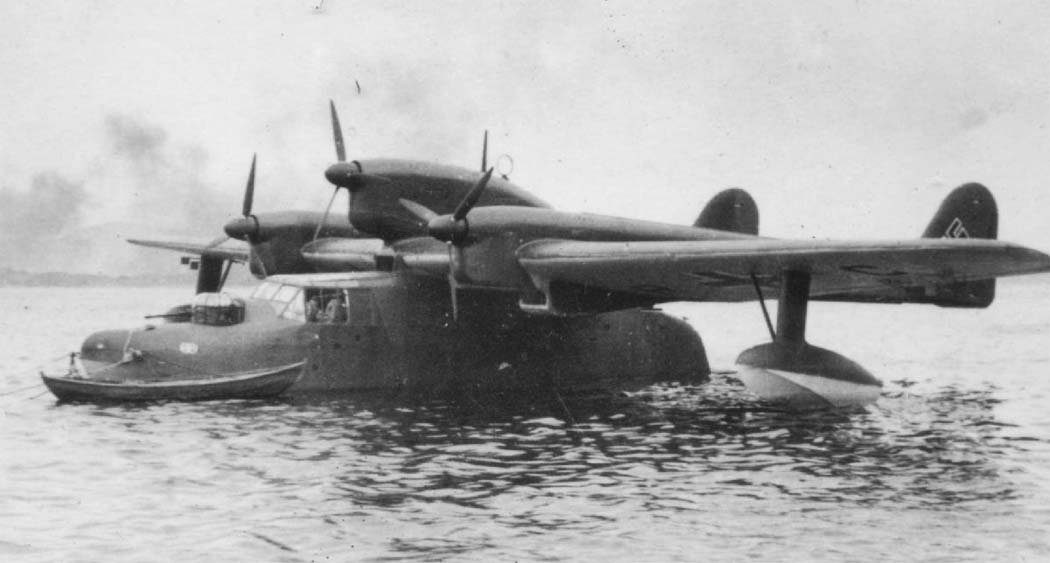 BV.138A |
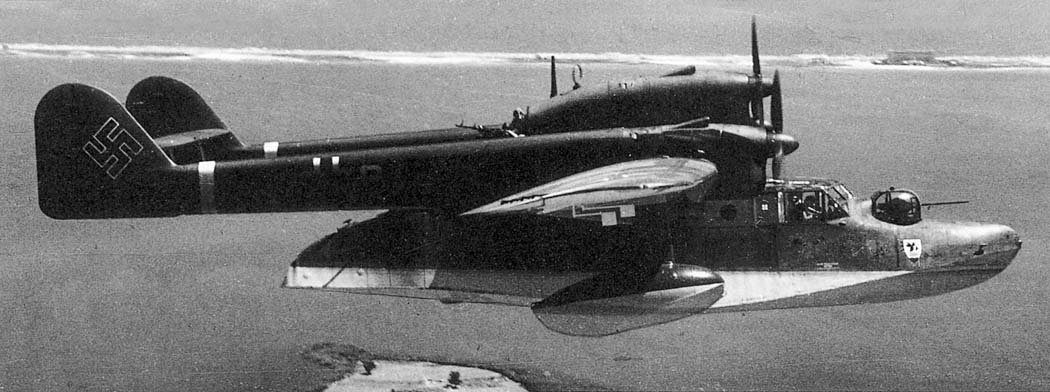 BV.138A |
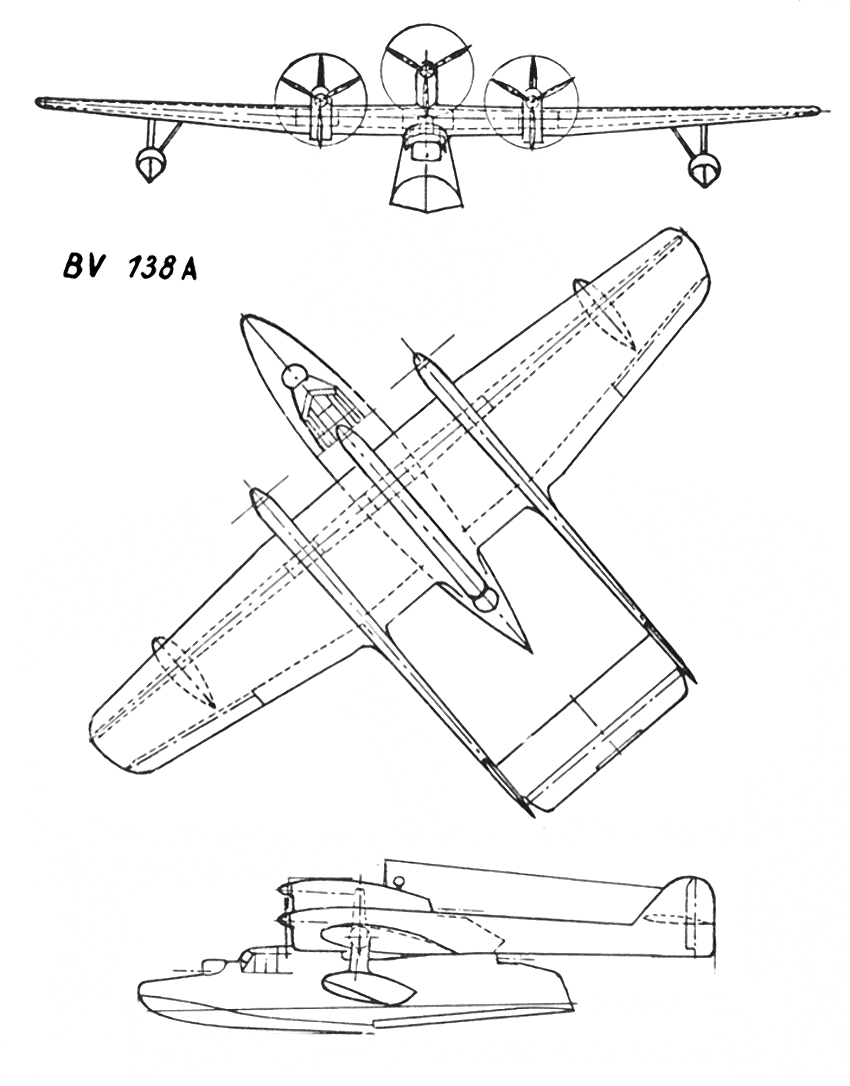 BV.138A |
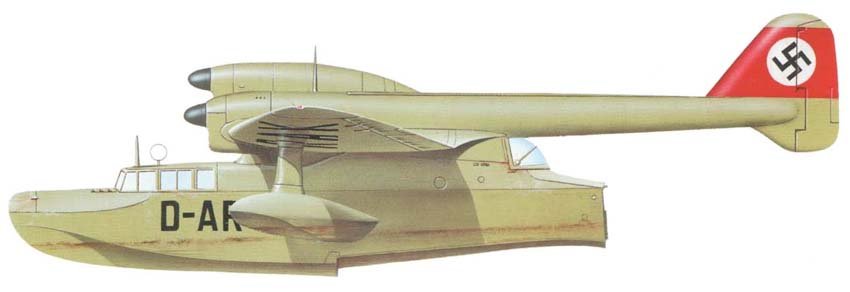 BV.138A |
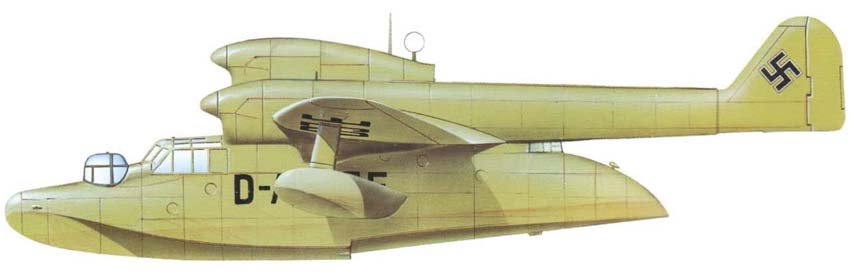 BV.138A |