
Challenges of French Aviation
The dire state of the French Air Force in 1940 is well-documented. However, the technical department of the Ministry of Aviation made considerable efforts towards a consistent and large-scale modernization of all components of French military aviation during the second half of the 1930s. Unfortunately, these attempts came too late, and by the critical days of May 1940, the results of these activities could not yet favorably impact the composition of the French Air Force.
Part of the blame lay with the confusion caused by the large-scale nationalization of the aviation industry in 1936-1937, and the subsequent decline in production. Among the major innovative research programs initiated by the technical department of the Ministry of Aviation was program A21, which aimed at developing a modern heavy bomber. This program was of strategic importance, as the aircraft of this class in service with the French Air Force were severely outdated.
The A21 program specification was issued in December 1936, but its developers made the same mistake as their counterparts in the British Air Ministry: the strategic bomber was to be equipped with two high-power engines. The British Avro Manchester, designed as a twin-engine aircraft, suffered from the unreliability of its Rolls-Royce Vulture I engines. The situation was saved by Handley Page, which, from the outset, installed four Merlin engines on its heavy bomber, the Halifax.
Innovative Design and Armament
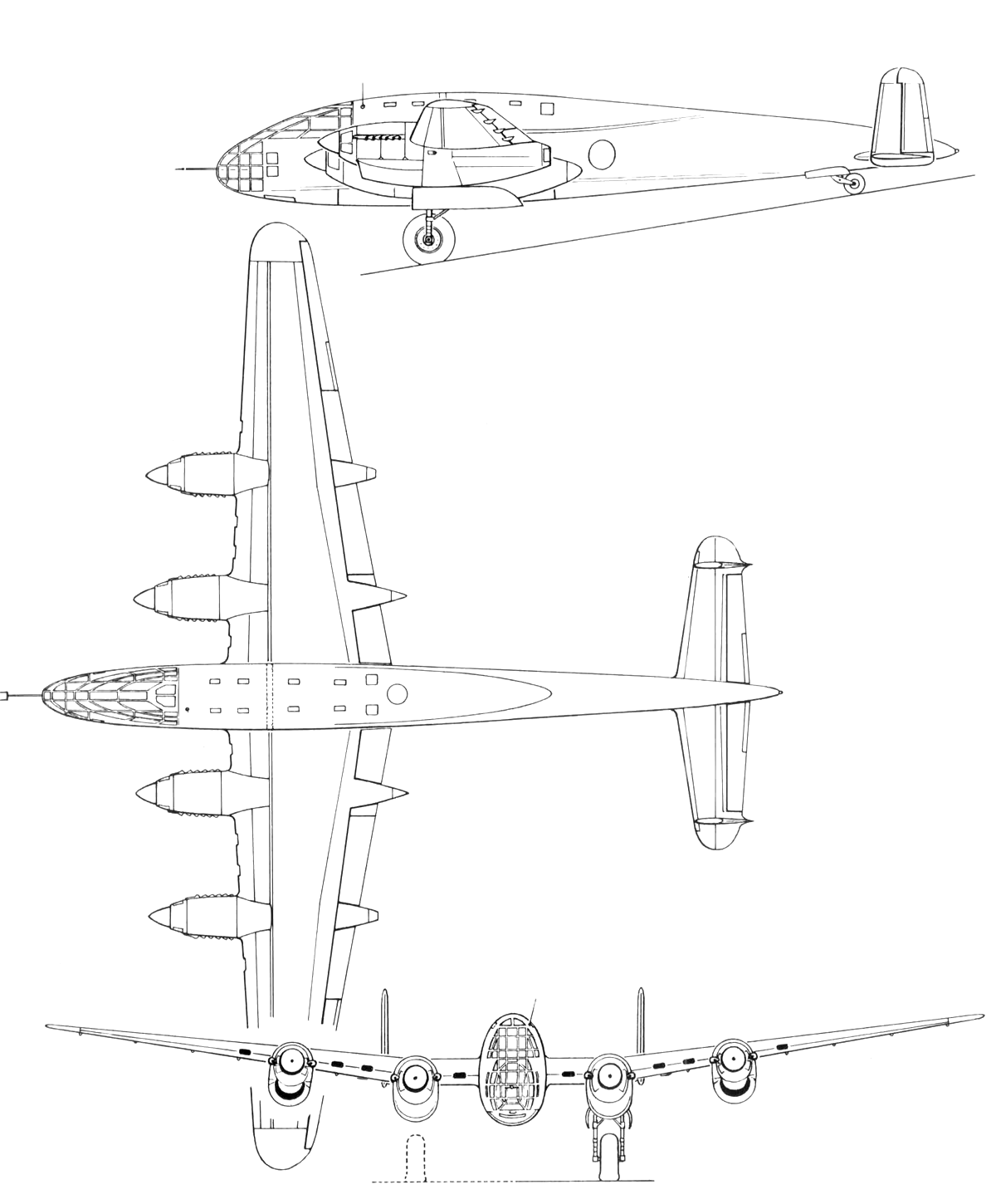
The French Breguet Bre 480 B4 bomber, developed under the A21 program, was initially intended to have two 18-cylinder, 1500-hp Gnome-Rhône 18P double-row engines. However, the engine company ceased their development at an early stage. Instead, Gnome-Rhône promised 18-cylinder, 2000-hp engines, but it became clear that waiting for these motors would be a waste of time.
Consequently, the bomber began to be developed as the Bre 482 B4 with four 910-hp Hispano-Suiza 12Y 21 V-engines. Nevertheless, the delay associated with engine selection meant that the order for manufacturing two prototypes was issued only on May 12, 1938.
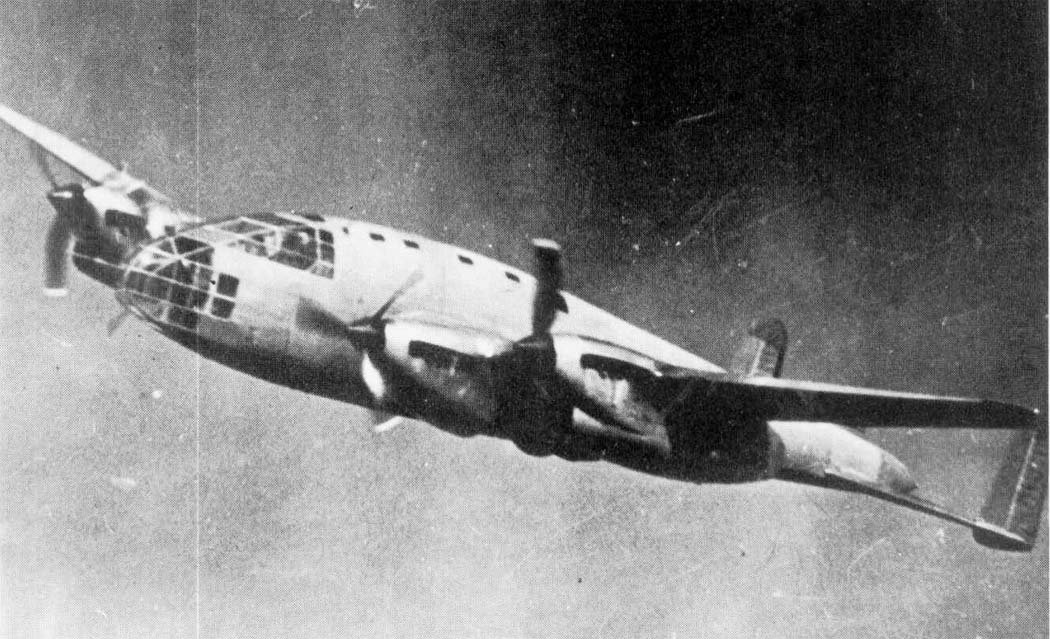
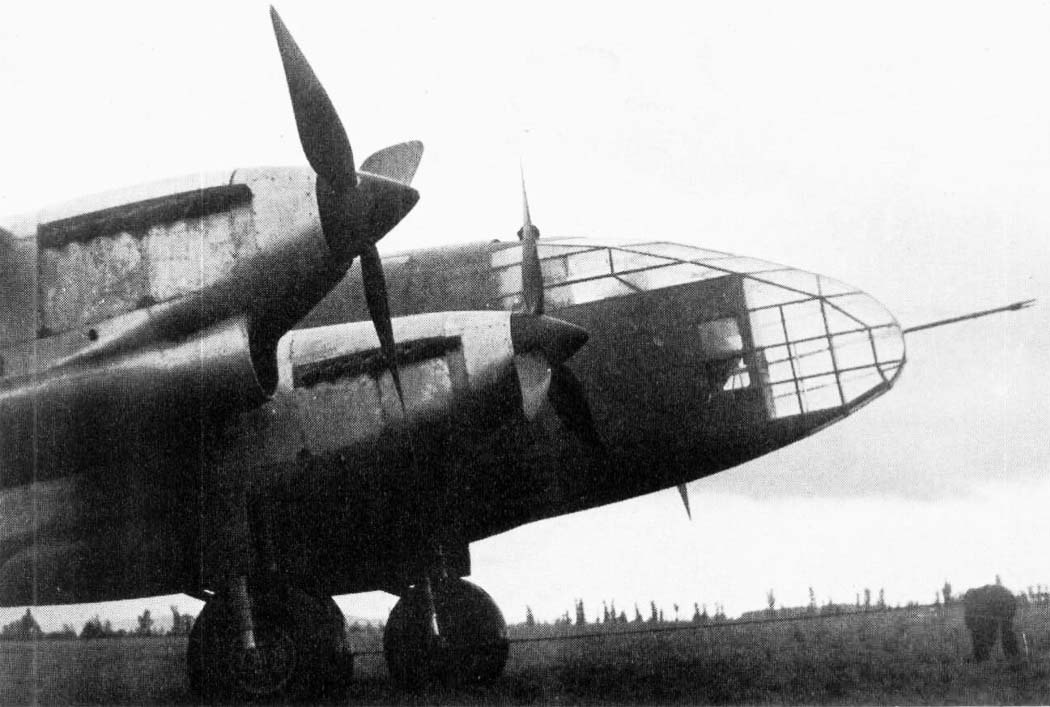
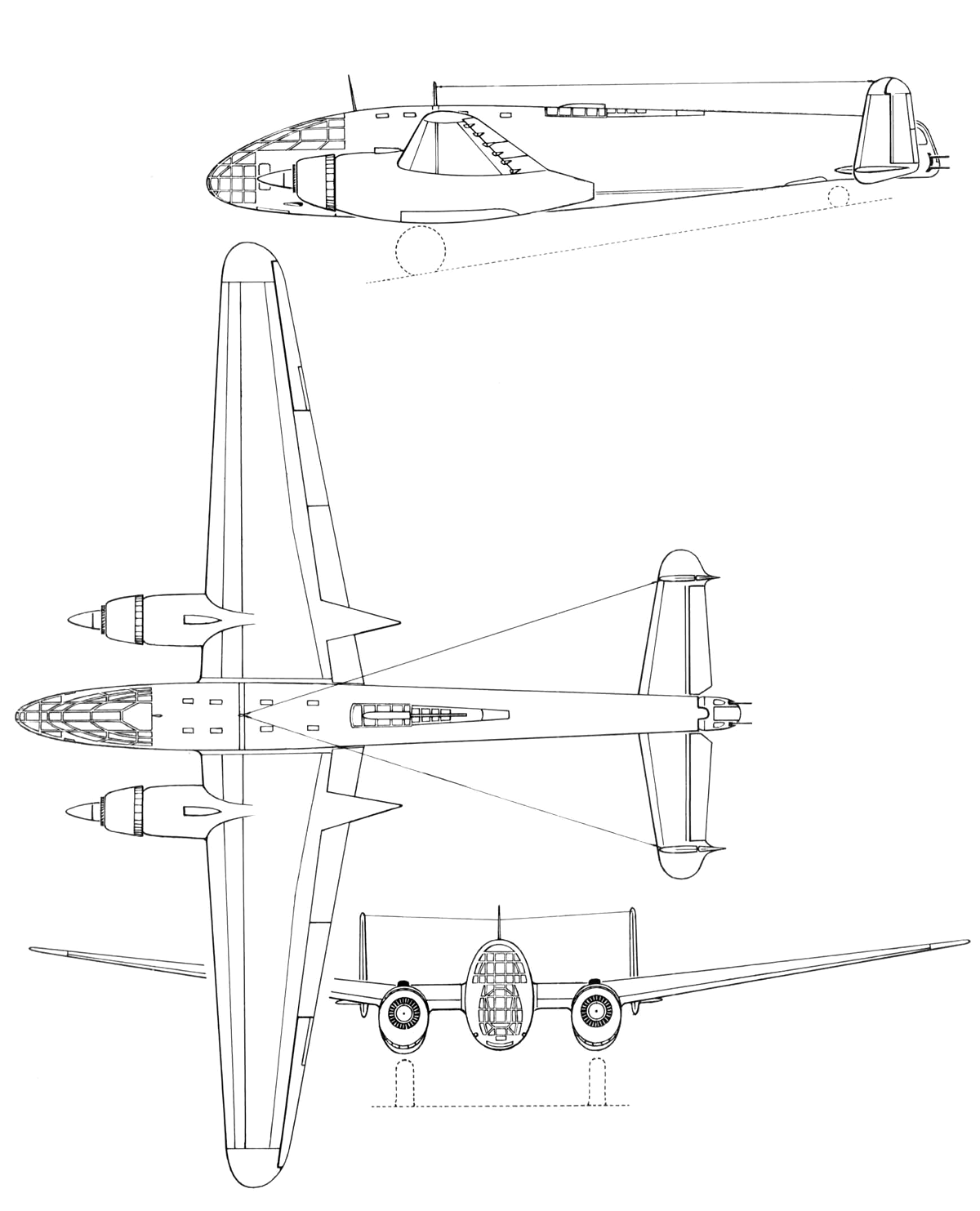
It should be noted that the Bre 482 B4 could be considered a masterpiece by Breguet in terms of aerodynamics, manufacturability, and functionality. Few four-engine bombers of those years could boast such excellent streamlined shapes. The fuselage had an oval cross-section with a vaulted glass nose offering very good visibility.
The four crew members were to be protected by an Hispano 404 cannon, mounted in a mechanically powered turret in the rear fuselage, with 180 rounds of ammunition. Due to the very low-set tail empennage, rearward firing would be almost unobstructed. One 7.5-mm MAC 34 machine gun was installed in the nose section, and two more in the lower part; the front machine gun had 500 rounds, and the two lower ones had 600 rounds per barrel.
The bomber could carry up to 2500 kg of bombs; its bay could accommodate one 500-kg bomb and ten 200-kg bombs. Construction of the prototypes began a year after the contract was signed. During this time, the powerplant changed: 1100-hp Hispano-Suiza 12Y 51 engines were installed instead of the Hispano-Suiza 12Y 21.
The inner engine nacelles received bays for retracting the wheels, while the outer engine nacelles were equipped with radiators that cooled both engines located on the wing console. The combination of the high, flat cross-section fuselage and large engine nacelles gave the Bre 482 B4 a very original appearance.
The Fate of the Prototypes
The German offensive in May caught the prototypes under construction at the Vélizy-Villacoublay factory. The enemy’s advance was so swift that it was decided to evacuate the prototypes of this promising aircraft. The first was taken to Bône, a port city in eastern Algeria, and the second to Anglet in the Pyrenees, where a Breguet branch factory was located.
There, the bomber prototype was eventually discovered by the Germans, who, however, showed no interest in it. Therefore, the French—at least on paper—developed other variants of the aircraft. For example, the Bre 482.24Z was to have two 2500-hp Hispano-Suiza 24Z engines and a tail turret.
The first prototype, though far from German occupation, nevertheless participated in combat operations. In November 1942, after the Allied landings in Africa (Operation Torch), German aircraft raided Bône, during which the prototype was destroyed.
The second prototype survived the war relatively peacefully in Anglet, and work on it continued immediately after the liberation. There were plans to incorporate wartime experience by installing 1500-hp HS 12Z engines on the aircraft, but the revitalized French Air Force showed no interest in aircraft of this class.
Eventually, in November 1947, the second Bre 482 B4 prototype took to the air, but as an experimental aircraft with civilian registration F-WFRM. Its crew consisted of three people, and the aircraft itself served to test instruments, equipment, and engines. The aircraft flew once with HS 12Z engines. Its photographs appeared after the war, but then the aircraft disappeared from the horizon.
Technical Specifications
| Modification | Br.482B.4 |
| Wingspan, m | 24.20 |
| Length, m | 18.60 |
| Height, m | 4.25 |
| Wing area, m2 | 67.90 |
| Empty weight | 9 500 |
| Normal takeoff weight | 1 6060 |
| Engine type | 4 Piston engine Hispano-Suiza 12 Y 51 |
| Power, hp | 4 x 1100 |
| Maximum speed, km/h | 5 24 |
| Cruising speed, km/h | 4 00 |
| Practical range, km | 2500 |
| Service ceiling, m | 9000 |
| Crew, crew members | 4 |
| Armament | one 20-mm Hispano-Suiza cannon and four 7.5-mm Darne machine guns; bomb load up to 2500 kg |
Image and diagram gallery of the Breguet Bre 482 B4
 Br.482 |
 Br.482 |
 Br.482 |
 Br.482 |
 Br.482 |
 Br.482 |
 Br.482 |
 Br.482 |