
The Caudron C.280 Phalene aircraft made its first flight in March 1932. It boasted excellent flight characteristics and high capabilities, leading to the construction of 240 different versions of the aircraft. The original version was a three-seater, with two seats positioned side-by-side in the front of the cabin, and the third located behind them.
Passenger doors on each side were hinged and rotated upwards when opened until pressed against the lower surface of the wings. A baggage compartment was located behind the passenger cabin. Each wing console had a constant chord and thickness along its span and was attached by a pair of streamlined duralumin struts.
The continuous mechanization of the wing’s trailing edge was hinged, with the outer sections forming ailerons, and the inner sections folding upwards to allow for wing folding. The fuselage had a rectangular cross-section and plywood-fabric skinning. Each landing gear strut featured a liquid-gas shock absorber, standard low-pressure tires, and differential brakes. The framework of the braced stabilizer, elevators, and rudder was made of pine, while the fin’s framework was constructed from welded steel tubing. It was powered by a 4-cylinder de Havilland Gipsy II engine generating 120 hp.
Design Evolution and Main Variants
In addition to the first production modification of the aircraft, the following versions were released: The C.280/6 featured rounded wingtips and a modified, more pointed vertical stabilizer (one aircraft built). The C.280/9 had a fuselage 20 cm longer than the C.280 (3 aircraft built). All C.282 series aircraft were equipped with a 4-cylinder in-line Renault 4Pci engine (11 aircraft built).
The C.282/2 (Phalene VI) had a four-seat cabin and used a Renault 4Pdi engine (21 aircraft built). The C.282/3 was similar to the C.282 but with a reduced fuel capacity (1 aircraft built). The C.282/4, the first version named Super Phalene, featured dual controls and automatically operated slots and flaps. It had one regular door on each side of the cabin, with slightly reduced wingspan and fuselage length (9 aircraft built).
The C.282/8 was identical to the C.282/2, except the fuselage was extended by 13 cm, fuel capacity was increased, and the tailwheel was replaced by a tailskid (89 aircraft built). The C.282/10 replaced the Merville 496 propeller series, installed on earlier versions, with a Merville 601 series propeller (11 aircraft built).
The C.286 differed from the C.282 in that the control column protruded from the cabin ceiling, and the vertical tail had redesigned contours (1 aircraft built). The C.286/2 was the same as the C.286 but with rounded wingtips; the C.286/2 S.4 and C.286/3 S.4 were versions with enhanced comfort and a Gipsy Major I engine (10 aircraft built).
The C.286/4 had a vertical tail similar to the C.280/6 (5 aircraft built). The C.286/5 (Super Phalene) featured a Gipsy Major I engine, leading-edge slots, a tailwheel, modified landing gear, and a stabilizer with a straight leading-edge sweep (1 aircraft built). The C.286/6 (Super Phalene) used a Merville 501 propeller (5 aircraft built).
The C.286/7 (Super Phalene) incorporated a Ratier series 1175 variable-pitch propeller and a vertical tail like the C.286/4 and C.280/6 (8 aircraft built). The C.286/8 (Super Phalene) had a slightly lengthened fuselage, like the C.280/9, and a vertical tail like the C.286 (4 aircraft built). The C.286/9 (Super Phalene) had a slightly shortened fuselage compared to the C.286/8 (1 aircraft built).
The C.289/2 was equipped with a 150 hp Hispano-Suiza 5Q engine. Its design was the same as the C.286/9, and the vertical tail was like the C.286 (1 aircraft built). The C.289/9 had the same power unit as the C.289/2, with a vertical tail like the C.280/6 (5 aircraft built).
Light Variants and Special Prototypes
The C.340 Micro Phalene was a reduced version of the Phalene, a single-seat light aircraft with a single strut on each side of the wing. It used a 30 hp Chaise 4D engine. One example was modified with a 40 hp Chaise 4E engine and designated C.344.
The C.345 Phalene Junior lacked wing dihedral and was equipped with a 40 hp Train 4T engine. In all other respects, it was similar to the C.340, though only one prototype was completed.
Technical Specifications
| Modification | C.2 86/2 |
| Wingspan, m | 11.62 |
| Length, m | 8.25 |
| Height, m | 2.05 |
| Wing area, m2 | 25.35 |
| Empty weight | 695 |
| Maximum takeoff weight | 1050 |
| Engine type | 1 Piston engine Renault 4Pgi |
| Power, hp | 1 x 120 |
| Maximum speed, km/h | 185 |
| Cruising speed, km/h | 155 |
| Practical range, km | 850 |
| Service ceiling, m | 4500 |
| Crew | 1-2 |
| Payload | up to 3 passengers |
Image and diagram gallery of the Caudron C.280 Phalene
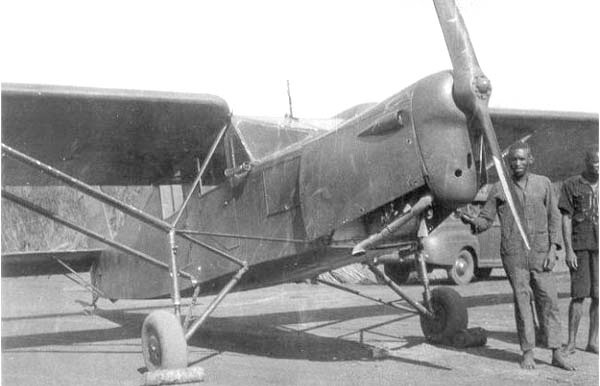 C.280 Phalene |
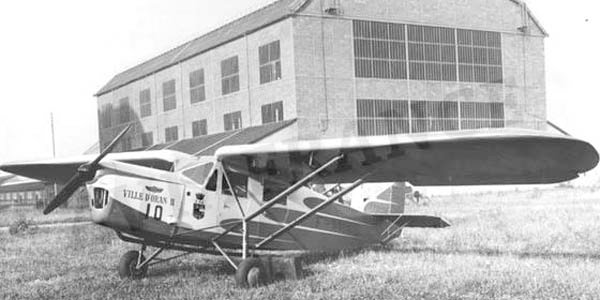 C.280 Phalene |
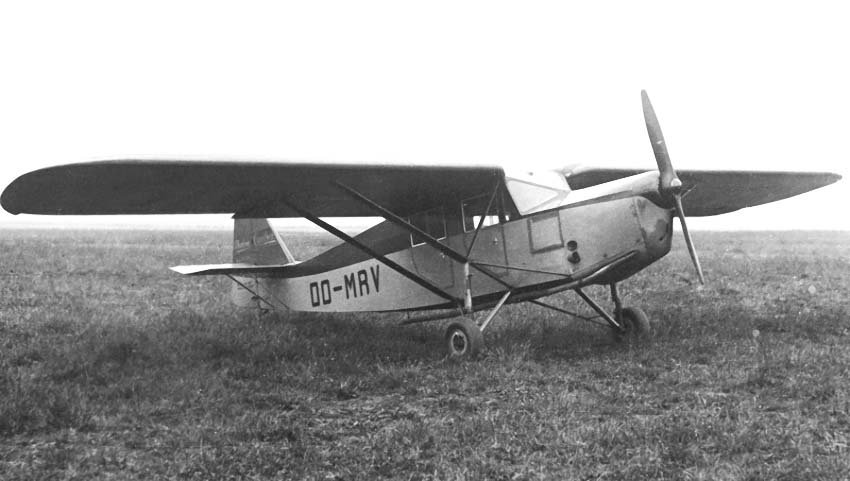 C.280 Phalene |
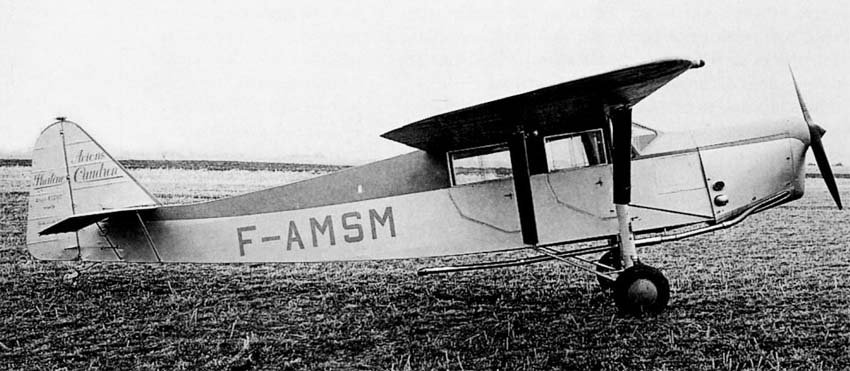 C.280 Phalene |
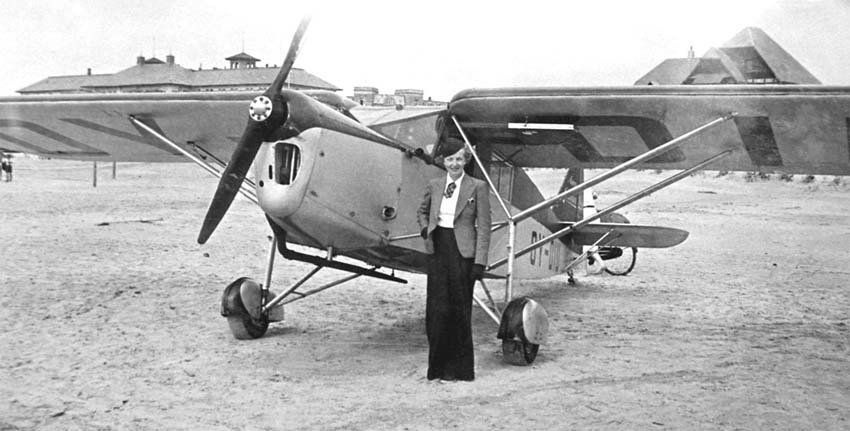 C.280 Phalene |
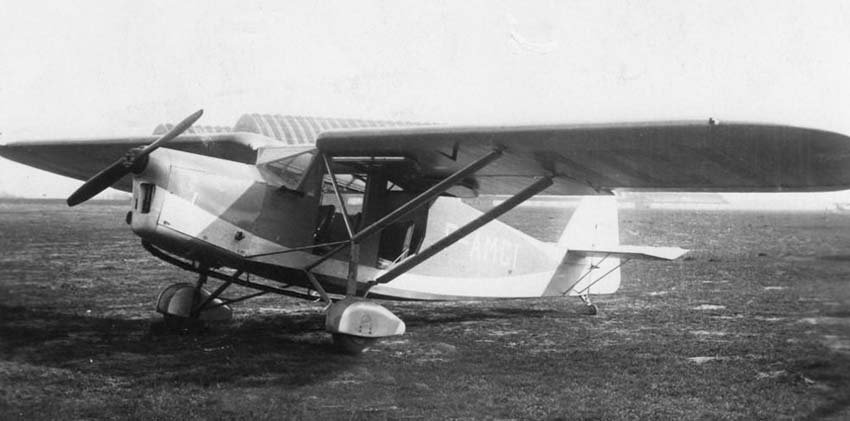 C.280 Phalene |
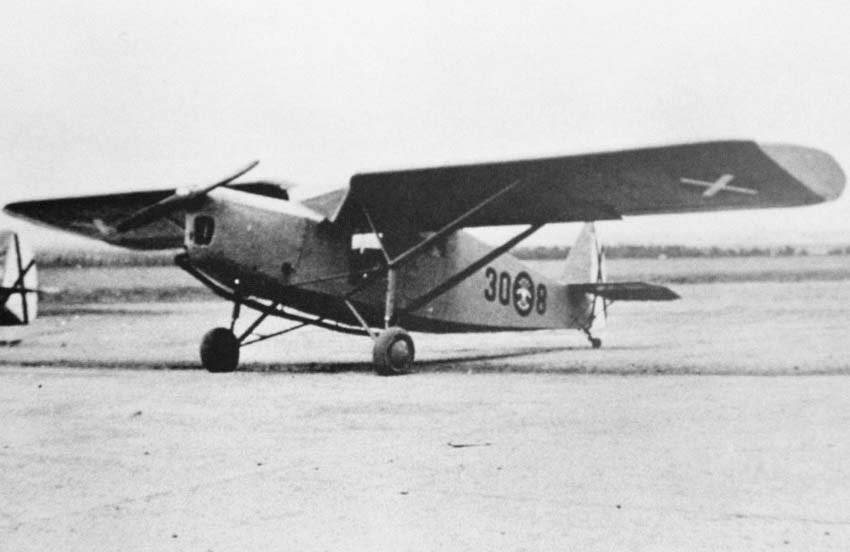 C.280 Phalene |
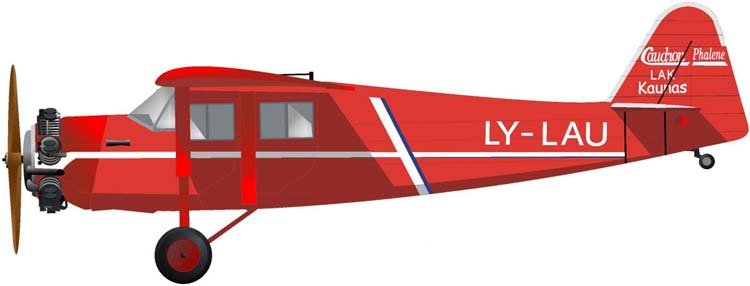 C.280 Phalene |