
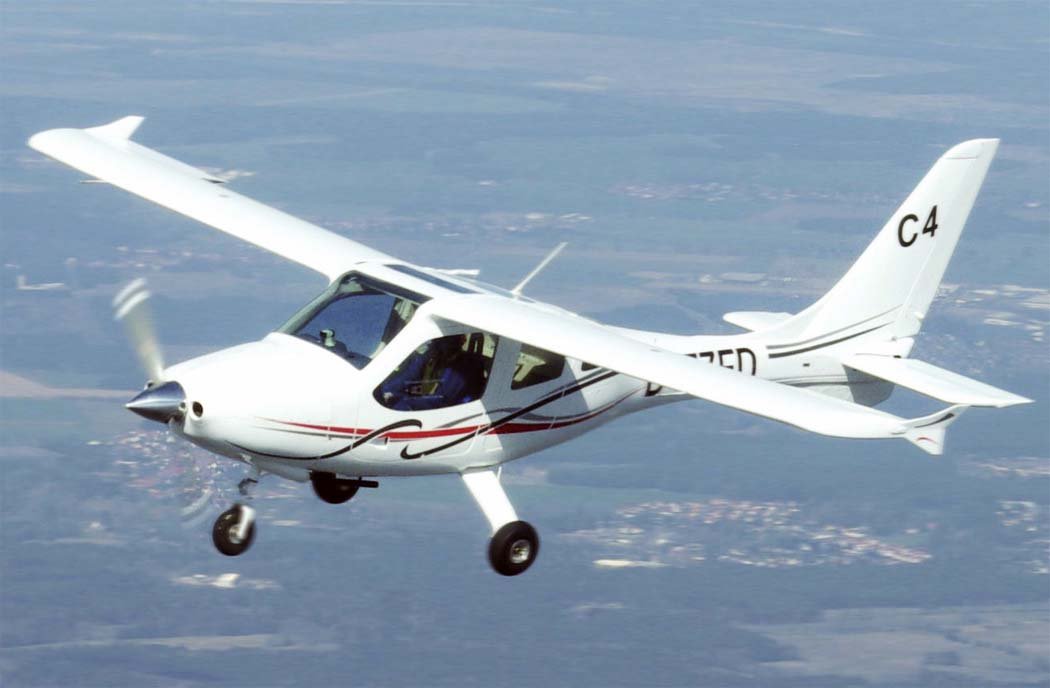
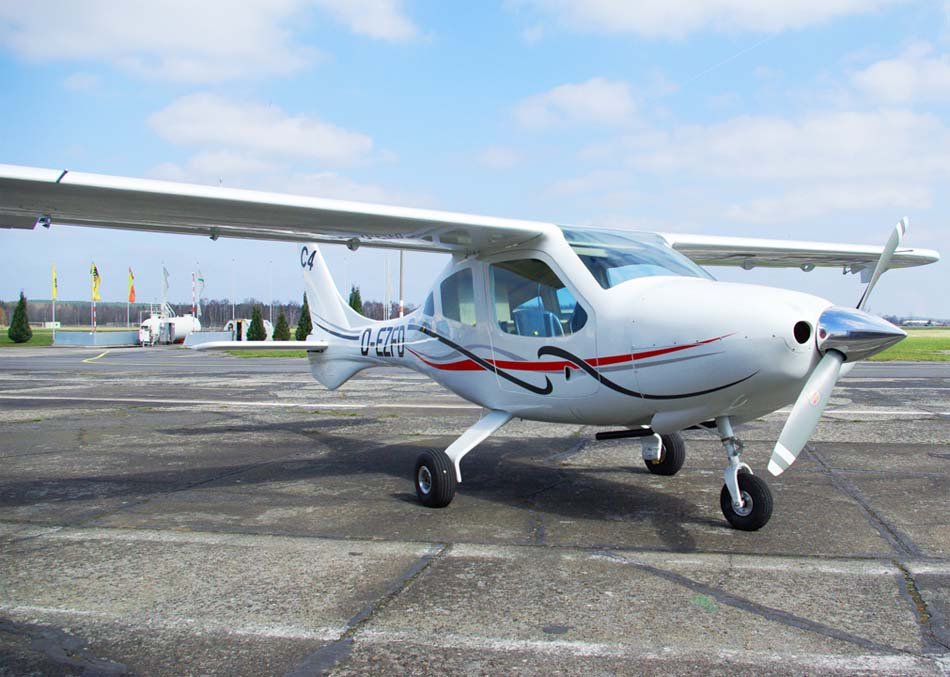
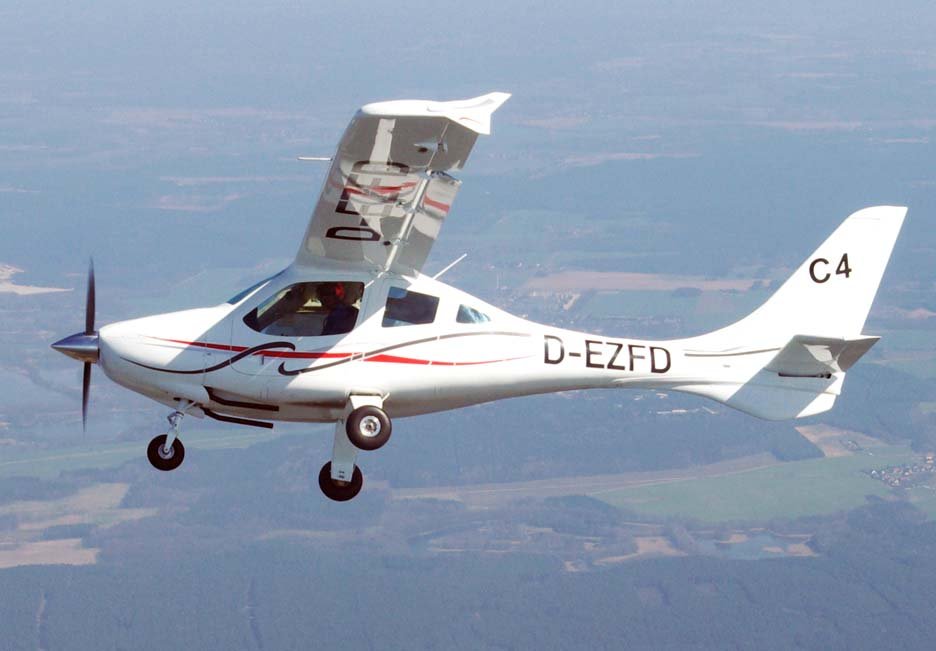
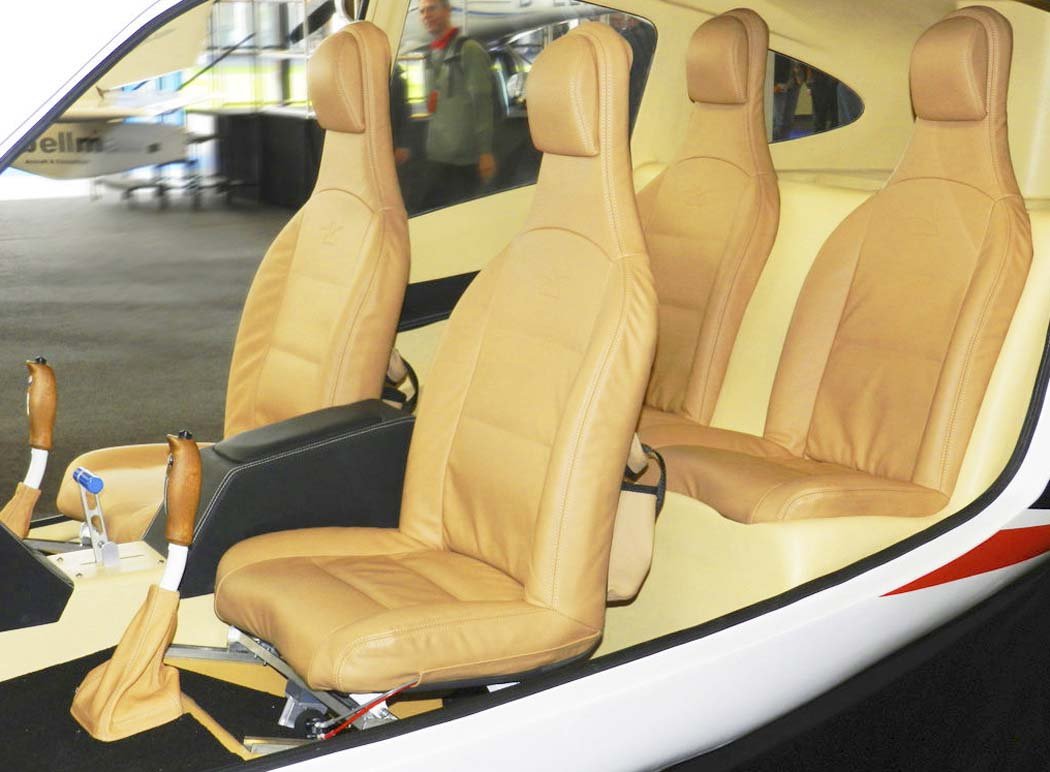
Flight Design General Aviation GmbH, a German LSA manufacturer, decided to compete in the 4-seat light sport aircraft market, unveiling the new C4 at the Aero Friedrichshafen 2011 exhibition.
Innovative Design & Features
The composite C4 will be powered by a Continental IO-360AF piston engine, boosted to 180 hp (at 2400 rpm), consuming 40.3 l/h (at 75% of maximum power). An optional 150 hp Centurion turbodiesel engine is also offered.
The aircraft’s landing gear is also composite. Ground control is achieved by turning the nose gear, and the braking system uses hydraulics. A new passive safety system, Safety Box, installed on the aircraft and developed with German government support, is intended to become standard for new light aircraft.
Advanced Avionics Suite
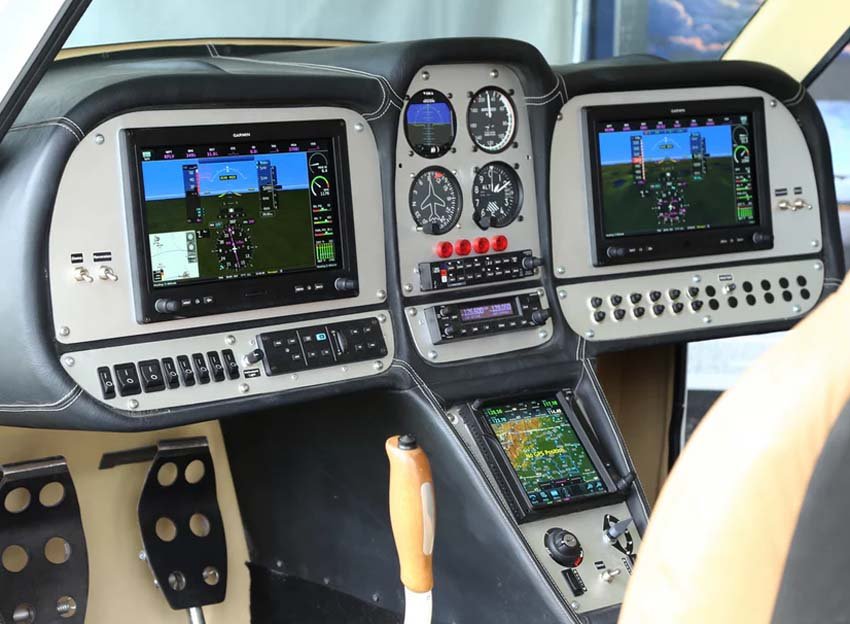
The C4 will feature extensive instrumentation, notably the Vision Touch Avionics, built around the Garmin G3X Touch monitor system. This product is the latest in the Garmin lineup, supporting synthetic vision and data input via both touchscreen and buttons. Integrating this system into the instrument equipment will significantly enhance situational awareness and simplify avionics use for C4 owners.
The primary navigation function is handled by the Garmin GTN 750 GPS-Nav-Com. A Garmin GNC 255 Nav-Com with radio communication support will serve as an auxiliary navigation system. The equipment suite also includes a Garmin GMA 350 audio panel and a Garmin GMC 305 autopilot. This impressive list is rounded out by an RC Allen digital solid-state gyroscopic compass, an attitude indicator, and full-size airspeed and altitude indicators.
The Vision Touch avionics represent a combination of various components, some built to TSO standards and others not. At this stage, this complicates its certification, which does not deter the manufacturer, as it allows for the use of newer avionics. Great attention has been paid to reliability, configuration flexibility, and reducing operating costs.
The system uses two fully independent data sources required for the functioning of aneroid-membrane instruments and angle-of-attack indication, powered by reliable power distribution system buses. Redundant analog instruments ensure reliability during instrument flight. The avionics architecture also allows for future upgrades or immediate customization as desired by clients.
Production & Future Outlook
The aircraft’s maiden flight took place in April 2015. The following year, Lift Air of Eisenach acquired all assets and operations of Flight Design. The new company expressed hope for resuming work on the C4 model.
The search continues for partners and investors willing to support the series production of the 4-seat high-wing piston aircraft. Despite a current lack of interest, Lift Air plans to finalize the certification process in 2019.
The C4 is slated for certification first in Europe, with production planned for the USA, Europe, and Asia. In the United States, the aircraft will be manufactured at a facility in Vermont. Recent delays in FAA certification were reported to be solely due to issues related to changes in Part 23 standards. The C4’s price remains unchanged at $250,000.
Technical Specifications
| Modification | C4 |
| Wingspan, m | 9.93 |
| Length, m | 7. 88 |
| Height, m | 2.61 |
| Empty weight | 600 |
| Maximum takeoff weight | 1 200 |
| Engine type | 1 Piston engine Continental IO-360-AF |
| Power, hp | 1 x 180 |
| Maximum speed, km/h | 320 |
| Cruising speed, km/h | 296 |
| Practical range, km | 2200 |
| Rate of climb, m/min | 300 |
| Crew, crew members | 1 |
| Payload | up to 3 passengers |
Image and diagram gallery of the Flight Design C4
 C4 |
 C4 |
 C4 |
 C4 |
 C4 |