
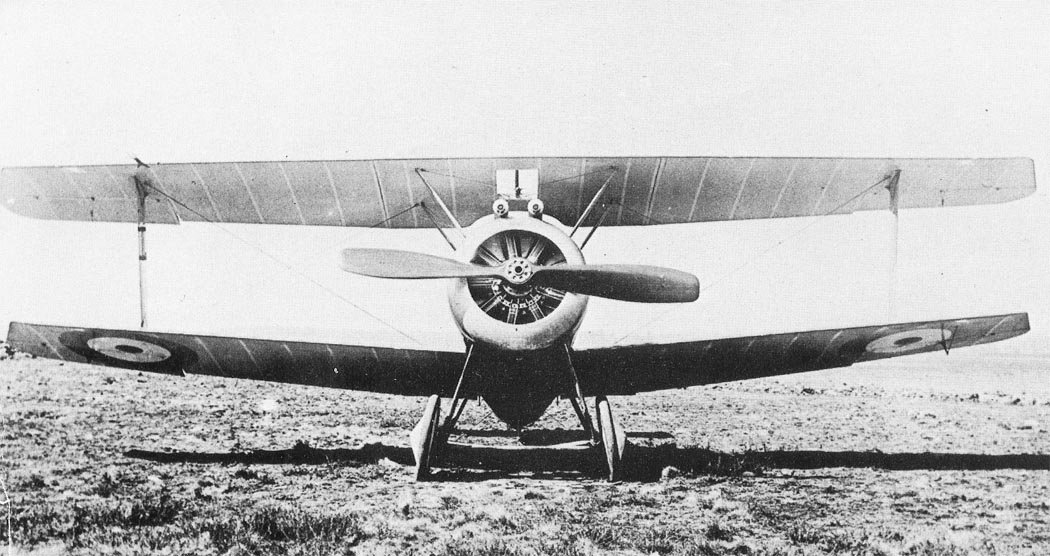
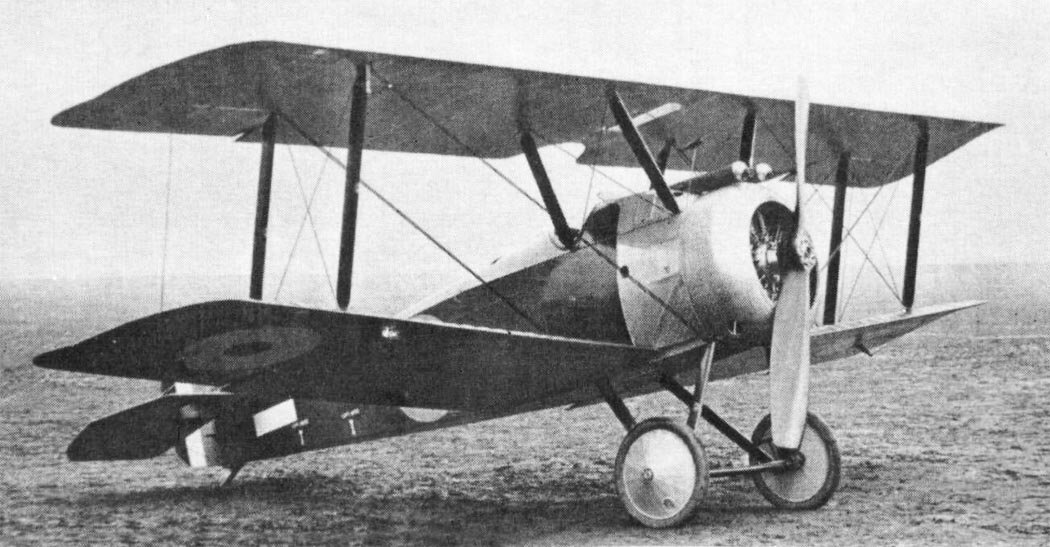
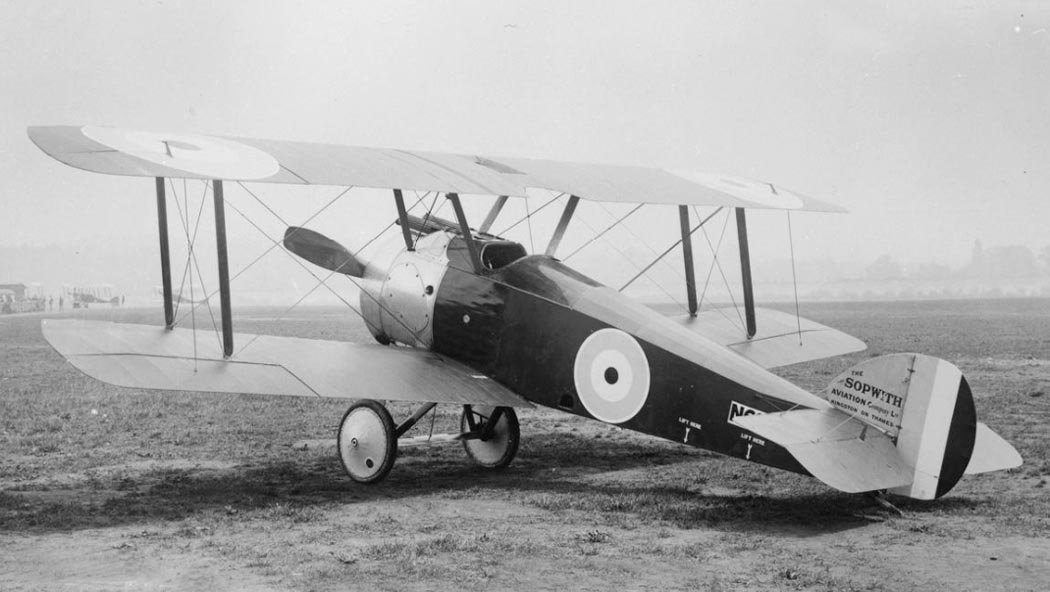
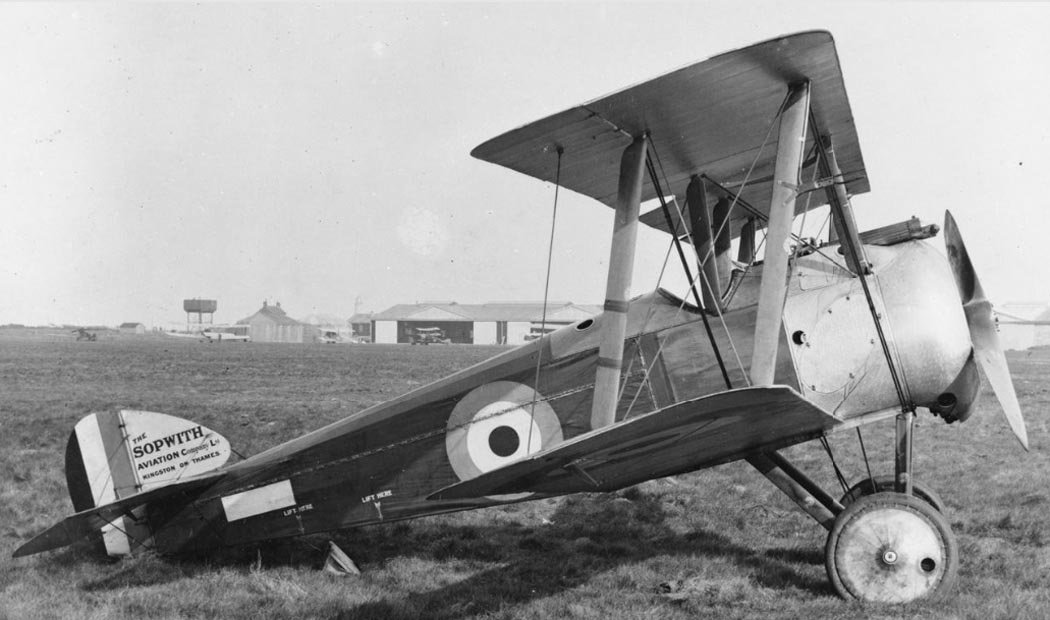
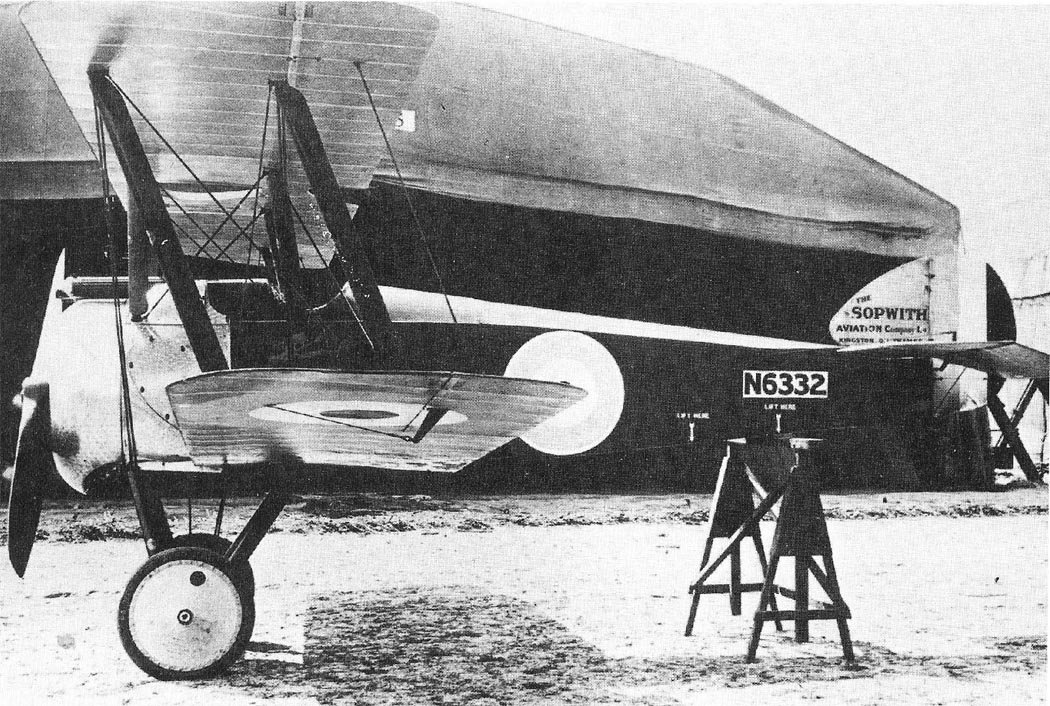
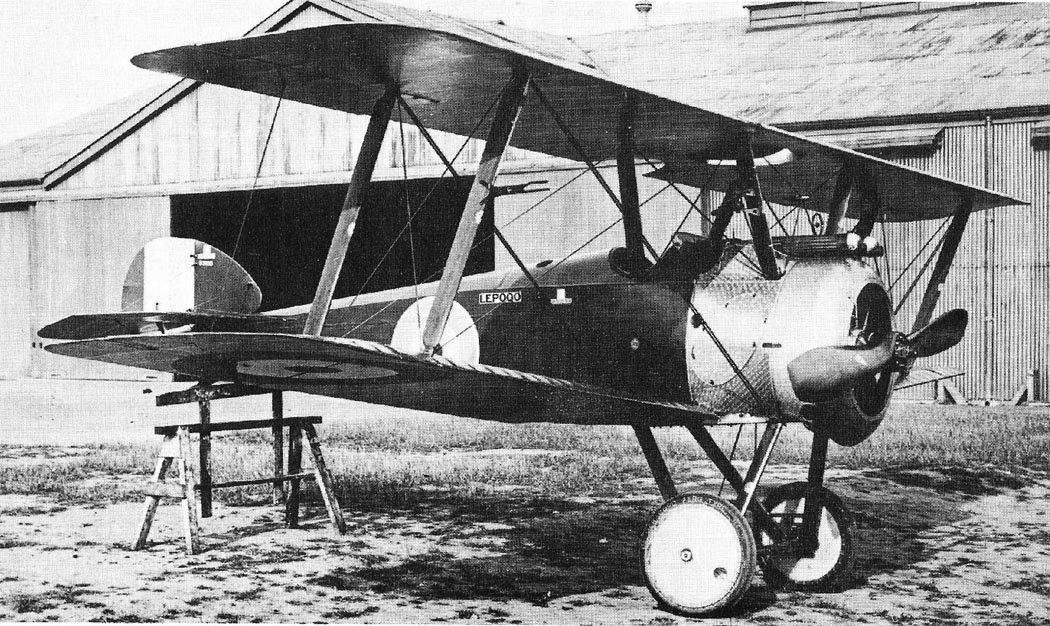
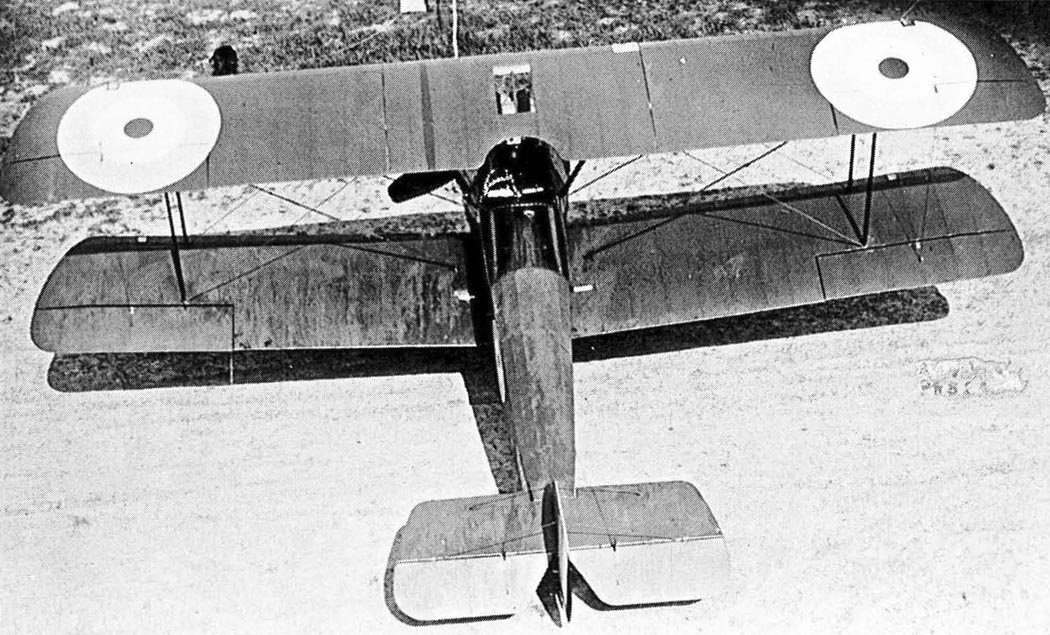
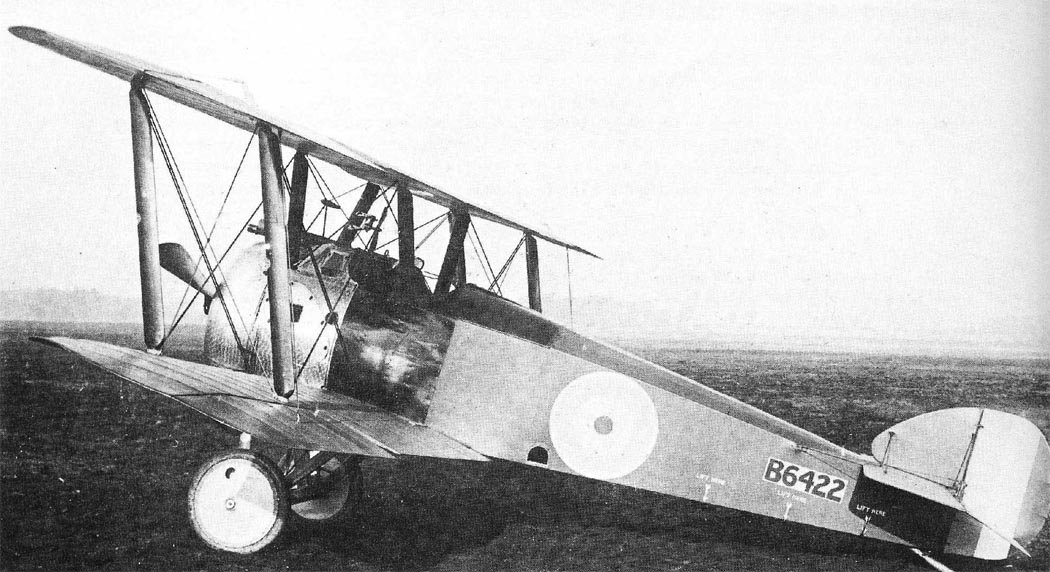
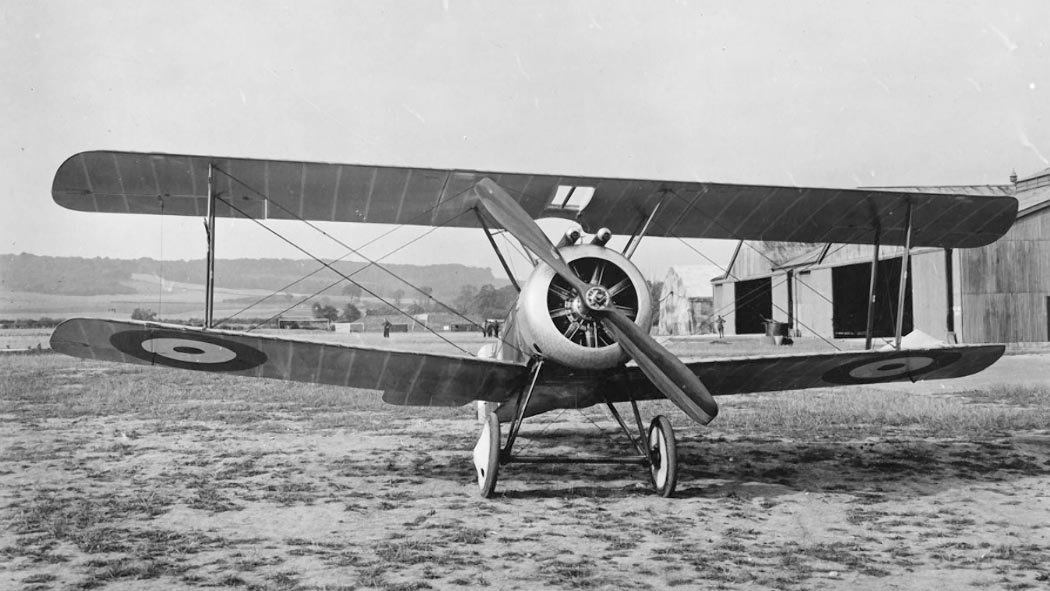
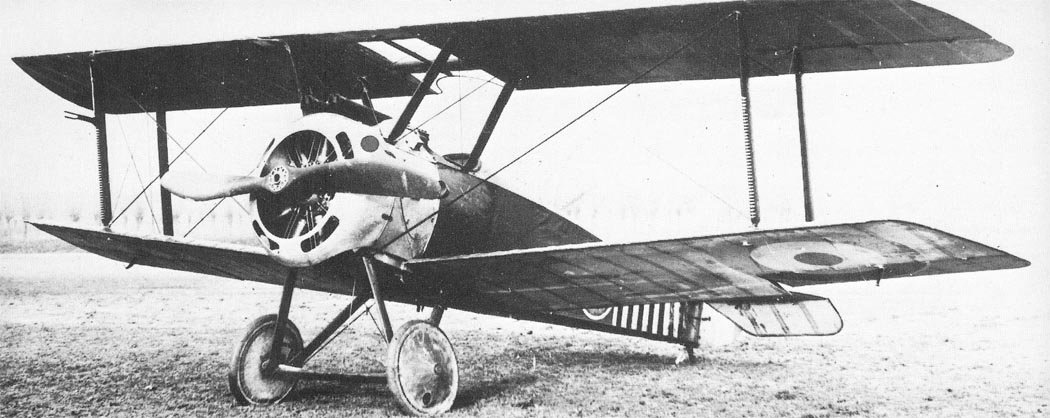
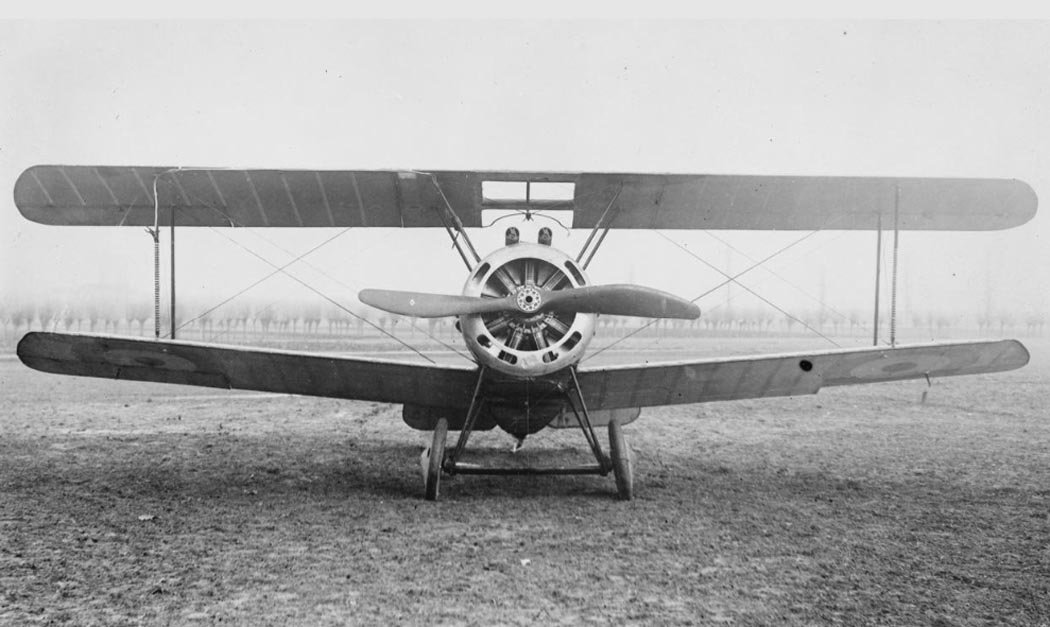
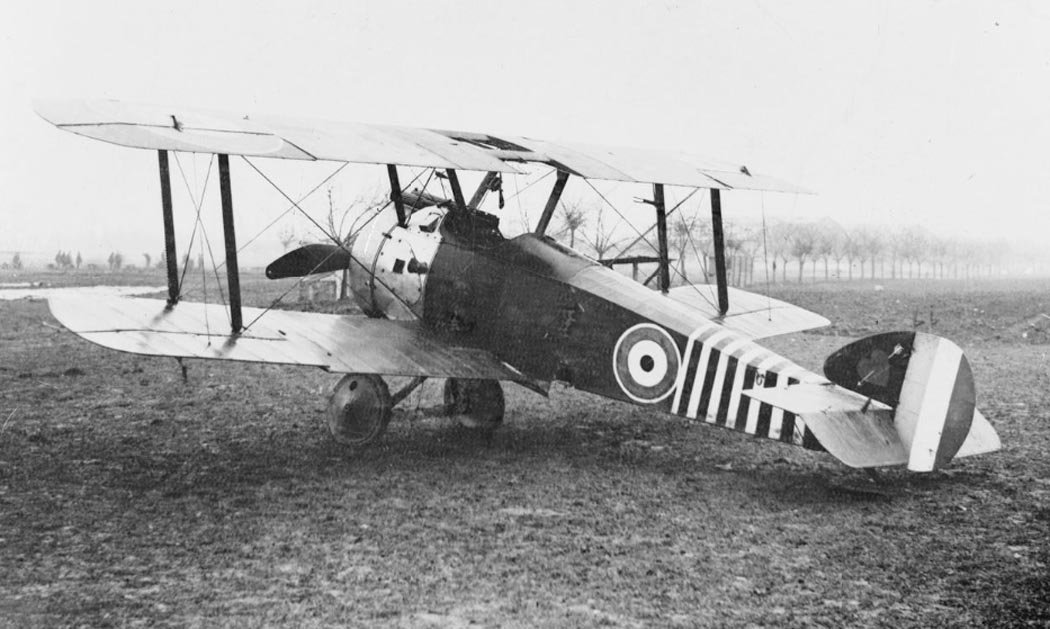
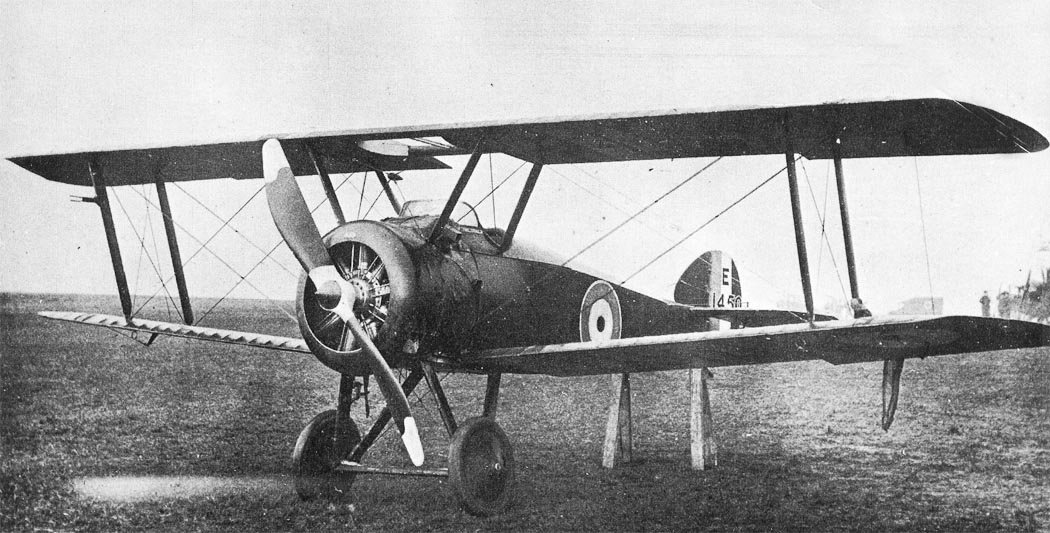
The “Camel” fighter was a successful development of the light Sopwith “Pup” fighter. It was a single-strut biplane of all-wood construction with mixed fuselage covering: the front part was duralumin, the cockpit sides and stringer were plywood, and the rest was fabric. It differed mainly in the design of its wings, which had a 0.4 m greater span and a smaller chord. The wings and tail unit were covered with fabric.
Despite the aircraft’s upper wing being three-section, it lacked the dihedral that contributes to increased lateral stability. The transition to a single-section wing design was usually motivated by increased productivity. The wide upper wing obstructed the upward and forward view. To partially overcome this drawback, two cutouts, covered with celluloid, were made in the center section – one in the middle and one at the trailing edge. The lower wing had a greater transverse V than the “Sopwith-Pup.” The fuselage and empennage had minor differences. The tail section of the fuselage was somewhat lowered compared to the “Pup” aircraft.
Innovative Design and Development
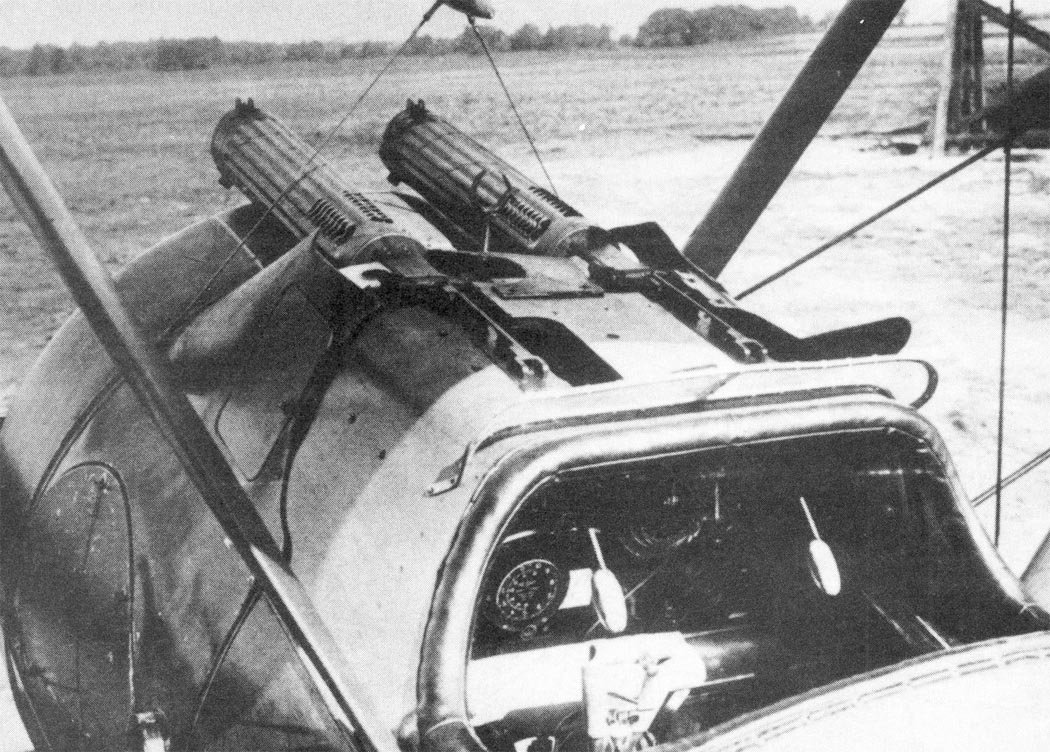
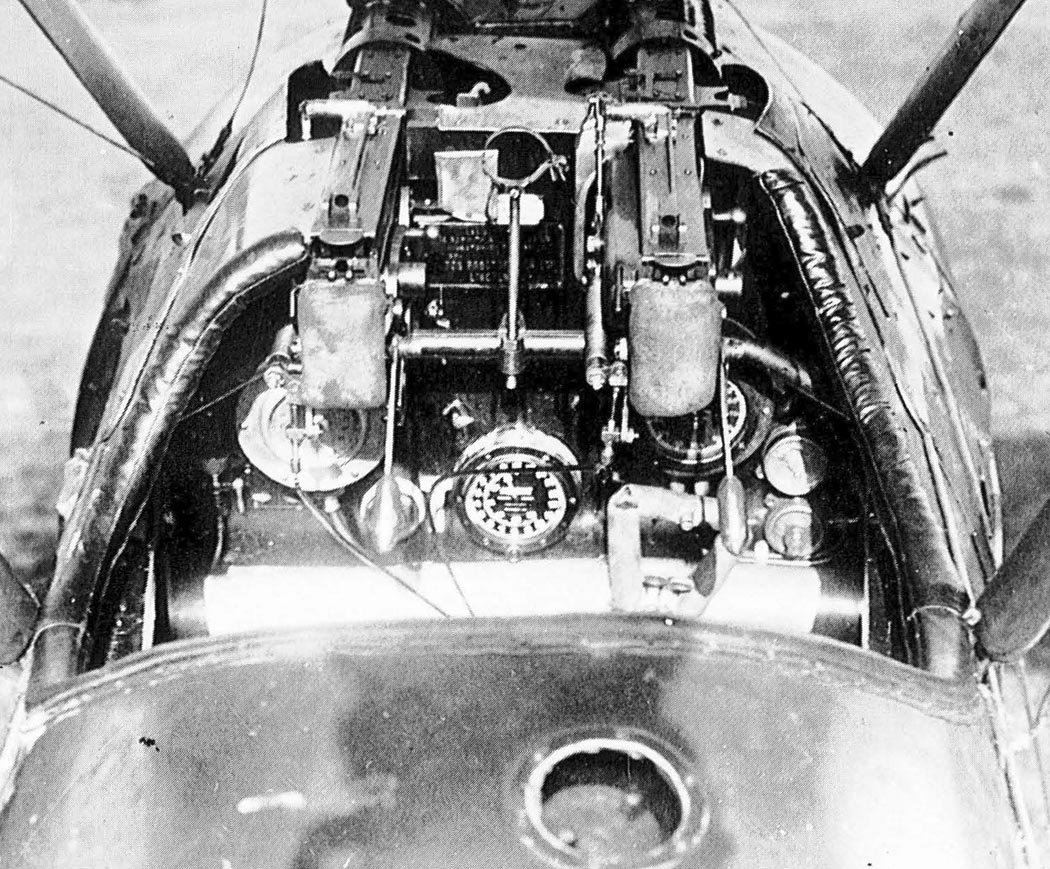
The “Camel’s” armament was more powerful than that of the “Pup” fighters. The breeches of the twin synchronized machine guns were partially covered by a fairing, which gave the aircraft its characteristic “humped” shape, hence its name, starting from the third prototype (English, “camel”). Prototypes were equipped with a Clerget 9Z 9-cylinder, air-cooled, radial rotary engine (100 hp). Most production models had 130 hp Clerget 9B engines or even more powerful 150 hp Bentley BR.1 or 180 hp (on the “Camel” E.1). Some were fitted with 110 hp “Rones” engines; such machines primarily served in air defense.
The aircraft’s armament was quite powerful: two synchronized Vickers machine guns and (if necessary) four 18 kg bombs. Like previous Sopwith fighters, the aircraft was developed by engineer Herbert Smith at the request of the Admiralty to equip fighter divisions of the British naval aviation. The prototype’s first flight took place in December 1916. After successful completion of trials in May 1917, the “Camel” was launched into large-scale production. The first production unit was completed on May 7, 1917.
The “Camel” was known for its strict handling, making it difficult for inexperienced pilots to manage. Due to the gyroscopic moment of the rotary engine, the aircraft’s maneuvering characteristics were asymmetrical; that is, left aileron rolls and left turns were performed faster than right ones. Some pilots could complete a 270-degree left turn faster than a 90-degree right turn. For the same reason, the takeoff phase was particularly dangerous, during which the aircraft would try to veer left, and the pilot struggled to keep it straight, deflecting the rudder fully to the right. At low flight speeds, the “Camel” had a tendency to enter a spin. The danger of this aircraft for young pilots is evidenced by the fact that during the war, 385 pilots died in various flight incidents unrelated to combat, while 415 died in combat. One pilot even called the “Camel” a “fierce little animal.” The famous ace Elliot Springs, expressing the feelings of many pilots, said: “I don’t want to fly a ‘Camel,’ certainly not with a Clerget engine.”
The Camel’s Decisive Role in Combat
In May 1917, the “Camel” began to enter service with front-line air units. The 70th Squadron of the Royal Flying Corps (RFC) and the 4th Squadron of the RNAS were the first to be equipped with the new fighter, replacing the “Strutter.” By this time, the air war had become fierce, and British pilots immediately appreciated the new combat machine, capable of turning the tide. It was with the help of this fighter that the British managed to rectify the situation in the air and eliminate Germany’s qualitative and quantitative superiority. During the combat operations in which the “Camel” participated, 1294 enemy aircraft were shot down – the highest figure among fighters. In terms of maneuverability and speed at altitudes up to 4000 m, the aircraft was unmatched almost until the end of the war.
Thanks to its low wing loading combined with relatively high power-to-weight ratio and compact layout around the center of mass, the fighter possessed exceptional horizontal maneuverability. The radius of a left turn was only 15 meters! (The right turn, due to the gyroscopic moment of the rotary engine, was somewhat wider). British pilots joked that the “Camel” could “spin around its tail in place.” Maximum speed and rate of climb, especially with the “Bentley” engine, also drew no complaints.
Based on the high evaluations of pilots and unit commanders, the leadership of the RFC and RNAS ordered 3450 examples of the fighter in 1917 alone (1325 were built by the end of the year), with additional orders following later. The total serial production of the “Camel” amounted to 5695 units, making it the most mass-produced British fighter of the First World War. But it was not only the most numerous but also the most effective. According to official British data, “Camels” achieved a total of 2790 aerial victories, more than any other fighter type from the Entente countries.
Variants and Post-War Service
In 1916-1917, raids by German airships and heavy bombers on Great Britain became more frequent. Bombing was carried out from altitudes over 4000 m, where the maneuverability of existing fighters was insufficient for dogfighting. Moreover, their range was limited. To organize the interception of German bombers and zeppelins over the English Channel, experiments were conducted with suspending “Camel” fighters from airships. An aircraft delivered in this way to the Channel area would detach from the trapeze upon detecting an enemy aircraft or airship, attack the enemy, and return to its airfield.
The “Camel” was actively used as a night fighter (pilots called them “Sopwith-Comic”) for the defense of the Home Front and French cities. Thanks to them, raids on British cities ceased. Over France, night fighters shot down 26 German bombers without suffering their own losses. Aces such as Collishaw, McLaren, and Barker, among others, flew “Camel” aircraft.</p
The aircraft was produced in several variants. For example, the 2F.1 was a modernized naval fighter. The F.1/3, a night fighter for combating German airships, differed in armament: instead of synchronized Vickers guns, whose muzzle flashes blinded the pilot at night, one or two Lewis machine guns were installed on the center section of the upper wing (377 such aircraft were produced). A system for hooking the “Camel” under an airship was also tested, as well as an attack version TF.1 with armor in key areas and two machine guns mounted at a downward angle. The “Camel” E.1, in addition to the two synchronized guns, had an over-wing machine gun firing outside the propeller’s rotation disc. Bomb armament was increased (four 9-kg bombs). It featured a 0.22 m increased wingspan and a 0.2 m lengthened fuselage. The cockpit was shifted rearward for easier firing of the over-wing machine gun.
“Camels” were produced and actively used until the end of the war. By the time of the armistice, the RAF had 2549 aircraft of this type in over 30 fighter squadrons. Furthermore, in 1918, four American divisions and two Belgian squadrons fought with “Camels,” and after the war, these aircraft were in service in Canada, Greece, and Poland. They were used in the Soviet-Polish and Greco-Turkish wars.
Several examples of the machine were part of the 47th British Division and the so-called “Slavo-British Air Corps,” which fought in 1918-1919 on the side of General Denikin in Russia. The 47th Division operated in the Volga region, and the “Slavo-British Air Corps” in the north, in the Arkhangelsk region. In 1920, several machines were handed over to the White Army. At least two “Camels” from their ranks were captured by the Red Army during battles.
Technical Specifications
| Modification | F.1 Camel |
| Wingspan, m | 8.53 |
| Length, m | 5.72 |
| Height, m | 2.59 |
| Wing area, m2 | 21.34 |
| Empty weight | 421 |
| Normal takeoff weight | 658 |
| Engine type | 1 Piston engine Clerget 9B |
| Power, hp | 1 x 130 |
| Maximum speed, km/h | 182 |
| Cruising speed, km/h | 165 |
| Flight endurance, h.min | 2.30 |
| Service ceiling, m | 5800 |
| Crew, crew members | 1 |
| Armament | two synchronized 7.7-mm Vickers machine guns or one 7.7-mm Vickers machine gun and one Lewis or two 7.7-mm Lewis machine guns (2F.1) up to 4 x 11.3-kg bombs on external hardpoints |
Image and diagram gallery of the Sopwith F.1 Camel
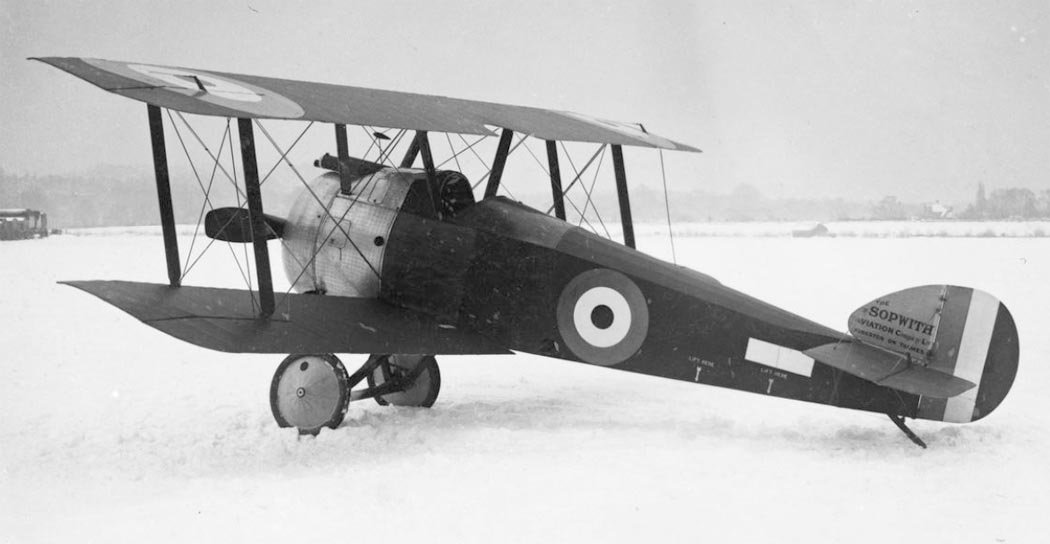 Sopwith F.1 Camel |
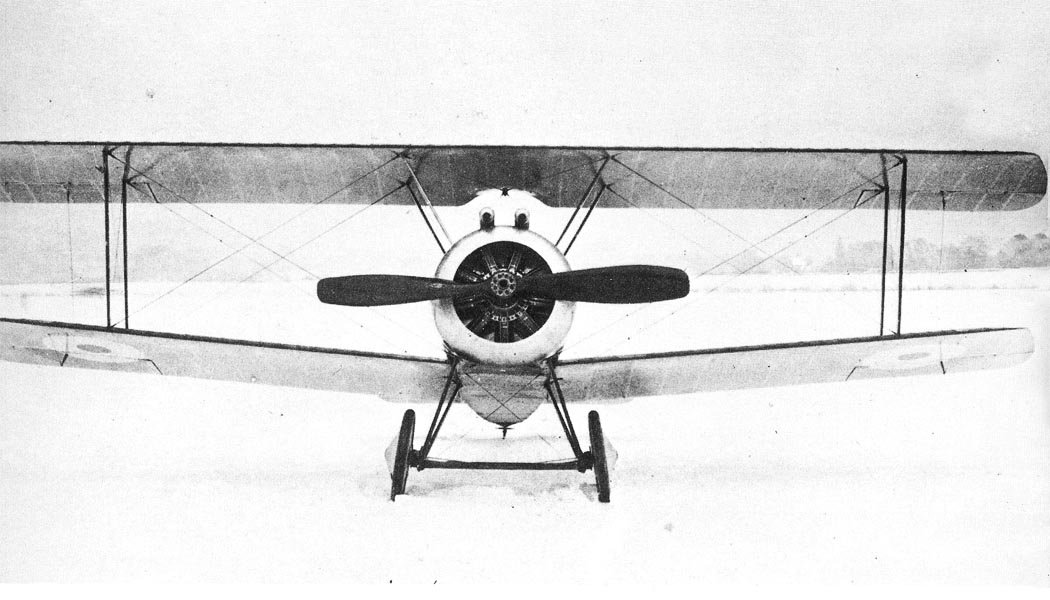 Sopwith F.1 Camel |
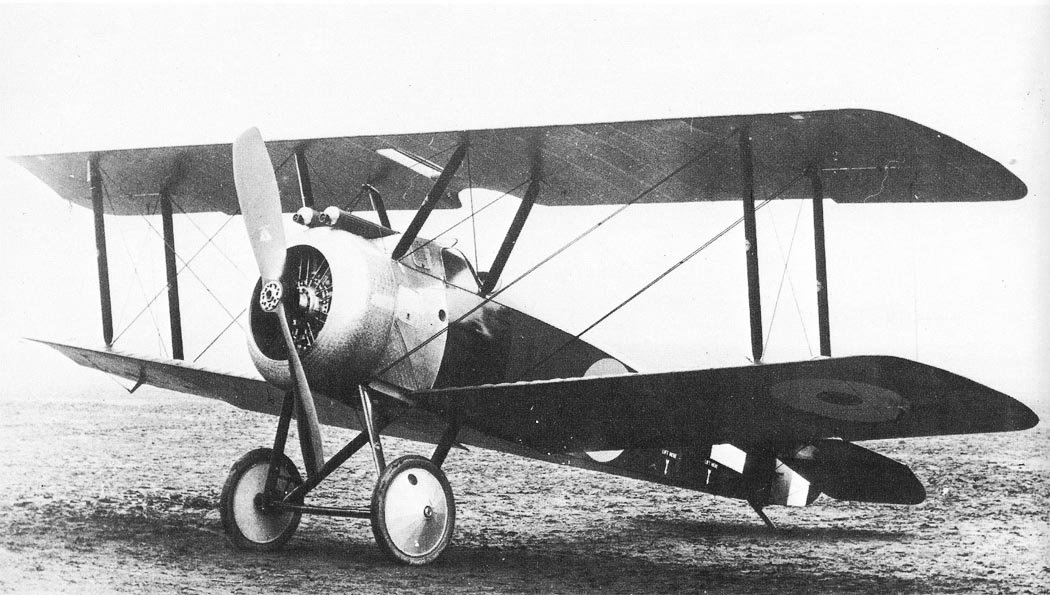 Sopwith F.1 Camel |
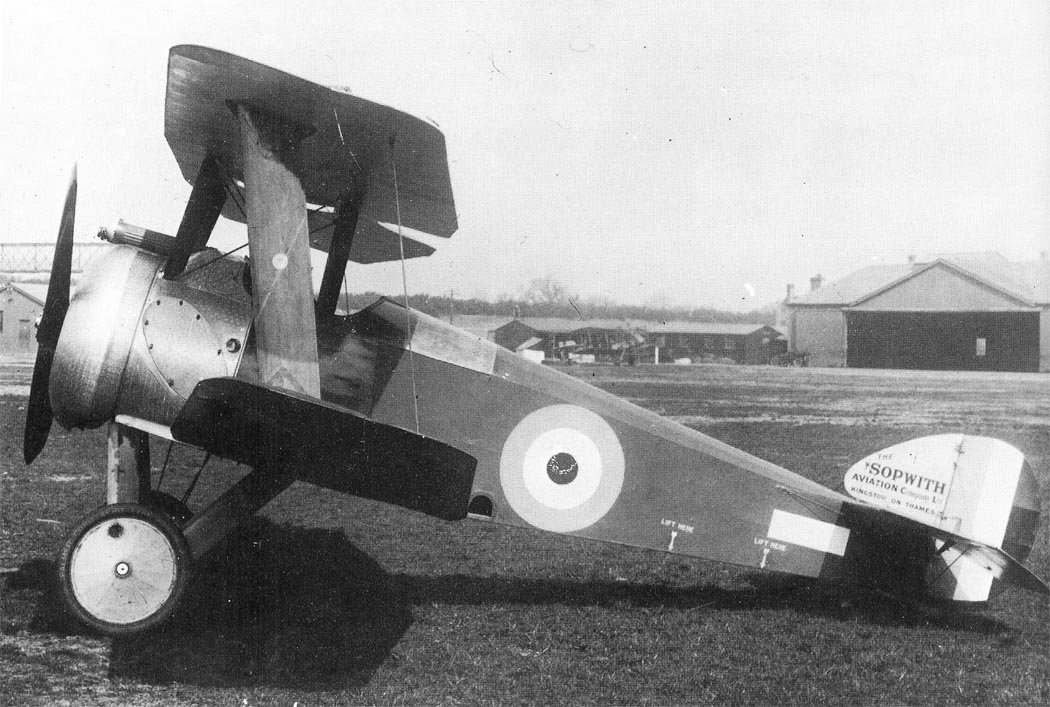 Sopwith F.1 Camel |
 Sopwith F.1 Camel |
 Sopwith F.1 Camel |
 Sopwith F.1 Camel |
 Sopwith F.1 Camel |
 Sopwith F.1 Camel |
 Sopwith F.1 Camel |
 Sopwith F.1 Camel |
 Sopwith F.1 Camel |
 Sopwith F.1 Camel |
 Sopwith F.1 Camel |
 Sopwith F.1 Camel |
 Sopwith F.1 Camel |
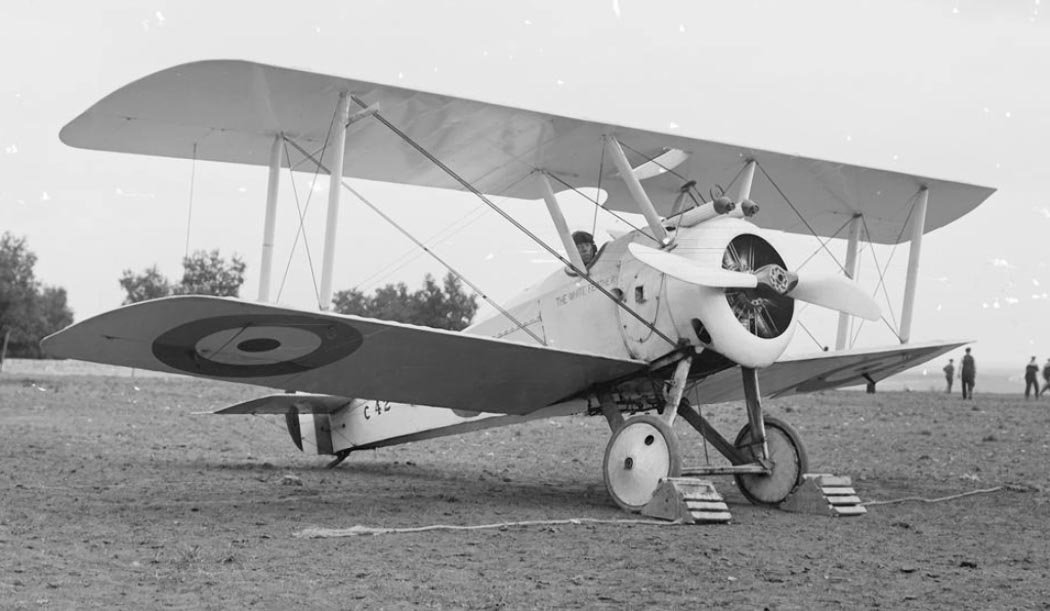 Sopwith F.1 Camel |
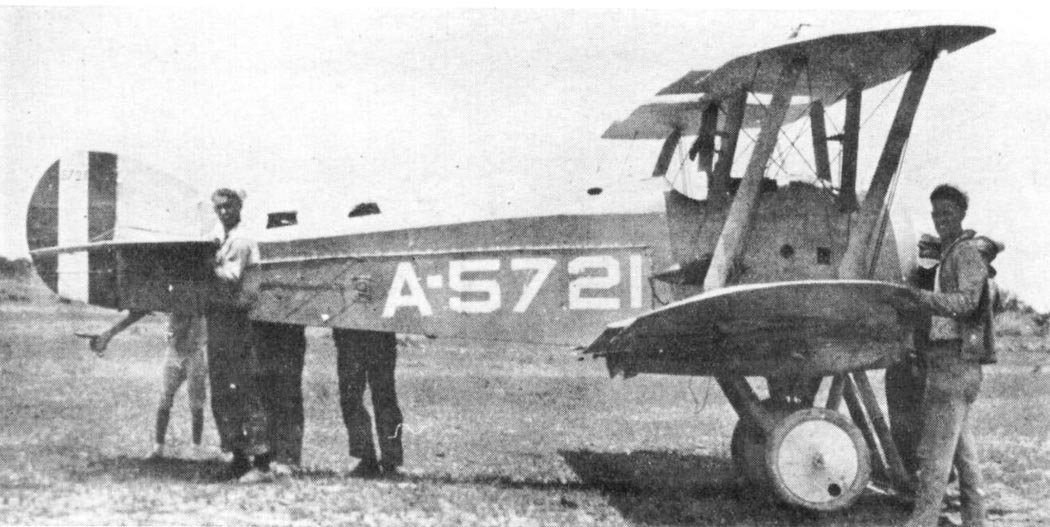 Sopwith F.1 Camel |
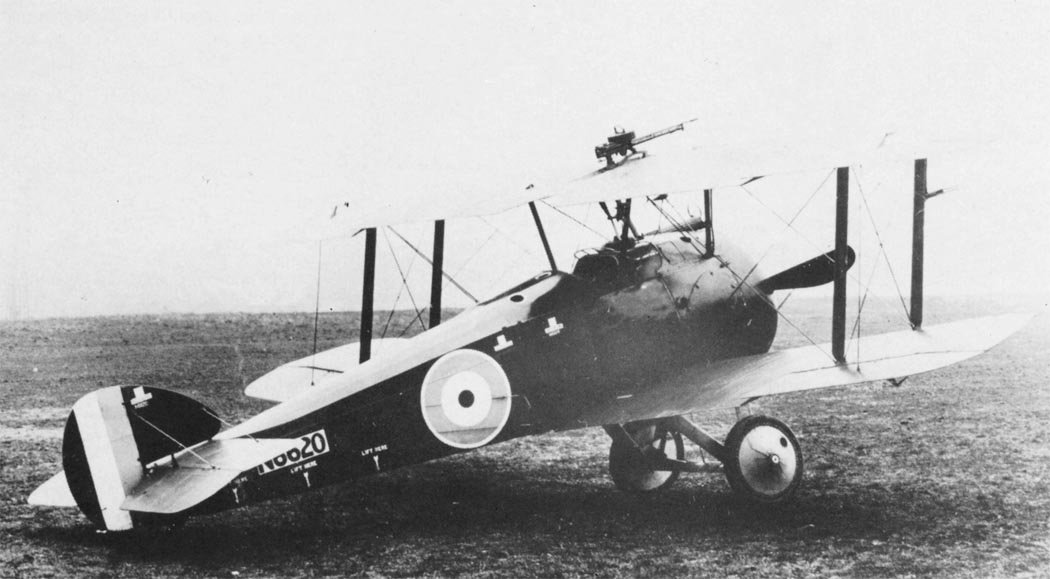 Sopwith F.1 Camel |
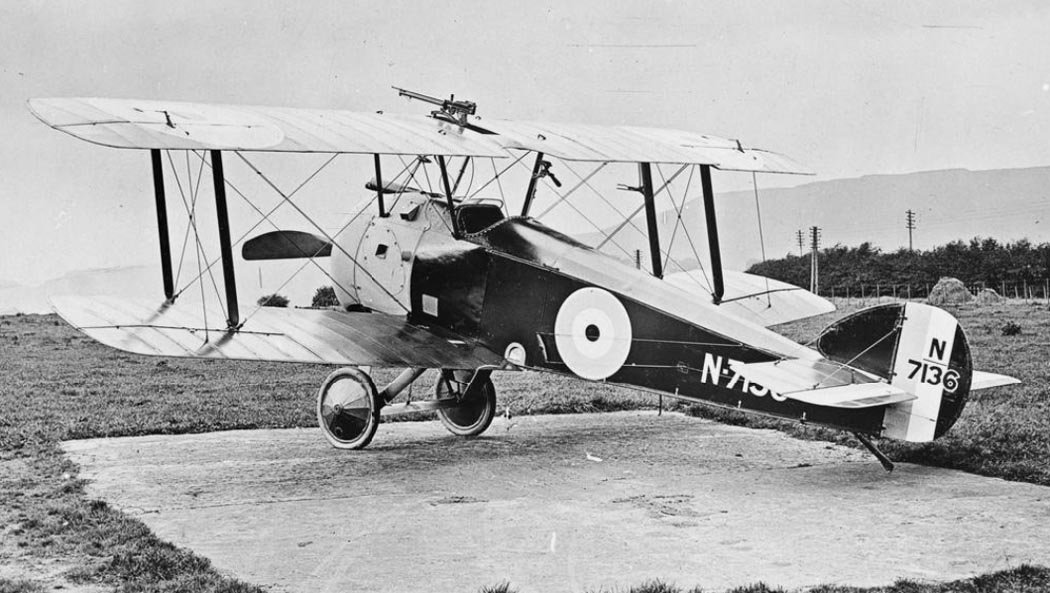 Sopwith F.1 Camel |
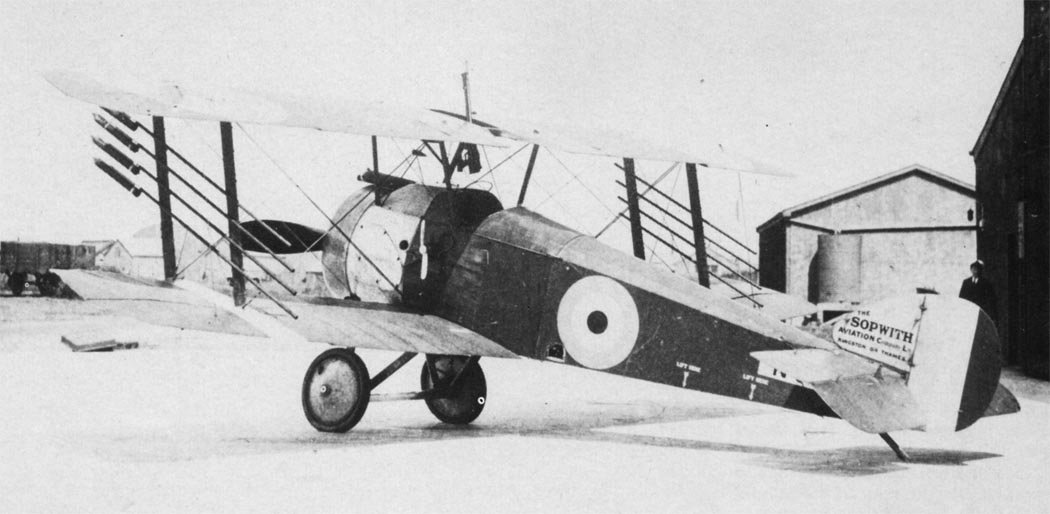 Sopwith F.1 Camel |
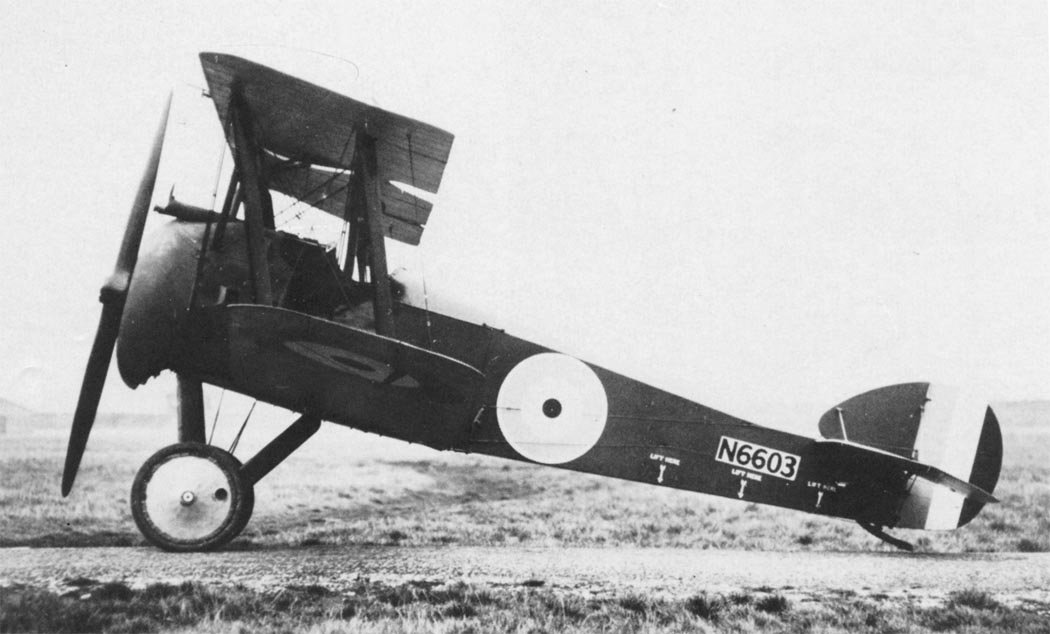 Sopwith F.1 Camel |
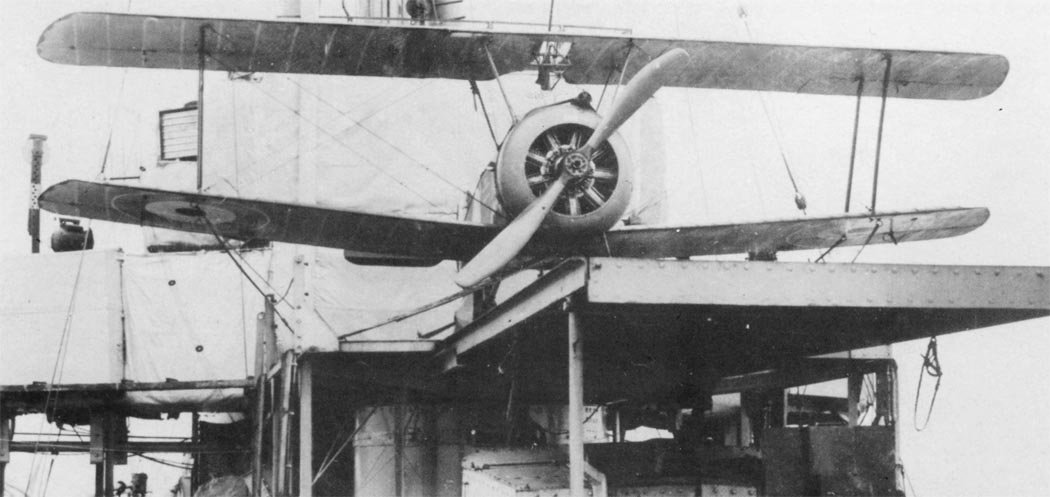 Sopwith F.1 Camel |
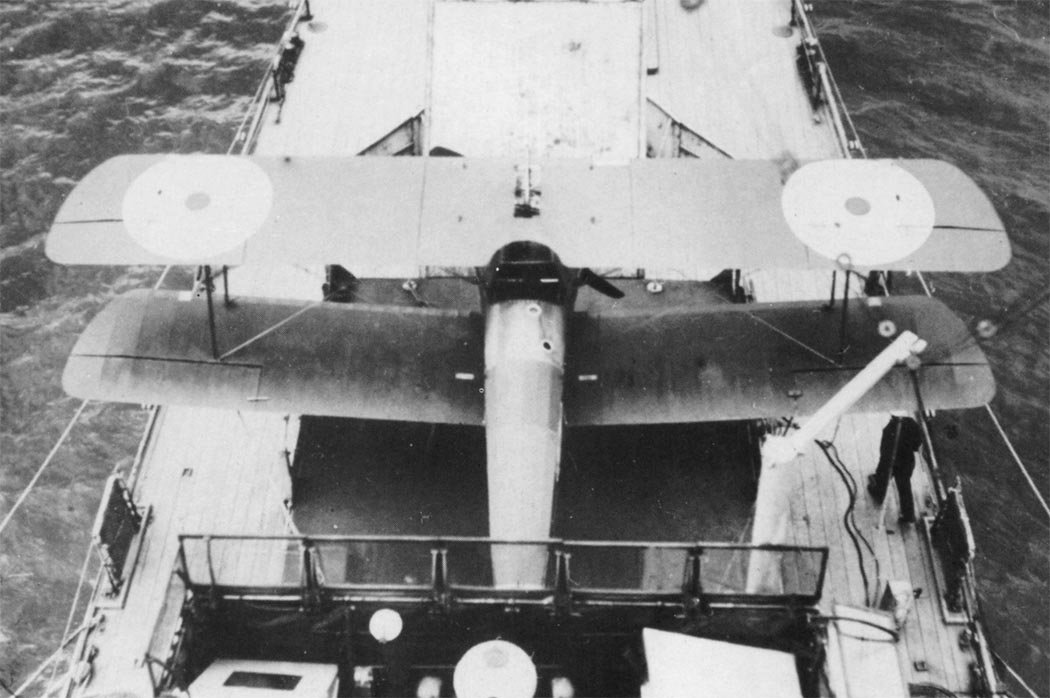 Sopwith F.1 Camel |
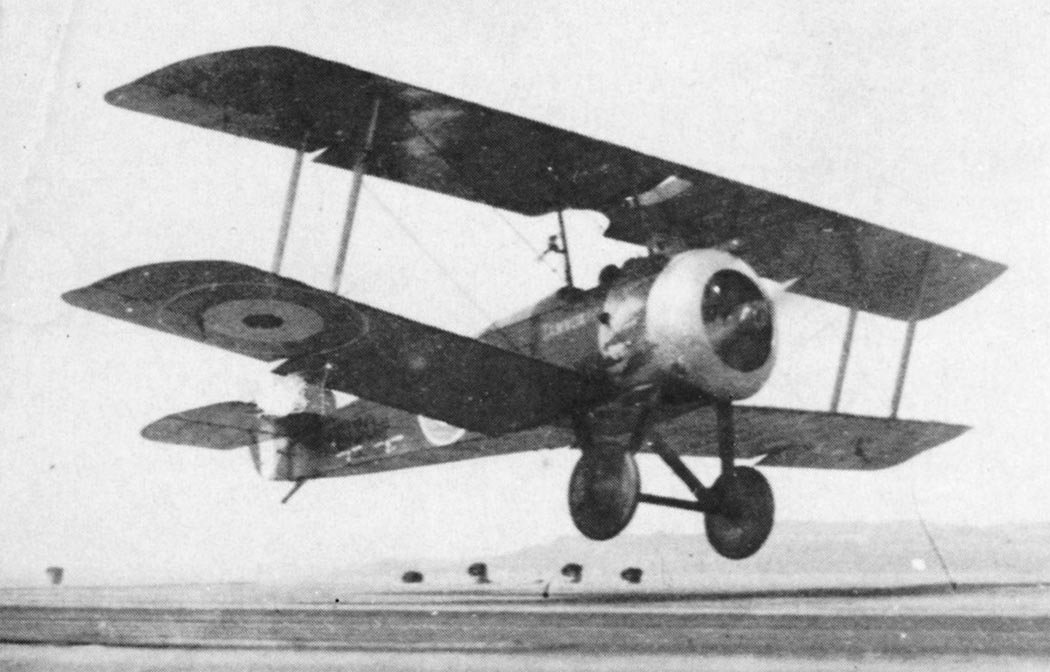 Sopwith F.1 Camel |
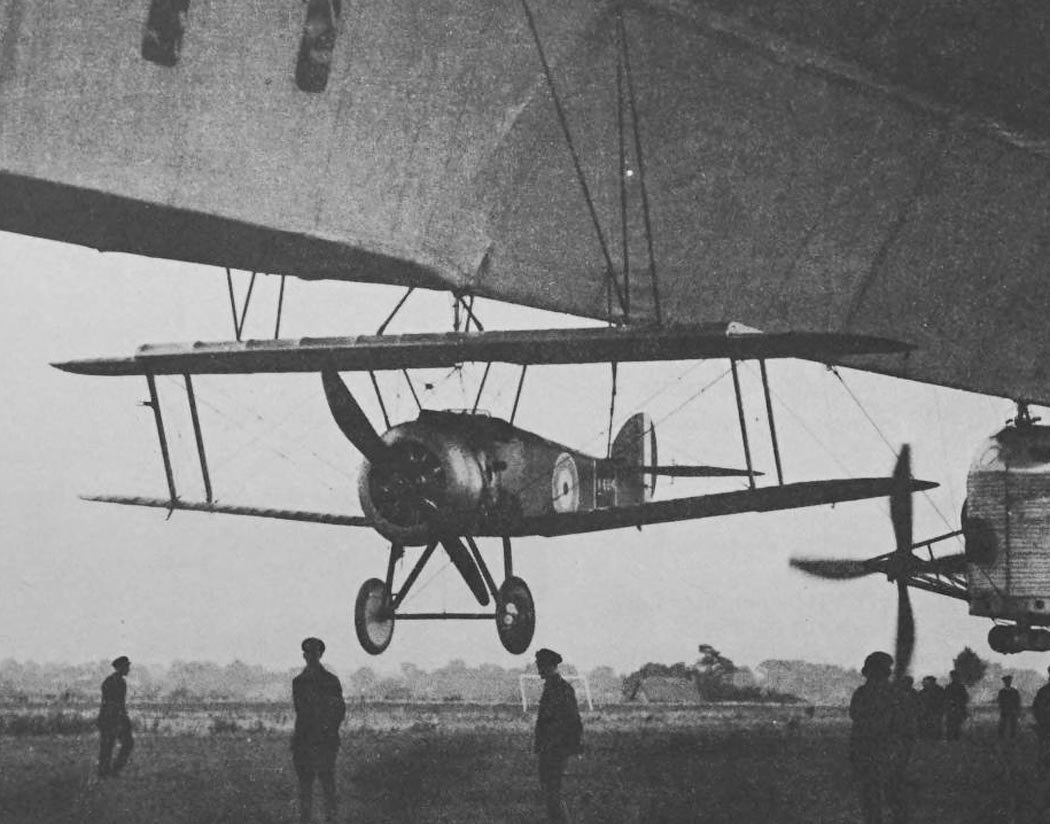 Sopwith F.1 Camel |
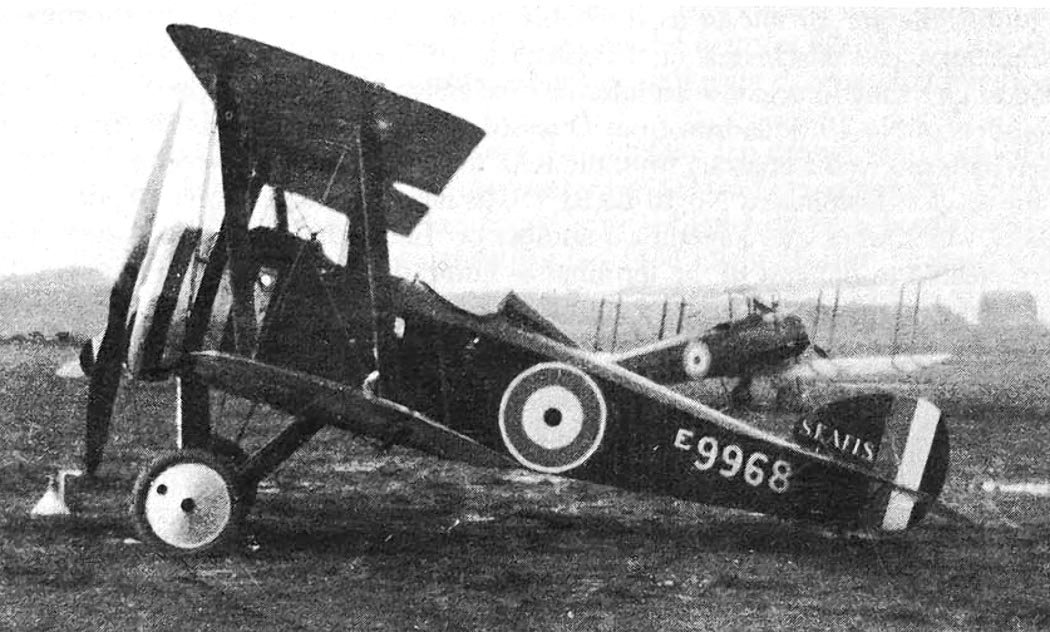 Sopwith F.1 Camel |
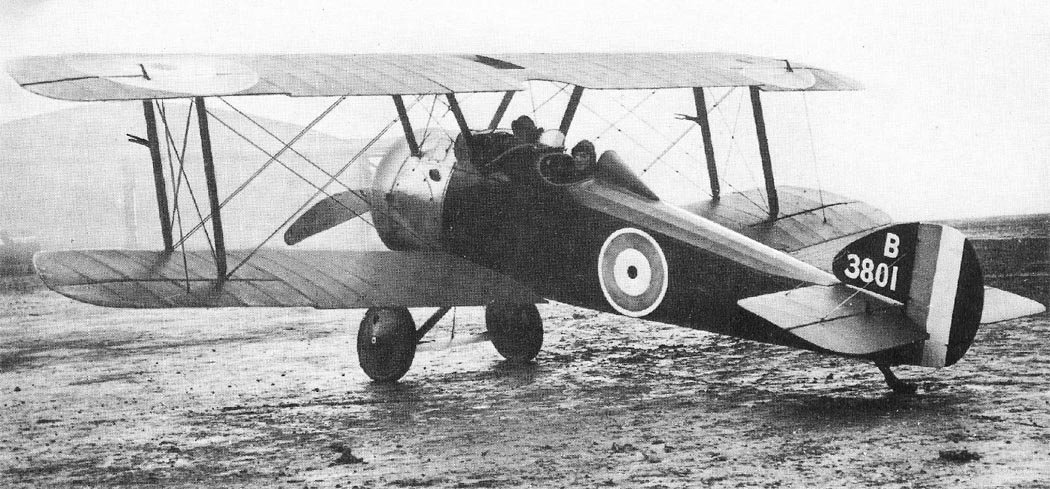 Sopwith F.1 Camel |
 Sopwith F.1 Camel |
 Sopwith F.1 Camel |
 Sopwith F.1 Camel |
 Sopwith F.1 Camel |
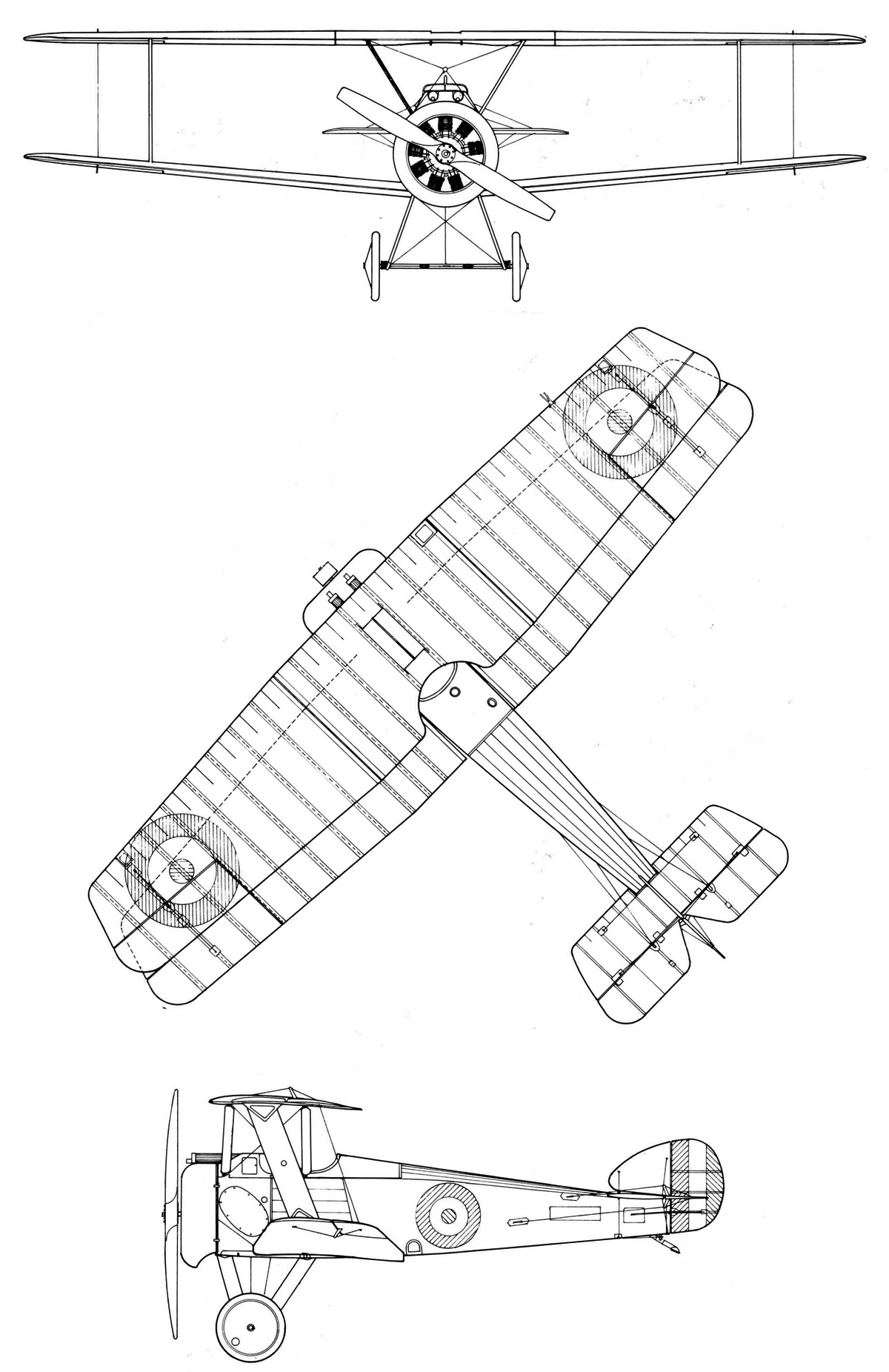 Sopwith F.1 Camel |
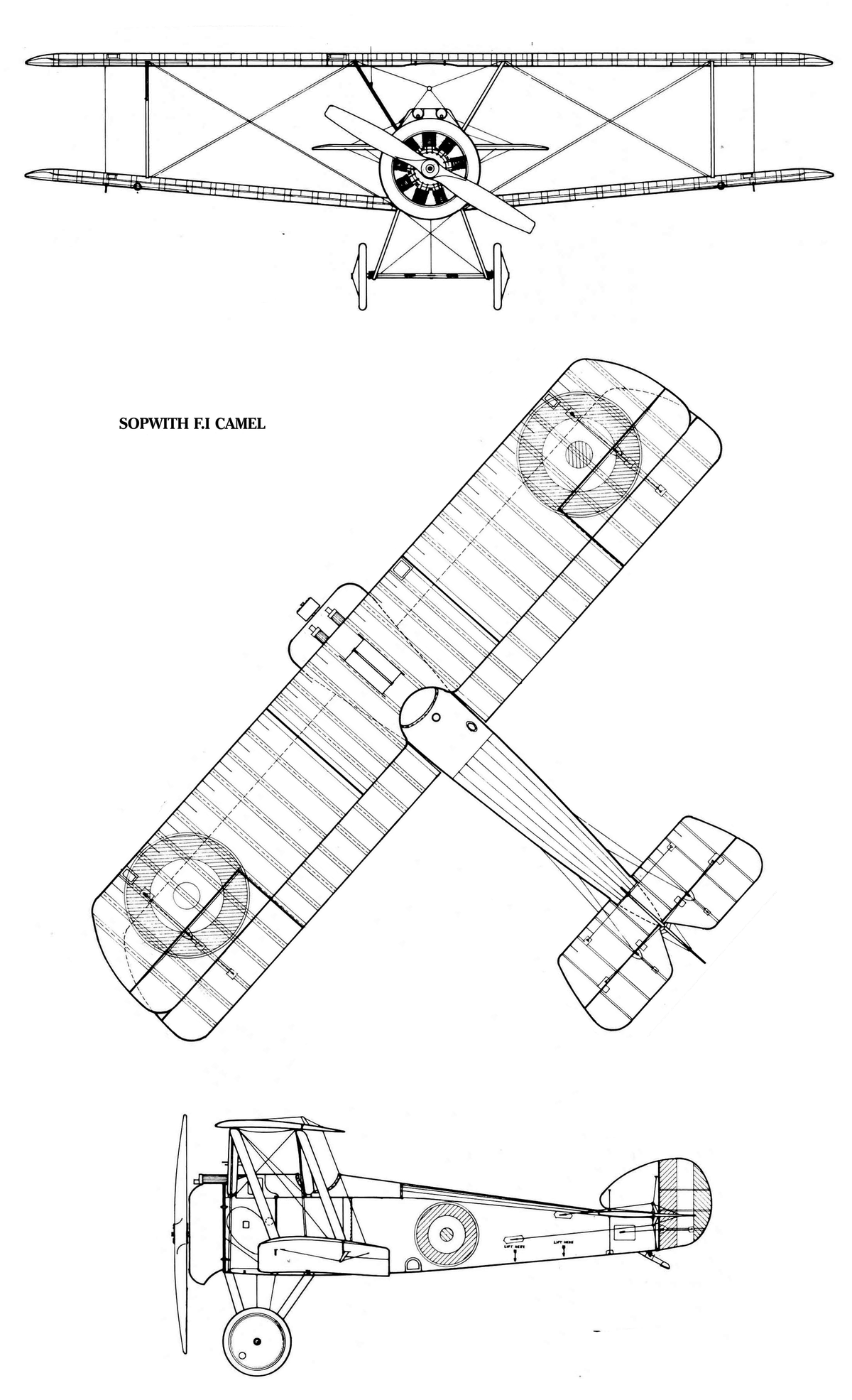 Sopwith F.1 Camel |
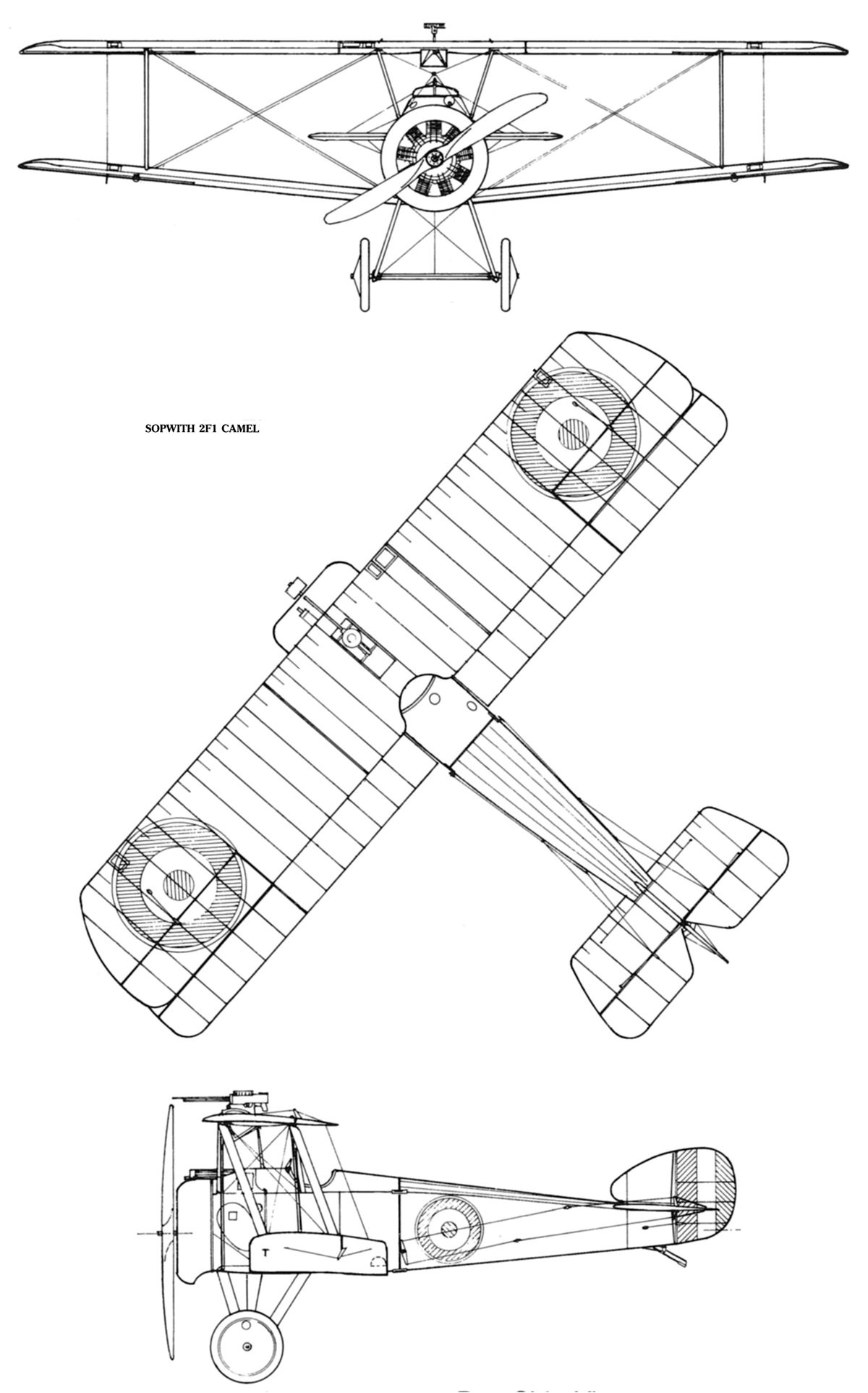 Sopwith F.1 Camel |
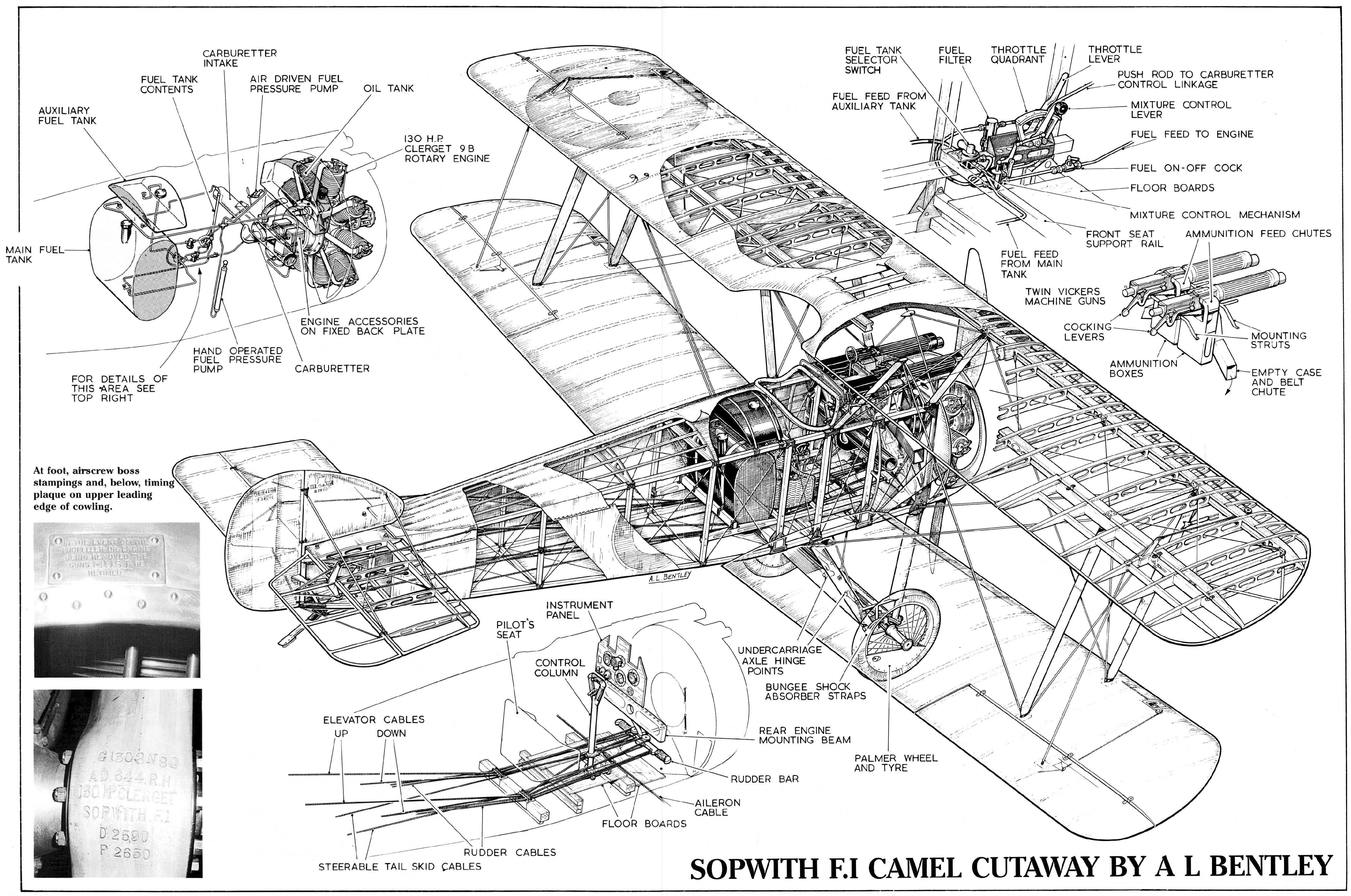 Sopwith F.1 Camel |
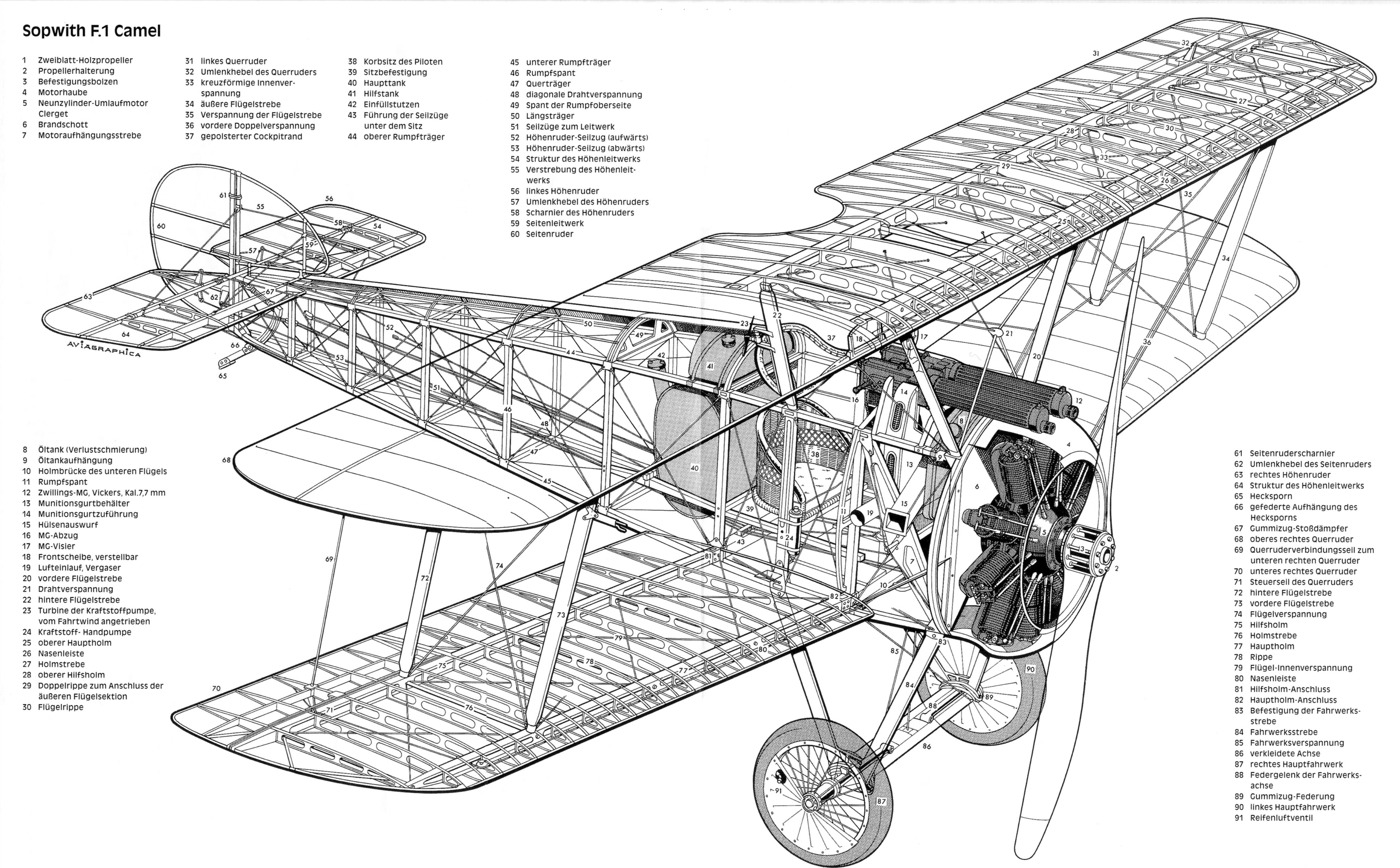 Sopwith F.1 Camel |
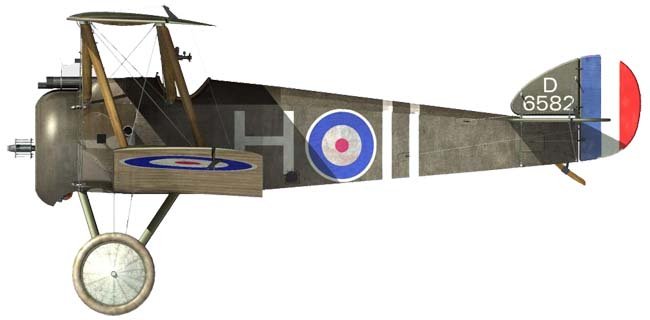 Sopwith F.1 Camel |
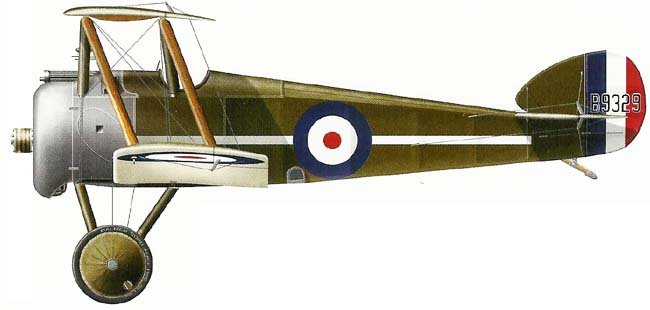 Sopwith F.1 Camel |
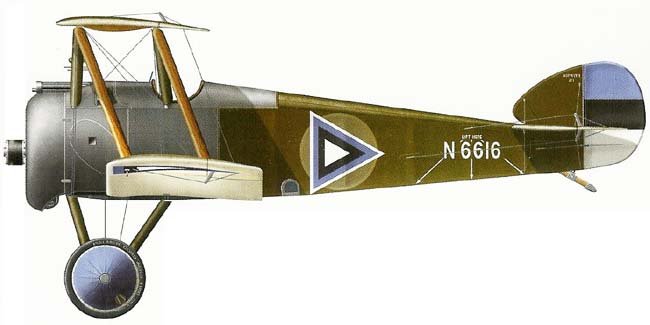 Sopwith F.1 Camel |
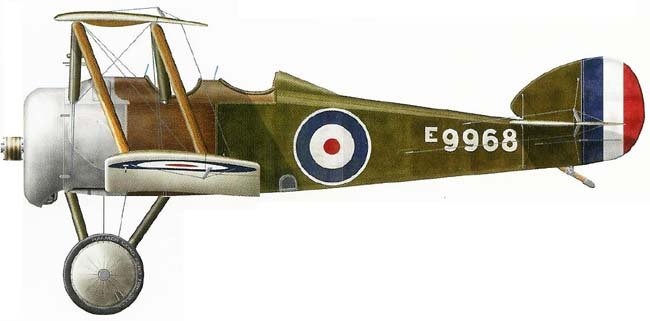 Sopwith F.1 Camel |
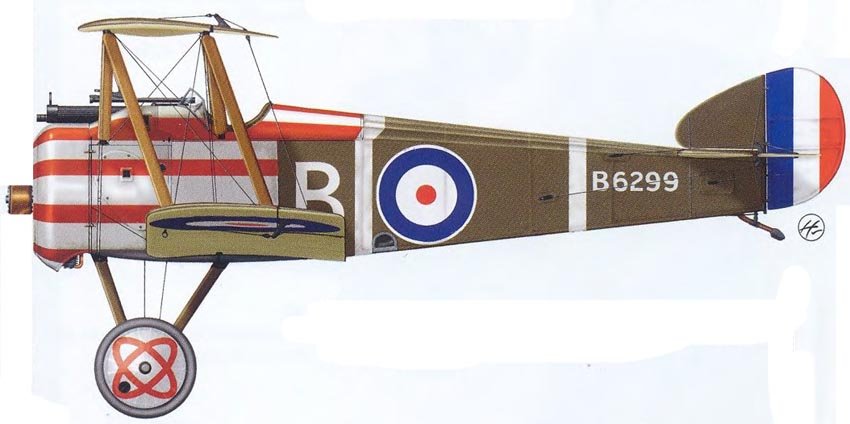 Sopwith F.1 Camel |
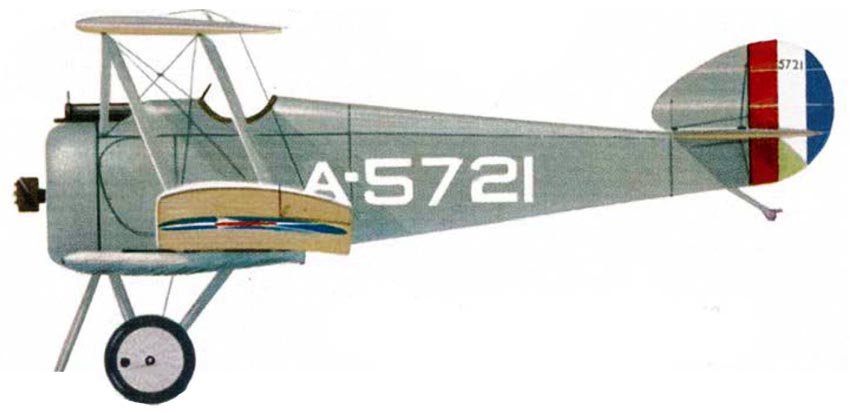 Sopwith F.1 Camel |