Skip to content
wp.archivoaereo.com

wp.archivoaereo.com

  • Military Aviation
    • World War I
      • WWI Attack Aircraft
      • WWI Bombers
      • WWI Fighters
      • WWI Flying Boats
      • WWI Reconnaissance
    • World War II
      • WWII Attack Aircraft
      • WWII Bombers
      • WWII Fighters
      • WWII Flying Boats
      • WWII Military Transport
      • WWII Reconnaissance
    • Cold War
      • Cold War Fighters
    • Modern
      • Modern Fighters
      • Modern Maritime Patrol
      • Modern Military Transport
  • Civil & Commercial Aviation
    • Classic Airliners
    • Modern Airliners
    • Classic Regional Airliners
    • Modern Regional Airliners
    • Pioneer Light Aircraft
    • Classic Light Aircraft
    • Modern Light Aircraft
    • Agricultural Aircraft
    • Racing Aircraft
  • Helicopters
    • Cargo & Heavy Helicopters
    • Light & Observation Helicopters
    • Pioneer Helicopters
    • SAR Helicopters (Rescue)
    • Utility Helicopters
  • Technology
    • Weapons & Technology
    • Drones & UAVs
    • Experimental Aircraft
  • History
    • History & Battles
  • Toggle search form

Hillson Bi-Mono

Posted on September 23, 2026 By

Table of Contents

Toggle
    • Hillson’s Early Ventures and Licensed Production
    • Pre-War Developments and Wartime Shift
    • The Innovative Hillson Bi-Mono Project
    • Technical Specifications
  • Image and diagram gallery of the Hillson Bi-Mono
    • How to cite this article:

Hillson’s Early Ventures and Licensed Production

Before the start of the Second World War, a new aviation firm, Hillson, was founded in Trafford Park. Its first design was the Mignet HM.14 ‘Flying Flea’ G-ADOU, built in 1935. Equipped with a Scott A.2S ‘Flying Squirrel’ engine, the aircraft first flew in October, but after a series of incidents, the design was deemed unpromising, and a second example, already under construction, was not completed.

Due to this setback, it was decided to first master the licensed production of an ultralight. The Czech Praga E.114 Air Baby was chosen. Aircraft designated as Hillson Praga became quite popular among civilian pilots, and the firm produced 28 such machines.

Pre-War Developments and Wartime Shift

With funds for new developments, the firm’s designers continued work on touring and training aircraft. As a result, two projects emerged: the Hillson Pennine and the Helvellyn. The Pennine was a two-seater monoplane, in the Praga format, with a 36 hp Praga B engine. The first prototype, G-AFBX, flew in late 1937 but was not a new word in aviation technology and was soon dismantled.

The second development, the Hillson Helvellyn G-AFKT, was also a two-seater training aircraft, primarily intended for military use. It was equipped with a 90 hp Blackburn Cirrus Minor 1 engine. The aircraft was tested in 1939 and used by the firm as a “stopgap”. With the start of the war, the firm received contracts from Avro for the production of parts for the popular Anson aircraft.

However, their own developments did not cease. They managed to attract W.R. Chown, who had previously worked at Blackburn Aircraft. The designer embarked on the development of a fighter, even though the RAF already had “Spitfire” and “Hurricane” in service.

The Innovative Hillson Bi-Mono Project

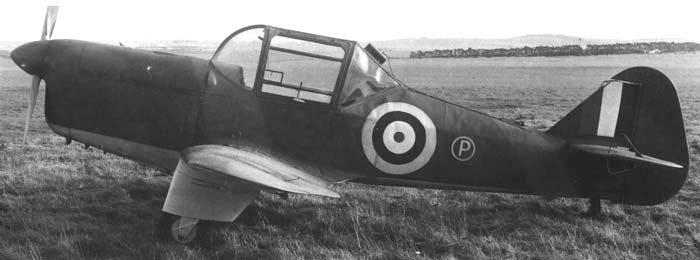
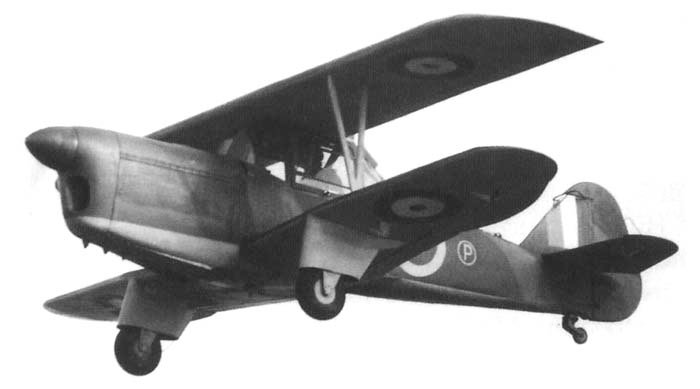
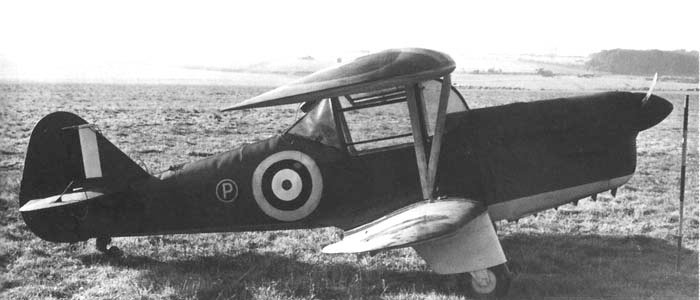
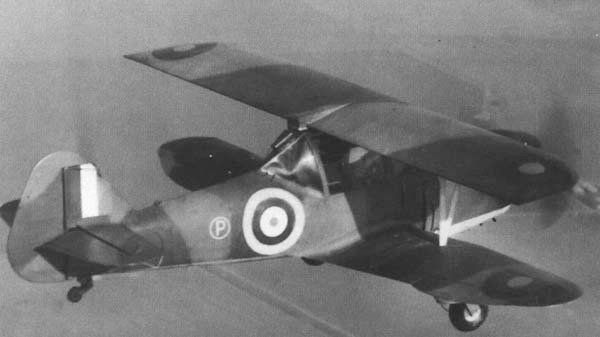
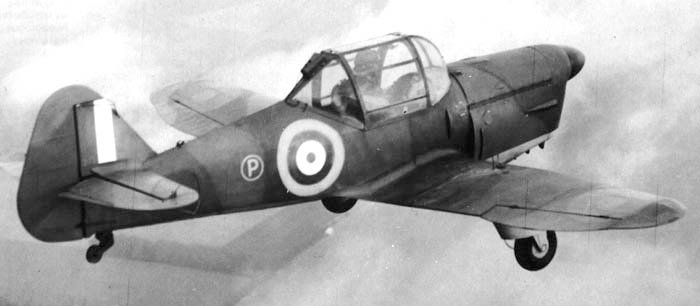
Chown turned his attention to the seemingly outdated biplane configuration. This was because such an aircraft could use airfields with shorter runways (a path later taken by British designers with the famous “Harrier”). It was decided to build an aircraft named Hillson Bi-Mono.

The new wing was made of wood using standard technology of the time. The engine for the new machine was a 200 hp de Havilland Gipsy Six. Initially, it had a standard wooden propeller, later replaced by a metal one developed by de Havilland. The model was tested in the wind tunnel of the Royal Aircraft Establishment in Farnborough.

The first flight of the future fighter prototype took place on July 16, 1941.

Technical Specifications

Modification Bi-Mono
Wingspan, m 6.10
Length, m 4.40
Wing area, m2 12. 26
Engine type 1 Piston engine de Havilland Gipsy Six
Power, hp 1 х 200
Maximum speed, km/h 185
Crew 1

Image and diagram gallery of the Hillson Bi-Mono

Bi-Mono
Bi-Mono
Bi-Mono
Bi-Mono
Bi-Mono
Bi-Mono
Bi-Mono
Bi-Mono
Bi-Mono
Bi-Mono

How to cite this article:

APA: Hillson Bi-Mono (). Hillson Bi-Mono. wp.archivoaereo.com. https://wp.archivoaereo.com/en/hillson-bi-mono-3/
VANCOUVER: Hillson Bi-Mono [online]. wp.archivoaereo.com; [cited 2026-09-24]. Available at: https://wp.archivoaereo.com/en/hillson-bi-mono-3/
Developed by Agatha Press
Experimental Aircraft Tags:British

Post navigation

Previous Post: British Klemm B.K.1 Eagle Light Multi-Purpose Aircraft
Next Post: 37mm Automatic Cannon BK 3.7
  • Español
  • Attack Aircraft
  • Aviation Biographies
  • Cargo & Heavy Helicopters
  • Classic Airliners
  • Classic Light Aircraft
  • Classic Regional Airliners
  • Cold War Fighters
  • Drones & UAVs
  • Experimental Aircraft
  • History & Battles
  • Interwar Reconnaissance
  • Light & Observation Helicopters
  • Maritime Patrol
  • Military Transport
  • Modern Airliners
  • Modern Cargo Aircraft
  • Modern Fighters
  • Modern Light Aircraft
  • Modern Military Transport
  • Modern Regional Airliners
  • Other Aircraft
  • Pioneer Air Transport
  • Pioneer Light Aircraft
  • Racing Aircraft
  • SAR Helicopters (Rescue)
  • Sin categoría
  • Utility Helicopters
  • Weapons & Technology
  • WWI Attack Aircraft
  • WWI Bombers
  • WWI Fighters
  • WWI Flying Boats
  • WWI Reconnaissance
  • WWII Attack Aircraft
  • WWII Bombers
  • WWII Fighters
  • WWII Flying Boats
  • WWII Military Transport
Piel CP-40 DonaldPiel CP-40 DonaldAdmin
Cierva C.24 AutogyroCierva C.24 AutogyroAdmin
Centennial 100Centennial 100Admin

Legal

  • About ArchivoAereo
  • Terms and Conditions
  • Contact Us
  • Privacy Policy

Copyright © 2026 wp.archivoaereo.com.

Powered by PressBook WordPress theme