
Origins and Design
In 1920, the BB-L6 biplane, also known as the Boeing Model 8, was built commissioned by the firm’s first test pilot, Robert Menter. This model featured a wing structure almost entirely taken from the BB-1, but with the stabilizer mounted significantly lower. The forward cockpit accommodated two passengers side-by-side, while the pilot occupied the rear cockpit. The aircraft was equipped with a “Hall-Scott L-6” engine, which was reflected in its designation.
A Historic Milestone
The BB-L6 was built as a single example, bearing serial number 199. It made its inaugural flight on May 24, 1920, marking a significant milestone in aviation. This pioneering aircraft was the first to fly over the peak of Mount Rainier, an impressive 4389 meters high.
A Tragic Demise
Sadly, the aircraft met a sorrowful fate. It was later destroyed in a hangar fire in Kent, Washington, bringing an early end to the career of this unique pioneer aircraft.
Technical Specifications
| Modification | BB-L6 |
| Wingspan, m | 13. 44 |
| Length, m | 8. 91 |
| Height, m | 3.30 |
| Wing area, m2 | 43.20 |
| Empty weight | 749 |
| Maximum takeoff weight | 1 194 |
| Engine type | 1 Piston engine Hall-Scott L-6 |
| Power, hp | 1 х 200 |
| Maximum speed, km/h | 161 |
| Cruising speed, km/h | 145 |
| Practical range, km | 724 |
| Service ceiling, m | 4572 |
| Crew | 1 |
| Payload | 2 passengers |
Image and diagram gallery of the Boeing Model 8 (BB-L6)
 Boeing Model 8 (BB-L6) |
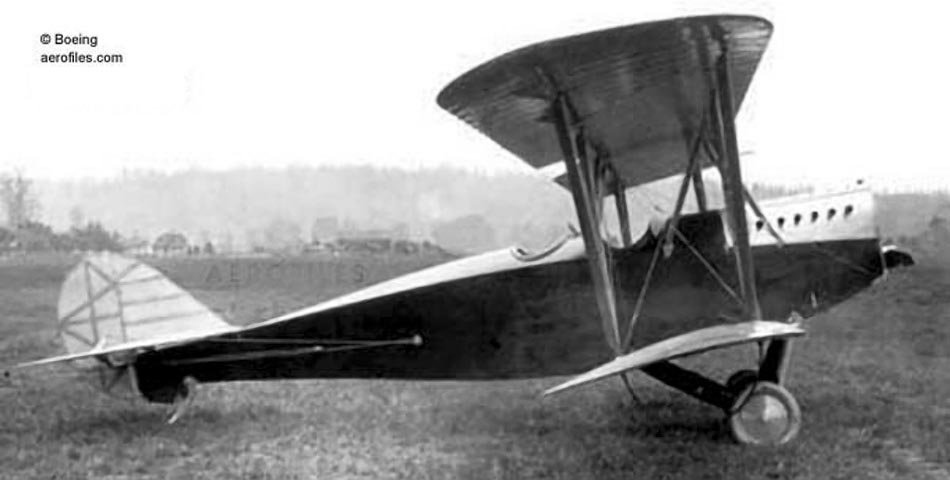 Boeing Model 8 (BB-L6) |
 Boeing Model 8 (BB-L6) |
 Boeing Model 8 (BB-L6) |
 Boeing Model 8 (BB-L6) |