
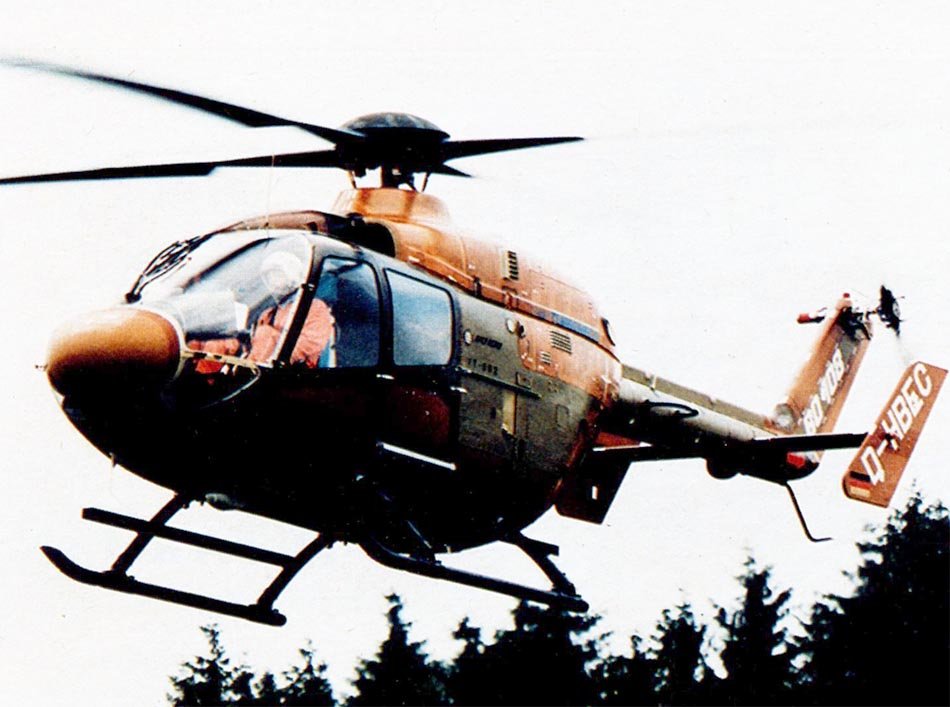
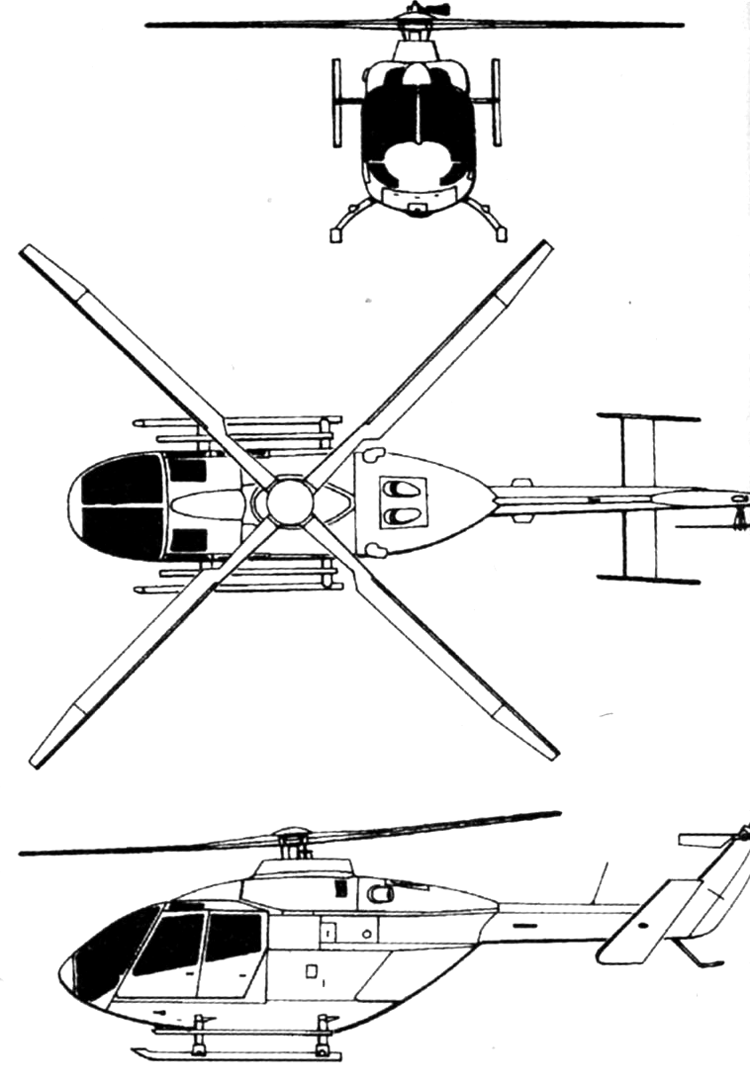
The Bo.108 helicopter, similar in appearance to the Bo.105 and developed as its replacement, was designed in the late 1980s.
Development Milestones
The experimental aircraft made its first flight on October 15, 1988. A second prototype, featuring a fuselage extended by 15 cm and equipped with a flight and navigation instrument system based on cathode ray tube displays, first took to the air in June 1991.
Innovation and Market Potential
The use of a promising hingeless main rotor design is expected to open up a wide market for the Bo.108. Helicopters intended for North America will be assembled in Fort Erie, Canada, using German-manufactured components.
Technical Specifications
| Modification | Bo.108 |
| Main rotor diameter, m | 10.00 |
| Length, m | 10.60 |
| Height, m | 3.00 |
| Empty weight | 1225 |
| Maximum takeoff weight | 2500 |
| Engine type | 2 gas turbine engines Allison 250-С20R-3 (Turbomeca TM-319 Arrius 1B) |
| Power, kW | 2 x 335 (360) |
| Cruising speed, km/h | 270 |
| Practical range, km | 800 |
| Practical ceiling, m | 5000 |
| Crew | 1-2 |
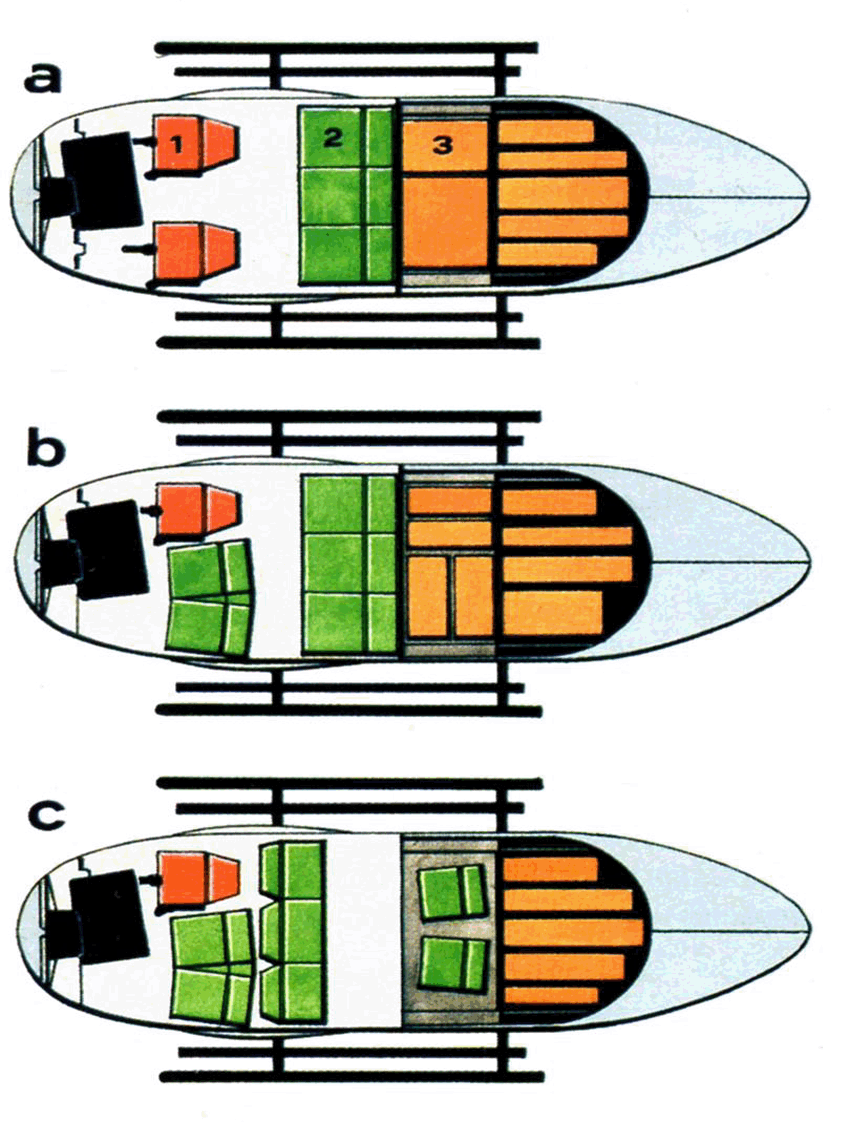
| Payload | up to 5 passengers |
Image and diagram gallery of the Bo.108
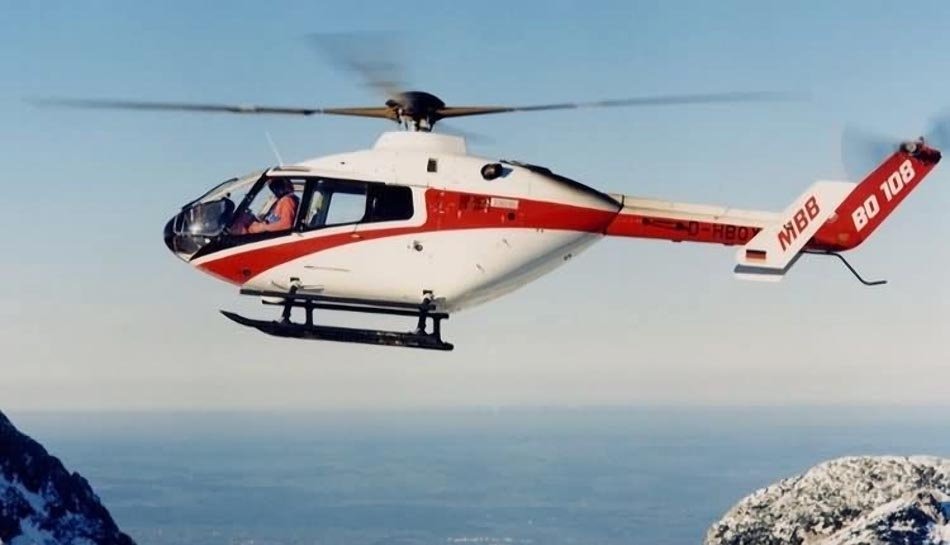 Bo.108 |
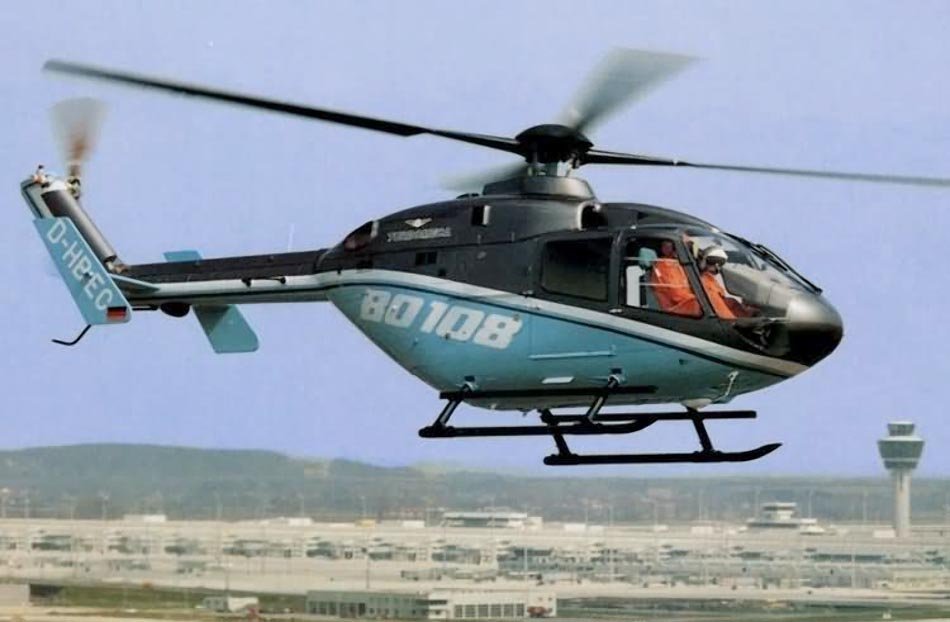 Bo.108 |
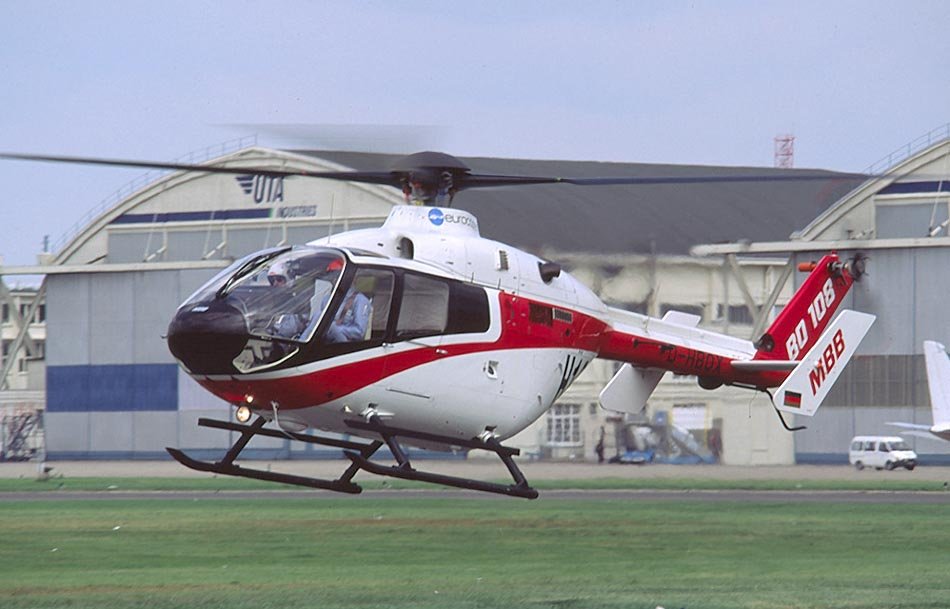 Bo.108 |
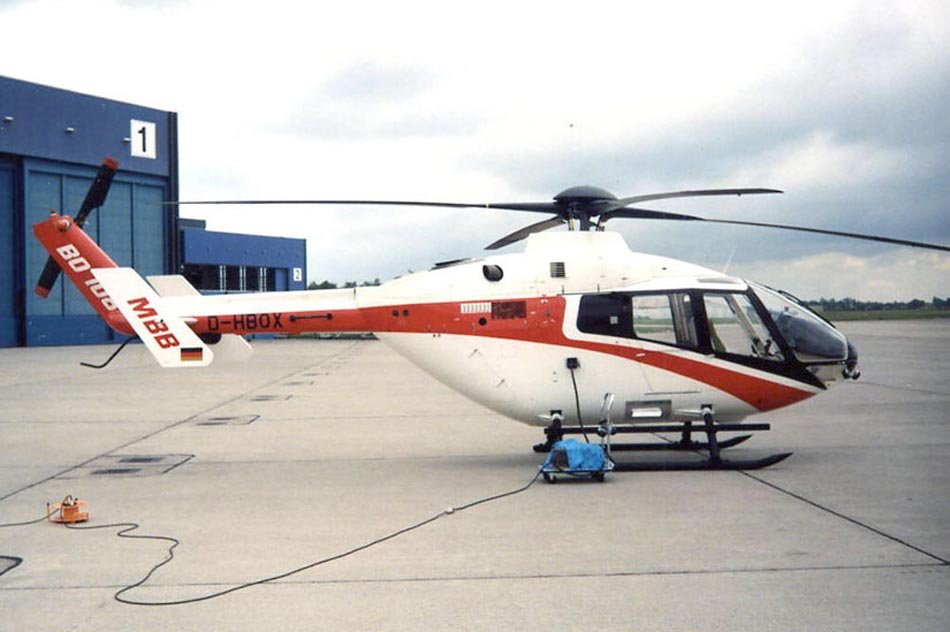 Bo.108 |
 Bo.108 |
 Bo.108 |
 Bo.108 |
How to cite this article:
APA: Bo.108 (). Bo.108. wp.archivoaereo.com. https://wp.archivoaereo.com/en/bo-108-2/
VANCOUVER: Bo.108 [online]. wp.archivoaereo.com; [cited 2026-10-06]. Available at: https://wp.archivoaereo.com/en/bo-108-2/