
Unlike the relatively common twin-engine flying boats, starting with the Curtiss H America — on which several successful aircraft were developed in the USA and Great Britain — twin-engine floatplanes were a great rarity. Among them were the German Gotha W.D.4 and the rather exotic Gotha-Ursinus U.W.D. Among French naval aircraft, float-equipped twin-engine seaplanes comprised only one type, which will be described in this article.
This seaplane was developed by the aircraft manufacturing company of aviation pioneer Gabriel Borel, who founded a flying school in Mourmelon in 1910. Instructors at this school included individuals who later became famous pilots and aircraft designers, making significant contributions to aviation history: François Denhaut, Léon Morane, and Raymond Saulnier. The school also housed workshops where Gabriel Borel (along with others) designed and built his aircraft.
Initially, the machines built had no specific names and were designated according to their assigned tasks, such as “racing monoplane.” Before the start of World War I, Borel’s aircraft retrospectively received designations from Bo.1 to, possibly, Bo.19 for company history, but these designations were generally not used. In 1911, the school experienced capital embezzlement, and after the ensuing scandal, the vast majority of its staff left and went their separate ways.
Borel’s Origins and Development
Among the few who remained was engineer Antoine Odier, who became a kind of chief designer. By 1914, a total of 19 aircraft had been created, most of which did not progress beyond the prototype stage. Among these was a dirigible fighter prototype created in 1913. Despite the excellent flight characteristics of the aircraft, authorities rejected it as useless. Only the 1911 training floatplane monoplane (later designated Bo.11) entered serial production. These seaplanes were used by the French and British navies, and also entered service in Brazil.
After the war began, due to personnel mobilization, Borel’s small company closed, but in November 1915, the firm was re-established under the name Etablissements Borel. It then engaged in the licensed manufacture of Caudron G.3 and G.4 multi-purpose aircraft, Nieuport fighters, and later various types of SPAD fighters. The company’s production capacity soon grew to four factories, and military orders, in addition to contributing capital, led to the development of a large seaplane.
The technical solutions for this seaplane were influenced by the Eiffel Laboratory, which produced the aerodynamically clean Breguet LE monoplane fighter, and by floatplanes built between 1915-1916. Based on this, Borel decided to build an aircraft capable of carrying and dropping a torpedo. Thus, it was to be a twin-float seaplane with free space under the fuselage.
The B.O.T Project and the B.O.2
The project, designated B.O.T, was developed in 1916 by Antoine Odier. In the same year, the project was submitted for consideration to the French Navy command. The aircraft was equipped with two 160 hp (118 kW) water-cooled Salmson radial engines and, in addition to torpedo-dropping, could perform long-range reconnaissance functions. The aircraft’s construction was entirely wooden.
The fuselage and floats had plywood skin, while the wings and tail unit were fabric-covered. To facilitate maneuvering on water and landing with one engine operating, the vertical tail unit was designed with three fins. Armament was to consist of two movable 7.7 mm Lewis machine guns, installed in positions in the aircraft’s nose and behind the wings, four 70 kg bombs, and a 450 mm caliber torpedo. The crew consisted of three people. A distinctive feature of Borel’s seaplane was the wide and flat (and waterproof) tail section of the fuselage, which acted as a tail float on the water surface.
In August 1916, the prototype crashed and was completely destroyed on its very first flight, immediately after takeoff. A newly built “true” prototype was equipped with powerful 220 hp (162 kW) Hispano-Suiza 8Bc eight-cylinder V-type water-cooled engines. In this form, in August 1917, the prototype, now designated Borel-Odier B.O.2 (also Bo.O.2), was handed over to the French Navy for official trials in Saint-Raphaël.
Testing was very thorough, and as a result, an order for the production of forty machines was issued on December 12, 1917. Production of these aircraft was delayed, and before the first of them were delivered to combat units, on July 10, 1918, the French Navy command issued a second order — this time for 50 units. In mid-August, the first production aircraft arrived at naval air bases in Perpignan, Sète, Toulon, and Antibes.
Limited Service and Legacy
However, at the first three bases, the B.O.2s never entered combat operations and remained in crates in disassembled condition. Aircraft of this type did not participate in combat. B.O.2 seaplanes were only used in September 1918 under somewhat specific conditions: a unit transferred from Antibes to Nice established regular airmail service with Corsica, commissioned by the Ministry of Posts and the French Admiralty.
In September and October, several flights were made to Ajaccio and Calvi. However, after the accidental loss of two B.O.2s and, finally, the disappearance of aircraft (serial number “5”) with its entire crew off Cap d’Antibes on November 2, the French Navy ceased these experiments. By the date of the Armistice signing, the unit in Nice was disbanded. The remaining aircraft were returned in disassembled form to Saint-Raphaël.
The mail planes were two-seaters; the front gun position was closed and served as a cargo compartment. As of December 1, 1918, the French Naval Aviation (Aviation Maritime) had 35 B.O.2 seaplanes (the machines were at the aforementioned air bases), and their production continued even after the end of the war. By this time, Borel’s company had changed its name to SGCIM (Société Générale des Constructions Industrielles et Mécaniques).
In April 1919, the company was commissioned to modify one of the machines, which involved installing 250 hp (184 kW) Hispano-Suiza 8Bb engines. The aircraft was tested in Saint-Raphaël, but the results of the experiments were not put to use. As of December 1, 1919, there were 68 B.O.2 seaplanes at bases in Berre, Toulon, and Saint-Raphaël (a total of 92 aircraft were built; 2 prototypes and 90 production models). Gradually, they were scrapped. Antoine Odier proposed a B.O.C. civilian transport aircraft based on the B.O.2. However, this machine did not generate interest, and in the early 1920s, SGCIM ceased aircraft production.
Technical Specifications
| Modification | BO. 2 |
| Wingspan, m | 19.80 |
| Length, m | 11.75 |
| Height, m | 4.28 |
| Wing area, m2 | 80.00 |
| Empty weight | 1 650 |
| Normal takeoff weight | 2650 |
| Engine type | 2 Piston engines Hispano-Suiza 8Bc |
| Power, hp | 2 x 220 |
| Maximum speed, km/h | 140 |
| Cruising speed, km/h | 115 |
| Practical range, km | 520 |
| Crew, crew members | 3 |
| Armament: | two movable 7.7-mm Lewis machine guns, four 70-kg bombs, and one 450-mm caliber torpedo |
Image and diagram gallery of the Borel-Odier B.O.2
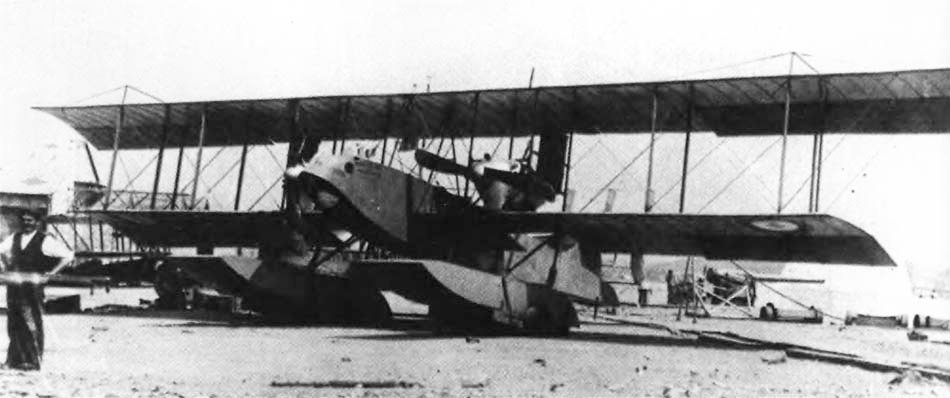 BO.2 (BO-T) |
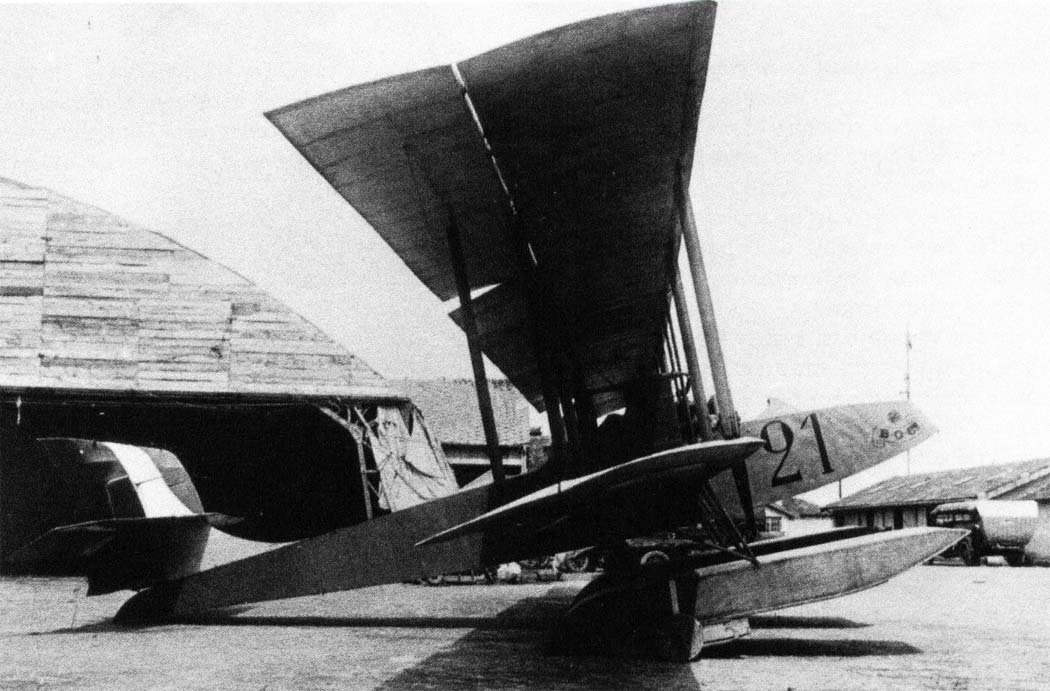 BO.2 (BO-T) |
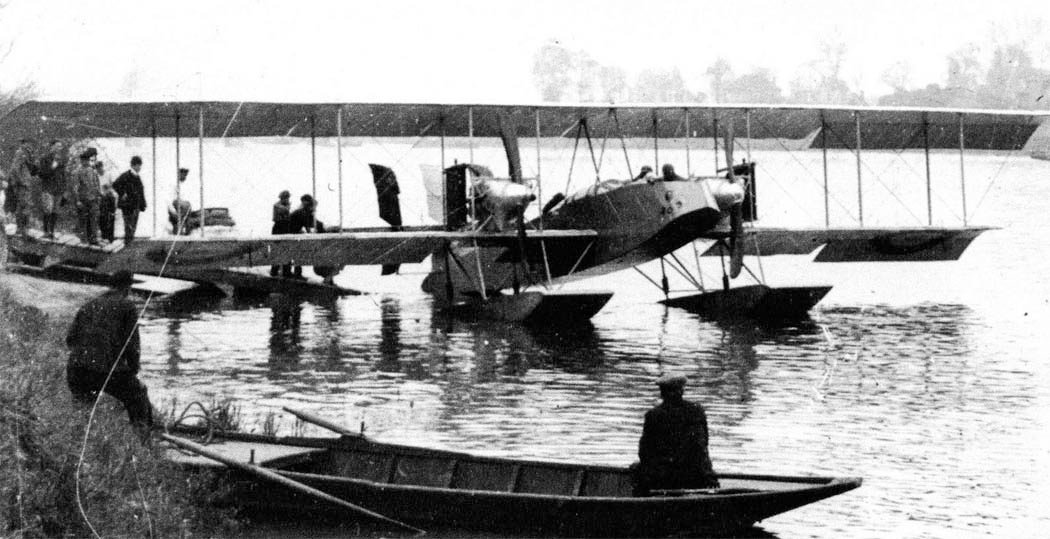 BO.2 (BO-T) |
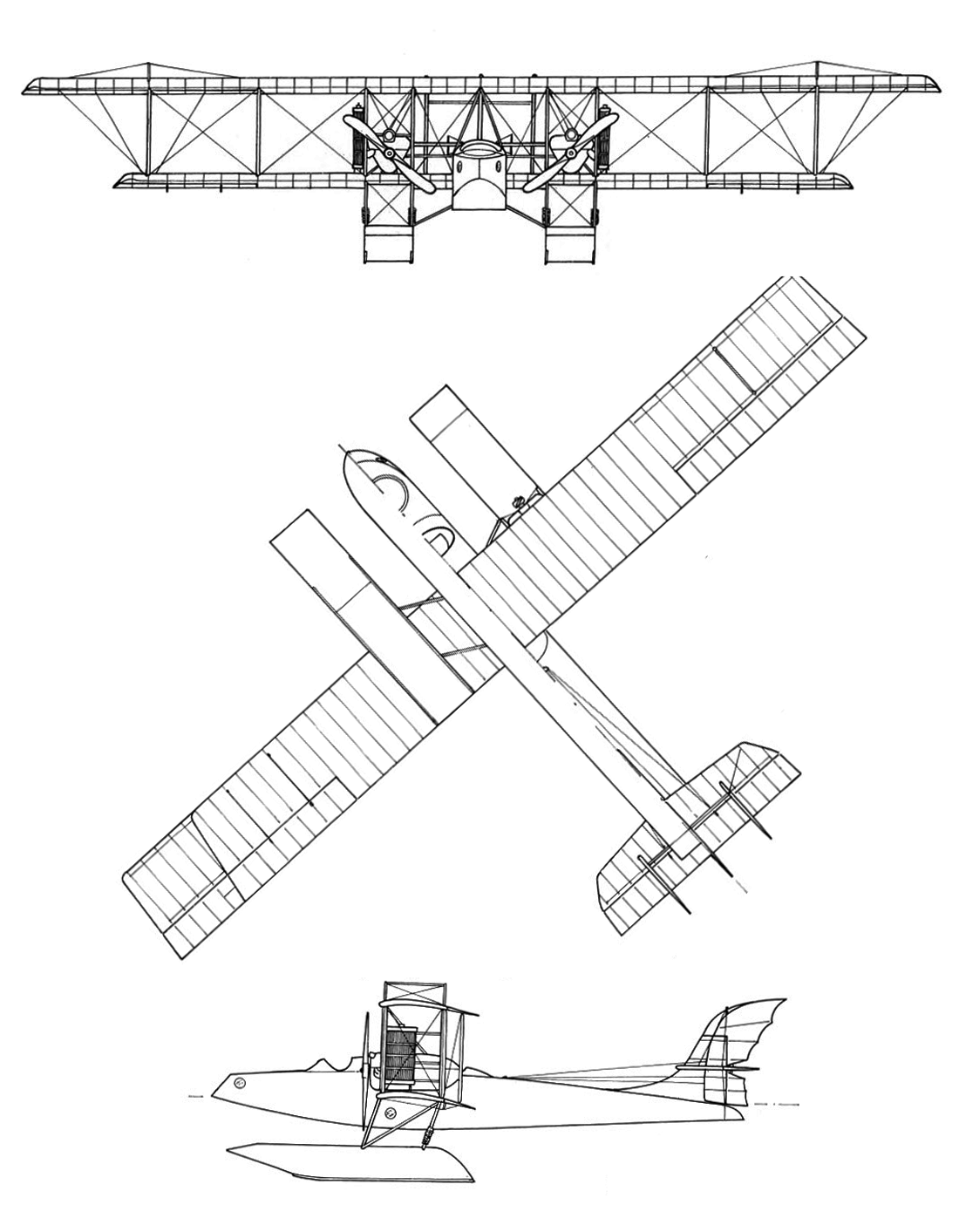 BO.2 (BO-T) |
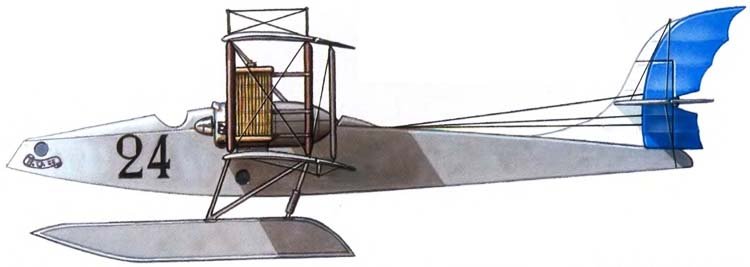 BO.2 (BO-T) |