
The Boulton & Paul P.9 light multipurpose aircraft was an enlarged version of the P.6 aircraft. Like its predecessor, it was equipped with a 90 hp RAF 1a engine but had an increased fuel capacity.
Early Flights and Australian Service
The aircraft’s first flight took place in May 1919. The first order for the P.9 came not from Great Britain, but from Australia. The aircraft was used for newspaper transport, and on December 17, 1919, it successfully crossed the Bass Strait between Australia and Tasmania.
Market Challenges and Limited Production
The operational experience of the P.9 in Australia allowed for certain modifications to be incorporated into the design of serial production aircraft. Despite its modest cost (only 700 pounds sterling), the aircraft could not compete with the multitude of decommissioned military aircraft entering civilian use after the war. As a result, production ceased after only 8 examples were manufactured.
Technical Specifications
| Modification | P.9 |
| Wingspan, m | 8.38 |
| Aircraft length, m | 7.52 |
| Aircraft height, m | 3.05 |
| Wing area, m2 | 30.00 |
| Empty weight | 565 |
| Maximum takeoff weight | 805 |
| Engine type | 1 Piston engine RAF 1a |
| Power, hp | 1 x 90 |
| Maximum speed, km/h | 167 |
| Cruising speed, km/h | 136 |
| Practical range, km | 483 |
| Rate of climb, m/min | 198 |
| Service ceiling, m | 4267 |
| Crew | 2 |
Image and diagram gallery of the Boulton & Paul P.9
 P.9 |
 P.9 |
 P.9 |
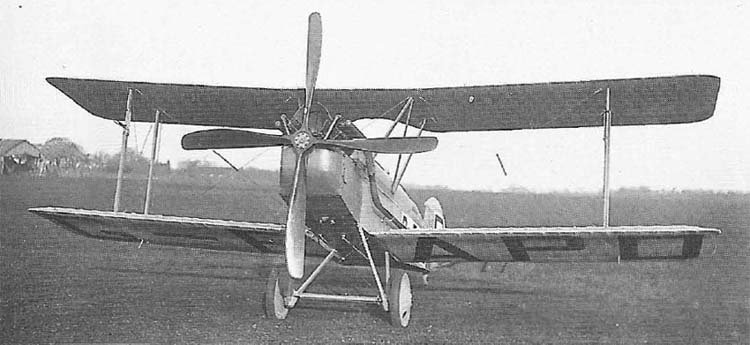 P.9 |
 P.9 |
 P.9 |