
After the end of the Second World War, designers at Breguet Aviation developed a project for a multi-purpose transport aircraft capable of carrying up to 30 passengers. This project envisioned the construction of three modifications: the multi-purpose transport-passenger Br.890, the military transport Br.891, and the passenger Br.892.
Initial Design and Engine Choices
Initially, the first variant of the aircraft, designated Br.890J, was planned to be equipped with 1200 hp Junkers Jumo 211 engines, produced at the Arsenal factory. However, during the construction phase of the first prototype, it was decided to replace these engines with English Bristol Hercules 739 units, delivering 2030 hp.
Maiden Flight and Trials
This version of the aircraft, the Br.890H (tail number F-WFRF), first flew on April 5, 1950. The aircraft successfully completed its tests, but despite its success, it did not proceed to serial production.
Technical Specifications
| Modification | Br. 89 0H |
| Wingspan, m | 30.62 |
| Aircraft length, m | 21.60 |
| Aircraft height, m | 7.20 |
| Wing area, m2 | 101.00 |
| Empty weight | 12040 |
| Maximum takeoff weight | 20000 |
| Engine type | 2 Piston engine Bristol Hercules 739 |
| Power, hp | 2 x 2030 |
| Maximum speed, km/h | 380 |
| Cruising speed, km/h | 350 |
| Range with max. payload, km | 1000 |
| Service ceiling, m | 7800 |
| Crew, crew | 4 |
| Payload: | 34-40 passengers or 6210 kg of commercial cargo |
Image and diagram gallery of the Breguet Br.890
 Br.890 |
 Br.890 |
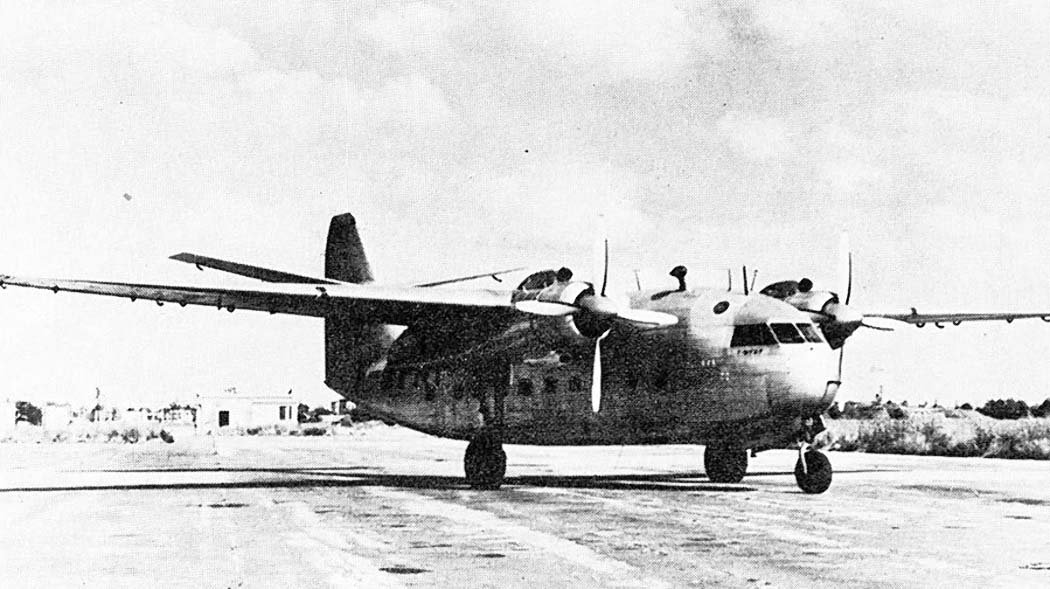 Br.890 |
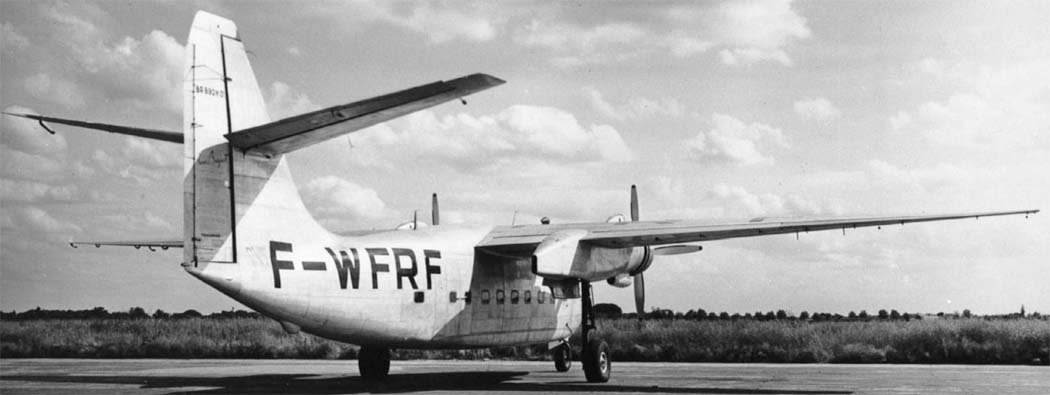 Br.890 |
 Br.890 |
 Br.890 |
 Br.890 |