
Origins and Development
In the history of military technology, there have been numerous examples of designs that arrived too late, missing their moment, and consequently either remained experimental or saw very limited use. A prime example is the Bristol Brigand twin-engine bomber, representing the culmination of a lineage that began with the well-known Beaufort and continued with the equally famous Beaufighter. It missed the final battles of World War II, thus failing to achieve the renown of its predecessors. Nevertheless, this interesting aircraft deserves attention.
The Beaufighter attack aircraft, successfully employed across various theaters of war, still had several drawbacks. Primarily, its small crew of two meant the second crew member was severely overloaded, performing duties as navigator, radio operator, and radar operator. By mid-1942, the aircraft’s speed and range were also no longer satisfactory to the military. Consequently, the British Air Ministry announced the requirement for a new strike aircraft for RAF Coastal Command.
In response, the management of the Bristol Aeroplane Company, aiming to retain the market niche occupied by its previous designs, proposed a preliminary project called “Buccaneer.” This design represented a further evolution of the Beaufighter. It envisaged redesigning the fuselage to reduce its cross-section, increasing the crew to three, and improving the aerodynamics of the engine nacelles. Equipped with 14-cylinder Bristol Hercules XVII engines, each delivering 1735 hp, the projected speed of the aircraft reached 528 km/h.
On August 28, 1942, a mockup of the new aircraft’s fuselage was presented to ministry representatives. The mockup was well-received, and ministry officials began developing tactical and technical requirements under the designation S.7/42, later changed to H.7/42. The final version, sent to the company on November 13, 1942, stipulated that the new aircraft should achieve a maximum speed of 556 km/h at low altitudes. Its range needed to reach 1500 miles (2778 km), allowing the “Buccaneer” to be deployed not only over the North and Mediterranean Seas but also across the vast Pacific Ocean. Another critical requirement was the ability to climb to 1500 meters on a single engine and sustain prolonged flight at that altitude, ensuring a return from missions even with one engine disabled over the target area.
The company required just over a month to refine the project according to the specifications. On December 16, 1942, the revised project was submitted to the Air Ministry. Under this design, the aircraft incorporated a virtually unchanged Beaufighter wing, with engines shifted 25 cm forward, and a completely new fuselage. The vertical stabilizer, like the Beaufighter’s, was single-finned, with the horizontal stabilizer mounted on the fin approximately 0.5 meters above the fuselage.
The proposed armament consisted of five 7.7mm or 12.7mm machine guns: four fixed forward-firing guns in the nose and one movable gun in the cockpit for rear-upward firing. A 457mm Mk.XII torpedo, weighing 965 kg, was to be carried under the fuselage. On December 21, 1942, the aircraft’s official name, “Brigand” (English for an armed robber or bandit), and its designation, TF Mk.I, were approved.
However, further in-depth project development revealed significant problems. Calculations indicated that the Hercules XVII engines could not provide the required speed. Furthermore, the military demanded additional radar equipment for surface target search, based on the AI Mk.VIII fighter radar. This addition increased the aircraft’s weight by almost a quarter of a ton, jeopardizing its single-engine flight capability.
To salvage the project, a “surgical intervention” was necessary. The Brigand was “implanted” with a new wing featuring Bristol Centaurus VII power units (18 cylinders, 2400 hp) and a twin-fin tail assembly from the Buckingham medium bomber, which was being developed concurrently. Armament was also strengthened: four 20mm cannons were planned for the nose, and a heavy machine gun for the cockpit. This variant of the Brigand, designated “Model 164,” was deemed promising, and in April 1943, the Air Ministry ordered four prototypes.
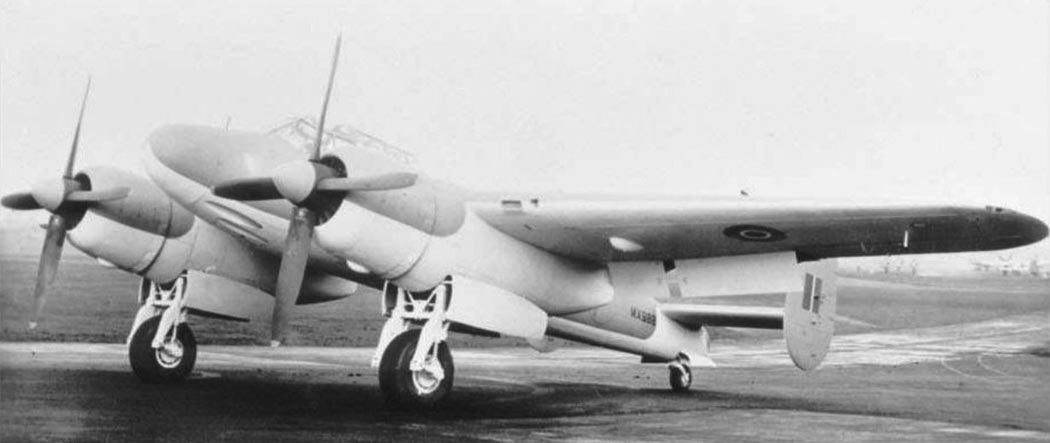
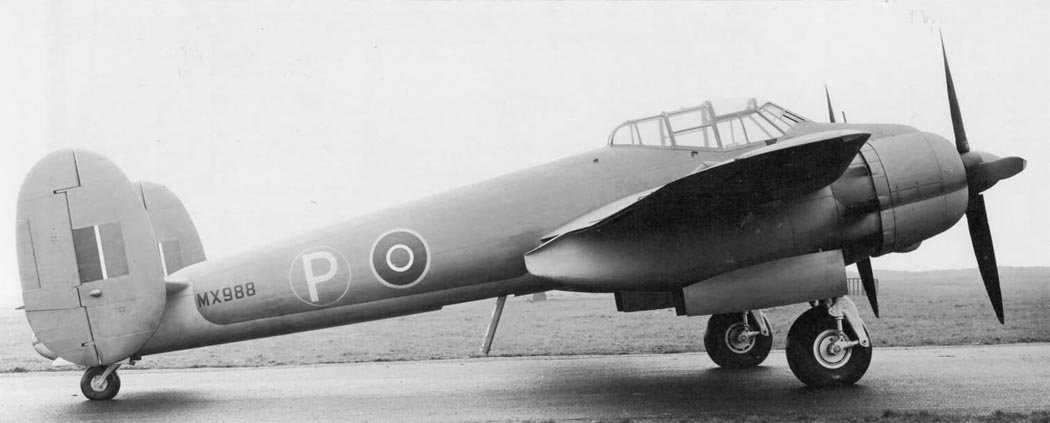
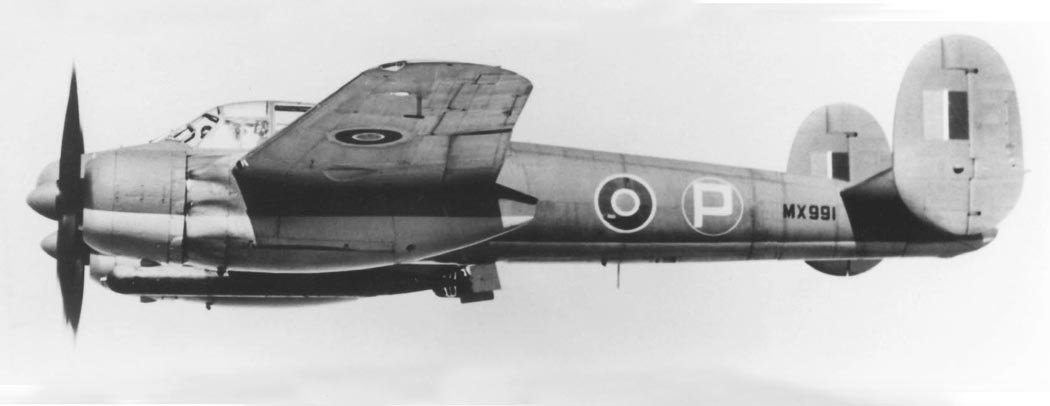
The construction of the prototypes proceeded rather slowly. The first (tail number MX988) did not take to the air from Filton airfield until December 4, 1944, piloted by Bristol’s chief test pilot, Cyril F. Uwins. The other three prototypes – MX991, MX994, and TX374 – soon followed. Testing generally went smoothly. A maximum speed of 576 km/h at an altitude of 4175 meters and a range of 3380 km (4460 km with drop tanks) were achieved.
It seemed a “bright future” awaited the aircraft. However, the approaching end of the war questioned the expediency of serial production for the new machine. Ultimately, a decision was made for limited-scale production of Brigands to utilize accumulated component stocks and at least partially preserve Bristol’s manufacturing capabilities.
Operational History and Variants
Production aircraft of the TF.Mk.I modification appeared only in the second half of 1946, with only a dozen built. Subsequently, the aircraft’s role was revised; it transformed from a torpedo bomber into a “colonial” bomber, intended for operations in the Middle and Far East. RAF units stationed in the colonies urgently needed a new aircraft, as the wooden Mosquitoes used there coped poorly with high temperatures and humidity.
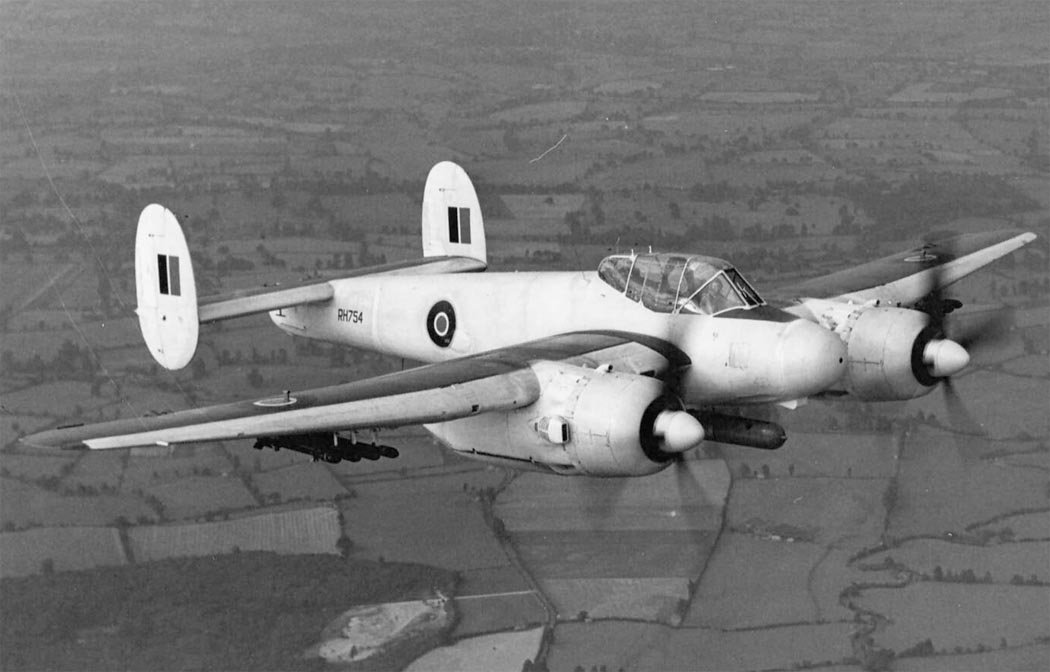
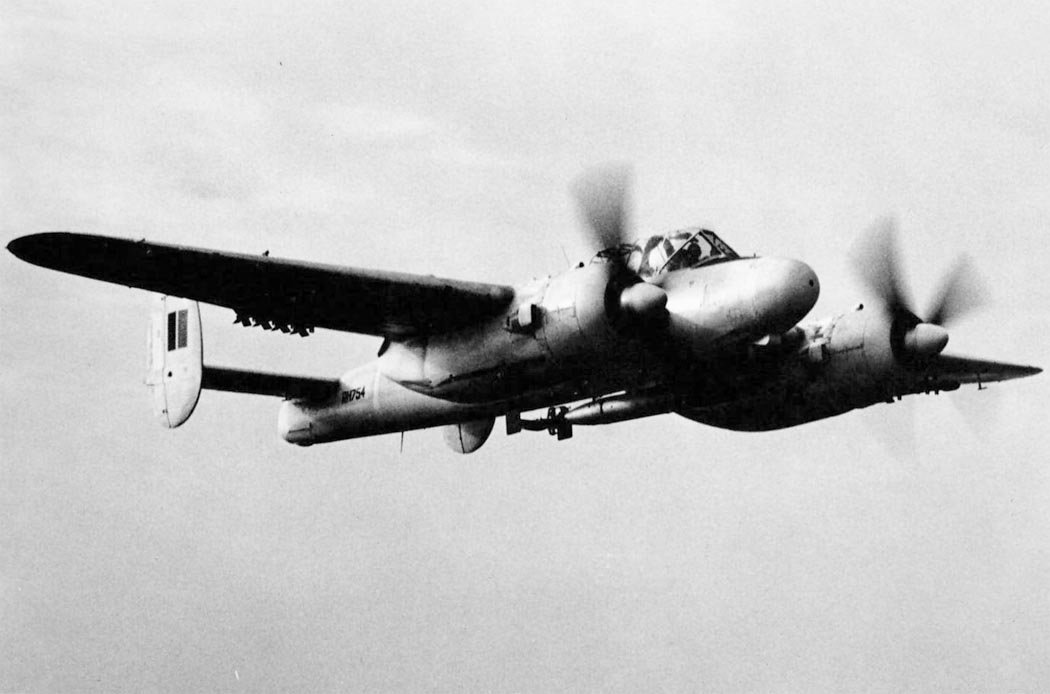
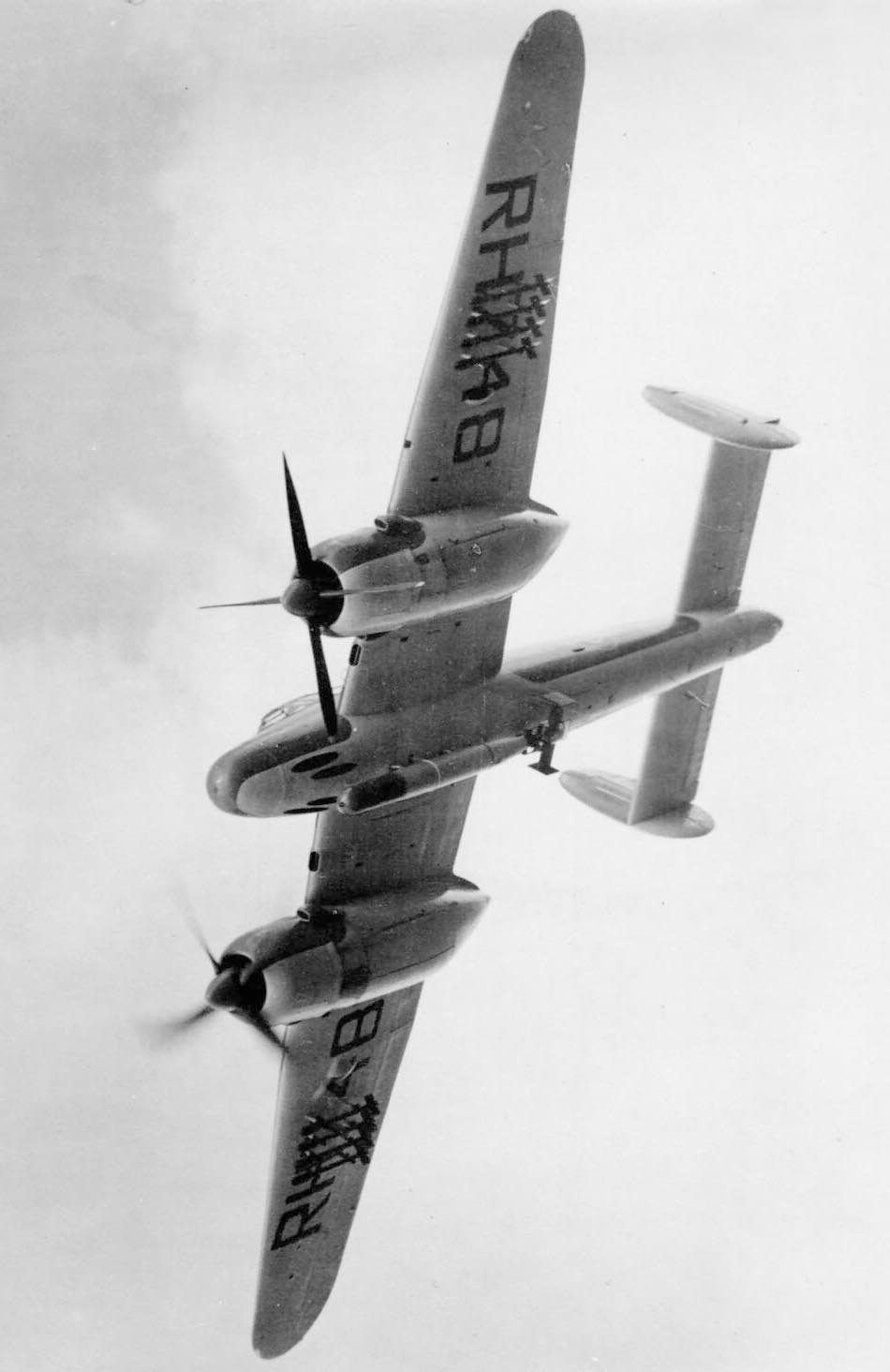
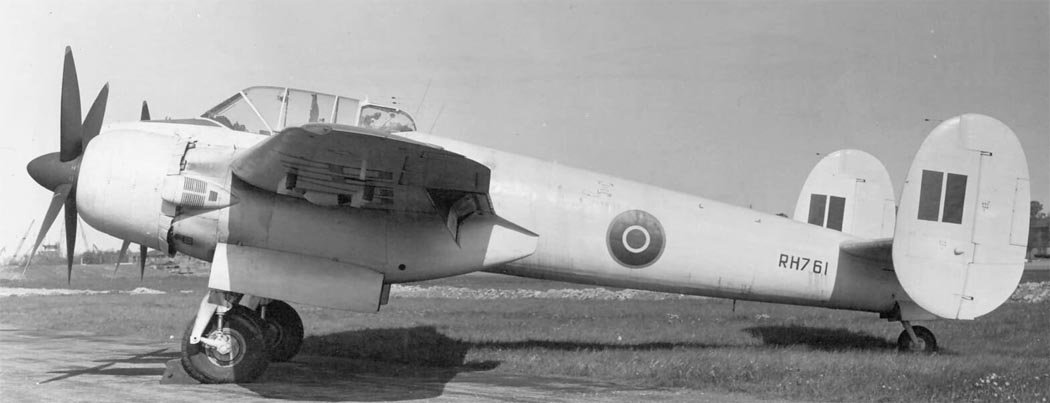
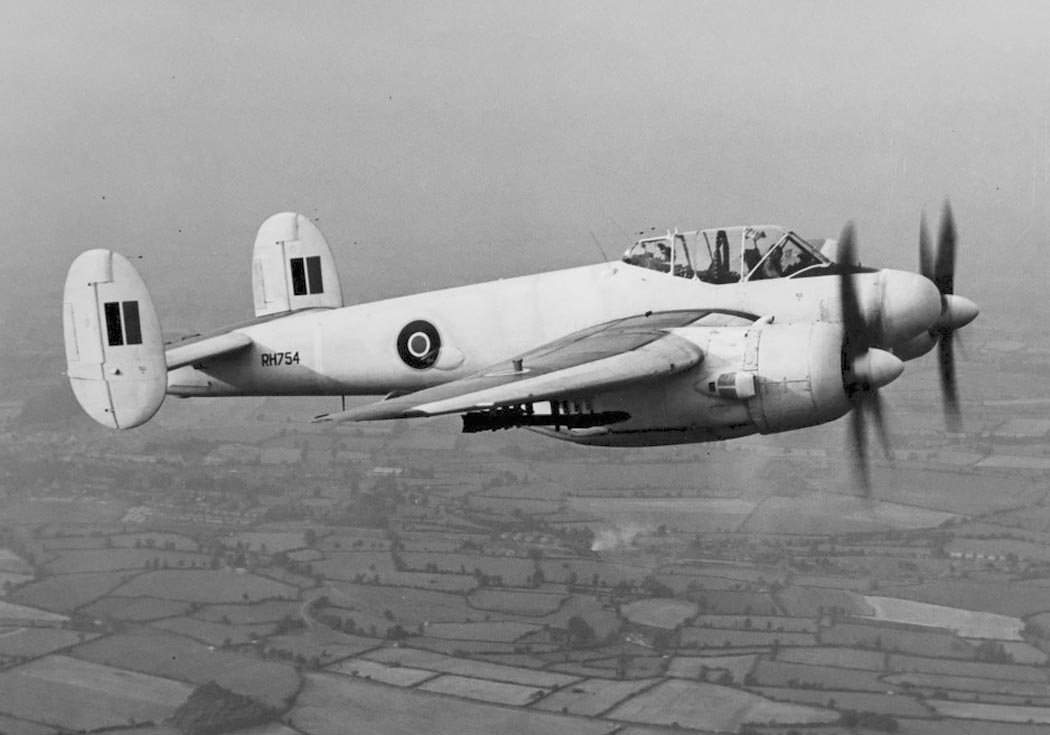
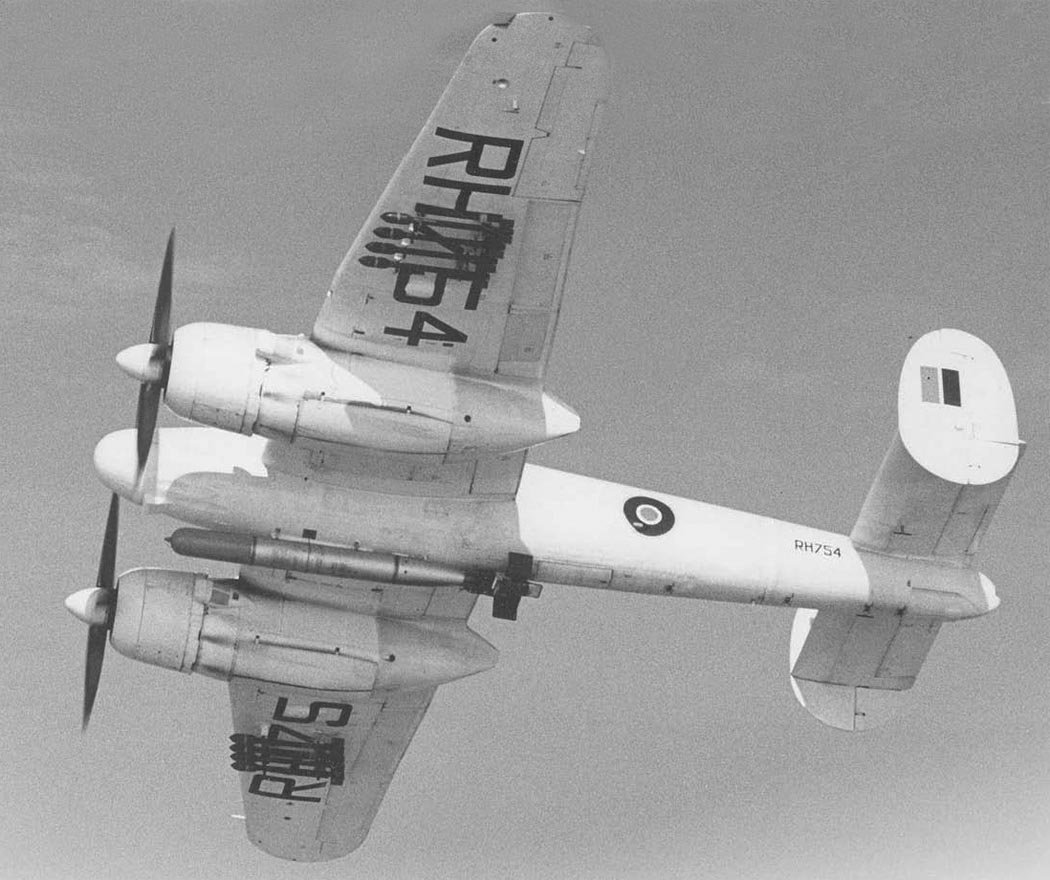
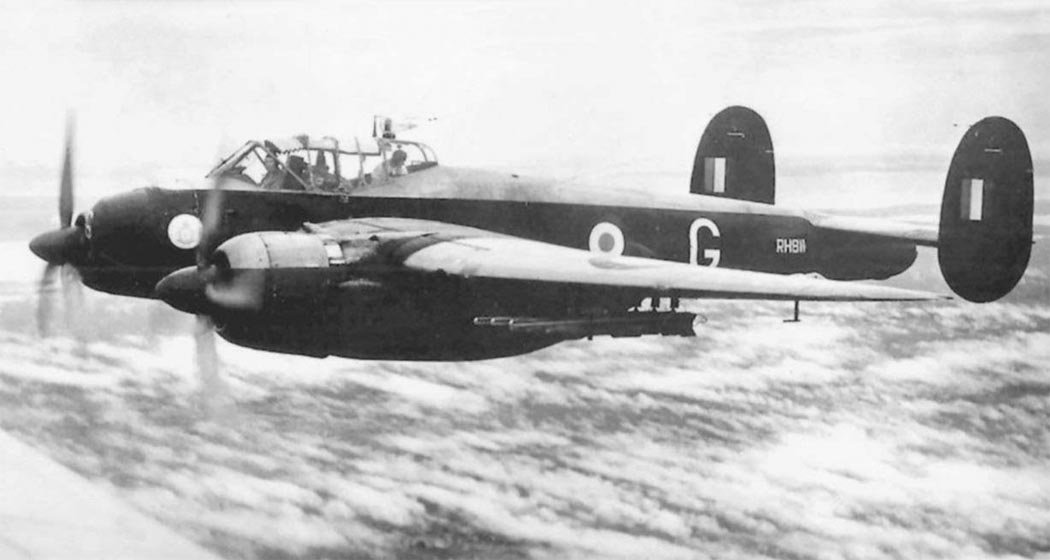
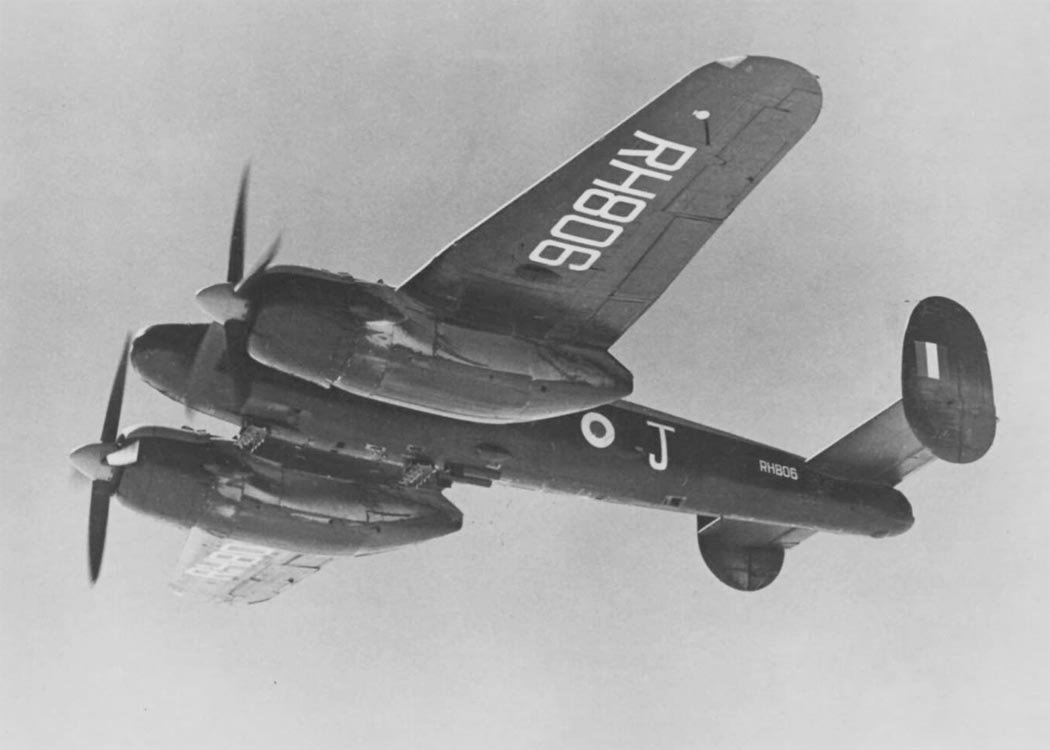
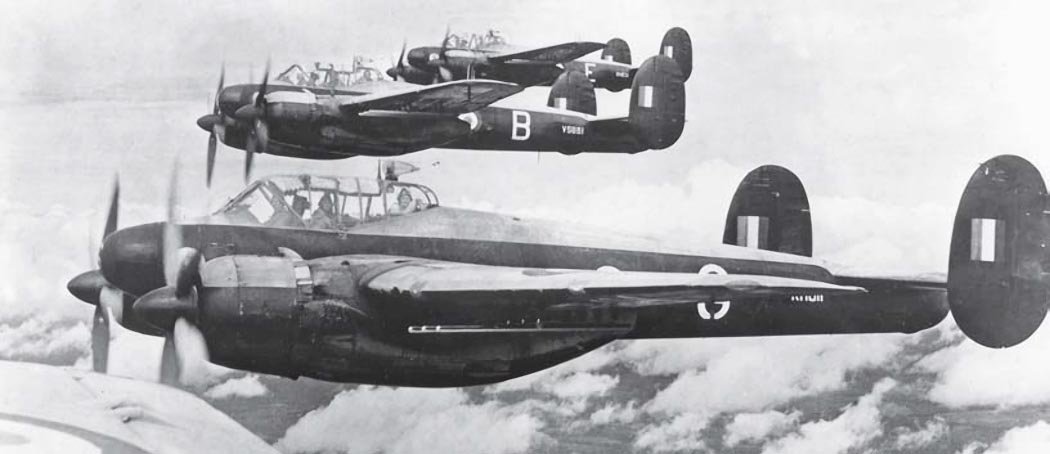
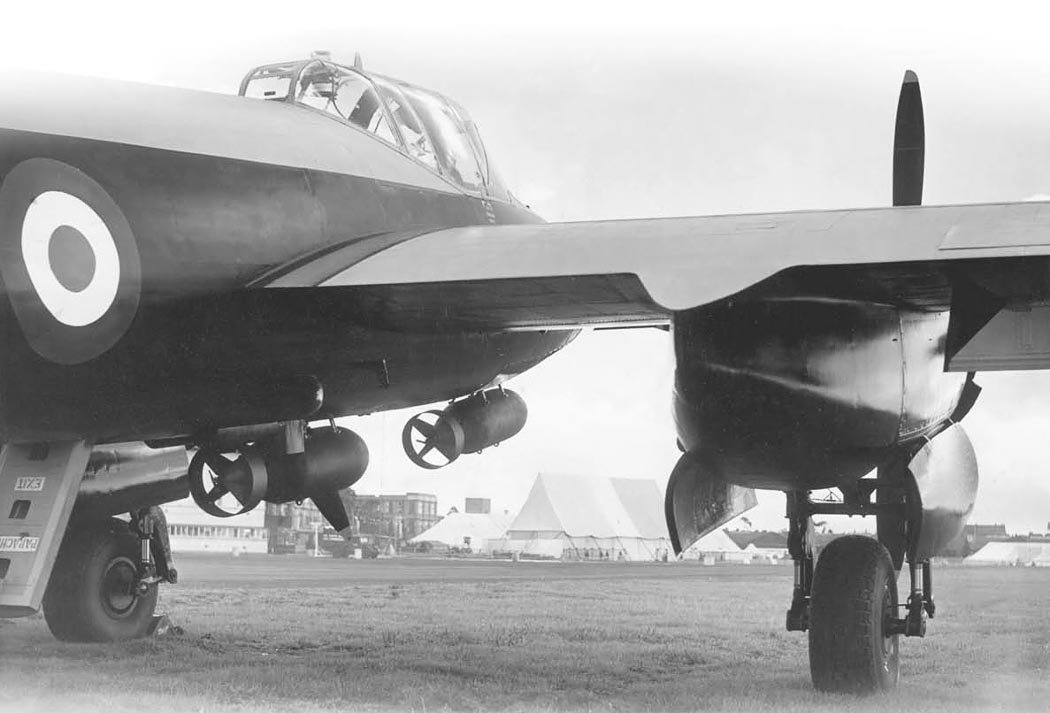
The new variant, designated Brigand B.Mk.1, differed from its predecessor only in “cosmetic” changes. Notably, designers introduced a new central canopy section to facilitate emergency egress. Given the absence of aerial adversaries in its intended areas of operation, the defensive machine gun installation was removed. Weapon pylons were also altered: four bomb racks were installed under the fuselage instead of torpedo mounts, and rails for eight 60-pound unguided rockets appeared under the wings. In total, 104 such bombers were built between 1947 and 1949.
In spring 1948, a third Brigand modification emerged: the unarmed Met. Mk.3 weather reconnaissance aircraft. This machine received additional fuel tanks, de-icing equipment, and a set of meteorological instruments. Sixteen of these were built between 1948 and 1949.
In 1948, trials began for the Brigand T Mk.4, a training modification designed to prepare radar operators. This aircraft lacked cannon armament; instead, a radar antenna was housed in the nose radome. The rear section of the canopy was made opaque.
The prototype was converted from bomber RH798, and a total of 33 B Mk.1 aircraft were modified to this variant by December 1951. Additionally, Bristol built nine new T Mk.4s between February and October 1951.
The final Brigand variant was the T Mk.5. The adoption of an improved radar with a larger antenna necessitated changes to the shape and size of the nose radome. Between 1954 and 1955, the Marshall company converted at least 23 aircraft in this manner, mostly from the T Mk.4 variant, but some were reconfigured from the bomber modification.
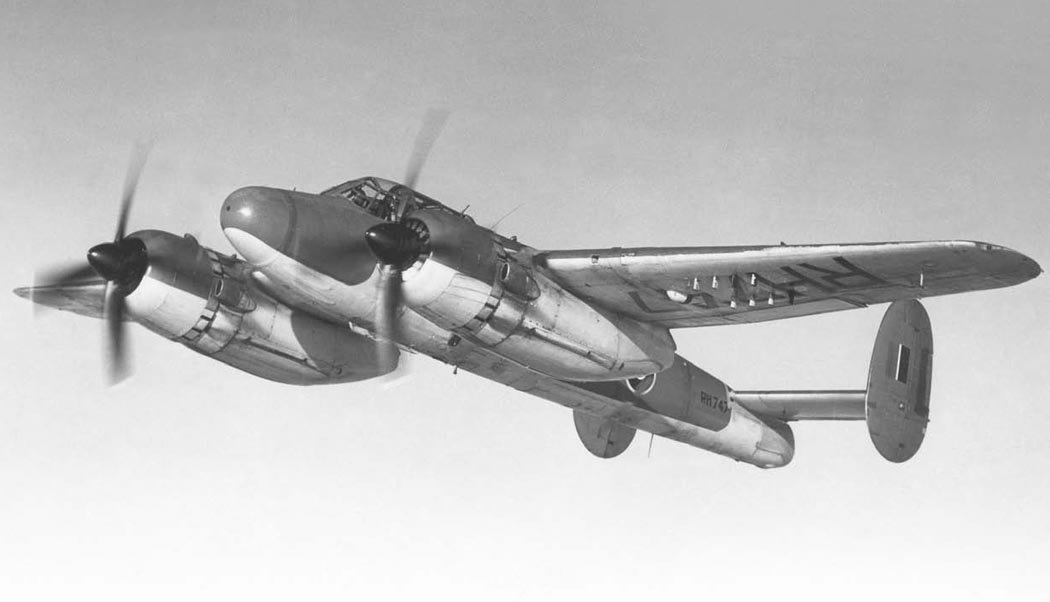
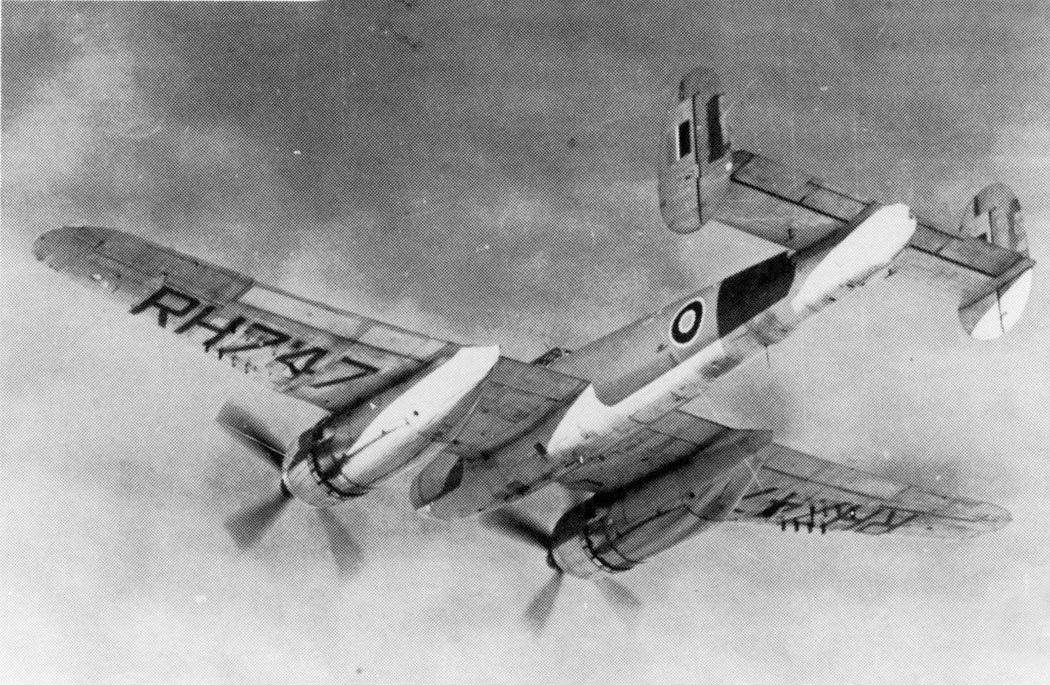
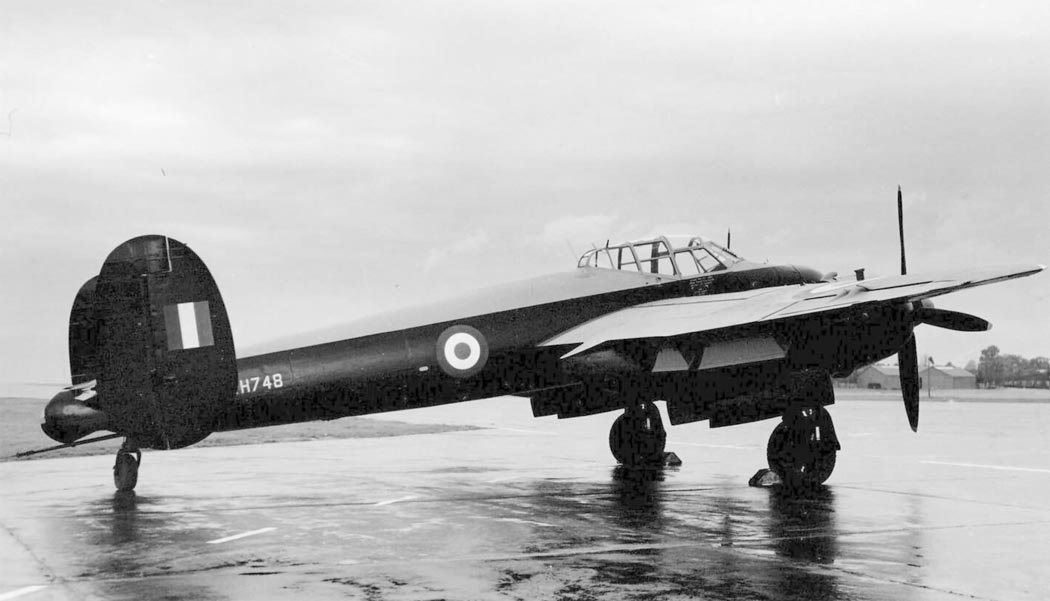
Due to their small numbers, Brigand TF Mk.I aircraft were used exclusively in test centers (reports of their use by the 36th and 42nd Coastal Command squadrons were unconfirmed). Specifically, they were used for torpedo testing at Gosport and for rocket weapon testing at Thorney and Ballykelly. In 1949, one aircraft (RH748) was transferred to Folland, which used it to test a steam catapult designed for new British aircraft carriers. This aircraft received reinforced airframe skinning and catapult attachment points. Ballast tanks filled with water were used to increase takeoff weight.
In 1950, Bristol prepared Brigand RH745 for testing Centaurus-633 engines, intended for the Britannia passenger airliner. However, a decision was soon made to use Proteus turboprops on the Britannia, and the testing program was cancelled.
Two TF Mk.I aircraft were lost. RH744 crashed on takeoff on October 1, 1946, at Farnborough, and RH742 crashed at Boscombe Down on July 19, 1947, killing both crew members. RH763 was the longest-serving, used until 1959 at Boscombe Down in a booster rocket test program.
The first RAF unit to receive Brigand B Mk.1s was the 228th Operational Conversion Unit (OCU), stationed at Leeming. In August-September 1948, this unit received nine new aircraft and began crew retraining. As often happens, mastering new equipment was accompanied by flying accidents. The first aircraft crashed on October 14 when its pilot made an error during an approach with an inoperative engine. The 228th OCU trained bomber pilots for about two years, and from July 1950, it was re-equipped with Brigand T Mk.4s and reoriented to train radar operators for night fighters. On July 1, 1952, these aircraft were transferred to the Air Interception School established at RAF Colerne, soon reorganized into the 238th OCU. This unit was the primary operator of the next training modification, the T Mk.5 (only two such aircraft were transferred to the 236th OCU in July 1954). The 238th Squadron, redeployed to North Luffenham in 1957, used training Brigands until March 17, 1958, training approximately 600 radar operators on these machines.
As evident, Brigands in the home country were used only for training. All combat squadrons operating this aircraft type were deployed in the Middle and Far East. Specifically, on February 7, 1949, the 84th Squadron at Habbaniyah (Iraq) received its first two Brigands. By the end of March, the unit reached its full complement of eight Brigand B Mk.1s. However, operations in the hot climate revealed deficiencies in the aircraft’s hydraulic system, exacerbated by a lack of spare parts. Consequently, by April 14, all Brigands of the 84th Squadron were out of service, and the unit’s technicians and supply personnel spent considerable time and effort repairing the new aircraft.
In spring 1949, the rearmament of the 8th Squadron at Khormaksar (Aden) began. Here, the Brigand immediately showed its character: the very first aircraft, dispatched to Khormaksar on April 23, made a belly landing due to landing gear failure and was completely destroyed (fortunately, the crew was unharmed). The 8th Squadron received its next Brigand only in late May, fully transitioning to the new aircraft type by early September.
On September 21, 1949, the rearmament with Brigands began for the third and final RAF combat squadron – the 45th, stationed in Kuala Lumpur (Malaya). For several months, this unit operated the new aircraft alongside older Beaufighters, completing its rearmament only in January 1950 (by which time the 45th Squadron had relocated to Tengah airfield in Singapore).
The Brigand Met. Mk.3 weather reconnaissance aircraft were operated by a single unit: the 1301st Meteorological Flight. This unit, stationed at Katunayake in Ceylon, received six Brigands in June 1949. The flight’s main task was to study monsoon phenomena. The Brigands served in Ceylon for a short period, being withdrawn from service by November 1951. The remaining 10 built weather reconnaissance aircraft went directly from the factory to a storage depot in St. Athan, and from there, after several years of storage, were scrapped.
Two Brigand B Mk.1 aircraft (RH820 and 821) were transferred to the Pakistan Air Force at the end of 1948 for evaluation, with a view to acquiring a larger batch. However, these aircraft never actually reached Pakistan, as Pakistani pilots trained with them in Iraq. After an aircraft piloted by Squadron Leader Abdullah Beg crashed on landing at Shaibah airfield near Basra on January 17, 1949, Pakistan declined further Brigand purchases. The surviving aircraft was returned to the British (receiving a new serial number – WA560).
The Brigand, designed for torpedo strikes, was in reality only used in counter-insurgency operations during Britain’s desperate but ultimately unsuccessful attempts to halt the collapse of its colonial empire.
The new aircraft saw their baptism of fire in Somalia. To support the withdrawal of British troops from the country, a detachment from the 8th Squadron was deployed to Mogadishu in late 1949, soon reinforced by four Brigands from the 84th Squadron.
While no enemy fire was encountered from “locals,” two Brigands were lost in Somalia: on December 30, 1949, aircraft VS839 disappeared without a trace with its entire crew during a coastal patrol flight, and on March 9, RH817 made a belly landing due to a hydraulic pump malfunction. Repairing the aircraft in the field was impossible, so it was abandoned after salvaging its armament and most valuable equipment. After evacuating from Somalia, the 8th Squadron flew Brigands in Aden without significant incident until December 1952, while the 84th was redeployed to Malaya.
In Malaya, aircraft of the 45th Squadron participated in Operation Firedog from December 19, 1949, aiming to suppress the pro-Chinese guerrilla movement. Initially, the squadron deployed only one Brigand, primarily flying Beaufighters. However, on February 7, 1950, the 45th Squadron’s Beaufighters made their last sortie, and thereafter the unit operated solely with Brigands. From April 14, the 84th Squadron, redeployed from Iraq to Tengah airfield, joined the combat operations.
As in Aden, the squadrons suffered losses due to aircraft or armament malfunctions. Squadron Leader A.S. Blyth, commander of the 45th Squadron, was particularly “unlucky” in this regard; his aircraft was damaged twice in a few days by premature detonations of dropped bombs. Although in the second incident, on April 27, the aircraft had to be written off, no crew members were injured. More tragic was the incident on July 6, 1950, when RH850 crashed into a mountainside while exiting an attack, killing the entire crew. In the same month, another Brigand, this time from the 84th Squadron, disappeared with its entire crew.
The increase in guerrilla activity and the expansion of their operational areas led to an intensification of Brigand combat deployments. In total, in 1950, the 45th and 84th Squadrons conducted 1179 combat sorties with this aircraft type. Such intensive operation in a hot and humid climate inevitably affected the aircraft’s technical condition. For instance, it was discovered that pervasive moisture adversely affected the mechanisms of the dive brakes, making their use risky.
Consequently, pilots were prohibited from using the dive brakes. The next issue was cracks in the fuselage skin around the bomb racks. Initially, aircraft flew with four 227 kg bombs, but after cracks were discovered, the load was restricted to one 227 kg and one 454 kg bomb, and when even this didn’t help, to only two 227 kg bombs.
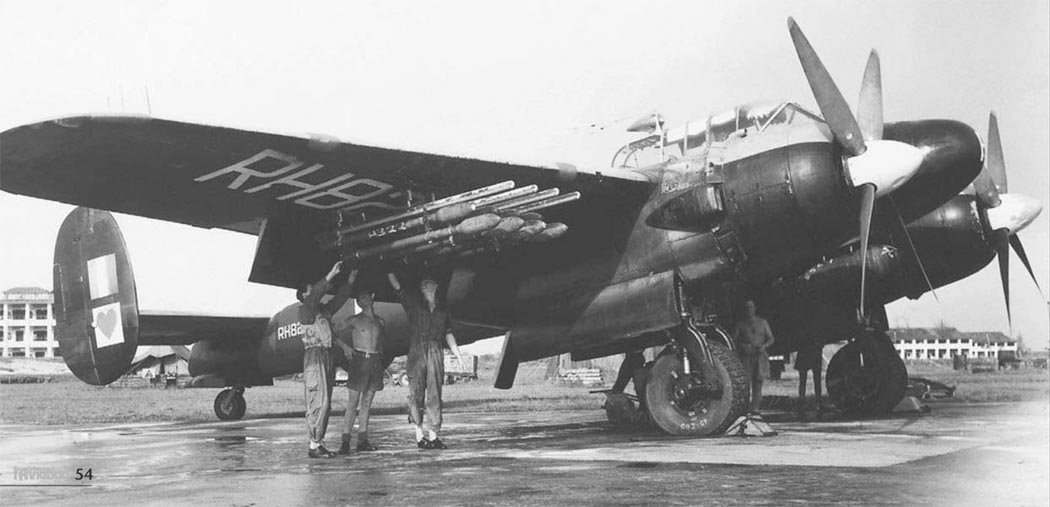
In an attempt to compensate for the reduced strike power of the Brigands, technicians of the 45th Squadron proposed and implemented two-tier rocket rails, allowing 16 rockets to be carried under the wing instead of eight.
However, armament problems persisted; in the humid climate, the durability of cannon barrels sharply decreased, requiring replacement after every 500 rounds. When two Brigands, along with their crews, were lost in January-February 1951 due to shell explosions in the gun barrels, cannon firing was completely prohibited, with the ban only lifted in June.
June 1951 proved to be a truly “black” month for both Malayan Brigand squadrons. On the very first day of the month, an 84th Squadron aircraft crashed at Tengah while attempting to land with one inoperative engine, burying three crew members in the wreckage.
Four days later, another aircraft from the same squadron crashed—one of its engines simply detached in flight. In this incident, the pilot managed to parachute out, but the navigator perished (in Malaya, Brigands often flew with a two-person crew instead of the prescribed three). On June 15, an aircraft from the 45th Squadron was lost for the same reason. This series of disasters halted the Brigands’ participation in Operation Warbler, aimed at clearing guerrillas from the Johor area. On June 18, all flights of this aircraft type were prohibited until the causes of the crashes were determined.
It was discovered that after approximately 400 hours of operation, cracks appeared in the Brigands’ propeller blades, leading to severe engine vibration and ultimately to the failure of the engine mount. British specialists promptly replaced the propellers and engine mounts. By July 12, two Brigands—one from each squadron—flew a ground attack mission over the Sungai Siput area.
Gradually, the number of combat sorties increased, and the operational area of the Brigands expanded. While they previously operated solely from Tengah airfield, in the second half of 1951, the 45th and 84th Squadrons also began using Kuala Lumpur and Butterworth airbases.
The highest number of combat sorties occurred in November, when the British conducted massive “reprisal actions” in response to the death of High Commissioner for Malaya, Henry Gurney, on October 6, 1951. However, the Brigand’s career in combat units was nearing its end.
In early 1952, the 45th Squadron was re-equipped with twin-engine piston fighter-bombers, the de Havilland Hornet (interestingly, this unit made its last Brigand sortie on February 7 – exactly two years after its last Beaufighter sortie). The surviving Brigands were transferred to the 84th Squadron. In March 1952, this unit was divided into two independent flights, A and B, which alternately rotated on duty at Kuala Lumpur airbase. However, by June, Hornets from the 45th Squadron arrived, and the Brigands were once again concentrated in Singapore.
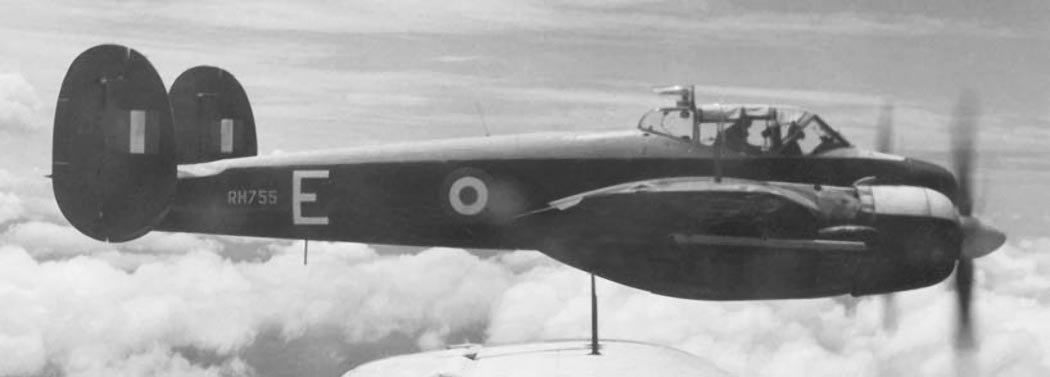
The only combat loss during this period was RH755, which crashed on May 3 while attacking a target near Lake Chenderoh. After launching rockets, the right wingtip detached. In addition to the two crew members, a passenger – a technician who had pleaded with the pilot to take him on a combat sortie “to see the war” – also died.
On December 20, another aircraft crashed during a training flight – its right wing also detached during a dive recovery. It became evident that the Brigands were beyond their useful life, and in early 1953, all flights were permanently prohibited. On January 16, an order was issued to disband the 84th Squadron. In total, during the Malayan campaign, Brigands carried out 4513 combat sorties.
It is difficult to give a definitive assessment of the Brigand. After all, this aircraft was never used in the role for which it was designed. Undoubtedly, the main reason for its high accident rate was the challenging climatic conditions of its operational areas, exacerbated by inadequate maintenance facilities. At the same time, pilots who flew Brigands noted its ease of control, good cockpit visibility, and stability as a weapon platform. It is worth noting that sources contain virtually no information about serious incidents involving training Brigands flying in the home country under temperate climates and from well-equipped airfields.
Technical Specifications
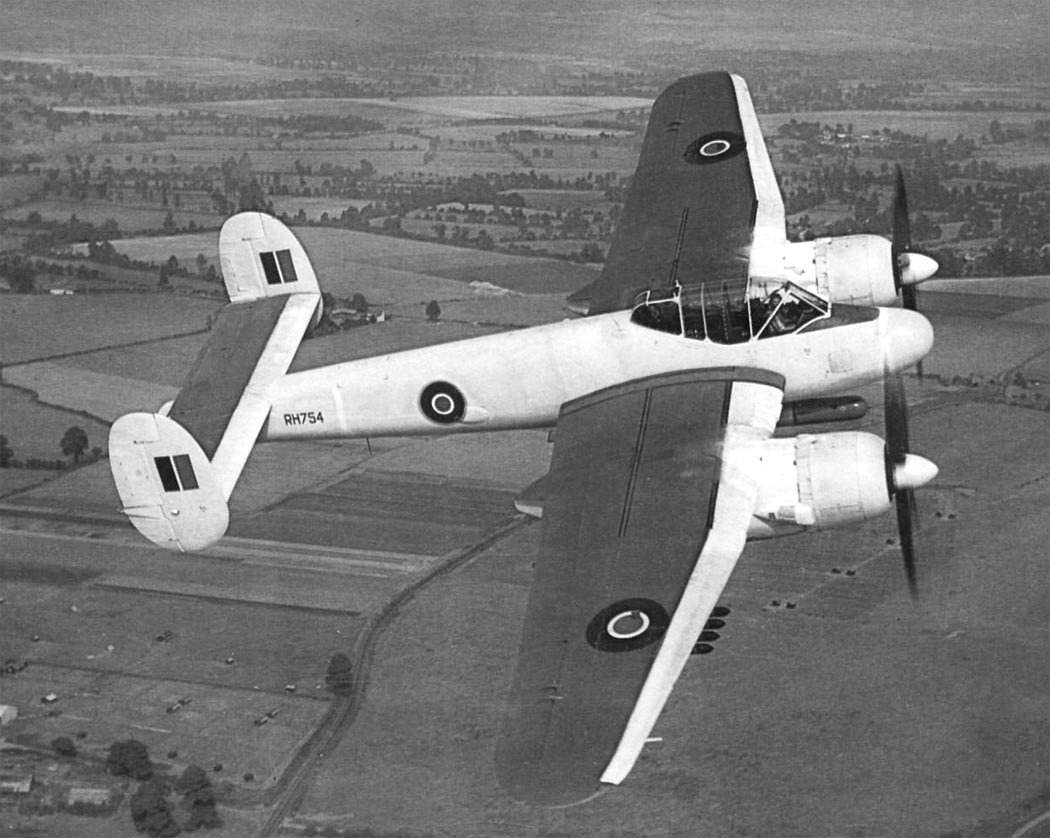
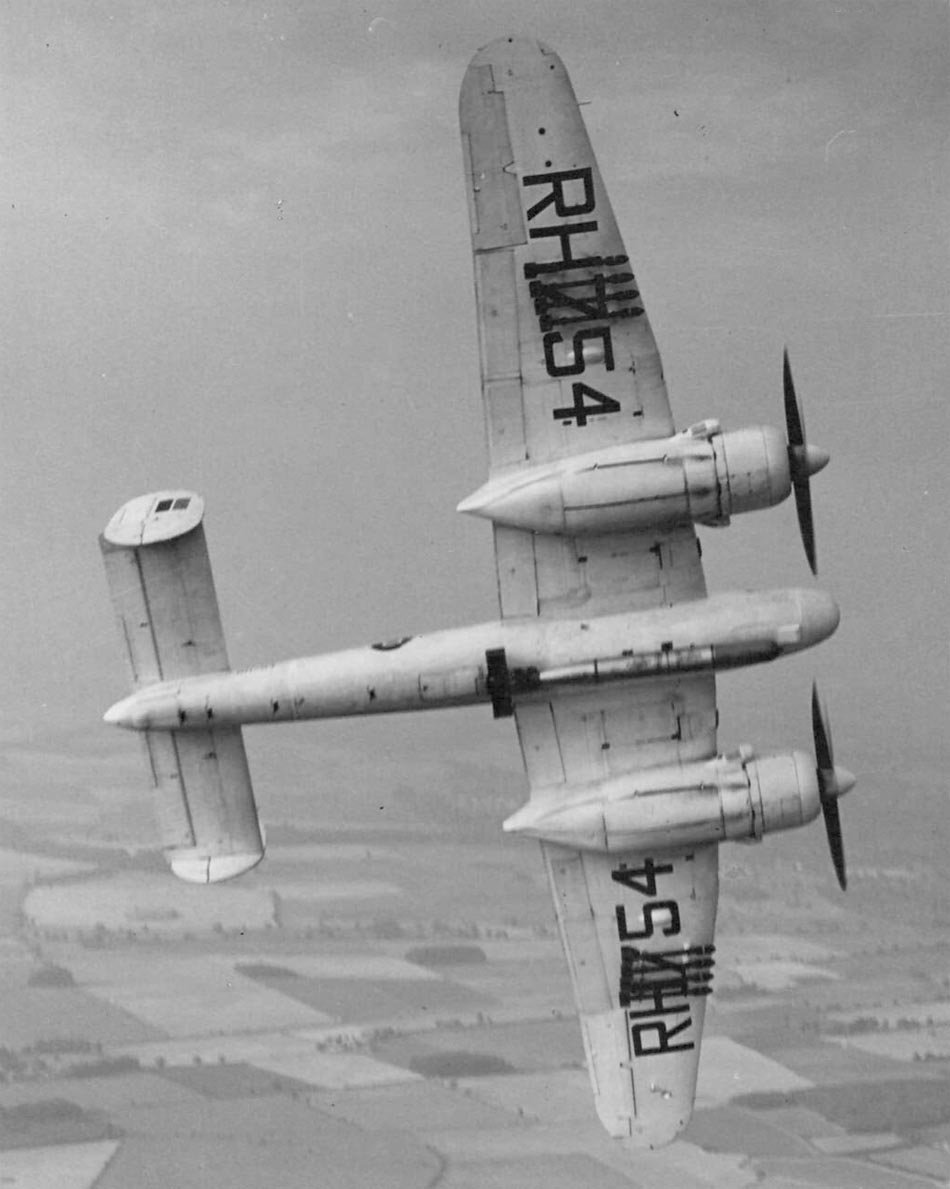
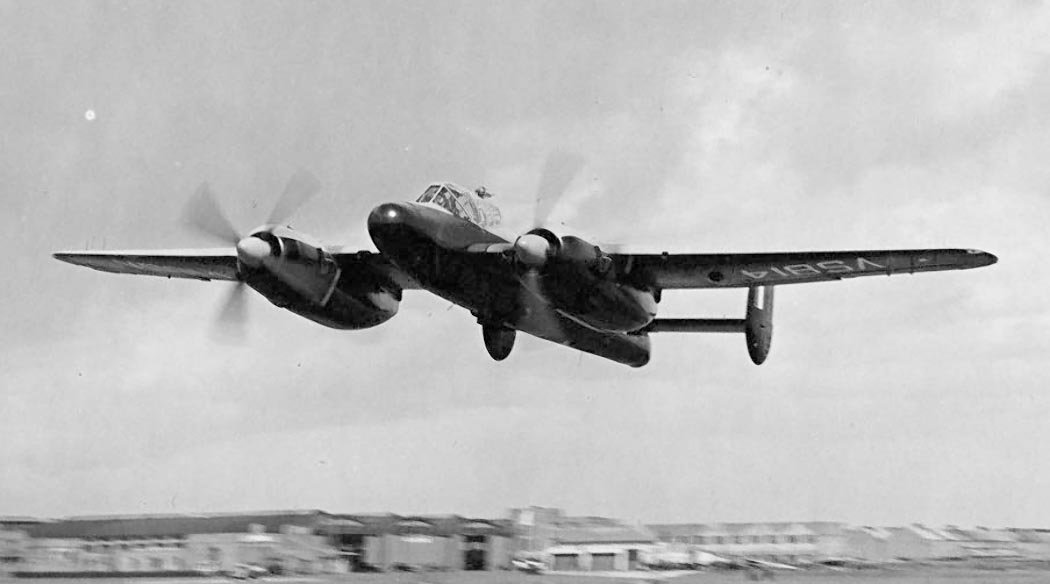
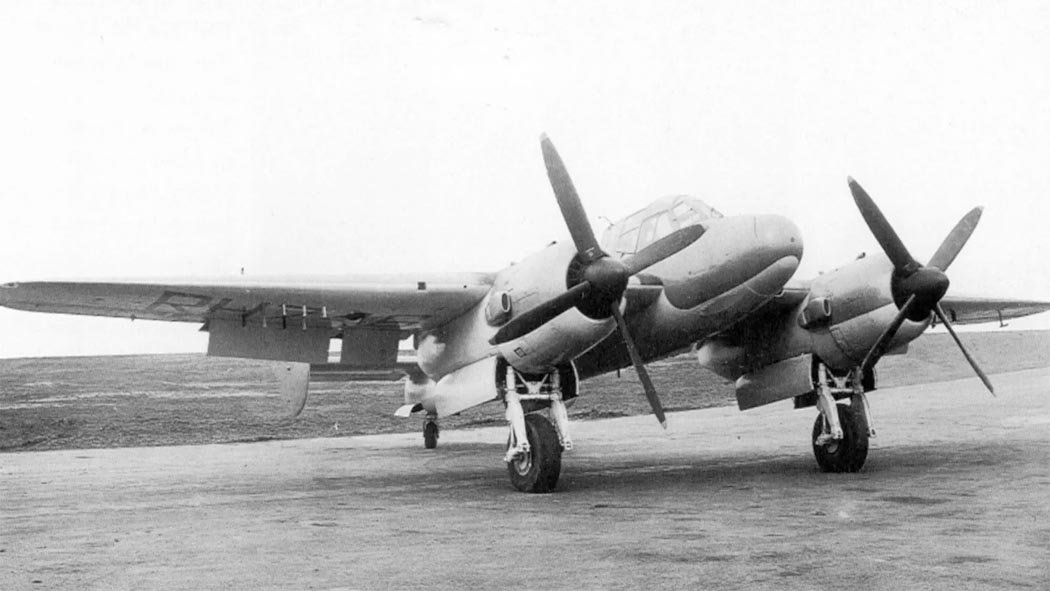
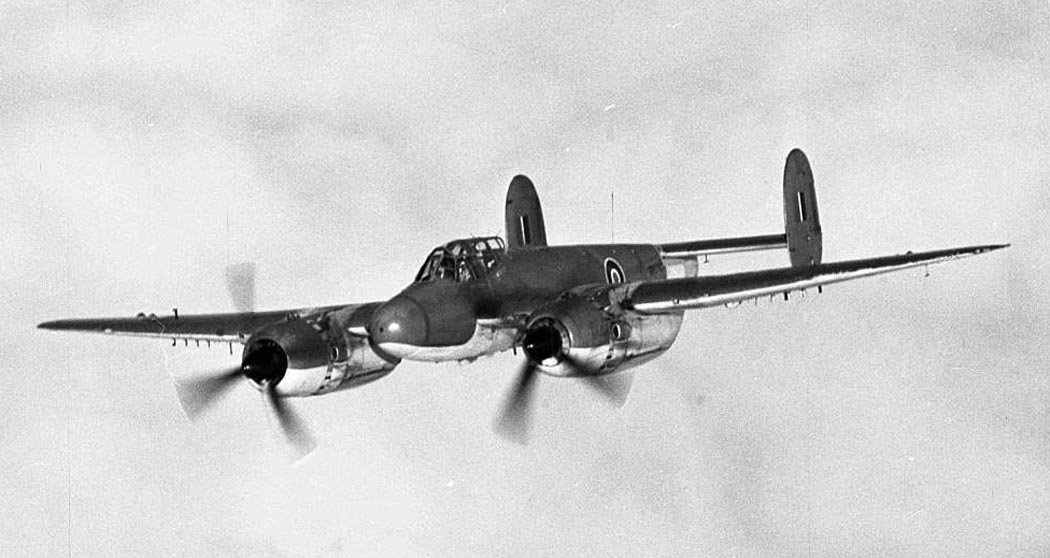
The Brigand B Mk.1 was a three-seat, twin-engine, long-range bomber-attack aircraft, a mid-wing monoplane of all-metal construction, featuring classic retractable landing gear and a twin-fin vertical tail.
Fuselage: Semi-monocoque, oval cross-section, constructed from light alloys; the crew cabin section was partially armored.
Wing: Two-piece (center section and outer panels), two-spar structure with stressed skin.
Horizontal stabilizer: Set at 0° incidence, rectangular in planform; vertical fins were oval endplates on the tips of the horizontal stabilizer; empennage structure and skinning made of light alloys (except for fabric-covered rudders).
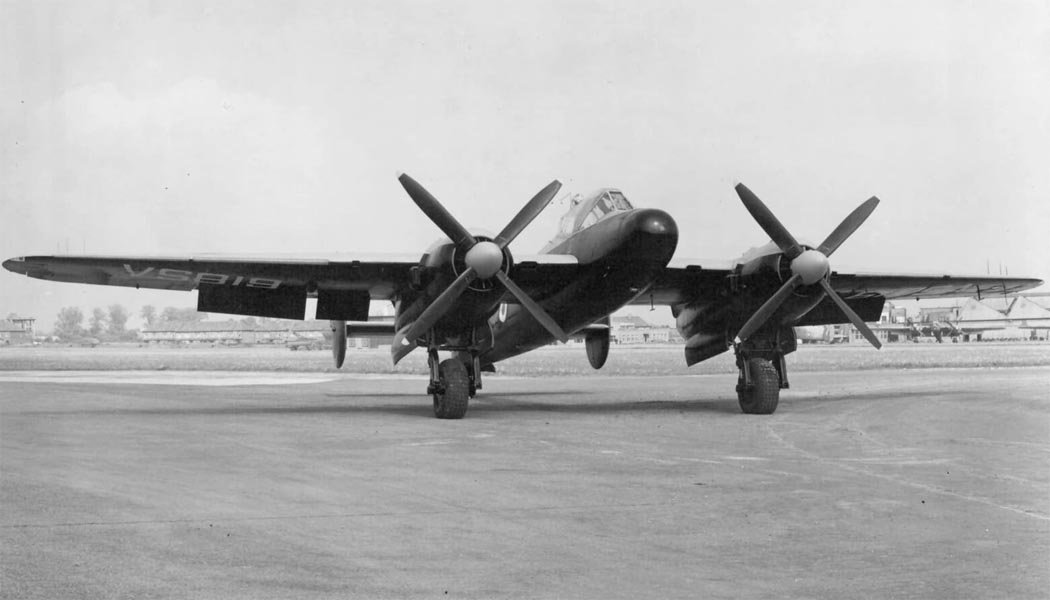
Landing Gear: Main single-wheel struts with oleo-pneumatic shock absorption, fully retracting rearward into the engine nacelles; tail wheel retracting forward.
Powerplant: Two 18-cylinder, air-cooled Bristol Centaurus 57 engines, each rated at 2470 hp (briefly, with water-methanol injection, 2810 hp); four-bladed propellers.
Armament: Four 20mm Hispano cannons, up to 907 kg of bombs on external hardpoints; 8 (up to 16 with two-tier rails) 60-pound unguided rockets under the outer wing sections.
Technical Specifications
| Modification | Brigand B.1 |
| Wingspan, m | 22.05 |
| Length, m | 11.15 |
| Height, m | 5.33 |
| Wing area, m2 | 66.70 |
| Empty weight | 11611 |
| Maximum takeoff weight | 17690 |
| Engine type | 2 Piston engine Centaurus 57 |
| Power, hp | 2 x 2470 |
| Maximum speed, km/h | 576 |
| Cruising speed, km/h | 501 |
| Range without external tanks | 3220 |
| Range with external tanks | 4510 |
| Rate of climb, m/min | 460 |
| Service ceiling, m | 7925 |
| Crew, crew | 3 |
| Armament: | 4 fixed 20-mm Hispano Mk.5 nose cannons; underwing hardpoints for rockets or bombs up to 907 kg |
Image and diagram gallery of the Bristol Brigand
 Brigand |
 Brigand |
 Brigand |
 Brigand |
 Brigand |
 Brigand |
 Brigand |
 Brigand |
 Brigand |
 Brigand |
 Brigand |
 Brigand |
 Brigand |
 Brigand |
 Brigand |
 Brigand |
 Brigand |
 Brigand |
 Brigand |
 Brigand |
 Brigand |
 Brigand |
 Brigand |
 Brigand |
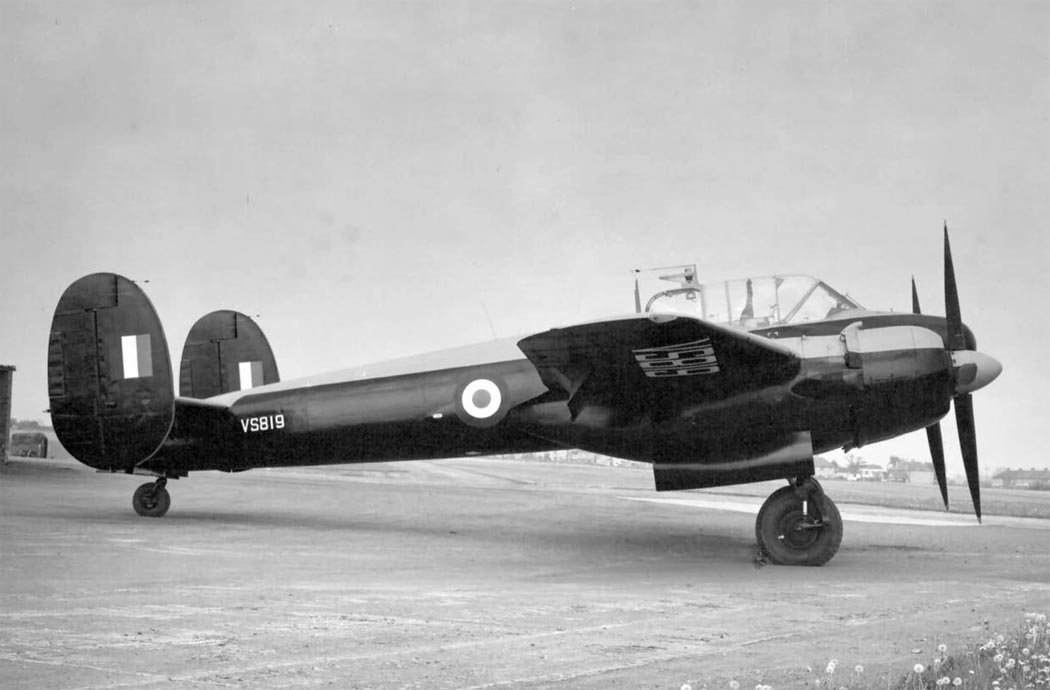 Brigand |
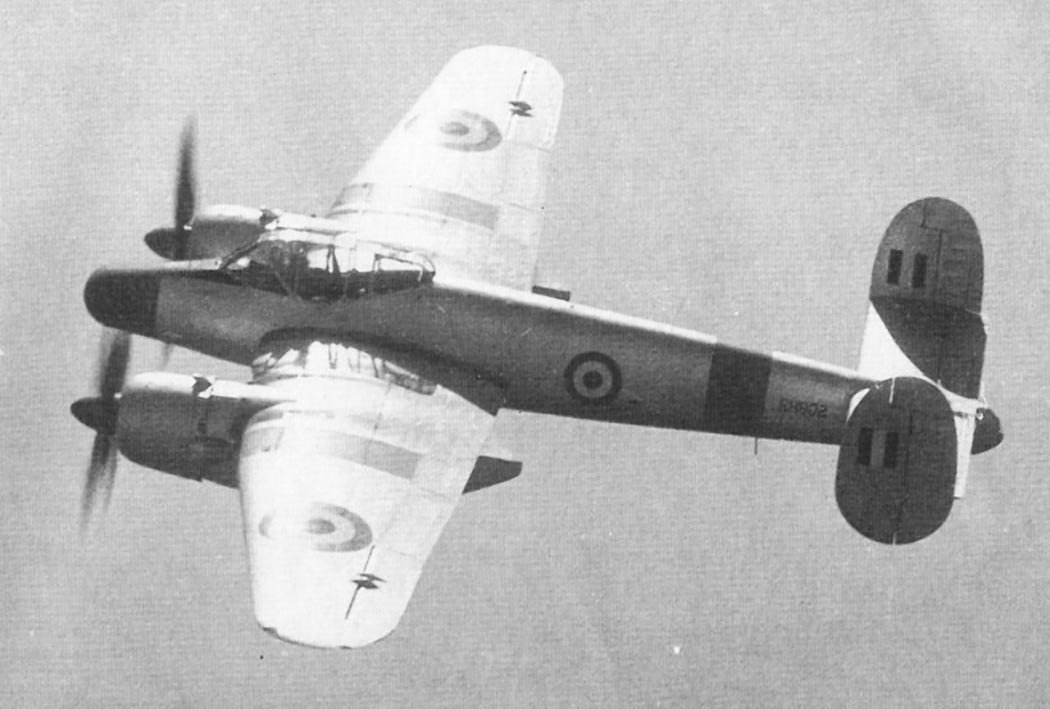 Brigand |
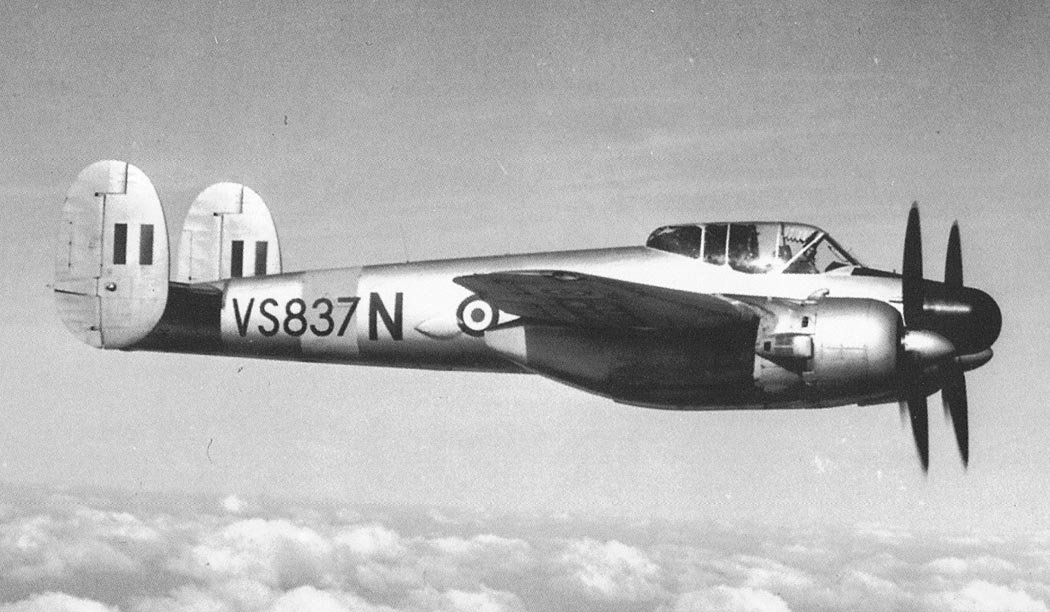 Brigand |
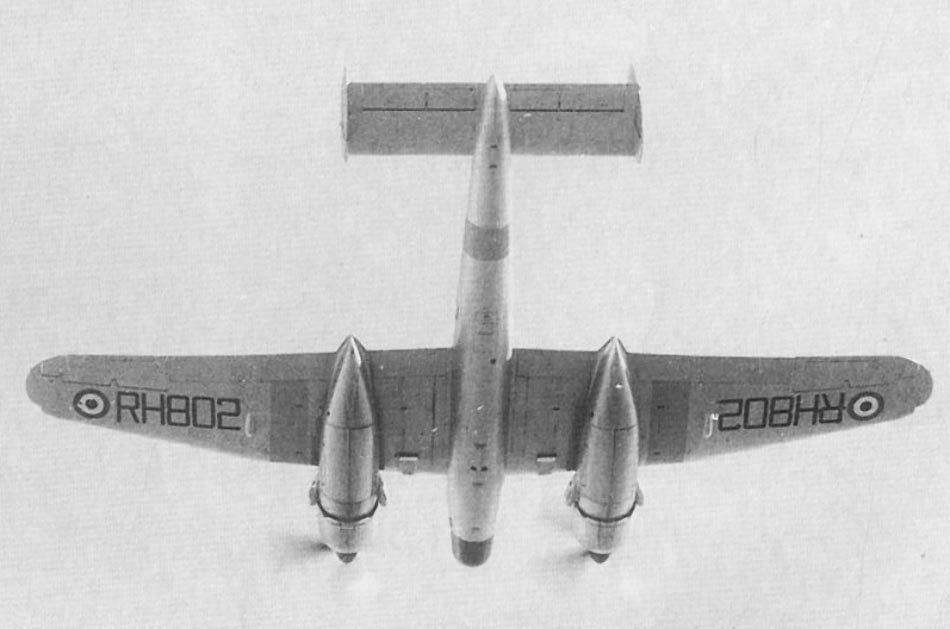 Brigand |
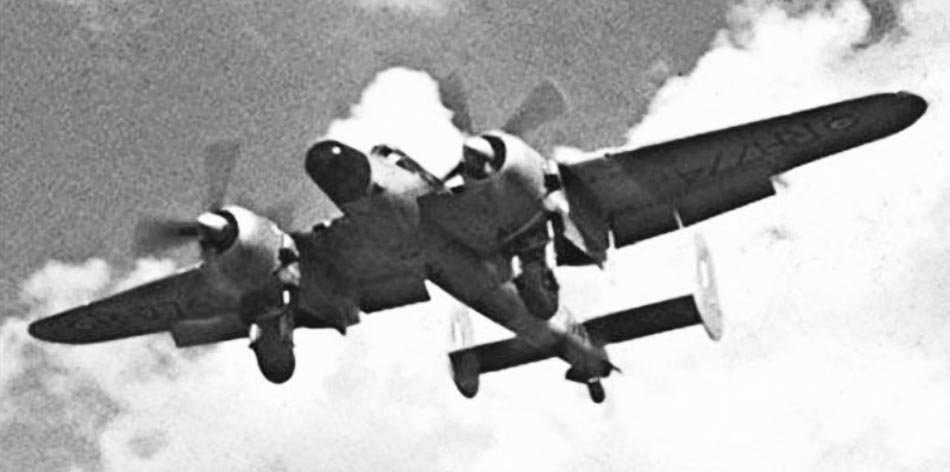 Brigand |
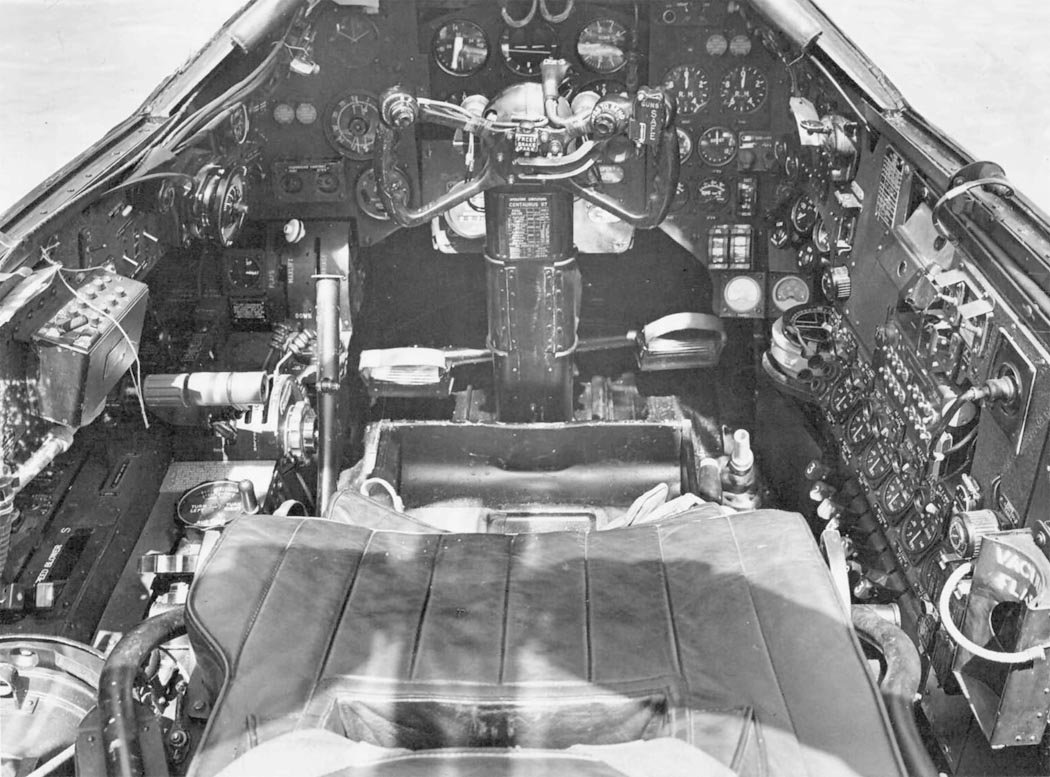 Brigand |
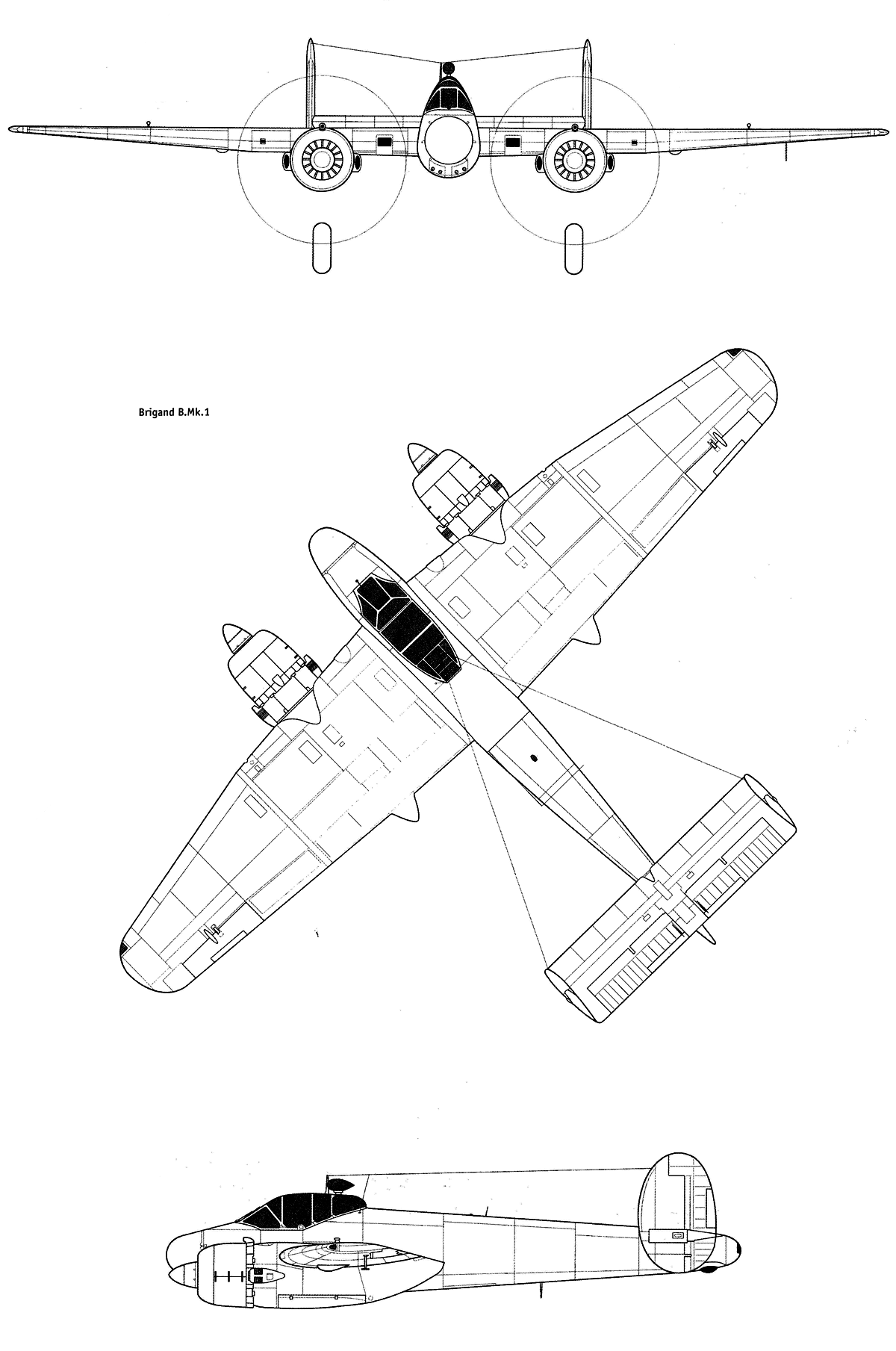 Brigand |
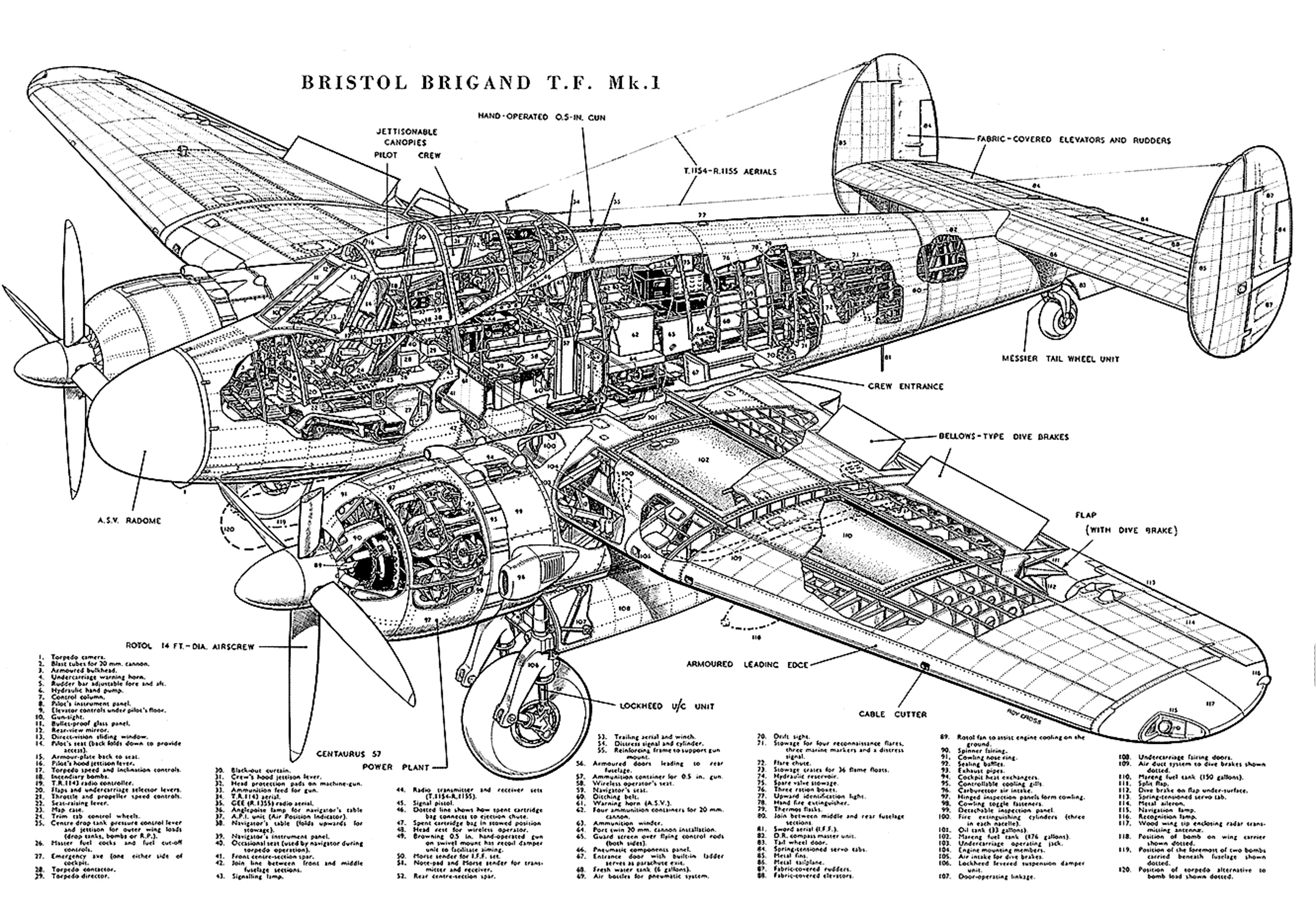 Brigand |
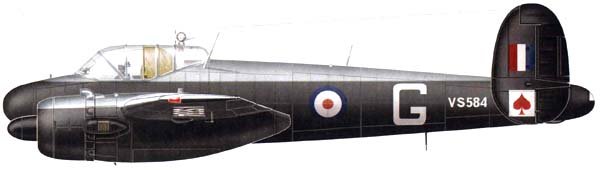 Brigand |
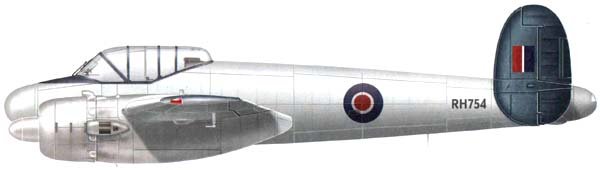 Brigand |