In the late 1940s and early 1950s, British aircraft carrier air groups were exclusively equipped with fighter-bombers. For instance, in Korea, Royal Navy pilots utilized piston-powered Hawker Sea Fury and Fairey Firefly aircraft, which were originally developed during World War II.
The Korean War demonstrated that fighter-bombers had limited capabilities for ground attack and were extremely vulnerable to enemy anti-aircraft fire. However, fighter-bombers continued to dominate the decks of British aircraft carriers for a long time. This made sense, as only aircraft like the jet-powered Hawker Sea Hawk and de Havilland Sea Venom could provide adequate air defense for formations and respectable strike capabilities, operating from relatively small carriers of the Colossus and Hermes classes.
Nevertheless, there was a growing need to introduce “pure” bombers into carrier air groups. This became particularly acute when the USSR embarked on its “Large Fleet” program, which included the construction of 26 cruisers (Projects 68-K and 68-bis) and 80 destroyers (Projects 30-K and 30-bis), all boasting powerful armament and protection. To counter these, the Royal Navy, unable to build and maintain a significant number of warships, required deck-based strike aircraft capable of overcoming the potent air defenses of Russian cruisers and destroyers, which comprised radar-guided anti-aircraft guns and, prospectively, surface-to-air missiles.
The most modern British deck-based strike aircraft of that era was the Westland Wyvern, equipped with a turboprop engine. By the early 1950s, it was already hopelessly outdated, a fact further confirmed by the results of the 1956 Suez Campaign. Naval command had long been aware of the Wyvern’s true combat qualities (indeed, ten years had passed from project to implementation), and in June 1952, it formulated Naval Staff Requirements Number 39 (NA.39), later designated M148T. These specified the requirements for a new, specialized jet combat aircraft capable of effectively performing combat missions by flying at low and very low altitudes.
This radar-equipped machine was required to fly at 0.85 Mach at altitudes of around 200 feet (60 meters), ensuring that enemy countermeasures would be too late after detection. The aircraft, capable of carrying 4000 pounds (1.8 tons) of ordnance, including nuclear weapons, needed an operational radius of no less than 460 miles (740 kilometers). Furthermore, the new bomber had to have a maximum weight of no more than 45000 pounds (20.4 tons) and a length of no more than 51 feet (15.5 meters) to operate from British aircraft carrier decks and fit through their aircraft lift hangars.
Twelve projects were submitted by British aviation firms for the competition, including the B.103 from Blackburn&General Aircraft Ltd. Despite Blackburn not having designed combat aircraft for quite some time and focusing on transport aircraft production, the B.103 project represented a very modern machine, although its creation proved to be a challenging endeavor.
Initially, attempts by the design team led by Barry Late to reconcile mutually exclusive requirements—such as the need for a large wing area for acceptable landing speeds versus minimizing it for ultra-low altitude flight, a large combat radius demanding significant fuel reserves (and thus increased takeoff weight), and weight restrictions coupled with the low thrust and high fuel consumption of contemporary jet engines—led to a rather monstrous design. The result was a large, two-seat aircraft by carrier standards, featuring a powerful swept wing offering maximum lift at the low speeds necessary for carrier operations, and a T-tail. It was equipped with two Armstrong Siddeley Sapphire Sa.7 engines, each with 11000 pounds (4990 kilograms) of thrust, which were planned to have swivel nozzles for acceptable takeoff and landing performance. In one project version, the pilots were seated side-by-side in the cockpit, making the aircraft strongly resemble the American Grumman A2F, the future Intruder, which was developed slightly later than the “Buccaneer” but under similar requirements.
This “monster” was, of course, rejected by the fleet, but Blackburn was already preparing a new project. The B.103 was saved by the application of the latest developments in aerodynamics.
Innovative Design Features
Developers reduced the wing area, aiming to enhance its lift properties by implementing a Boundary Layer Control System (BLCS), sometimes called a boundary layer blowing system. This system radically improved airflow over the wing at low speeds, eliminating flow separation and increasing lift, thereby allowing for acceptable landing speeds with a smaller wing area and significant bomb load. It was created through the combined efforts of John Antinello from NASA, who initially proposed the idea; Dr. John William from the National Physical Laboratory; and Levis Buddington from the British Admiralty, who further developed, refined, and demonstrated it. Air bled from the engine compressors was blown through a thin slot running along the entire leading edge of the wing and a second similar slot to blow over the flaps. The BLCS was also present on the horizontal stabilizer, where air was fed through a slot on its underside. Despite the difficulties encountered by BLCS developers, it fully rewarded their efforts, making the problem of wing and stabilizer icing irrelevant: the hot air emitted by the BLCS gave ice no chance.
For low-altitude flights, the wing needed to possess great strength and rigidity. It featured two spars, a relatively sparse rib set, and a robust stressed skin. The outer wing panel consisted of an upward-folding section (120 degrees) and a center section. The center section spars were connected to each other through powerful annular frames enclosing the engine exhaust pipes; these elements were made of high-strength steel. The aircraft’s creators made every effort to reduce the number of airframe parts, as connection points are the weak link in any structure. Consequently, for example, the skin of the outer wing section, made of high-strength aluminum alloys, consisted of only six parts (three top and three bottom). To produce such parts, Blackburn had to develop special high-precision milling machines (which were designed in just one year, while other British firms requested two and a half years for their development); many other structural elements were processed using a powerful press or chemical milling (etching).
In addition to the BLCS wing, another innovation applied to the B.103 was the fuselage, designed using the “area rule.” This was the only way for the aircraft to achieve high transonic speeds without using afterburners, especially at low altitudes. The trade-off for high flight performance was the aircraft’s appearance, as, in accordance with the “area rule,” the fuselage’s mid-section behind the wing had to be enlarged, distorting the B.103’s sleek lines with a huge, thick “rear.” It should be noted immediately that this unaesthetic feature proved very useful when it came to filling the aircraft with equipment: there was ample space for its placement in the aft fuselage.
The nose of the fuselage housed a Ferranti Blue Parrot radar. Although it did not yet provide terrain-following capability, it was highly useful for navigation and targeting.
The B.103’s crew consisted of two people, a pilot and a navigator-weapons systems operator, seated in tandem in the cockpit. Their seats, to improve visibility, were not on the fuselage centerline but were offset two inches to the left (pilot) and right (navigator) respectively. The cockpit canopy opened by sliding backward, and a transparent visor was mounted in front of the pilot’s instrument panel to protect the operator during ejection.
However, the main feature of the Blackburn aircraft’s fuselage was its bomb bay, a rather rare feature on aircraft of this type. It was absolutely essential because the aircraft’s main weapon—the Green Cheese guided nuclear bomb—could only be delivered to the target via internal carriage. At the same time, the bomb bay not only had to accommodate the special munition but also had to be able to release it easily, which at near-Mach speeds close to the ground was a very problematic task: under the impact of the rushing airflow, conventional bomb bay doors might simply fail to open.
Blackburn found a very elegant solution to this problem: before releasing the bomb, the bomb bay “turned inside out.” There was only one door, and the munitions were attached to its inner wall. During release, it rotated 180 degrees around its longitudinal axis, and the bombs were then on “external suspension” outside the aircraft. This not only solved the problem of bomb release but also… reduced the aircraft’s radar signature at the most critical moment of the attack, as the open doors of a traditional bomb bay increased the bomber’s detectability in the radio spectrum. Thus, slowly but surely, elements of Stealth technology were being created…
Powerplant and Performance
The “heart” of the B.103 was not the Sapphire or Avon engines, recommended by the Ministry of Aviation, but the weaker de Havilland PS.43 Gyron Junior, which were a scaled-down version of the Gyron engines developed for unfulfilled British supersonic aircraft projects. These engines entered production under the name Bristol Siddeley Gyron Junior Mk.101 and had a thrust of only 8000 pounds (3630 kg). The main reason for choosing the Gyron Junior was its relatively low fuel consumption and high reliability; however, as subsequent events showed, the engines became the Buccaneer’s weak point, as the already modest Gyron Junior thrust decreased by another ten percent when the BLCS was in use.
Since the engines had to operate at full power during landing to feed the BLCS, airbrakes were recognized as the only way to reduce speed. These were located only in the aft fuselage behind the tail surfaces. When retracted, they formed a conical fairing at the fuselage’s end, which, when necessary, split into two halves.
For storage in the aircraft carrier hangar, the nose cone with the radar folded to the left, and the airbrake doors opened maximally, reducing the aircraft’s overall length by three and a half meters.
The aircraft’s fuel tanks, located in the upper fuselage behind the crew cockpit, held 1871 US gallons (7092 liters) of kerosene. An additional 528 gallons (2000 liters) were accommodated in a ferry tank within the bomb bay. Furthermore, internal underwing pylons could carry external fuel tanks, initially conventional, and later 300-gallon (1136 liters) semi-conformal tanks.
Armament, in addition to the bomb bay, was carried on four underwing pylons. In total, the aircraft was designed to carry eight 1000-pound (454 kg) bombs (four in the bomb bay and one on each underwing pylon). Unguided rocket pods could also be suspended under the wings. The bomb bay could also house a useful cargo container, mainly used by pilots to transport personal belongings during redeployments, while the “COD” (Carrier Onboard Delivery) role was successfully performed by Fairey Gannet aircraft. The aircraft had no built-in gun armament, although a container with two 30mm Aden cannons was planned for the bomb bay, but it was never developed.
The Americans provided significant assistance to the British in the aircraft’s creation, as both the BLCS and the “area rule” were developed in America. Many tests also took place in the USA; for example, the aircraft’s flutter characteristics were tested in NASA’s wind tunnel at Langley Field. Additionally, the Americans processed test results, supplied equipment, and offered consultation on new materials.
Work on the B.103 halted in the summer of 1954 because the Admiralty could not select a competition winner. However, by July of the following year, military experts finally recognized the B.103 as the most promising. The development program for the new deck-based bomber was initially declared top secret, and until 1957, the aircraft, built to NA.39 requirements, was hidden under the acronyms BNA or BANA, meaning Blackburn Naval Aircraft and Blackburn Advanced Naval Aircraft respectively. Factory workers transformed BANA into what they considered a more meaningful “Banana Jet,” and this nickname stuck to the aircraft throughout the Buccaneer’s long career. Some sources, however, suggest the B.103’s designation was even more mysterious – ARNA, standing for A Royal Navy Aircraft – in which case the origin of the “Banana Jet” nickname from the acronym seems highly dubious. It’s also said that the “Buccaneer” with its small, “undersized” fin and long, spindle-shaped fuselage somewhat resembled a tropical fruit, but this is also faintly believed.
Prototypes and Early Service
The British Ministry of Aviation ordered two prototypes from the company; the first flight of the new aircraft was scheduled for no later than April 1958. Blackburn barely managed to meet the contract conditions: although all major structural components had been built by early July 1957, engines and equipment were still missing on the first prototype three months before the deadline.
In March, the engines were started for the first time, and soon after, the aircraft was transported under strict secrecy by road from Brough, where the factory was located, to the Royal Aircraft Establishment (RAE) in Thurleigh, near Bedford. Here, after the usual ground tests and pre-flight preparations, which actually only involved replacing a cracked tire on the main landing gear and caused the sole minor delay, the first prototype of the NA.39 aircraft, bearing registration number XK486, made its maiden test flight on the last day of April 1958. The new machine was piloted by Blackburn’s test pilot, Derek J. Whitehead, while the flight test manager, Bernard J. Watson, occupied the second crew position during the first flight. The entire flight, including climbing above 5000 meters, lasted 39 minutes and proceeded without incident.
On July 9, 1958, Derek Whitehead ferried the aircraft for further testing from Thurleigh to the old military airfield of Holme-on Spolding Moore, located approximately 19 km northwest of Brough and leased by Blackburn, as the factory airfield’s runway in Brough was insufficient for conducting full flight tests of the NA.39 aircraft.
On August 26, 1958, the second prototype, XK487, made its maiden flight, and in September, both prototypes flew to the Farnborough Airshow. For XK487, this was only its second flight, and it was displayed statically to a small circle of interested specialists, while XK486, which had accumulated a total of 25 flight hours by then, performed a demonstration flight that was a complete surprise to the spectators.
Subsequently, the first aircraft continued flight tests to determine its performance characteristics, while the second machine, with a thicker wing skin, was primarily used for aerodynamic research and then transferred to Ferranti for an extensive program of research to improve radar performance.
The fate of the first B.103 prototype proved tragic – on October 5, 1968, it crashed during one of its test flights. The aircraft went down near the village of Little Weighton, not far from Brough; fortunately, the crew managed to eject, and the disaster resulted in no human casualties.
Following the initial test results, a new contract was concluded, stipulating the construction of an unprecedented number of pre-production aircraft – a total of eighteen machines. The Admiralty desperately needed the new aircraft and could not afford delays in the NA.39 program (the Wyvern example was fresh in mind) or work stoppages due to prototype losses.
All aircraft were intended for an extensive, multifaceted test program, which was to take place at the company (9 aircraft – including prototypes – for flight tests), at research centers of the Ministry of Aviation Industry (5 aircraft), and with the military (the remaining 6).
The third NA.39 (XK488) was handed over to de Havilland and used as a flying laboratory for experiments with Gyron Junior engines. The main objectives of these experiments were engine refinement, development of fuel consumption reduction methods, increasing engine thrust, and so on. On July 24, 1961, during one of its landings, the aircraft overran the runway and sustained damage. A prefabricated hangar was erected directly on the apron, and the machine was repaired in a short time.
The fourth prototype, XK489, differed from the previous machines by having folding wing outer panels and a braking arrestor hook, and was intended for aircraft carrier deck trials.</p
The fifth aircraft, XK490, was used for armament experiments, and it was on this machine that the original rotating bomb bay door was first installed and tested. During numerous test flights involving the practical application of various types of aerial bombs and other weapons, optimal combat load configurations were determined for the aircraft. In June 1959, this fifth machine was first presented for public viewing at the 23rd Paris Air Show at Le Bourget. It was also demonstrated at the Farnborough ’59 airshow, where the aircraft was again piloted by the now-promoted chief pilot of the company, Derek Whitehead. The fate of XK490 proved even more tragic than XK486’s. Heavenly spirits yearned for bloody sacrifices, and on October 12, 1959, XK490, on which a US Navy test pilot was conducting a familiarization flight alongside a British observer, crashed. The crew managed to eject, but unsuccessfully – in an inverted position – and both pilots perished.
The sixth NA.39 and final prototype (XK491) was used for air-to-air refueling trials; a modified English Electric Canberra bomber (WH735) served as the tanker. XK491 was fitted with a retractable refueling probe, which was later abandoned in favor of a removable non-retractable one.
Subsequently, serious malfunctions were discovered in the onboard electrical system of XK491. Rectifying these issues significantly enhanced the reliability of the electrical system in future production aircraft.
The first B.103s differed from pre-production and production machines by a short nose radome, which did not yet house a radar but from which a long probe with sensors protruded, as well as the absence of a fin fairing. Although the aircraft were built for the fleet and wore a “marine” paint scheme, they did not carry the traditional “ROYAL NAVY” inscription common to the British fleet – instead, the fins of the first prototypes bore five white squares, and on the fifth and sixth aircraft, the fin was completely white.
The seventh NA.39 (XK523) was already equipped with a full set of electronic equipment and became the first of the subsequent fourteen pre-production machines, fully ready for operational use. On January 19, 1960, it performed its first landing on the deck of HMS Victorious in the English Channel.
Besides XK523, prototype XK489 also participated in flights from Victorious. Over three days, despite extremely poor weather conditions, these aircraft performed 30 takeoffs and landings on the deck, proving in practice that the new machine could successfully operate from aircraft carriers.
It is worth noting the unusual posture the “Buccaneer” had to adopt during takeoff. The aircraft balanced on its main landing gear, prevented from tail-striking the deck by a catapult bridle attached to the wing. Thus, in the launch position, the nose landing gear hung in the air.
The next two aircraft were intended solely for testing: XK524 had two additional underwing fuel tanks, increasing its range, while XK525 served to fine-tune the integrated electronic navigation and weapon management system.
On August 20, 1960, the hitherto unnamed Blackburn aircraft finally received its official designation: Buccaneer S. Mk. 1.
Meanwhile, four more pre-production aircraft (XK526 – XK529) were built for the so-called C-squadron, transferred to the fleet for further carrier trials. In January 1961, two aircraft, XK526 and XK527, were tested aboard HMS Ark Royal in the Mediterranean Sea. During these trials, the high effectiveness of the BLCS system was proven – its use reduced landing speed by 46 kilometers per hour. Subsequently, aircraft XK526 briefly returned to the factory for modification, and in July of the same year, it flew from the ship to Singapore for tropical condition tests.
C-squadron aircraft also flew from other British aircraft carriers. There were casualties too. On August 31, 1961, during one of its flights, the carrier-based XK529 crashed. The aircraft fell into Lyme Bay, and the crew perished.
The eighth pre-production aircraft (XK530), which made its first flight on May 12, 1961, was used almost exclusively for factory tests.
The remaining six pre-production aircraft were immediately transferred to the so-called Trials and Working-Up Unit, established at Naval Air Station (NAS) Lossiemouth, which became the “home” for the “Buccaneers” for many years. Subsequently, on March 7, 1961, this unit, in accordance with standard practice in UK naval aviation, was redesignated as 700Z Flight. Initially, 700Z Flight, led by Commander A.J. Leahy, operated only two pre-production aircraft, XK531 and XK532. By late 1961, its aircraft fleet was augmented by the next three machines, XK533-XK535, and shortly thereafter, in December, the last aircraft (XK536) was also delivered to the unit, completing its full complement.
In October 1961, all six aircraft in 700Z Flight received new tail codes, LM 680-LM 685 (the LM code indicated the aircraft’s base – Lossiemouth air station). From this time, a new paint scheme was introduced for the “Buccaneer” aircraft. Henceforth, all aircraft were entirely painted white to enhance the dispersion of light energy from nuclear flashes, as “Buccaneers” were planned for military operations involving nuclear weapons. However, they never received the promised Green Cheese, and the “Buccaneers” had to make do with the older Red Beard, developed earlier for the RAF Canberra bomber. Red Beard was a rather old nuclear weapon, weighing 2000 pounds (900 kg) and having a TNT equivalent of 14-15 kilotons. The bomb was armed on the ground. For its placement in the “Buccaneer’s” bomb bay, a special door was used, in which the bomb was in a semi-recessed position and which was intended to dampen the impacts inevitable during deck operations.
Each aircraft of 700Z Flight performed forty sorties per month. Flying at altitudes from sea level to 12000 meters, the crews of these machines conducted weapons tests and developed the best tactical methods for the combat deployment of “Buccaneers.” Experimental flights utilizing terrain-following radar were also conducted in the Scottish Highlands area.
In September 1961, Derek Whitehead brought the twelfth pre-production aircraft, LM 683 (XK534), to the Farnborough Airshow. Soon after, the aircraft visited Fürstenfeldbruck Air Base near Munich, making its first appearance in West Germany and abroad in general. The visit to Germany was primarily a promotional move: the Germans were looking for a replacement for their old Sea Hawks and showed interest in purchasing “Buccaneers” for their Bundesmarine. However, in the end, due to the passive stance of the British government, the Germans preferred American F-104G Starfighters to the “Buccaneers.” The Yankees convinced the Germans that the Lockheed fighter could successfully attack naval targets and was unmatched in air combat. The Germans believed this, for which, as is known, they paid a heavy price.
Back in September 1958, Blackburn received an order for the supply of 50 production aircraft to the fleet, the first of which (XN922) took to the air in January 1962 at the Boscombe Down test center. However, on July 5, 1962, during a landing, the aircraft suffered an accident and was severely damaged.
The second production aircraft (XN923) was also not delivered to the fleet and remained at the Boscombe Down test center until April 1965.
A production “Buccaneer” was also among the exhibits demonstrated at the Farnborough Airshow ’62.
Production Buccaneer S. Mk. 1 aircraft were equipped with two Gyron Junior Mk.101 engines and, thanks to the use of the boundary layer blowing system, possessed good takeoff and landing characteristics. In level flight at sea level, they could reach speeds of up to 1158 km/h (Mach 0.95). However, due to high fuel consumption, the range of these aircraft did not exceed 965 kilometers. Furthermore, engine thrust at sea level proved to be somewhat less than expected, especially with the BLCS engaged.
The aircraft’s armament typically consisted of 4 x 1000-pound bombs or 4 unguided rocket launchers, initially 2-inch caliber (36 rockets each), and later 2.7-inch Matra SNEB (18 rockets each). A typical combat flight profile was as follows: takeoff from the deck, flight at 6000 meters to a point 480 kilometers from the target, then descent to sea level, flight at 740 kilometers per hour to a boundary 160 kilometers from the target, acceleration to 1045 kilometers per hour, and attack, during which, alongside conventional munitions, nuclear bombs could be dropped using an “over-the-shoulder” maneuver.
Guided weapons did not become a staple on the Buccaneer S. Mk. 1: although American AGM-12 Bullpup air-to-ground missiles were tested on it in 1965, due to the peculiarity of their guidance system, they were deemed unsuitable for the “Buccaneer” and rarely used in practice.
In the bomb bay, in addition to bombs, a fuel tank, and a cargo container, a reconnaissance photo equipment container could be placed. It included five vertically oriented cameras and one forward-looking camera for long-range, panoramic, and night photography, as well as a device for deploying illuminating bombs, used as a photographic flash. These, however, were rarely used; for night illumination, Gloworm rockets, eight of which were suspended on underwing pylons, were preferred.
In the summer of 1962, the first combat unit equipped with “Buccaneers” – 801 Naval Air Squadron – was formed at Lossiemouth. It received its first “Buccaneer” (XN925) on July 26, and on February 20, 1963, seven of its aircraft (the last, eighth, remained ashore) redeployed to HMS Ark Royal. The brief voyage concluded in May, but the 801 Squadron’s “Buccaneers” were already preparing for a new deployment, which began on August 14. This time they had to change their tail codes from “R” to “V” and relocate to HMS Victorious, bound for the Far East. On the return journey in January 1964, the 801st Squadron’s aircraft had to make a brief stop to quell insurgents in East Africa. The deck-based aircraft here played a role as a deterrent, and the “Buccaneers” did not need to use their weapons.
After almost two years at sea, in July 1965, HMS Victorious returned to England, and 801 Squadron, flying back to Lossiemouth, was disbanded.
Based on the disbanded 700Z Flight (January 15, 1963), 809 Naval Air Squadron was formed under the command of Lieutenant Commander I.F. de Winton. It was based at Lossiemouth, and its tasks, in addition to front-line operational deployment (as major combat units were designated in the UK), included introducing pilots trained by 736 Training Squadron into service. Subsequently, it became purely a training unit, resulting in its number first changing to 709, and then being merged altogether with 736 Squadron.
The third Buccaneer S. Mk. 1 combat squadron was 800 Naval Air Squadron, formed on March 19, 1964, at RNAS Yeovilton under the command of Lieutenant Commander J.C. Nather. In early December 1964, the squadron flew aboard “its” aircraft carrier HMS Eagle, heading for the Far East, where upon arrival it participated in demonstration maneuvers with Malaysian and Singaporean forces.
In March 1966, these aircraft participated in the oil blockade of Rhodesia, patrolling the coast of Mozambique. In September of the same year, the unit returned home to Lossiemouth.
As a result of the “tropical” deployments, it became clear that the engine power was insufficient for full-weight deck takeoffs in high air temperatures. Consequently, “Buccaneers” had to be catapulted with minimal fuel and immediately refuel mid-air from Supermarine Scimitar tankers after takeoff.
The last squadron to receive the S. Mk. 1 in June 1967 was 803 Naval Air Squadron, which, while converting from Scimitars to “Buccaneers,” temporarily used four aircraft of this modification.
Four production Buccaneer S. Mk. 1 aircraft were never accepted into active squadrons for various reasons. These included XN922 and XN923, which were transferred, as mentioned above, to the Boscombe Down test center, and two other aircraft, XN952 and XN966, lost in crashes, with one resulting in the loss of the crew.
Overall, despite a large number of flight incidents, pilots spoke very positively about the new aircraft, bestowing upon them the honorary nickname “Brick” for their enormous structural strength and powerful armament. The sole weakness of the Buccaneer S. Mk. 1 was its Gyron Junior Mk.101 engines, which were too thirsty and lacked sufficient thrust. The Admiralty learned about this after prototype trials and proposed that Blackburn install different engines on the “Buccaneer.” Ultimately, the Rolls Royce Spey was chosen, and after testing prototypes of the new modification, designated Buccaneer S. Mk. 2, the fleet canceled the purchase of the last ten S. Mk. 1s in favor of the S. Mk. 2. The last “Mark One” (XN973) left the Brough factory in early 1964, and the next aircraft, XN974, was already equipped with Spey engines.
With the advent of the new modification, which significantly outperformed aircraft with Gyron Junior engines, the older S. Mk. 1s began to leave combat squadrons. In July 1968, the last S. Mk. 1 was transferred from 803 Squadron to the 736 training squadron.
But even here, the career of the “Mark Ones” proved short-lived. On December 1, 1970, during a landing of one of 736 Squadron’s aircraft, the engines suddenly lost thrust, and the crew ejected. A week later, on December 8, another crew faced almost the same problem. During a training flight, an engine suddenly “cut out”; the decision was made to eject, but the operator’s seat jammed, and he perished. The commission investigating the causes of the crashes attributed them to the Gyron Junior engines and issued a flight ban for all S. Mk. 1 aircraft. By this point, 13 production aircraft and another seven prototypes/pre-production aircraft—exactly one-third of the total built—had been lost in flight incidents.
The surviving 27 S. Mk. 1s never flew again after this ban and were used only as non-flying training aids or airfield decoys.
Technical Specifications
| Modification | Buccaneer S.Mk. 1 |
| Wingspan, m | 12.90 |
| Wingspan with folded wings, m | 6.07 |
| Aircraft length, m | 19.33 |
| Aircraft height, m | 5.03 |
| Wing area, m2 | 47.19 |
| Empty weight, kg | 12600 |
| Maximum takeoff weight, kg | 26400 |
| Engine type | 2 Turbojet engines Bristol Siddeley Gyron Junior 101 |
| Thrust, kgf | 2 x 3220 |
| Maximum speed, km/h | 1158 (M=0.95) |
| Practical range, km | 965 |
| Maximum rate of climb, m/min | 2060 |
| Practical ceiling, m | 12000 |
| Crew | 2 crew |
| Armament | Combat load – 1814 kg in the bomb bay and on 4 hardpoints. |
Image and diagram gallery of the Buccaneer S.Mk.1
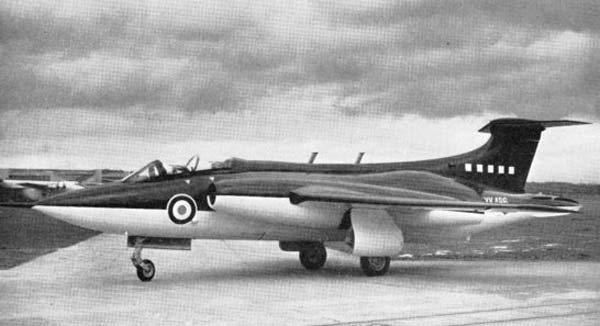 Buccaneer S.Mk.1 |
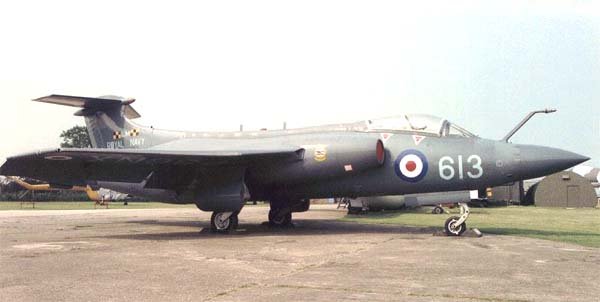 Buccaneer S.Mk.1 |
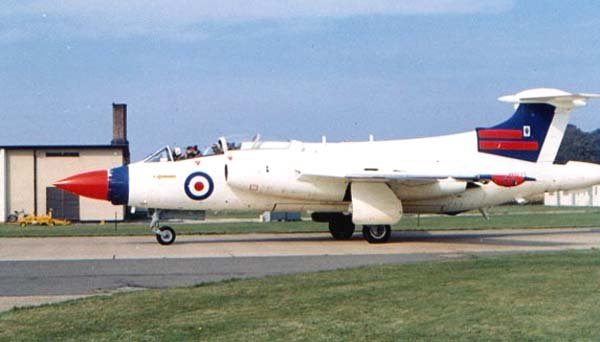 Buccaneer S.Mk.1 |
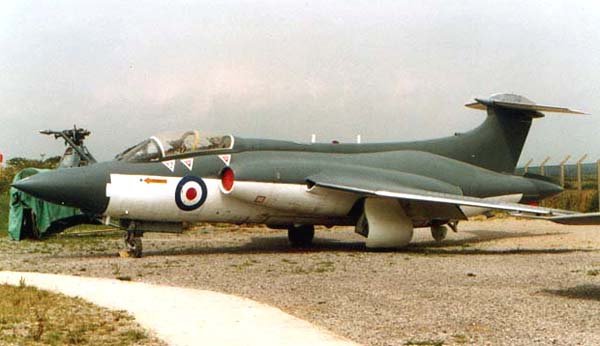 Buccaneer S.Mk.1 |
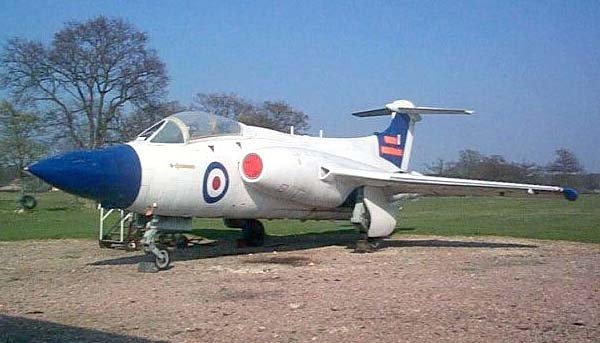 Buccaneer S.Mk.1 |
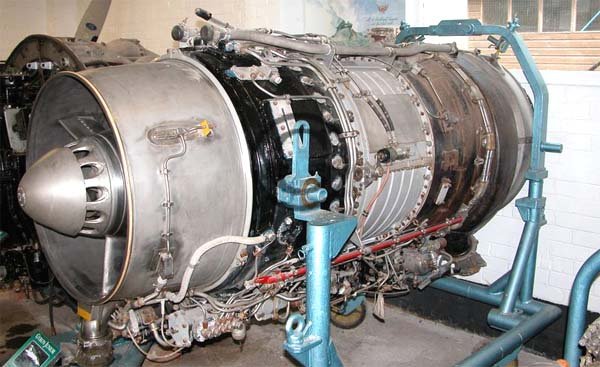 Buccaneer S.Mk.1 |
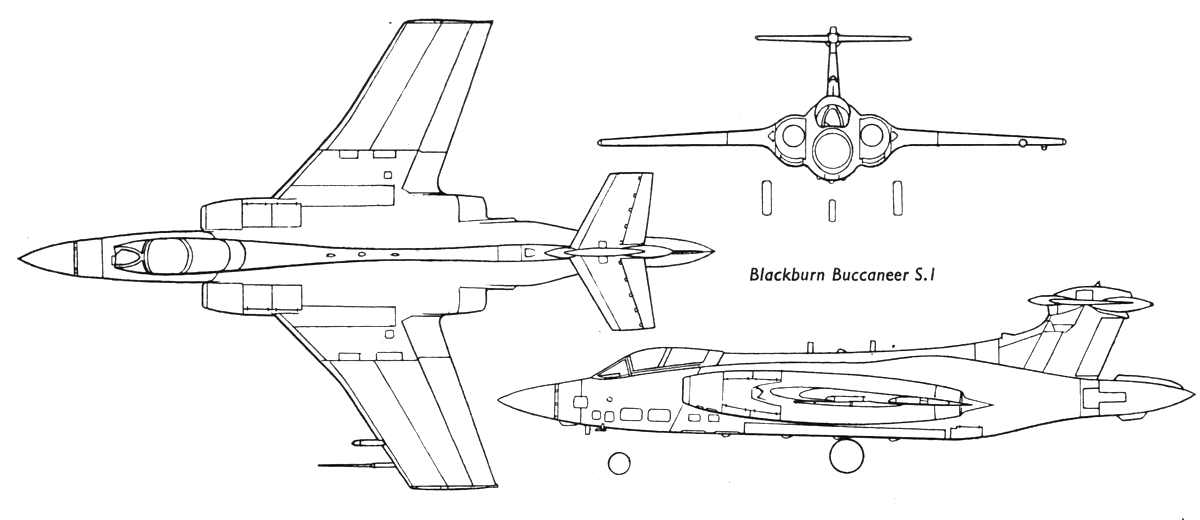 Buccaneer S.Mk.1 |