
The Burgess Model HT was designed by the well-known engineer Starling Burgess of the “Burgess Company,” which was part of the “Curtiss Aeroplane and Motor Corporation.” The Model HT was developed according to requirements formulated in the autumn of 1916 by the U.S. Navy for a fighter seaplane. It was to feature a single Gnome Monosoupape 9N rotary engine of 165 hp, capable of a maximum speed of at least 153 km/h and an endurance of 2.5 hours.
The prototype was demonstrated to U.S. Navy representatives in May 1917, although it failed to meet the projected performance data due to the installation of a 100 hp Curtiss OXX-2 V-engine. Nevertheless, six (later increased to eight) serial aircraft, designated Model HT-B, were ordered, as naval representatives were impressed by the machine’s structural perfection and its hydrodynamic and aerodynamic purity.
Design Features
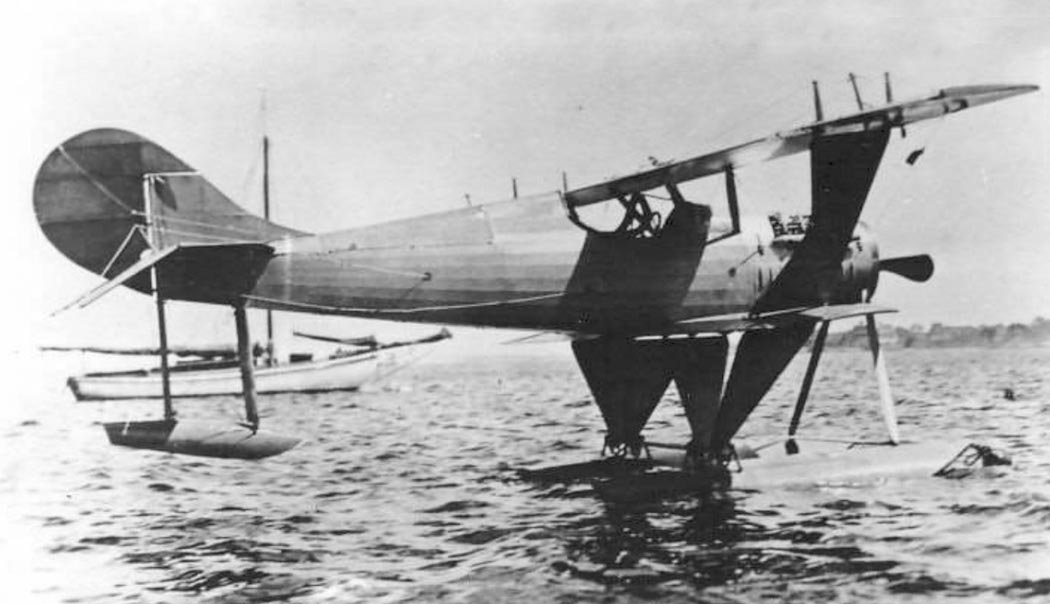
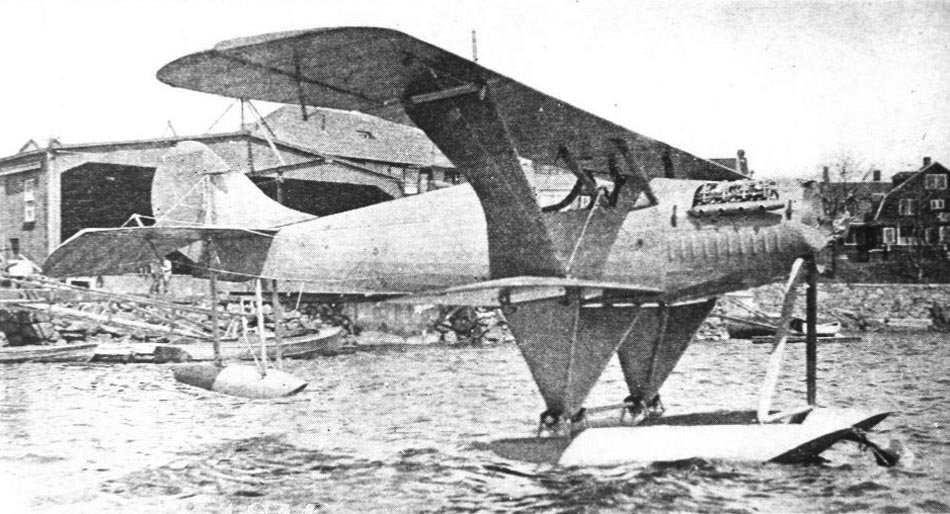
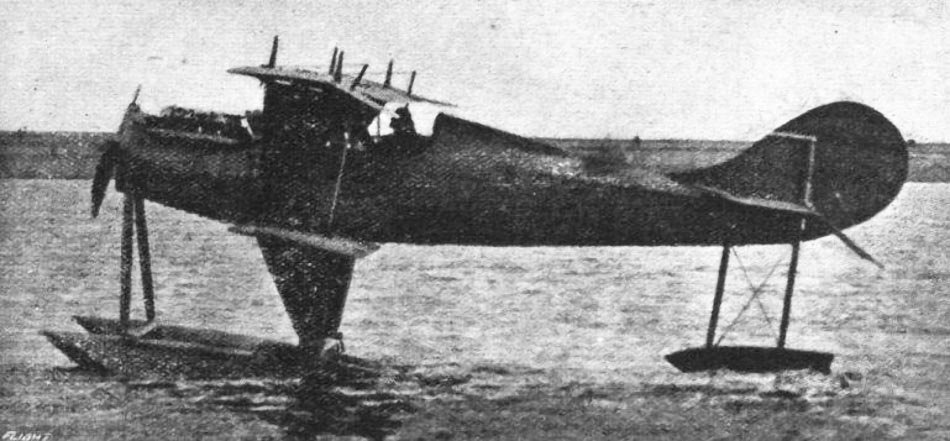
The Model HT-B was a wooden sesquiplane with fabric covering. The fuselage structure was made of wood and equipped with wire bracing. The engine was installed in the nose, followed by fuel and oil tanks, then the pilot’s cockpit. The empennage consisted of a stabilizer with elevators and a fin with a rudder, the latter fitted with an aerodynamic balance.
The upper wing, of constant chord, had a significantly larger span than the lower wing, although the chord length of both wings was identical. The lower wing spars passed through the fuselage. The upper wing was assembled from two halves, with ailerons mounted on it. A cutout in the trailing edge of the center-section improved pilot visibility. The upper and lower wings were connected by wires and K-struts.
Landing Gear and Powerplant
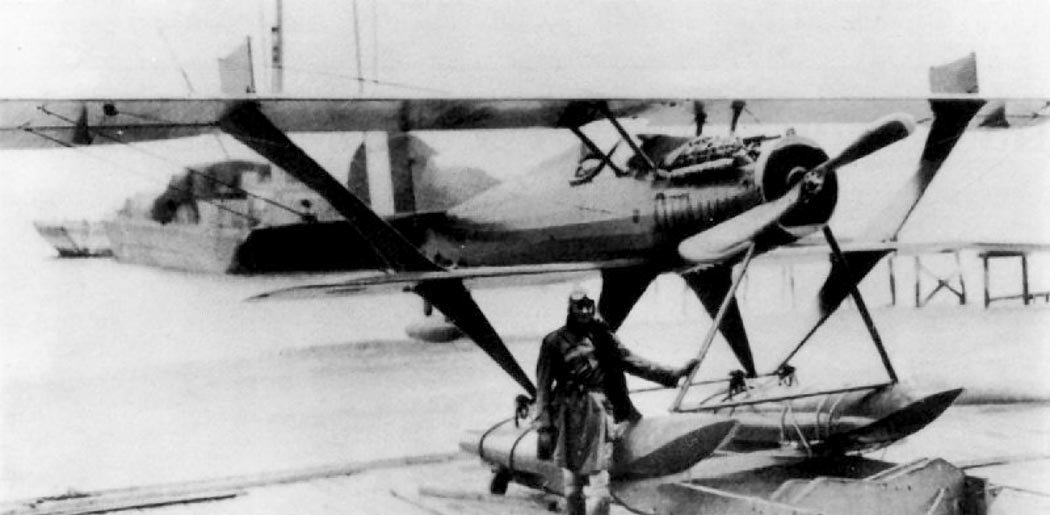
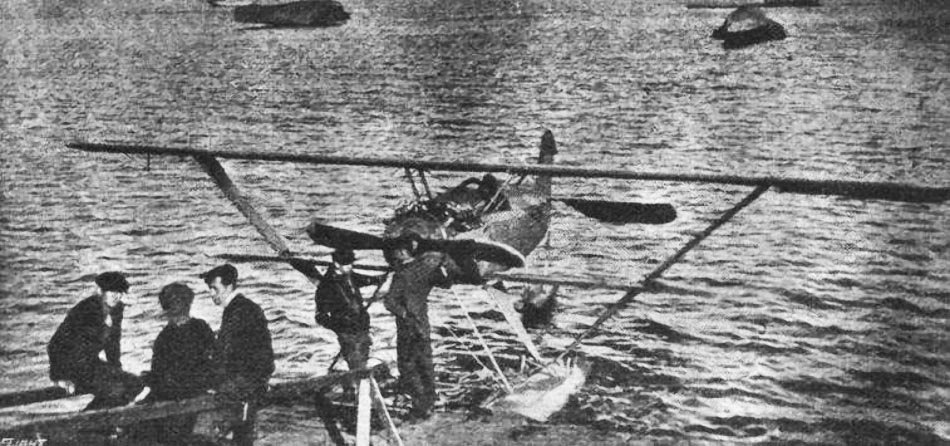
The landing gear consisted of two single-step wooden floats, connected by horizontal linkages. The floats were attached with struts to the lower wing and fuselage. From a frontal view, the float struts and the inter-wing struts formed a single line. The tail section of the fuselage was supported on the water by a small float, secured on two vertical struts.
The aircraft was equipped with a single V-shaped OXX-2 engine, enclosed in a cylindrical cowling, and driving a two-bladed wooden pulling propeller. The radiator was installed in front of the engine. Production aircraft also used less powerful Curtiss engines, which is why most aircraft were unarmed. From September 1917, these aircraft were used for reconnaissance and pilot training. Six slightly improved aircraft, designated Model HT-2, were delivered in 1918. The “Burgess Company” ceased to exist in December 1918, and operations of the HT-B and HT-2 aircraft soon ended.
Technical Specifications
| Modification | HT-2 |
| Wingspan, m | 10.46 |
| Length, m | 6.87 |
| Height, m | 3.28 |
| Engine type | 1 Piston engine Curtiss OXX-2 |
| Power, hp | 1 x 100 |
| Maximum speed, km/h | 153 |
| Cruising speed, km/h | 125 |
| Flight endurance, h.min | 2.30 |
| Crew, crew members | 1 |
| Armament | Most aircraft had no armament, although the installation of one 7.62-mm Marlin machine gun in the nose of the fuselage was foreseen. |
Image and diagram gallery of the Burgess Model HT
 HT |
 HT |
 HT |
 HT |
 HT |