
Development and Early Production
In 1952, Cessna began work on a project for a twin-engine, 5-6 seat light aircraft, which resulted in the Model 310. Its prototype first flew on January 3, 1953. Production continued until 1981, with over 5,500 aircraft built.
The prototype, a cantilever low-wing monoplane with retractable tricycle landing gear and two Continental O-470-B engines (225 hp each), was initially called the E225. This marked the first use of a civilian version of this engine. Early production Model 310s featured O-470-M engines, providing 240 hp.
Evolution of Civilian Models
Deliveries of production aircraft began in April 1954, though only 32 units were released by the end of that year. By the end of the following year, production surged to 200 aircraft. The Model 310 underwent continuous refinement throughout its production run, culminating in the advanced Model 310R variant.
Major intermediate versions included the Model 310B (1957) and Model 310C (1959), which introduced 260 hp engines. The Model 310D (1960) featured a sharper nose cone and a swept fin, while the Model 310E (1961) incorporated numerous minor changes, including two additional cabin windows.
Further developments included the Model 310G with a six-seat cabin and additional wing fuel tanks, supplementing the tip tanks. The Model 310I extended engine nacelles for extra baggage compartments. The Model 310K (1966) introduced a frameless cockpit windshield and airframe modifications, and the Model 310L (1967) was equipped with 260 hp IO-470-L direct fuel injection engines and other improvements. The Model 310P featured an under-fuselage fin and 285 hp IO-520-M engines.
In 1966, a premium comfort version was released, featuring cabin air conditioning and oxygen equipment, with turbocharged engines. Initially named the Turbo-System Executive Skyknight, it was briefly rebranded as the Model 320, then the Model T310. The final versions were the Model 310R, with 285 hp IO-520-MB engines and factory-installed avionics (similar to Model 310 II), and the Model T310 with TSIO-520-BB engines, also mirroring the Model 310 II’s equipment.
Military and Aftermarket Variants
In the mid-1950s, the U.S. Air Force ordered the Model 310B, a slightly modified version of the Model 310A, for light cargo and liaison duties under the designation L-27A, which changed to U-3A in 1962. A total of 160 such aircraft were built. Subsequently, 36 machines of the limited all-weather Model 310M modification (originally Model 310E, with a civilian version of Model 310D developed) were constructed for military service as L-27B (later U-3B). Several Model 310 units were sold to France, Argentina, and the Philippines.
The Model 310 also served as a base for various conversions created by other companies. For example, the Riley 65 version saw several modifications. There were also two advanced Riley variants: the Rocket, with 290 hp Lycoming engines, and the Turbo-Rocket, featuring the same turbocharged engines.
Technical Specifications
| Modification | Cessna 310R |
| Wingspan, m | 11.25 |
| Aircraft length, m | 9.74 |
| Aircraft height, m | 3.25 |
| Wing area, m2 | 16.60 |
| Empty weight | 1480 |
| Maximum takeoff weight | 2495 |
| Engine type | 2 Piston engine Continental IO-520MB |
| Power, hp | 2 x 285 |
| Maximum speed, km/h | 383 |
| Cruising speed, km/h | 360 |
| Economical speed, km/h | 267 |
| Practical range, km | 2840 |
| Maximum rate of climb, m/min | 507 |
| Practical ceiling, m | 6020 |
| Crew, crew members | 1 |
| Payload: | 4-6 passengers |
Image and diagram gallery of the Cessna 310
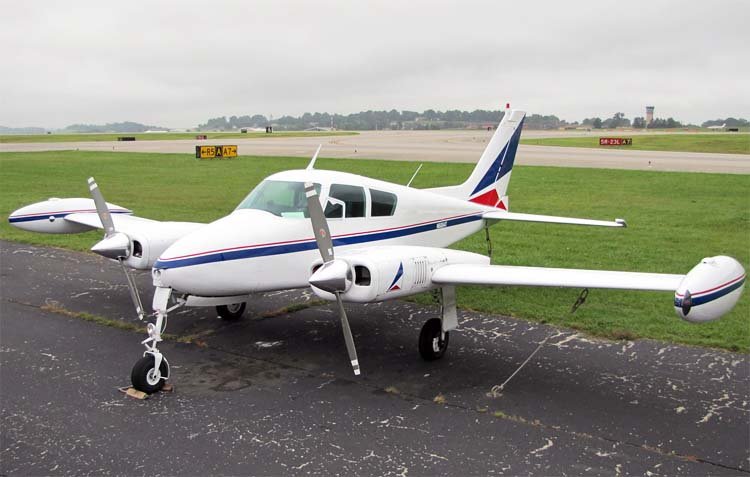 Cessna 310 |
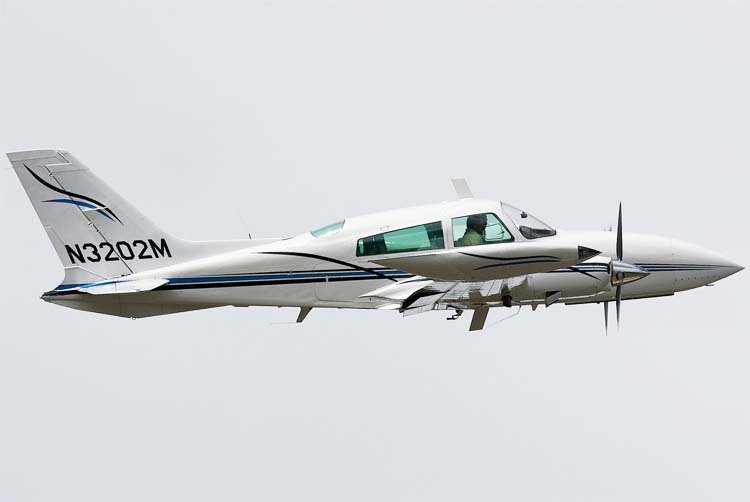 Cessna 310 |
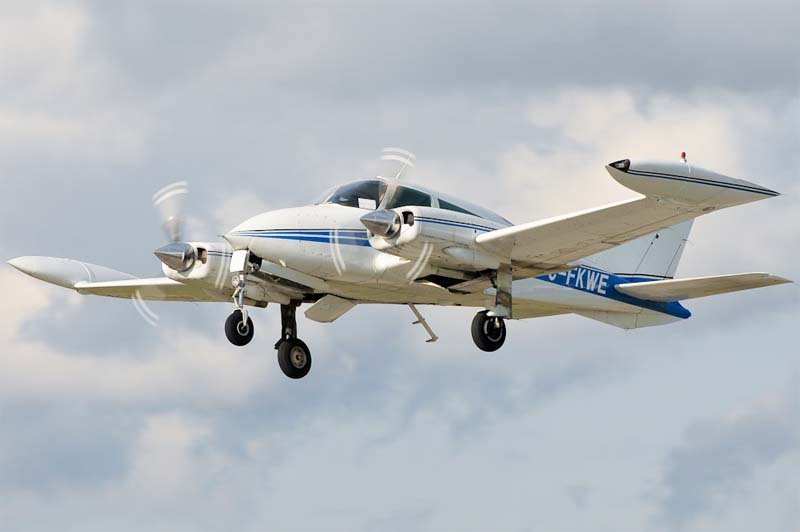 Cessna 310 |
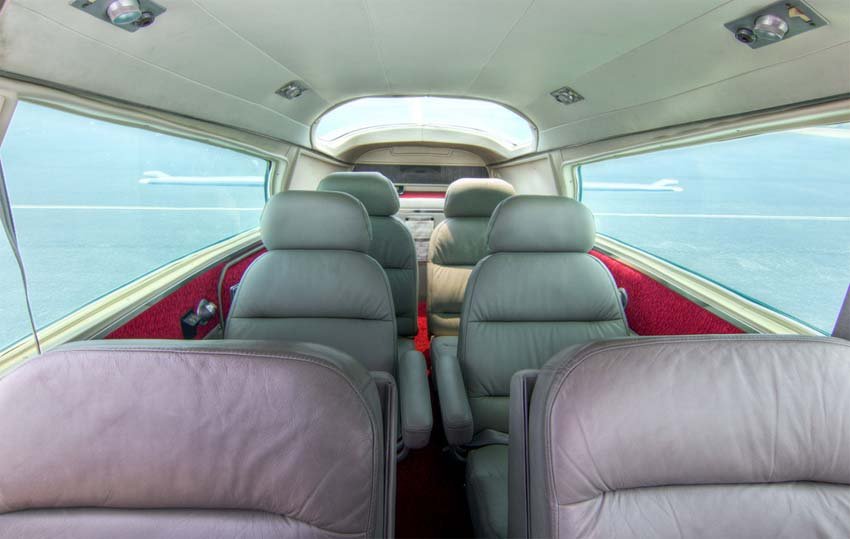 Cessna 310 |
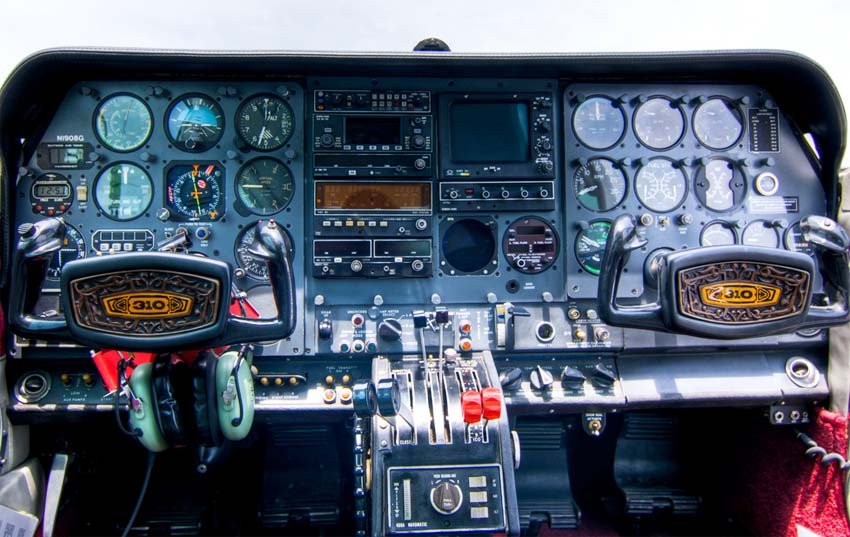 Cessna 310 |