
The EKW C-3603-1 Schlepp-Leucht target tugs were used for combat training of Swiss anti-aircraft gunners until the early 1960s. However, the venerable “Hispano-Suizas” caused increasing trouble: wear and tear mounted, and the number of spare parts diminished catastrophically.
A Crucial Modernization
In 1962, it was decided to replace these aircraft with more modern turboprop-equipped models. After several years of unsuccessfully searching worldwide for a suitable candidate, the Swiss eventually settled on a project by the domestic company Eidgenössisches Flugzeugwerke (F+W). This firm proposed equipping the C-3603 with American Lycoming T53-L-7A engines, rated at 1115 hp.
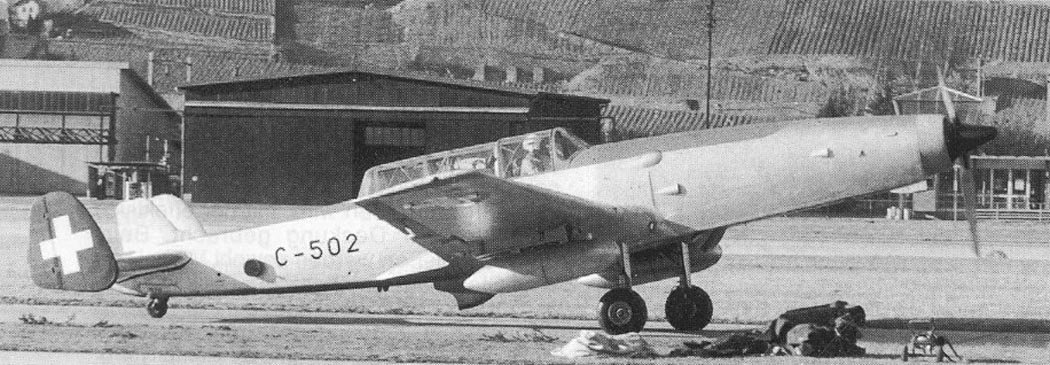
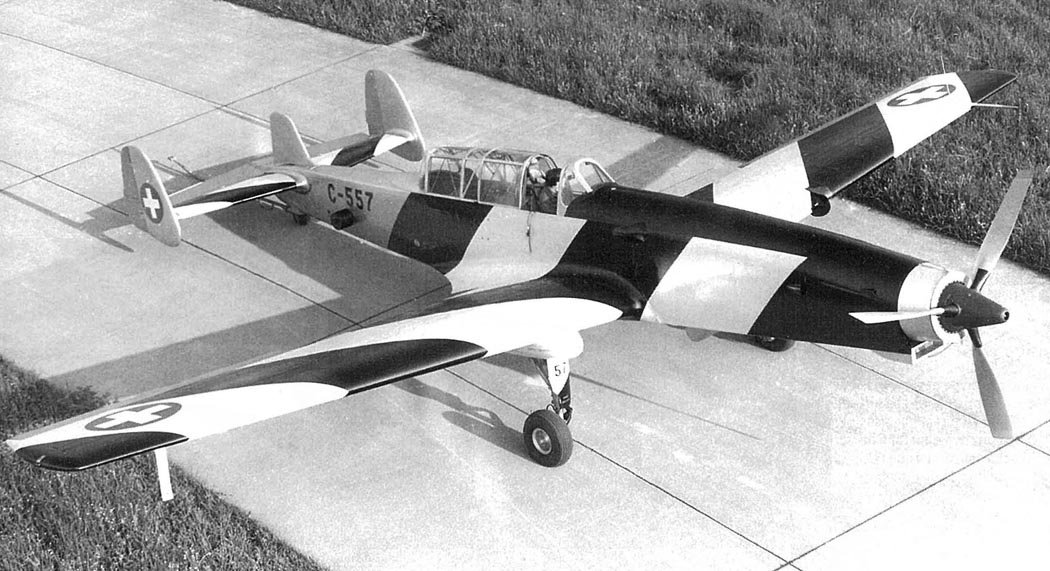
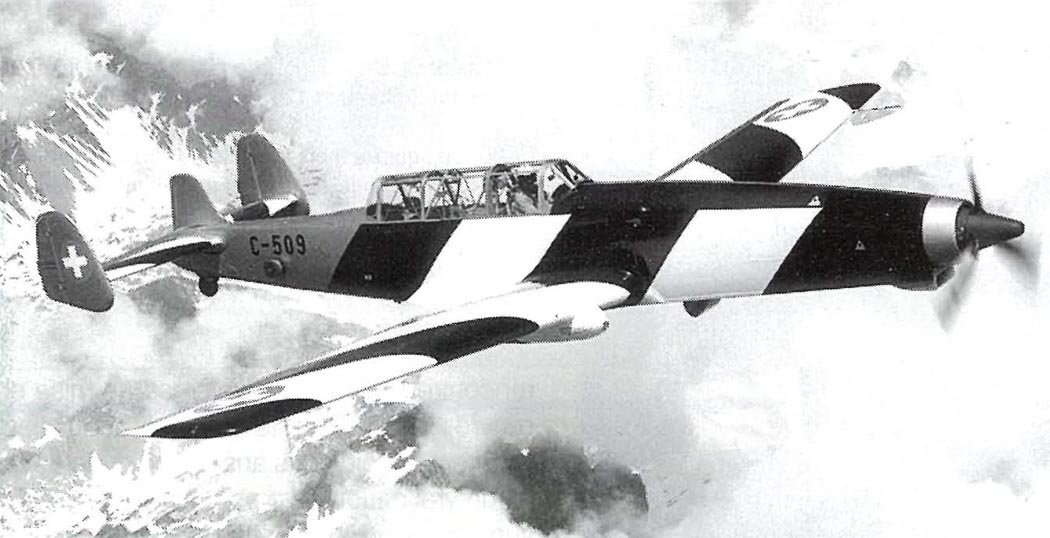
The work was entrusted to a team led by engineer Jean-Pierre Weibel. Since the turboprop engine was much lighter than the “Hispano-Suiza” (245 kg vs. 542 kg), its installation drastically shifted the aircraft’s center of gravity rearward. To solve this problem, the engine had to be moved far forward, extending the aircraft’s nose by 2.7 meters. However, this negatively affected directional stability, requiring the installation of a third fin.
Innovative Design and Upgrades
The use of the turboprop engine allowed for a new cabin air conditioning system. The flight and navigation equipment was also completely updated, a hydraulically driven winch was installed, and a series of smaller improvements were made. This new modification received the designation C-3605.
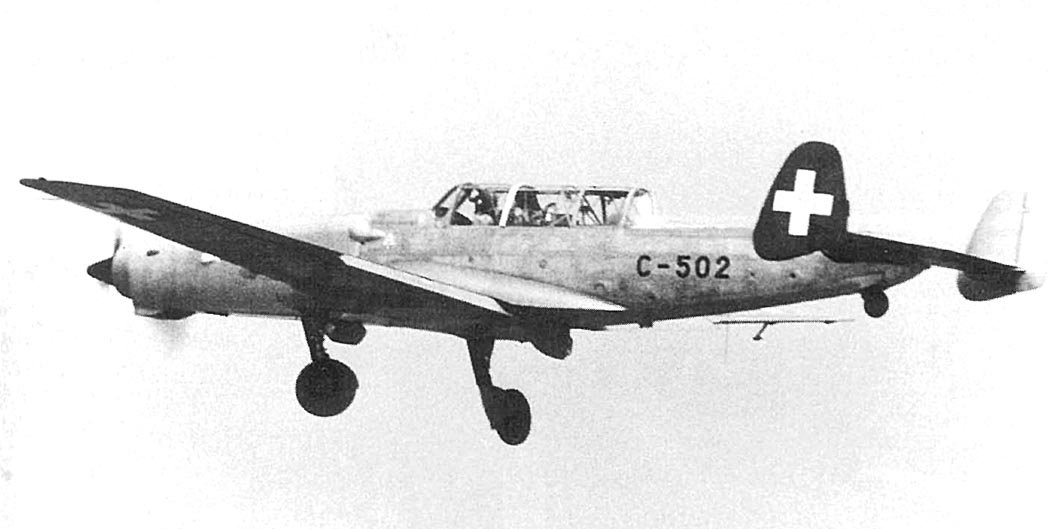
The first aircraft to undergo modification was the C-502, which took to the air in its renewed form on August 19, 1968. Factory and military trials proceeded quickly and successfully. The military liked the aircraft, and an order for 23 more units followed in December of the same year. The conversions were carried out between 1968 and 1970 at the Emmen facility.
The C-3605 tugs flew until July 15, 1987, and were decommissioned due to the engines’ almost complete exhaustion of their service life and the economic unfeasibility of their repair. During its operational period, aircraft C-552 suffered an accident on October 23, 1974, and was converted into a “two-seater trainer” during its repair. After decommissioning, most C-3605s were stored at the Lodrino airbase.
Technical Specifications
| Modification | C-3605 |
| Wingspan, m | 13. 74 |
| Length, m | 12.03 |
| Height, m | 4. 05 |
| Wing area, m2 | 28.70 |
| Empty weight | 2634 |
| Maximum takeoff weight | 3716 |
| Engine type | 1 Turboprop Avco Lycoming T53-L-7 |
| Power, hp | 1 x 1100 |
| Maximum speed, km/h | 432 |
| Cruising speed, km/h | 380 |
| Practical range, km | 980 |
| Maximum rate of climb, m/min | 756 |
| Practical ceiling, m | 10000 |
| Crew | 2 |
Image and diagram gallery of the EKW C-3605
 C-3605 |
 C-3605 |
 C-3605 |
 C-3605 |
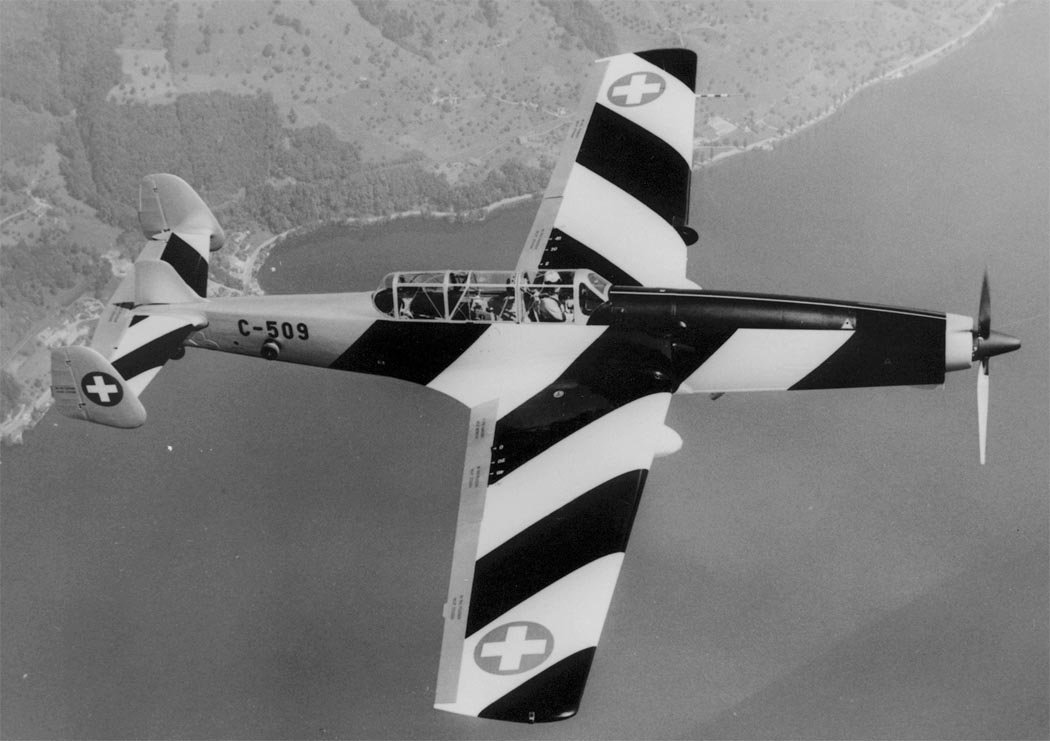 C-3605 |
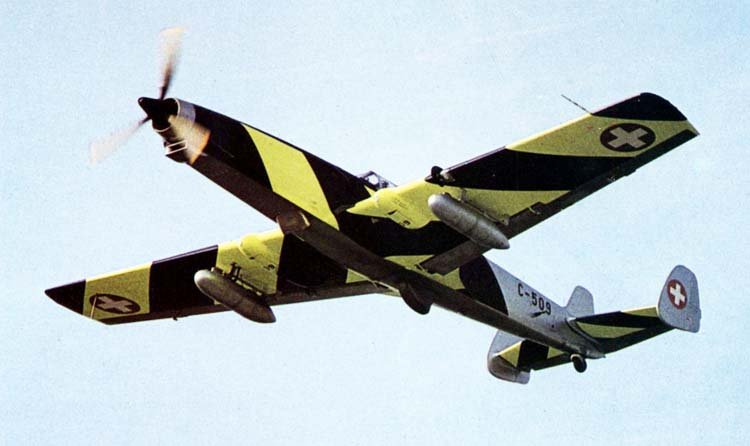 C-3605 |
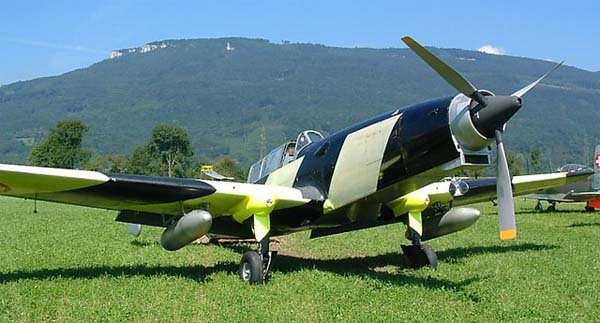 C-3605 |
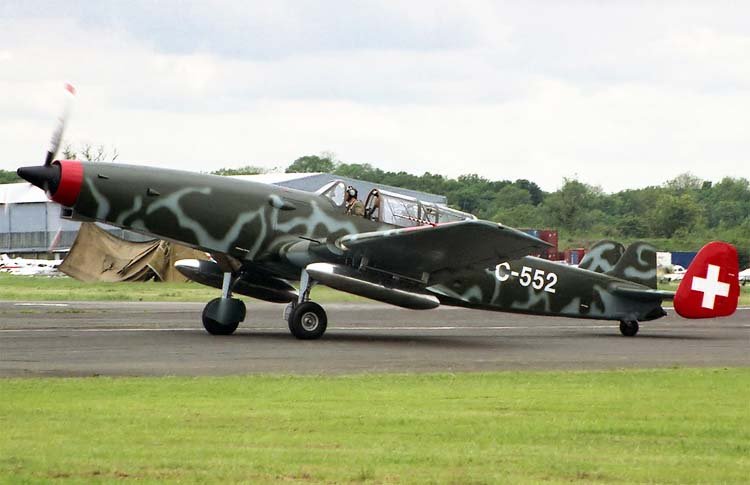 C-3605 |
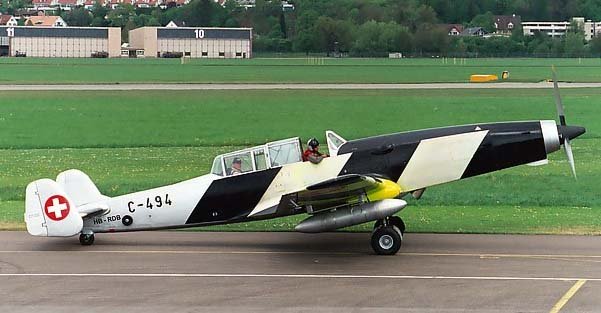 C-3605 |
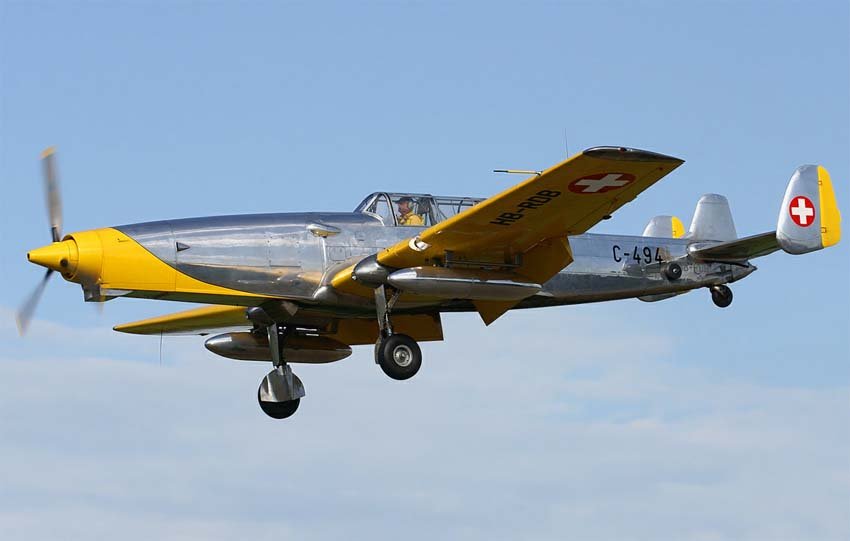 C-3605 |
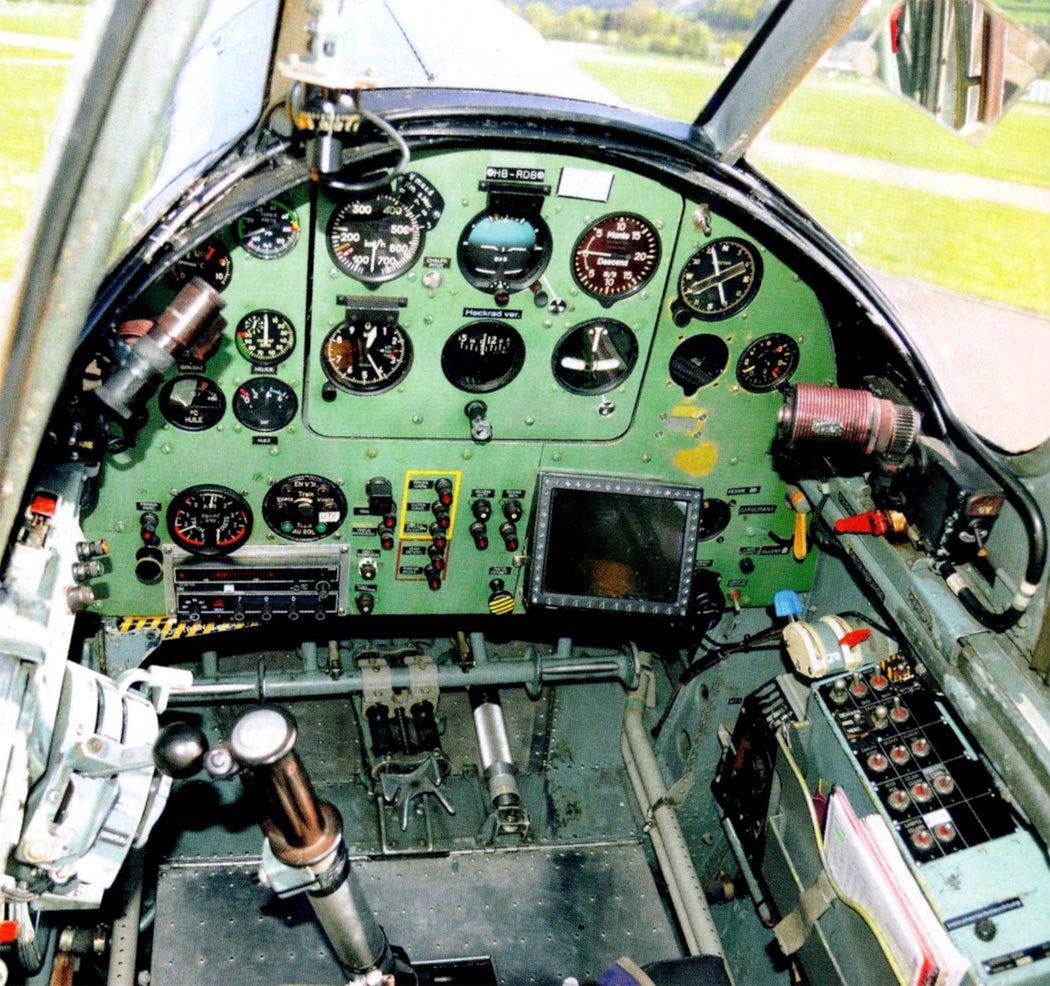 C-3605 |
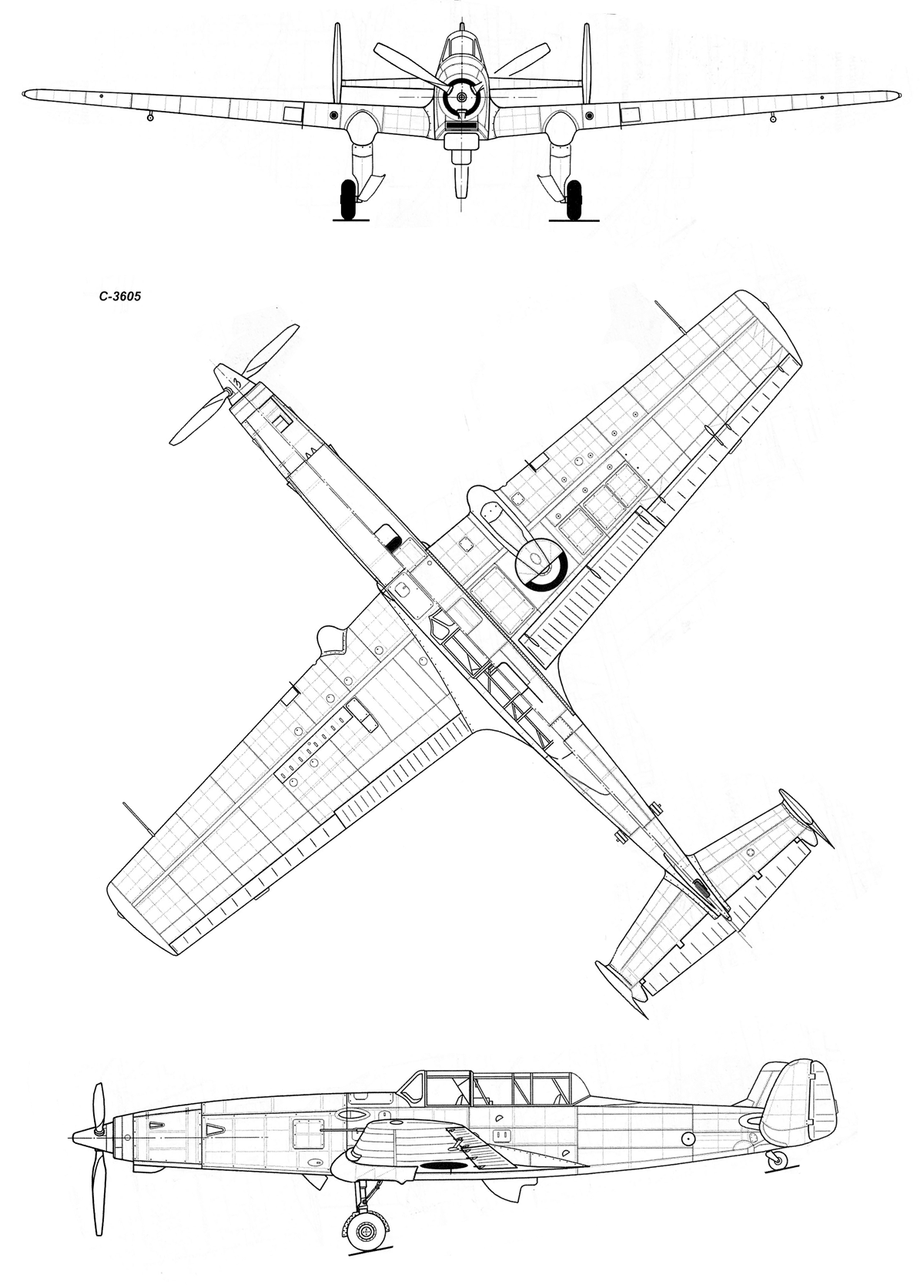 C-3605 |
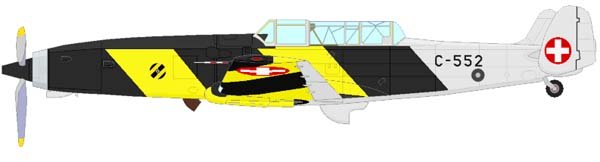 C-3605 |