
In the mid-1930s, the French government initiated a large-scale program to develop new combat aircraft of all major classes. A leading position in this program was occupied by Category C1 machines—single-seat fighters. By 1939, aircraft such as the Morane-Saulnier MS.406C1, Dewoitine D.520C1, and Marcel Bloch MB.151C1 had been developed and adopted. All of them were, so to speak, “standard” monoplane fighters with engines ranging from 860 to 1000 hp and mixed cannon-machine gun armament. Alongside them, though in significantly smaller numbers, the Caudron CR.714C1 light fighter was also built.
By the early 1930s, it became increasingly clear to both aircraft designers and military officials that biplane fighters were exhausting their potential and had to give way to monoplanes. At the same time, cantilever wings and retractable landing gear mechanisms significantly increased flying weight. This led to either a reduction in armament and ammunition or a decrease in flight time and range due to fuel tank volume limitations. It was no coincidence that the first European fighters with retractable landing gear, the Messerschmitt Bf 109B and the I-16 (types 10 and 17), could stay airborne for no more than 45 minutes—half the time of traditional biplanes.
The Quest for Light Fighters
Aircraft designers worldwide faced an alternative: either accept the inevitable increase in flying weight and the installation of more powerful engines, or seek ways to create a light fighter. It was assumed that a light machine, due to its high specific power, would possess superior flight and tactical characteristics. Attempts to create such an aircraft were made in various countries. Our journal has already covered the American Curtiss-Wright CW-21 fighter, which grew out of just such a light machine. On the European continent, the German program to create a “home defense fighter”—a light and simple aircraft for the re-emerging Luftwaffe—became the most extensive.
The Focke-Wulf Fw 56 “Stösser” monoplane, created within this framework, was built in significant numbers (around 1000 machines produced by 1940) and even exported to Austria and Hungary. However, the weakness of its Argus As 10 engine (only 240 hp) and armament (a single 7.92mm machine gun) meant it could not be relied upon for successful combat use; the “Stösser” served exclusively as a trainer. A very successful light fighter, the VEF I-16, was created in Latvia in the pre-war years. This was a machine with a Czechoslovak Walter “Sagitta” I-SR engine of 455 hp and a pair of German 7.92mm MG 15 machine guns. The aircraft, with non-retractable but faired landing gear and extremely compact dimensions, reached a speed of 485 km/h. However, only two prototypes were built before Latvia’s annexation by the USSR.
France’s Light Fighter Program
In France, a competition for a light fighter of wooden construction was announced in 1936. This last requirement was driven by the desire to obtain a combat aircraft built from materials less scarce than light alloys. Three firms submitted their preliminary designs to the competition: Arsenal (VG.30), Marcel Bloch (MB.700), and Caudron (C.710). The aircraft was intended to supplement the “main” fighter, which had been under development since 1934. The following requirements were stipulated for the light machine: maximum speed of at least 450 km/h at 4000 m; flight duration of 2.5 hours at a cruising speed of 320 km/h; climb time to 4000 m in 6 minutes, to 8000 m in 15 minutes, and to 10000 m in 19 minutes; the most powerful possible armament; and simplicity of construction to ensure rapid production launch at non-specialized enterprises.
Caudron C.710: Design and Trials
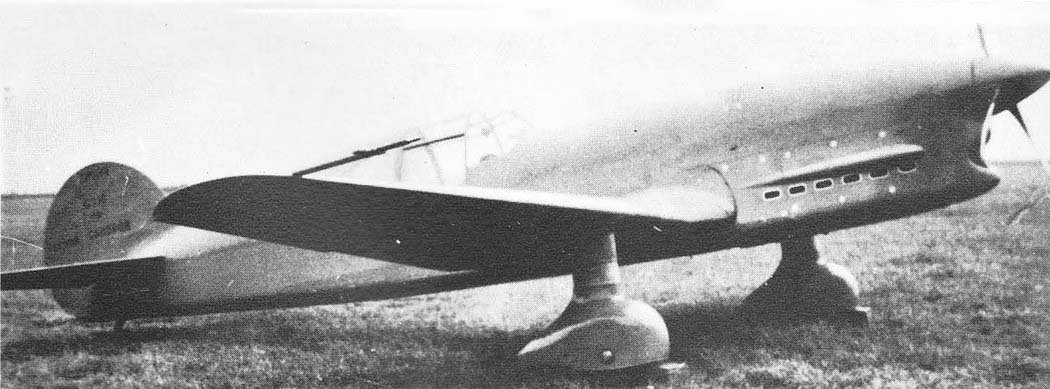
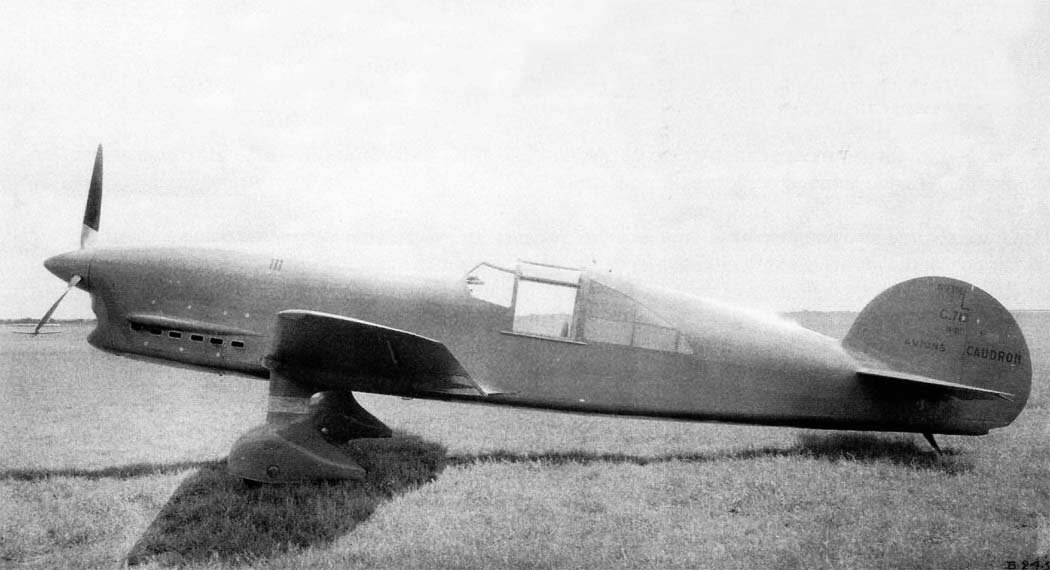
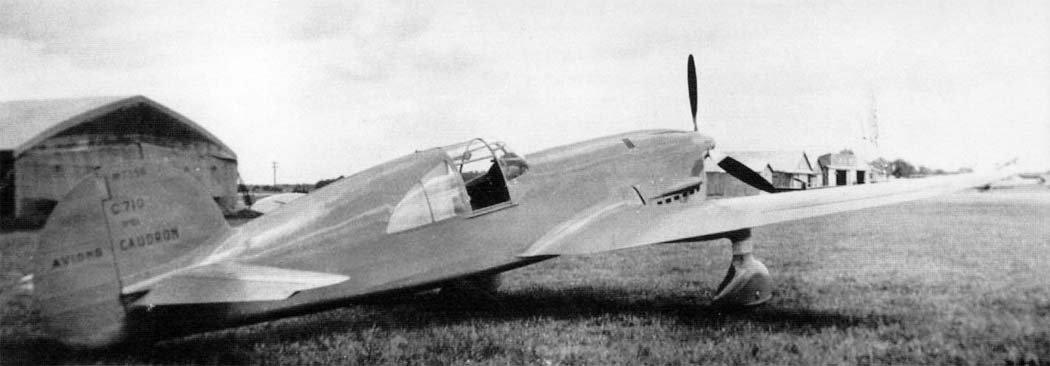
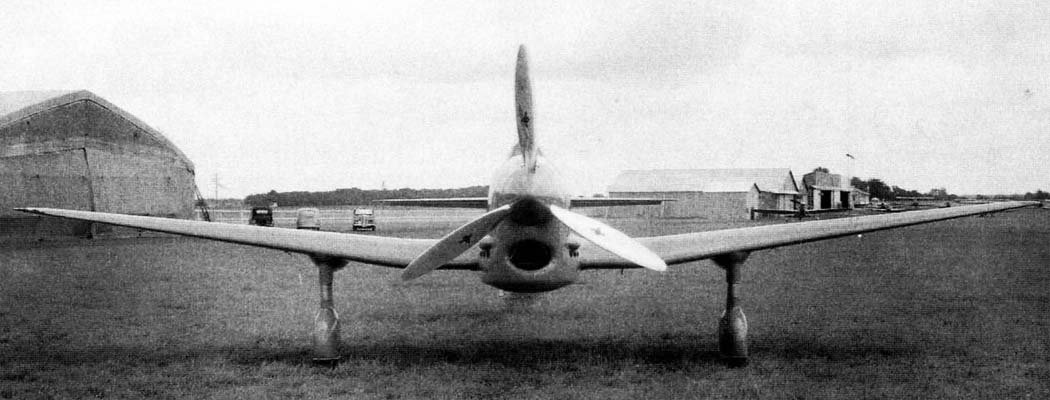
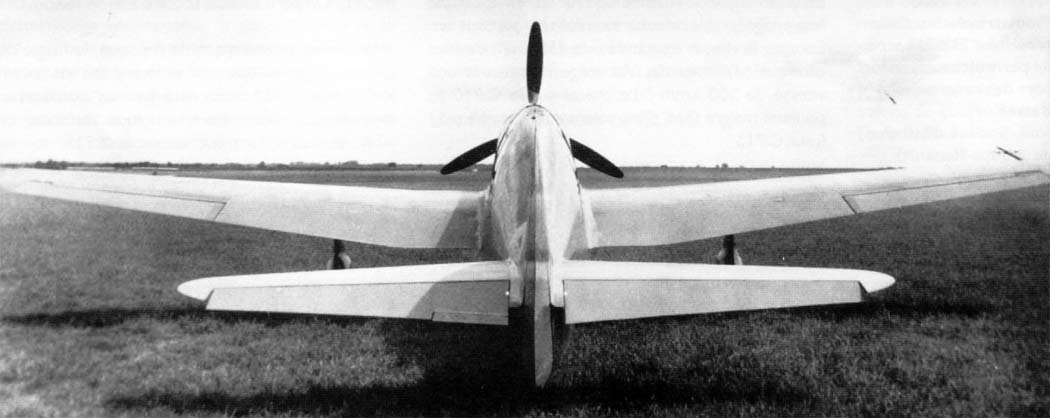
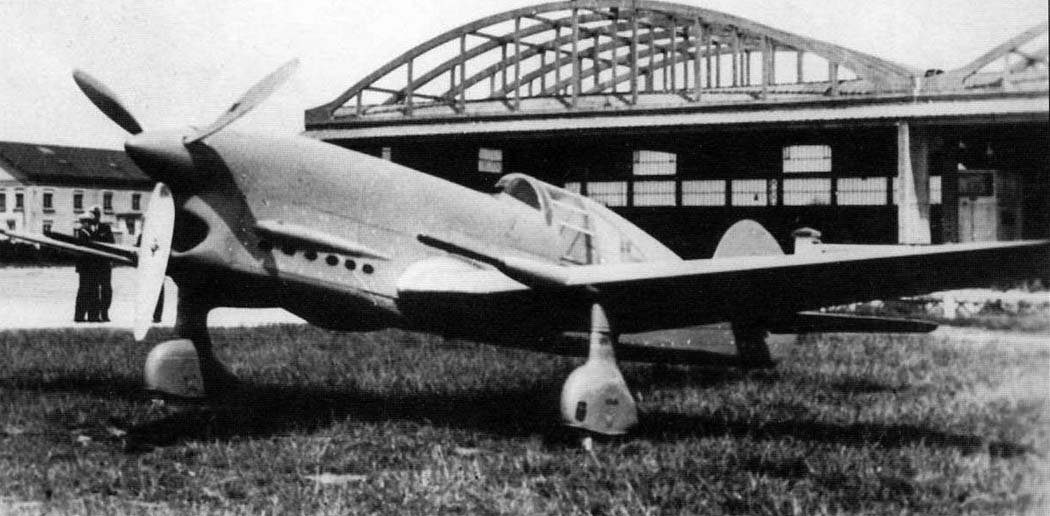
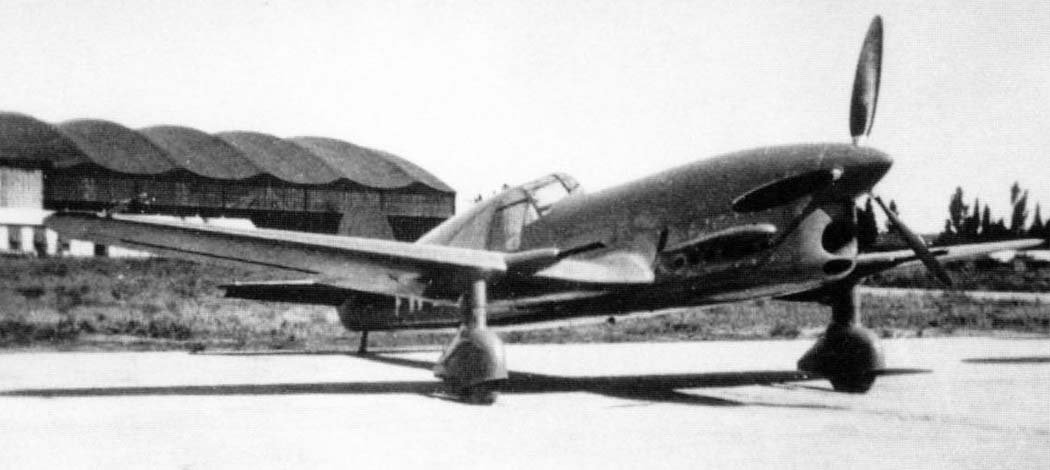
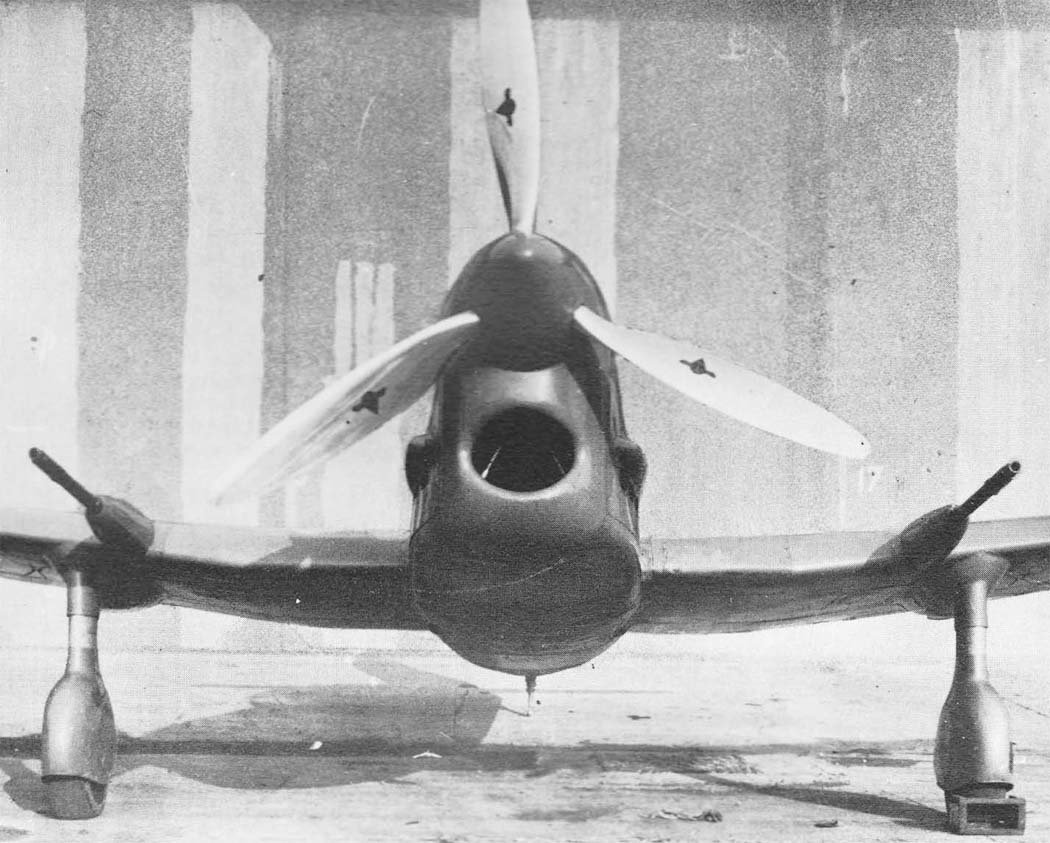
Marcel Riffard, chief designer at Caudron and known for creating a series of successful sports and record-breaking monoplanes, took the newly created C.690 trainer, which entered testing in early 1936, as the basis for his fighter. The C.690 was an elegant low-wing monoplane with fixed landing gear, an enclosed cockpit, and a 6-cylinder Renault 6Q-03 engine producing 220 hp. Naturally, for a fighter, even a light one, this power was insufficient. Therefore, an engine from the same company, but a 12-cylinder one—the Renault 12R-01 (inverted V-type)—was chosen, developing 450 hp at altitudes of 4000-5000 m, coupled with a three-blade Ratier variable-pitch propeller. The landing gear, like on the C.690, was initially fixed. No armament was installed on the prototype, but the project envisioned using two 20mm Hispano-Suiza cannons with 60 rounds each.
The fighter prototype, designated C.710 (serial number 01, factory number 7536), was prepared very quickly. Its construction was completed by July 10, 1936, and on the 18th, the machine first took to the air from the Guyancourt factory airfield, piloted by Raymond Delmotte. Trials were successful, achieving a maximum speed of 460 km/h. However, it was clear from the outset that the C.710 would not enter series production: the client raised the maximum speed requirement to 500 km/h, and to achieve such parameters, retractable landing gear was necessary.
Technical Specifications
| Modification | CR.71 0 |
| Wingspan, m | 8.97 |
| Length, m | 8.53 |
| Height, m | 2.47 |
| Wing area, m2 | 12.50 |
| Empty weight | 1243 |
| Normal takeoff weight | 1646 |
| Engine type | 1 Piston engine Renault 12R-01 |
| Power, hp | 1 x 450 |
| Maximum speed, km/h | 460 |
| Cruising speed, km/h | 310 |
| Practical range, km | 552 |
| Practical ceiling, m | 9100 |
| Crew, crew members | 1 |
| Armament: | two 20-mm HS-9 cannons |
Image and diagram gallery of the Caudron C.710 Light Fighter Prototype
 C.710 |
 C.710 |
 C.710 |
 C.710 |
 C.710 |
 C.710 |
 C.710 |
 C.710 |
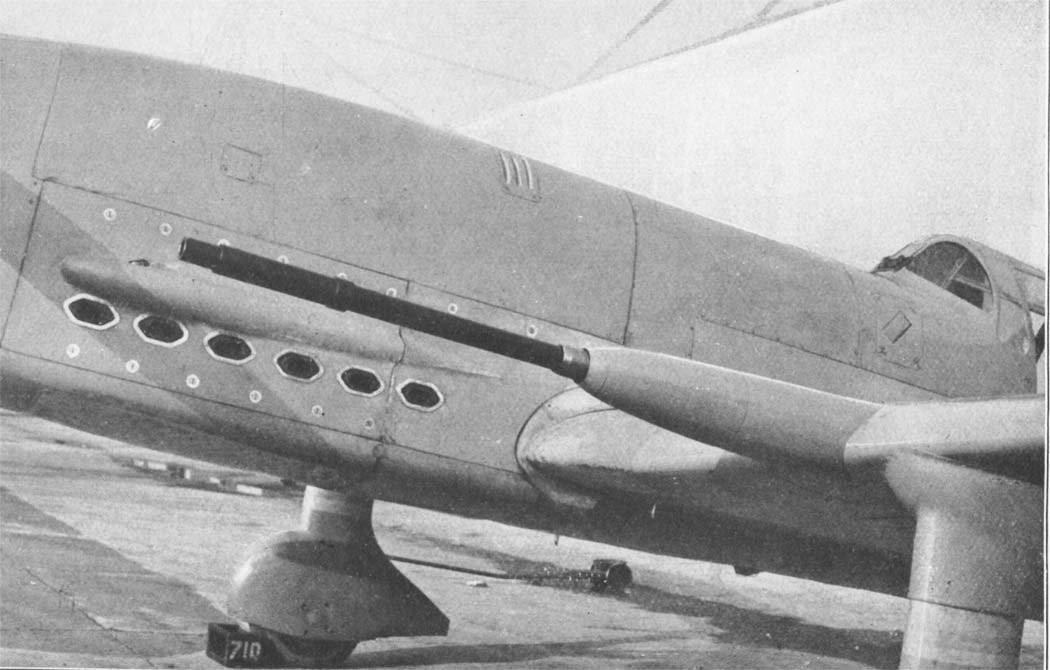 C.710 |
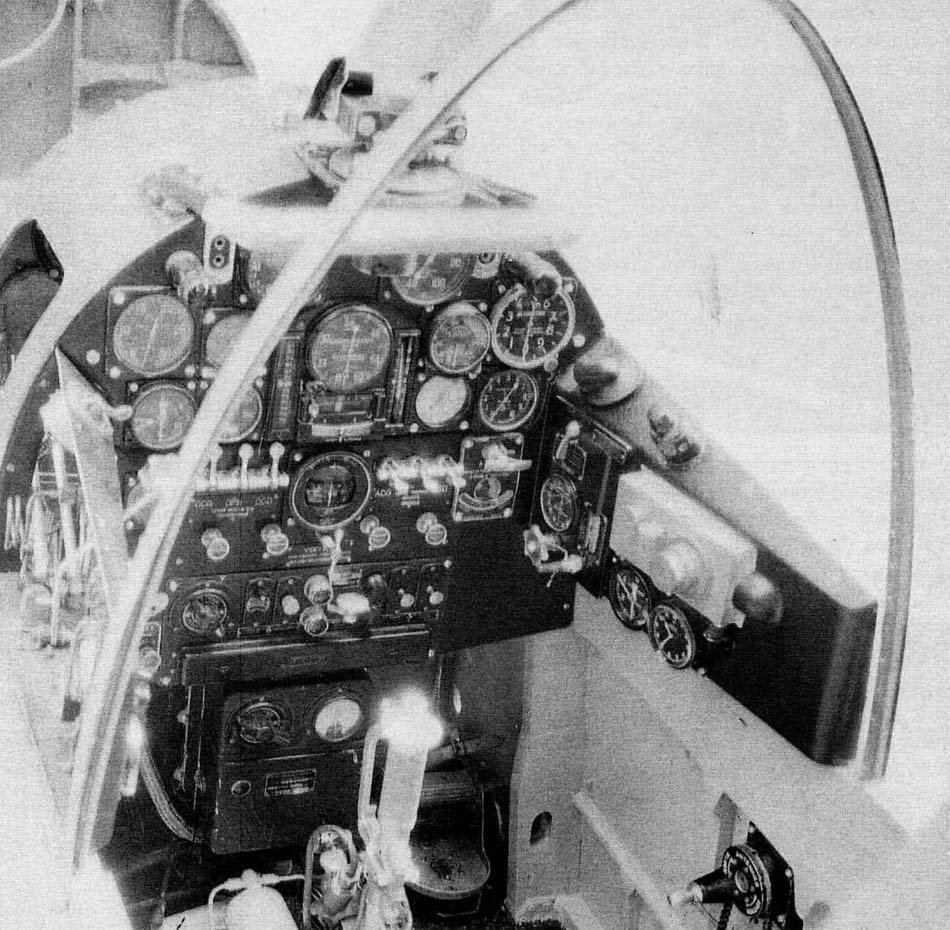 C.710 |
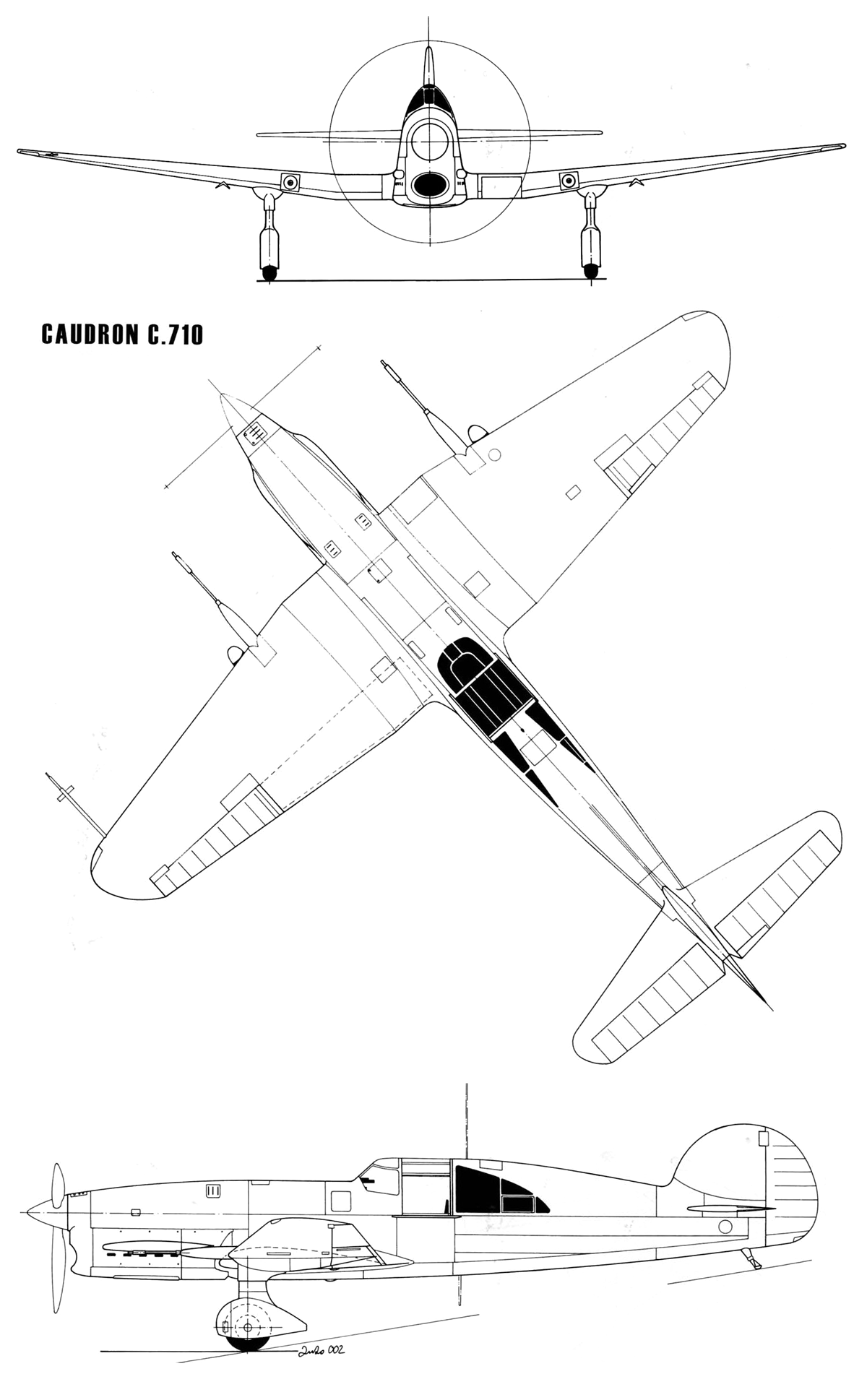 C.710 |
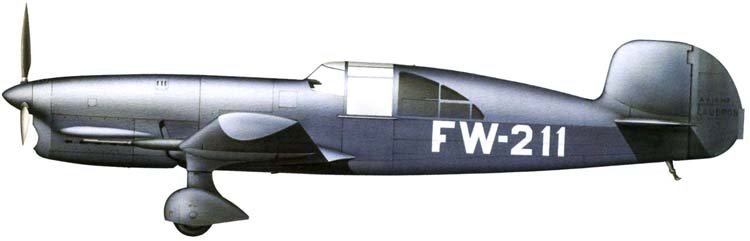 C.710 |