
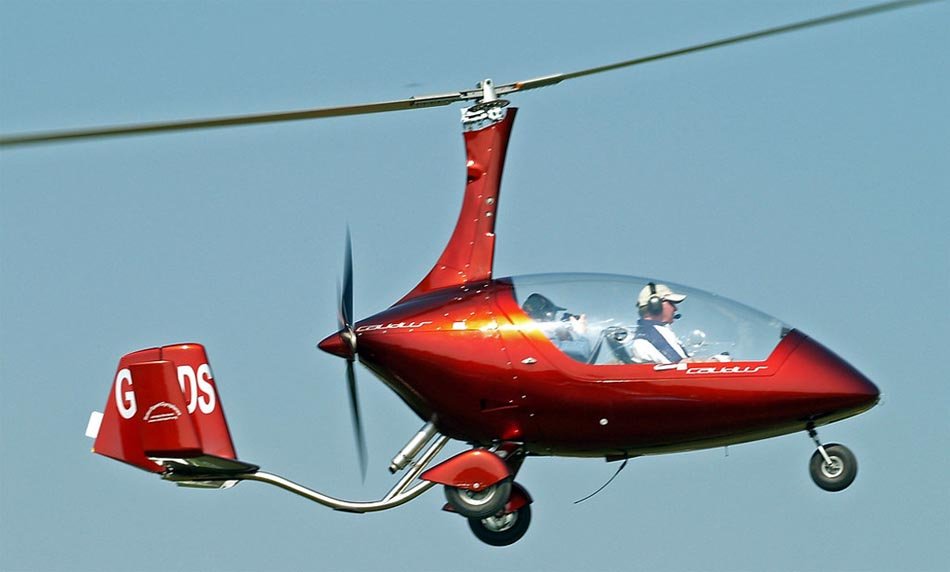
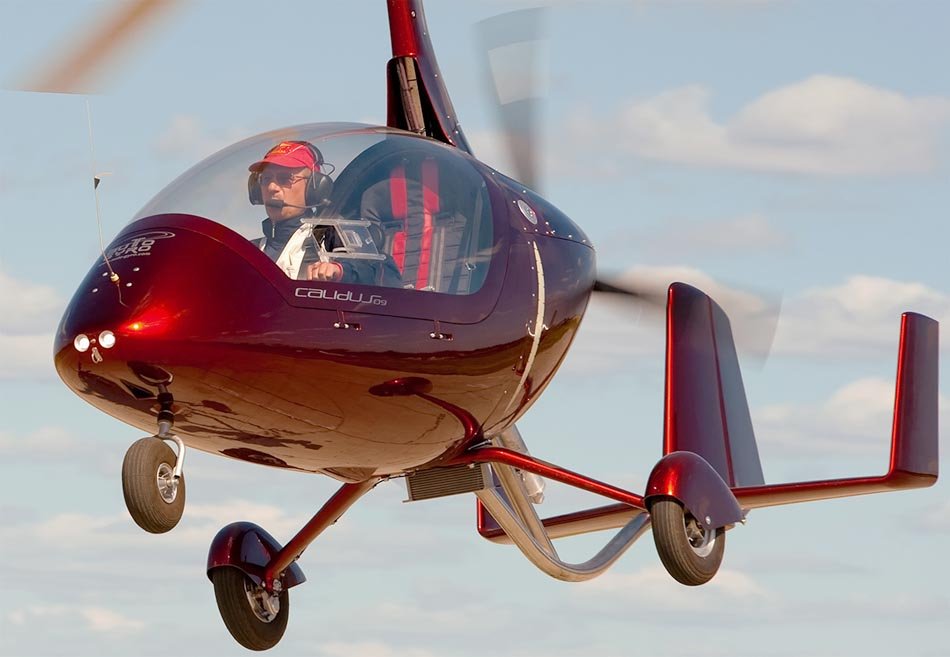
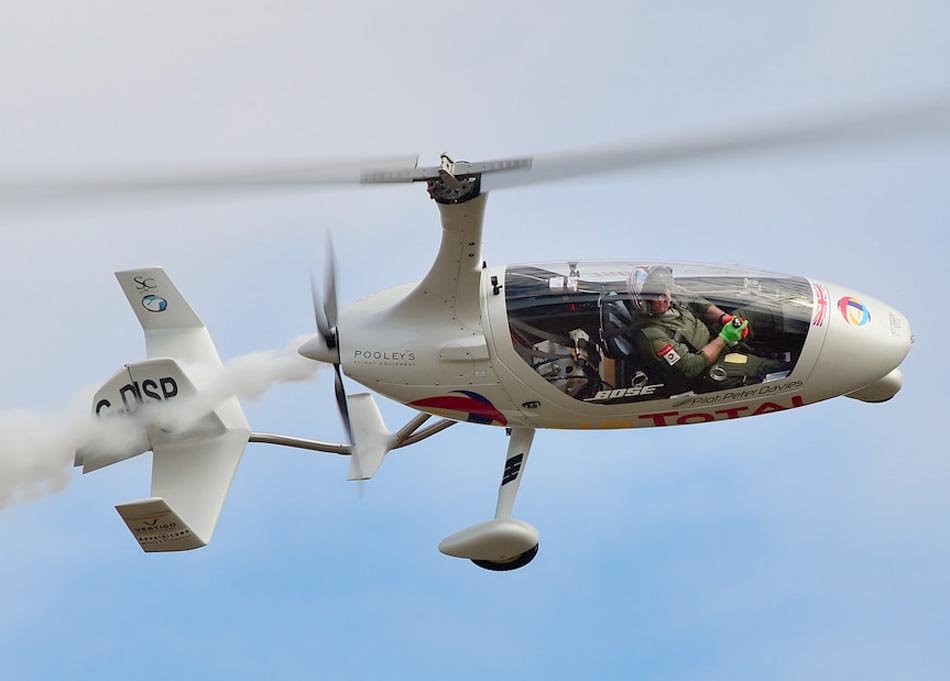
The Calidus is a two-seat autogyro with a tandem (one behind the other) crew configuration, manufactured by the German company AutoGyro GmbH from Hildesheim. This autogyro is characterized by its maneuverability and speed, elegance, and maximum comfort. The series-produced German quality Calidus gyrocopter offers the safest extreme experience, further ensured by its enclosed all-weather cockpit. The Calidus autogyro combines excellent flight characteristics, true series-produced German quality, all-weather performance (with an enclosed cockpit), and an acceptable price.
The Calidus is an ideal complement to the MTOsport autogyro from the same company. Since its launch in 2009, it has enjoyed great popularity and complements AutoGyro GmbH’s product range. This autogyro is perfectly suited as an enclosed gyrocopter for flights in colder or unstable weather conditions, providing high comfort for its passengers.
Calidus: Features and Comfort
Equipped with reliability-proven Rotax engines (available with the 100 hp Rotax 912ULS or the 115 hp Rotax 914UL), a load-bearing fuselage made of fiberglass or carbon fiber, and an interchangeable top, the Calidus is perfectly suited for long-distance flights. Thanks to innovative aerodynamics, developers managed to increase efficiency and, consequently, the flight range compared to the MTOsport.
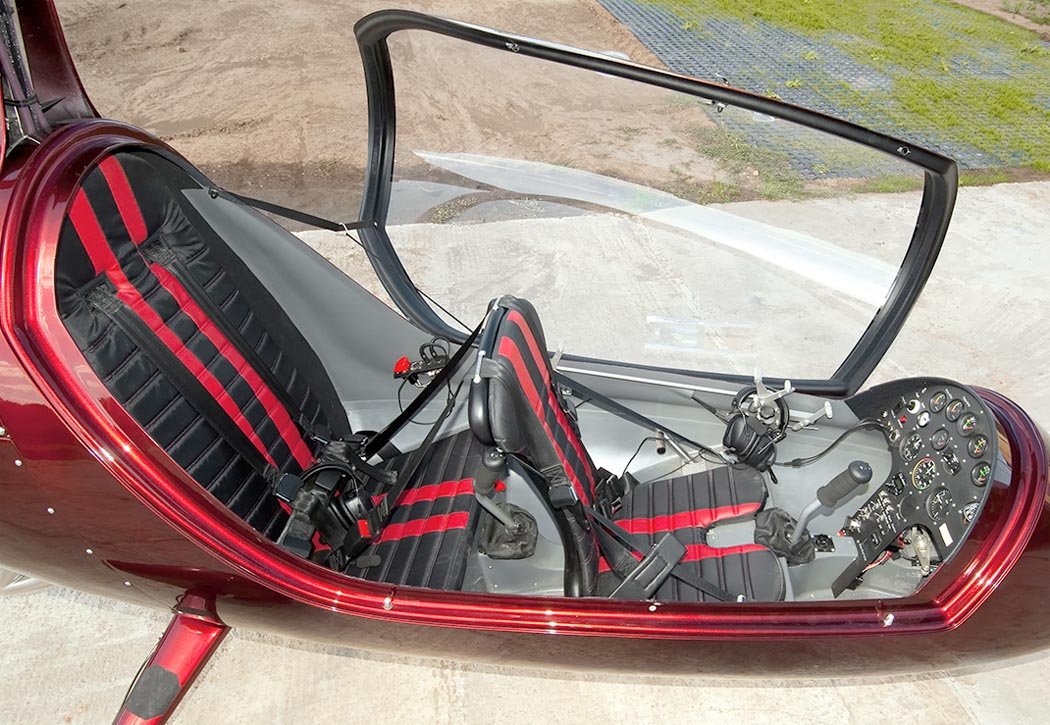
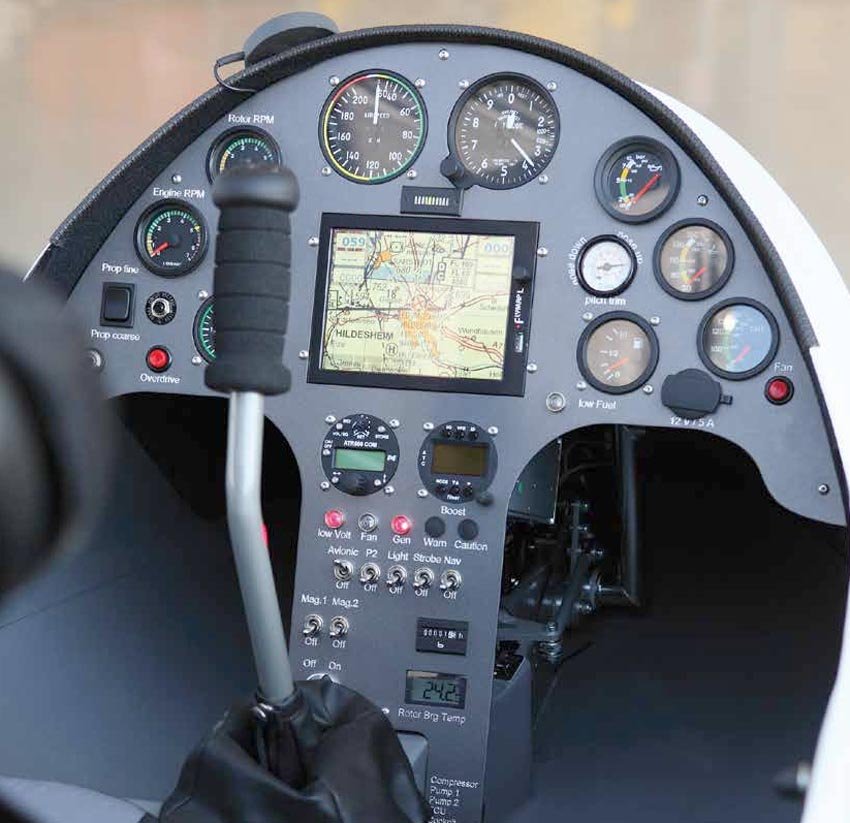
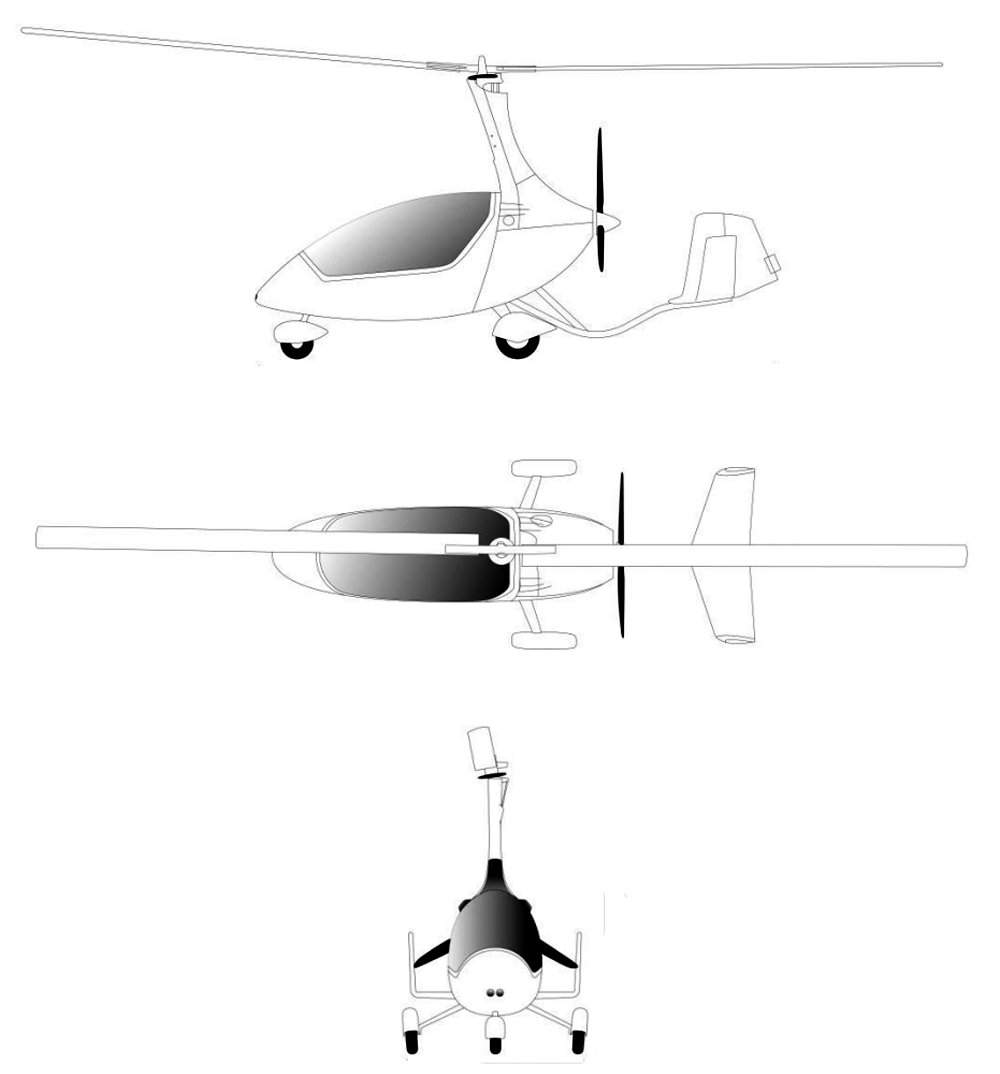
The exterior of the Calidus autogyro resembles a bullet with a tail frame and two rotors, appearing very dynamic compared to small helicopters. Its cabin is designed for two average-height individuals, with the main seat located at the front. The pilot’s cockpit in its maximum configuration is described as a blend between a modern glider and a MiG-29 fighter, though the basic version is much simpler. As a straightforward machine without a swashplate, the pilot relies on a standard set of flight instruments, engine control instruments, a rotor RPM sensor, navigation instruments, and communication devices. There is also windshield heating, but only in the pilot’s field of vision. The rear seat is for the passenger; it also has a control stick, but the instrument set is always minimal.
Performance and Aerodynamic Design
The Calidus is almost devoid of baggage space and is very limited in fuel reserve. However, the gyrocopter’s fuel tank holds up to 90 liters of fuel and is capable of covering a distance of up to 750 km with a consumption of 13-14 l/h or 9 l per 100 km. The optimal cruising speed is 160 km/h at 75% power. With 90 liters of fuel in the tank and a minimum fuel consumption of 10 l/h, this machine ensures a 9-hour flight!
However, the main advantage of this machine lies elsewhere: the Calidus takes off at a speed of only 30 km/h, and can be calmly controlled at 60 km/h. What can the gyrocopter’s behavior be compared to? It’s hard to say: it gains altitude like a plane, lands like one too, but the control responses are entirely helicopter-like. The machine exhibits distinct characteristics of both types of aircraft. Ultralight gyrocopters are not designed for performing flight maneuvers where positive overloads exceeding +3 are possible, and negative loads are not permissible at all.
Cost and Acquisition
Gyrocopters also have another significant advantage: cost. AutoGyro GmbH’s delivery terms are the same for everyone: 50% prepayment is made at the time of contract signing, and the buyer pays the second 50% upon notification of the gyrocopter’s readiness for transport. The export price of the Calidus is 52,500 euros, but when legal entities purchase the autogyro in Russia, value-added tax (18%) and customs duty (20%) increase the machine’s price by 41.6%. If a private individual buys the gyrocopter, the total tax rate is 30% – this scheme is most often used.
Technical Specifications
| Modification | Calidus |
| Main rotor diameter, m | 8.40 |
| Length, m | 4.78 |
| Height, m | 2.77 |
| Width, m | 1.73 |
| Empty weight, kg | 265 |
| Maximum takeoff weight, kg | 450 |
| Standard fuel capacity, l | 70 |
| Maximum fuel capacity, l | 90 |
| Engine type | 1 Piston engine Rotax 912ULS |
| Power, hp | 1 x 100 |
| Maximum speed, km/h | 195 |
| Cruising speed, km/h | 160 |
| Practical range, km | 600 |
| Rate of climb, m/min | 300 |
| Crew | 2 crew |
Image and diagram gallery of the Calidus
 Calidus |
 Calidus |
 Calidus |
 Calidus |
 Calidus |
 Calidus |