
In the well-known books by V. Green and J. Smith, considered exhaustive references on German military aircraft of World War II, similar information is presented regarding the Bf 109D modification. It is described as a variant of the “one hundred and nine” with a different, still undeveloped engine—the 12-cylinder DB 600A with a takeoff power of 950 hp.
Convincing arguments are provided: indeed, experimental aircraft Bf 109V10 (crashed in Zurich by E. Udet during a demonstration flight), V11, and V12 existed with the stated power plant. However, either this engine proved unreliable, or the next engine from Daimler-Benz, the DB-601, was more successful, leading to a short production run for the Bf 109D series, as the even more outstanding Bf 109E was soon ready.
The Engine Myth and the Revealed Truth
In the 1980s, archives of the German aviation industry were opened in the West, revealing that the “Bf 109D with the DB 600 engine” was another bluff by German propaganda. This propaganda sought to present “failed” situations as spectacular successes, similar to stories about non-existent “He 113 serial fighters” that aviation specialists worldwide “fell for.”
It turned out that all the few and indeed insufficiently developed DB 600 engines were directed to equip the twin-engine He 111 aircraft, which were then considered the most powerful bombers of the Luftwaffe. In reality, due to a shortage of modern engines, Bf 109D fighters were fitted with Jumo 210Da engines, even without the direct fuel injection system that the Germans so praised when describing the Bf 109C. Thus, in terms of its power plant, the Bf 109D was not just “a step backward,” but arguably “two steps” in the wrong direction. Clearly, German aircraft engine manufacturing was not entirely problem-free if Goebbels’ department had to resort to such deceptions.
Design and Flight Characteristics
Furthermore, the airframe of the Bf 109D was somewhat strengthened, making it heavier. The wing received more robust spar caps, and the tail wheel assembly, previously consisting of two structural elements—the main support and a strut—became a “cantilever” design. As a result of the increased takeoff weight, the maximum speed of the “Dora” became lower than that of the Bf 109B-2, reaching only 450 km/h (280 mph).
The cockpit featured a Revi C/12D gunsight, and the design of the exhaust pipes also changed, becoming similar to those of the Bf 109E on later production series. The capacity of the fuselage fuel tank, which followed the contour of the pilot’s seat, was increased to 400 liters. The aircraft lacked armor. Armament consisted of four MG-17 machine guns, with the fuselage guns having 500 rounds each and the wing guns 420 rounds per barrel.
It was noted that takeoff with flaps lowered to 20° on the Bf 109D was extremely short, and the rate of climb was noticeably better than the “Berta” (Bf 109B). Flight performance at combat altitude was considered satisfactory, although the aircraft had a relatively high stall speed. Stalling occurred without entering a spin, with the aircraft warning of the approaching dangerous regime by shaking of the ailerons. The aileron deflection angle was kinematically linked to the flap position; ailerons drooped 11° when flaps were extended. Excessive forward or aft center of gravity could be compensated by changing the stabilizer incidence angle (from -8° to +3°).
Operational Service and Disinformation Tactics
A small pre-production batch of Bf 109D was built in early 1938. Similar to the pre-production Bf 109B aircraft, almost all were used for experimental and developmental testing of “Messerschmitts,” primarily the E series. Following these, Bf 109D-1s began rolling off the assembly line, with deliveries to I/JG131 group starting in the spring of 1938, and by summer, such aircraft were sent to Spain. Studying the dynamics of “Dora” deliveries to operational units gives the impression that their production was somehow restrained until a certain point, and then suddenly, many aircraft of this modification were produced in a short time.
Renowned Messerschmitt expert J. Beaman noted that if in August 1938 Bf 109s accounted for less than half of the 643 front-line fighters available to the Luftwaffe, then just seven months later, a combat strength report showed the number of Bf 109s had grown to 583. The total production volume of the “one hundred and nines” in 1938 did not exceed 400 units. How did such Stakhanovite rates suddenly appear? Everything falls into place if we assume that plans to equip the “Messerschmitt” with DB 600 engines indeed existed, and airframes for such power plants were built, but the engines themselves “were not available.” Then, at some point (apparently in July-August 1938), the decision matured to revert to the more reliable Jumo 210Da, and to make the best of a bad situation, the Germans implemented a set of measures aimed at disinforming potential adversaries.
On July 15, 1938, E. Udet, along with famous American naval aviator Major A. Williams, who was visiting Germany as part of a European tour, arrived in Kassel, where Bf 109D-1 fighters were being mass-produced at the Fieseler factory. Udet promised Williams that he would have the opportunity to fly a “freshly built” regular production “Messerschmitt,” but he deliberately misled his friend. In reality, the American was given an experimental aircraft with a much more powerful engine, most likely a DB 601A. The goal was to impress an “independent expert,” and the scheme was quite successful. Williams later recalled: “I estimated that the Messerschmitt required half the takeoff distance of a Hurricane, and a quarter of that of a Spitfire. Upon losing speed, it pitched sharply down… Handling at a speed 20 miles less than the evolutionary speed was simply amazing, the ailerons and rudder were sensitive to the slightest movement.”
Williams further added: “Upon landing, touchdown occurred at 105 km/h (65 mph) indicated… The Messerschmitt was a very simple machine… The Germans said its maximum speed was somewhere around 560-570 km/h (348-354 mph), and they were telling the truth.” Udet, knowing this was a special aircraft, cunningly asked Williams, “Well, Al, how did you like the machine? You’re the first non-Luftwaffe pilot to have the opportunity to fly it.” Williams enthusiastically replied, “It’s the best plane I’ve ever sat in!” Besides its flight performance, the American was struck by how quickly the Messerschmitt’s engine could be replaced. According to him, it took only 12 minutes at the factory, whereas on a typical American aircraft, this operation took 24-36 hours.
Another American who had the opportunity to fly the “one hundred and nine” before the war was the famous Charles Lindbergh, the first pilot to fly solo across the Atlantic. On October 21, 1938, Lindbergh visited the Luftwaffe’s Rechlin test center and subsequently made a diary entry: “We inspected the Messerschmitt-110, and after that, it was time to fly the ‘one hundred and nine’. I sat in the cockpit, and one of the officers explained the purpose of the instruments and controls. The greatest difficulty was the need for appropriate propeller pitch setting during takeoff, cruise, and dive… The aircraft’s handling was wonderful. I spent a quarter of an hour familiarizing myself with the instruments and controls, and then another quarter of an hour doing turns, dives, Immelmanns, etc. Half an hour later, I landed, then took off again, flew a circuit over the airfield, and landed the machine a second time… The ‘one hundred and nine’ took off and landed just as easily as it flew.”
Again, the assumption arises (Lindbergh did not provide any numerical or other data to conclude the aircraft’s modification) that in this case, too, the American was “given” a specially prepared, non-production aircraft; otherwise, he would hardly have admired the “Dora,” which by then was falling behind, not surpassing the Soviet “I-16” in speed and climb rate. However, non-production Messerschmitts that repeatedly broke world speed records during this period could indeed evoke admiration. One such aircraft was the experimental Bf 109V13 with a specially boosted DB 601 engine (its power was increased to 1650 hp by reducing its service life to 20 hours), which brought Germany a world speed record for land-based aircraft (611 km/h or 380 mph).
The DB 601 family of engines had the same dimensions as the DB 600. Cylinders and pistons remained unchanged, but instead of carburetors, designers used a direct fuel injection system into the cylinders with a Bosch fuel pump, and the compression ratio was increased from 6.5 to 6.9. The rotational speed of the DB 601 engine’s supercharger turbine could be smoothly varied using a hydraulic coupling. Direct injection contributed to reduced fuel consumption, allowed the use of lower-octane gasoline, and enabled the engine to operate under negative G-forces. However, all these innovations required lengthy development.
The combat career of the Bf 109D-1 was short, as was its production, although before being withdrawn from service at the end of 1940, the aircraft served in a significant number of units. The Bf 109D-1 entered service with the 1st group of JG 131 in Jesau in the spring of 1938. During the Polish campaign, I/ZG 2 (formerly I/JG 231) was the only unit to use these fighters, albeit under the designation J.Gr.102, mainly for ground attack missions due to weak Polish fighter opposition. Following this campaign, the Bf 109D-1s were replaced by Bf 110s.
Despite the withdrawal of the D-series fighters from fighter squadrons and “hunter” squadrons, the aircraft’s combat career did not end there. In the summer of 1939, the night fighter squadron 10.(Nacht)/JG 26 was formed to develop night interception tactics. This unit was initially armed with Ar 68 and Bf 109B, later receiving Bf 109C. By the end of 1939 and early 1940, other night fighter squadrons like 11.(Nacht)/JG 2 and 10.(Nacht)/JG 26 (re-equipped with Bf 109D-1) were formed and deployed as part of the “Schumacher” squadron in the Heligoland Bight area. These Bf 109D-1s were used in the air defense of northern Germany until mid-1940, after which they were finally withdrawn from service.
Technical Specifications
| Modification | Bf 109D-1 |
| Wingspan, m | 9.85 |
| Length, m | 8.60 |
| Height, m | 2.55 |
| Wing area, m2 | 16.40 |
| Empty weight | 1800 |
| Normal takeoff weight | 2425 |
| Engine type | 1 Piston engine Daimler-Benz DB 600Aa |
| Power, hp | 1 x 986 |
| Max speed at altitude, km/h | 570 |
| Max speed at sea level, km/h | 475 |
| Practical range, km | 560 |
| Max rate of climb, m/min | 912 |
| Practical ceiling, m | 10000 |
| Crew, crew members | 1 |
| Armament | one 20-mm MG FF/M cannon with 160 rounds per barrel and two 7.9-mm MG 17 machine guns with 500 rounds per barrel. |
Image and diagram gallery of the Bf.109D
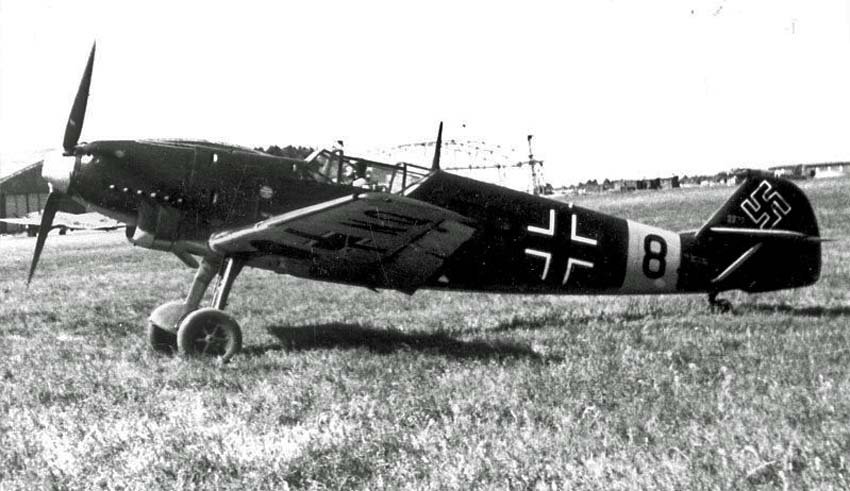 Bf.109D |
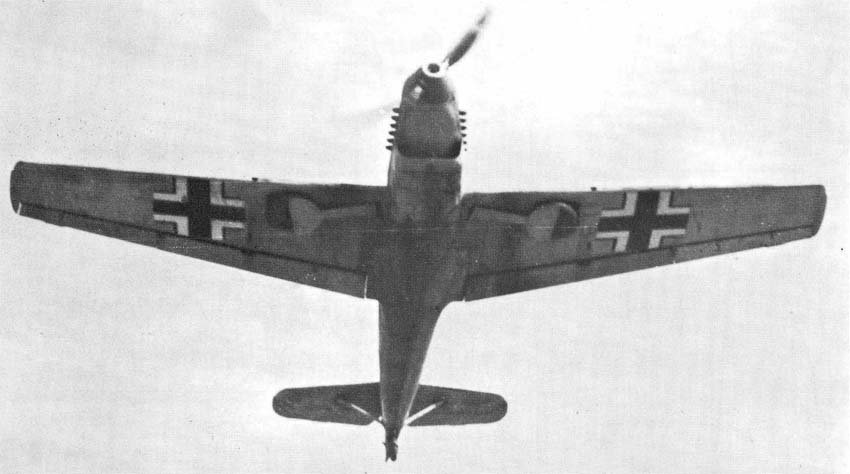 Bf.109D |
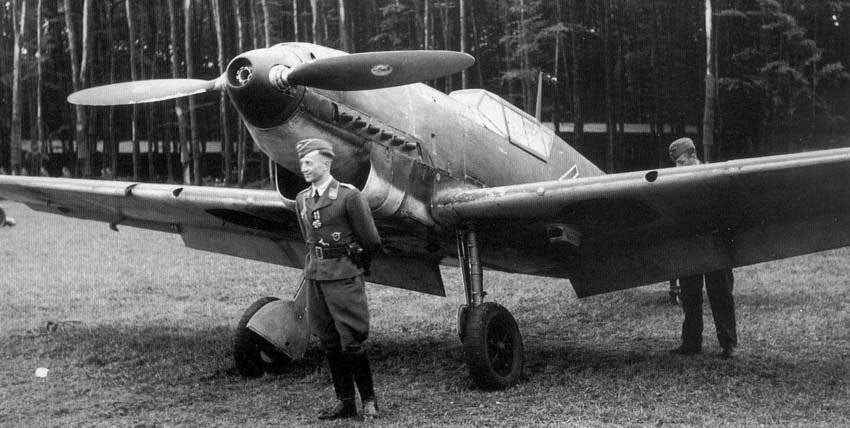 Bf.109D |
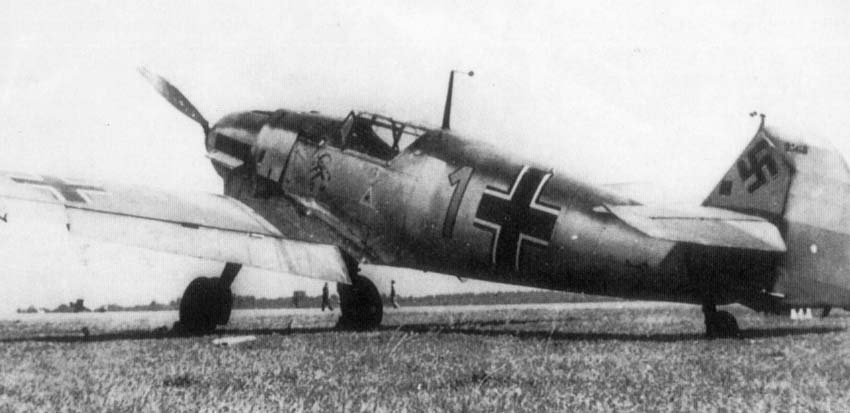 Bf.109D |
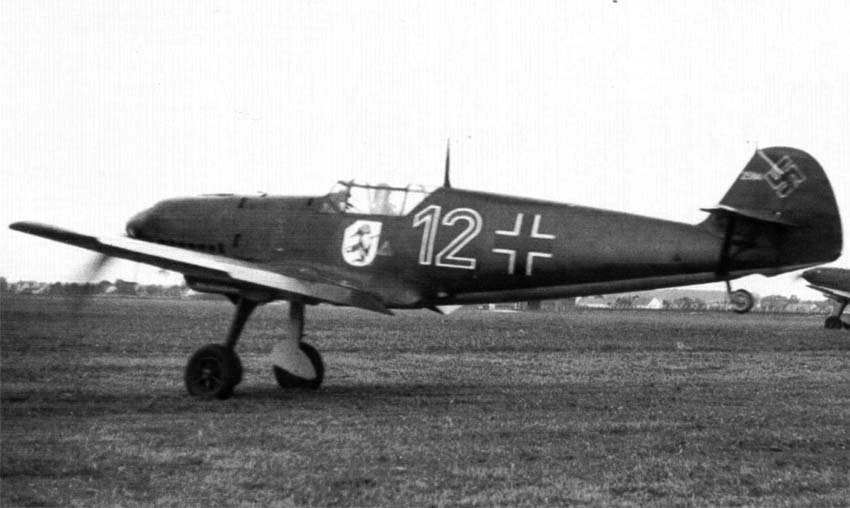 Bf.109D |
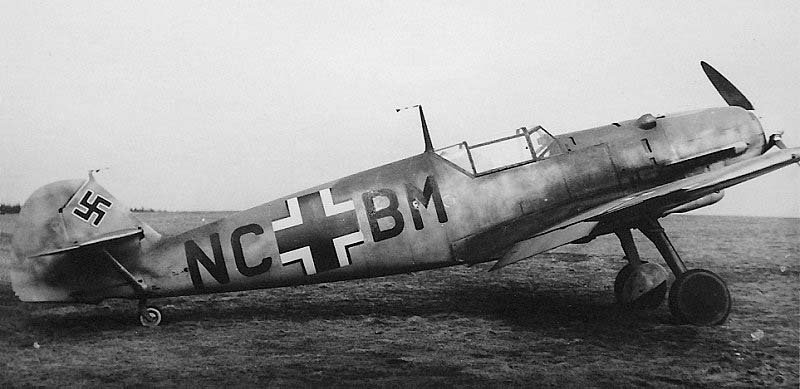 Bf.109D |
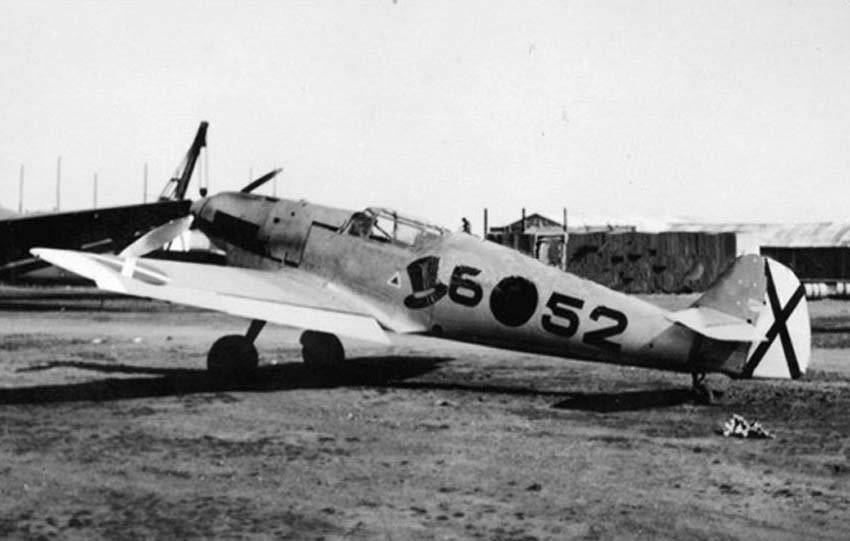 Bf.109D |
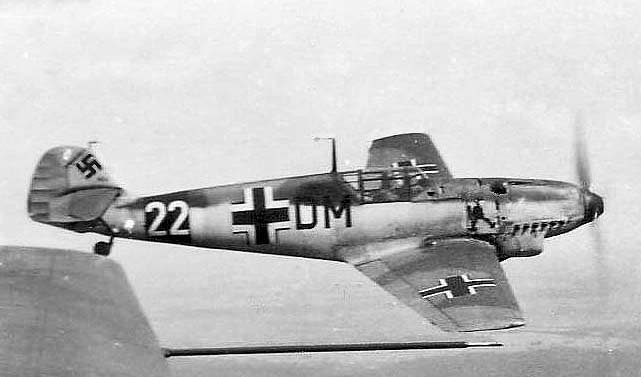 Bf.109D |
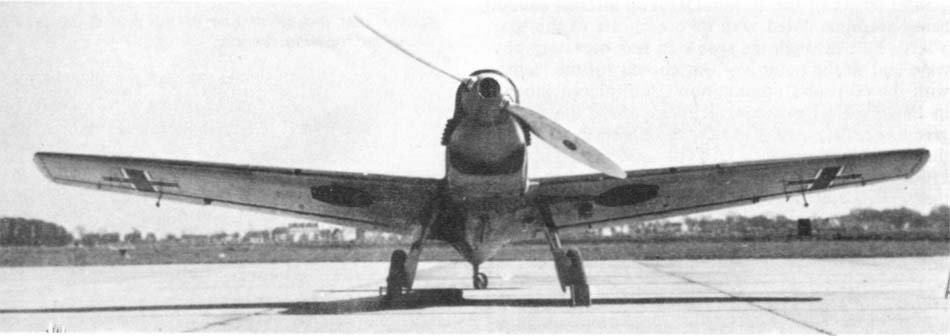 Bf.109D |
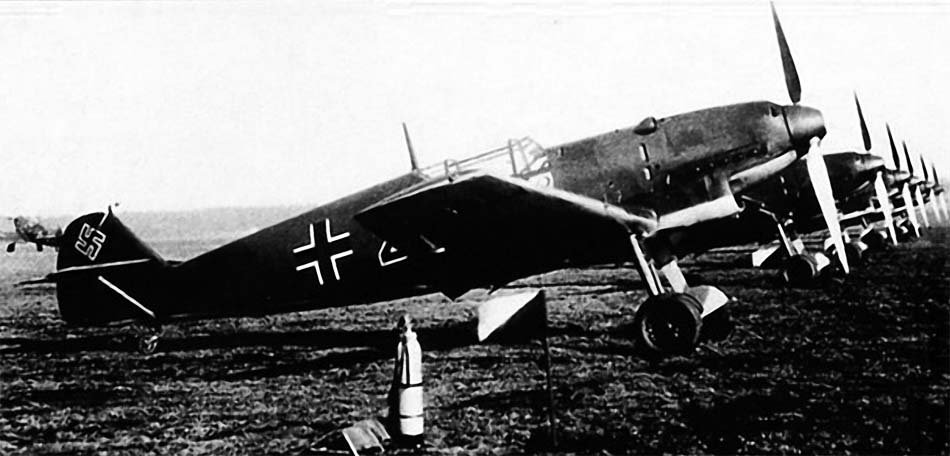 Bf.109D |
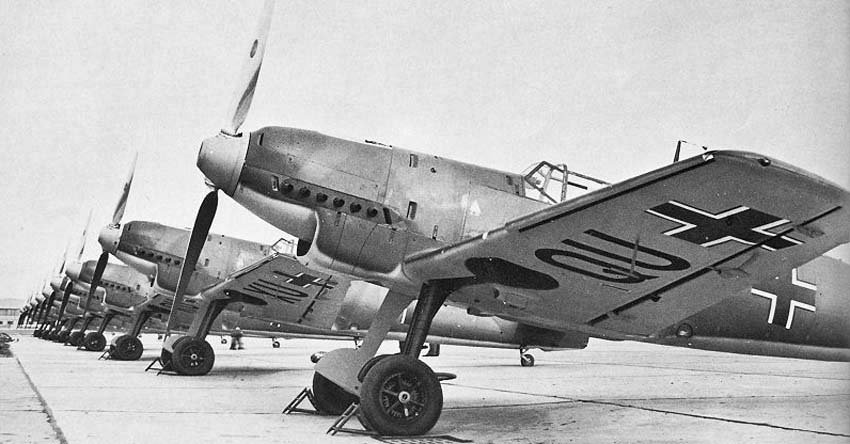 Bf.109D |
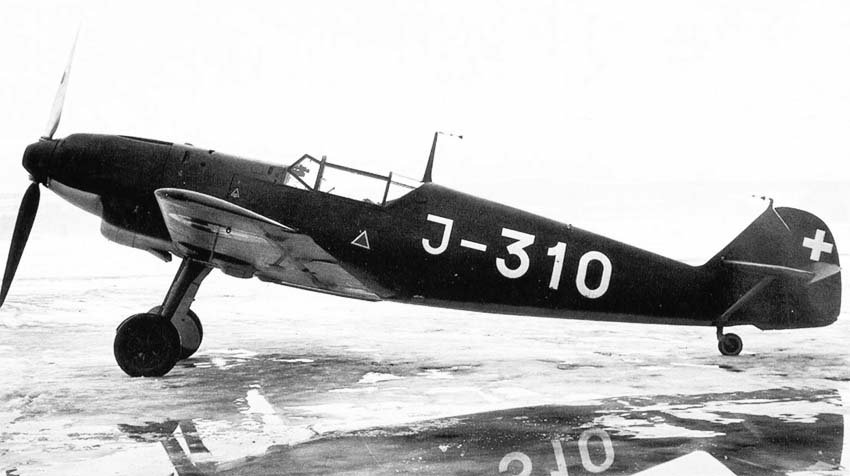 Bf.109D |
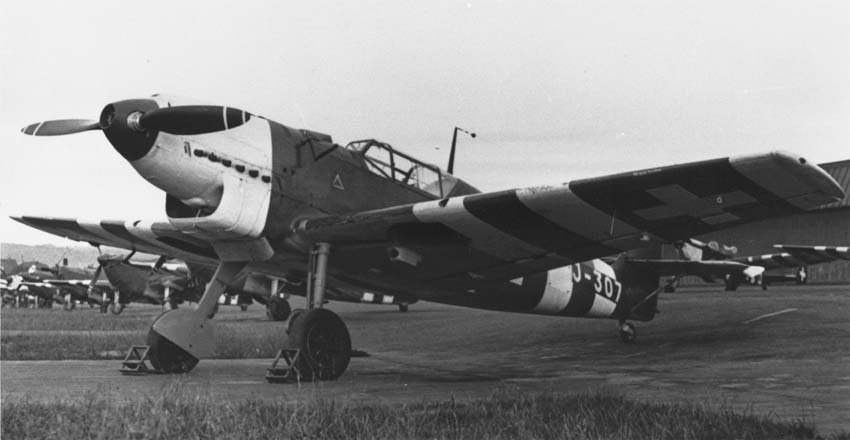 Bf.109D |
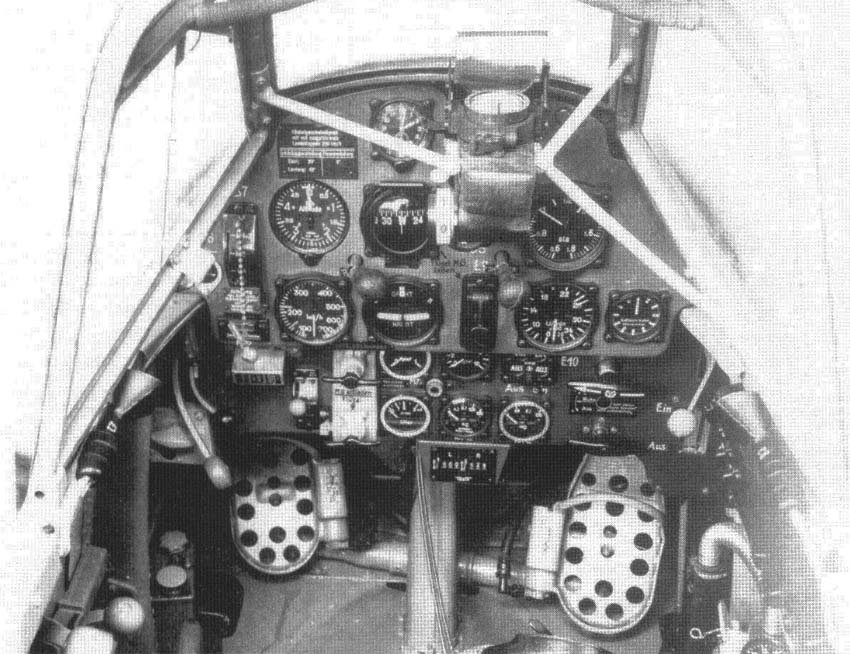 Bf.109D |
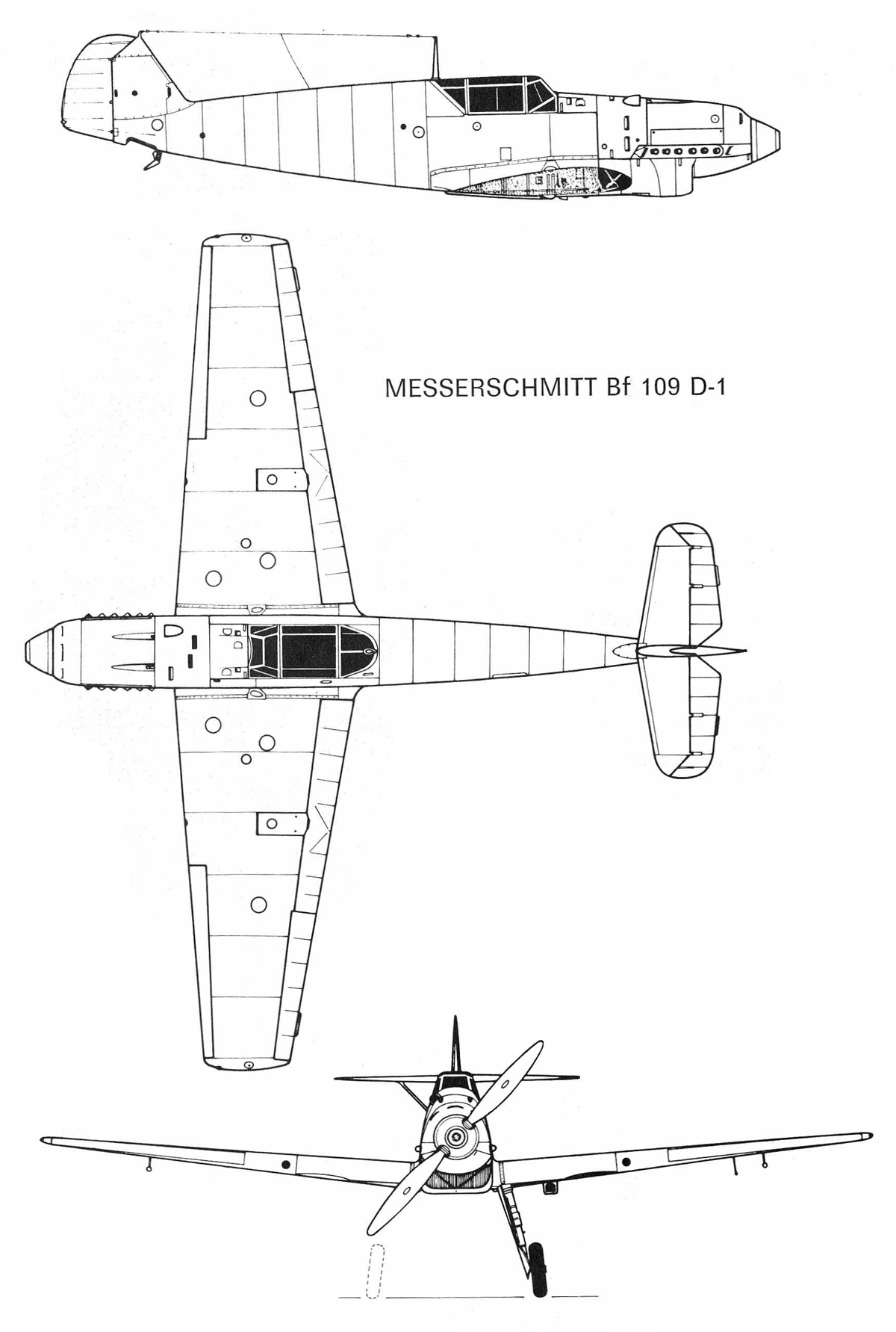 Bf.109D |
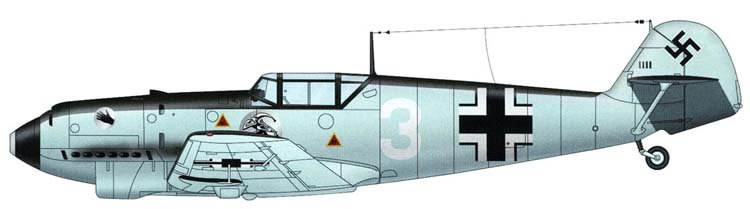 Bf.109D |
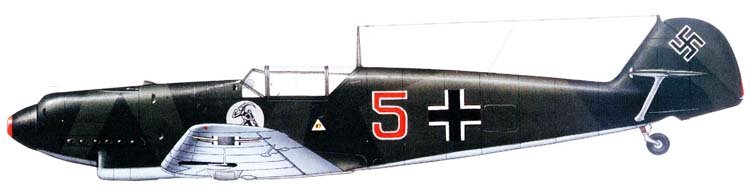 Bf.109D |
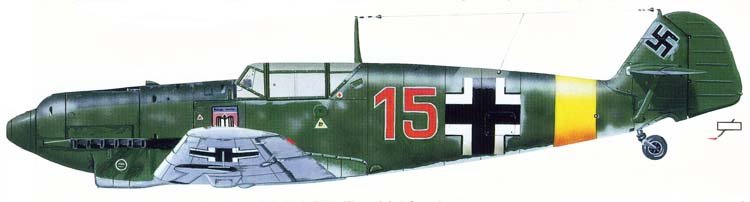 Bf.109D |
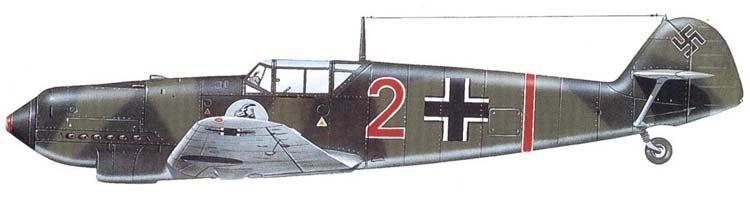 Bf.109D |
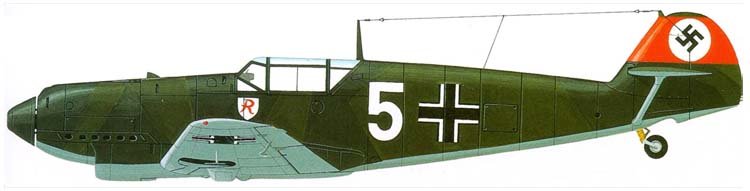 Bf.109D |