During the First World War, Boulton & Paul manufactured a large number of Sopwith Camel fighters. It was therefore logical that John North became keenly interested in creating an aircraft to replace the Camel. After the Air Ministry issued a specification for such an aircraft, North quickly began work, urgently considering several layouts.
The Air Ministry specified the 230 hp Bentley B.R.2 rotary engine as the powerplant for the new fighter, which was only 93 pounds (42.12 kg) heavier than the 150 hp B.R.1. Alternatively, the Ministry proposed the 170 hp ABC Wasp radial engine, which was installed on the Sopwith 8F.1 Snail, Westland Wagtail, and BAT FK.22/2 Bantam.
Sopwith entered its Snipe project into the competition, which was slightly ahead of its rivals. The Snipe’s first flight took place in late 1917, equipped with a B.R.1 engine as the heavier motor was not yet available. Initially, the Sopwith Snipe was a single-bay biplane with a flat-sided fuselage; its two prototypes, with minor layout differences, underwent evaluation trials in December 1917.
The third prototype was converted into a two-bay design with a rounded fuselage and the 230 hp B.R.2 engine; this aircraft was delivered to Martlesham Heath in February 1918. Although the Sopwith Snipe was considered the main contender, there were two other serious rivals for the Camel replacement:
Development and Contenders
These included the Austin A.F.T.3 Osprey triplane, designed by John Kenworthy (North’s successor as Austin’s designer) and C.H. Brooks. Another was the Nieuport BN.1, Henry Folland’s first project at British Nieuport and a development of his earlier S.E.5A design.
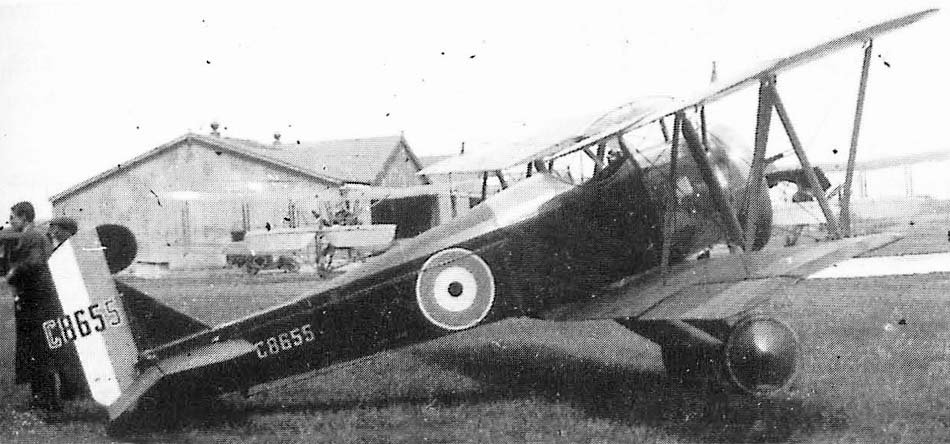
On December 1, Boulton & Paul received an order for two of their projects: P.3 and P.5. Three prototypes of each project were ordered; P.5 machines were assigned earlier serial numbers C8652-C8654, while P.3 machines received later numbers C8655-C8657. The P.5 was initially named “Hawk.” This name may also have been used for the P.3, but the company was forced to change it due to the Air Ministry’s classification system, which came into force in 1918.
Predatory bird names were reserved for aero-engines (the name Hawk went to a Rolls-Royce engine), while single-seat, single-engine fighters were to be named after land birds (excluding birds of prey) or reptiles. Boulton & Paul were assigned the initial letters BO (Sopwith received SO, SA, and SN, with its machine named Snipe; Austin received AU, AS, and OS, and its aircraft was named Osprey). Boulton & Paul wanted to rename their contender “Boblink,” but later changed it to the North American bird “Bobolink.” The P.5 project was abandoned early, and its serial numbers were transferred to another aircraft.
Boulton & Paul P.3 Bobolink Features
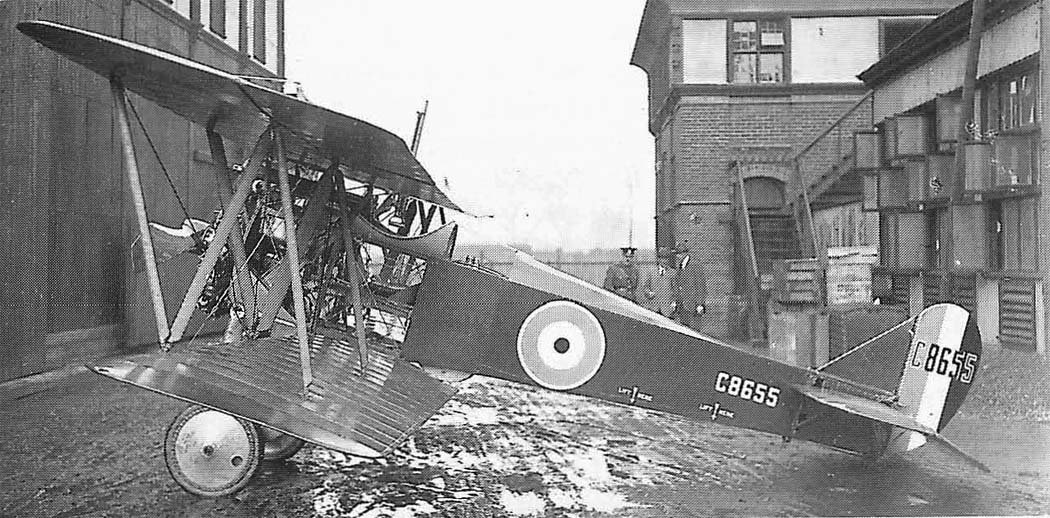
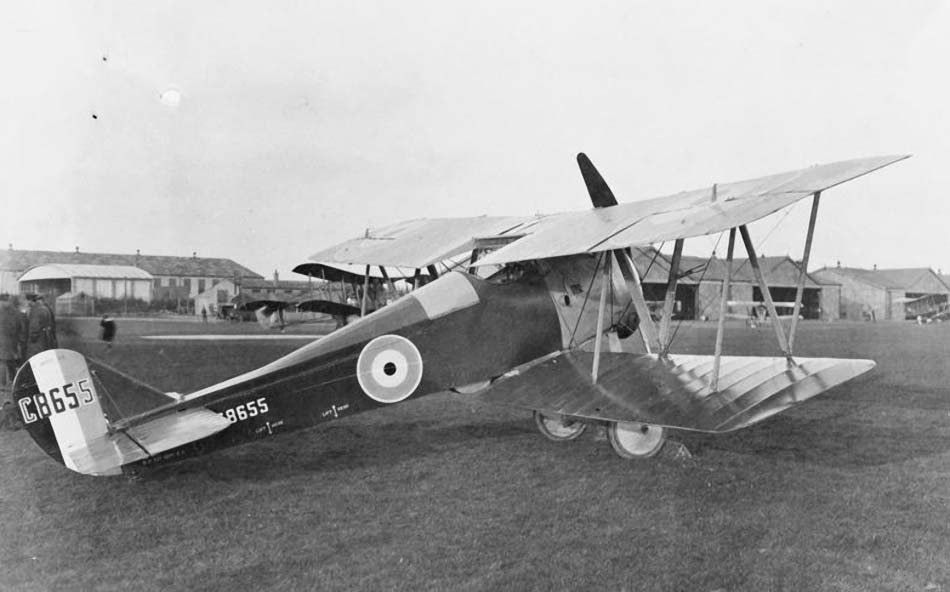
Nevertheless, construction of the P.3 continued with urgency, aiming to participate in trials at Martlesham Heath alongside its three rivals. The availability of the B.R.2 engine was a constraining factor in aircraft construction, leading to the first P.3 Bobolink (C8655) ultimately being equipped with only the fourth B.R.2 produced.
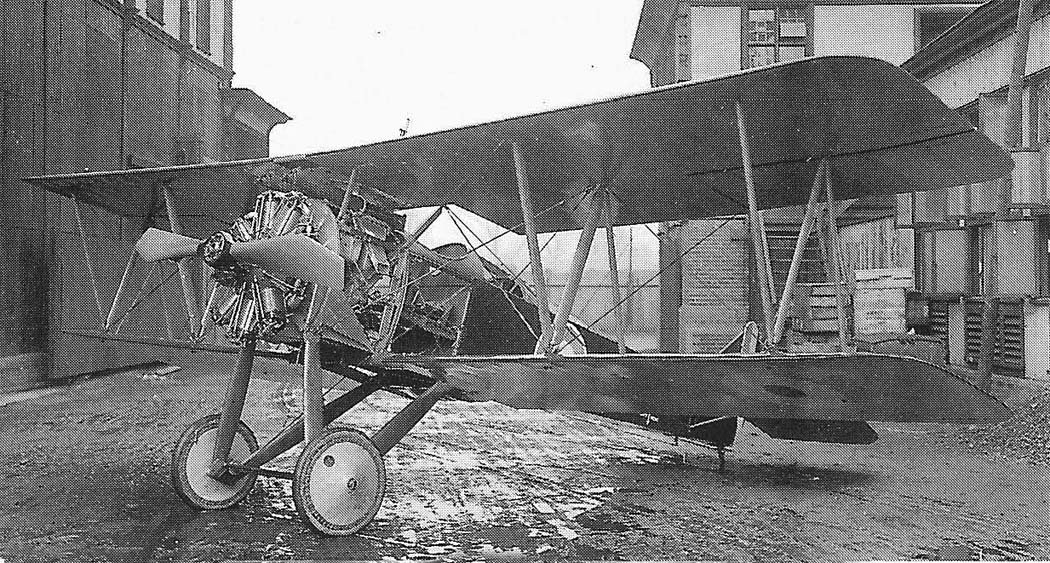
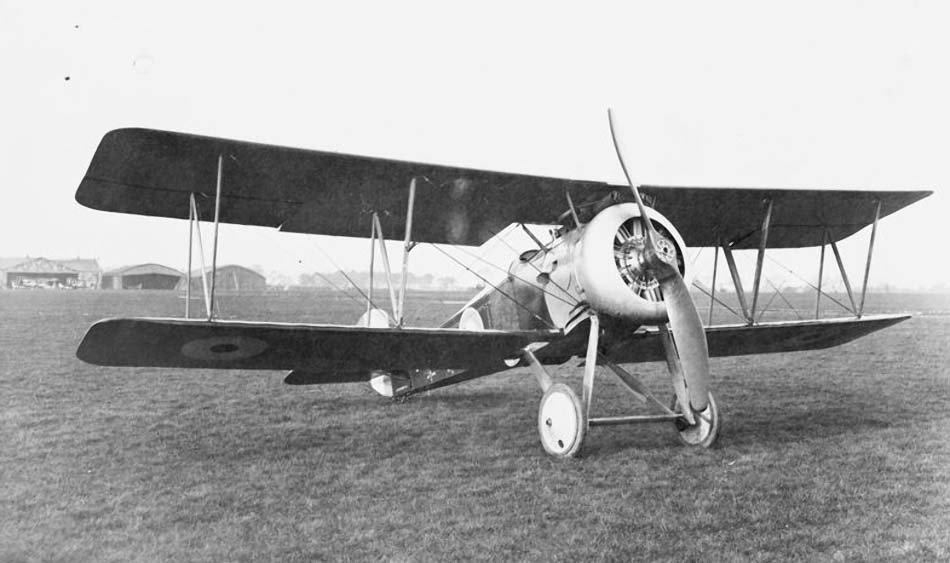
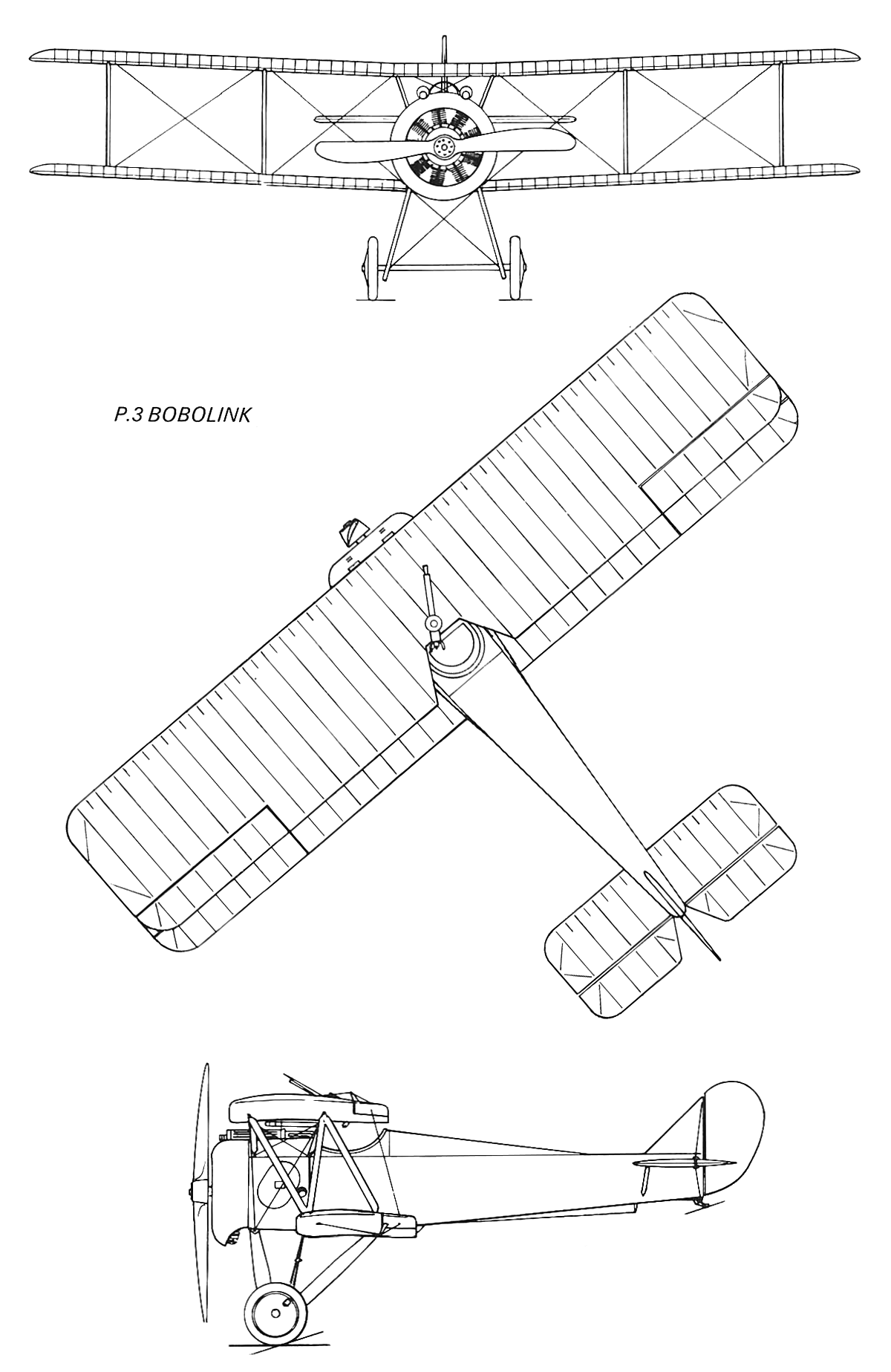
Like the Snipe, the P.3 fighter was a two-bay biplane with wings of equal span and a wing gap of 2 feet 3.5 inches (0.7 m). The biplane box featured N-struts, which were still quite rare at the time (although North himself had used them before WWI on the Grahame-White Type 13). The advantage of such struts was in simplifying rigging and reducing the number of bracing wires.
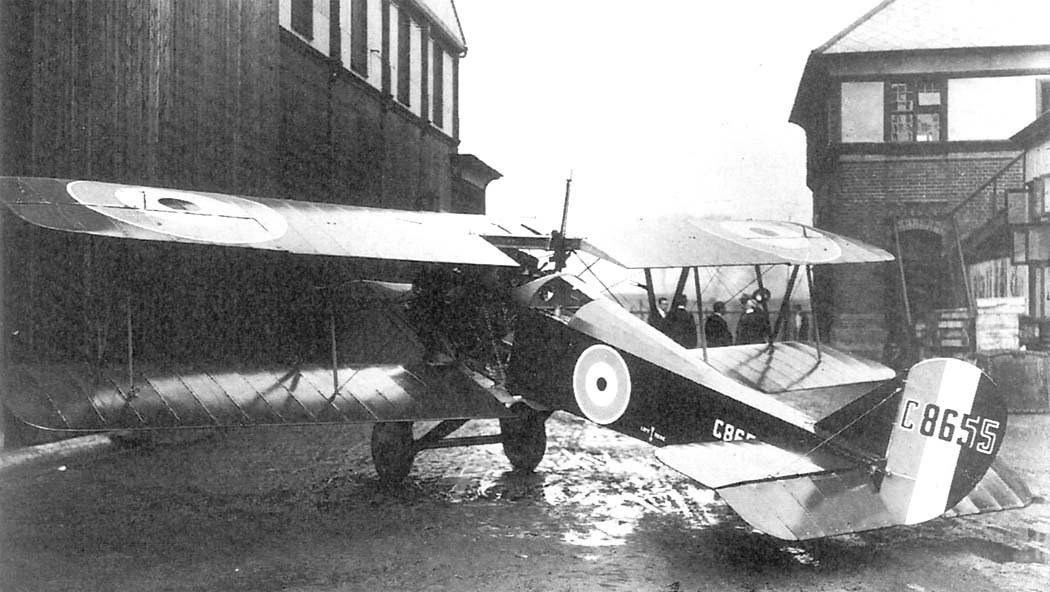
The wing structure was conventional wood with fabric covering. Thanks to the skill of North and the Boulton & Paul workers, the wings themselves were very light – without fabric covering, they weighed only 29 pounds (13.2 kg). Initially, ailerons were installed only on the upper wing, but insufficient maneuverability, discovered at Martlesham Heath during initial trials, forced the installation of ailerons on the lower wing as well. Ailerons on different wings were connected by struts. Another distinctive feature of the upper wing was a large rectangular cutout, providing the pilot with excellent upward visibility.
The front part of the fuselage had a circular cross-section, adapted for the rotary engine, while the rear part, with flat sides, was a simple wire-braced box-beam with a curved upper section behind the pilot’s head. The project featured another innovation directly related to John North’s flexible thinking and meticulous work: two fuel tanks placed behind the pilot.
These tanks, with capacities of 34 and 6 gallons (154.6 and 27.3 liters), were separated by an armor plate, giving a single bullet minimal chances of piercing both tanks. In case both tanks caught fire, the pilot could jettison them and glide to a safe landing, preserving the rest of the aircraft. In days when aircraft were built from flammable fabric and wood, and pilots were still not allowed to wear parachutes, this idea was very successful.
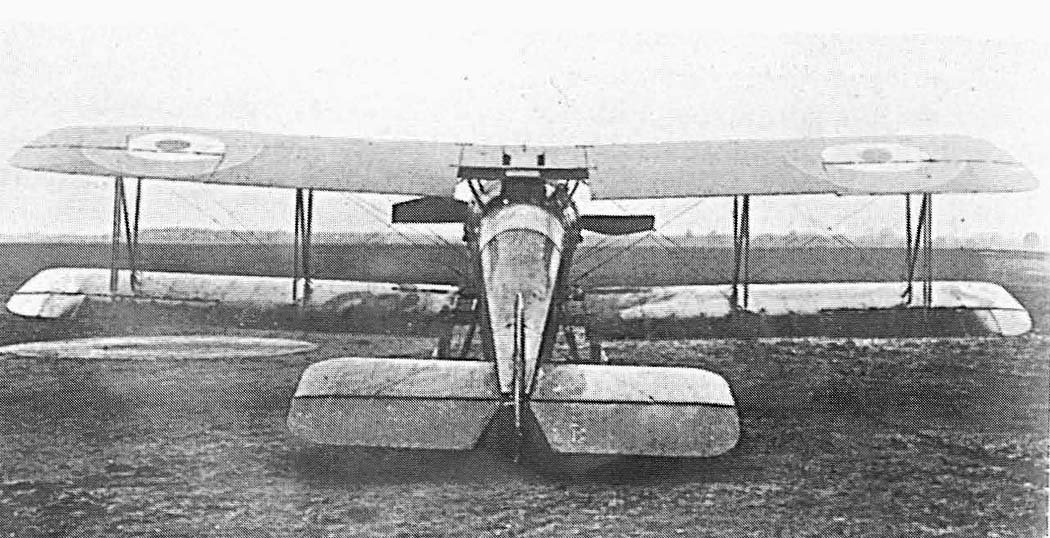
The aircraft’s rudder had a sharply curved leading edge leading to an inclined fin. The overall length of the aircraft was 20 feet (6.1 m), the wingspan was 29 feet (8.84 m), and the height was 8 feet 4 inches (2.54 m). Compared to the third Snipe prototype, the Bobolink prototype had a 2 foot 1 inch (0.64 m) larger wingspan and a 1 foot 2 inch (0.36 m) greater height, but was 9 inches (0.23 m) shorter.
Two Vickers machine guns were mounted in the front fuselage, firing forward through the propeller disc of the 9-foot (2.74 m) two-bladed propeller. Additionally, provision was made for a mounting rail for a single Lewis machine gun above the upper wing. When C8655 was rolled out of the Riverside factory in late 1917, it was equipped with both Vickers machine guns and the mounting rail for the Lewis gun. C8655 was fully complete upon rollout, except for the covering of the front fuselage. However, when the aircraft was sent for trials, the Lewis machine gun had already been removed. As expected, the engine mounts and Vickers machine gun installation were very similar to those of the Camel.
The Martlesham Heath Competition
In-house trials of the fighter began at Mousehold under the command of Captain Frank Courtney. Captain Courtney had been transferred from the Royal Flying Corps experimental unit and was involved in a program to install 150 hp Monosoupape engines on Sopwith Camel fighters. Flight tests for this program were carried out at Mousehold on Camel fighters built by Boulton & Paul, so it was natural that Captain Courtney performed the first flights of the Bobolink.
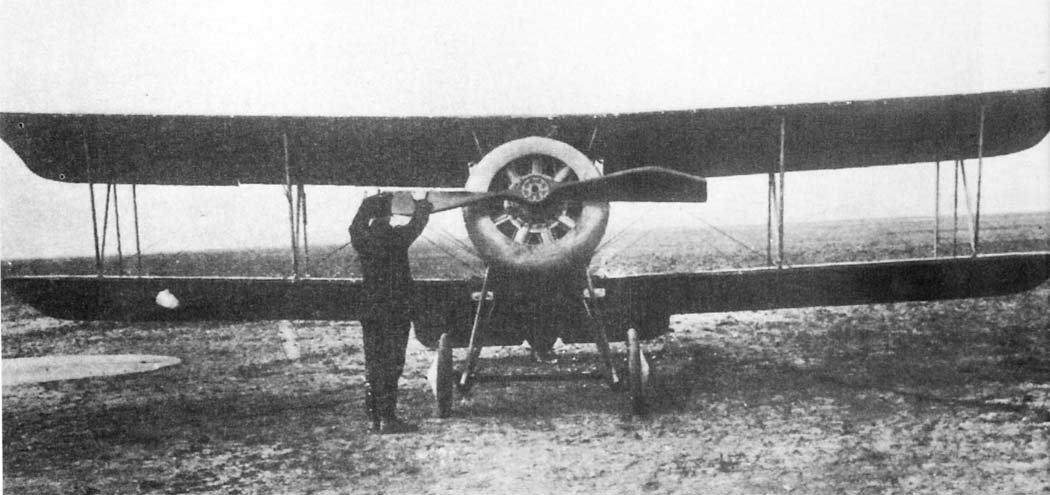
In addition to criticizing the insufficient maneuverability, which led to the installation of ailerons on the lower wing, Courtney noted the inadequate width of the landing gear track, which made taxiing the Bobolink quite difficult. However, Courtney recognized that the track width was not a serious error requiring immediate change. When the aircraft was rolled out of the factory, it had a propeller with noticeably square tips, but subsequent photographs showed a propeller with rounded tips (likely a Snipe propeller installed at Martlesham).
At the end of the week ending March 9, 1918, C8655 was transferred to Martlesham Heath, where it joined the Snipe. The Nieuport BN.1 and Austin Osprey were delivered to Martlesham Heath within the week, and comparative flight trials were quickly conducted. During the final evaluations, several active-duty pilots, including Captain James McCudden, were invited to assess all four aircraft in single-day trials at Sutton’s Farm.
Each machine was tested with a Snipe propeller and full specification load: 40 gallons (181.8 L) of fuel, 8 gallons (36.4 L) of oil, 150 pounds (68 kg) of Vickers machine guns and ammunition, 50 pounds (22.7 kg) of Lewis machine gun and ammunition, and 25 pounds (11.4 kg) of wiring and oxygen. Due to a cowl failure, no reliable tests of the Nieuport could be conducted to determine its performance characteristics.
Equipped with wings of 23 feet (7 m) span, the Osprey was the most maneuverable, followed by the Nieuport and Bobolink, which were less attractive due to heavy handling and slow lateral response. But the Osprey was clearly the slowest of the four, as the shortest era of triplanes was coming to an end. No official order was issued for the Osprey fighter; the machine was built at the company’s own expense with special permission from the Air Ministry, which issued license No. 17 and serial number X15 from a special series reserved for company-funded machines.
The BN.1, like the Bobolink and Snipe, was a two-bay biplane and featured revolutionary I-struts, which were viewed with suspicion at the time. The BN.1 was the fastest of the four aircraft with very promising overall characteristics, but an accident involving an in-flight fire occurred on March 10. As a result, the aircraft was completely destroyed and excluded from the competition, as a second prototype could not be delivered immediately.
Visibility from the pilot’s seat was best in the Snipe, followed by the Nieuport and Bobolink, although with minor changes in this regard, all three were very similar. The Osprey’s visibility was the worst, and there was no way to quickly improve it. Regarding access to the engine and related equipment, the Osprey was clearly the best, followed by the Snipe and Bobolink, which were equal in this respect. The Nieuport was the worst of the four in this regard, although modifications could have improved it to the standards of the other two biplanes.
Vickers machine guns were equally well placed on the biplanes, but on the Osprey, the gun cocking handles were difficult to access. On the Bobolink and Snipe, the Lewis gun was difficult to use because the pilot sat too close to the rear spar; the Nieuport was much better in this regard. It was impossible to mount a Lewis gun on the Osprey, except for a fixed upward-firing installation.
The Applied Design Branch compiled a report on the ease of manufacture and maintenance of the four aircraft. The Osprey and Nieuport were considered the best, although the Nieuport’s wing structure was criticized. The Bobolink was described as very poor in terms of production and maintenance. This viewpoint seems strange, as the Bobolink had a simple rectangular box-beam fuselage, whereas, for example, the Snipe had a complex rounded fuselage constructed of frames and stringers.
There were too few differences among the four aircraft, although Sopwith’s greater experience and the fact that the Snipe was already flying and had undergone significant structural changes were major advantages in its favor. Although its maximum speed was disappointing (121 mph (194.7 km/h)) at 10,000 feet (3048 m) – 4 mph (6.44 km/h) less than the Bobolink’s – its rate of climb was excellent, and its high-altitude handling was superb: pilots in the Snipe felt as comfortable in the air as in the Camel.
Taking all factors into account, the following ranking was obtained for meeting requirements: Snipe, Nieuport, Osprey, Bobolink. The choice of the Snipe was likely inevitable, although the Bobolink’s overall characteristics differed only slightly. Criticism of the Bobolink also included its narrow landing gear track and (though this could have been rectified) inconvenient cockpit access, which was located within the upper wing cutout.
Later, in an attempt to solve ground handling problems, the Bobolink was fitted with a rudder featuring a large horn balance; the compensation was unshielded and, being next to the unchanged fin, gave the rudder an absurd appearance. The struts connecting the ailerons were replaced with cables. The Snipe also required a larger rudder, increasing its length to 19 feet 10 inches (6.04 m).
Later that same year, another B.R.2-engined fighter appeared: the Armstrong Whitworth Armadillo. However, by the time of its first flight, there was no chance of receiving orders, but for completeness, the Armadillo was included in the participants of the next competition.
The armament consisted of two synchronized 7.7mm Vickers machine guns in the upper fuselage, and provision for mounting another 7.7mm Lewis machine gun above the center section.
Technical Specifications
| Modification | Bobolink |
| Wingspan, m | 8.84 |
| Length, m | 6.10 |
| Height, m | 2.54 |
| Wing area, m2 | 24.71 |
| Empty weight | 557 |
| Normal takeoff weight | 904 |
| Engine type | 1 Piston engine Bentley B.R.2 |
| Power, hp | 1 x 230 |
| Maximum speed, km/h | 201 |
| Cruising speed, km/h | 175 |
| Flight endurance, h.min | 3.15 |
| Maximum rate of climb, m/min | 375 |
| Service ceiling, m | 5945 |
| Crew, crew members | 1 |
| Armament | two synchronized 7.7-mm Vickers machine guns in the upper fuselage, provision for the installation of another 7.7-mm Lewis machine gun above the center wing section. |
Image and diagram gallery of the Boulton & Paul P.3 Bobolink
 Bobolink |
 Bobolink |
 Bobolink |
 Bobolink |
 Bobolink |
 Bobolink |
 Bobolink |
 Bobolink |
 Bobolink |