The Air Staff realized that most contractors interpreted the specifications too literally, particularly concerning engine selection. However, Fedden convinced Barnwell to develop a monoplane for the F.7/30 requirements using the specified Mercury engine.
In April 1933, Barnwell presented a derivative of the Type 120 – a two-seat fighter (Type 132). The Type 132 was equipped with a 16-cylinder, twin-row Hydra engine, which Fedden was developing as a power plant for fighters.
Initial Development and the Type 132
The Type 132 was a low-wing monoplane featuring a rear gun turret, a stressed-skin cantilever wing, a monocoque aluminum alloy rear fuselage, and a steel tube front section. The Air Ministry was prepared to support the privately developed Hydra engine by ordering a prototype. For some time, the choice lay between the Type 132 and a Vickers project.
In March, the company received instructions to commence prototype No. 7774, but on April 24, this was canceled due to serious difficulties with the Hydra engine. Consequently, work on the Type 132 was halted before the metal fabrication stage.
Innovations and Design of the Bristol 133
Barnwell then designed a single-seat aircraft powered by a Mercury engine, with a structure similar to the Type 132. He was permitted to complete its development for the F.7/30 competition under an Air Ministry contract issued for the prototype of the large transport/assault aircraft Type 130. In March 1933, a single Type 133 prototype was privately ordered.
The new fighter fully utilized the latest American invention – Alclad (a duralumin-type alloy clad with pure aluminum or corrosion-resistant aluminum alloy) – combined with controlled heat treatment in salt baths. It was a cantilever monoplane with a fully cowled engine and retractable landing gear – the first of its kind for the Royal Air Force. Its stressed rear fuselage and girder-type forward section were structural features that appeared ten years later in the Hawker Typhoon and Tempest.
The constant-chord wing had rounded tips; a sharply dropped center section housed the retractable landing gear, fuel tanks, and detachable outer wing panels. Ailerons, fin, and elevators were fabric-covered components. Armament consisted of two fuselage-mounted synchronized Vickers machine guns and two Lewis machine guns mounted behind the landing gear struts, outside the propeller arc.
The ailerons spanned the entire detachable outer panels and could be symmetrically lowered in unison to reduce landing speed via a linkage system. This, along with landing gear retraction, was hydraulically operated by a Dowty hand pump; hydraulic wheel brakes were also provided.
Testing, Tragedy, and Legacy
Equipped with the Mercury VIS.2 engine, the Bristol 133 prototype, No. 7776 (R-10), made its first flight on June 8, 1934, piloted by Uwins, who reported it would be a winner. Wheel brakes were made more effective, rudder area increased, original ailerons replaced with smaller-span ones, separate slotted flaps extended through the center section, the tail skid was replaced by a self-orienting tail wheel, and an emergency pylon and sliding canopy were installed on the cockpit.
Finally, an improved low-drag exhaust collector ring and an elongated cowl were fitted. By the end of February 1935, all performance tests and most handling tests had been completed by Uwins in just 18 flying hours. On March 8, only the final spin and dive tests remained before the aircraft’s transfer to Martlesham.
On that day, Uwins completed the spin tests and two dives up to an indicated airspeed of 310 mph (498.79 km/h). Then, Campbell took the aircraft for the final half-hour handling tests and, at 14,000 ft (4267.2 m), entered a right-hand spin. Unfortunately, he overlooked the fact that the landing gear was extended, which led to the development of a flat spin.
He immediately applied throttle, but apparently due to fuel starvation caused by centrifugal force, the engine stopped. As Campbell had no hope of recovering from the spin and had already lost 8,000 ft (2438.4 m), he parachuted out. The cockpit canopy opened easily, but Campbell’s foot was caught in the control column, and for several seemingly eternal moments, he hung upside down before freeing himself at 2,000 ft (609.6 m).
His parachute opened immediately, and according to him, the Type 133, descending below him and rotating steadily, ignited upon impact at Longwell Green airfield, east of Bristol. This marked the end of the company’s hopes for the F.7/30 competition and highlighted the false economy of relying on a single prototype for such an important undertaking.
Barnwell was ready to develop an improved modification of the Type 133, but time was too short. Specification F.5/34 had already been issued, requiring a fighter with a radial engine and eight wing-mounted machine guns. To meet these requirements, the company developed a new project (Type 146), for which Bristol secured a contract at the end of March.
Technical Specifications
| Modification | Bristol 133 |
| Wingspan, m | 11.89 |
| Length, m | 8.53 |
| Height, m | 2.97 |
| Wing area, m2 | 22.95 |
| Empty weight | 1053 |
| Normal takeoff weight | 2149 |
| Engine type | 1 Piston engine Bristol Mercury VIS |
| Power, hp | 1 x 620 |
| Maximum speed, km/h | 418 |
| Cruising speed, km/h | 378 |
| Crew | 1 crew member |
| Armament | two synchronized 7.7-mm Vickers machine guns, two 7.7-mm Lewis machine guns |
Image and diagram gallery of the Bristol 133
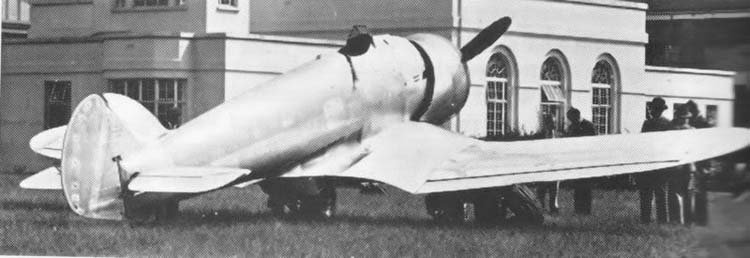 Bristol 133 |
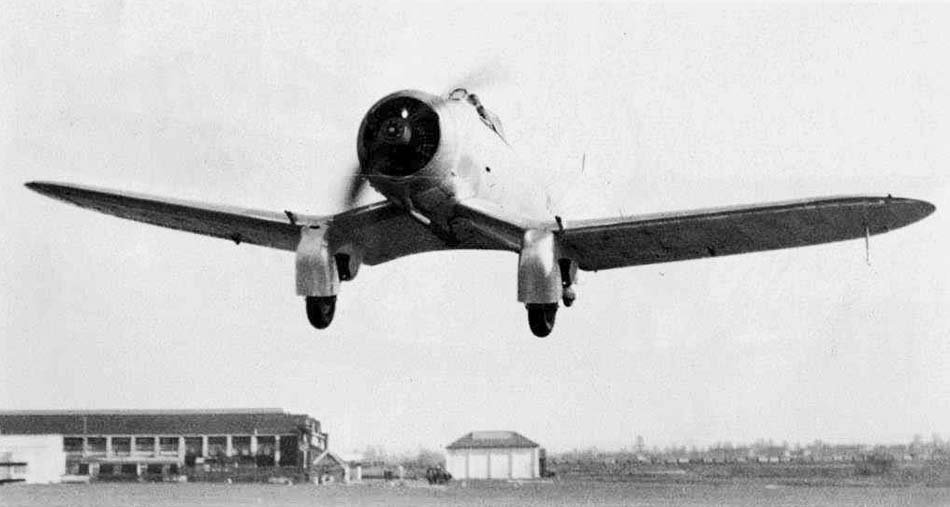 Bristol 133 |
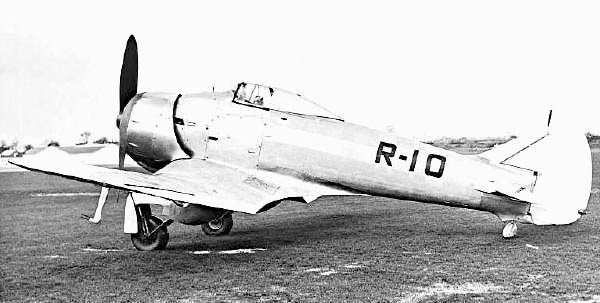 Bristol 133 |
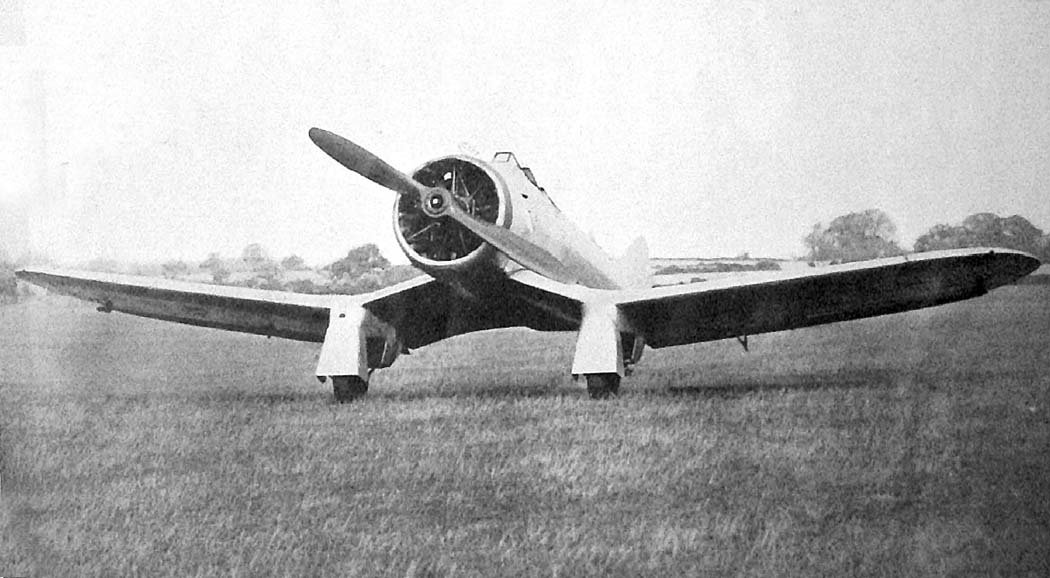 Bristol 133 |
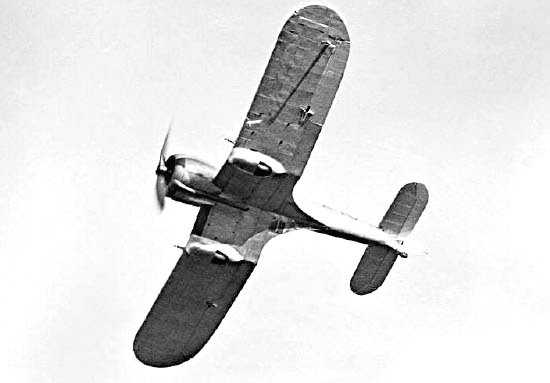 Bristol 133 |
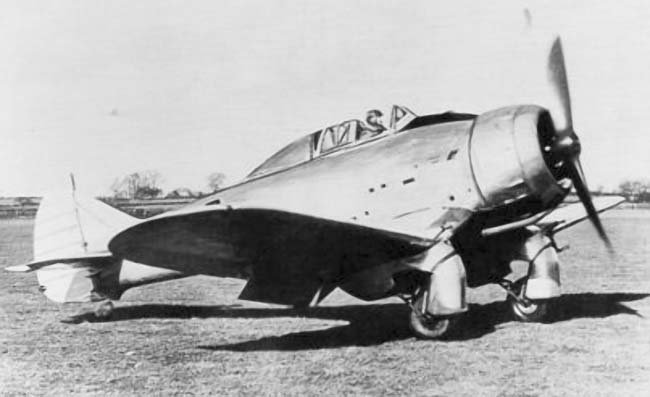 Bristol 133 |
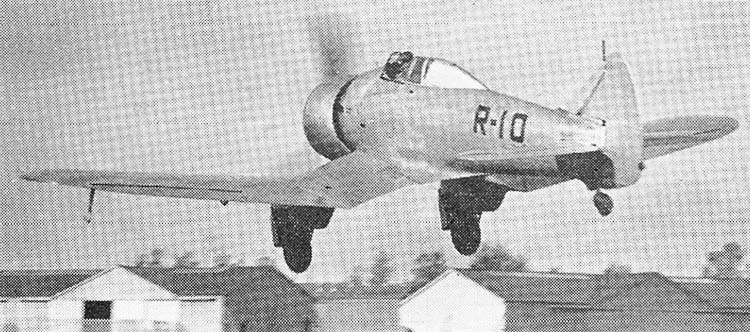 Bristol 133 |
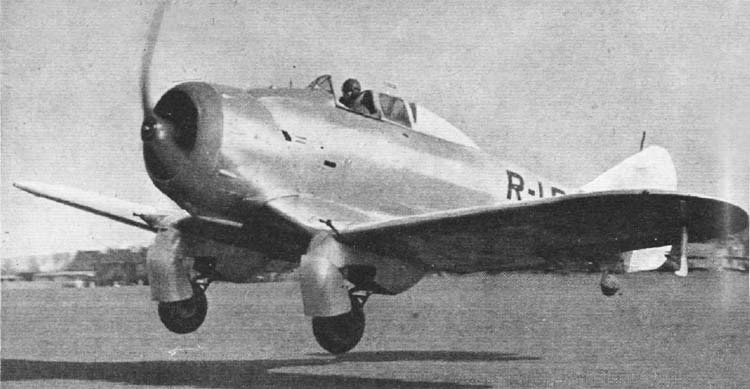 Bristol 133 |
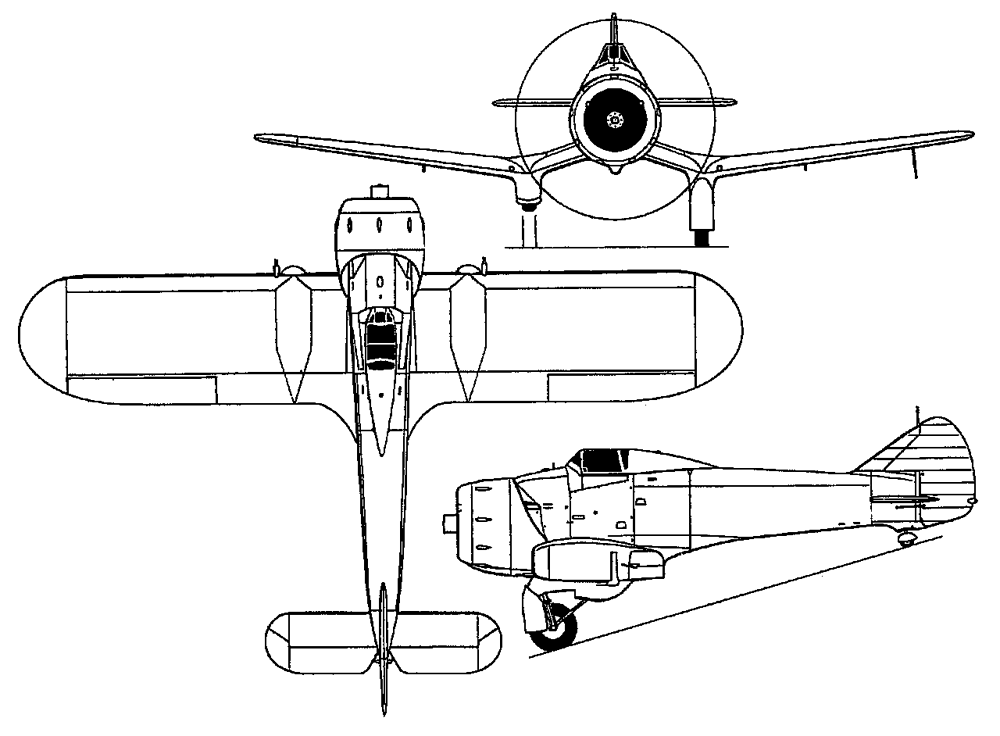 Bristol 133 |
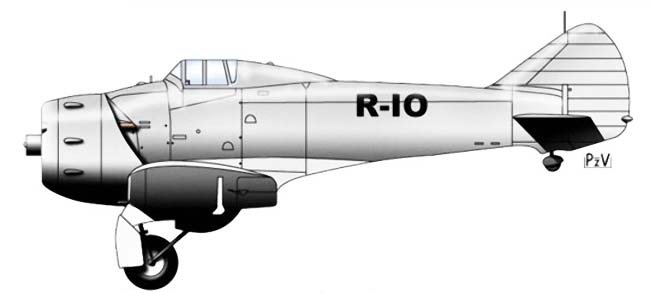 Bristol 133 |