On December 8, 1935, the London Chamber of Commerce and the Royal Aeronautical Society collaborated to host an airports conference, attended by representatives from 124 UK local government bodies. Opening the proceedings at the Mansion House, the Prince of Wales, a committed and frequent air traveler, addressed his audience: “We should think of cruising speeds of around 250 miles per hour (402.25 km/h).” This statement underscored the growing ambition for faster air travel.
Months earlier, Frank Barnwell and Roy Fedden had reached similar conclusions. On July 28, 1933, Barnwell sketched a light twin-engine transport monoplane, designed for six passengers and a crew of two. The aircraft was intended to be powered by two small, sleeve-valve radial engines, then under development by Fedden. The Aquila I engine, first run in September 1934, completed 50-hour civil type tests within a month, achieving a maximum output of 500 hp.
Barnwell’s Type 135, with its low-wing configuration, was compared to a high-wing design of similar dimensions, demonstrating superior aerodynamic efficiency with less drag and structural weight. These findings were consistent with conclusions reached by American manufacturers like Boeing, Lockheed, and Douglas. Although a decision to self-fund a prototype wasn’t immediate, Fedden was authorized to build two Aquila engines in August. The Type 135 was known within the Filton design office as the “Captain’s Gig.”
The Vision for a European Speed Record
The aircraft’s promising prospects soon captured wider attention beyond its development team. When Lord Rothermere, owner of the Daily Mail, declared his intention to commission “the fastest commercial aircraft in Europe” during a dinner discussion on civil aviation, aiming to counter American claims with the Douglas DC-1, he was promptly informed of the Filton developments by Robert T. Lewis, editor of the Bristol Evening World. Lewis promised to gather all available data on the Bristol 135 within a week.
On March 6, 1934, Lewis referenced Barnwell’s estimation that a Type 135 variant, equipped with moderately supercharged Mercury engines instead of Aquilas, could achieve a maximum horizontal speed of 240 mph (386.16 km/h) at 6,500 ft (1981.2 m). Lewis conveyed this information to Lord Rothermere. On March 26, he called Fedden, relaying Rothermere’s desire to build a personal aircraft.
Rothermere’s objective was two-fold: to encourage businesses in the proper use of civil aviation, and, crucially, to demonstrate to the Ministry of Aviation that existing fighters were no match for a high-speed transport adapted as a bomber. The proposal was discussed by the Board of Directors on March 27 with some apprehension. They were wary of offending their prime client, the Ministry of Aviation, by joining a press campaign against official policy.
However, the prestige and recognition attainable from such a project were too significant to dismiss lightly. It was decided that Sir Stanley White, Barnwell, and Fedden would meet Lord Rothermere for dinner at Stratton House on March 29, where he would explicitly state his requirements. Lord Rothermere desired an aircraft capable of carrying a crew of two and six passengers at the speed specified by Barnwell, and was prepared to pay the estimated cost of £18,500 in two installments: half upfront, and the remainder within a year, provided the aircraft was flying by then. The first payment, however, was not made until June, giving the company only two months to get the aircraft airborne.
From Civilian Speedster to Military Prospect
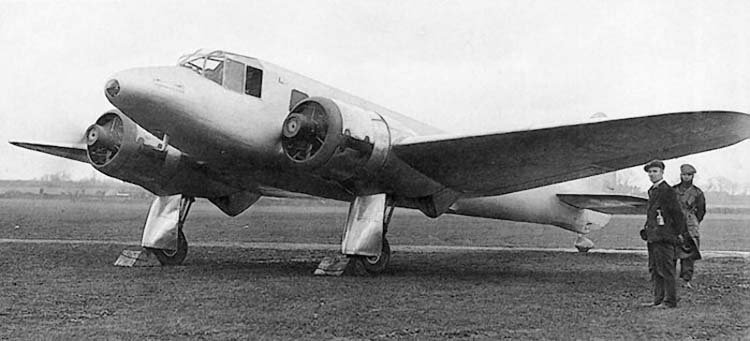
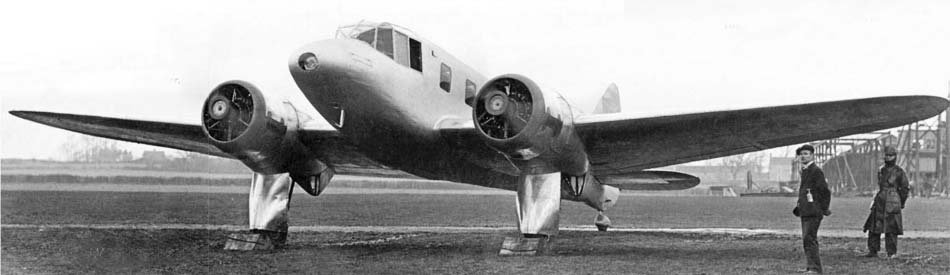
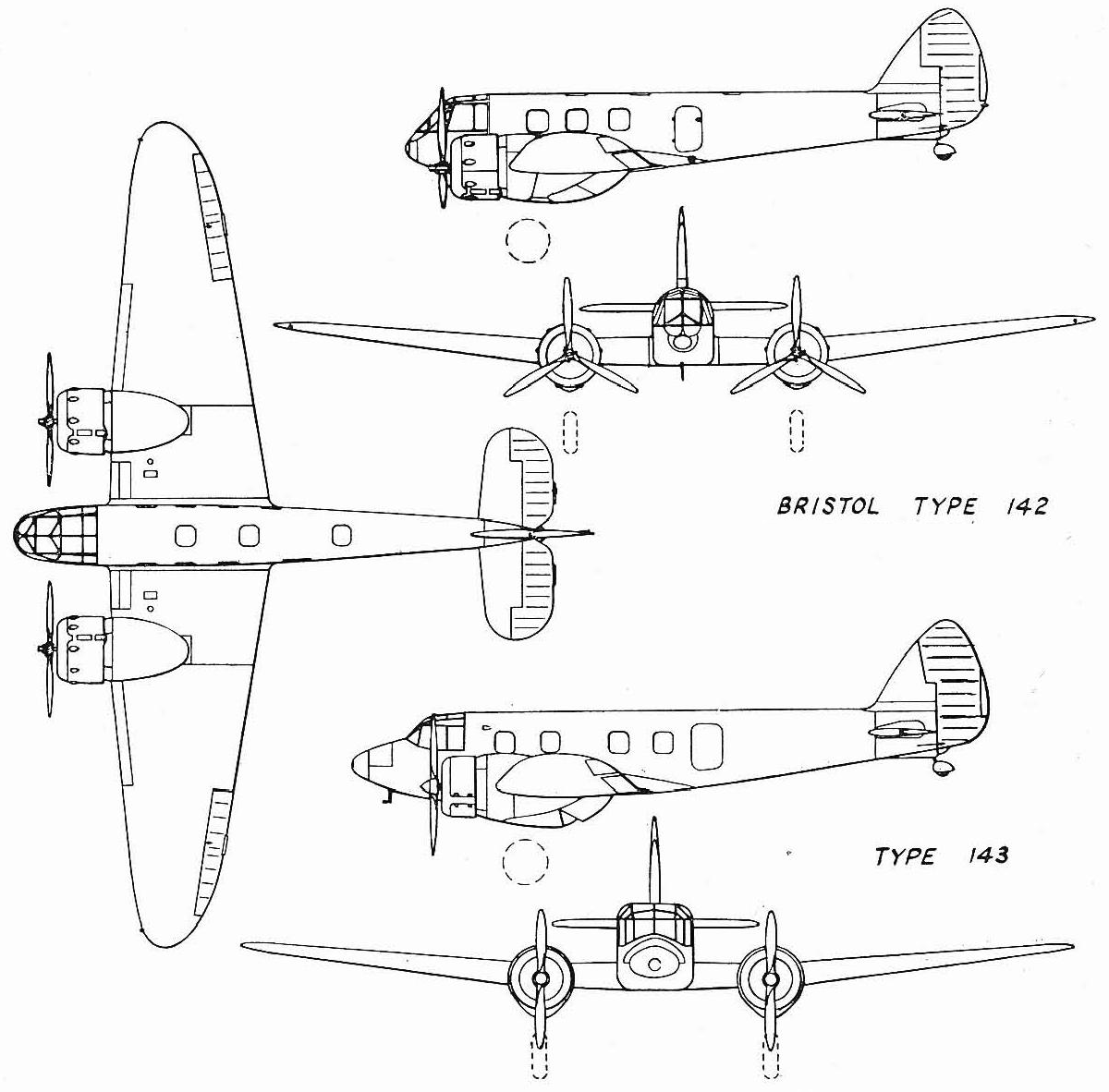
The Ministry of Aviation adopted a tactful approach, maintaining a distance that was neither overtly enthusiastic nor actively objecting. Reassured by this stance, the company proceeded to build two aircraft for Lord Rothermere. Barnwell recommended a prototype with two Aquila engines, noting that 70% of components could be shared. This led to modifications of the Type 135, which evolved into the Type 143 with Aquila engines and an increased passenger capacity of eight. The version powered by Mercury engines became the Type 142, featuring a more slender fuselage and a pointed nose.
To acquire the latest design insights, Barnwell undertook a brief inspection tour in America in May. Upon his return, requests for the Bristol 143 had already surfaced. The Finnish government expressed interest, and after initial trials, Ethyl Export Corporation sought to purchase a prototype, ideally at a reduced price in exchange for worldwide publicity. The Type 143 fuselage was showcased at the Paris Air Show in November, drawing considerable attention, partly due to the recent MacRobertson Race from London to Australia earlier that year.
It became clear that Finland sought a versatile aircraft, adaptable for both civil and military roles. A promotional brochure outlined a convertible variant, the Type 143F, equipped with Mercury VI engines and interchangeable nose and tail sections. This design allowed the aircraft to function as a passenger, cargo, mail, ambulance, or even a fighter-bomber. For military applications, a forward-firing 20mm Madsen cannon was envisioned, in addition to a top-mounted Lewis machine gun. Negotiations for nine Type 143F aircraft began in February but had not progressed far when the Ministry of Aviation itself expressed interest in a potential bomber version, following the first flight of the Type 142 (No. 7838) at Filton on April 12, 1935.
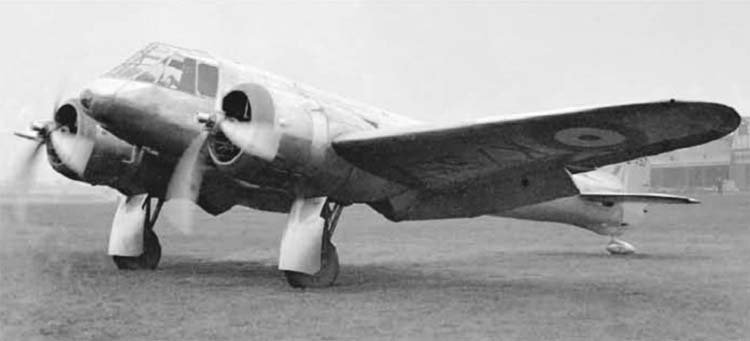
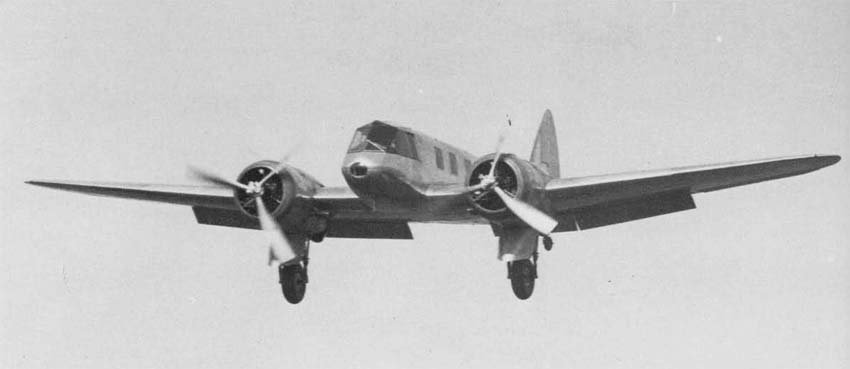
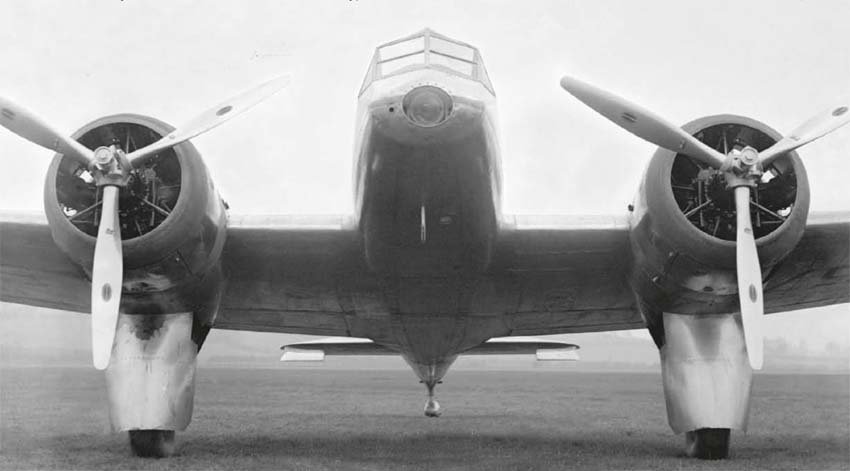
During its early successful flights, the Type 142 was fitted with wooden, fixed-pitch, four-bladed propellers. However, in June, these were replaced with three-bladed, two-position Hamilton-Standard propellers before the aircraft was sent to Martlesham for airworthiness acceptance trials. There, the Type 142 created a sensation: fully loaded, it was 50 mph (80.45 km/h) faster than the Gloster Gladiator prototype, which had won the F.7/30 competition.
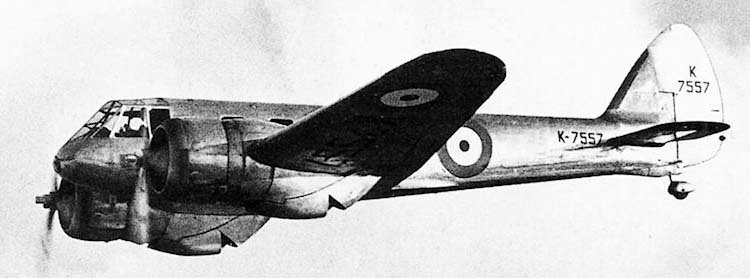
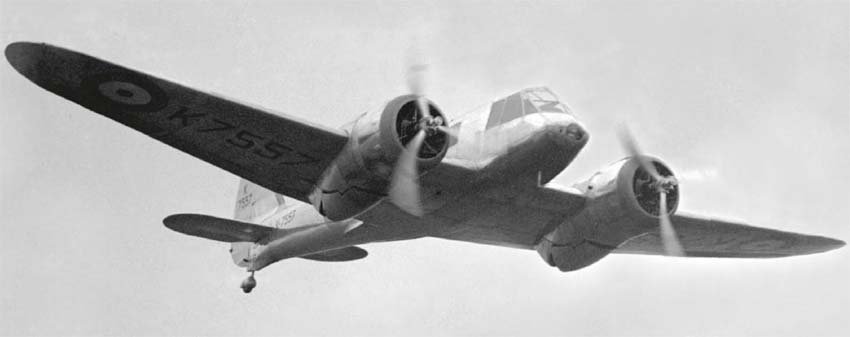
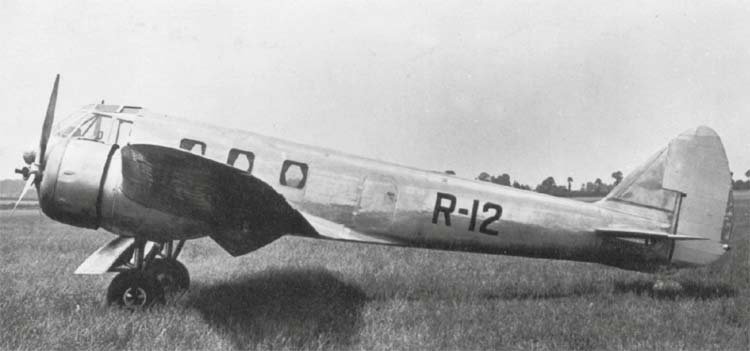
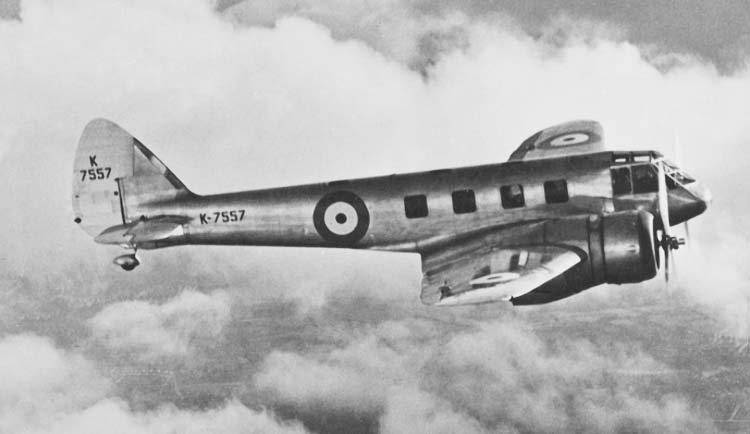
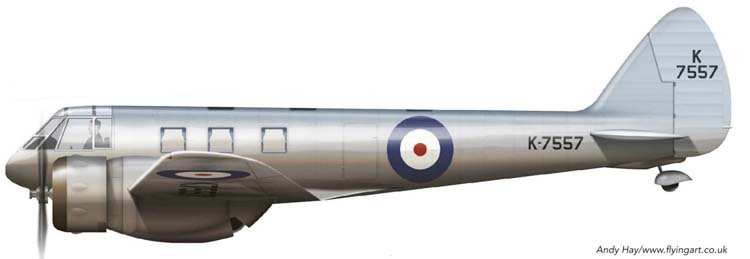
Everyone who flew the Type 142 was so impressed by its performance and handling that the Ministry of Aviation requested its retention for full-scale trials as a potential bomber. Lord Rothermere was delighted with this easy victory over the experts, presenting the Type 142 to the Air Council and naming it “Britain First.” Although registered as G-ADCZ on February 25, the Type 142 never carried this civil registration, bearing only the experimental mark R-12 when sent to Martlesham.
In July, it received the serial number K7557, and its civil registration was canceled in October. In early July, the company received an inquiry for a copy of the “Britain First” from Owen Cathcart Jones, but by then, all available production capacity was committed to the Ministry of Aviation, with the exception of approved foreign government orders, precluding any private commissions. On February 14, 1936, Lord Rothermere himself wrote to the company to order an improved version of “Britain First,” stipulating a cruising speed of 360 mph (579.24 km/h), but even he had to accept a “no.”
“Britain First” was damaged at Martlesham during the second week of July when a cowling panel inadvertently shifted, necessitating its return to Filton for repairs. This repair opportunity was utilized to enhance the brakes and landing gear fairings. After its redelivery and the completion of trials at Martlesham, “Britain First” was transferred to the R.A.E. (Royal Aircraft Establishment), where it conducted experimental and transport flights until 1942. Subsequently, “Britain First” served as a training glider (No. 10 Technical Training School) at Kirkham, Lancashire, under serial number 2211M, before finally being scrapped at Morris Motors, Cowley, in 1944.
The Birth of a Legend: Bristol Blenheim
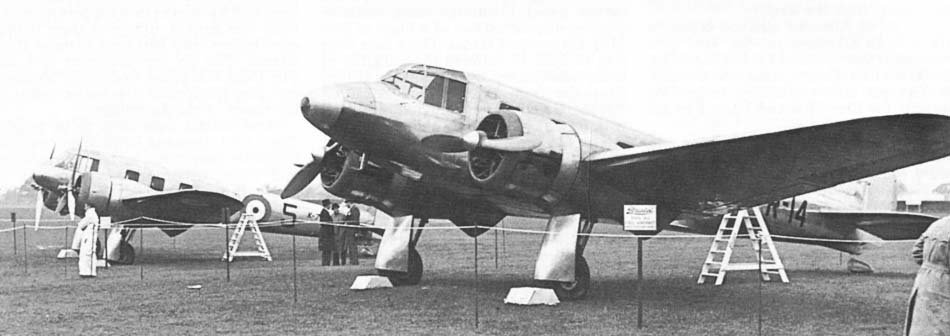
The prototype Bristol 143 (No. 7938) was registered G-ADEK on March 22, 1935. However, its first flight was delayed until January 20, 1936, awaiting the completion of endurance tests on two Aquila I engines, which were conducted on Bullpup and Bulldog G-ABBB. Like “Britain First,” it initially bore no registration marks, flying instead as the Aquila testbed R-14. An application for a certificate of airworthiness was made on March 4, 1935, but was canceled on June 26, 1936.
Following its tests, there was a proposal to sell it to Imperial Airways, but Fedden ensured its preservation, and the aircraft could occasionally be seen away from Filton. One of its few public appearances was at Whitchurch on September 5, 1936, during an outdoor reception for the Bristol and Wessex Aero Clubs, where Uwins emphasized its speed on a very rainy day. The primary obstacle to the Type 143’s further development was the unavailability of variable-pitch propellers appropriately sized for the Aquila engines. The Type 143 was placed into storage without engines when Aquila production was abandoned in 1938, and it was eventually scrapped sometime after the outbreak of the war.
Although Imperial Airways had inquired about the Type 143 as late as the end of 1937, any serious intention to produce civilian versions of either the Type 142 or Type 143 was abandoned in August 1935. This change occurred when the company received a contract under Specification 28/35 for 150 bombers, designated as the Type 142M variant. Besides Finland’s request for the 143F, the first proposal for a bomber conversion came on May 29, 1935. Barnwell calculated a maximum horizontal speed of 262 mph (421.558 km/h) at 15,000 ft (4572 m) for an Aquila-powered version with a full load of 9,600 lbs (4354.56 kg), a crew of two, and 1,000 lbs (453.6 kg) of bombs.
On June 20, these figures were compared with an estimated 278 mph (447.302 km/h) for a Mercury-powered aircraft, with a maximum estimated weight of 10,400 lbs (4717.44 kg). Two days later, Air Commodore Verney, Director of Technical Development, wrote to Barnwell, expressing a preference for the Mercury-powered version and inviting him to a design conference in London on July 9 to discuss details. At the conference, Barnwell presented his proposals for converting the Type 142 into a mid-wing design with a retractable dorsal turret and internal bomb bay. This design was immediately accepted from the drawing board as the basis for a series production contract. Thus emerged the Bristol Blenheim – the immortal bomber, which was ready in significant numbers by the outbreak of war.
(c) alternathistory.org.ua
Technical Specifications
| Modification | Bristol 142 |
| Wingspan, m | 17.17 |
| Length, m | 12.12 |
| Height, m | 3.91 |
| Wing area, m2 | 43.57 |
| Empty weight | 3094 |
| Normal takeoff weight | 4244 |
| Engine type | 2 Piston engines Bristol Mercury VIS 2 |
| Power, hp | 2 x 650 |
| Maximum speed, km/h | 494 |
| Cruising speed, km/h | 152 |
| Practical range, km | 1610 |
| Crew | 2 crew |
| Payload | 4 passengers |
Image and diagram gallery of the Bristol Blenheim
 |
 |
 |
 |
 |
 |
 |
 |
 |
 |
 |
 |