Skip to content
wp.archivoaereo.com

wp.archivoaereo.com

  • Military Aviation
    • World War I
      • WWI Attack Aircraft
      • WWI Bombers
      • WWI Fighters
      • WWI Flying Boats
      • WWI Reconnaissance
    • World War II
      • WWII Attack Aircraft
      • WWII Bombers
      • WWII Fighters
      • WWII Flying Boats
      • WWII Military Transport
      • WWII Reconnaissance
    • Cold War
      • Cold War Fighters
    • Modern
      • Modern Fighters
      • Modern Maritime Patrol
      • Modern Military Transport
  • Civil & Commercial Aviation
    • Classic Airliners
    • Modern Airliners
    • Classic Regional Airliners
    • Modern Regional Airliners
    • Pioneer Light Aircraft
    • Classic Light Aircraft
    • Modern Light Aircraft
    • Agricultural Aircraft
    • Racing Aircraft
  • Helicopters
    • Cargo & Heavy Helicopters
    • Light & Observation Helicopters
    • Pioneer Helicopters
    • SAR Helicopters (Rescue)
    • Utility Helicopters
  • Technology
    • Weapons & Technology
    • Drones & UAVs
    • Experimental Aircraft
  • History
    • History & Battles
  • Toggle search form

BRO-16 Seaplane Glider

Posted on July 26, 2026 By

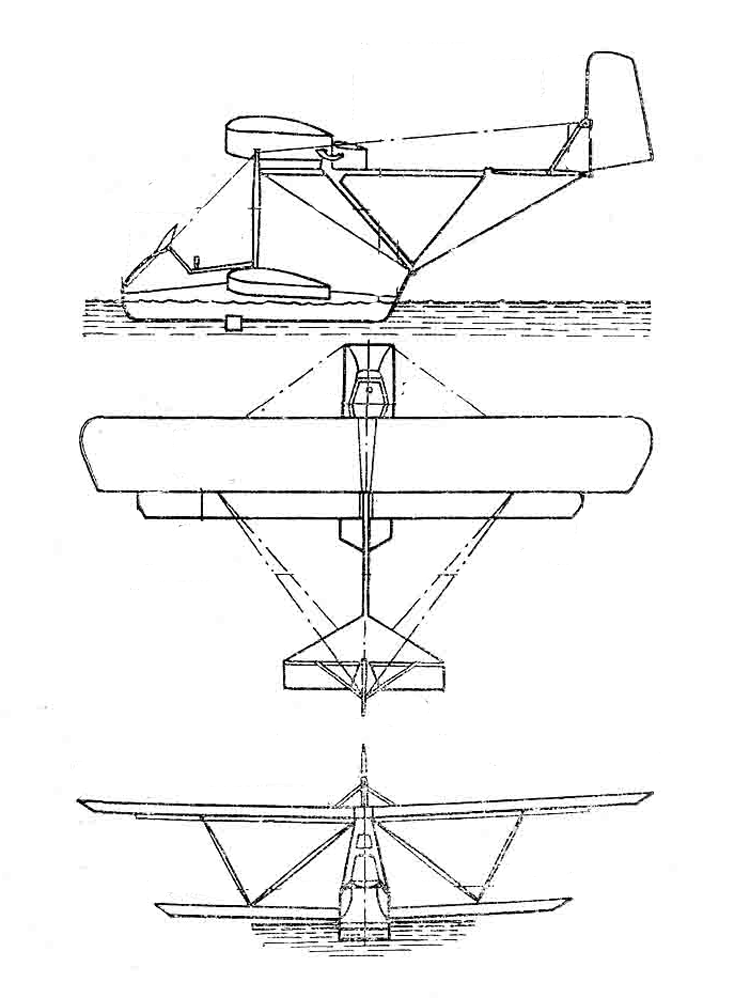
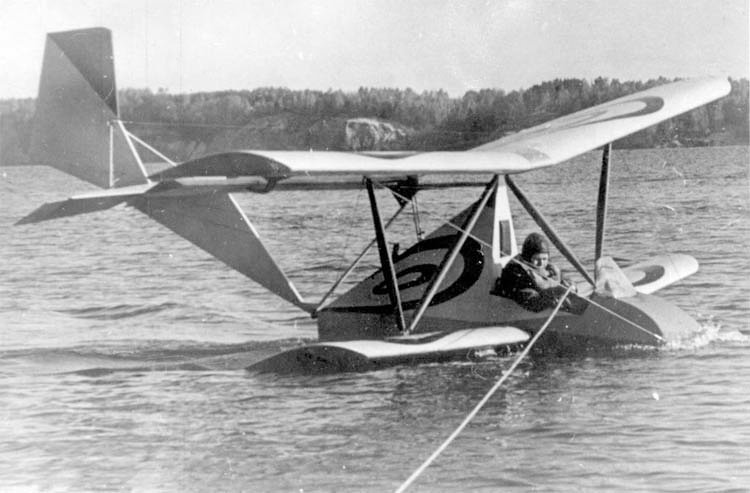
The BRO-16 seaplane glider is a single-seat wooden biplane, designed for training, as well as demonstration and practice flights. It was the first aircraft of its type created in the Lithuanian SSR under the leadership of the well-known designer, veteran of Soviet gliding, Bronis Oškinis.

Table of Contents

Toggle
    • Design and Construction
    • Flight Operations
    • Technical Specifications
  • Image and diagram gallery of the BRO-16 Seaplane Glider
    • How to cite this article:

Design and Construction

The BRO-16 is mass-produced and is a “descendant” of the widely used BRO-11M school glider, from which its upper wing, tail unit, truss, and control system were borrowed. The pilot’s cockpit is located in the middle part of the lower wing, forming a flat-bottomed boat of assembled construction, with a 2 mm plywood skin, covered on the outer surface with fiberglass fabric on epoxy resin. The cockpit is open, with a windshield below the instrument panel.

To facilitate takeoff, the boat has a small hydrofoil, positioned 200 mm ahead of the machine’s center of gravity. The wings are of single-spar construction. The lower wing, serving as support during low-speed rolls and for creating a ground effect during takeoffs and landings, is fully skinned with plywood and, over the plywood, covered with percale.

Structurally, the lower wing is similar to the upper one, but its span is reduced to 5.8 m. The wing profile is TSAGI R-II, 14%, and the aileron profile is TSAGI P-III, 16%.

Flight Operations

Glider control is mixed: cable-operated for the rudder and elevator, and rigid rods for the ailerons. The upper wing is connected to the lower by two pairs of profiled struts, and by QBC wire bracing to the nose of the cockpit and the tail truss.

The BRO-16 takes off by being towed behind a high-speed boat with a stationary engine, allowing it to reach a speed of at least 50 km/h. A synthetic, non-sinking tow rope, 50 to 150 meters long, is best used. The height of flight during towing depends on the length of the rope (practically, it is about 35% of the rope’s length). After unhooking, the glider can perform a free flight and land on water.

The first season of BRO-16’s operation showed that the glider is reliable, easy to pilot, and invariably generates great interest among young people. Many flights were conducted at the Lithuanian water sports center on the Kaunas Sea.

Continuing the discussion initiated by Riga students about using water bodies for training and practice flights, the editorial board welcomes the successful experience of building a motorless apparatus capable of taking off and landing on water. Seaplane gliders like the BRO-16 can be built not only in factory conditions but also at young technicians’ stations and by amateur groups.

Technical Specifications

Modification BRO-16
Wingspan, m 7.80
Length, m 5.24
Wing area, m2 16.50
Empty weight 129
Normal takeoff weight 204
Crew 1

Image and diagram gallery of the BRO-16 Seaplane Glider

BRO-16
BRO-16
BRO-16
BRO-16

How to cite this article:

APA: BRO-16 Seaplane Glider (). BRO-16 Seaplane Glider. wp.archivoaereo.com. https://wp.archivoaereo.com/en/bro-16-seaplane-glider/
VANCOUVER: BRO-16 Seaplane Glider [online]. wp.archivoaereo.com; [cited 2026-07-26]. Available at: https://wp.archivoaereo.com/en/bro-16-seaplane-glider/
Developed by Agatha Press
Sin categoría

Post navigation

Previous Post: Bücker Bü 134
  • Español
  • Agricultural Aircraft
  • Attack Aircraft
  • Aviation Biographies
  • Cargo & Heavy Helicopters
  • Classic Airliners
  • Classic Light Aircraft
  • Classic Regional Airliners
  • Cold War Fighters
  • Drones & UAVs
  • Experimental Aircraft
  • History & Battles
  • Interwar Reconnaissance
  • Light & Observation Helicopters
  • Maritime Patrol
  • Military Trainer Aircraft
  • Military Transport
  • Modern Airliners
  • Modern Cargo Aircraft
  • Modern Fighters
  • Modern Light Aircraft
  • Modern Maritime Patrol
  • Modern Military Transport
  • Modern Regional Airliners
  • Other Aircraft
  • Pioneer Air Transport
  • Pioneer Helicopters
  • Pioneer Light Aircraft
  • Racing Aircraft
  • SAR Helicopters (Rescue)
  • Sin categoría
  • Utility Helicopters
  • Weapons & Technology
  • WWI Attack Aircraft
  • WWI Bombers
  • WWI Fighters
  • WWI Flying Boats
  • WWI Reconnaissance
  • WWII Attack Aircraft
  • WWII Bombers
  • WWII Fighters
  • WWII Flying Boats
  • WWII Military Transport
  • WWII Reconnaissance
Cessna Model 170Cessna Model 170Admin
CicadaCicadaAdmin
C-133 CargomasterC-133 CargomasterAdmin

Legal

  • About ArchivoAereo
  • Terms and Conditions
  • Contact Us
  • Privacy Policy

Copyright © 2026 wp.archivoaereo.com.

Powered by PressBook WordPress theme