
Design Evolution
After returning from America, Bronius Oskinis decided to refine the BRO-4 glider. This led to the introduction of a new glider, designated BRO-5 Ruta-2, in 1938.
Key Innovations and Performance
The BRO-5 Ruta-2 distinguished itself from its predecessor primarily through its new ClarkY profile wing. This innovation significantly enhanced its flight capabilities, boosting the maximum aerodynamic quality from 19 for the BRO-4 to an impressive 21.5 for the BRO-5.
Technical Specifications
| Modification | BRO-5 |
| Wingspan, m | 11.00 |
| Length, m | 5. 60 |
| Aspect ratio | 10.1 |
| Wing area, m2 | 12.00 |
| Empty weight | 130 |
| Maximum weight | 220 |
| Minimum sink rate, m/s | 0.92 |
| Max. aerodynamic quality | 21.5 |
| Speed at max aerodynamic quality, km/h | 75 |
| Crew | 1 |
Image and diagram gallery of the BRO-5 Ruta-2
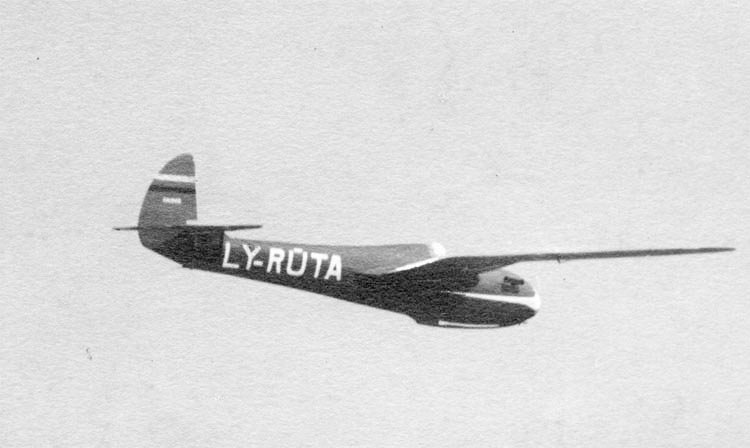 BRO-5 Ruta-2 |
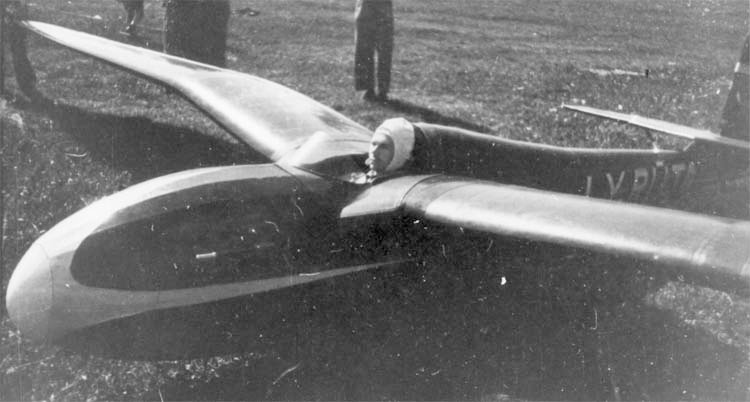 BRO-5 Ruta-2 |
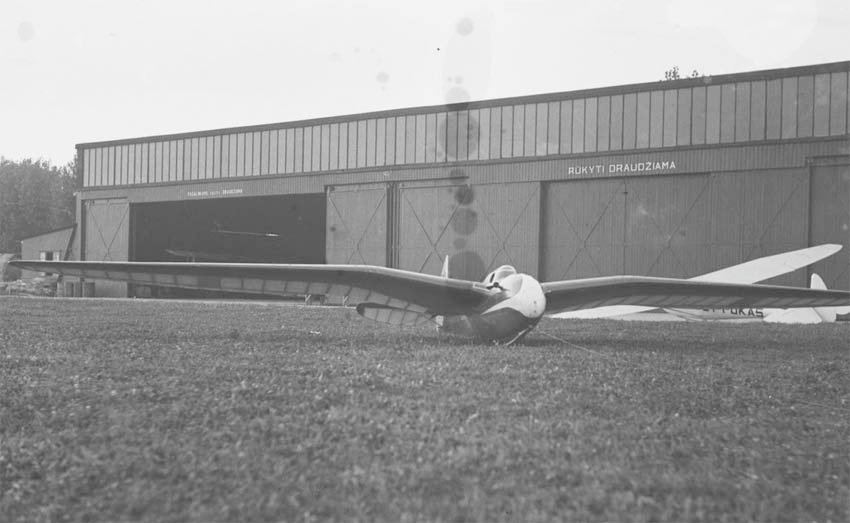 BRO-5 Ruta-2 |
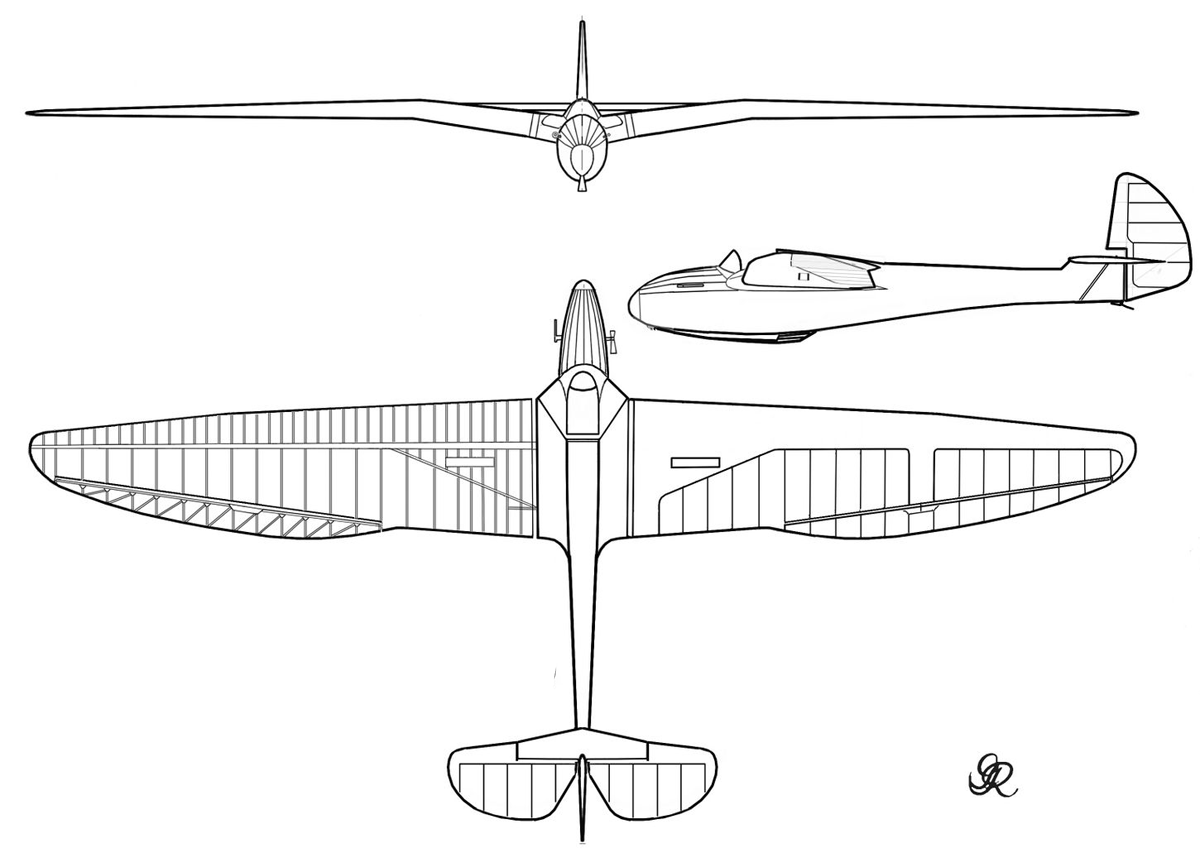 BRO-5 Ruta-2 |
How to cite this article:
APA: BRO-5 Ruta-2 (). BRO-5 Ruta-2. wp.archivoaereo.com. https://wp.archivoaereo.com/en/bro-5-ruta-2-2/
VANCOUVER: BRO-5 Ruta-2 [online]. wp.archivoaereo.com; [cited 2026-09-21]. Available at: https://wp.archivoaereo.com/en/bro-5-ruta-2-2/