
For a long time, maritime communications were a vital factor for Germany, ensuring the supply of essential raw materials, products, and other goods to its population and industry. During wartime, the enemy could easily and relatively quickly block communications in the North and Baltic Seas, as well as exits from seas and ports, using various types of mines.
The comparatively flat seabed and shallow coastal waters meant large ships could only use a limited number of channels, which could be mined by the enemy. Naval mines could be laid by aircraft, surface ships, and submarines in locations where their most effective impact was expected. A detailed explanation of mine types and their activation systems would lead us astray.
However, for the German coast, it was sufficient to install mines with fuses that could be triggered by changes in magnetic field parameters (magnetic mines). When a ship passed, the magnetic field parameters would be distorted, initiating the detonator, followed by an explosion. Magnetic mines could also explode if an aircraft flew at a low altitude, posing no danger to the aircraft itself.
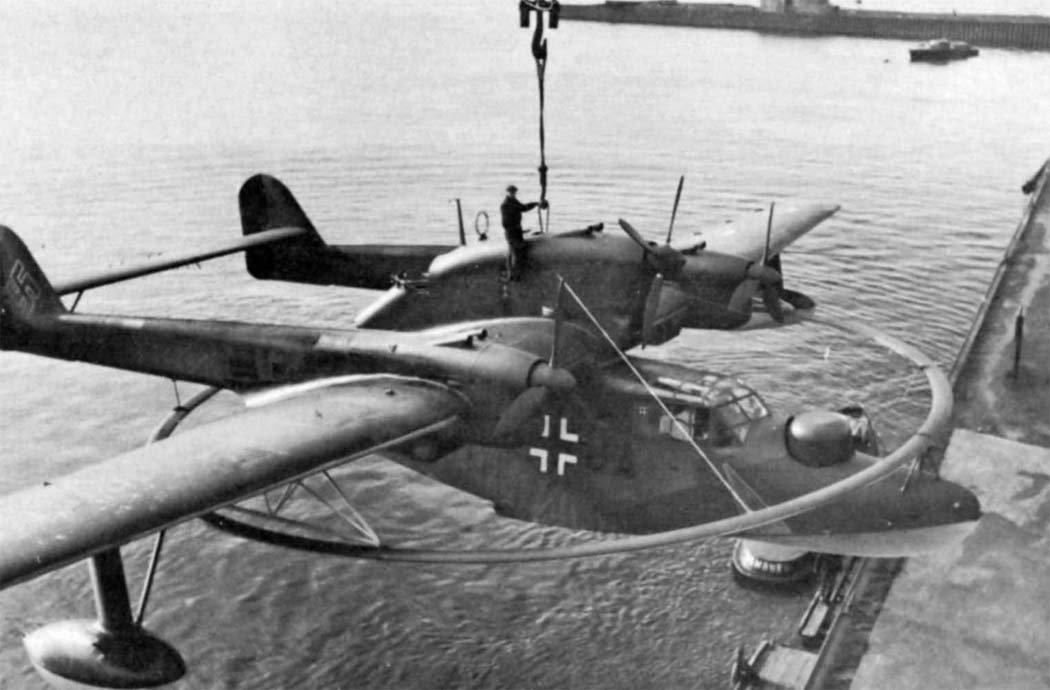
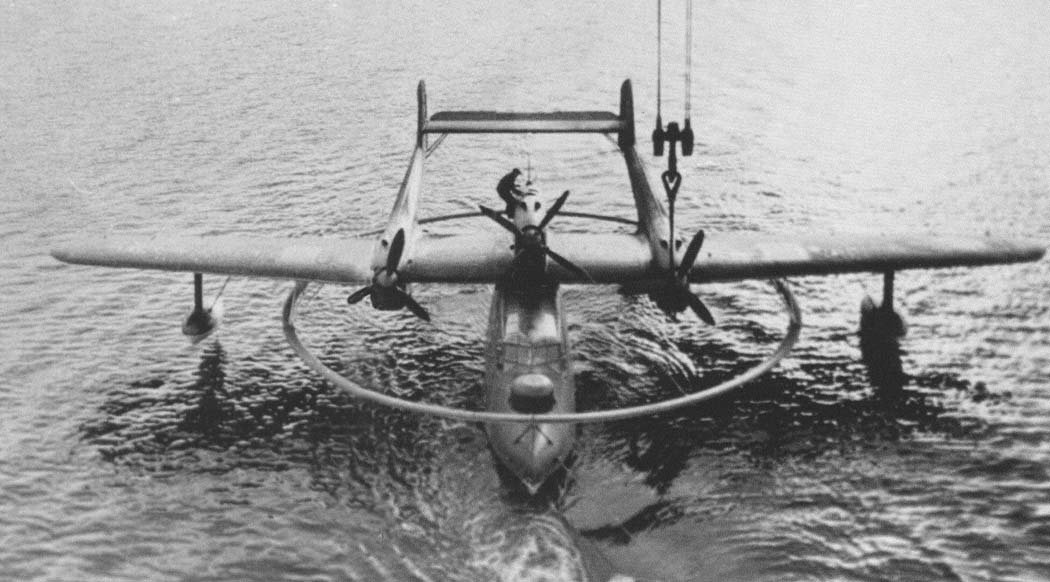
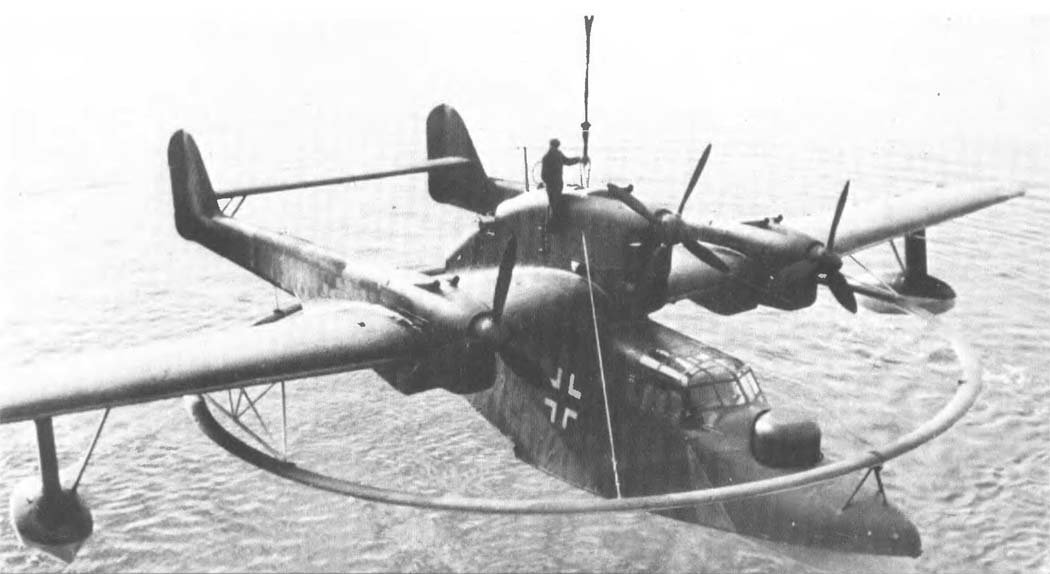
For this purpose, the aircraft could be equipped with a special magnetic ring or a magnetic cable (Minensprengschleife). By flying at a low altitude over the water’s surface, it could create a magnetic field change that triggered the magnetic mine fuses. The aircraft’s speed usually allowed it to move a safe distance away from the exploding mine.
Aerial Mine Clearance Operations
To destroy enemy minefields, the Nazi German Air Force (Luftwaffe) employed specially equipped aircraft: the Junkers Ju 52/3m, Dornier Do 23, Heinkel He 111, and Blohm & Voss BV 138. As an example of an aerial mine clearance aircraft, one could cite the Blohm & Voss BV 139 floatplane, which was equipped with a magnetic cable.
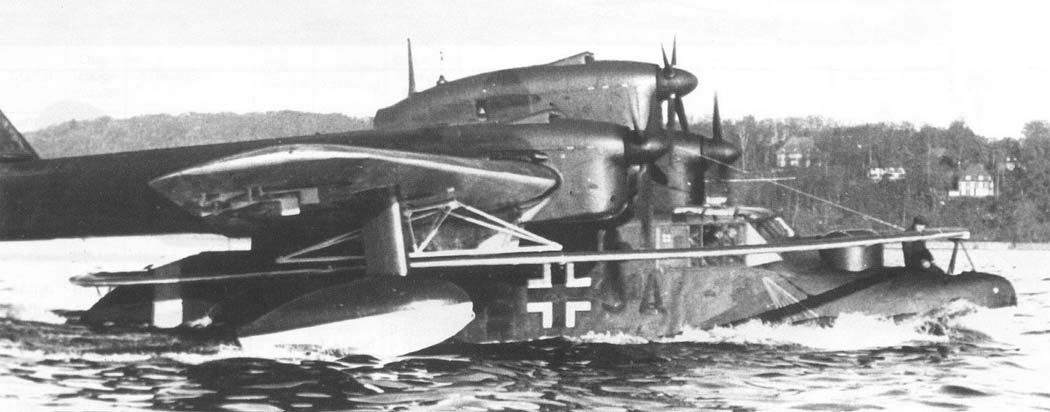
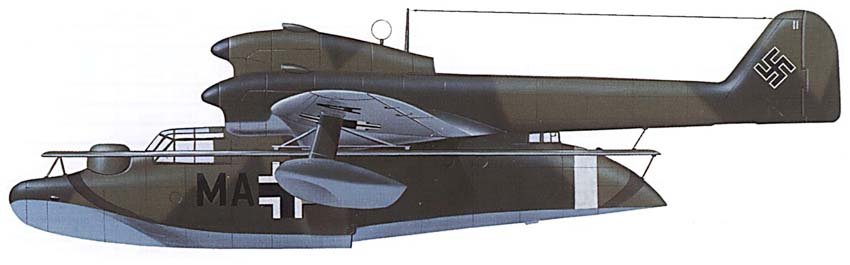
In the autumn of 1942, Blohm & Voss converted one BV 138 C-1 flying boat into the BV 138 MS aerial mine clearance aircraft. This flying boat received the military number CB + UA and was dispatched to the Luftwaffe test center located in Travemünde.
BV 138 MS Design and Modifications
The use of the mine ring necessitated very heavy auxiliary equipment, so this aircraft, with factory number 0310021, was stripped of all ballast not required for such operations. Specifically, the following structural changes were necessary: the front defensive armament HD 151 (245 kg) was removed, as was the rear defensive armament HD 151 (245 kg), bomb racks (14 kg), the onboard unit (100 kg), oil tanks I and II in the hull (74 kg), fuel tanks in the hull (105 kg), and three reserve ammunition boxes (12 kg).
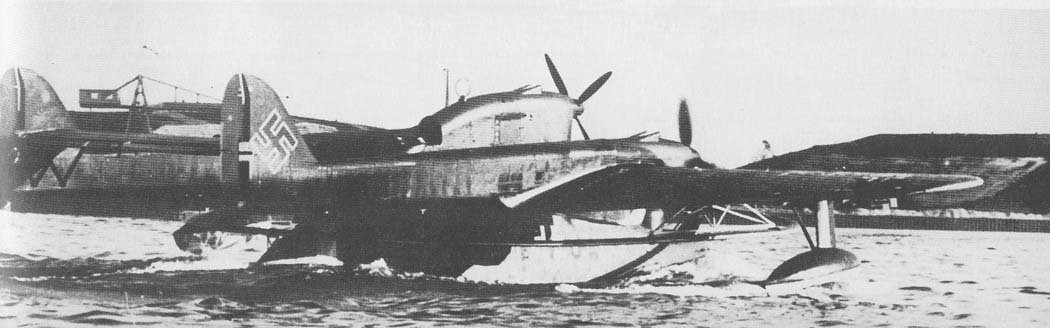
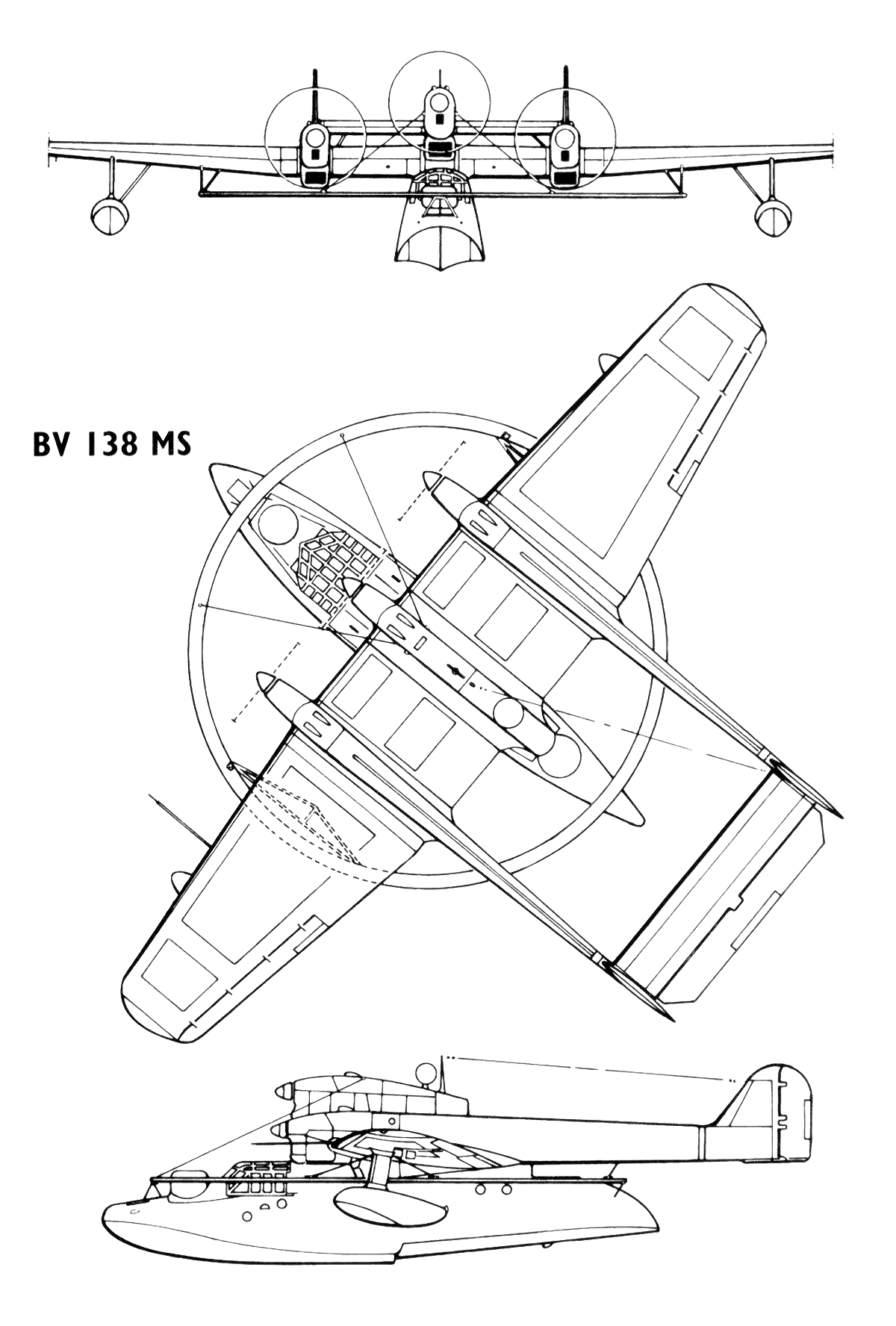
Of all defensive armament, only the MG 131 machine gun in the rear of the central engine nacelle was retained. The magnetic ring, essential for detonating mines, and its mounting elements on the hull and wing consoles, in turn, increased the aircraft’s weight. The conversion of the flying boat into a mine destruction aircraft required the installation of a magnetic ring (1050 kg), struts and brackets for attachment to the tail (3.7 kg), truss structures under the wing consoles (32 kg), 6 braces (11 kg), 8 locks and fork heads (4.1 kg), 8 clamping brackets (12.9 kg), a fairing on the spar (6.4 kg), attachment elements in the bow (3.4 kg) and stern (1.6 kg) of the hull, internal attachment elements on the spar (2.8 kg), and bracing wires (7.6 kg).
The total weight of the elements required for converting the flying boat into a mine destruction aircraft was 1136.4 kg. The magnetic ring for detonating mines had an average diameter of 14.07 meters. The center of gravity of the ring was located 200 mm aft and 878 mm below the tubular spar.
The auxiliary unit, necessary for operating the magnetic ring, was installed in the fuselage and located 800 mm aft, 2390 mm below the tubular spar, and 400 mm to the right relative to the aircraft’s center of gravity. For BV 138 B-1 flying boats, also intended for mine destruction, the auxiliary unit for the magnetic ring was calculated to be 190 mm aft of the center of gravity and 420 mm below the main spar. The total weight of the auxiliary unit, whose main components included an engine and generator, was 1200 kg, and this weight was evenly distributed with a load of 10% on frames 30 to 39. Due to the significant loads on the hull caused by the installation of the magnetic ring and its attachments, the sides of the hull had to be appropriately reinforced with profiles.
The takeoff weight of the BV 138 MS flying boat with the magnetic ring and the necessary equipment for initiating magnetic mines was 16 tons, with a fuel capacity of 1725 liters. At cruising power (80% of maximum), each of the three engines developed 640 hp. At this setting, specific fuel consumption was 0.163 kg/hp·h or 313 kg/h. At a cruising speed of 200 km/h, the flight duration was 5.5 hours.
Production and System Details
For the conversion of BV 138 flying boats of the B-1 and C-1 series into BV 138 MS aircraft for detonating magnetic mines, as well as for similar conversions of Junkers Ju 52/3m type aircraft, 10 magnetic rings needed to be produced monthly. Before Blohm & Voss was to begin their production, the company Menibum, in Stendal, was responsible for manufacturing the magnetic rings. Junkers was tasked with preparing documentation for the machine that wound the wire onto the magnetic ring; according to Junkers, this winding machine required 10,000 man-hours to build. Plans called for monthly conversions of 4 BV 138 flying boats and 6 Ju 52 aircraft, and possibly Heinkel He 111s, all intended for mine clearance.
The installation of the mine clearance system included the magnetic ring’s attachments in the bow and stern of the flying boat’s hull and under the wing consoles, which are clearly visible in some images. To generate the necessary electrical energy, an auxiliary unit with a generator was installed in the fuselage. The necessary documentation for the mine clearance system’s operation was provided by Junkers.
In the defensive emplacement located in the rear of the nacelle, a voltmeter, ammeter, a button for short-circuiting the circuit, a magnetic field strength regulator with a switch, and a neon lamp were additionally installed. Another button, used to short-circuit the circuit, was mounted near the crew commander’s seat. In the engine room, where the auxiliary power unit was located, there was also a panel with switches and other instruments and devices necessary for operating and monitoring the auxiliary unit.
The auxiliary unit had a separate 120-liter fuel tank, sufficient for four hours of operation. The auxiliary unit’s lubrication system was supplied by Junkers, and the cooling system radiator was supplied by RLM (department C-B 2/1V).
Technical Specifications
| Modification | ВV.138 MS |
| Wingspan, m | 26.95 |
| Length, m | 19.85 |
| Height, m | 5.90 |
| Wing area, m2 | 108.50 |
| Empty equipped weight | 12470 |
| Normal takeoff weight | 13615 |
| Maximum takeoff weight | 1 6000 |
| Engine type | 3 Piston engines Junkers Jumo-205D |
| Power, hp | 3 x 880 |
| Maximum speed, km/h | 2 32 |
| Cruising speed, km/h | 200 |
| Flight endurance, h.min | 5.30 |
| Service ceiling, m | 3800 |
| Crew, crew members | 3 |
| Armament | One 13-mm MG 131 machine gun in the rear part of the central engine nacelle |
Image and diagram gallery of the BV 138 MS: Mine Clearance Seaplane
 BV.138MS |
 BV.138MS |
 BV.138MS |
 BV.138MS |
 BV.138MS |
 BV.138MS |
 BV.138MS |